
The Butler’s Pantry
The Secret Room Every Dream Kitchen Needs (And How to Get Yours)
Structure at a glance:
Content
What Exactly Is a Butler’s Pantry?
Women Obsession With Butler’s Pantries
Must-Have Features of a Butler’s Pantry
Design Styles Trending in 2026
How to Plan Yours From Scratch
Organization Ideas That Actually Work
Butler’s Pantry on a Budget
Does It Actually Add Home Value?

A well-organized home is a well-organized mind — and a butler’s pantry is where that organization begins, one beautiful shelf at a time.”
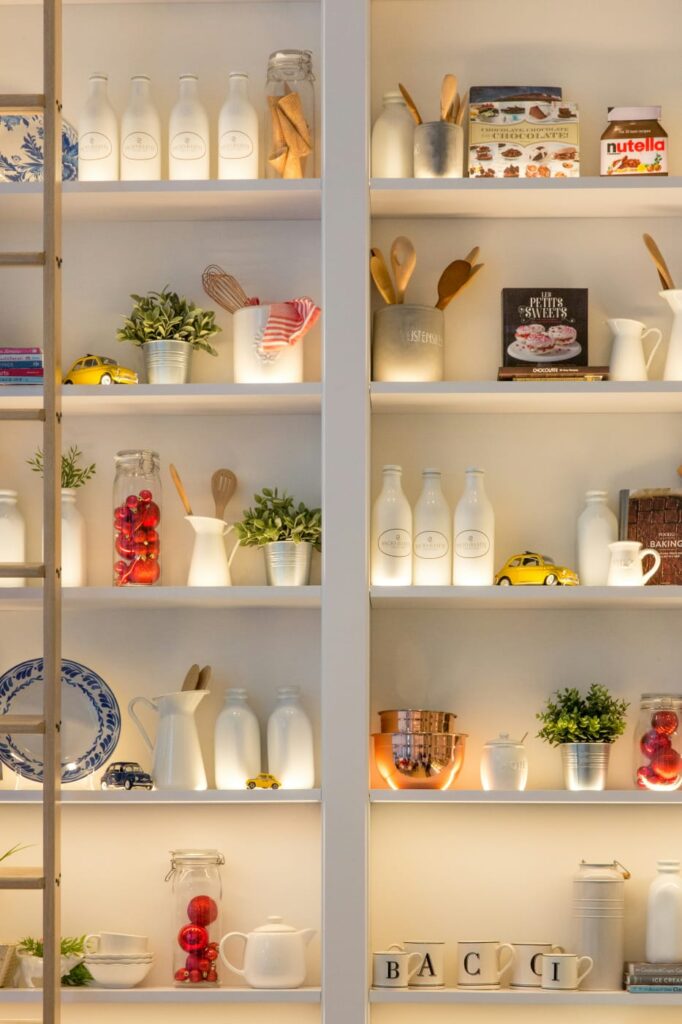
Picture this: It’s Thanksgiving morning. Your kitchen counters are covered in flour, your sink is stacked with prep bowls, and guests are arriving in two hours. Now imagine quietly closing a door and behind it? Pristine shelves of glassware, a second sink, a marble counter staging area, and every appliance you need, completely out of sight. That’s the magic of a butler’s pantry.
Once a luxury reserved for Victorian estates and old-money dining rooms, the butler’s pantry has made a stunning comeback — and this time, it’s showing up in modern farmhouses, suburban dream homes, and even smart apartment renovations across America. If you’ve been seeing this term everywhere on Pinterest and HGTV lately, you’re not imagining things. Women across the U.S. are going absolutely wild for this space, and honestly? We completely understand why.
Whether you’re a serious entertainer, a busy mom who needs a hidden staging area, or just someone who craves a little more order in their life — this article is your complete guide to understanding, planning, and falling deeply in love with the butler’s pantry.
What Exactly Is a Butler’s Pantry? (It’s Not What You Think)
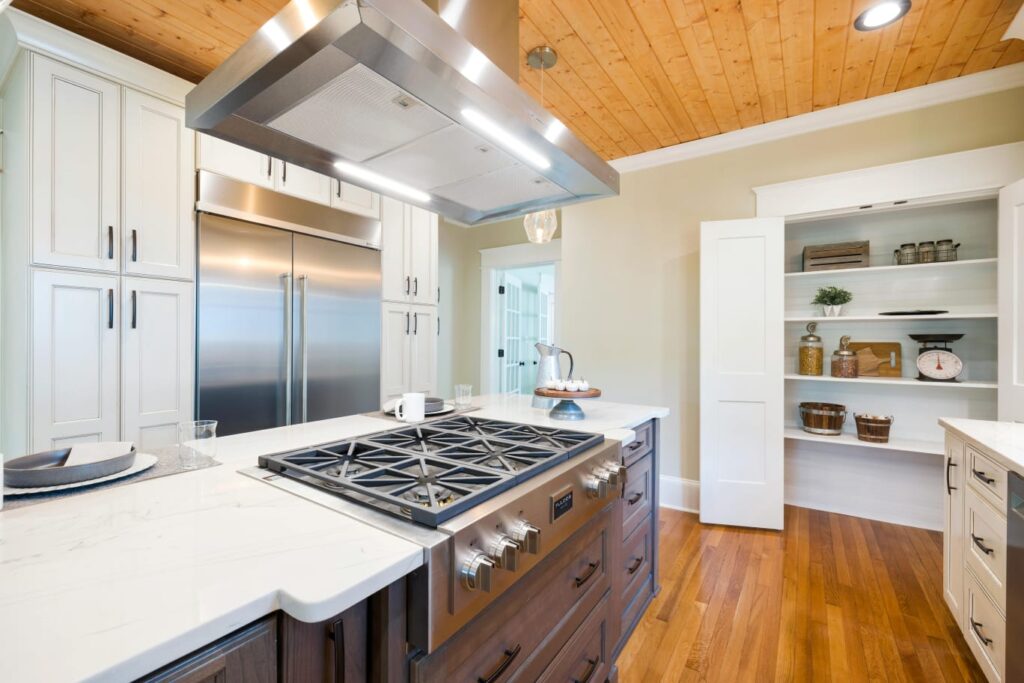
Let’s settle this right away: a butler’s pantry is not just a walk-in pantry with extra shelves. It’s actually a transitional room — a dedicated prep and storage space typically located between your main kitchen and your dining room (or entertaining area).
Historically, it was literally where the butler worked. He’d polish silver, stage dinner courses, store fine china, and make sure every dish left the kitchen looking flawless before it hit the dining table. Think Downton Abbey vibes, but make it functional for your actual life.
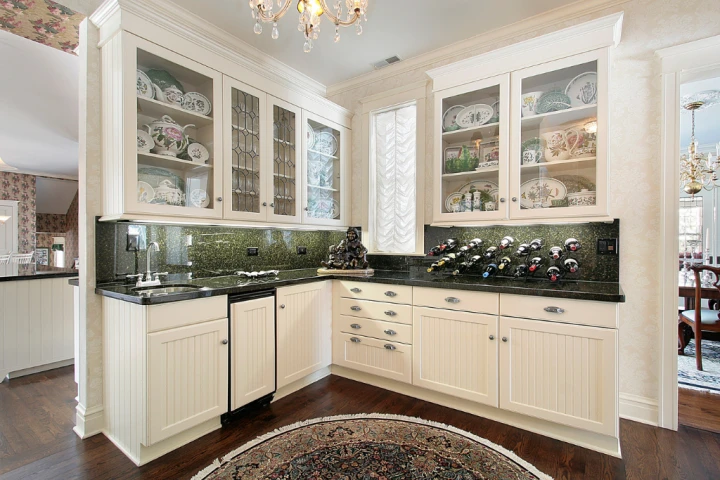
Today’s modern butler’s pantry typically features a combination of upper and lower cabinetry, open shelving for display, a secondary sink, some counter space, and often a secondary refrigerator or wine fridge. It’s the behind-the-scenes command center of a beautiful, functional home.
Quick Tip: A butler’s pantry doesn’t require a full extra room. Even a wide hallway (at least 7–8 feet long, 4 feet wide) can be transformed into a stunning and highly functional butler’s pantry.
Why Women Are Obsessed With Butler’s Pantries Right Now
Getting this aesthetic right is about layering texture, meaning, and mood. Here’s what the dark cottagecore world is actually built on:
The butler’s pantry is having a serious cultural moment, and it’s not hard to see why. We’re living in the age of the open-concept kitchen which is gorgeous, yes, but also means every mess is on full display the moment a guest walks through your front door.
The butler’s pantry solves a problem that millions of women have been quietly wrestling with for years: how do you entertain beautifully when the kitchen looks like a crime scene?
It’s also a deeply personal space. Unlike the main kitchen which is for everyone the butler’s pantry feels like your space. Your organizational system. Your labeled canisters. Your perfectly arranged wine glasses. It’s the home version of a backstage dressing room, and there’s something genuinely satisfying about having a space where everything is exactly where you put it.
Social media has played a massive role too. Butler’s pantry tours are racking up millions of views on TikTok and Instagram, and Pinterest boards dedicated to pantry organization have exploded in popularity. We’re not just dreaming about these spaces we’re building them.

“The butler’s pantry isn’t about having more stuff — it’s about having a place for everything, so your home can finally breathe.”
The Must-Have Features of a Truly Functional Butler’s Pantry
Not all butler’s pantries are created equal. Before you start ripping out walls, here’s what separates a truly functional space from a glorified storage closet:
●
A secondary prep sink
●
Upper cabinets or open shelving
●
Lower cabinets for storage
●
Generous counter space
●
Wine fridge or beverage center
●
Electrical outlets for appliances
●
Good task lighting
●
A coffee or tea station
●
Drawer organizers for utensils
●
A small dishwasher (bonus!)
The prep sink is arguably the most important feature it’s what transforms the space from a pantry into an actual working room. You can rinse produce, wash up prep tools, or fill the coffee maker without taking up your main kitchen sink.
Butler’s Pantry Design Styles That Are Trending in 2026
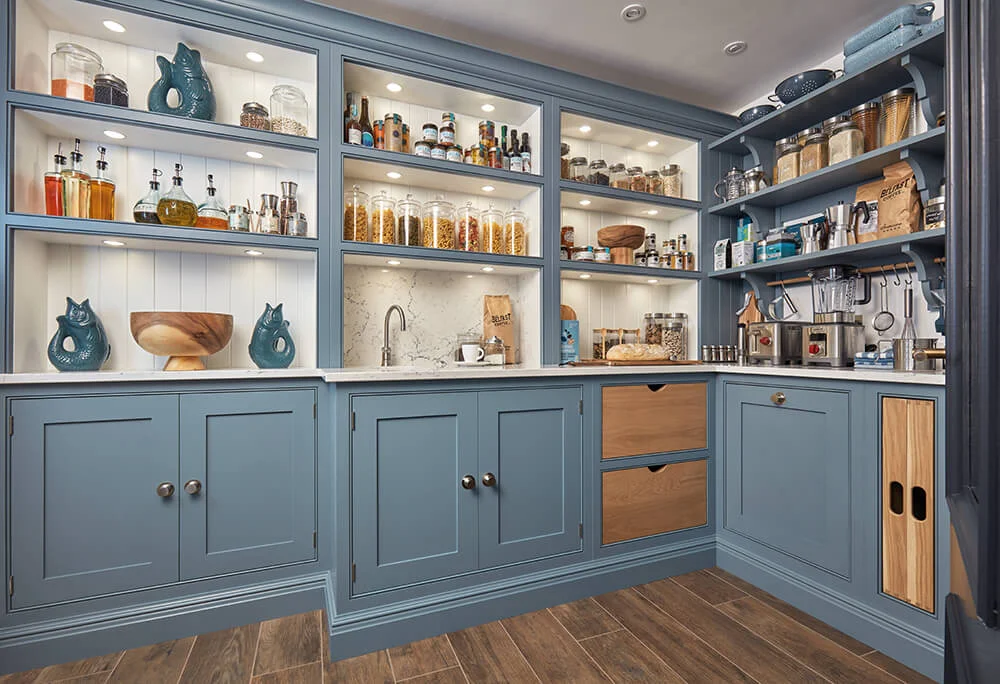
One of the most exciting things about planning a butler’s pantry is that it’s actually a great place to take design risks. Since it’s a smaller, more enclosed space, you can go bolder than you might dare in your main kitchen.
This is the most popular style right now — think creamy white or soft off-white cabinetry, marble or quartz countertops, polished nickel or gold hardware, and glass-front upper cabinets. It’s classic, elegant, and always in style.
Navy, forest green, charcoal, and deep mocha cabinetry are having a huge moment. Paired with brass hardware and warm wood accents, a dark butler’s pantry feels like the most sophisticated spot in the house.
Open shelving in natural wood tones, linen baskets, matte black fixtures, and earthy ceramics. This style feels lived-in and intentional — like a Pinterest board brought to life.
Beadboard panels, apron-front sinks, vintage-style faucets, and an abundance of wicker baskets and glass jars. Absolutely charming, deeply cozy, and wildly popular with the cottagecore crowd.
Butler’s Pantry Design Styles That Are Trending in 2026
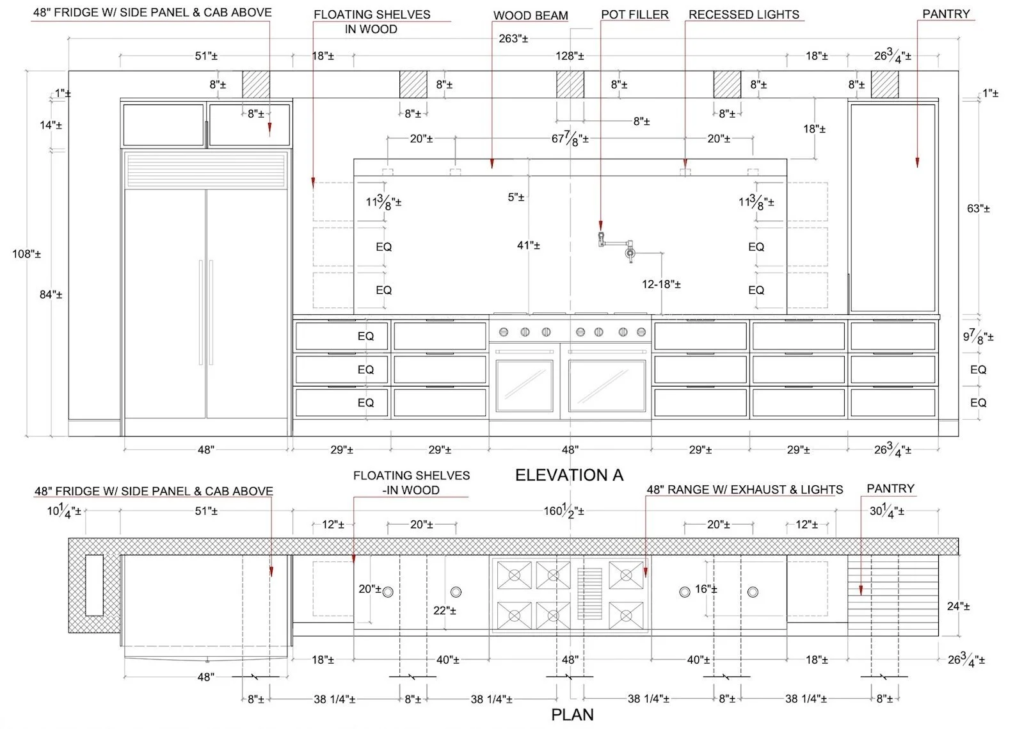
Ready to actually make this happen? Here’s how to go from “I wish I had one” to “I can’t believe I ever lived without this”:
Look for underutilized areas: a wide hallway between your kitchen and dining room, a large closet, or even a bump-out addition on an exterior wall. Most butler’s pantries require a minimum of 5–6 feet of linear counter space.
Are you mainly a coffee bar person? A holiday entertainer? A wine collector? Your number one use case should drive every design decision from layout to appliances.
A basic butler’s pantry conversion can start around $3,000–$5,000. A high-end custom build can run $15,000–$30,000+. Knowing your budget upfront prevents heartbreak later.
If plumbing is involved (and it should be, because that sink is everything), you’ll need a licensed plumber. Work with a kitchen designer or contractor who has done pantry builds before.
Lead times on custom cabinetry can run 8–14 weeks. Order early, and let your cabinet style dictate the rest of your design choices.
Decide where every category lives before items go on the shelves. Trust us — rearranging later is more painful than planning upfront.
Organization Ideas That Will Make You Swoon (and Actually Work)

The internet loves a good organization reveal, and butler’s pantries are delivering some of the most satisfying transformations we’ve ever seen. Here are some ideas to steal:
Dedicate distinct areas for coffee/tea, barware, baking supplies, and everyday dishes. When everything has a zone, every family member knows where things live and more importantly, where to put them back.
Don’t stop at eye level. Use the full height of your walls. Upper shelves are perfect for large platters, seasonal items, and serving pieces you don’t use every day.
Even if you designed the entire space yourself and theoretically know where everything is — label it anyway. It makes tidying up faster, keeps everyone accountable, and let’s be honest, labels just look incredible.
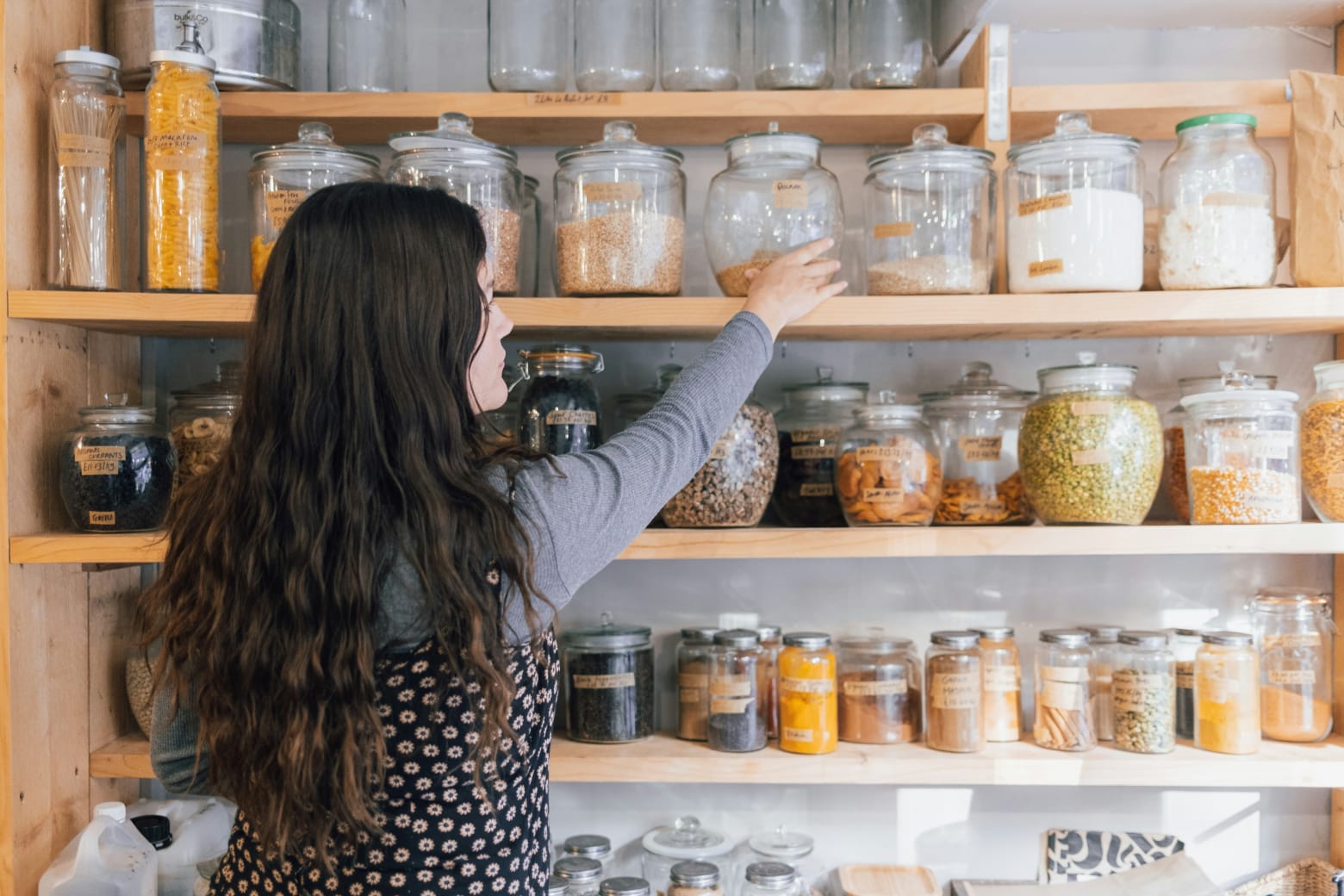
This is the single fastest way to make a pantry look professionally styled. Swap out mismatched packaging for a cohesive set of glass or ceramic canisters. The difference is genuinely jaw-dropping.
Tuck a small drawer with a USB charging hub inside — it keeps devices out of the main kitchen and eliminates the counter clutter of tangled cords.
💡Pro Organizer Tip: Use a “first in, first out” rotation system for pantry staples. Put newer items behind older ones whenever you stock up. It prevents waste and keeps your pantry from becoming a graveyard of forgotten expiration dates.
Butler’s Pantry on a Budget: You Don’t Need a Renovation to Get the Look
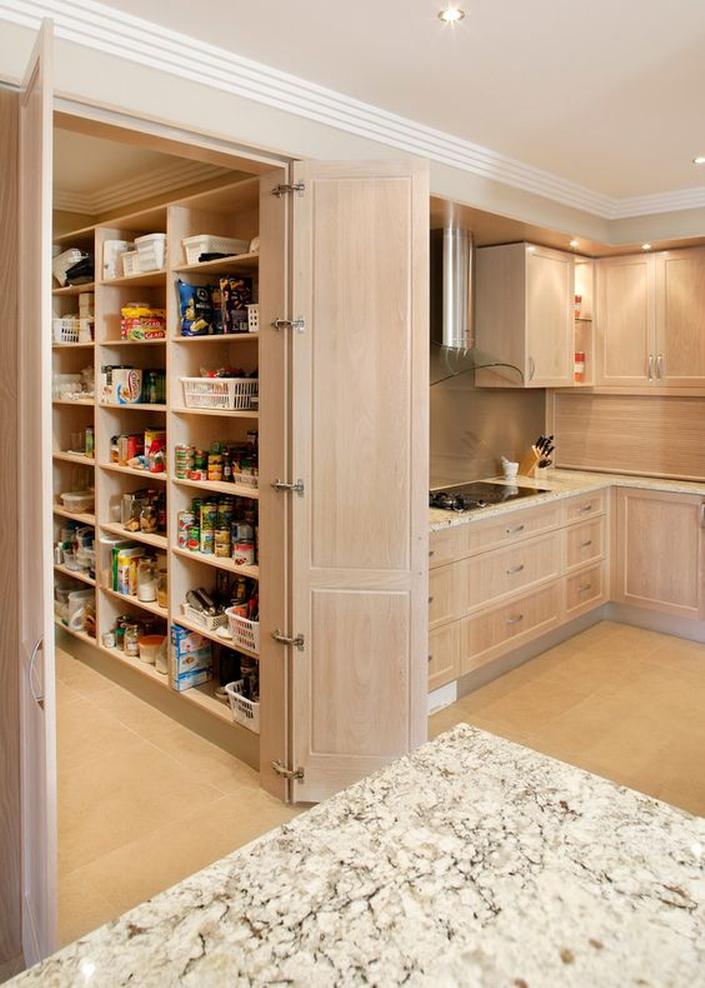
Not ready to break down walls? That’s completely fine. The spirit of a butler’s pantry a dedicated prep and staging zone can absolutely be achieved on a budget with a little creativity.
A standard coat closet (typically 24″ deep) is almost perfect for a small butler’s pantry. Remove the hanging rod, add adjustable shelves, install a few outlets, and you’ve got a functional staging area for under $1,000.
A large hutch, a vintage sideboard, or a couple of matching base cabinets from IKEA topped with a butcher block counter can create the feel of a built-in butler’s pantry without the price tag.
If you have an unused corner of your dining room or kitchen, transform it into a mini butler’s zone with a floating shelf, a small beverage fridge, and a tray for coffee supplies. It costs next to nothing and gives you the functionality you’re craving.
One of the most popular budget hacks? Find a solid wood cabinet at a thrift store or estate sale, paint it a beautiful deep color, swap the hardware, and style the shelves. No one will ever know it didn’t come from a custom cabinetmaker.
Does a Butler’s Pantry Actually Add Value to Your Home?
Short answer: yes, and often significantly so. Real estate agents consistently report that butler’s pantries are among the most-requested features in the $500,000+ home buyer market particularly among female buyers and buyers who entertain frequently.
A well-designed butler’s pantry signals that a home was built or renovated with intention. It communicates quality, storage capacity, and the kind of thoughtful design that serious buyers are willing to pay a premium for.
From a return-on-investment perspective, kitchen upgrades typically return 60–80% of their cost at resale. A butler’s pantry that’s thoughtfully integrated especially one with plumbing can return even higher, particularly in markets where larger homes with entertaining spaces are in demand.
Beyond dollars and cents, there’s also the daily value to consider. Homeowners who add butler’s pantries consistently report reduced kitchen stress, easier entertaining, and a significantly better relationship with their home. That’s hard to put a number on but it’s absolutely real.
CONCLUSION
The butler’s pantry isn’t just a design trend it’s a lifestyle upgrade. It’s the hidden room that gives your home more breathing room, your kitchen more function, and honestly, your daily life more joy. Whether you’re planning a full custom renovation or quietly converting a coat closet with a can of paint and some IKEA shelves, there’s a version of this space that’s perfect for your home and your budget.
What we love most about the butler’s pantry revival is that it’s not about having more it’s about having better. Better organization. Better flow. Better entertaining experiences. A better morning routine when the coffee station is set up exactly the way you like it, hidden away from the chaos of the main kitchen.
So go ahead pull up Pinterest, start a mood board, measure that hallway, and dream a little. Your butler’s pantry is waiting. And once you have it? You’ll wonder how you ever lived without it.
Have you recently added a butler’s pantry to your home, or are you in the planning stages? We’d love to hear your story in the comments below!