
Kitchen Trends 2026 INTERIOR DESIGN:
What’s Actually Worth Doing (And What to Skip)
“Your kitchen doesn’t need more. It needs better. Those are two very different shopping lists.”
Your kitchen is the most used room in your home. It’s also the most over-renovated, over-trended, and over-thought.
Every year, someone tells you to rip out your cabinets and start over. Buy new appliances. Go all-white. No wait ,go bold. No wait — go warm.
Here’s the truth: most kitchen trends aren’t worth your time or money. But a few of them? They genuinely change how a kitchen feels to be in — and how much your home is worth when you eventually sell it.
This guide covers exactly those. Four trends that are actually reshaping American kitchens in 2026, plus three fixes you can make this weekend that will do more for your kitchen than most renovations costing thousands.
No filler. No trends that will embarrass you in three years. Just what’s real, what works, and what you can actually use.
Before the trends — one shift worth understanding.
For years, American kitchens chased one thing: looks. White cabinets. Marble countertops. Everything photographed well, felt cold to live in, and showed every fingerprint within 48 hours.
In 2026, kitchen renovations are being driven by function, personalization, and smarter storage — a shift toward kitchens that blend style with intention, not just aesthetics. Homeowners are done decorating for the photo. They’re designing for the Tuesday morning when three people are making coffee, someone’s packing a lunch, and the dog is underfoot.
That shift is behind every trend on this list.
TREND 1.
Warm Wood Is Back. And This Time It’s Staying.
“A kitchen that looks like it grew somewhere is always more beautiful than one that looks like it was ordered online.”
The Problem It Solves:
Your kitchen feels cold, clinical, and oddly exhausting to spend time in.
Who it hits:
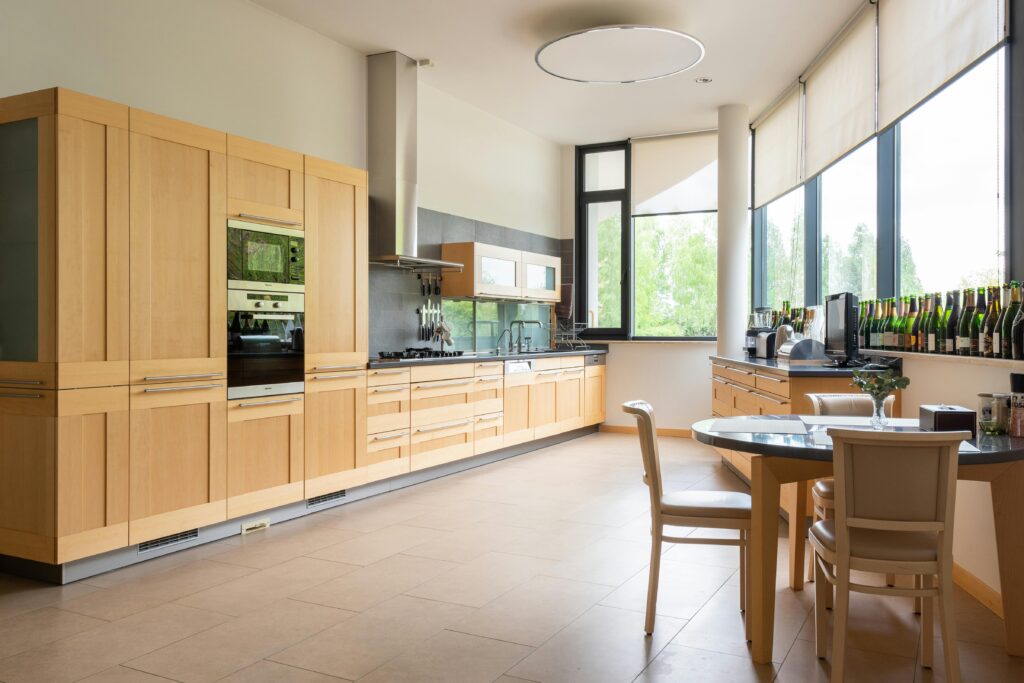
Wood cabinets now top the list, edging out white for the first time in years. Medium-toned woods lead this comeback, followed by lighter finishes — signaling a return to organic material preferences. People are done with the all-white kitchen that looks stunning in a listing photo and feels like a hospital cafeteria to actually cook in.
What it actually looks like IN 2026:
White oak is the most requested finish, followed by walnut for the contrast and depth it offers. Homeowners want to see the grain patterns and feel the texture the result is kitchens with genuine warmth that painted surfaces simply can’t match. Think natural, imperfect, alive. The grain is the point, not something to paint over.
How to use it without a full renovation:
You don’t need new cabinets to get this right. A warm wood kitchen island against painted perimeter cabinets is one of the most cost-effective ways to bring this trend into your home. Wood islands paired with painted cabinets add focal interest, while exposed floating shelves introduce organic texture without committing to full wood cabinetry. Start there. See how it feels. Your wallet will thank you.
What to avoid:
The espresso-stained dark wood of the early 2000s. That’s not what this trend is. It’s warm and natural — not dark and heavy. White oak, walnut, and light ash are the wood tones worth considering. Everything else is nostalgia for something nobody actually misses.
TREND 2.
Two-Tone Cabinets: Bold Below, Light Above
“Color is not a commitment. It’s a conversation. Start with one wall, one cabinet, one decision — and let the room talk back.”
The Problem It Solves:
You want a kitchen with personality, but you’re afraid of committing to color on every surface.
What’s happening:
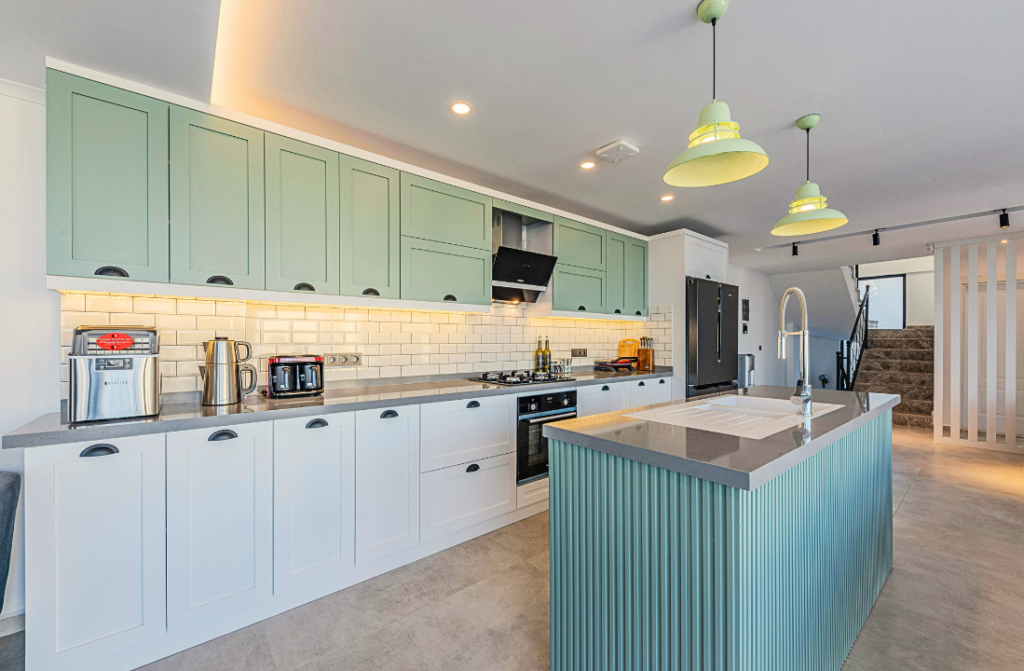
2026 brings bolder cabinetry choices and two-tone kitchen designs. Dark navy, forest green, or matte black paired with lighter upper cabinets or a white kitchen island creates depth, contrast, and real visual interest. The all-one-color kitchen whether all-white or all-gray is quietly on its way out.
What it actually looks likE:
Successful combinations pair warm wood with painted neutrals, or use a bold color forest green, navy, deep burgundy — on lower cabinets while keeping upper cabinets light and bright. Done right, a two-toned design adds dimension that single-color schemes simply can’t achieve. The upper cabinets stay airy and open. The lower cabinets ground the space and give it a point of view.
The color combinations worth trying right now:
Sherwin-Williams’ 2026 palette presents Sunbaked Hues (desert-sun warmth), Restorative Darks (deep auburn, plum-brown), and Foundational Neutrals running from white through near-black calm enough to run across a full wall of lower drawers without the room feeling overdone. If you’re nervous about color, start with sage green on your lower cabinets. It reads bold in a showroom and surprisingly calm in daily life.
What to avoid:
Choosing two colors that are too similar in tone — like light gray uppers and medium gray lowers. The effect disappears. The whole point of two-tone is contrast. If someone has to squint to see the difference, you’ve lost the plot.
TREND 3.
The Kitchen Island That Does Everything
“The best kitchen island isn’t the biggest one. It’s the one that knows exactly what it’s supposed to do — and does it every single day.”
The Problem It Solves:
Your room feels dark, Your kitchen has a beautiful island that exists entirely to collect mail and hold fruit you forget about., and closed-in — and you want it to breathe.
What’s happening:
More task-specific zones are being added beverage stations, coffee bars, baking areas, and snack stations — turning kitchens from one-size-fits-all layouts into purpose-driven spaces. The kitchen island in 2026 isn’t just a prep surface. It’s where you work, eat breakfast, charge devices, pour coffee, and occasionally do actual cooking.
What it actually looks likE:
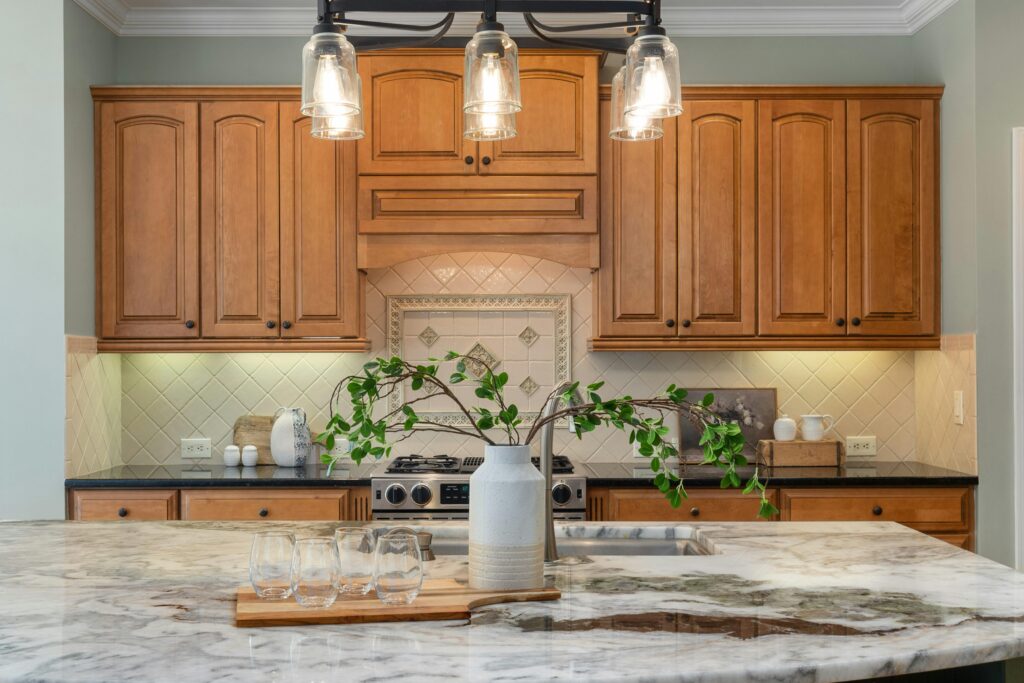
Kitchen islands are evolving into multi-functional hubs combining prep zones, storage, breakfast bars, and even remote workstations. Pull-out pantries, rotating corner baskets, and adjustable shelving systems redefine how usable a kitchen actually is. The best 2026 islands don’t look busier they look cleaner, because everything has a home and nothing is sitting out on the counter because there’s nowhere else to put it.
How to use it without building a new island:
You don’t need a full remodel. A dedicated coffee station on one end of your existing counter with the machine, the mugs, the beans, all in one intentional zone does the same thing a $15,000 island renovation does in terms of how your kitchen feels to use every morning. Zone your counter space by task. Cook zone. Coffee zone. Kid snack zone. The organization alone will change how your kitchen feels to be in.
What to avoid:
Choosing a countertop for your island that is identical to your perimeter countertops. In 2026, contrast is the move — a different color, a different material, or a different edge profile on the island tells the eye that this is a different surface doing a different job. It’s a small decision that makes a disproportionately large visual impact.
TREND 4.
Hidden Appliances and Clutter-Free Counters
“A clear counter isn’t empty. It’s ready. There’s a difference — and your kitchen knows it.”
The Problem It Solves:
Your kitchen looks like a showroom for small appliances you use twice a year.
What’s happening:
Panel-ready appliances that match surrounding cabinetry are gaining serious traction, the trend in 2026 is making your fridge and dishwasher effectively disappear into the kitchen’s visual flow. And it’s not just the big appliances. Open shelving, once a major trend, is declining sharply in favor of hidden storage zones and walk-in pantries homeowners now prefer clean, uncluttered aesthetics where the majority of kitchen items are discreetly tucked away
What it actually looks likE:
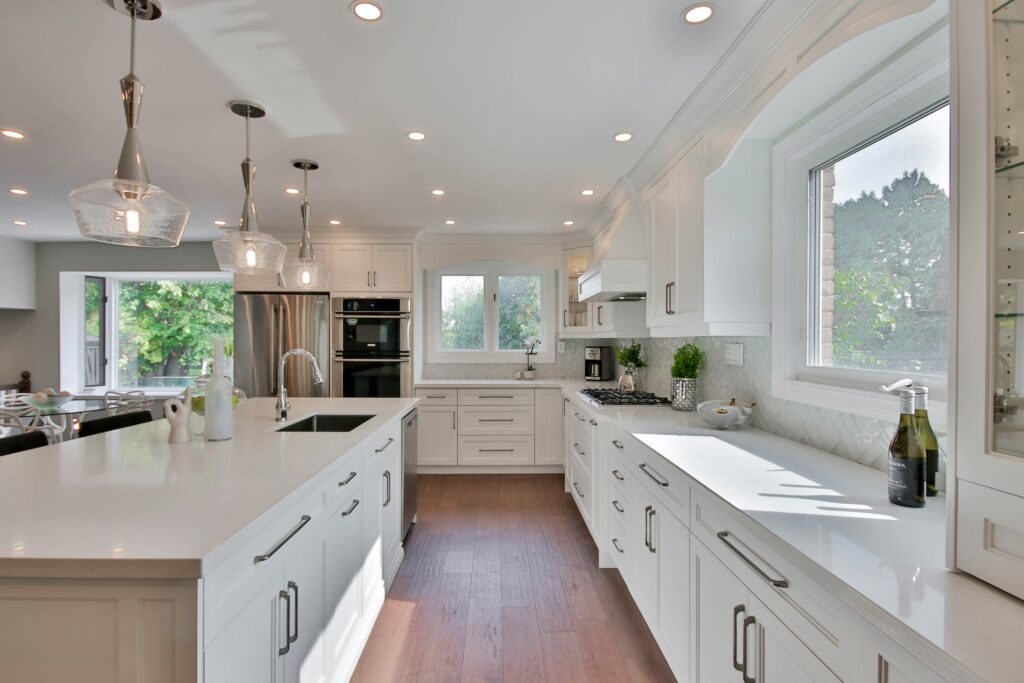
A kitchen where the first thing you notice isn’t the appliances it’s the space itself. Countertops clear enough to feel like a workspace, not a storage unit. Pantry cabinets, walk-in pantries, and butler’s pantries leading the way more than three-quarters of renovating homeowners are adding specialty storage features specifically to keep clutter out of sight.
How to use it without panel-ready appliances:
Panel-ready fridges are expensive. But the principle get things off your counter is free. Pick the three appliances you use every single day. Give those a permanent counter spot. Everything else goes in a cabinet. A toaster oven you use on Sundays does not deserve 18 inches of prime counter real estate every day of the week. This one habit shift will make your kitchen look bigger, cleaner, and more expensive without spending a dollar.
What to avoid:
Hiding everything and then leaving no personality in the room. A completely sterile kitchen with zero visible objects isn’t aspirational — it’s uncomfortable. Keep one or two things out intentionally: a beautiful olive oil bottle, a ceramic fruit bowl, a plant on the windowsill. The goal is curated, not empty.
3 Fixes That Work in Every Kitchen, Any Budget
Most American kitchens have overhead lighting and nothing else. The result is a flat, evenly lit space that looks fine and feels like a cafeteria. Interior cabinet lighting showcases glassware and creates a soft backdrop; hanging fixtures serve as focal points; backlighting creates visual depth and when combined with dimmable controls, these layers let you adjust the mood from bright and energizing for morning coffee prep to softer and more intimate for evening gatherings. Add under-cabinet lighting first. It’s the cheapest upgrade with the biggest visual return, and it actually makes the counter easier to work on. Then add a pendant or two above the island. Then put everything on a dimmer. That’s a $200 project that makes a $20,000 difference in how the kitchen feels at night.
Cabinet hardware is the jewelry of a kitchen. Bar pulls now dominate over knobs, most often in brushed nickel, followed by black or brushed gold. If your current hardware is builder-grade chrome knobs from 2009, swapping them out is a Saturday afternoon project that costs $150–$300 for a full kitchen and completely changes the room’s character. Pick one finish and commit to it across every cabinet and drawer. Mixing hardware finishes in a kitchen reads as indecision, not style. Consistency is what makes it look intentional.
Most American kitchen backsplashes are subway tile in white. Not because it’s the best choice because it’s the safe one. Backsplashes featuring fluted, ribbed, or concrete-effect panels are on the rise in 2026 these designs add a sculptural dimension that pairs beautifully with smooth countertops and matte cabinetry. If a full backsplash replacement isn’t in the budget, focus on the section directly behind the stove the “feature wall” of your kitchen. A 3-foot-wide stretch of interesting tile behind the range does more for your kitchen’s personality than redoing the entire backsplash in plain subway tile. Same budget, five times the impact.
CONCLUSION
“The kitchens people fall in love with aren’t the most expensive ones. They’re the most intentional ones — and intention costs nothing.”
Your kitchen doesn’t need to be rebuilt to feel like a 2026 kitchen.
Warm up the materials. Add a second cabinet color if you have the nerve. Create zones that actually match how you use the space. Hide what doesn’t need to be seen. Get the lighting right. Change the hardware. Make one bold move on the backsplash.
None of that requires a six-figure renovation. Most of it can be done on a weekend, a few weekends, or a thoughtful conversation with a contractor who doesn’t need to gut the whole room to make it feel new. The kitchens people fall in love with in 2026 aren’t the most expensive ones. They’re the most intentional ones — rooms where every decision was made on purpose, and it shows. That’s always been the real trend. It just took everyone a while to catch up.