
Mid Century Modern Living Room Ideas
That Make Every Space Feel Like a Dream
You know that feeling when you walk into someone’s living room and just… stop? Everything feels warm, intentional, and somehow both stylish and cozy at the same time. There’s a walnut coffee table, a low-slung sofa in a rich mustard yellow, and a sunburst clock on the wall. You don’t know exactly why it works it just does.
That, my friend, is the magic of a mid century modern living room.
And the best part? You don’t need a designer’s budget or a Pinterest-perfect house to get that feeling. Mid century modern design is one of the most beginner-friendly styles out there it’s built on clear principles, honest materials, and furniture that actually makes sense for real life. Whether you’re decorating from scratch or refreshing a space that feels a little blah, this guide is going to walk you through everything you need to know.

“Have nothing in your house that you do not know to be useful, or believe to be beautiful.” — William Morris
This style lives that quote every single day.
What Is Mid Century Modern Design?
Mid century modern (often shortened to MCM) is a design movement that emerged in the mid-1900s, roughly from the 1940s through the 1970s. It grew out of post-war optimism a sense that design could be both beautiful and functional, accessible to everyday people, not just the wealthy.
Think of it as the design world’s sweet spot between minimalism and warmth. It’s clean without being cold. It’s stylish without being fussy.
The style was shaped by iconic designers like Charles and Ray Eames, Florence Knoll, and Eero Saarinen — people who believed furniture should work with the human body and fit naturally into daily life. Their pieces are still widely reproduced and loved today, which tells you everything about how well this style has aged.
1.
The Foundation
Getting Your Furniture Right
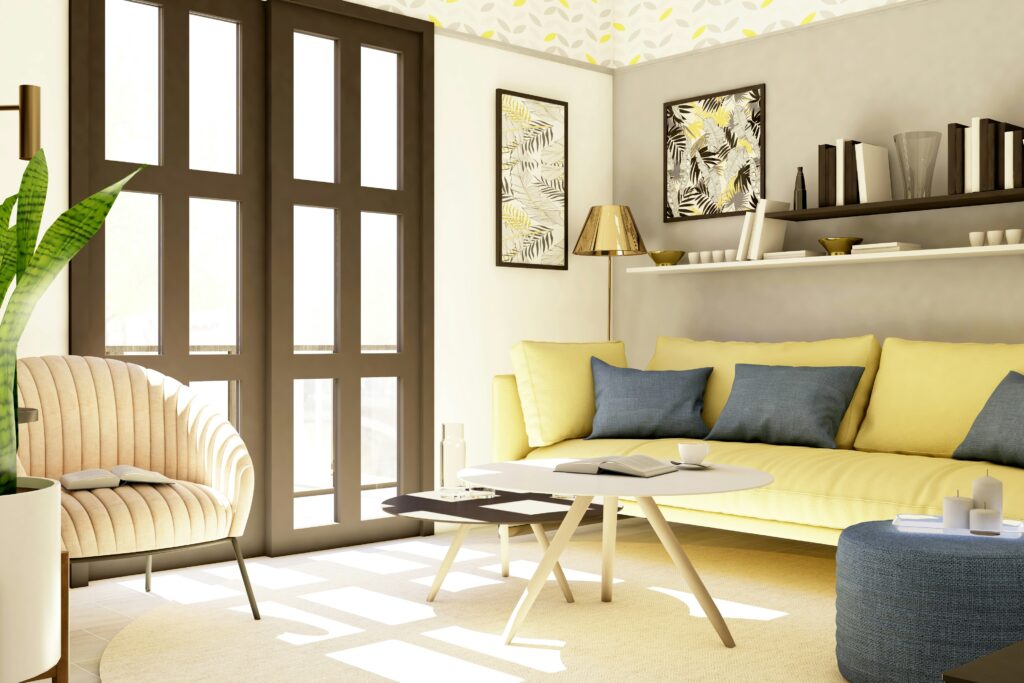
Furniture is the heart of a mid century modern living room, and it starts with the silhouette. MCM pieces sit low to the ground — sofas, chairs, and tables all hug the floor. That horizontal line creates a sense of calm and openness in a room.
Look for sofas with tapered wooden legs, clean lines, and no fussy detailing. A classic two or three-seater in a solid color think caramel, olive green, dusty teal, or warm grey sets the whole tone.
Pair it with an accent chair that has a little more personality. An Eames-style lounge chair, a tulip chair, or even a simple barrel chair in a contrasting fabric adds visual interest without chaos.

“Good design is making something intelligible and memorable. Great design is making something memorable and meaningful.” — Dieter Rams
Don’t try to match everything perfectly. MCM interiors have always celebrated a curated mix.
2.
Color Palette
Warm, Earthy, and Occasionally Bold
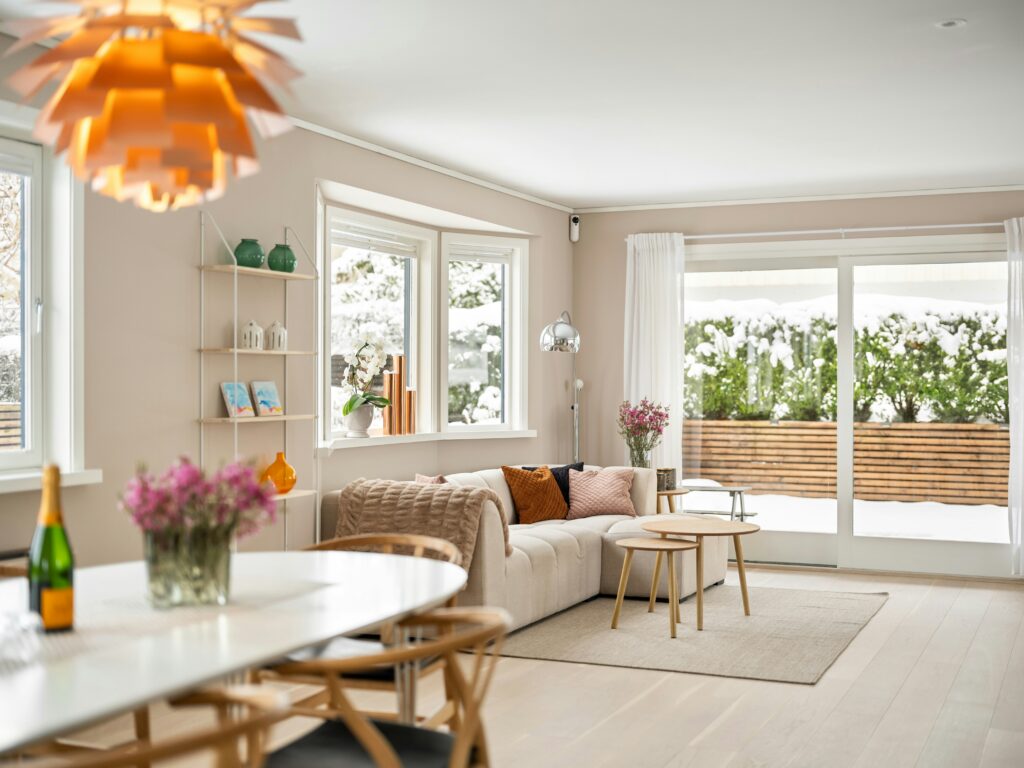
One of the biggest myths about mid century modern is that it’s all neutrals. It’s not. MCM color palettes are rich and intentional they just know when to be bold and when to hold back.
Your base colors should be warm and grounding: camel, cream, warm white, warm grey, or soft tan. These go on your walls and larger furniture pieces and create the calm backdrop everything else sits against.
Then you bring in the color through accent pieces. Terracotta, mustard yellow, burnt orange, olive green, and teal were all signature MCM colors and they still feel incredibly fresh today. A mustard throw pillow, an orange ceramic vase, or a teal accent chair can transform the entire energy of a room.
“Color is a power which directly influences the soul.” — Wassily Kandinsky
Keep it to two or three accent colors maximum. More than that and the palette starts to compete with itself.
3.
Materials
That Make the Room Feel Alive
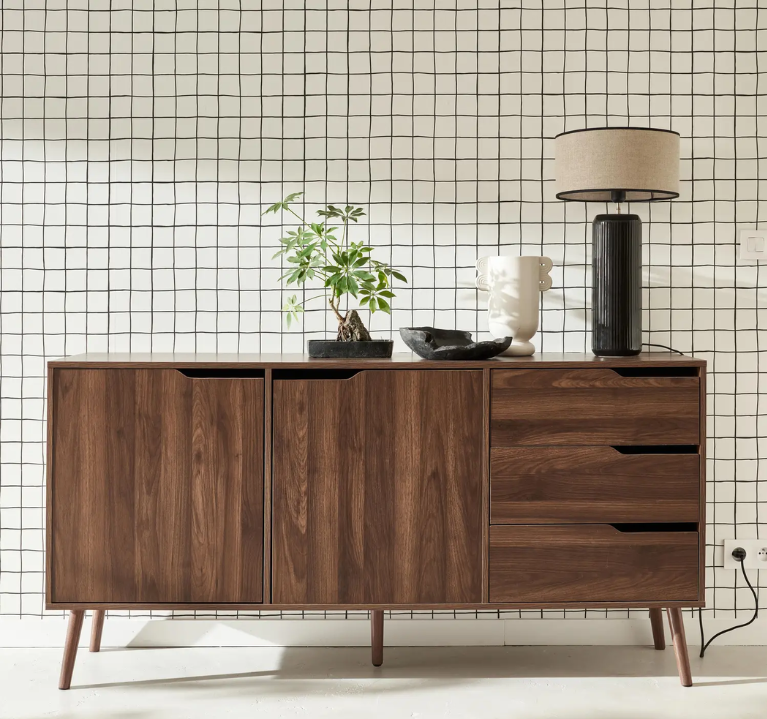
Mid century modern design has a deep love for natural materials and using them is the fastest way to make a room feel authentically MCM.
Walnut wood is the star. It shows up in coffee tables, sideboards, shelving, and lamp bases. Its warm brown tone plays beautifully against the earthy color palette. If real walnut is out of budget, walnut veneer finishes are widely available and look just as good in most spaces.
Beyond wood, lean into rattan, leather, linen, and wool. A rattan pendant light above a seating area adds that organic warmth. A leather ottoman doubles as storage and seating. Linen throw cushions bring texture without pattern overload.
“The details are not the details. They make the design.” — Charles Eames
Avoid too much plastic or chrome those materials can push the look into cold and corporate territory fast.
4.
Lighting
Lighting That Sets the Mood
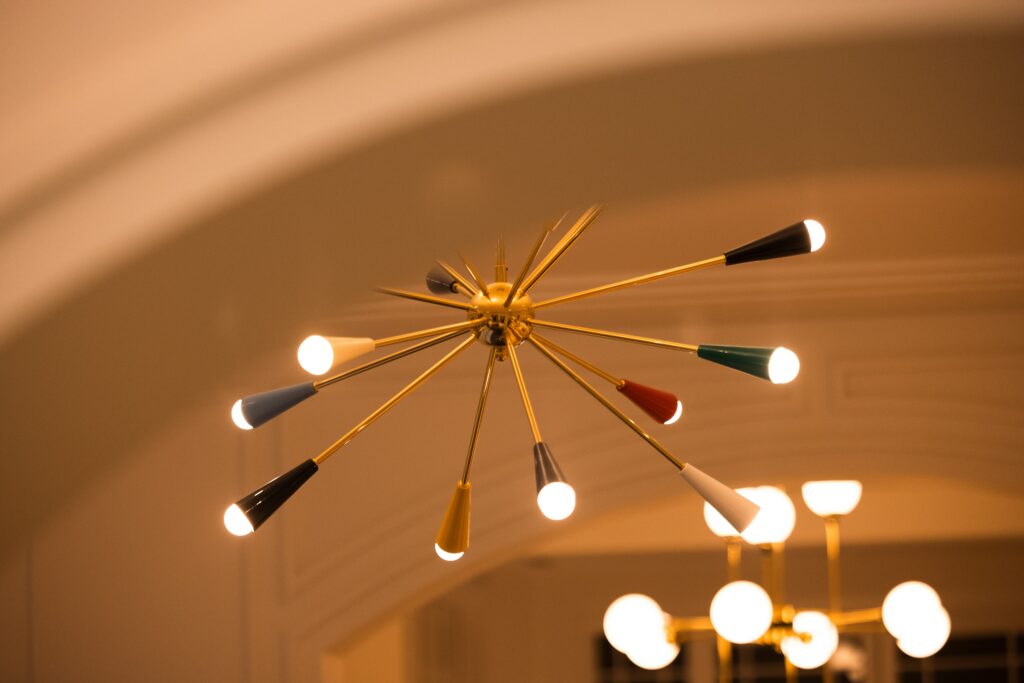
Lighting in a mid century modern living room is more than practical it’s architectural. The right light fixture becomes a sculptural element that adds personality to the whole space.
Go for statement pendant lights with organic shapes sputnik chandeliers, globe pendants in frosted glass, or dome shades in metal with a brushed brass finish. These are all deeply MCM in spirit and still incredibly popular.
For floor lamps, look for arc styles with a sculptural base, or the classic tripod lamp in walnut or black metal. Table lamps with ceramic bases in earthy tones are another beautiful option.
Under-cabinet LED strips are a small detail that makes a huge everyday difference. They illuminate your prep zone, make everything look more intentional, and create that warm, cozy glow you see in magazine kitchens.
“Light is the first element of design; without it there is no color, form, or texture.” — Frank Lloyd Wright
Layer your lighting overhead, floor, and table so the room can shift from energetic to cozy depending on the time of day.
5.
Rugs and Textiles
Where Comfort Meets Style
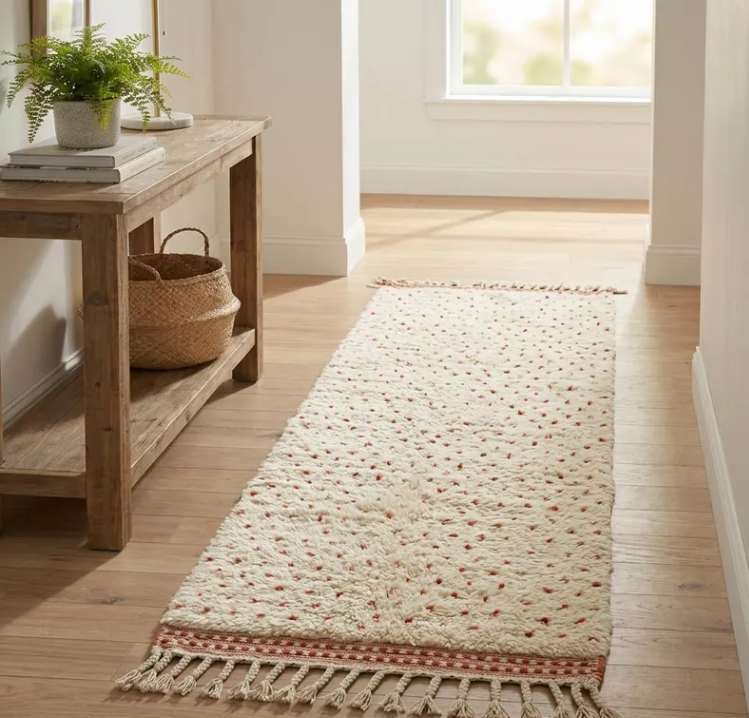
A mid century modern living room without a great rug is like a great outfit without the shoes. The rug anchors the seating area and pulls all your colors and materials together.
For MCM interiors, geometric patterns are your best friend think abstract diamonds, simple stripes, or starburst shapes in two or three of your accent colors. Alternatively, a solid-color wool rug in a warm tone (rust, olive, caramel) keeps things grounded and lets your furniture do the talking.
Size matters enormously here. Go bigger than you think you need ideally, all your main furniture legs should sit on or just off the edge of the rug. A too-small rug is one of the fastest ways to make a well-decorated room look unfinished.
“A room without a rug is like a face without a smile.” — attributed to various interior designers
Layer in textiles through throw blankets and cushions mix linen, wool, and even a little velvet for richness.
6.
The Art of Styling Surfaces
Less is always more
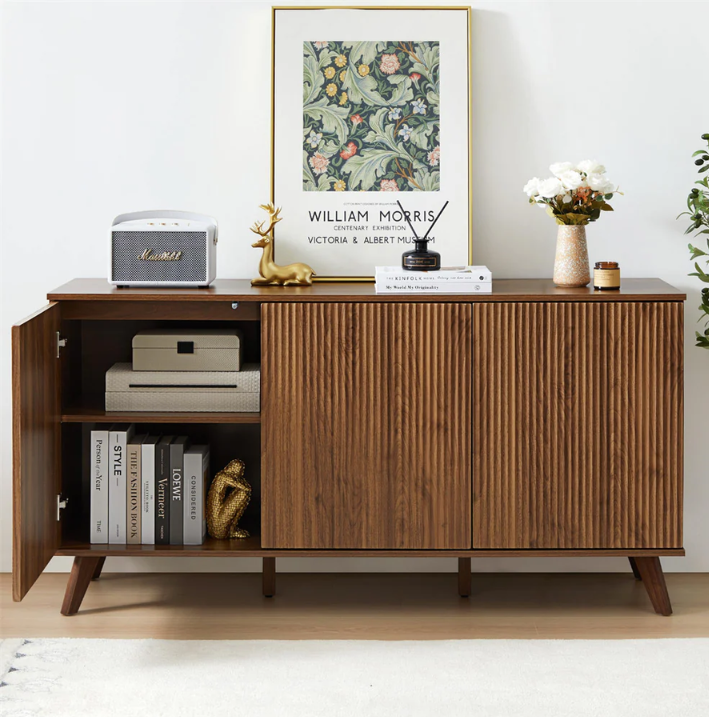
In a mid century modern living room, your surfaces coffee tables, sideboards, shelving — do a lot of the storytelling. But restraint is everything here.
Less is genuinely more. Pick three to five objects for a surface and arrange them in an intentional cluster. A stack of books, a ceramic bowl, a small sculptural object, and a single plant is more powerful than a shelf stuffed with knick-knacks.
Houseplants are a non-negotiable MCM element. A fiddle leaf fig in a terracotta pot, a monstera in a woven basket, or a row of small succulents on a shelf all feel completely at home in this aesthetic.
Art in the kitchen is still underrated. A small framed print near the coffee station, a handmade ceramic on open shelving, or even a beautiful cookbook displayed cover-out. These personal touches are what make guests say “this kitchen feels so you.”
“Simplicity is the ultimate sophistication.” — Leonardo da Vinci
When in doubt, edit. Take one thing away and see if the surface looks better. It usually does.
Pro Tips You Can Use Right Now
Common Mistakes to Avoid
CONCLUSION
A mid century modern living room isn’t just a style it’s a feeling. It’s the warmth of walnut wood in afternoon light. It’s the quiet confidence of a room that isn’t trying too hard. It’s the everyday joy of sitting in a space that feels genuinely like you.
You don’t need to do it all at once, and you don’t need a huge budget. Start with one piece you love, build slowly, and trust your instincts. The beauty of MCM is that it rewards personal curation over perfection.
Your living room is waiting to become your favorite place in the house.