
Modern Living Room Designs:
The Complete Guide – Stop Decorating. Start Designing.
Most living rooms have the same problem.

Not too little money. Not too little space. Too little direction.
You spent real money on furniture. You followed the trends. You watched the YouTube videos and scrolled Pinterest until your eyes glazed over. And yet every time you walk into your living room, something feels off. You can’t name it. You just feel it.
That feeling has a name: visual disconnect. That’s not a budget problem. That’s a design language problem. And this guide fixes it.
Whether you’re in a Chicago apartment, a London terrace, a Sydney suburb, or a rented flat you can’t even paint — these principles work everywhere. Because good design isn’t about your postcode. It’s about understanding why a room feels the way it feels.
Before styles, before colors, before shopping- one rule:
1- Every room needs one visual anchor — the first thing your eye lands on when you walk in.
2- Furniture must be scaled to the room, A statement sofa. A bold piece of art. A dramatic light fixture.
3- Color must do a job — not just look pretty in isolation.
(Not 47. Four. The ones real people actually live in.)
01 Warm Minimalism (Japandi)
02 Mid-Century Modern
03 Coastal Modern
04 Modern Maximalism
✦ Universal Mistakes
1.
Warm Minimalism
“Everything minimalism promised — but this time, you’ll actually want to sit in it.”
The Problem It Solves:
Your home feels chaotic and you don’t know where to start.
Who it hits:
The person who screenshots clean, airy rooms on Pinterest but finds their own home exhausting to be in. Works in a London flat, a New York studio, a Melbourne apartment — anywhere space is tight and calm is currency.
What it actually looks like:
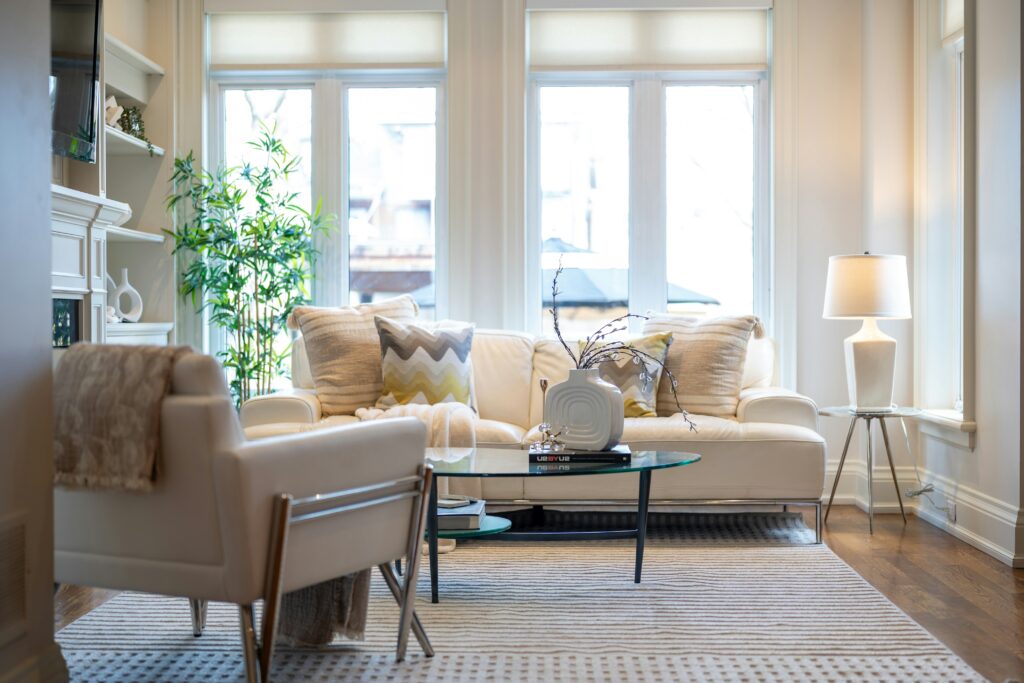
Light wood tones. Linen textures. One large plant in the corner. Soft off-white walls — not stark white, never stark white. Furniture that sits low and feels grounded. A room where every single thing has a reason to be there.
The moves that make it work:
The mistake that kills it:
Buying “minimal-looking” furniture and then filling every shelf, surface, and corner anyway. That’s just expensive clutter. Minimalism is an editing habit, not a furniture style.
2.
Mid-Century Modern
“The most timeless look in homes — clean lines, warm wood, shapes that never stopped being beautiful.”
The Problem It Solves:
You want a put-together room that won’t look embarrassing in five years.
Who it hits:
Everyone from a homeowner in Texas to a flat owner in Manchester. MCM has been the most enduringly popular style in both the US and UK for 60+ years — because its proportions and natural materials don’t age. Trends expire. Good bones don’t.
What it actually looks likE:
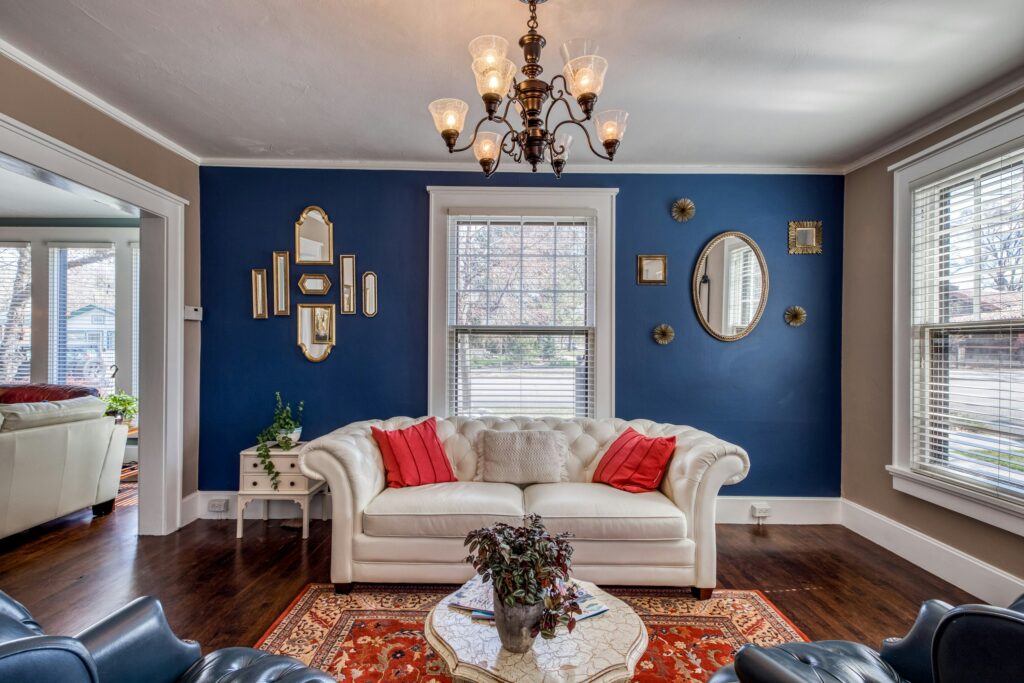
Tapered legs on everything. Warm walnut wood. One curved accent piece — a round coffee table, an organic-shaped mirror, an Eames-era lounge chair — among otherwise straight lines. Abstract art on the walls. Colours that feel like autumn: mustard, rust, teal, warm cream.
The moves that make it work:
The mistake that kills it:
Buying MCM-inspired furniture at the wrong scale. Many high-street and big-box stores copy the aesthetic but inflate the proportions — sofas that are too deep, coffee tables that are too low. The result looks almost right and feels completely wrong. Always measure before you buy.
3.
Coastal Modern
“The feeling of a beach house — without a single anchor, seashell, or piece of driftwood art.”
The Problem It Solves:
Your room feels dark, heavy, and closed-in — and you want it to breathe.
Who it hits:
Particularly strong in warm climates — California, Florida, coastal Australia, southern Spain — but equally relevant in grey-sky countries like the UK where people crave lightness even more because they get so little of it outdoors.
What it actually looks likE:
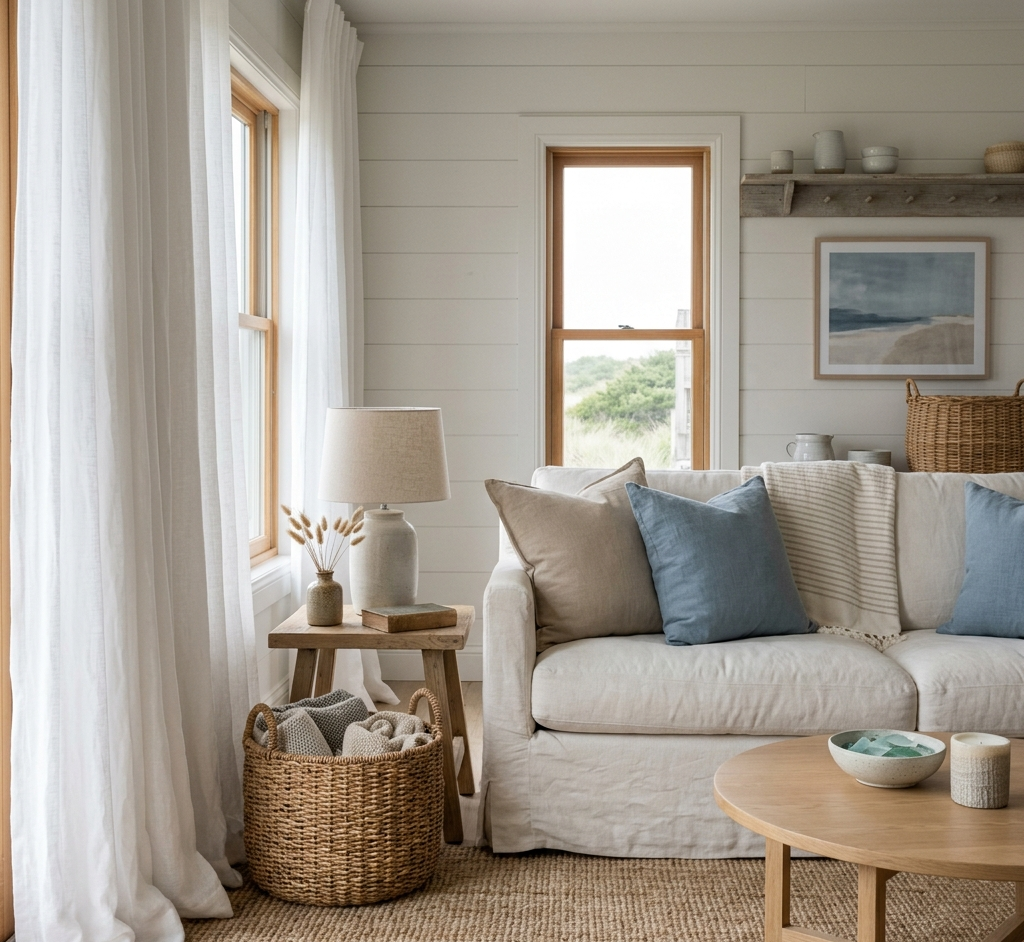
Sheer linen curtains pooling on the floor. A jute or sisal rug. A slipcovered sofa in warm white that looks like you could throw it in the wash (and probably can). Woven rattan baskets. Soft, dusty blues and sandy neutrals. A room that feels like exhaling.
The moves that make it work:
Palette: soft, not saturated. Dusty blue, not royal blue. Warm sand, not yellow. Pale sage, not lime. The moment you reach for a saturated ocean blue, you’ve crossed into nautical — which is a completely different (and much more dated) aesthetic.
The mistake that kills it:
Going nautical instead of coastal. Navy stripes, anchor motifs, rope details, lighthouse lamps — that’s a souvenir shop, not a modern home. Modern coastal should feel like a beautiful life near water. Not a literal painting of one.
4.
Modern Maximalism
“More of everything — but with intention, intelligence, and a color story that holds it all together.”
The Problem It Solves:
You have things you love and you’re tired of being told to hide them.
Who it hits:
The collector. The traveller who brings things home. The person with inherited furniture and strong opinions. Maximalism has a long tradition in both American and British interiors — the British especially have a deep cultural relationship with “more,” from country house libraries to London townhouses stacked with art and books.
What it actually looks likE:
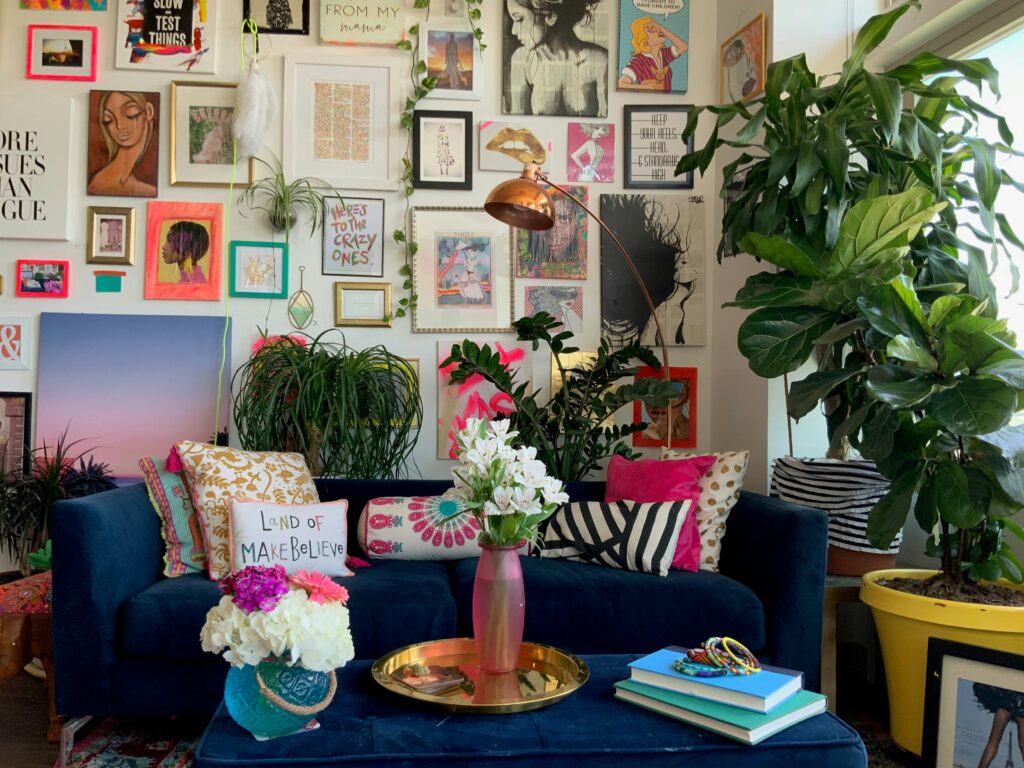
Walls covered in art. Bookshelves that actually have books on them. Pattern on pattern — but with a logic underneath. A room that looks like it took years to build, because it did.
The moves that make it work:
The mistake that kills it:
Confusing maximalism with accumulation. A truly great maximalist room is edited as ruthlessly as a minimalist one — it just keeps more of what passes the test. If you add something, something else has to justify why it stays.
The 3 Fixes That Work in Every Style, Every Country, Every Budget
This single mistake makes more living rooms look cheap than any other. All front legs of every seating piece should sit on the rug. If only the coffee table is on it — too small. Go up a size. Every time.
Center of any artwork: 57–60 inches from the floor. That’s eye level. That’s where it belongs. If you’re tilting your head back to see it, bring it down. This costs nothing and changes everything.
One overhead light = waiting room. Layer three types: overhead (ambient), a floor or table lamp (task), and something accent — a light inside a bookcase, a picture light above art. Put everything on a dimmer. A dimmed, layered room at 7pm is a completely different space from the same room at full overhead fluorescent. It’s the cheapest luxury upgrade you’ll ever make.
Where to Start Tomorrow
Don’t try to do everything at once. Pick the one thing in your current living room that bothers you most.
The rug that’s too small. The art that’s hanging too high. The sofa pushed flat against the wall. The room that has no focal point and therefore no personality.
Fix that one thing first.
Good design isn’t a room you finish. It’s a room you keep getting closer to. Every right decision makes the next one easier.
Start there.
CONCLUSION
Here’s what nobody tells you when you start decorating:
You don’t need a bigger budget. You need a clearer eye.
The most beautifully designed living rooms in the world — in Manhattan penthouses, London townhouses, Sydney beach cottages — aren’t beautiful because of what was spent. They’re beautiful because of what was decided. Every piece belongs. Every choice connects to the next one. Nothing is there by accident. That’s it.
That’s the whole secret.
You’ve just read about four styles, three universal fixes, and one rule that holds all of it together. But here’s the thing about design knowledge — reading it isn’t the same as using it. The people who end up with rooms they genuinely love aren’t the ones who knew the most. They’re the ones who started.
So here’s your actual next step:
Walk into your living room right now. Not tomorrow. Right now.
Look at it like a stranger would. What’s the first thing your eye goes to? Is that what you want it to go to? Is there one clear focal point — or is everything competing for attention at the same volume?
That one question will tell you more about what your room needs than any mood board, any shopping trip, any style quiz ever could.
Fix that one thing. Then fix the next.
A great living room isn’t built in a weekend. It’s built in decisions — small ones, patient ones, made with intention rather than impulse. You don’t have to get it all right at once. You just have to keep getting it more right.
That’s the whole game. And now you know how to play it.