
storage ideas for small spaces
By Anna Grace | 6 July 2026
Storage Ideas for Small Spaces to Stop Living in Chaos
My first apartment was 410 square feet, and I learned fast that “cozy” is just real estate code for “you own too many shoes.” I spent the first three months tripping over boxes, cursing my past self for buying a stand mixer I used twice a year, and wondering why nobody warns you that small-space living turns you into an amateur architect overnight. Eventually I figured out a system, and it didn’t involve throwing away everything I owned or moving into a tent.
Storage ideas for small spaces aren’t about cramming more boxes into less room. They’re about rethinking how every inch of your home can pull double duty. Whether you’re in a studio, a tiny apartment, or a house where the “extra bedroom” is really just a closet with delusions of grandeur, the right strategies can make your space feel bigger without knocking down a single wall.
This guide walks through five practical shifts: using vertical space properly, choosing furniture that works harder, hunting down forgotten corners, building decluttering habits that actually stick, and tightening up the two rooms that cause the most chaos the kitchen and the closet. None of it requires a renovation budget or a moving truck. It just requires looking at your space differently.
Rethink Vertical Space Before You Rent a Storage Unit
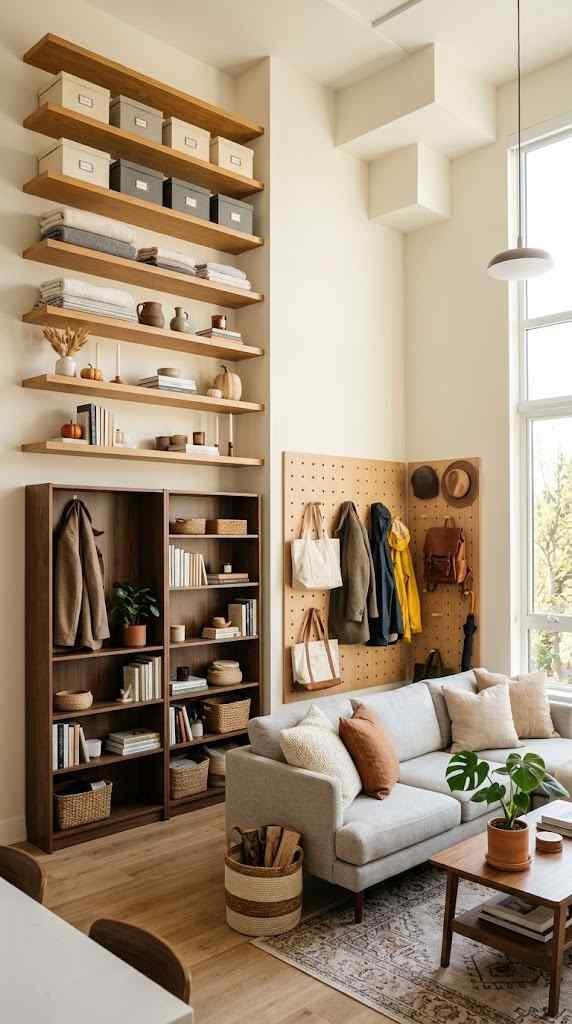
Most people stare at their floor space and panic. But your walls are basically unused real estate just sitting there, judging you. Ceilings can go up 8, 9, sometimes 10 feet, and most of us only use the bottom 5 feet of that for anything useful. That’s a lot of wasted air, and air doesn’t hold your winter coats.
Floating shelves are the obvious starting point, but don’t stop at eye level. Install shelving up near the ceiling for items you don’t need daily think seasonal decor, extra linens, or that fondue set you swear you’ll use someday. Tall, narrow bookcases do more work than short, wide ones because they claim height instead of floor footprint. If you’ve got a bookcase that’s wider than it is tall, you’re basically storing horizontally when you should be storing vertically, and that’s costing you real square footage.
Command hooks and wall-mounted baskets deserve more credit than they get, too. A single row of hooks near the entryway can hold bags, umbrellas, and jackets that would otherwise end up in a heap by the door. Vertical storage isn’t just about shelves it’s about training your eye to look up before it looks for more floor space.
A few vertical wins worth trying:
● Wall-mounted pegboards in kitchens or craft rooms keep tools and utensils visible and off counters
● Over-the-door organizers turn wasted door space into shoe, pantry, or bathroom storage
● Ladder shelves lean against a wall and add visual height without needing anchors
● Hanging pot racks free up cabinet space in tiny kitchens
● Tall garment racks with a shelf on top handle both hanging clothes and folded items in one footprint
Here’s a question worth asking yourself: how much of your clutter is actually just stuff with nowhere assigned to live? Vertical storage gives everything an address, and clutter tends to behave better when it has one. It’s a small mindset shift, but it changes how you shop for organizers going forward you start thinking in height instead of just width and depth.
Choose Furniture That Earns Its Keep
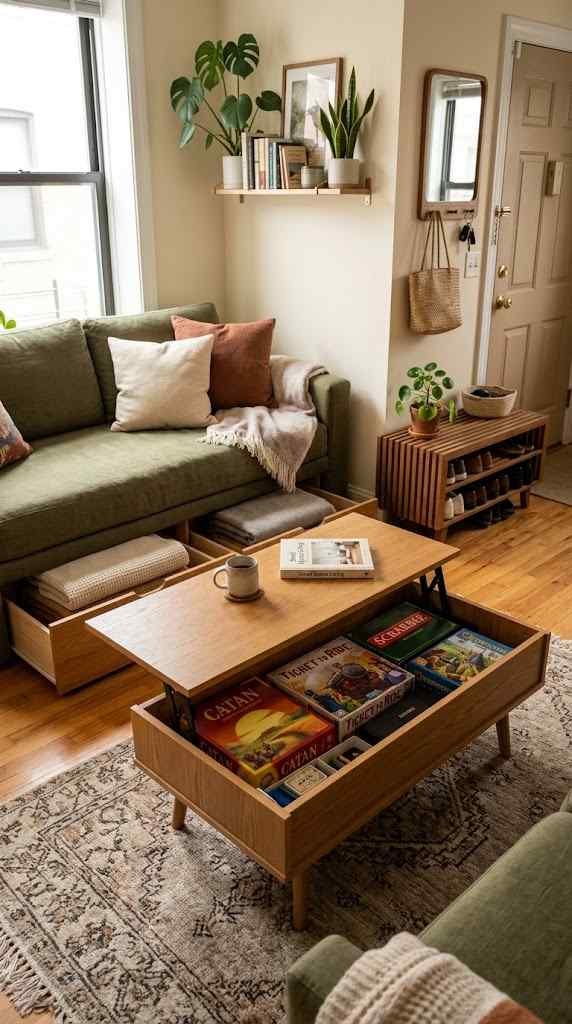
Furniture in a small space shouldn’t just sit there looking pretty. It should work a second job, maybe even a third. A bed, sofa, or ottoman that only does one thing is a missed opportunity in tight quarters. This is probably the single biggest mindset shift for anyone furnishing a small home, because most furniture is designed for houses with room to spare.
Storage beds with drawers underneath or lift-up frames can swallow an entire season’s worth of clothing. I switched to one after my third time shoving a suitcase full of sweaters under my bed like some kind of fabric hostage situation. Ottomans with hollow interiors hide blankets, remotes, or the emergency snack stash nobody needs to know about. Coffee tables with a lower shelf or hidden compartment do something similar for the living room, holding board games, coasters, or the remote control graveyard every household seems to accumulate.
Even dining furniture can pull double duty. A bench with a lift-top seat at the table gives you extra storage for placemats and linens instead of taking up a drawer somewhere else. Drop-leaf tables fold down against the wall when not in use, freeing up floor space for anything from yoga mats to a toddler’s dance recital.
Consider these multi-taskers:
● Storage benches at the entryway hold shoes and double as seating
● Nesting tables collapse down to almost nothing when you don’t need extra surface area
● Sofa beds with storage compartments handle guests and gear in one piece
● Kitchen islands on wheels add prep space and cabinet storage, then roll away when not needed
● Wall-mounted desks that fold flat turn a home office corner back into open floor space when the workday ends
Furniture shopping for small spaces means asking one extra question before buying: what else can this do? If the answer is “nothing,” keep looking. IMO, that single mindset shift saves more square footage than any organizing gadget ever could, and it usually saves money too, since one multi-purpose piece often replaces two or three single-purpose ones.
Hunt Down the Forgotten Corners
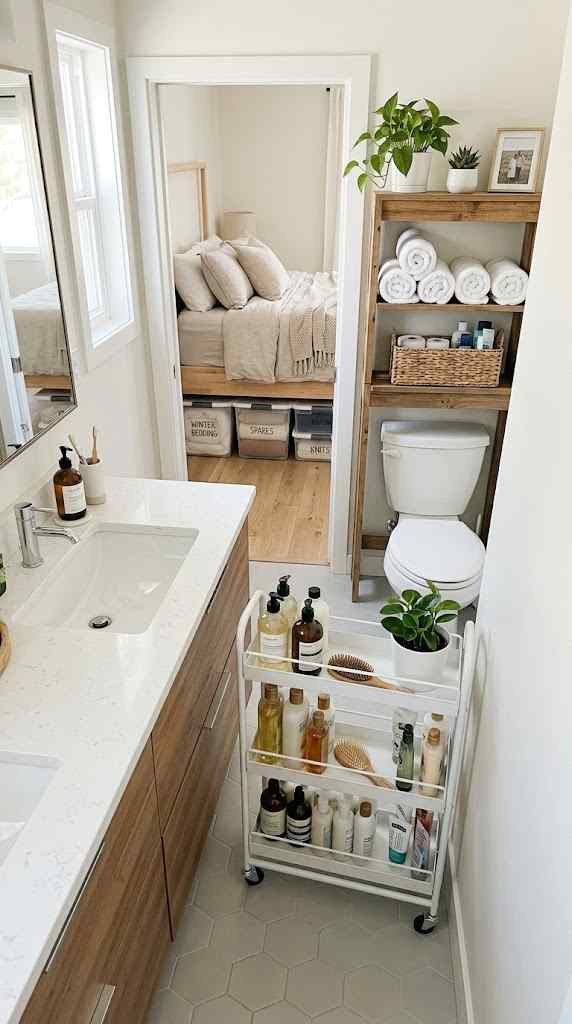
Every small home has dead zones spots so awkward or overlooked that they basically become no man’s land. Under the stairs, behind doors, above the fridge, that weird gap between the washer and the wall. These spaces are goldmines if you’re willing to get a little creative, and most people walk past them for months without noticing they’re even there.
Under-bed storage is the classic move, but plenty of people still waste it on random junk instead of purposeful bins. Clear, labeled containers work better than random shoeboxes because you can actually see what’s inside without digging through a mystery pile at midnight. Stair drawers, if you’ve got a staircase, convert wasted triangular space into pull-out storage for shoes, books, or pantry items. It’s the kind of renovation that sounds fancy but is really just a carpenter recognizing empty space for what it is.
Bathrooms deserve special mention here. That gap between your toilet and the wall? A slim rolling cart fits right in and holds toiletries, towels, or cleaning supplies. Over-the-toilet shelving units add storage without touching your floor space at all. Even the inside of a shower curtain can hide a mesh pocket organizer for bath toys or extra soap, which is a small trick but a genuinely useful one if your bathroom is on the smaller side.
Entryways are another commonly wasted zone. That narrow strip of wall behind a front door is usually empty, but a slim hook rack or a shallow shelf can turn it into a landing zone for keys, mail, and sunglasses. Small changes like this mean you stop hunting for your keys every morning, which honestly might be worth it on its own.
Garages and hallway closets often hide the biggest opportunities of all, mostly because people stop seeing them as “real” rooms and just let stuff accumulate there. A pegboard wall in a garage can replace three or four plastic bins of loose tools. Slim hallway closets, the kind that are too narrow for a full shelving unit, usually still have room for a shallow shoe rack or a stack of over-the-door hooks if you measure carefully before buying anything.
A few more corners worth reclaiming:
● The space above kitchen cabinets for rarely-used appliances or decorative storage baskets
● Inside cabinet doors for spice racks, lids, or cleaning supply organizers
● Closet corners with corner shelving units instead of leaving them empty
● The area under a console table for baskets holding mail, keys, or shoes
● The side of a refrigerator for magnetic spice tins or a slim pull-out cart
Once you start hunting for these gaps, you can’t stop seeing them everywhere. My partner thinks I’ve developed a sixth sense for dead space, and honestly, I’m not going to argue with that assessment. It becomes a habit, almost a game, to look at any room and ask what’s not being used yet.
Make Decluttering a Habit, Not a Once-a-Year Panic
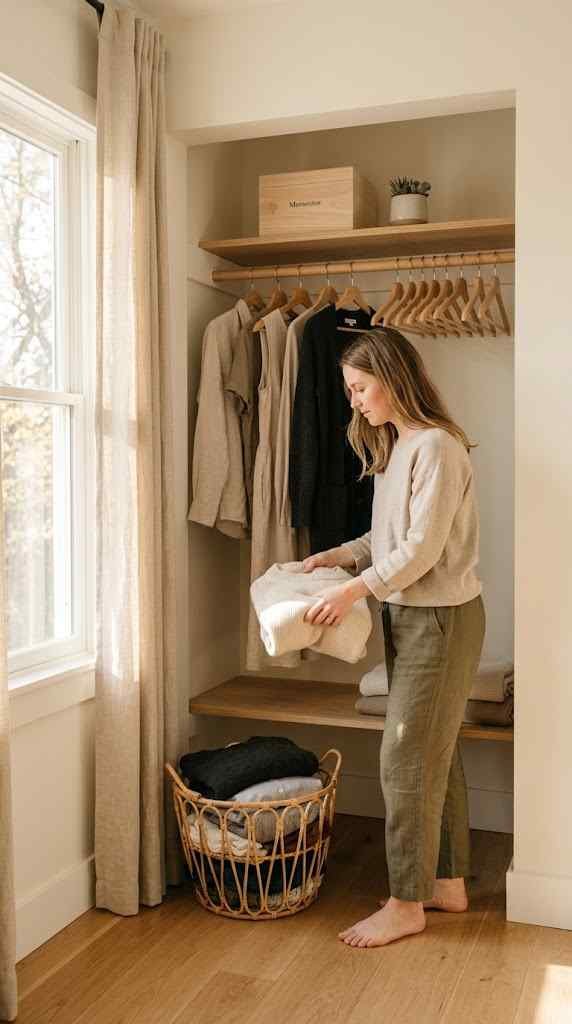
No storage system survives a household that never lets anything go. You can buy every bin, basket, and shelf on the market, and clutter will still win if you don’t build habits around what stays and what goes. This is the part nobody wants to hear because it involves actual decision-making instead of just buying stuff, and buying stuff is a lot more fun than deciding what to get rid of.
The one-in-one-out rule works well for small spaces: when something new comes in, something old goes out. It sounds strict, but it keeps your storage from slowly filling back up the way it always does. Seasonal check-ins, maybe every three months, force you to reassess what’s actually earning its shelf space versus what’s just there out of habit. Clothes are usually the biggest offender here, since it’s easy to hang onto things “just in case” a specific event or season comes back around.
Digital clutter counts too, even though it’s easy to forget about since it doesn’t physically take up room. Old receipts, warranty papers, and manuals pile up in drawers when most of that information exists online anyway. Scanning a handful of documents and tossing the paper originals can free up an entire drawer that was previously dedicated to things you’ll never actually read again.
Sentimental items are usually the hardest category, and no article about decluttering should pretend otherwise. Nobody wants advice telling them to toss a childhood blanket or a stack of old letters, and honestly, you shouldn’t have to. The trick is picking a single, defined container one bin, one shelf, one box for sentimental keepsakes, and letting that box’s size be the limit. Once it’s full, something has to be genuinely special to earn a spot inside, which keeps sentimental clutter from quietly spreading into every drawer in the house.
Try building these habits into your routine:
● Do a five-minute nightly reset where everything goes back to its designated spot
● Set a quarterly “does this still fit my life” review for clothes, gadgets, and decor
● Donate or sell items within a week of deciding they’re no longer needed, instead of letting them pile up
● Keep a donation box in a closet so decluttering happens gradually, not all at once
● Scan important paper documents and shred the originals once they’re backed up
Is this glamorous? Not even a little. But consistent small habits beat one dramatic decluttering weekend every single time. I tried the dramatic weekend approach once, ended up with seven garbage bags and a minor existential crisis, and learned my lesson. Small, steady effort works better than the occasional heroic purge, mostly because it doesn’t leave you burned out on organizing for the next six months.
Get Smart With Small-Space Kitchen and Closet Systems
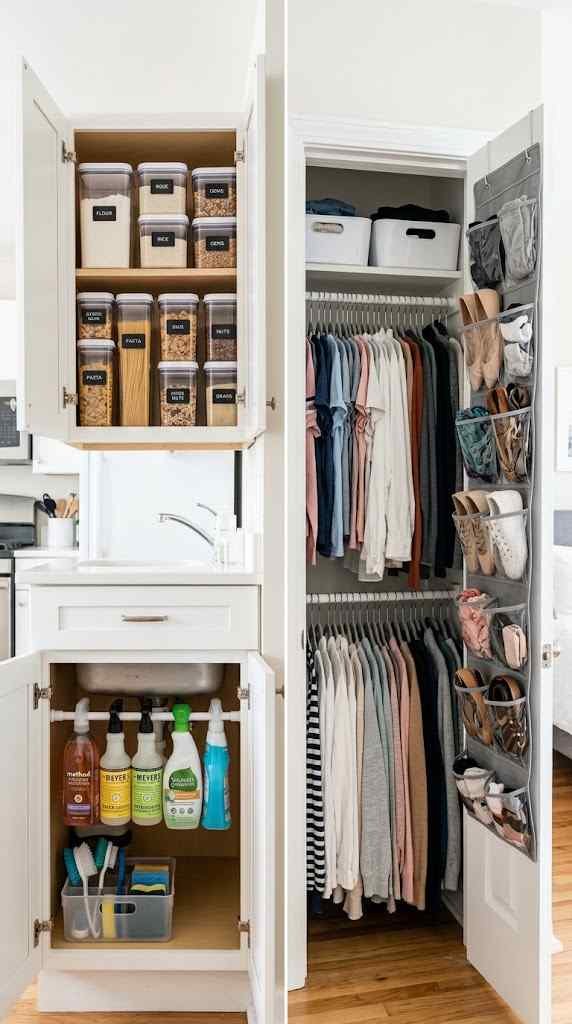
Kitchens and closets tend to be the two rooms where small-space chaos hits hardest. There’s just never enough room for everything you actually use, and generic storage solutions don’t always fit oddly shaped cabinets or narrow closets. These are also the rooms people give up on fastest, which is a shame because they respond really well to a few targeted fixes.
In the kitchen, drawer dividers stop utensils from turning into a tangled mess every time you open a drawer. Stackable bins in cabinets double your usable shelf space by creating a second tier where there used to be wasted air. Magnetic strips on the inside of cabinet doors hold spice jars or small tools without eating counter space. Even something as simple as a tension rod under the sink, mounted horizontally, gives you a spot to hang spray bottles by their trigger handles instead of letting them tip over every time you open the door.
Closets benefit from a similar layered approach. Slim velvet hangers take up noticeably less room than bulky plastic ones, which sounds small but adds up fast when you’re working with limited rod space swapping out a closet’s worth of hangers can genuinely add several inches of usable rod length. Shoe organizers that hang on the back of a closet door can hold way more than shoes, too think scarves, belts, or cleaning supplies. Adding a second, lower rod underneath your existing one effectively doubles your hanging space for shirts and folded pants, since most closets are built with way more vertical clearance than a single rod ever uses.
Quick wins for both spaces:
Clear stackable bins for pantry ite
● Clear stackable bins for pantry items or closet accessories
● Tension rods installed under sinks to hang spray bottles vertically
● Drawer organizers sized specifically for junk drawers, which every home has whether you admit it or not
● Slimline hangers to reclaim closet rod space instantly
● A second closet rod installed below the first to double hanging capacity
FYI, none of these fixes require a renovation budget. Most of them cost under $20 and take less than an afternoon to set up, which makes them worth trying even if you’re renting and can’t drill into walls. Small, cheap changes in these two rooms tend to have the biggest visible payoff, mostly because kitchens and closets are the spaces we open and dig through every single day.
Bathrooms deserve a second pass in this section too, since they’re often the smallest room in the house and the easiest to overhaul cheaply. A three-tier cart tucked beside the sink can hold everything from extra towels to skincare products, freeing up the medicine cabinet for daily essentials only. Labeling bins inside that cabinet, even with something as simple as masking tape and a marker, cuts down on the morning scramble of pushing bottles around looking for the one you actually need.
FAQ’s
What’s the cheapest storage idea for small spaces?
Slim hangers, tension rods, and clear stackable bins cost under $20 and instantly free up usable space.
How do I store things in a small apartment with no closets?
Use wardrobe racks, over-the-door organizers, and storage ottomans to replace traditional closet function without built-ins.
What furniture is best for maximizing storage in small spaces?
Storage beds, ottomans with hollow interiors, and nesting tables serve double duty as seating, storage, and surface space.
How often should I declutter a small space?
Do quarterly reviews plus a five-minute nightly reset to prevent clutter from quietly rebuilding between deep cleans.
Can renters use vertical storage without damaging walls?
Yes tension-mounted shelves, adhesive hooks, and freestanding ladder shelves add vertical storage without drilling or leaving marks.
CONCLUSION
Storage ideas for small spaces come down to one core idea: use what you have more intentionally instead of wishing for more square footage. Vertical space, multi-purpose furniture, forgotten corners, consistent decluttering habits, and smarter kitchen or closet systems can transform a cramped apartment into something that actually feels livable. You don’t need a bigger place. You need a smarter relationship with the place you’ve already got.
My 410-square-foot apartment eventually felt roomy, not because I moved anything out of the walls, but because I stopped treating every surface like a dumping ground and started treating it like prime real estate. Give a few of these ideas a shot, and your small space might just surprise you with how much it can hold. 🏠