
Cleaning Supplies Organization
By Anna Grace | 16 July 2026
Tired of Losing Your Sponge? A Real-Life Guide to Cleaning Supplies Organization
Somewhere between the third bottle of “all-purpose” spray you bought because you forgot you already owned two, and the mystery rag collection that’s taken over your laundry room, you probably realized your cleaning supplies have a life of their own. They multiply. They hide. They somehow end up everywhere except where you actually need them. If that sounds familiar, you’re not alone, and you’re definitely not bad at cleaning you just don’t have a system yet.
Cleaning supplies organization isn’t about buying a Pinterest-worthy caddy and calling it a day. It’s about building a setup that matches how you actually clean, so you’re not sprinting to three different rooms mid-scrub because you forgot the glass cleaner is under the bathroom sink for some reason lost to time. I reorganized my own cleaning closet last spring after nearly knocking myself out with a falling mop, and it genuinely changed how often I clean turns out when the stuff is easy to grab, you grab it more.
There’s also a financial angle nobody talks about enough. When you can’t see what you own, you buy duplicates. That’s money sitting in a cabinet doing nothing, multiplied across every category sprays, wipes, sponges, you name it. A little organization pays for itself pretty quickly once you stop restocking things you already had two of sitting in the back of a cabinet somewhere.
And it’s not just about tidiness. Poorly stored cleaning products can actually become safety hazards leaking bottles, mixed chemicals, kids or pets getting into things they shouldn’t. Organization isn’t a luxury project here; it’s a little bit of household risk management wearing a more approachable outfit.
This guide walks through practical, realistic ways to sort, store, and maintain your cleaning supplies so they work for you instead of against you, without pretending you need a full renovation or a four-figure storage haul to get there.
Do a Full Inventory Before You Organize Anything
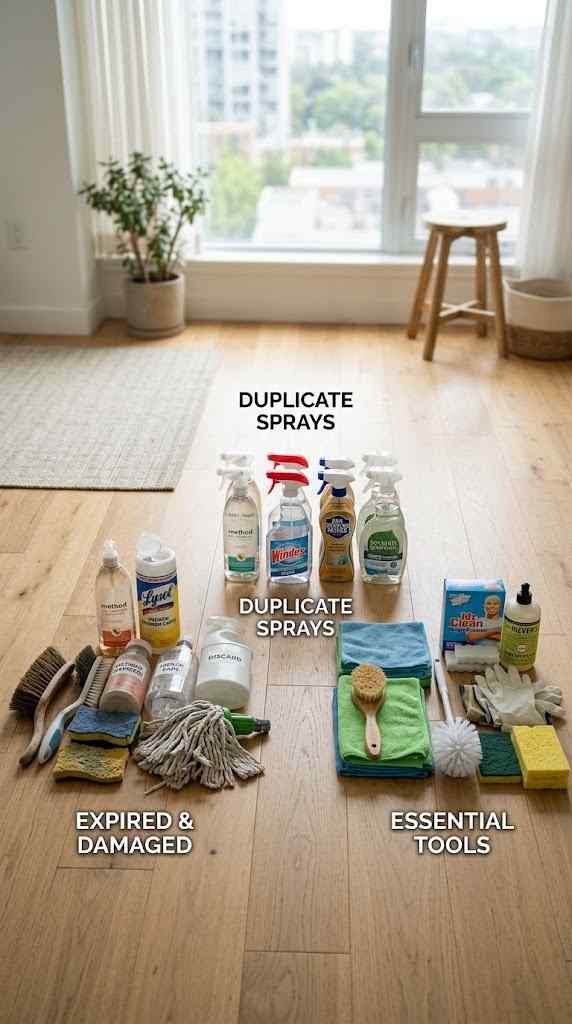
You can’t organize what you don’t fully see, and most people underestimate how much cleaning stuff they’ve quietly accumulated over the years. Pull everything out every bottle, every rag, every half-used sponge and lay it all on a table, a countertop, or the floor if that’s what you’ve got available.
This step feels tedious, and it kind of is, but skipping it is exactly why most organization projects fail within a month. You end up shoving things back into the same chaotic drawer because you never actually confronted the volume of stuff you own. Seeing everything at once is uncomfortable in a useful way it forces decisions instead of letting clutter make them for you by default.
While you’re doing this, sort items into three piles:
Expired cleaning products lose effectiveness and sometimes become unstable, so check dates on anything older than two years. Bleach in particular degrades fast usually within six to twelve months so if that jug’s been sitting since last spring, it’s basically water at this point. Aerosol cans are worth a squeeze test too; if the nozzle sputters more than sprays, it’s done and safe to toss.
Don’t forget to check tools alongside products. Sponges harbor bacteria fast and should get replaced every one to two weeks, while microfiber cloths, if you’re rotating and washing them properly, can last months or even years without needing replacement. If your “cleaning tools” pile includes a scrub brush with bristles worn down to nubs, that’s a toss too, no sentimentality required.
While you’re at it, check for anything you own multiples of. Three half-empty glass cleaners is a sign, not a coincidence. Consolidate what you can into one container if the formulas match, and make a mental note not to buy that product again until you’re actually out.
Group Supplies by Room, Not by Type
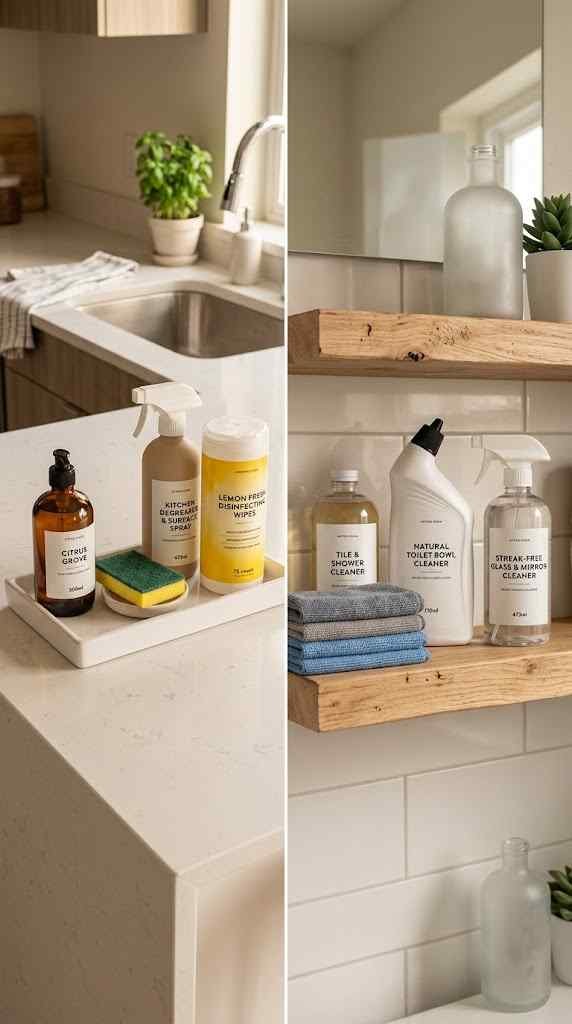
Here’s where a lot of organizing advice gets it backwards. It’s tempting to organize by category all sprays together, all cloths together, all tools in one bin because that’s how a store shelf looks. But that’s not how cleaning actually happens in a house. You clean a room, not a category, and your storage should reflect that reality.
Instead, think in terms of zones. What do you need in the kitchen? What lives in the bathroom? What’s for general household use that moves around depending on the day?
Kitchen zone usually needs:
● Dish soap and sponge
● Degreaser or all-purpose spray
● Disinfecting wipes
● A small trash bag stash
● Bathroom zone typically needs:
● Toilet bowl cleaner and brush
● Tile or grout cleaner
● Glass cleaner
● Disposable gloves
● General or floating zone (stored centrally, used everywhere)
● Vacuum and attachments
● Mop and bucket
● Microfiber cloths
● Multi-surface spray
Is it more efficient to have one giant supply closet instead? Sometimes, ye especially in smaller homes where hauling a caddy from room to room doesn’t add much time anyway. But if you’re constantly running up and down stairs for a bottle you forgot, room-based mini-stations save real time and real frustration over the course of a week.
I switched to this setup and stopped losing ten minutes every cleaning day just walking back and forth for stuff I’d left in the wrong place. Ten minutes doesn’t sound like much until you multiply it by every cleaning session for a year.
There’s a psychological perk too. When supplies live exactly where you use them, cleaning stops feeling like a project and starts feeling like a two-minute task you can knock out while waiting for coffee to brew. That shift alone gets more cleaning done than any product on the market ever will, no matter how good the marketing is.
Choose Storage That Matches Your Space, Not a Trend
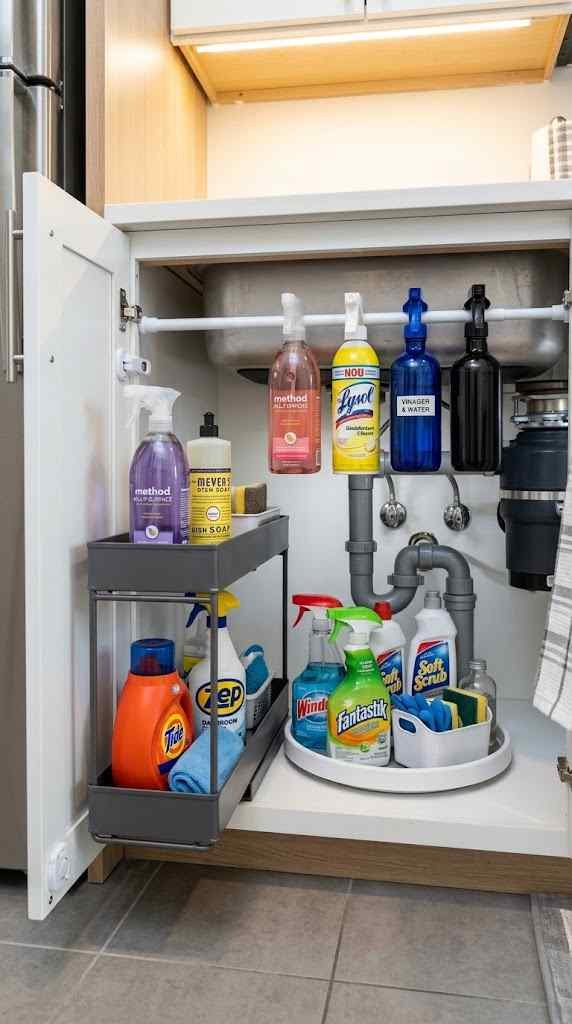
Under-sink storage is the default in most homes, but it’s also one of the worst-designed spaces for it pipes cut through the middle, it’s dark, and stuff gets shoved to the back and forgotten until you rediscover it a year later looking slightly haunted. If that’s your only option, work with it smartly instead of fighting the layout.
For under-sink cabinets:
● Use stackable bins or a two-tier sliding organizer to double your usable space
● Install a tension rod to hang spray bottles by their trigger handles, freeing up floor space
● Add a lazy Susan for smaller bottles so nothing gets lost in a corner behind the pipes
For closets or pantries:
● Wall-mounted racks keep mops, brooms, and dustpans off the floor and out of the way
● Clear bins with labels beat opaque totes because you can see what’s inside without digging
● Vertical shelving uses space that’s usually wasted, especially near the ceiling
For small apartments with no dedicated storage:
● A rolling cart tucked into a closet corner works as a mobile cleaning station
● Over-the-door organizers hold spray bottles and gloves without taking up floor space
● A single labeled tote can hold your full kit and get carried room to room as needed
FYI, the fancier the container, the more people assume they need to buy new supplies just to “match” the aesthetic. You don’t. Repurposed jars, old baskets, and dollar-store bins work just as well as anything from a home goods store function matters way more than looks here, and nobody’s grading your cabinet on presentation.
Material matters more than most people think, too. Plastic bins are lightweight and cheap but can crack over time, especially under heavier bottles. Metal caddies hold up longer but add weight, which matters if you’re the one carrying it up and down stairs. Fabric or canvas totes are the lightest option and easiest to store flat when not in use, though they don’t do well with leaks. Pick based on how you’ll actually use the thing, not which one photographs best.
One thing worth considering: ventilation. Cleaning chemicals stored in tightly sealed, poorly ventilated cabinets can build up fumes over time, especially bleach and ammonia-based products. If your storage space is fully enclosed, crack it open occasionally, and never store bleach and ammonia products next to each other regardless of how organized that looks on paper the combination produces toxic fumes if they ever leak or mix together.
Build a Grab-and-Go Cleaning Caddy
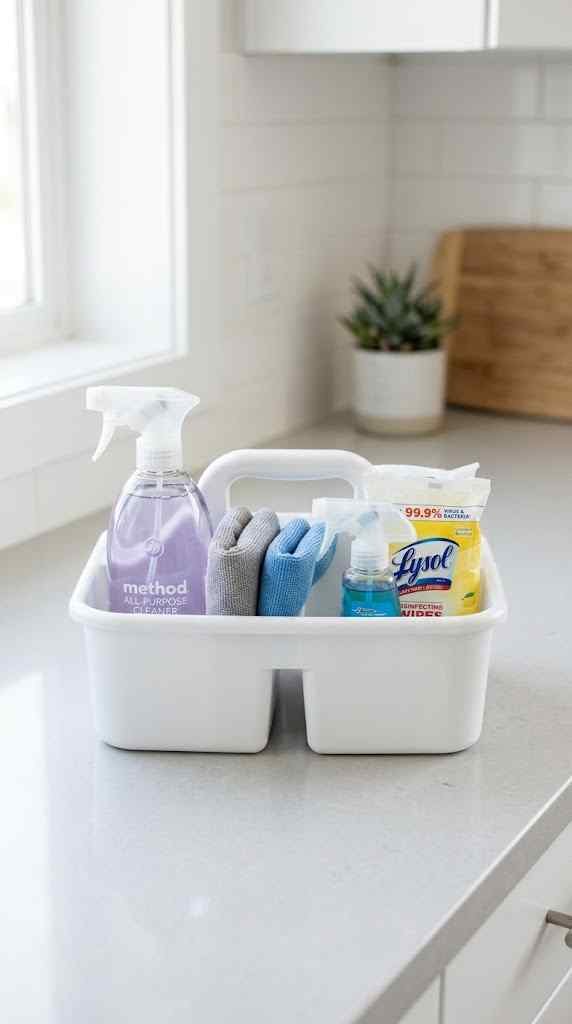
Even with room-based zones set up, having one portable caddy for quick cleanups is genuinely useful. This is the “someone’s coming over in twenty minutes” kit the stuff you need most, in one place, ready to move without assembling it from three different rooms first while your guest is already parking outside.
● A solid caddy setup includes:
● All-purpose cleaner
● Microfiber cloth, two ideally one for wiping, one for buffing
● Glass cleaner
● Disinfecting wipes
● A small trash bag for quick tidying
Keep this caddy somewhere central a hall closet, a laundry room shelf, anywhere that’s roughly equal distance from the rooms you clean most. The goal is grabbing it and going, not hunting for it first when you’re already running late for guests or a video call you forgot was on camera.
A caddy only works if you actually restock it after every use. This is the step everyone skips, and it’s exactly why caddies become useless within a month half-empty and missing the one thing you actually need mid-clean. Get in the habit of a thirty-second check after each use: wipe it out, replace what’s low, done, move on with your day.
If you clean multiple homes, or you’re managing a household with several bathrooms, consider having two caddies instead of one. It sounds like overkill until you realize how much time gets wasted carrying one caddy back and forth across a large house. Duplicate the basics, keep them stocked separately, and stop treating one caddy as a single point of failure for your entire cleaning routine.
Maintain the System So It Doesn’t Fall Apart
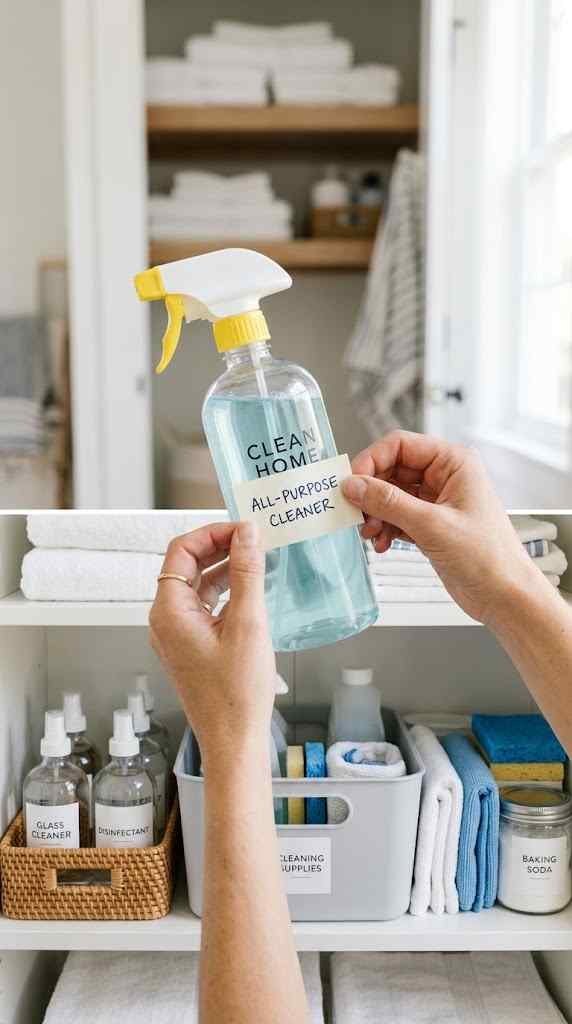
Organizing your supplies once is the easy part. Keeping them organized is where most systems quietly die. It’s not that people don’t care it’s that maintenance never gets scheduled, so it never happens, and entropy wins by default every single time.
A few habits keep things running:
Do a quick supply check monthly. Toss expired items, note what’s running low, and wipe down bins that have accumulated dust or spill residue over time.
Label everything, especially DIY solutions. If you make your own cleaning sprays, an unlabeled bottle six months from now is a mystery liquid, not a cleaning product, and nobody wants to guess what’s in it.
Return items to their zone immediately after use. This sounds obvious, but it’s the single biggest reason systems break down one bottle left on a counter “just for now” turns into five bottles scattered across the house within a week.
Reassess every few months. Your cleaning habits change, you buy new products, maybe you moved a shelf. What worked in January might not fit your life by summer, and that’s completely fine.
Should you go as far as color-coding everything by room? Honestly, that’s optional it works great for some people and feels like overkill for others. Do what you’ll actually stick with, not what looks most impressive in a before-and-after photo nobody but you will ever see.
It’s also worth building in a small reset ritual, even something as simple as a five-minute Sunday check that keeps the whole cabinet functional for another month. Organization systems that rely purely on willpower fade fast. Ones that get folded into an existing habit like a weekly tidy-up you already do tend to stick around far longer than anything built on motivation alone.
Seasonal shifts matter too. Spring often means swapping in heavier-duty cleaners for deep cleaning, while winter might call for more disinfecting wipes during cold and flu season. A quick seasonal review, maybe four times a year, keeps your stock matched to what you’ll actually need rather than what happened to be on sale last time you shopped.
FAQ’s
How often should I check my cleaning supplies for expiration?
Check monthly, especially bleach-based products, which lose effectiveness within six to twelve months of opening.
Should I organize cleaning supplies by room or by product type?
By room works best for most households since it matches how people actually clean, saving time and steps.
What’s the most space-efficient way to organize an under-sink cabinet?
Use stackable bins, a tension rod for hanging spray bottles, and a two-tier organizer to maximize vertical space.
Do I need to buy special containers to organize cleaning supplies?
No, repurposed jars, baskets, or dollar-store bins work fine function matters more than matching containers.
How do I keep my cleaning caddy from becoming disorganized again?
Restock it immediately after each use and return every item to its zone right after cleaning.
CONCLUSION
Cleaning supplies organization isn’t glamorous, and it’s not going to transform your whole life overnight. But it does remove one small, recurring frustration from your week, and that adds up faster than you’d think once you notice how much time you used to spend just looking for things you already owned. A clear inventory, room-based zones, storage that fits your actual space, a functional grab-and-go caddy, and a little regular upkeep that’s really the whole system. Nothing complicated, nothing that requires a full weekend or a trip to a container store you don’t have time for.
Start small if the whole thing feels like too much at once. Pick one space under the kitchen sink, the bathroom cabinet, whatever’s bugging you most right now and sort just that one area first. You’ll probably find it easier to keep going once you see how much better it feels to actually find what you need on the first try, instead of digging through three bins to locate a bottle of glass cleaner that’s been hiding since last month.