
Hidden storage
By Anna Grace | 19 July 2026
Hidden Storage Ideas for Small Spaces
You know that feeling when you open a closet and something falls out and hits you in the face? Yeah, that was me last week, courtesy of an avalanche of extension cords and a single rollerblade I don’t remember owning. Small spaces have a way of turning “organized” into “aspirational” real fast.
The good news is that hidden storage ideas for small spaces aren’t some Pinterest fantasy reserved for people with unlimited budgets and zero clutter. Most of them work with furniture you already own, walls you already have, and about an hour of your Saturday. Below are five practical, tested categories of hidden storage that actually make a dent not just Instagram-friendly tricks that look nice for a photo and fall apart the second you try to use them daily.
Furniture That’s Secretly a Storage Unit
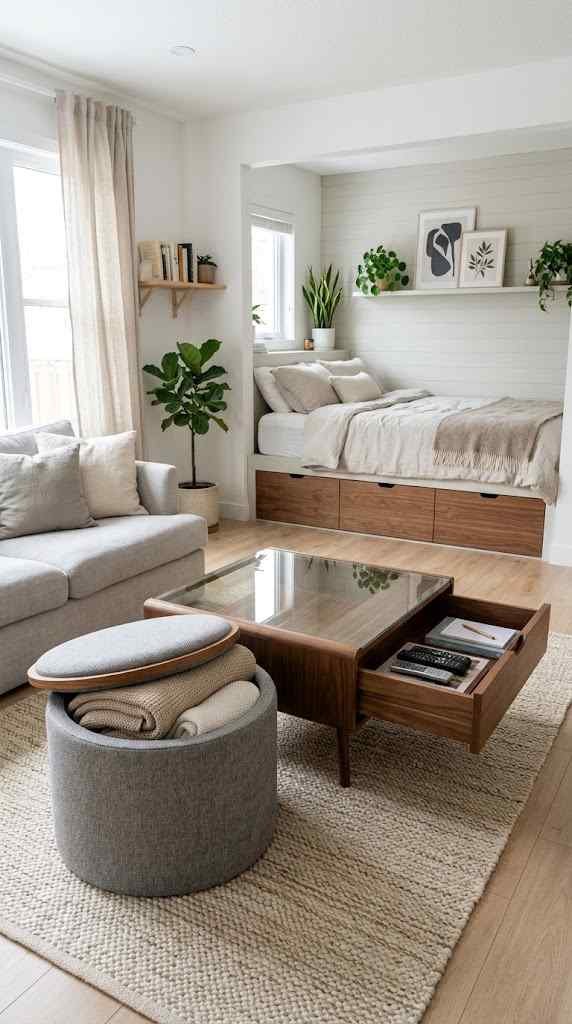
Multi-functional furniture is the backbone of any small-space strategy, and honestly, it should be the first thing you shop for, not an afterthought.
● Storage ottomans: These double as a coffee table, extra seating, and a blanket graveyard. Lift the lid, stash the mess, done.
● Beds with built-in drawers: A bed frame with drawers underneath can swallow an entire off-season wardrobe. No more bins sliding out from under the bed collecting dust bunnies.
● Storage benches: Perfect for entryways shoes go in, chaos stays out.
● Hollow coffee tables: Look sleek on top, hide remotes and coasters and that one deck of cards nobody ever finishes a game with underneath.
Nesting tables deserve a mention too. They look like one elegant side table until you need extra surfaces for guests, at which point they pull apart into three. A daybed with drawers works double duty as a guest bed and a linen closet, which is clutch if you’re hosting people in a room that’s also your office five days a week. Even dining chairs come in storage versions now some have a hollow seat that lifts up, perfect for stashing placemats or extra napkins you never have room for in the kitchen
Shopping for dual-purpose furniture does take a little more research than grabbing whatever’s cheapest at a big-box store, but the payoff compounds over time. Every piece that hides something is one less bin, basket, or pile you have to find a home for elsewhere. Measure twice before buying, though a storage ottoman that’s too bulky for your living room defeats the entire purpose.
Sofa beds have come a long way from the lumpy pull-out couches of the past, and a lot of modern versions include a storage compartment under the mattress for extra pillows or bedding. If you’ve got guests crashing on your couch more often than you’d like to admit, this solves two problems in one purchase. TV stands with closed cabinet doors are another underrated pick instead of an open shelf where cables and game consoles sit in full view, a cabinet front hides the mess while keeping the remote within arm’s reach
The takeaway here if a piece of furniture doesn’t serve at least two purposes in a small space, it’s probably taking up rent-free real estate it hasn’t earned.
Vertical Space Is Your Best Friend (Even If You Ignore It)
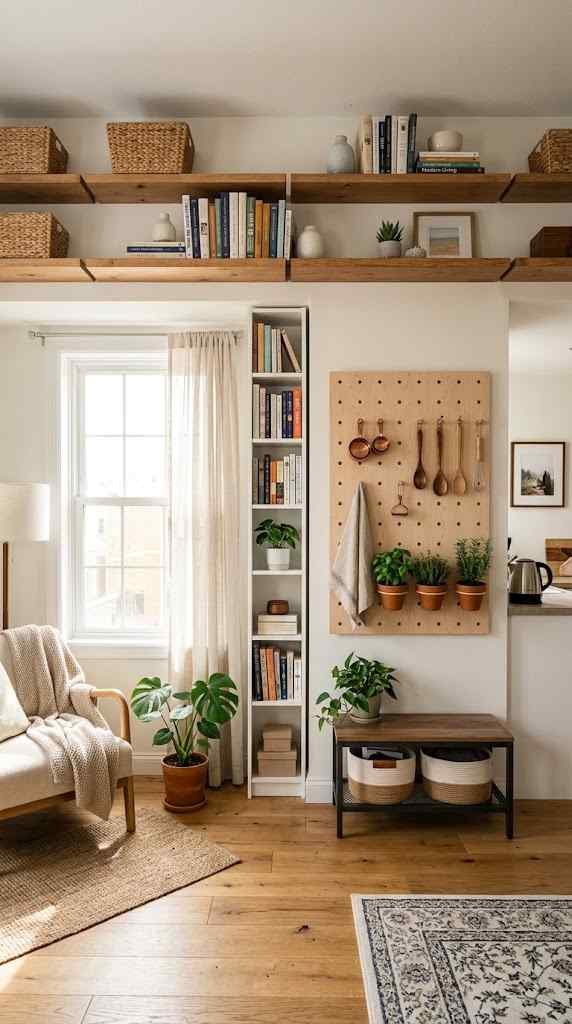
Why do we obsess over floor space when the walls are just sitting there, doing nothing? Most small rooms have 8 feet of vertical real estate and we use maybe 4 of it.
Floating shelves near the ceiling can hold rarely-used items like holiday decor or luggage, keeping them visible but out of the way. Over-the-door organizers work wonders in bathrooms and closets, adding storage without touching a single square inch of floor. Tall, narrow bookcases squeeze into gaps beside doorways or windows that would otherwise sit empty forever.
I put a slim bookcase in the six-inch gap next to my fridge a spot I genuinely thought was useless for anything besides collecting dust and it now holds every cookbook I own plus my air fryer accessories. IMO, that gap-filling trick alone can solve half your kitchen storage problems.
Pegboards are another vertical option people sleep on, and I genuinely don’t get why. Mount one in a kitchen, craft room, or garage, and suddenly pots, tools, or supplies hang in plain sight instead of burying themselves in a drawer. Ladder shelves lean against a wall and take up almost no footprint while offering four or five tiers of storage great for plants, towels, or books in a room too small for a traditional bookcase.
Don’t forget the space above doorways either. A slim shelf mounted there can hold baskets of rarely-used items, like spare lightbulbs or gift wrap, without interrupting the room visually. Corner shelves are the other overlooked winner corners often sit empty because standard furniture doesn’t fit the angle, but a few staggered corner shelves can turn dead space into a mini display or storage zone. Going vertical isn’t just a small-space trick; it’s basically free square footage hiding in plain sight.
Tall cabinets that stretch to the ceiling, rather than stopping at the standard six-foot mark, capture all that dead air space above a typical cabinet run. Sure, you’ll need a step stool to reach the top shelf, but that’s a small trade-off for the extra cubic feet you gain. Why let builders decide how much of your wall gets used when a $20 shelf bracket can claim the rest for you?
Built-Ins and Semi-Permanent Solutions
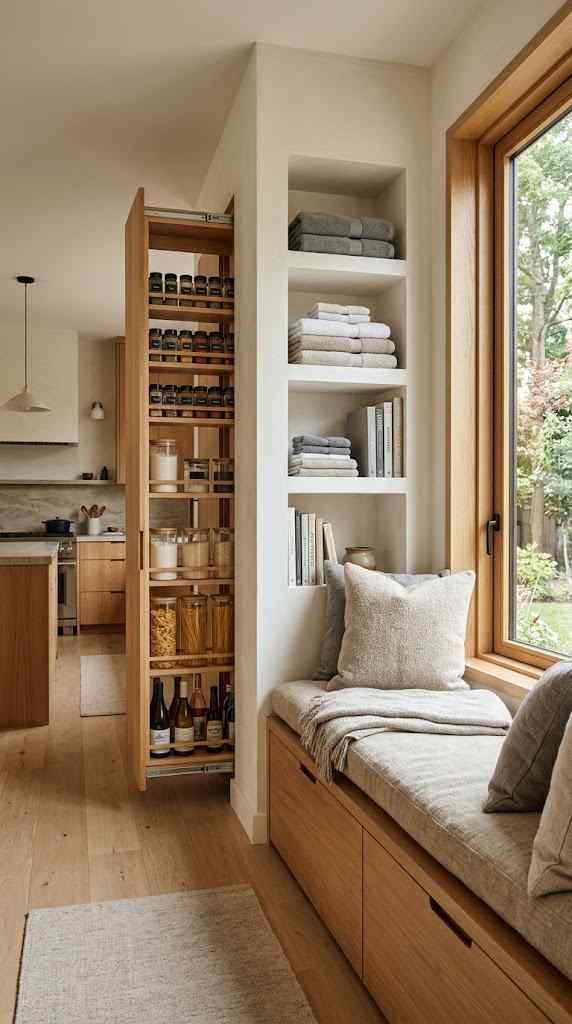
If you’re willing to commit slightly harder than “furniture shopping,” built-in storage solutions offer the biggest payoff per square foot
Recessed shelving between wall studs turns a flat, useless wall into a functional niche this works especially well in bathrooms for towels or in hallways for books. A window seat with storage underneath gives you a cozy reading nook and a place to hide seasonal linens at the same time, which feels like getting two rooms for the price of one. Under-stair storage, if you’re lucky enough to have stairs, is one of the most underused spaces in any home; drawers or cubbies built into that triangular void can hold everything from shoes to board games.
Kitchen toe-kick drawers are another built-in option worth considering, and they’re sneakier than most people realize. That empty gap beneath your lower cabinets the one your vacuum bumps into can become a shallow drawer for baking sheets or cutting boards with the right contractor. Closet systems custom-built to the exact dimensions of your space also outperform generic wire shelving by a wide margin, since every inch gets used instead of wasted on awkward gaps.
Bathroom vanities with built-in pull-out storage columns solve the eternal problem of where to put hair tools and toiletries without cluttering the counter. And if you’ve got a mudroom or entry closet, built-in cubbies sized for shoes, bags, and jackets keep the entryway functional instead of becoming a landing pad for everything nobody wants to deal with. These upgrades cost more upfront, sure, but they’re the difference between storage that just works and storage you’re constantly fighting with.
Pull-out pantries are a favorite for small kitchens that don’t have room for a traditional walk-in a narrow, tall cabinet on rolling tracks slides out to reveal several tiers of shelving for canned goods, spices, and snacks. It fits into gaps as slim as six inches, which makes it a great fit for that awkward sliver between a fridge and the wall. Built-in desks with drawers integrated directly into the frame also save space compared to a standalone desk plus a separate filing cabinet, especially in home offices squeezed into a corner of a bedroom.
Garage built-ins deserve a shoutout too, since garages are often the most neglected storage space in a home despite being one of the largest. Floor-to-ceiling cabinets along one wall, paired with a pegboard section for tools, can turn a garage from a dumping ground into an actual functional space where you can find things without a treasure hunt. These projects require more planning and usually a professional, but they transform how a home functions on a daily basis, not just how it looks for thirty seconds during a showing.
The “Nobody Would Guess” Category
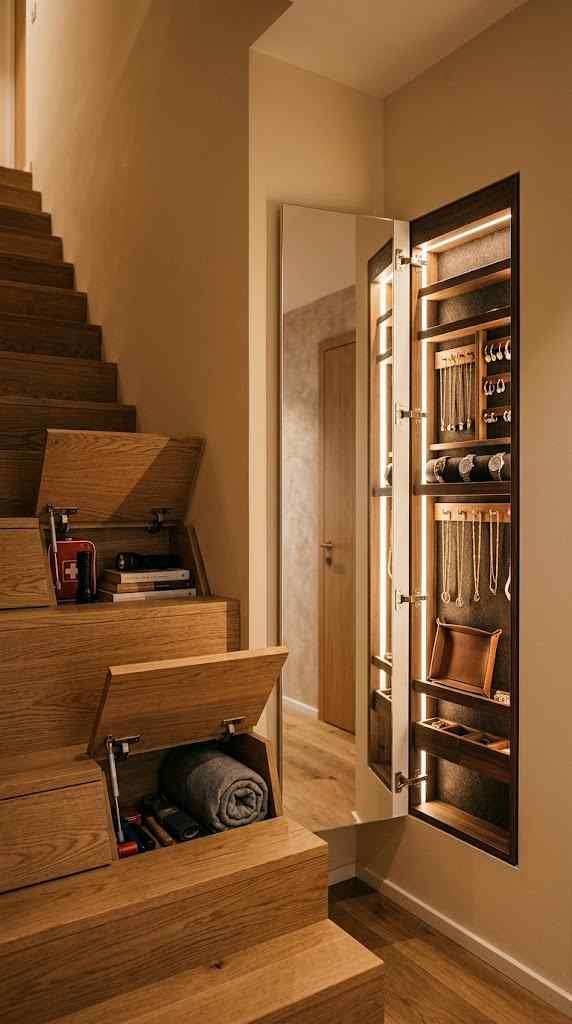
Some storage hacks work specifically because they’re sneaky. This is where hidden storage furniture really earns its name.
● Stairs with drawers built into each step (yes, this exists, and it’s brilliant)
● A headboard with hidden compartments for books, chargers, or that emergency snack stash
● A mirror that opens to reveal a medicine cabinet or jewelry storage
● Fake books on a shelf that are actually a hollow box for valuables
● A bench that lifts open, hiding sports equipment or out-of-season shoes
My personal favorite? A kitchen island with a pull-out trash and recycling bin hidden behind a cabinet front. Nobody guesses it’s there until you show them, and then they get weirdly jealous. It’s a small thing, but it makes the kitchen feel bigger just by removing a visual obstacle.
Ottomans that look like solid cubes but flip open from the top are another crowd-pleaser, especially in studio apartments where every piece of furniture needs a secret identity. Floating nightstands with a hidden drawer built into the underside give you a place for chargers and glasses without adding visual bulk to a small bedroom. Even radiator covers can double as storage benches, hiding gloves and scarves right where you’ll actually remember to grab them on your way out the door.
There’s also the classic hollow ceiling beam or exposed shelf trick, where a decorative beam conceals a slim storage channel above eye level not practical for daily items, but perfect for things you touch twice a year, like holiday lights or luggage tags. The common thread across all of these? They don’t scream “storage” at first glance, which somehow makes a small space feel calmer and less like it’s constantly on display.
Fake HVAC vent covers are a lesser-known trick a false vent panel mounted on a wall can conceal a slim recessed cubby for valuables, similar to the hollow-book trick but slightly less obvious to anyone who’s ever watched a heist movie. Staircase risers, the vertical part of each step rather than the tread itself, can also be hinged to open into shallow storage, which is a different (and honestly easier to install) version of the drawer-in-stairs idea mentioned earlier.
What ties this whole category together is the psychological trick of it all storage that doesn’t look like storage makes a room feel less cluttered even when it’s holding just as much stuff. Our brains read visible bins and boxes as “mess,” even when they’re neatly organized, so hiding the container itself does more for a room’s calm factor than the organizing inside it ever could.
Small, Sneaky Wins That Add Up Fast
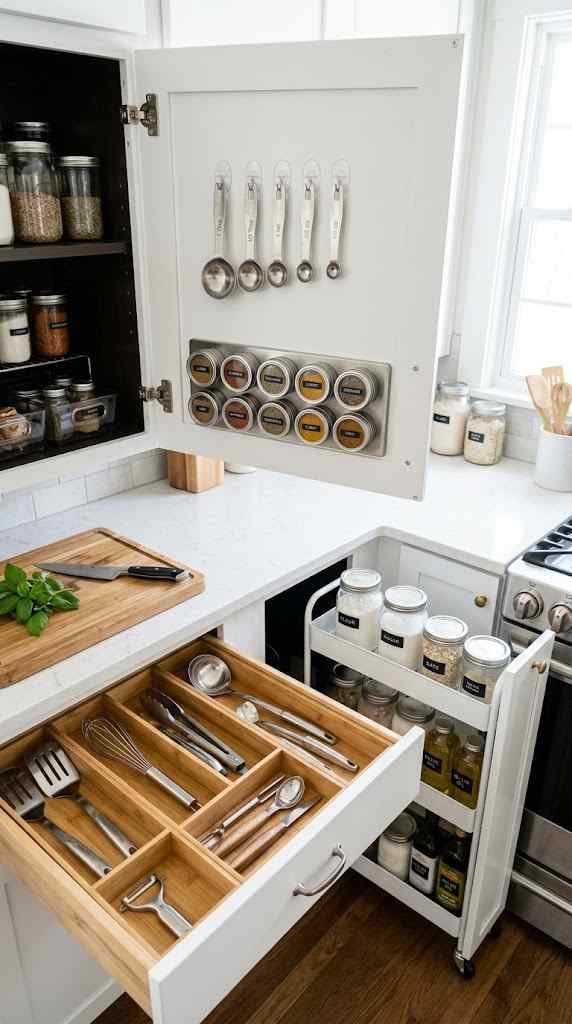
Not every solution needs to be a renovation. Sometimes the tiniest tweaks make the biggest difference in how a room actually functions day to day.
Drawer dividers keep junk drawers from becoming junk swamps, and they cost less than a fancy coffee. Command hooks inside cabinet doors can hold cleaning supplies, measuring cups, or even a broom, freeing up shelf space you didn’t know you were wasting. Rolling carts tucked into narrow gaps like beside a fridge or washer give you mobile storage that slides in and out as needed.
Baskets on open shelving hide clutter while still looking intentional, which is basically the whole game when it comes to small-space storage: make the mess invisible without making the room feel cramped.
Under-shelf baskets are another cheap fix they clip right onto an existing shelf and instantly create a second tier of storage without installing anything new. Cord organizers and cable boxes hide the tangle of chargers behind a TV stand or desk, which sounds minor until you realize how much visual clutter cords actually create in a small room. Magnetic strips inside cabinet doors can hold small metal tools or spice jars, freeing up drawer space for things that actually need it.
Even a simple over-the-sink shelf in the kitchen or bathroom adds storage without eating into counter space, since it sits above the fixture instead of beside it. None of these fixes require tools, contractors, or a weekend of your life most take less time than waiting for your coffee to brew, and the cumulative effect on a cluttered room is bigger than any single item would suggest.
Under-sink tension rods, mounted horizontally beneath a bathroom or kitchen sink, give you a bar to hang spray bottles from by their trigger handles, freeing up the floor of the cabinet for bulkier items like extra toilet paper or dish soap refills. An over-the-door organizer meant for shoes works just as well repurposed for cleaning supplies in a laundry closet or utility closet, with each pocket sized perfectly for a spray bottle or roll of paper towels. Drawer liners with built-in dividers cost next to nothing and stop utensils, makeup, or office supplies from turning into a jumbled pile every time you open the drawer.
Stackable clear bins are a small investment that pays off fast, especially in a pantry or linen closet, since you can see contents at a glance instead of pulling out three containers to find the one you need. A basic label maker or even painter’s tape and a marker can turn a chaotic shelf into a system anyone in the household can actually maintain IMO, half of clutter problems aren’t a storage shortage at all, they’re a labeling shortage. Once everyone knows where something belongs, it’s far more likely to end up back there.
Finally, a shallow riser or shelf insert placed inside a cabinet instantly doubles usable space by stacking plates or bowls on two levels instead of one tall, wobbly stack. It’s the kind of five-dollar fix that feels almost too simple to matter, right up until you use it and wonder why you waited so long. Small wins like these rarely show up on anyone’s “big renovation” list, but stacked together, they solve more day-to-day frustration than most of the bigger projects combined.
FAQ’s
What furniture offers the best hidden storage for small spaces?
Storage ottomans, beds with drawers, and storage benches offer the most functional, budget-friendly hidden storage options.
How can I add storage without losing floor space?
Use vertical solutions like floating shelves, over-door organizers, and tall narrow bookcases in unused wall gaps.
Is built-in storage worth the investment in a small home?
Yes built-ins like under-stair drawers or window seats add lasting value and maximize otherwise wasted space.
What’s an affordable hidden storage hack I can try today?
Drawer dividers and command hooks inside cabinets cost little and instantly improve small-space organization.
Where’s the most overlooked storage spot in small homes?
Under stairs and narrow gaps beside appliances are frequently ignored but hold serious hidden storage potential.
CONCLUSION
Small spaces don’t need to feel small. They need smarter systems, and most of these fixes cost less than a dinner out. Start with one category furniture, vertical space, built-ins, sneaky hacks, or small wins and expand from there. The goal isn’t to hide everything; it’s to make your space work as hard as you do. Pick one idea from this list, try it this weekend, and see how much breathing room you get back. Your future self, digging through a closet without getting hit by a rollerblade, will thank you.