
small front porch ideas
By Anna Grace | 1 July 2026
Small Front Porch Ideas to Maximize Style and Space
My neighbor has a porch the size of a doormat, and somehow it looks better than my old apartment’s living room. That’s when it hit me square footage has nothing to do with how good a porch feels. It’s all about what you do with the few feet you’ve got.
If you’re staring at a cramped concrete slab wondering how to make it look like something off Pinterest, you’re in the right place. Small front porch ideas aren’t about cramming furniture into a tight space they’re about picking the right pieces and letting the space breathe. Here’s how to actually pull that off.
Start With What Your Porch Is Actually For
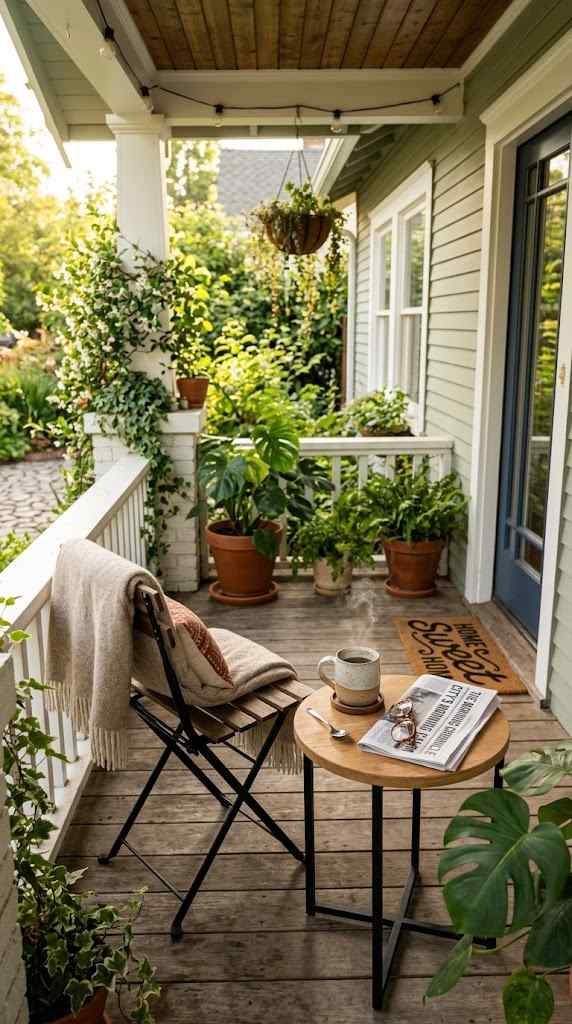
Before you buy a single planter, figure out how you’ll use the space. Do you want a spot for morning coffee? A place to greet trick-or-treaters? Somewhere to kick off muddy boots?
A tiny porch trying to be everything at once ends up being nothing at all. Pick one or two purposes and design around those. My own porch is basically a coffee nook and a mail-sorting spot that’s it, and honestly, that’s enough.
Think about the time of day you’ll actually use it, too. A porch that gets blasted with afternoon sun needs a different setup than one tucked in shade all day. I learned this the hard way after buying a reading chair for a spot that turned into a sauna by 2 PM total waste. Match the function to the conditions, not just the vibe you’re going for.
Ask yourself who actually uses the porch besides you. Kids drop backpacks there, dogs wait by the door, neighbors stop for a two-minute chat all of that shapes what the space needs to handle. A porch built only around your own habits often ignores the traffic it gets from everyone else in the house. Once you map out the real daily use, the layout basically designs itself.
Sometimes the porch’s purpose changes with the seasons of your life, not just the seasons of the year. A porch that worked as a quiet reading spot before kids might need to become a drop-zone for scooters and soccer cleats a few years later. Revisit the “purpose” question every year or two instead of setting it once and forgetting it. Your porch should evolve the same way the rest of your life does no shame in that.
Knowing the porch’s job before you decorate saves you from buying stuff you’ll never use.
Let Color Do the Heavy Lifting
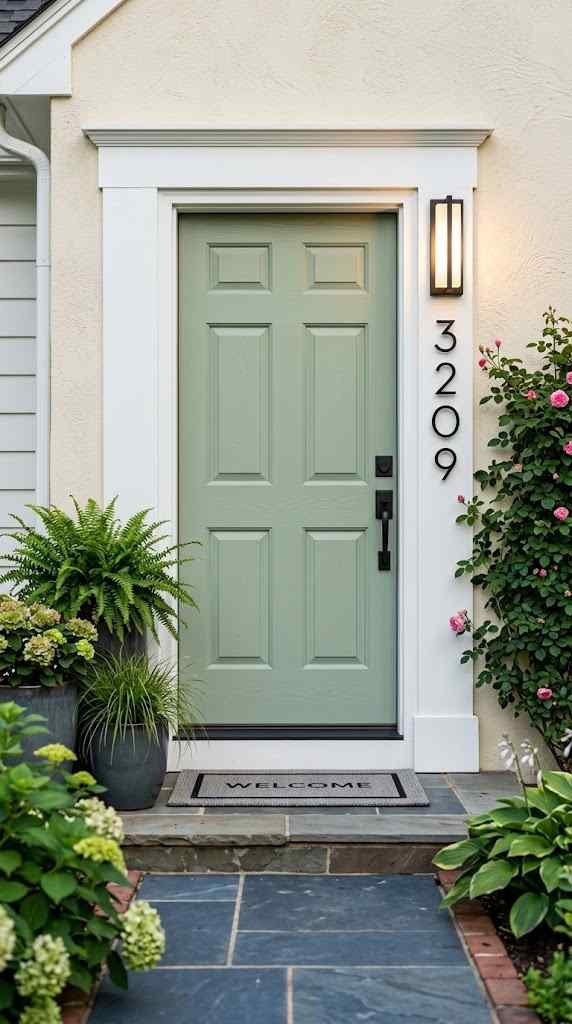
Paint is cheap, and it’s probably the single biggest bang-for-your-buck upgrade a small porch can get. A fresh coat on the front door instantly makes the whole entryway look intentional instead of forgotten.
Light, warm colors think soft sage, buttery yellow, or a dusty terracotta open up a tight space visually. Dark colors aren’t off-limits, but use them sparingly, maybe just on the door or trim, so the porch doesn’t feel like it’s closing in on you.
FYI, glossy or satin finishes reflect more light than matte, which genuinely helps a shaded porch feel less like a cave. Small detail, big difference.
Don’t forget the ceiling painting it a soft “haint blue” is a Southern porch trick that’s been around forever, and it genuinely makes the space feel airier. Trim colors matter just as much as the door itself a crisp white trim against a muted wall color adds contrast without overwhelming a small area. If you’re renting and can’t paint, a bold welcome mat or colorful cushion covers do a surprising amount of the same work.
Consider how your porch color plays against the rest of the house, not just on its own. A door that clashes with the siding can make the whole entry look like an afterthought, even if the color itself is nice. Testing a swatch at different times of day matters too a color that looks perfect at noon can turn muddy under evening light. Cheap fix, but it saves you a repaint down the line.
A porch color doesn’t exist in a vacuum think about how it reads from the street, not just up close. Colors that look subtle in person can either pop or completely disappear from a passing car’s view. Drive or walk a block away and glance back before committing to a final shade. It sounds excessive, but it’s a five-minute check that prevents a color regret you’ll stare at every day.
Vertical Space Is Your Best Friend
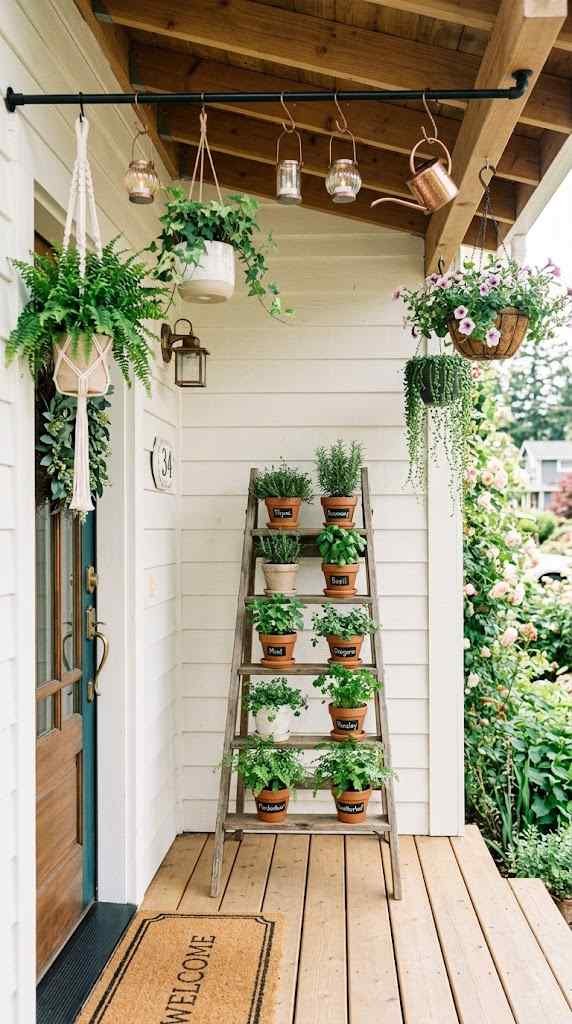
Ever notice how the tiniest apartments always end up with shelves climbing the walls? Same logic applies here. When floor space runs out, go up.
Hanging baskets, tiered plant stands, and a vertical herb garden mounted near the door all add greenery without stealing walking room. A pegboard or slatted wood panel can hold lanterns, small wreaths, or seasonal decor that you swap out without drilling new holes every time.
Even your porch light matters more than people think. A wall sconce that hangs slightly higher makes the whole ceiling area feel taller, which tricks the eye into thinking the space is bigger than it is.
A ladder-style plant stand is another sneaky-good option since it leans against the wall instead of taking up floor footprint. Consider hooks on the porch ceiling for hanging ferns they add greenery right at eye level without touching the ground at all. Just make sure whatever you hang can handle the weather in your area; nobody wants a soggy basket crashing down mid-summer.
A narrow bookshelf turned sideways can double as a plant ledge if floor space is really tight. Even the underside of a porch roof is usable a few S-hooks and some string lights instantly change the mood after sundown. Just keep the vertical elements grouped instead of scattered, since one tall focal point reads cleaner than five random hanging bits.
Vertical storage isn’t just for plants think about umbrella stands, coat hooks, or a small mounted shelf for keys and mail. A porch that handles small daily tasks well feels more functional than one that’s purely decorative. Even a single hook by the door for a leash or bag saves you a trip back inside. Small utility touches like these often get overlooked in favor of aesthetics, but they’re what make a porch genuinely useful.
Rugs, Textures, and the Illusion of Depth
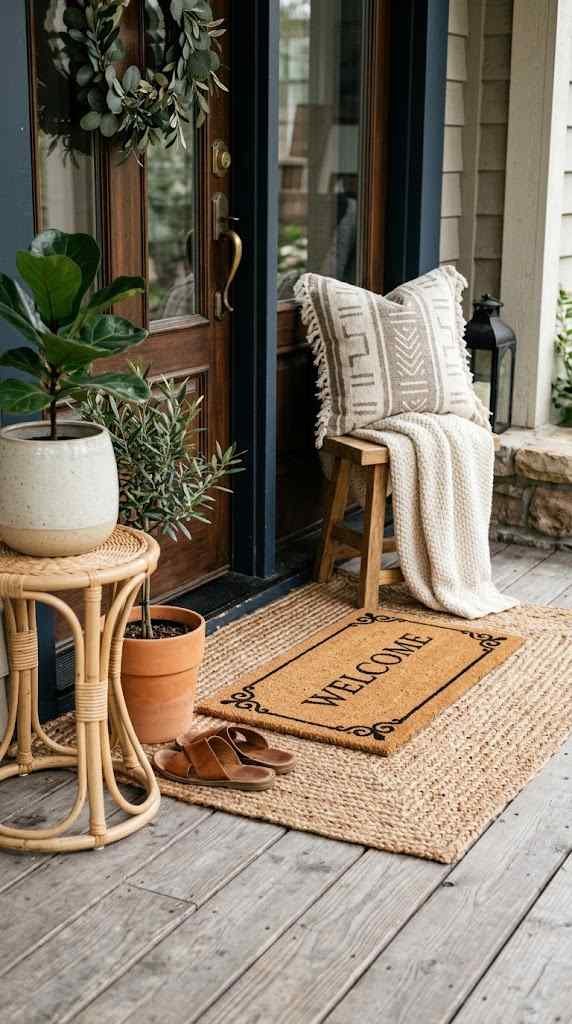
A well-placed outdoor rug can visually define your porch without taking up any real square footage it just sits there doing its job. Go for a rug that’s slightly smaller than the porch itself so you can still see the edges of the flooring underneath; it creates a sense of layering instead of one flat block of color.
Mixing textures helps too. Pair a woven rug with a smooth ceramic planter and a wood side table, and suddenly the space feels curated instead of thrown together. IMO, texture does more for a small porch than color ever will it adds visual interest without adding clutter.
Mirrors work indoors for a reason, and a small weatherproof mirror can pull the same trick outside. Hang one near the door and watch how it bounces light around and makes the whole entry feel more open 🙂
Stick to two or three materials max, or the space starts looking busy instead of curated. Jute and rattan are great budget-friendly options that bring texture without screaming for attention. And don’t skip the small stuff a textured throw pillow or a woven basket for garden tools adds just enough visual layering to keep things interesting.
Pattern placement matters as much as pattern choice. A rug with a directional stripe pointing toward the door subtly guides the eye and makes the porch feel longer than it is. Layering a smaller accent mat right at the threshold adds another texture point without competing with the main rug. It’s a small trick, but it’s the kind of detail that makes people ask what you did differently.
Texture isn’t only about what you touch sound matters too. Wind chimes, rustling grasses in a planter, or a wooden bench that creaks slightly all add a sensory layer most people never think about. A porch that sounds good is just as inviting as one that looks good, even if you can’t quite explain why. It’s a small, often-missed detail that makes a space feel more alive.
Seasonal Swaps Keep It From Feeling Static
A tiny porch that never changes starts to feel stale by the third month. Rotating a few small details keeps things fresh without requiring a full redesign every time the weather shifts.
Swap the wreath, change the throw pillow covers, or switch potted mums for pansies depending on the season. None of this costs much, and it keeps the porch looking cared for instead of forgotten. A porch that looks lived-in genuinely used, not staged always beats one that looks like a showroom nobody touches.
Is it extra effort? Sure. But a five-minute seasonal refresh beats a full weekend redo, and it makes the front of your house feel like it belongs to someone who actually cares about it.
A Few Small Details People Skip
Some of the smallest touches make the biggest difference, and they’re the first things people forget:
● House numbers in a font that matches your home’s style not the builder-grade default ones
● A doormat with some personality, even if it’s just a good color instead of a pun
● String lights or a lantern for evening ambiance without needing electrical work
● A single statement plant instead of five mismatched pots crowding the corner
Keep a small bin in the garage with your seasonal porch items so swaps take minutes, not hours. Fall calls for pumpkins and warm-toned mums; winter is all about evergreen sprigs and soft white lights; spring wants pastel planters and something blooming. It’s a small habit, but it’s the difference between a porch that feels forgotten and one that feels like part of the home.
Don’t limit swaps to just decor lighting temperature can shift with the season too. Warmer bulb tones feel cozier in fall and winter, while a cooler white light suits spring and summer evenings better. Keep a simple checklist taped inside a closet door so the seasonal refresh doesn’t turn into a scavenger hunt every few months. Small systems like that make the whole habit stick.
Finally, don’t underestimate the power of a clean floor. A pressure-washed or freshly swept porch floor makes every other upgrade look sharper, even if you haven’t spent a dime on decor yet. Stains, cobwebs, and dust dull down even the nicest furniture and rugs sitting on top of them. Make cleaning the floor the very first step before adding anything new it’s free, it’s fast, and it resets the whole space instantly.
FAQ’s
How much space do I actually need for a functional small porch?
Even 4–5 feet of depth works if furniture is compact and wall-mounted where possible.
What’s a budget-friendly way to upgrade a small front porch fast?
A fresh door color and new doormat instantly refresh the look for very little cost.
Should I avoid bulky decor items on a small porch?
Yes bulky pieces block movement; slim, multi-purpose items work far better in tight spaces.
How do I make a small porch feel welcoming at night?
Add warm string lights or a lantern near the entry for cozy evening ambiance.
What’s the easiest way to add greenery without losing floor space?
Use hanging baskets or vertical planters instead of ground-level pots on small porches.
CONCLUSION
A small front porch isn’t a limitation it’s a design challenge, and honestly, the constraints make the choices easier. You don’t need five chairs or a jungle of plants. You need a handful of pieces that actually earn their spot.
Pick one or two ideas from this list, try them out, and see how the space feels. Chances are, you’ll end up liking your tiny porch more than you ever expected to.