
rustic christmas front porch
By Anna Grace | 13 June 2026
How to Turn Your Front Porch Into a Rustic Christmas Wonderland (Without Breaking the Bank)
My grandmother had this thing about front porches. She always said a porch tells you everything about the people inside before you even knock on the door. I thought she was being dramatic until I decorated my own porch for Christmas last year and watched three separate neighbors stop mid-walk to take photos of it. Turns out grandma knew something the rest of us are just catching up to.
A rustic Christmas front porch isn’t about spending a fortune on matching ornaments or hiring someone with a truck full of garland. It’s about warmth, texture, and a little bit of imperfection that makes a space feel lived-in and loved. Think weathered wood, plaid ribbon, pinecones you picked up on a walk, and lanterns that flicker instead of blast LED light in every direction. If you’re ready to give your entryway that cozy cabin-in-the-woods energy, here’s exactly how to pull it off.
Start With a Foundation of Natural Materials
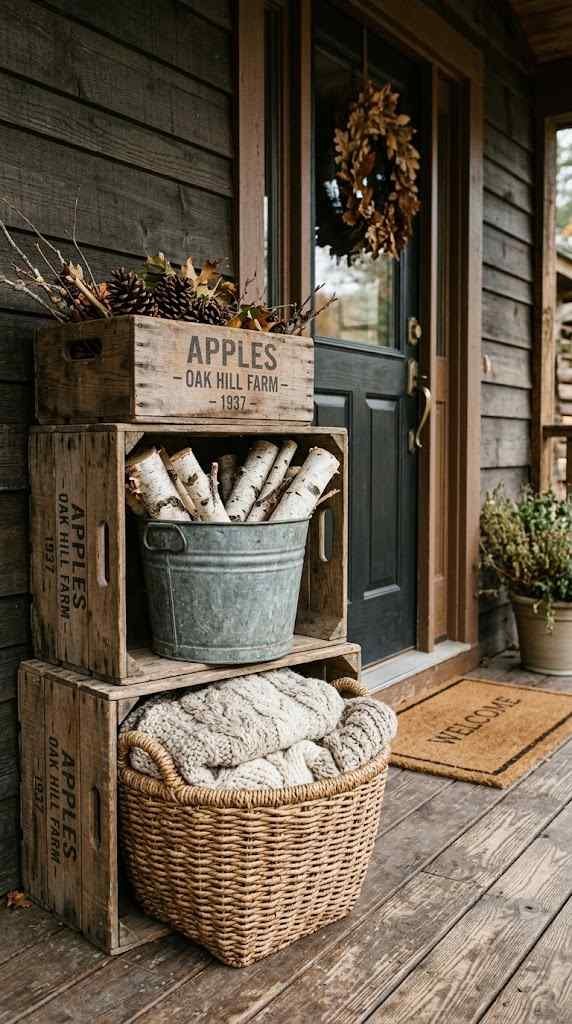
Rustic style lives and dies by texture, so the first thing you want to nail down is your base layer. Skip the shiny plastic wreaths and glittery mesh ribbon you find in the clearance bin. Instead, reach for things that look like they came from the earth: burlap, raw wood, wicker, and unpolished metal.
A few foundation pieces that work almost every time include:
- Wooden crates or barrels stacked near the door for instant height and structure
- Galvanized metal buckets filled with birch logs or pinecones
- Woven baskets holding extra throw blankets for guests
- A weathered wood sign with a simple phrase like “Merry & Bright” or “Joy”
I picked up two old apple crates from a flea market for six dollars total, and they’ve become the backbone of my entire porch display every single year since. Cheap doesn’t mean it can’t look intentional. The trick is layering these pieces at different heights so your eye moves around the space instead of landing flat.
One thing worth mentioning: don’t feel like every piece needs to match perfectly. A rustic porch actually benefits from a bit of mismatch, since real farmhouses and cabins were never furnished from a single catalog. If you’ve got an old ladder gathering dust in the garage, lean it against the wall and hang a few ornaments or a small wreath from the rungs. Vintage tools, old milk cans, and chipped enamelware all fit right into this style without needing a fresh coat of paint. Thrift stores and estate sales are goldmines for this kind of thing, and honestly, half the fun is hunting for pieces that already have some history baked into them.
A rustic porch should feel collected over time, not purchased in one trip. That’s honestly the whole secret. Mix in something old, something you made, and something you bought, and the combination reads as authentic rather than staged.
Layer Your Lighting Like You Mean It
Nothing kills rustic charm faster than harsh white LED lights blasting from every corner. Warm, low, ambient light is what makes a porch feel like it’s inviting you in instead of announcing itself to the entire street. Have you ever noticed how a single flickering lantern can make a whole space feel more intimate than a hundred blinking bulbs? That’s not an accident.
String lights in warm amber tones work beautifully wrapped around railings or draped along the roofline in loose, uneven swags. Battery-operated lanterns tucked among your greenery add depth without requiring an outlet anywhere near your steps. Candlelight, even the flameless kind, sitting inside mason jars or old tin cans creates that soft glow rustic decor depends on.
If you want to go a step further, try these layering combos:
- String lights along the porch railing, kept loose rather than taut
- Two or three lanterns of varying heights flanking the front door
- A single oversized lantern or hurricane lamp on a side table or bench
- Candle sconces mounted near windows for symmetry
Layering matters more than quantity here. Three well-placed light sources at different heights will always beat twenty scattered randomly.
Timing matters too, and this is something people overlook constantly. Set your lights on a timer so they click on right around dusk, because nothing undercuts the cozy factor like a porch sitting dark until you remember to flip a switch at nine at night. If your porch has a ceiling or overhang, consider adding a couple of Edison bulb string lights up top for extra height and warmth. And don’t be afraid to leave a few shadows. Rustic lighting isn’t about illuminating every square inch; it’s about creating pockets of warm glow that draw the eye toward specific spots, like your wreath or your seating area.
Build a Wreath and Garland That Feel Handmade

Your front door is the focal point of the whole display, so this is not the spot to skimp. A rustic wreath typically skips the perfectly symmetrical pine circles you’d see in a big box store and instead leans into mixed textures: dried orange slices, cinnamon sticks, eucalyptus, pinecones, and a chunky plaid or buffalo check bow.
FYI, if you’re crafty, making your own wreath is genuinely easier than it looks and costs a fraction of what you’d pay retail. Grab a grapevine base from a craft store, hot glue your dried elements on in clusters rather than evenly spaced, and finish with a wired ribbon bow that you can fluff into an asymmetrical shape. It doesn’t need to be perfect. In fact, a slightly lopsided, overstuffed wreath usually looks more rustic than a precise one.
For garland, drape it loosely along your railing or across the top of your doorway rather than pulling it taut. Real or faux fresh greenery both work, though real greenery gives off that pine scent that instantly signals “the holidays are here” the moment someone walks up your steps. Add in a few sprigs of red berries or dried hydrangea for color variation without going full-on Christmas explosion.
If wreath-making still feels intimidating, start smaller with a swag instead, which is basically a wreath’s more relaxed cousin. A swag is just a bundle of greenery tied together and hung flat against the door, and it takes about ten minutes with zero shaping skills required. Dried orange slices deserve a special mention here because they’re inexpensive, they smell incredible once they warm up in the sun, and they add a pop of color that plastic ornaments simply can’t match. Slice oranges thin, bake them low and slow for a few hours, and you’ve got a garnish that looks like it belongs in a magazine spread.
Choose a Cohesive Color Palette (And Actually Stick to It)
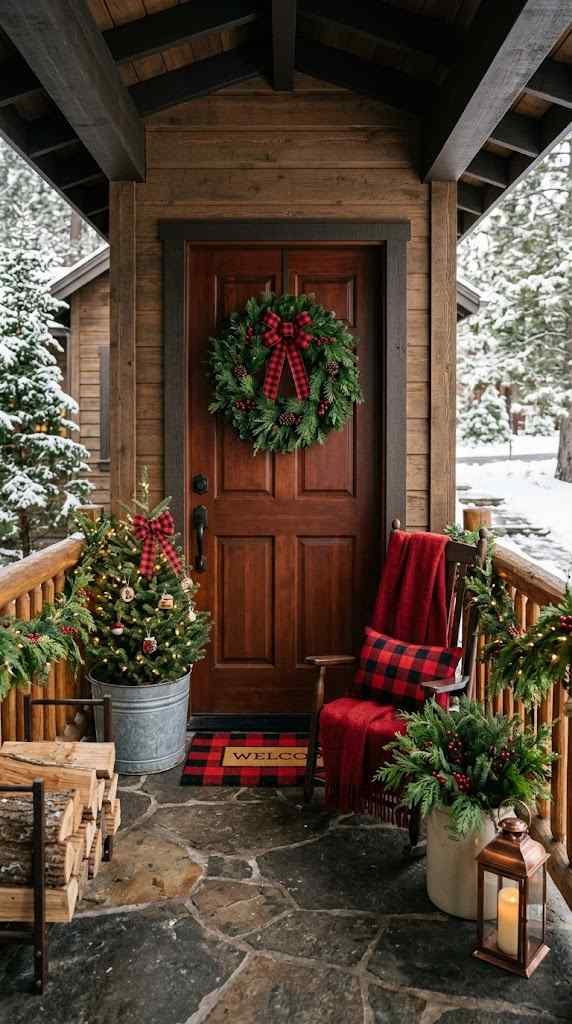
This is where a lot of porches go sideways, myself included in my early decorating years. I once threw together red, gold, silver, and turquoise on the same porch because I liked all of them individually, and the result looked like a craft store threw up on my steps. Rustic Christmas decor thrives on restraint.
Stick to a tight palette of two or three colors max. The classic combo is deep red, forest green, and natural wood tones, but plenty of gorgeous rustic porches lean into all-neutral schemes with cream, tan, and touches of black or dark green. Buffalo check plaid in red and black has become something of a signature pattern for this style, and it pairs beautifully with anything wood or metal.
Once you’ve picked your palette, run everything through it: ribbon, ornaments, ribbon on the wreath, any ceramic pieces, even your welcome mat. Consistency is what makes a porch look designed instead of thrown together at the last minute.
It also helps to think about your porch’s existing architecture before locking in colors. A porch with dark wood trim will read completely differently than one with white shiplap siding, so take a photo of your bare porch and hold up fabric swatches or paint chips against it before buying anything. If you’re someone who likes a little variety year to year, keep your big-ticket items neutral, like wood crates and lanterns, and rotate your ribbon and smaller accents seasonally. That way you’re not repurchasing everything from scratch every November, and you still get to switch things up without much extra cost.
Add Personal Touches That Make It Yours
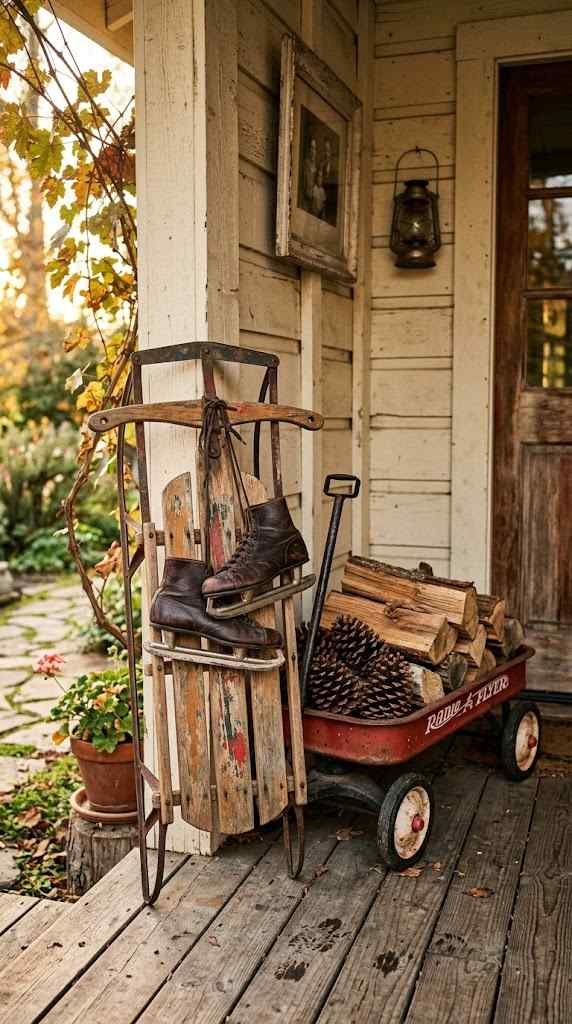
A porch full of store-bought items still needs one or two things that only you would think to include. This is the part people skip because it feels harder, but it’s genuinely what separates a Pinterest-copy porch from one that feels like your home. Maybe it’s your kids’ old sled propped against the wall, or a collection of vintage skis you found at an estate sale, or your grandfather’s old wooden toboggan leaning near the door.
I use an old wagon that’s been in my family for three generations, filled with firewood and a couple of oversized pinecones, right next to my front steps. It’s not fancy. It’s definitely not something you can order on Amazon. But it’s the one thing every single guest asks about, every year, without fail.
A few ideas if you’re starting from scratch:
- Repurpose an old sled, wagon, or wheelbarrow as a planter or display piece
- Hang a childhood ice skate or mitten set as an accent near the door
- Use family heirloom ornaments in an outdoor-safe glass jar or lantern
- Display a hand-lettered chalkboard sign with a family tradition or inside joke
Don’t overthink this step. Walk through your garage or attic before you buy a single new item, because odds are you already own something that would fit right in.
Kids’ contributions count here too, and I’d argue they matter more than anything store-bought. A pinecone ornament your daughter glued together in second grade, slightly crooked and covered in too much glitter, tells a better story than anything with a designer tag on it. Ask family members if they have anything tucked away that could work outdoors, since old wooden sleds, snowshoes, and even vintage thermoses turn up in more attics than you’d expect. These pieces weather beautifully outside anyway, so you’re not risking anything precious by giving them a season on display.
FAQ’s
What colors work best for a rustic Christmas front porch?
Deep red, forest green, and natural wood tones work best, with buffalo check plaid as a popular accent pattern throughout.
Do I need real greenery, or can I use artificial garland for a rustic look?
Either works, though real greenery adds authentic pine scent and texture that many people find hard to replicate with faux versions.
How much does it typically cost to decorate a porch in this style?
Costs vary widely, but reusing crates, family items, and DIY wreaths can keep total spending under fifty dollars easily.
What lighting works best for a cozy, rustic porch feel?
Warm amber string lights, battery lanterns, and flameless candles layered at different heights create the coziest, most inviting glow.
How do I keep my rustic porch from looking cluttered?
Stick to two or three colors, group items at varying heights, and always leave some open space instead of filling every corner.
CONCLUSION
Decorating a front porch for Christmas doesn’t need to drain your bank account or your weekend. Start with natural, textured foundation pieces, layer in warm and varied lighting, build a wreath that looks a little imperfect on purpose, commit to a tight color palette, and finish with something that’s genuinely yours. That combination is what separates a porch that looks like everyone else’s from one that stops people mid-walk to snap a photo, the way mine apparently did last December.
Give yourself permission to add things gradually over a few seasons instead of trying to nail the whole look in one shopping trip. IMO, the best rustic porches are the ones that have clearly evolved over time, with a wreath from year one, a lantern from year two, and a family piece that’s been there since before you started decorating at all. That’s what makes it feel real instead of rented.