
Room Organization
By Anna Grace | 12 May 2026
Room Organization Ideas That Make Your Space Feel Twice as Big
One survey found that Americans burn roughly two and a half days every year searching for lost stuff. Keys, remotes, that one charger that fits nothing else. I read that number while digging through a laundry pile for my phone, and honestly, it stung.
Good room organization won’t make you a different person. It will, however, hand you back those wasted days, along with a bit of calm every time you walk through the door. You don’t need a label maker obsession or a weekend of suffering. You need a system that works with your habits instead of fighting them.
This guide walks you through exactly that: why rooms slide back into chaos, how to cut the excess, where everything should live, which storage tools earn their price, and the small daily habits that keep the whole thing standing.
Why Your Room Keeps Sliding Back Into Chaos

You clean on Saturday. By Wednesday, the room looks like a raccoon threw a party. Sound familiar?
The problem rarely comes down to laziness. Most messy rooms suffer from a lack of systems, not a lack of effort. When an item has no assigned home, it lands on the closest flat surface. Multiply that by forty items and you get the desk you can no longer see.
Friction plays a huge role too. If putting your jacket away requires opening a closet, finding a hanger, and wrestling it onto a rail, your brain quietly votes for the bed instead. Every extra step you add to a task lowers the odds you’ll actually do it.
I learned this the hard way with what my family called “the chair.” You probably have one: the bedroom chair that holds worn-but-not-dirty clothes and never actually gets sat on. Mine carried a small mountain for about three years. The fix wasn’t willpower. I swapped the chair for a row of wall hooks, and the mountain vanished in a week. Same habit, less friction, totally different result.
A few other culprits that sabotage room organization:
- Too much stuff for the space. No clever bin can fix a closet holding twice its capacity.
- Storage in the wrong spot. Your shoe rack lives in the hallway, but you take shoes off by the bed.
- Systems that suit someone else. That color-coded bookshelf looked great online. Your actual life doesn’t care.
Once you spot which of these shows up in your room, the solution usually becomes obvious.
Edit First, Shop Later
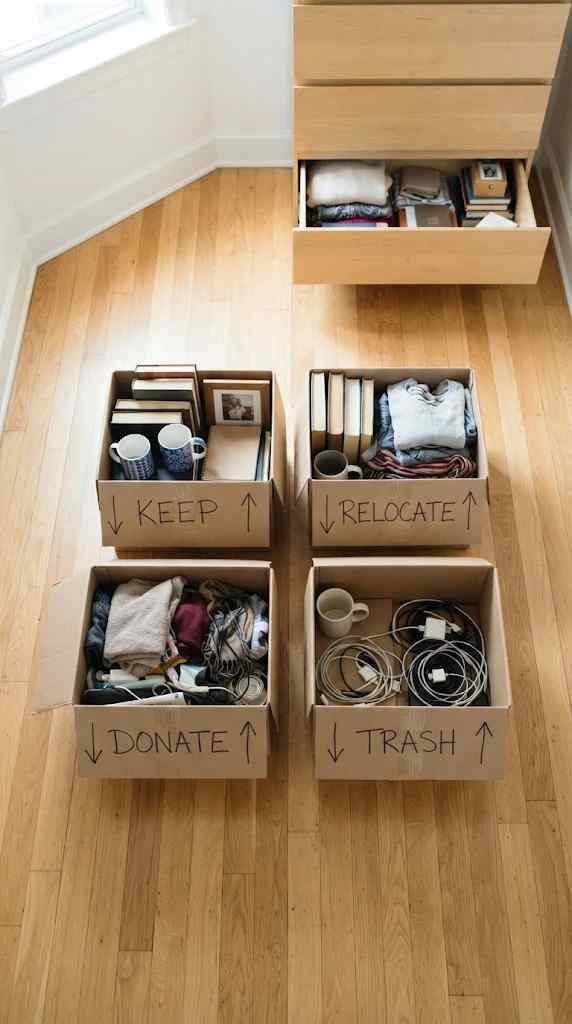
Here’s my most unpopular opinion about organizing: buying containers before decluttering wastes money every single time. Containers don’t solve clutter. They just give it a nicer apartment. IMO, the storage aisle at any big-box store should come with a warning sign.
Before you spend a cent, cut down what you own. A tighter inventory makes every other step easier, faster, and cheaper.
The Four-Pile Method
Grab four boxes or bags and label them. Then work through the room one zone at a time, starting with whatever bugs you most.
- Keep: You use it, you love it, and it belongs in this room.
- Relocate: You want it, but it lives somewhere else. (The kitchen mug on your nightstand qualifies.)
- Donate or sell: It works fine, but you haven’t touched it in a year.
- Trash: Broken, expired, mystery cables with no known device. Let them go.
Work in short bursts. Twenty-five minutes on one drawer beats a heroic five-hour session that leaves you surrounded by half-sorted piles at midnight. Ask me how I know :/
Questions That Speed Up Tough Decisions
Sentimental items and “someday” items slow everyone down. When you hesitate, ask yourself:
- Would I buy this again today at full price?
- Have I used it in the last twelve months?
- Do I keep it out of love or out of guilt?
If guilt wins, the item can go. Snap a photo of sentimental pieces you can’t store but can’t quite toss. You keep the memory without the shoebox.
Haul the donate pile to your car the same day. Seriously. A donation bag that sits in the corner for a month just becomes new clutter with better intentions.
Give Every Room Zones (and Every Item an Address)

With the excess gone, you can finally design a layout that makes sense. Think of your room as a tiny city with neighborhoods. Each neighborhood handles one activity, and everything related to that activity lives there.
A bedroom might include a sleep zone, a dressing zone, and a reading nook. A home office might split into a work surface, a supply station, and a filing area. A kid’s room often needs play, sleep, and homework zones, plus a lot of patience.
If you can’t decide where to draw the lines, track your own movements for a day. Notice where you drop your bag, where you charge your phone, and where you actually read. Build zones around those real patterns instead of around how you wish you lived.
Treat Arm’s Reach Like Prime Real Estate
The space between your shoulders and your knees carries the highest value, figuratively speaking. Store the things you use daily in that easy-reach band, and push everything else up, down, or out. Seasonal clothes go to the top shelf. Spare bedding slides under the bed. Your everyday hoodie hangs right at eye level.
This one rule fixes a shocking amount of mess. When daily items take zero effort to grab and return, you’ll actually return them.
Go Vertical Before You Go Wider
Most rooms waste wall space like it costs nothing. Floating shelves, pegboards, over-the-door organizers, and tall narrow bookcases all pull storage off the floor and free up breathing room. A small bedroom with clear floors feels twice as big as the same room with stacked bins everywhere.
Use the Hidden Spots
Every room hides storage you probably ignore:
- Under the bed (risers can add several inches of clearance)
- Behind doors
- Inside the closet door
- The gap between the dresser and the wall
- Above the wardrobe
Once you set the zones, give each category a specific “address.” Not “somewhere in the closet,” but “the left bin on the second shelf.” Specific homes make cleanup automatic, because your hands learn the route.
Small Tweaks for Specific Rooms

The principles stay the same everywhere, but each room throws its own curveballs. A few targeted adjustments make a big difference.
The Bedroom
Your bedroom should help you rest, so it deserves the strictest rules about what stays out. Keep work papers, overflowing laundry baskets, and random packages somewhere else whenever possible. A clear nightstand with just a lamp, a book, and a charger does more for your sleep than any fancy pillow.
Fold clothes vertically in drawers (file-style) so you see every shirt at once. This trick sounds fussy, yet it stops the endless digging that wrecks a neat drawer in two days. Keep a small hamper inside the closet so dirty clothes have an obvious destination that beats the floor.
The Home Office or Study Corner
Paper causes most office chaos. Set up a simple three-tray system: incoming, action needed, and file. Process the incoming tray once a week, and the paper monster stays small.
Cable clutter comes next. Velcro ties, an adhesive cable channel under the desk, and a single power strip that you mount out of sight make the whole space look calmer instantly. Keep only the tools you touch daily on the desk surface. Everything else goes into a drawer or a nearby shelf.
The Kid’s Room
Kids follow systems that make sense to them, not to you. Open bins on low shelves beat lidded boxes on high ones, because little hands can actually reach them. Picture labels help pre-readers know where the cars go and where the blocks go.
Rotate toys instead of keeping every single one out. Store half in a closet bin, then swap every few weeks. Your kid gets “new” toys, and you get a floor you can cross without stepping on a building block at 2 a.m.
Small or Shared Rooms
Tight spaces reward furniture that pulls double duty. A storage ottoman, a bed with built-in drawers, or a bench with cubbies underneath adds capacity without adding bulk. Mirrors bounce light around and make the room feel bigger, which helps more than you’d think.
In shared rooms, give each person a clearly defined zone and their own set of bins. You’ll hear far fewer arguments about whose sweater sits on whose chair. Trust me, roommates appreciate boundaries more than matching decor.
Storage Tools That Earn Their Spot (and Ones That Don’t)

Now, and only now, you get to shop. The right tools make room organization feel effortless, while the wrong ones become fancy clutter. Here’s my honest breakdown after years of buying both kinds.
Worth the money:
- Drawer dividers. They stop your sock drawer from becoming a soup of fabric. Cheap, quick, and wildly satisfying.
- Clear bins with lids. You see what’s inside without opening them, which means you actually use what you store.
- Slim velvet hangers. They grip clothes and take up noticeably less rail space than chunky plastic ones.
- Wall hooks. The undefeated champion of low-friction storage for bags, jackets, and towels.
- Under-bed rolling containers. They turn a dust bunny habitat into a legit closet extension.
Often a waste:
- Decorative baskets with no clear job. They look cute and swallow random junk forever.
- Huge deep bins for small items. Everything sinks to the bottom and you dig like an archaeologist.
- Specialty gadgets for one tiny task. A rack that only holds flip-flops rarely earns its keep.
- Matching sets you buy before measuring. Measure your shelves first. Always. FYI, returning twelve bins that don’t fit feels terrible.
Before you buy anything, ask what specific problem it solves and where exactly it will live. If you can’t answer both, leave it in the store.
Budget tip: shoeboxes, glass jars, and old tissue boxes make surprisingly decent drawer dividers while you figure out what you really need. Test your system with free stuff, then upgrade the pieces that prove their worth.
A quick note on labels: they help more than people expect, especially in shared rooms or kids’ spaces. You don’t need a fancy machine. Masking tape and a marker work just fine, and they let you change your mind later without guilt.
Habits That Keep Your Room From Unraveling
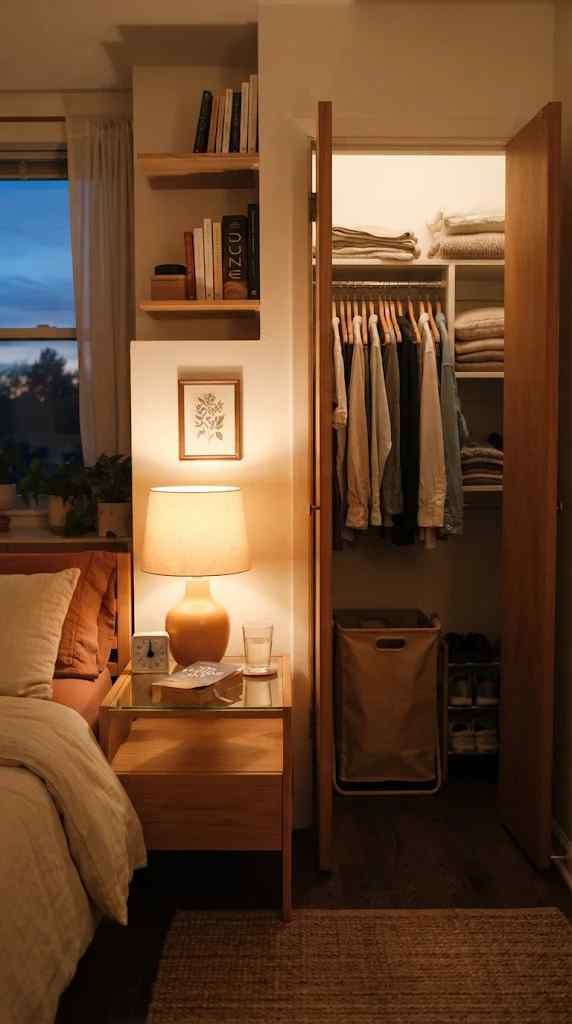
Here’s the part nobody wants to hear. A beautifully organized room stays that way for about ten days unless you build a few habits around it. Systems create order. Habits protect it.
Luckily, these habits take minutes, not hours.
The One-Minute Rule
If a task takes less than a minute, do it now. Hang the shirt. Toss the receipt. Put the book back on the shelf. These tiny actions prevent the small piles that eventually merge into big ones.
The Nightly Reset
Spend ten minutes each evening returning items to their addresses. Set a timer, throw on a song or two, and move fast. You’ll wake up to a calm room instead of yesterday’s leftovers, and mornings get noticeably easier.
Pair the reset with something you already do, like brushing your teeth or setting your alarm. Habit stacking makes it feel automatic within a couple of weeks.
One In, One Out
When a new item enters the room, an old one leaves. New sweater? Donate an old one. This simple swap keeps your inventory from creeping back up after all that editing work.
A Monthly Five-Spot Check
Once a month, inspect the usual trouble spots: nightstand, desk surface, closet floor, under the bed, and that one drawer that collects everything. Catching drift early takes fifteen minutes. Ignoring it for a season costs you a whole weekend.
Honestly, the nightly reset changed my life more than any product I’ve ever bought. It feels almost too simple to work, and then it just… works. Why do we keep chasing complicated fixes when the boring ones deliver?
Consistency beats intensity every time. Ten minutes daily outperforms one dramatic deep clean every few months.
FAQ’s
How long does it take to organize a messy bedroom?
Most bedrooms take one to two weekends when you declutter in short, focused sessions.
Should I declutter before buying storage containers for room organization?
Yes, always declutter first so you buy only the containers you actually need.
What is the best way to organize a small room with little storage?
Use vertical wall space, under-bed containers, and over-the-door organizers to free floor space.
How do I keep my kid’s room organized?
Use low open bins, picture labels, and a quick nightly reset your kid can follow.
How often should I reorganize my room?
Do a quick monthly check and a deeper room organization refresh each season.
CONCLUSION
Room organization comes down to a few honest moves: understand why the mess returns, cut what you don’t need, assign every item a logical home, buy only the tools that solve real problems, and protect the whole setup with tiny daily habits. None of it requires perfection or a magazine-ready aesthetic.
Remember, the goal never involved owning the prettiest bins on the block. It involves walking into a room and finding what you need in seconds.
Pick one drawer tonight. Just one. Sort it, give everything an address, and notice how good it feels to open it tomorrow morning. That small win usually sparks the next one, and before long, the whole room follows.
Your space should work for you, not the other way around. So which corner of your room gets its makeover first?