
Built a Kitchen Coffee Bar for Quiet Mornings. The In-Laws Had Other Plans.
By Anna Grace | 7 November 2026
This is a fictional story,
The doorbell rang at 7:12 on a Tuesday morning, and I was still in my pajama pants with the cartoon avocados on them. Through the peephole, I saw my mother-in-law holding a ceramic mug from her own kitchen. Not a casserole, not a gift, just a mug.
“Morning!” Linda said when I opened the door, stepping right past me. “Is the bar open?”
Three weeks earlier, my husband Mark and I had finished our kitchen coffee bar, a project I’d been planning on a secret Pinterest board for about two years. It was supposed to be my quiet little corner of the house. So how did four feet of butcher block become the most popular hangout in our zip code, and why did my father-in-law suddenly know where we kept the good beans?
The coffee bar that started it all
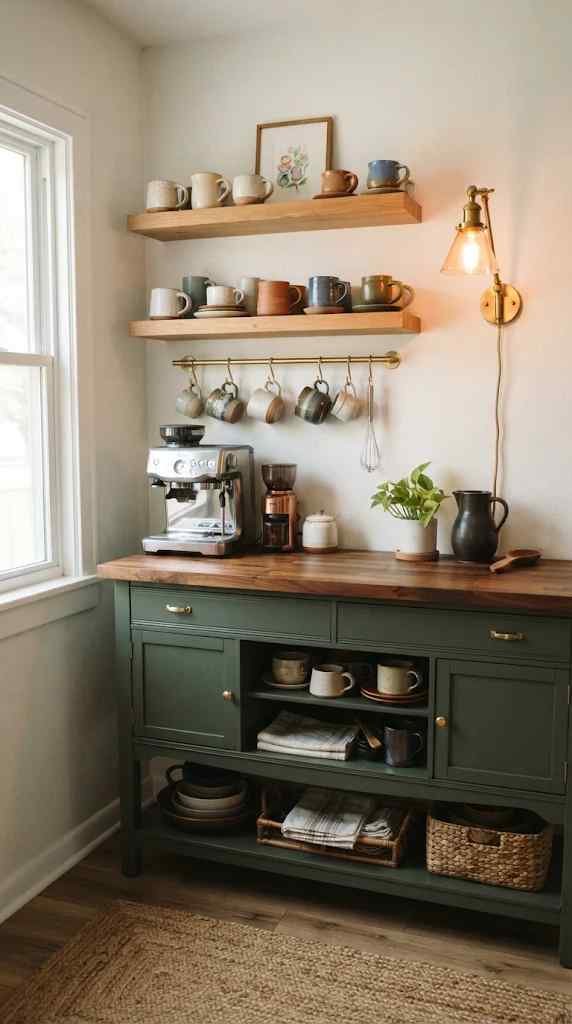
Our house has a breakfast nook that never worked as a breakfast nook. The table was too big, the bench wobbled, and mostly it collected mail, reusable grocery bags, and one roller skate nobody would claim. It was less a nook and more a holding cell for clutter.
Last spring, I talked Mark into hauling the table out to the garage. In its place we put a secondhand sideboard from an estate sale, sanded it down, and topped it with a butcher block slab cut to 48 inches. Above it went two floating shelves for mugs, a small brass rail for hanging cups, and a plug-in sconce. It made the whole corner look like a café in a movie where someone falls in love with a bookstore owner.
Mark’s contribution was the espresso machine. He researched it for six weeks with the intensity of a man buying a used car. “This one has a pressure gauge,” he told me, like the gauge was going to help pay the mortgage.
The first week was perfect. I’d wake up at 6:30, make a latte, and stand in that sconce light like a woman in a yogurt commercial. Then I made a mistake that seemed harmless at the time: I posted a photo of it in the family group chat.
The first surprise visit
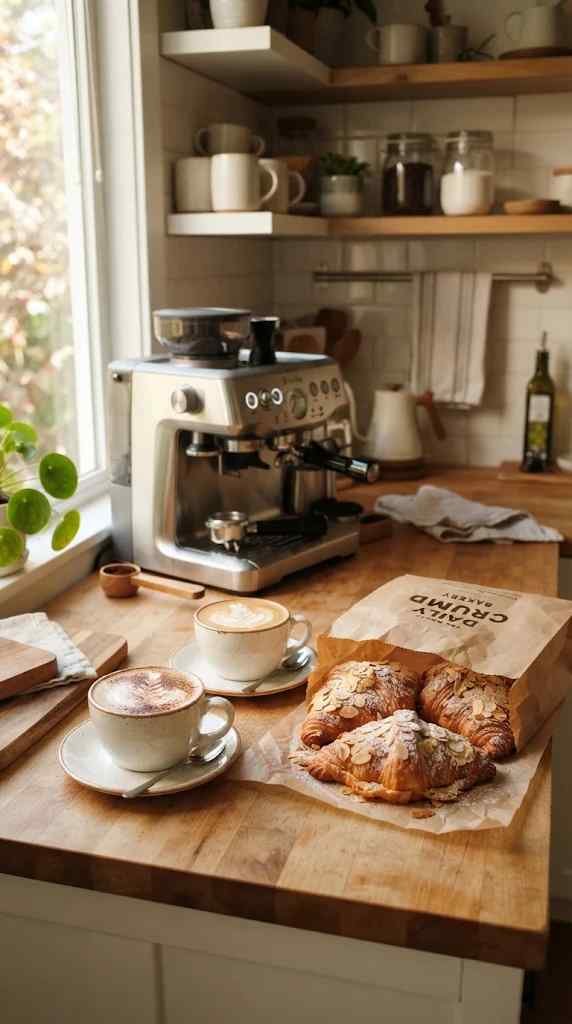
Linda replied within four minutes. “WOW. Can we come try it?” My father-in-law, Gary, sent a thumbs up, which from Gary is basically a standing ovation.
They came that Saturday, and honestly, it was lovely. Mark pulled shots like he was competing on a reality show, Linda took 40 photos of the floating shelves, and Gary drank two cappuccinos and said “Now that’s coffee” three separate times. When they left, Mark said, “See? Everybody loves it.”
I did see. I just didn’t see what was coming.
The next Tuesday, they came back. Then Thursday, and then Saturday again, with a bag of almond croissants as a kind of admission ticket. By the end of the month, Linda had her own mug parked on our shelf, and Gary could work the steam wand better than either of us.
The “is the bar open” text became a daily event. Usually it came around 7 a.m. Once it came at 9:45 p.m., which raised questions I wasn’t ready to ask.
The second month got weirder
The visits weren’t the strangest part. The strangest part was Gary.
Gary is a retired high school chemistry teacher. In the 11 years I’d known him, he’d shown about the same enthusiasm for our house as he did for jury duty. Now he showed up early, lingered, and talked about crema like it was an old friend.
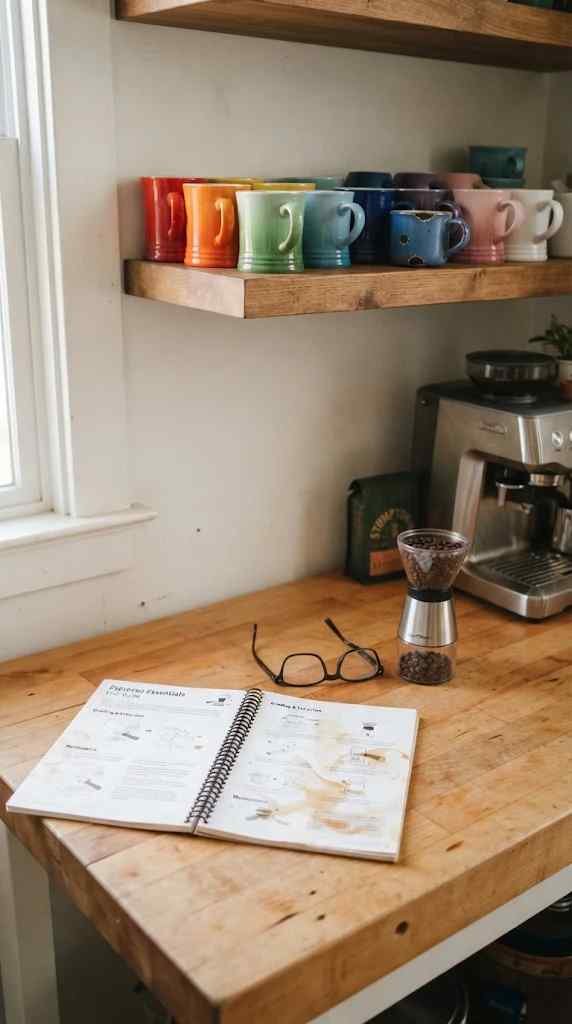
One morning I found him crouched at the sideboard, reading the espresso machine manual with his glasses pushed down his nose. “You know,” he said without looking up, “you’re grinding too fine for this roast.”
I had not asked. I also had no idea what that meant. I made a mental note to look it up later and promptly forgot, because Linda was in the nook rearranging my mug shelf by color.
“It just flows better this way, honey,” she said, sliding my favorite chipped blue mug to the very back. I loved Linda. I still love Linda. But in that moment, I understood exactly how a cat feels when someone moves its box.
The mystery of the missing espresso beans
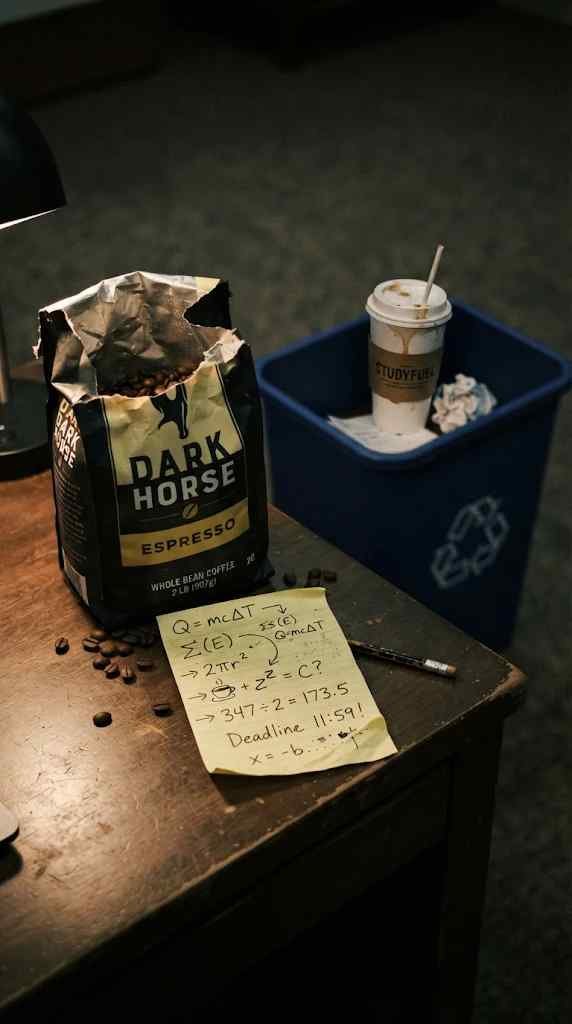
By week seven, we were going through a two-pound bag of espresso beans every five days. Mark and I usually take two weeks to finish one. I did the math on a sticky note, and the sticky note did not look happy.
Then I noticed something else. Gary always made his drinks while Linda was in the bathroom or out on the porch taking a call, every single time. And on two different mornings, I found an empty lidded paper cup tucked into our recycling bin like evidence at a crime scene.
So I asked him, casually, while Linda was outside complimenting the neighbor’s hydrangeas. “Gary, are you taking coffee to go?”
He froze like a teenager caught climbing back in through a window. Then he sighed, set down his cup, and told me everything. At his checkup in the spring, his doctor had told him to cut back to one cup a day.
Linda, who treats every health instruction like it was carved on stone tablets, threw out every caffeinated bean in their house and replaced them with decaf. “I’ve been drinking brown water for five months,” he said quietly. “Your bar is the only real coffee within ten miles.”
I didn’t know whether to laugh or hold an intervention. “How many cups are you having here?”
He held up two fingers. Then, after a long pause, a third.
The argument over the nook
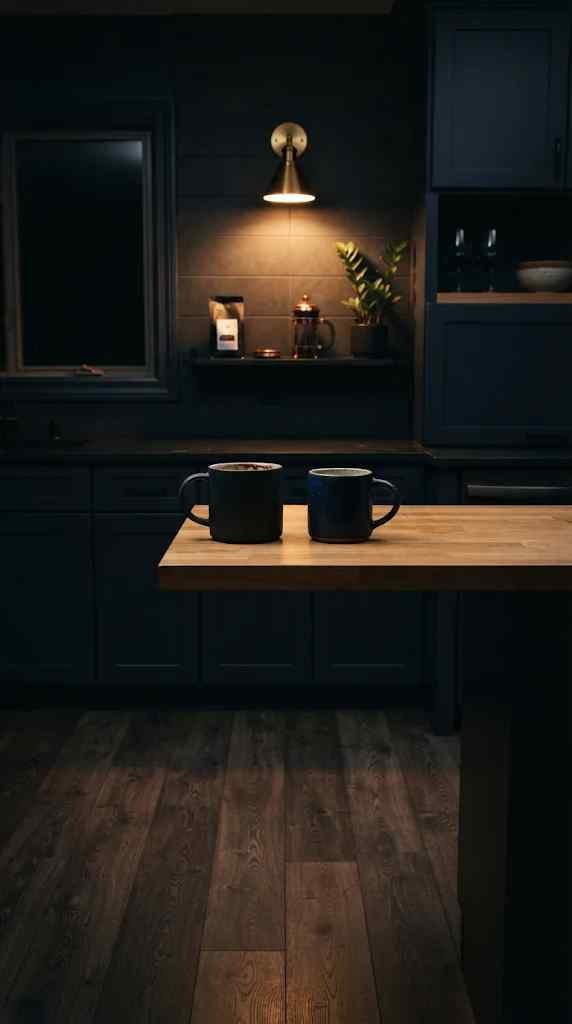
That night, I told Mark. I expected him to worry about his dad. Instead, he laughed so hard he had to sit down on the kitchen floor.
“That’s not the point,” I said. “The point is your parents are here four mornings a week, your dad is running a caffeine smuggling operation out of our breakfast nook, and I haven’t had a quiet latte since Labor Day.”
Mark stopped laughing. “Wait. You want them to stop coming?”
That’s where it got hard. Mark grew up with a dad who worked long hours and graded papers through most of dinner. These coffee mornings were the most time he’d spent just talking with Gary in maybe twenty years. They talked about baseball, about grout, and once Gary even asked his opinion on a retirement account, which had never happened in Mark’s entire life.
“I’m not trying to ban anybody,” I said. “I just built that corner for a reason. Now it feels like a café where I’m the unpaid staff.”
“It’s a coffee bar,” Mark said. “Isn’t the whole point that people gather around it?”
I didn’t have a good answer. We went to bed facing opposite walls, which in our marriage counts as a formal letter of complaint.
Both of us had a point

Here’s what made it hard: neither of us was wrong.
I need about 20 minutes alone in the morning before I can function as an adult. That kitchen coffee bar was my version of a meditation app, the one spot in the house that was fully mine, from the mug rail to the jar of cinnamon I refused to buy in bulk. Losing it felt small and enormous at the same time.
Mark, meanwhile, had found something he didn’t know he’d been missing. His parents weren’t getting any younger. Gary’s checkup had scared them more than they let on, and those mornings were filling a gap that had been there since Mark was twelve.
Then there was Gary, who wasn’t being sneaky to be a jerk. He was a grown man who had lost control of his own coffee pot, and he’d found the one place where he still had a little freedom. Linda wasn’t being pushy either. Retirement had made their house very quiet, and our nook felt warm and busy in a way hers no longer did.
Four reasonable people. One four-foot butcher block. Something had to give.
The Sunday morning truce
The fix started with an honest conversation, which is the least fun way to fix anything.
We invited Linda and Gary over on a Sunday, and before anyone touched the espresso machine, Gary confessed. Linda stared at him for a long, silent moment. “Three cups? Gary, your doctor said one.”
“One,” he said, “with decaf as a chaser.” She did not find this funny. I found it extremely funny and had to pretend I was coughing.
After that, we made a deal. Coffee mornings became a standing date every Sunday and Wednesday, and the bar was open to everyone. On other days, the bar was closed before 9 a.m. (announced by text, though I did briefly consider a sign). Gary would get one real cup at our house, made by Mark, then switch to decaf, which we’d keep in a jar with a label Linda wrote herself.
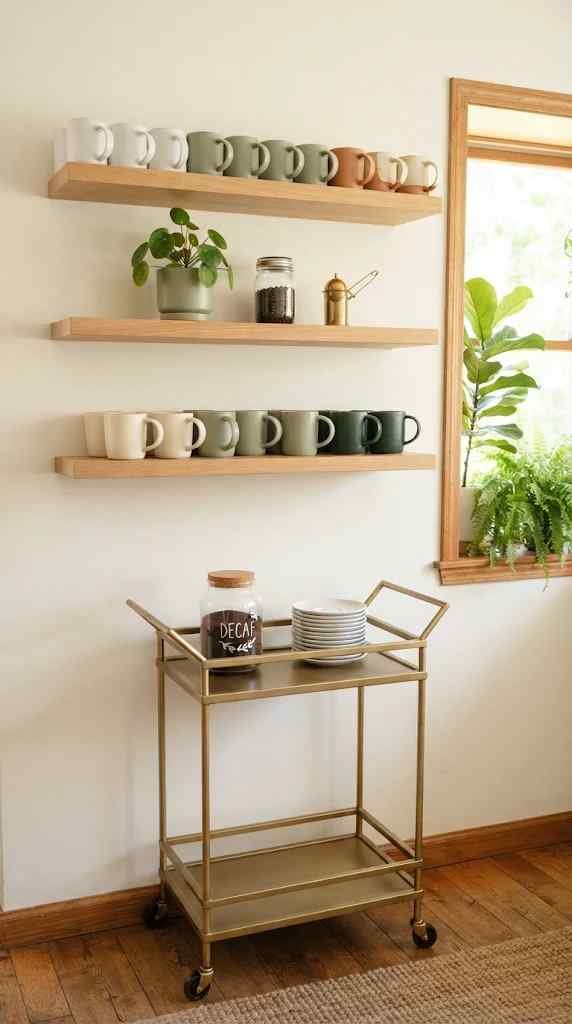
The part that surprised me was the design fix. Mark suggested giving his parents their own shelf, so Linda could organize it however she liked and leave mine alone. We added a third floating shelf on the side wall, plus a small rolling cart for the extra mugs and the decaf, which pulled guest traffic away from the counter where I make my drinks.
Linda organized her shelf by color in under ten minutes. Mine stayed exactly as chipped and chaotic as I liked it.
What happened after
For a while, things calmed down. Sundays turned into a whole event, with croissants, Gary reading the sports page out loud, and Linda asking Mark about work in a way that made him sit up a little straighter. My Tuesday and Thursday mornings came back, and I drank my latte in silence like the sconce-lit yogurt commercial woman I was always meant to be.
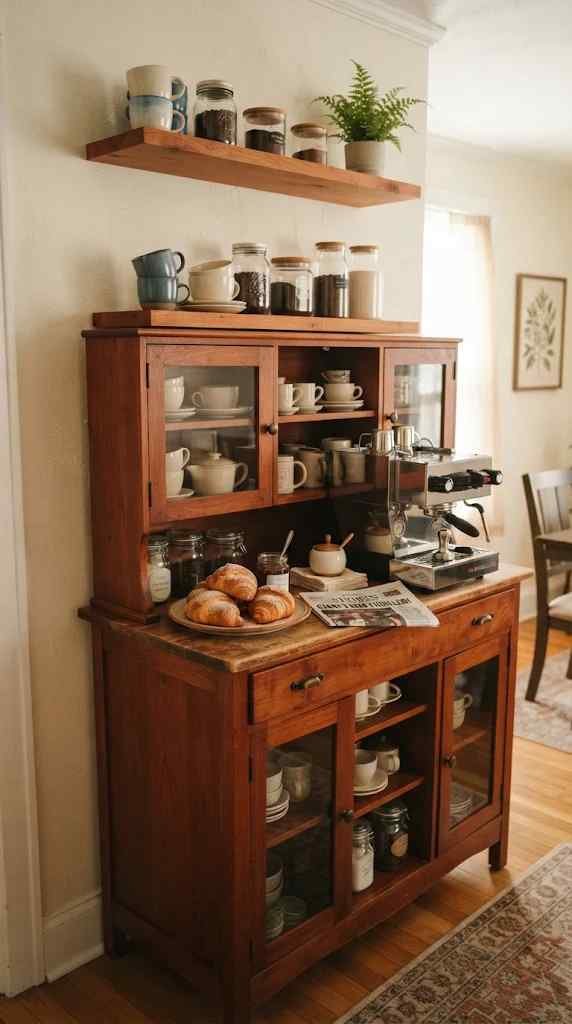
Then, in March, Linda posted a photo to the group chat. It was their dining room hutch, cleared off, with two floating shelves above it and a brand-new espresso machine on top.
“Gary built a coffee bar!” she wrote. “Come over Saturday and try it!”
Mark and I went. Then we went the next Saturday, and the one after that. Gary had read every manual and watched roughly 300 videos, and he now pulls a better shot than any café near us. Last week I caught myself texting Linda at 7 a.m.: “Is the bar open?”
She replied with a thumbs up. Apparently it runs in the family.
Practical tips for a shared kitchen coffee bar
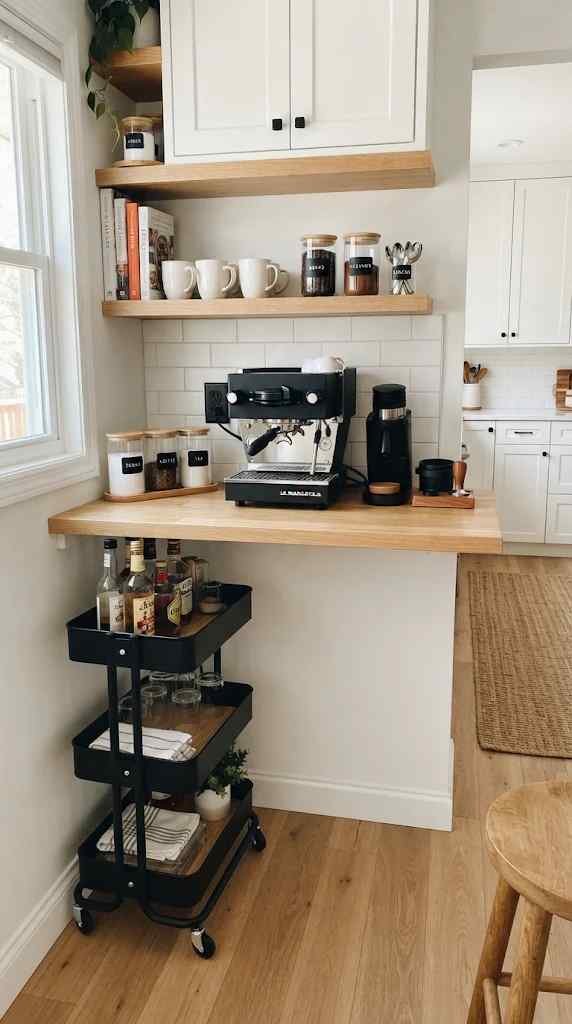
Our little saga taught us more about layout than any Pinterest board ever did. Here’s what actually helps when a coffee bar turns into a family hub.
Keep it out of the main traffic path
- About 36 inches is a common minimum for a kitchen walkway. Where people work or pass each other, 42 to 48 inches is more comfortable. Guidelines vary, so check them against your own layout.
- If guests will stand around the bar, give them a spot that doesn’t block the fridge, sink, or oven.
- A nook, corner, or dining room wall usually works better than the middle of your main prep counter.
Get the height and depth right
- Standard kitchen counters are 36 inches high and about 24 inches deep. Sideboards often run 30 to 36 inches high and 16 to 20 inches deep, so measure your machine before you buy furniture.
- Leave a few inches above and behind the espresso machine so you can open the water tank lid and let the steam out.
- Try to keep 12 to 18 inches of clear landing space beside the machine for mugs and milk.
Plan for power before pretty
- Espresso machines, grinders, and kettles draw a lot of power, and running them all at once on one circuit can trip a breaker.
- Outlets near a sink should be GFCI-protected. If you need new ones, hire a licensed electrician.
Give guests their own zone
- A separate shelf, drawer, or rolling cart for guest mugs, decaf, and tea keeps your main workspace clear.
- Floating shelves spaced roughly 12 to 15 inches apart fit most mugs. Tall travel cups need more room.
- Label your jars (especially the decaf) so nobody has to guess.
Set house rules that fit your household
- Decide on “open hours” if you need quiet time. A friendly text goes over better than a sign.
- Agree on who restocks beans and milk, so one person isn’t quietly paying for everyone’s habit.
- Revisit the setup after a month. What works for two people may not work for six.
CONCLUSION
For a long time I thought the flaw was the location, or the size, or posting that photo in the group chat. But the bar did exactly what a good gathering spot is supposed to do: it gave people a reason to show up.
The fix wasn’t a smaller bar or a locked door. It was being honest about what each of us needed from that corner, and then making a little room for all of it. The best kitchen coffee bar turned out not to be the prettiest one. It’s the one where everybody knows which shelf is theirs.