
Brown Bedroom
By Anna Grace | 12 March 2026
Brown Bedroom: Why Your Cozy Sanctuary Doesn’t Have to Be Beige or Gray
Brown bedrooms used to scream “dated” and “boring.” Now? They’re quietly becoming the anti-trend that actually sticks around and for good reason. Your bedroom gets maybe 10 hours a day of your actual attention, so why treat it like a showroom designed for strangers? Brown creates warmth that neutrals can’t replicate, and it does something gray never will it makes you feel something the moment you walk in.
I spent two years in a white bedroom, convinced I was being minimalist and chic. What I actually was? Cold and wired at 11 PM. The second I painted my walls a warm chocolate brown, something shifted my room stopped feeling like a hotel and started feeling like mine. That’s the real estate you’re shopping for here.
The Psychology of Brown in Your Bedroom

Brown isn’t just a color; it’s basically an architectural hug. Your brain associates it with earth, stability, and comfort the exact trifecta you want when your head hits the pillow. Brown naturally lowers cortisol levels compared to jarring brights or clinical whites, which means your nervous system actually relaxes around it instead of staying on edge.
Different shades hit differently, too. Deep chocolate browns feel luxurious and protective they’re perfect if you want your bedroom to feel like a cocoon. Lighter, warmer taupes and taupes-adjacent browns still deliver comfort without the cave-like intensity. The right brown shade works with your body’s natural wind-down instead of fighting against it.
Scientists have studied color psychology for decades, and the findings are consistent warm, earthy tones reduce anxiety and promote parasympathetic nervous system activation. That’s the fancy way of saying your body literally chills out. Cool grays and whites activate alertness useful in an office, catastrophic in a bedroom. A brown bedroom sends a chemical signal to your brain It’s safe to rest here.
Why does this matter for your Google search about brown bedrooms? Because you’re not just picking a color you’re engineering an environment where sleep actually happens better. That’s the kind of practical stuff that separates a brown bedroom that works from one that just exists. Studies show people in warm-toned rooms report better sleep quality, less insomnia, and fewer nighttime awakenings compared to neutral or cool-toned spaces.
The emotional dimension matters too. Brown evokes feelings of stability and groundedness qualities your mind craves after a chaotic day. It’s why people describe brown bedrooms as “comforting” and “welcoming” rather than “trendy” or “Instagram-worthy.” And honestly? That’s the entire point of a bedroom.
Styling Your Brown Bedroom Without It Looking Like a Log Cabin
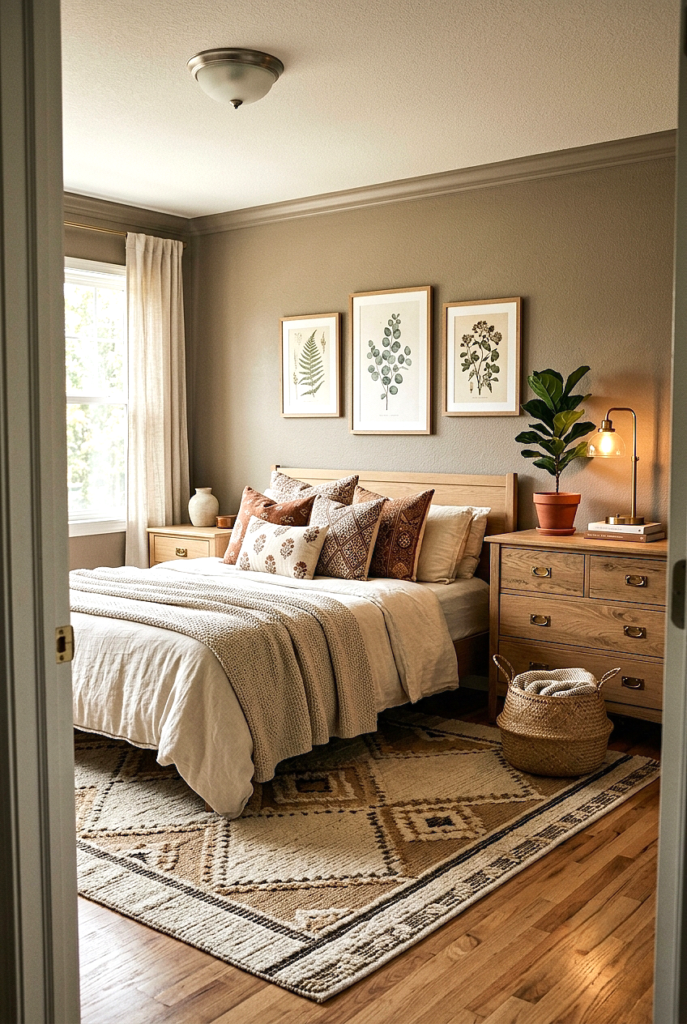
Brown + brown + brown = yes, actually. Layering different brown tones is the secret move that makes the whole room feel intentional instead of accidental. Mix a warm taupe wall with cognac bedding and a lighter caramel accent chair. The variation keeps it sophisticated.
But here’s the real magic: complement brown with unexpected textures and lighter neutrals. White or cream linens pop against brown walls. Natural wood tones (oak, walnut, lighter pine) create visual interest without clashing. Throw in a few plants, and suddenly you’ve got a brown bedroom that feels alive, not dim.
Textures are your invisible weapon here. Linen, cotton, wool, leather, and natural fibers all play beautifully with brown. A chunky knit throw draped over your bed, a jute area rug underfoot, linen curtains these aren’t decorative choices, they’re architectural elements that prevent your brown bedroom from feeling like a sensory void.
Plants deserve their own mention because they’re basically the cheat code for making brown bedrooms feel dynamic. A snake plant on the dresser, a pothos trailing from a shelf, a fiddle-leaf fig in the corner the green breaks up the brown and adds visual rhythm. Plus, plants improve air quality, which your sleeping brain loves.
Artwork is another way to inject personality without clashing. Abstract pieces with warm tones complement brown. Landscape photography in natural frames looks effortless. Even simple line drawings or botanical prints work because your brown walls act as a neutral gallery backdrop. The art becomes the star, not fighting for attention against the walls.
Lighting fixtures are styling elements too. Brass or copper finishes feel intentional with brown. A sculptural lamp base, woven pendant, or vintage-inspired sconce adds character and prevents the room from feeling sterile. These aren’t just functional they’re visual anchors that make your brown bedroom feel curated.
Nailing the Right Brown Shade for Your Space
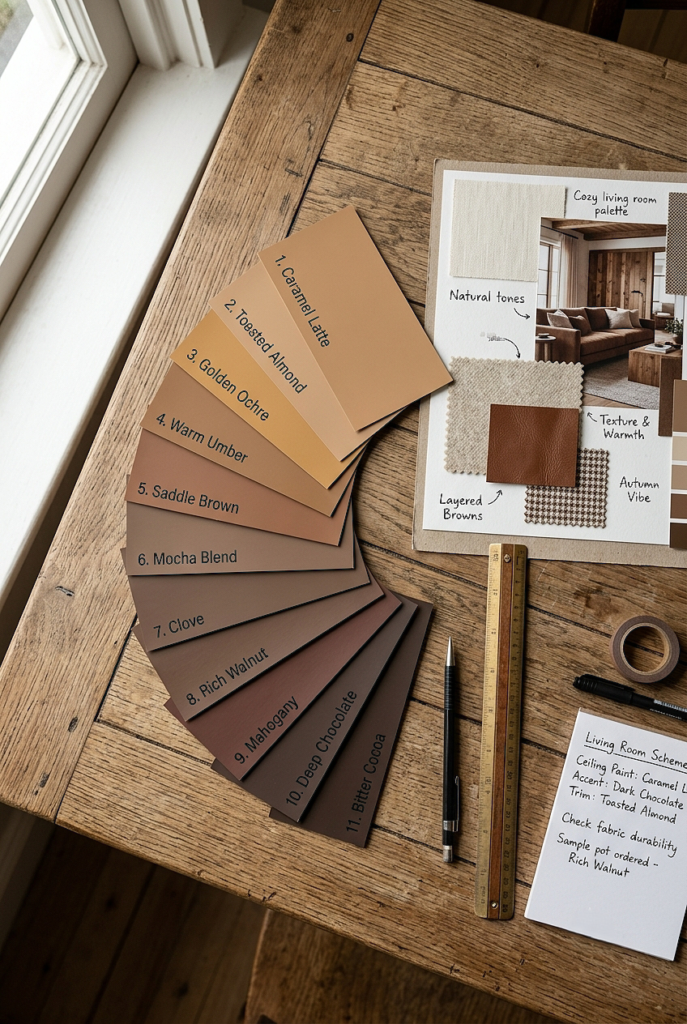
Here’s where people fumble they think all browns are interchangeable. Wrong. The undertone is everything. Cool undertones (browns with gray or taupe leaning in) suit bedrooms with northern light. Warm undertones (browns with red, orange, or golden notes) come alive in rooms with warmer, afternoon light.
Test your paint color at three different times of day before committing. Morning light, midday sun, and artificial evening light will show you three different versions of the same color. It sounds tedious, but you’re staring at this for the next 5+ years spend 15 minutes with samples. 🙂
The undertone rabbit hole goes deeper than most people realize. A brown that looks perfect at 2 PM under natural light might feel muddy and dull at night under artificial lighting. This is why paint stores let you take home large samples on cardboard. Tape them to your wall, live with them for a few days, and notice how your mood shifts around each shade. Your subconscious knows the difference even if you can’t articulate it.
Small bedrooms do better with lighter browns (think cognac, caramel, warm taupe) because they don’t swallow the space. Larger rooms can absolutely handle deeper, more dramatic browns without feeling cramped. And if you’re renting? Wallpaper, removable peel-and-stick options, or an accent wall get you the brown bedroom vibe without landlord drama.
Popular brown shades for bedrooms include warm taupe, terracotta-leaning browns, soft cognac, and honey tones. Each hits different emotional notes. Warm taupe feels serene and sophisticated; terracotta leans slightly earthy and boho cognac feels rich and mature; honey tones radiate coziness without heaviness. Your choice should match not just your lighting but also the feeling you want to wake up to every morning.
Don’t overlook finish options either. Matte finishes absorb light and feel moody; eggshell finishes have subtle sheen that keeps brown from feeling flat satin finishes are the Goldilocks zone reflective enough to brighten without being glossy. For brown bedrooms, eggshell or satin beats matte because brown can feel too heavy without any light reflection at all.
The Lighting Question: Brown Bedrooms Need Intentional Brightness
Dark walls absorb light, so your brown bedroom won’t automatically glow without help. This isn’t a dealbreaker it’s just a fact you work with. Layer your lighting a main fixture (recessed lights or a simple chandelier), bedside lamps with warm bulbs (2700K color temperature), and maybe a floor lamp for reading.
Mirrors are your silent partner here. A large mirror opposite a window bounces natural light around the room and keeps it from feeling cave-like. IMO, people skip mirrors in bedrooms and then wonder why their space feels dim. Don’t be that person.
The brown bedroom actually hides clutter better than lighter rooms, so if you’re not a compulsive tidier, this is accidentally perfect. But that doesn’t mean you should skip good lighting design entirely warmth and visibility should coexist.
Strategic mirror placement can transform how light moves through your brown bedroom. A leaning mirror across from your window multiplies natural light without looking obvious. If you have two windows, position mirrors to bounce light from one to the other. This simple move makes a brown bedroom feel bright and airy instead of dark and heavy.
Bedside lighting deserves special attention because you interact with it every single night. Dimmers let you adjust brightness for different moods bright for getting ready, dimmed for winding down. Warm bulbs (2700K) promote melatonin production, so your body recognizes it’s time to sleep. Cool bulbs (4000K+) trick your brain into thinking it’s daytime. If your brown bedroom has only cool-bulb fixtures, you’re fighting biology. Switch them out.
Consider accent lighting too. Picture lights above artwork, under-shelf lighting on dressers, or string lights (yes, really they work in adult bedrooms) add ambiance without overhead harshness. Brown bedrooms benefit from layered, soft lighting that feels intentional rather than functional.
Don’t forget natural light optimization. Sheer curtains filter bright morning sun while letting diffused light through. Blackout linings give you control without heavy drapes. If you have a brown bedroom facing west, afternoon sun can feel intense translucent shades are your friend here.
Brown Bedroom on a Budget: Where to Invest and Where to Save
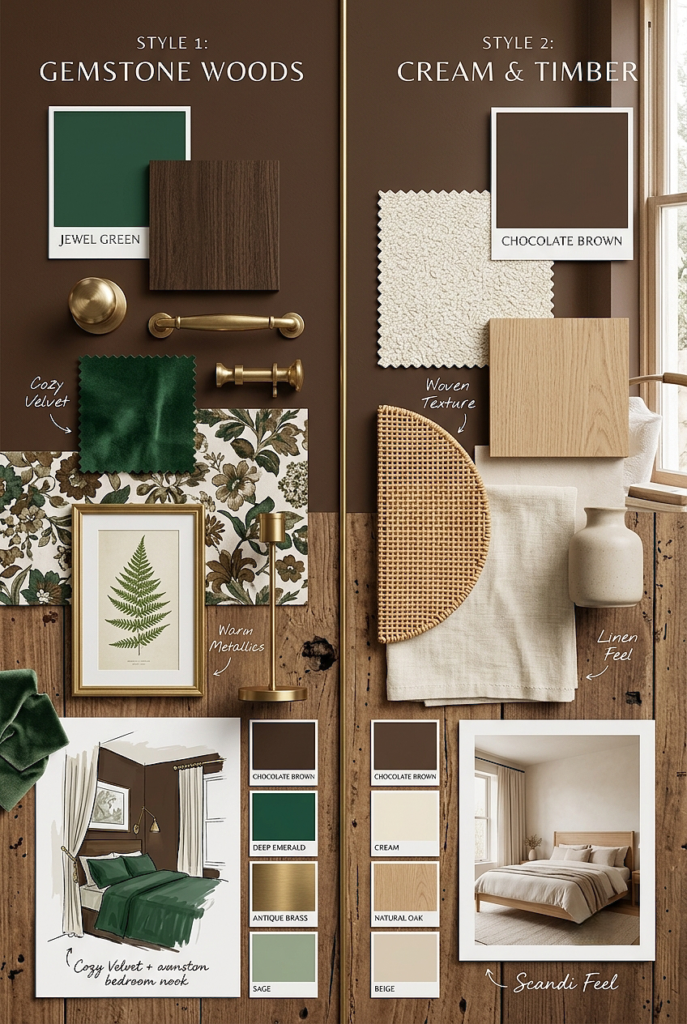
Paint is your biggest bang-for-buck investment. A gallon of quality paint costs $40–60 and transforms the entire room. Bedding is the other heavy lifter invest here because you interact with it nightly. Mid-range options from Parachute, Brooklinen, or even Target’s Threshold line deliver comfort without requiring a second mortgage. Cheap, scratchy sheets will make you hate your brown bedroom, so don’t skimp.
Everything else? Mix and match fearlessly. Thrift a wooden dresser and refinish it. Grab throw pillows from discount retailers. Hunt for art at estate sales and frame it yourself. Your brown bedroom is a long-term space, not a one-weekend makeover, so you can build it thoughtfully instead of dropping $5,000 at once.
Lighting fixtures are worth buying right. Cheap lamps flicker and feel janky. Spend $50–100 per lamp for something that lasts and doesn’t remind you of a dorm room.
The budget breakdown matters because brown bedrooms can feel expensive even when they’re not. A rich, intentional brown bedroom costs less than you’d think paint, quality bedding, a few thrifted pieces, and strategic shopping. Track your spending over three months instead of trying to do everything at once. A $20 throw pillow this month, a $40 lamp next month, a $100 mirror the month after adds up to a fully realized space without financial stress.
Thrifting is your secret weapon here. Brown bedrooms work beautifully with vintage wood furniture it ages gracefully and pairs naturally. Facebook Marketplace, local thrift stores, and estate sales have endless options. Refinishing a piece yourself is cheaper than buying new and feels personally rewarding.
DIY elements boost your budget further. Paint your own wooden frames. Create art prints from affordable sources (Unsplash, Pexels) and frame them affordably. Rearrange what you already own before buying new. Sometimes the best brown bedroom design comes from working with constraints instead of unlimited money.
FAQ’s
Can a brown bedroom work in a small space without feeling cramped?
Yes. Choose lighter brown shades like caramel or cognac, use mirrors to bounce light, and keep linens neutral.
What’s the best paint finish for brown bedroom walls?
Eggshell or satin finishes work best They’re washable, slightly reflective to brighten the space, and hide minor wall imperfections.
Do brown bedrooms actually help with sleep quality?
Absolutely. Brown calms your nervous system and lowers stress, promoting deeper sleep better than harsh, jarring colors ever could.
How do I add modern style to a brown bedroom?
Layer textures, use geometric patterns, add brass accents, pick sleek furniture. Brown works perfectly with contemporary, minimalist design.
What’s the ideal lighting temperature for brown bedrooms?
Use warm 2700K bulbs for bedside lamps and main fixtures. This color temperature complements brown’s warmth and promotes relaxation.
CONCLUSION
If your current bedroom doesn’t make you want to stay in it, if you’re waking up tired despite sleeping 8 hours, or if you’re just bored with gray and white then yeah, try brown. The worst case? You repaint in two years. The best case? You’ve built yourself a sanctuary that actually works.
Brown bedrooms are having a moment because they work. They’re not a trend with an expiration date they’re a return to what makes spaces feel safe. Your bedroom doesn’t need to impress anyone. It needs to hold you while you sleep and make you smile when you walk in. Brown the right brown does that.
Consider this your permission slip to stop chasing design trends and start building spaces that serve your actual life. A brown bedroom might be exactly what your tired, overstimulated nervous system has been begging for.