
King bedroom
By Anna Grace | 10 March 2026
Your King Bed Should Make You Want to Stay in Bed, Here’s How to Make That Happen
Your king-size bed takes up roughly 40% of a typical bedroom floor space, which means it absolutely deserves to be the star of the show not an afterthought shoved against whatever wall works logistically. Most people treat the sleeping area like a dumping ground for whatever furniture survived the move, then wonder why they don’t feel like a royalty in their own room. The good news? A few strategic design choices can turn that sprawling mattress into the centerpiece of a genuinely beautiful retreat.
Frame Selection: The Foundation of Everything
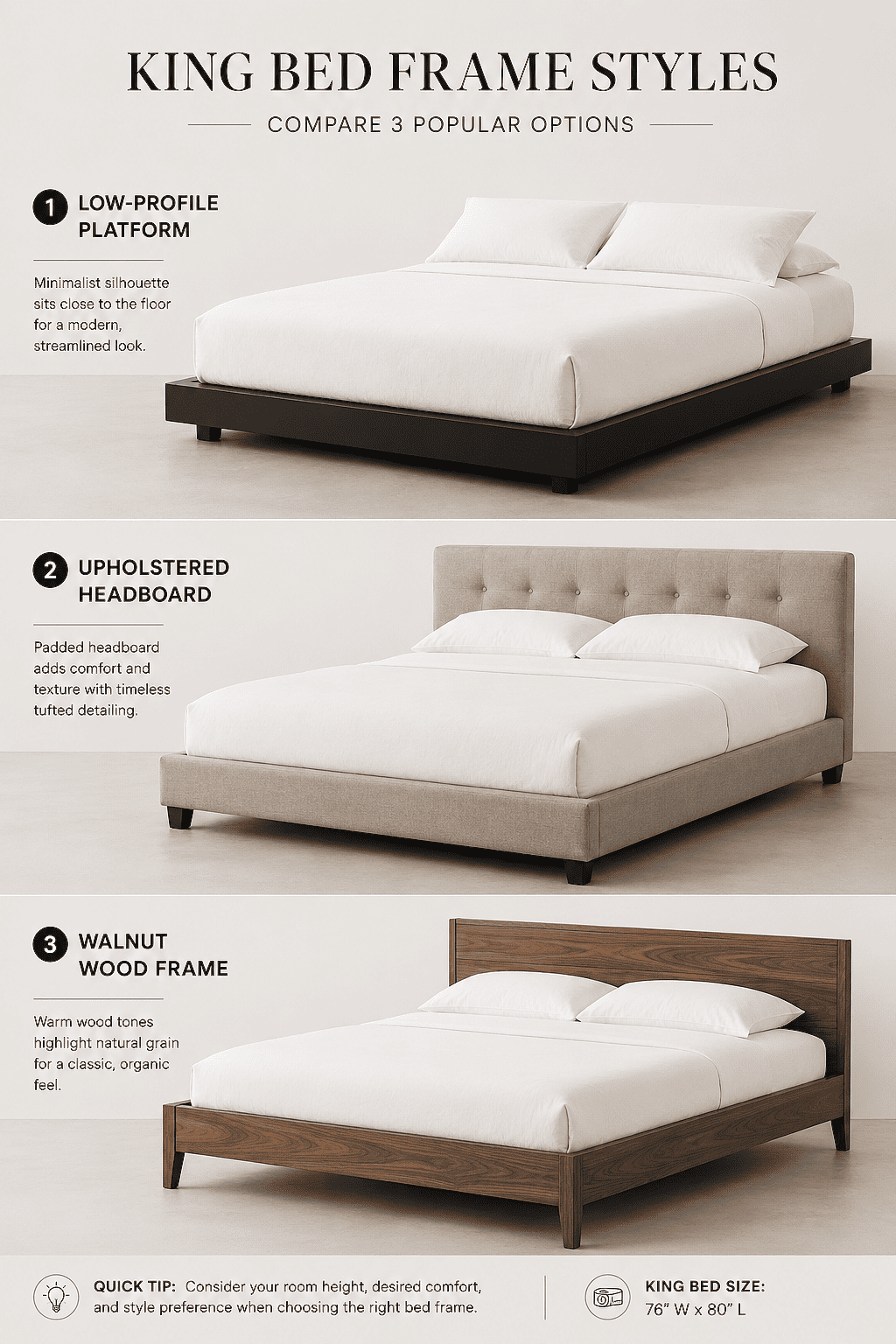
Here’s the thing about king bed frames they’re not all created equal, and the wrong choice can make your entire room feel either cramped or chaotic. Your frame does more than hold up a mattress it sets the visual tone for your whole sleeping space.
Go with a simple platform frame if your room skews minimal or modern. These low-profile designs don’t consume visual weight, which matters when you’re working with a king’s footprint. Upholstered frames, on the other hand, add instant softness and luxury I’m talking tufted headboards in charcoal linen or crisp white cotton. They work beautifully if your style leans toward contemporary or mid-century vibes.
Wood frames bring warmth and grounding energy. Walnut or reclaimed oak creates a focal point that feels intentional rather than inserted. If you’re going the wood route, make sure the rest of your furniture plays nicely with it mixing finishes works, but it needs intention, not accident.
Panel headboards versus upholstered versus metal? This choice shapes what you hang on your walls, how you style your nightstands, and even what kind of lighting makes sense. A dramatic wood headboard with geometric slats doesn’t want the same vibe as a soft upholstered one wrapped in linen.
Material, Durability, and Visual Impact
The material you choose for your king bed frame carries more weight than most people realize and I’m not just talking about structural integrity. Your frame choice affects how your bedroom photographs, feels in different lighting conditions, and adapts as your style evolves.
Let’s talk upholstered frames in detail. If you go this route, linen is the workhorse fabric. It breathes, it ages gracefully with a lived-in patina that actually looks better over time, and it pairs with almost every design direction. Velvet upholstery screams luxury but demands maintenance dust shows, and pet hair clings like it’s on a mission. Leather or faux leather frames read as either ultra-modern or slightly sterile depending on their shade and surrounding context. Cotton blends offer a middle ground between durability and softness, though they can pill if you’re rough on them.
Wood frame construction matters just as much as the wood type itself. Solid wood frames will outlast engineered alternatives by decades, but they cost more upfront. Hardwoods like oak, maple, and walnut handle seasonal humidity shifts without warping. Softwoods like pine are cheaper but more prone to movement as humidity changes. If your bedroom gets temperature swings or you live somewhere with dramatic seasonal shifts, solid hardwood is the smarter long-term investment.
The footprint of your frame deserves consideration too. Some king headboards eat 8-10 inches of bedroom depth with their padding and structure. If your room’s already tight, a sleeker frame prevents that claustrophobic feeling. Conversely, if you’ve got generous square footage, a tall, heavily upholstered headboard can anchor the space beautifully and justify investing in a statement piece.
Layering Bedding Like You Actually Know What You’re Doing
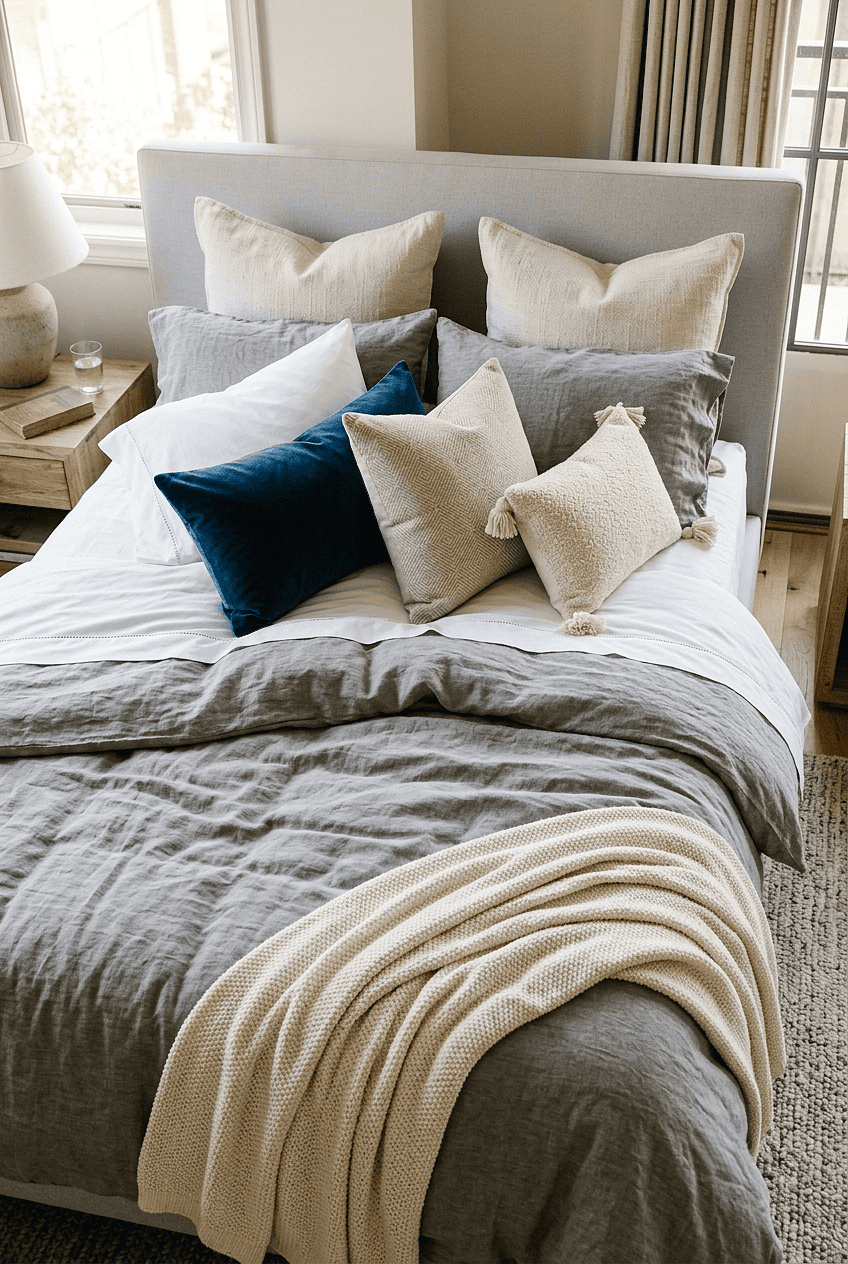
Nobody wants a bedroom that looks like a furniture showroom. Real spaces have depth, texture, and a sense that someone actually sleeps there and enjoys it. This is where bedding layers change the game.
Start with quality sheets and I mean this genuinely, not as a marketing pitch. If your king bed has high-thread-count cotton sheets underneath everything else, every other choice compounds that softness. Then add your duvet or comforter, but here’s the twist pick something that contrasts slightly with your sheets. A cream duvet over ivory sheets looks flat. Cream duvet over soft gray sheets? That’s dimension.
Throw a throw blanket across the foot of the bed. This serves both practicality and aesthetics it’s there when you want extra warmth, but it also adds visual interest and prevents your bed from reading as “lump under giant bedspread.”
Pillows deserve their own attention. Aim for an odd number (three or five) arranged against your headboard, mixing sizes and textures. A European sham with decorative pillows in front, a sleeping pillow behind this isn’t complicated, but it feels intentional. Mix your fabrics: linen, velvet, a subtle pattern next to solids. Your brain reads variety as “curated” rather than “whatever was on sale.”
Fabric Psychology, Seasonal Swaps, and the Color Game
Bedding sits in this weird intersection between function and emotion. What you surround yourself with while sleeping actually impacts your sleep quality and how rested you feel, even if you’re not consciously aware of it.
Linen bedding deserves its own category. Yeah, it wrinkles. That’s not a flaw it’s character. Linen actually becomes softer and more comfortable with every wash, which is backwards from synthetic alternatives that break down over time. Linen regulates temperature better than cotton, pulling heat away from your body in summer and insulating in winter. If you live in a warm climate or share a bed with someone who runs hot, linen is your answer. The cost premium exists because linen genuinely lasts longer and performs better.
Seasonal bedding swaps don’t require buying entirely new sets each time temperatures shift. Keep summer-weight layers (lightweight quilts, breathable cotton) and winter-weight options (heavier duvets, warmer linen blends) stored appropriately. This approach costs less than buying four complete sets and gives your bedroom a fresh feeling throughout the year.
Texture layering is where magic happens. If your sheets are smooth percale, your duvet could be textured a quilted duvet, a gathered fabric, something with visual depth. Your throw blanket introduces yet another texture. Your decorative pillows vary between velvet (soft, light-absorbing, slightly luxe), linen (structured, slightly nubby, casual), and maybe a patterned option. When textures vary, your eye travels across the bed differently, and the space reads as more intentional.
Nightstands and Lighting That Actually Serves You
Most king bedrooms fail at nightstands. People either skip them entirely to save space (a mistake) or shove tiny tables that look comically small against a king. Go bigger or go home. Your nightstands should be proportional to your bed we’re talking tables that can actually hold a lamp, a book, a water glass, and maybe your phone without looking crowded.
Matching nightstands are fine, but offsetting different styles (a wood table on one side, a metal frame on the other) reads as more interesting and contemporary. Height matters too: aim for your nightstand to be roughly the same height as your mattress top, so reaching for your phone doesn’t feel like an awkward stretch.
Lighting choices make or break the vibe. A single overhead fixture in a bedroom is basically a crime your space needs ambient, task, and accent lighting. Bedside lamps with warm bulbs (around 2700K color temperature) create that “I want to stay in here” feeling. A reading light mounted on the wall above the headboard handles task lighting without taking up nightstand real estate. IMO, sconces are the sleeper MVP of bedroom design. They’re space-efficient, they look intentional, and they create pockets of warm light that feel infinitely more welcoming than a bare bulb.
Functional Design, Smart Placement, and Brightness Strategy
Nightstands aren’t just side tables they’re functional command centers for your bedroom. What you choose to place there and how you organize it directly affects your sleep quality and morning routine.
Material choices for nightstands follow the same logic as your frame they should feel intentional together. If you’re going wood, matching your bed frame’s wood type (or at least staying in the same warmth family) creates cohesion. If your frame is upholstered, nightstands in a contrasting material wood, metal, or even stone surfaces prevent the room from feeling overstuffed with texture. Metal nightstands in brass or matte black pair beautifully with upholstered frames and bring contemporary edge.
Open shelving nightstands (metal frames with just a surface and no drawers) look modern and airier but require aggressive styling discipline. Everything on view becomes part of your bedroom’s aesthetic, so books need to be curated for appearance, and clutter becomes immediately visible. If you’re naturally tidy and intentional about what you display, open shelving works. If you’re someone who tosses whatever’s handy onto your nightstand, closed storage saves you from visual chaos.
Now, lighting strategy this is where amateur bedrooms diverge from actually functional ones. Your bedroom needs at least three separate light sources operating on different circuits or controls. The overhead fixture handles brightness for the room (cleaning, getting dressed, finding things). Bedside task lighting (lamps with shades that diffuse light rather than create spotlights) handles the specific areas where you’re reading or working. Accent lighting wall sconces, strip lighting, indirect ambient sources creates the mood and warmth.
Color temperature affects sleep more than people realize. Bulbs at 2700K (warm white) signal your brain that it’s evening and time to wind down. Bulbs at 4000K (cool white) feel more activating and are better for bathrooms and kitchens. Your bedroom should run primarily on 2700K bulbs, especially bedside lamps and any lighting you use within an hour of sleep. The blue light in cool-temperature bulbs actually suppresses melatonin production, keeping you alert when you should be winding down.
Walls, Color, and the Personality Question
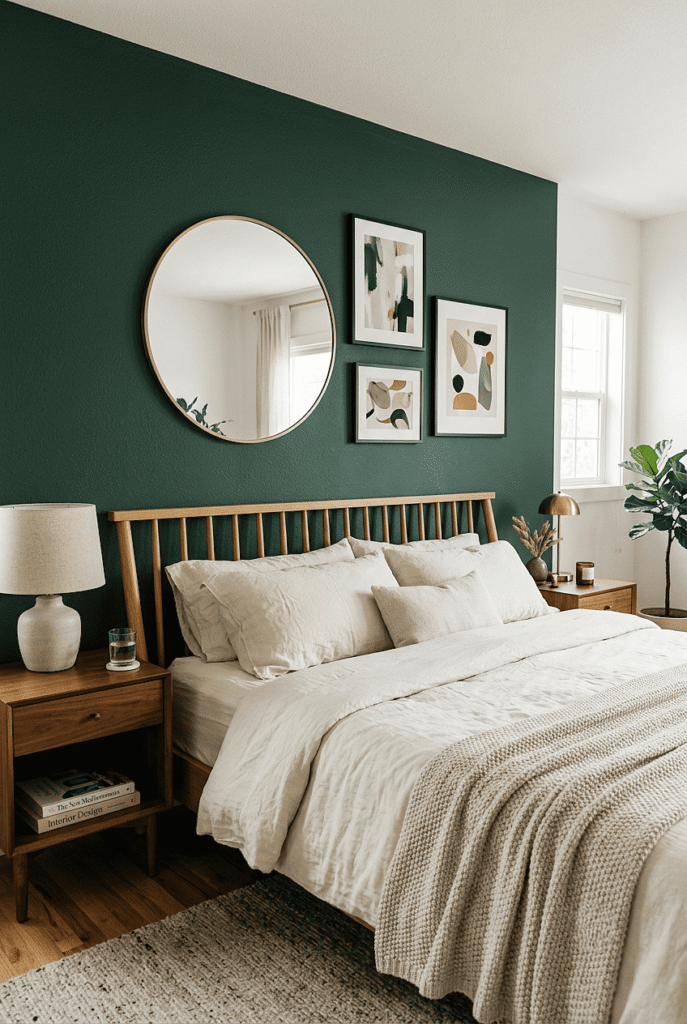
Your walls either support your king bed or compete with it, and most bedrooms accidentally choose option two. A feature wall behind your headboard doesn’t need to scream it just needs to make sense. Deep forest green with warm wood? That’s a vibe. Soft charcoal with brass hardware? Sophisticated. Pale blue that pulls from your bedding? Cohesive.
Neutral walls aren’t boring if you choose them intentionally. Warm greige, soft taupe, or creamy off-white create a canvas that lets your bedding, art, and styling speak. The mistake happens when you pick a neutral and then treat it like white space to ignore. Even neutral walls need thought.
FYI: What works on your wall depends partly on your lighting situation. A color that looks serene in morning light might feel heavy at night under certain fixtures. Stand in your room at different times before committing.
The Psychology of Color, Accent Strategies, and Surface Finishes
Color in your bedroom operates on both aesthetic and neurological levels. The shade you choose doesn’t just look a certain way it actually affects your mood, relaxation response, and sleep quality.
Deep, saturated colors forest green, navy, charcoal create cocooning spaces that feel intimate and calm. These work particularly well for master bedrooms where you want to feel separated from the rest of your home’s activity. The trade-off: darker walls can make smaller rooms feel claustrophobic. If your king bedroom is already modest in square footage, test deep colors on a large swatch before committing. View the swatch at different times of day and under your actual bedroom lighting.
Soft, muted tones dusty blue, warm gray, pale sage offer the calm benefits of saturated colors without the visual weight. These are psychologically restful but read as fresher and more spacious. They’re the Goldilocks choice for many people because they’re forgiving with different lighting conditions and easier to style around. Most designer bedrooms land in this category because it’s a proven formula.
Warm neutrals greige, warm taupe, cream work with almost every design style and let your bedding, art, and furnishings become the focal points. They read as sophisticated without demanding attention, which matters if you have multiple architectural features competing for focus (unusual ceiling, large windows, prominent closet doors).
Two-tone wall treatments (imagine the bottom half in soft gray, the top half in cream with a horizontal divider) create architectural interest and vintage charm, though they require precision to look intentional rather than accidental. This works better in rooms with crown molding or architectural details that the treatment can echo.
Wallpaper for your king bedroom’s feature wall requires careful selection. Busy patterns compete with your bedding’s texture and style. Large-scale geometric or botanical prints read modern and intentional. Subtle texture papers in neutral tones add depth without pattern noise. Removable wallpaper gives you flexibility if your style shifts, though it’s more expensive than paint.
Art and mirrors on your walls should feel intentional, not random. A single large piece above your dresser or between nightstands commands attention and feels curated.
Color psychology in action: if you struggle with anxiety, warm earth tones and soft greens calm your nervous system. If you feel lethargic in winter, slightly warmer tones with brass accents combat the seasonal mood dip. If you’re naturally energized and need help winding down, softer, cooler tones support that intention. Your bedroom color should serve your actual emotional needs, not just photograph well.
Layout Decisions That Make Sense
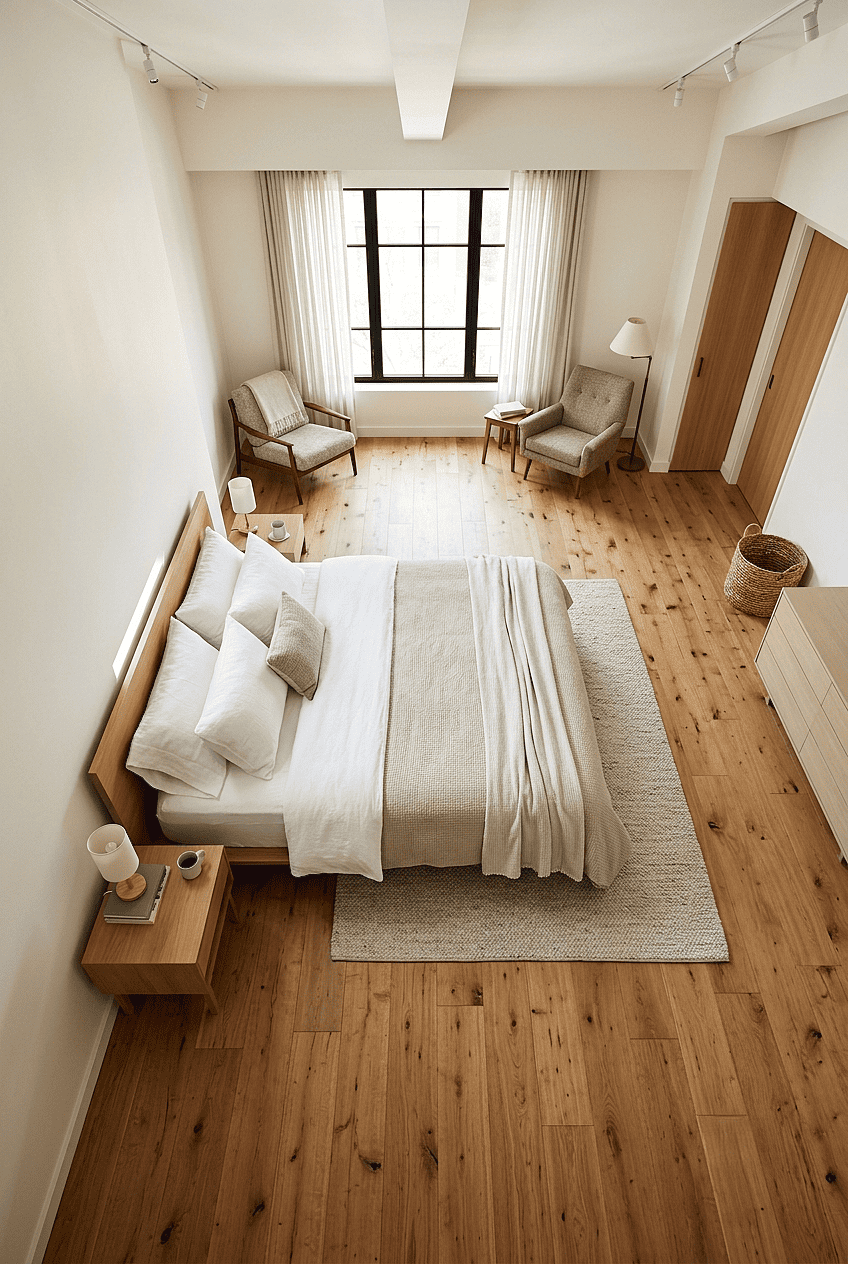
King bedrooms have specific spatial challenges. Where do you actually place a bed this size? Centered on the longest wall is the obvious move, but if your room’s awkwardly shaped, sometimes angling a bed in a corner or floating it away from the wall creates better energy and function.
Floating your bed (positioning it away from the wall rather than pressed against it) feels luxurious and modern, though it requires more visual interest on the wall behind it. Pressing it against a wall is practical and space-conserving, especially if your room isn’t massive.
Your remaining floorspace matters. You should be able to walk around your bed without performing gymnastics. If you can only fit a nightstand and maybe a dresser, lean into that constraint go minimal and let the bed itself be the focal point. If you have generous square footage, a seating area (a reading chair, a small bench) makes your bedroom feel like an actual retreat rather than just a sleeping zone.
Traffic Flow, Furniture Arrangement, and Adapting to Room Dimensions
Bedroom layout isn’t just about what looks good it’s about how your body moves through the space daily. Poor layout creates friction in your routine, while thoughtful arrangement makes your morning and evening flows effortless.
Traffic patterns matter more than aesthetics in determining where your bed should live. If your bedroom door opens on the right side and your closet is on the left, positioning your bed along the wall opposite the door lets you move naturally from entry to closet without squeezing past furniture. If your door opens wide and your room has an obvious flow, work with that flow rather than against it.
In smaller rooms (12×12 feet), pushing your bed against a wall maximizes usable floor space. You gain an extra 3-4 feet of walking room, which feels significant in tight quarters. This isn’t a design compromise it’s a smart spatial solution that lets you include other elements (a dresser, a chair, shelving) that make the room feel complete.
Bed placement relative to windows affects both functionality and aesthetics. Placing your headboard opposite a window gives you natural light first thing in the morning (great for waking, potentially annoying if you like darkness for sleep).
Angling your bed in a corner works if your room layout makes it feel natural rather than forced. This arrangement works better in rooms with lower ceilings or awkward dimensions because it creates visual balance and doesn’t emphasize the space’s limitations.
Dresser placement near your closet (if applicable) creates a logical dressing zone where you’re not walking across your entire bedroom in different states of undress. If your room’s layout makes this impossible, position your dresser along a wall that doesn’t interrupt your primary path from bed to door or bed to closet.
Seating arrangements in larger king bedrooms feel luxurious and functional. A reading chair positioned near a window with a small side table creates a dedicated space for those times you want to sit without lying in bed. An upholstered bench at the foot of the bed provides seating and extra storage (if it opens) without taking up floor space.
Rug placement grounds your bed visually and defines the sleeping zone. A rug running the width of your bed (roughly 8-10 feet for a king) that extends 2-3 feet on each side creates a clear boundary. This works especially well if your bed floats away from walls. In smaller rooms with wall-pressed beds, a rug just at the foot of the bed adds warmth underfoot without consuming floor space.
Storage solutions in tight king bedrooms require creativity. Under-bed storage in rolling bins handles seasonal items. Wall-mounted shelving above your dresser maximizes vertical space. Nightstands with drawers provide closed storage rather than adding new furniture pieces.
FAQ’s
Which king bed frame material lasts the longest?
Solid hardwood frames like walnut and oak outlast engineered options by decades with proper care.
How do I fit a king bed in a 12×12 bedroom?
Position the bed against a wall, skip extra furniture, and use floating shelves for storage.
Do brown bedrooms actually help with sleep quality?
Soft neutrals like greige and taupe or muted blues create calming, sleep-supporting environments naturally.
Why do you need warm lighting in a king bedroom?
Warm 2700K bulbs reduce blue light, supporting melatonin production and significantly better sleep quality.
What’s the quickest way to upgrade a basic king bedroom?
Switch to quality layered bedding with varied textures and add intentional warm lighting immediately.
CONCLUSION
Your king bedroom doesn’t need to be magazine-perfect or require a second mortgage to feel amazing. It needs to reflect how you actually want to spend your time there. That means considering what makes you happy whether that’s soft textures, moody colors, lots of light, or complete minimalism and committing to it without apology.