
japandi bedroom
By Anna Grace | 20 March 2026
Create Your Perfect Japandi Bedroom: Minimal Aesthetics Meets Cozy Functionality for Better Rest
Your bedroom should feel like a hug, not a showroom. That’s the entire philosophy behind a Japandi bedroom, and honestly? It’s the design movement that’s been quietly solving problems we didn’t even realize we had.
If you’ve scrolled through design Instagram lately, you’ve probably noticed the obsession with minimalism, but it somehow got cold and sterile. On the flip side, cozy interiors are trending hard, but they often veer into clutter territory. Japandi splits the difference. It combines Japanese principles of simplicity and intentionality with Scandinavian warmth and functionality creating bedrooms that are simultaneously peaceful and genuinely livable.
The beauty of this approach is that it doesn’t feel precious or hard to maintain. It’s not about perfection; it’s about creating a space that supports better rest and mental clarity without demanding constant upkeep.
Understanding Japandi: More Than Just a Design Mashup
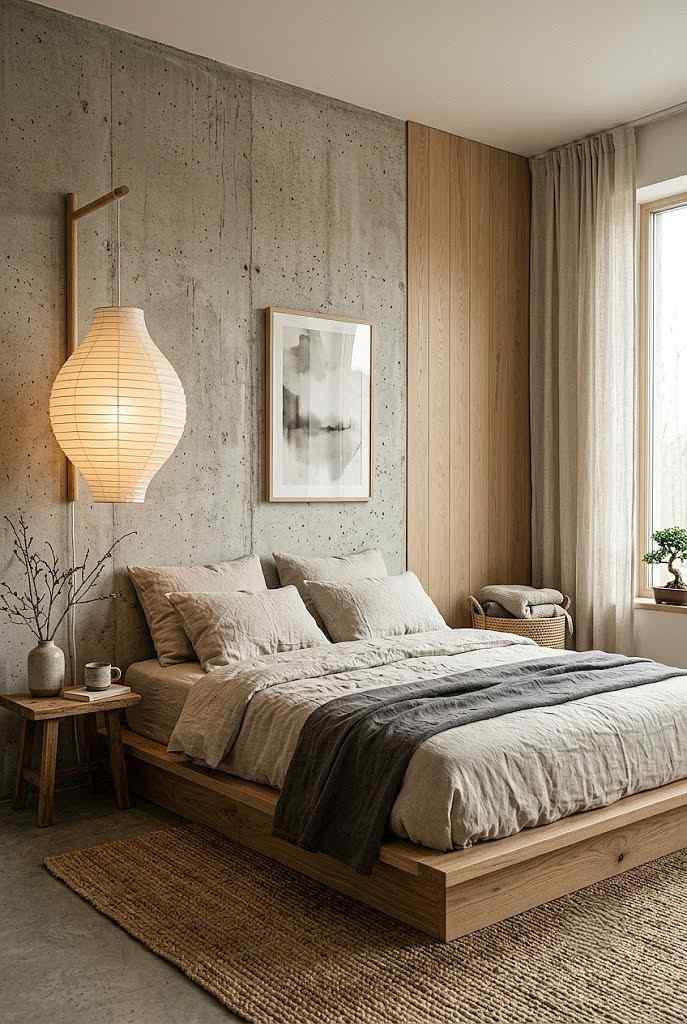
Japandi isn’t just Japanese minimalism plus Scandinavian hygge thrown into a blender. It’s a deliberate philosophy that prioritizes quality over quantity, natural materials over trends, and function that actually makes sense for how you live.
Japanese design centers on concepts like ma (negative space) and wabi-sabi (finding beauty in impermanence). Scandinavian design brings in coziness, accessibility, and practicality. When you combine them, you get something that looks calm but feels warm spaces that breathe but still embrace you.
The result in a bedroom context? A room that helps you sleep better, think clearer, and feel more grounded. It’s not maximalist, but it’s not austere either. There’s intention behind every piece, and nothing’s there just to fill a corner. This is why Japandi bedrooms have exploded in popularity people are tired of design that looks good in photos but feels hollow in real life.
The genius of Japandi is that it meets you where you actually are not where some magazine told you to be. You’re not sacrificing comfort for a curated look, and you’re not drowning in excess to feel safe. This design philosophy acknowledges that humans need both order and warmth to thrive. When you step into a well-designed Japandi bedroom, your shoulders literally drop. You stop mentally cataloging clutter because there isn’t any. You stop feeling overstimulated because the palette isn’t competing for attention. The stress response your body has been trained into all day finally gets permission to power down.
The Core Design Elements of a Japandi Bedroom
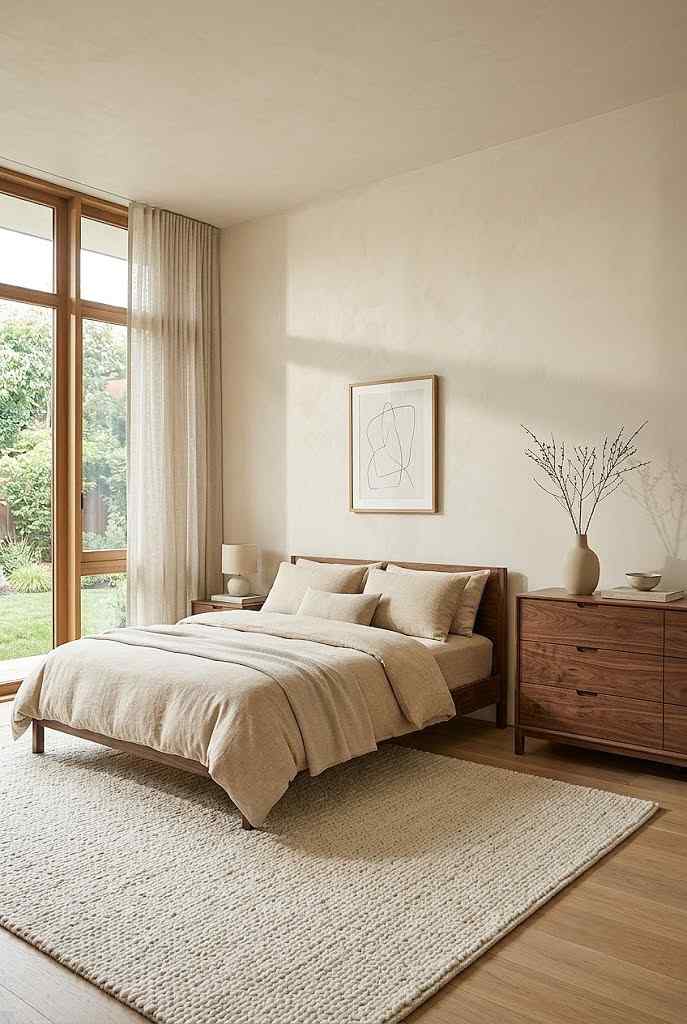
Building an authentic Japandi bedroom relies on several foundational principles working together. These aren’t arbitrary rules; they’re the backbone of why the style actually works.
Natural materials are non-negotiable. Wood, linen, cotton, wool, and stone should dominate your space. Think light oak or walnut for furniture, cotton or linen for bedding, and natural fibers for rugs. IMO, this is where the Japanese wabi-sabi really shines these materials age beautifully and gain character over time rather than looking worn out. Synthetic fabrics and particle board have no place here because they cheapen the entire vibe.
The color palette stays neutral and earthy. Your base should be soft whites, warm grays, soft blacks, and natural wood tones. Accent colors (if any) come from nature terracotta, soft sage, muted blue, or charcoal. A typical Japandi bedroom feels like you’re sleeping inside a cloud made of oatmeal. That might sound boring until you actually experience how restful it is.
Negative space is your secret weapon. This isn’t about having an empty room; it’s about strategic emptiness. Don’t fill every surface. Leave your nightstand mostly clear. Let your walls breathe. That breathing room is what makes your brain stop racing at 2 a.m.
Furniture should be low-profile and geometric. Platform beds, low shelving, clean-lined dressers nothing with fussy details or ornate legs. The bedroom should feel grounded, literally and figuratively. High furniture can make small bedrooms feel cramped and chaotic.
What makes this particularly genius is that Japandi is forgiving. If you live with a partner who sheds socks everywhere or you have a chaotic work schedule, a Japandi bedroom doesn’t punish you for it. The neutral palette hides minor dust; the open surfaces mean you can quickly reset without organizing systems that require a PhD. The Japanese principle of kanso (simplicity through elimination) isn’t about perfectionism it’s about removing the unnecessary so what remains feels essential. When you apply this to your bedroom, you’re not creating a space that requires constant maintenance; you’re building a foundation that improves over time. A white linen duvet gets softer after fifty washes. Wooden furniture develops a richer patina. Natural materials in a Japandi bedroom literally get better as you live with them.
Textures: The Underrated Game-Changer
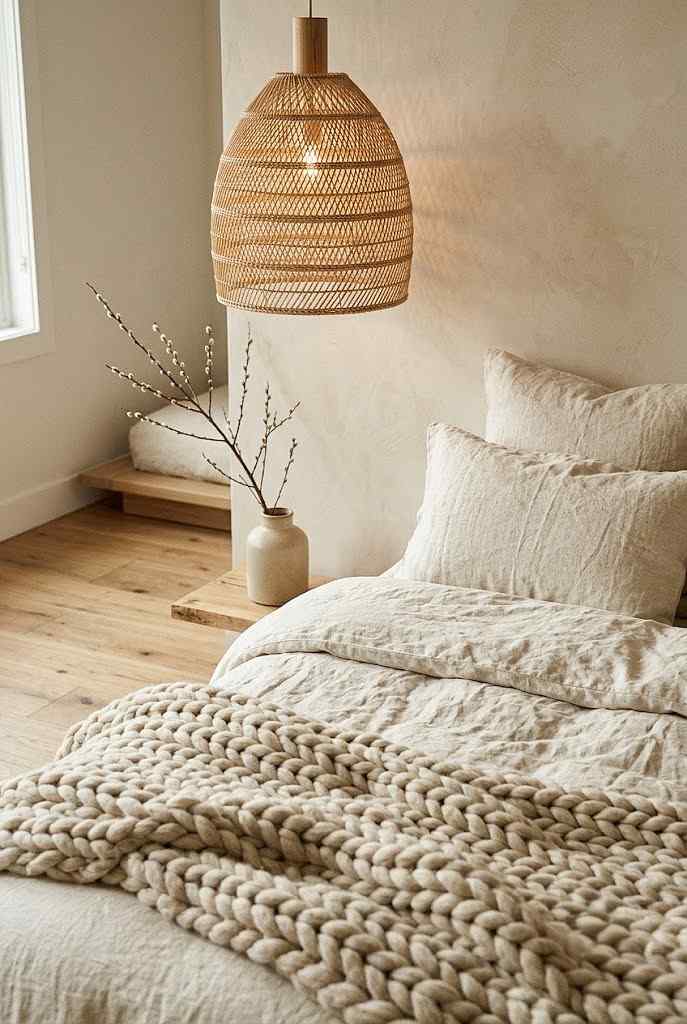
Here’s something people miss when they try to DIY Japandi: texture is what transforms a stark minimalist room into something you actually want to sleep in. Without it, you end up with a hospital room with nice intentions.
Layer your bedding with different natural fabrics. A linen duvet in cream, a chunky knit throw, cotton sheets, maybe a woven tote at the foot of the bed for storage that doesn’t look like storage. Add a wool area rug under the bed. Include a rattan pendant light or wooden wall shelving. These elements should feel organic chosen because they exist in nature, not because they’re trendy.
The bedroom I grew up in had Japanese-style tatami mat flooring, which my mom maintained obsessively. I hated it as a kid, but looking back, that room was the only place in our chaotic house that felt calm. That’s the power of thoughtful texture and material choices they rewire your nervous system without you even realizing it.
The texture conversation also extends to how things feel against your skin, which matters more in a bedroom than anywhere else in your house. Cotton sheets that have been washed enough times to feel like butter against your face create an almost Pavlovian response you touch them and your nervous system knows sleep is coming. A thick linen throw that weighs just enough to feel grounding without being a weighted blanket gives you comfort without the overwhelming sensation some people find claustrophobic. Raw wood nightstands, when you run your hand across them, provide tactile feedback that screens and chrome never will. This is where Japandi truly understands human physiology in a way that sterile modern design misses entirely. Your body is hungry for genuine materials, and your bedroom is where it should finally get fed.
Lighting That Actually Respects Your Sleep Schedule
Your Japandi bedroom needs lighting that serves your circadian rhythm, not Instagram. This means no harsh overhead fixtures and definitely no bright white LEDs at night.
Soft, warm lighting should be your only option after sunset. Think paper lanterns (inspired by Japanese andon lights), fabric-wrapped lamps, or simple wooden fixtures. Warm bulbs should hover around 2700K color temperature that golden, almost firelight quality. Bedside lamps should be dimmable so you can gradually signal to your body that sleep is coming.
Natural light during the day matters too. Sheer linen curtains let sunlight filter through without creating harsh shadows. You’re not blackout-curtaining yourself into a cave; you’re managing light thoughtfully.
Beyond the technical aspects, lighting in a Japandi bedroom sets an emotional tone the moment you enter. That warm glow signals safety and relaxation the opposite of the cold, institutional lighting most of us endure during our work day. If you have the ability to control lighting throughout your room (not just at the bed), do it. Adjust brightness as the evening progresses, mimicking sunset. Some people swear by amber-tinted bulbs that filter out blue light entirely after sunset. Others use smart bulbs that gradually dim over a set period. The Japandi approach doesn’t prescribe which specific technology you use; it prescribes the principle that your bedroom lighting should support your biology, not fight it. A single paper lantern and a reading lamp might be all you need. The point isn’t the fixture itself; it’s that light serves rest, not aesthetics.
Storage That Actually Hides (But Isn’t Hidden From You)
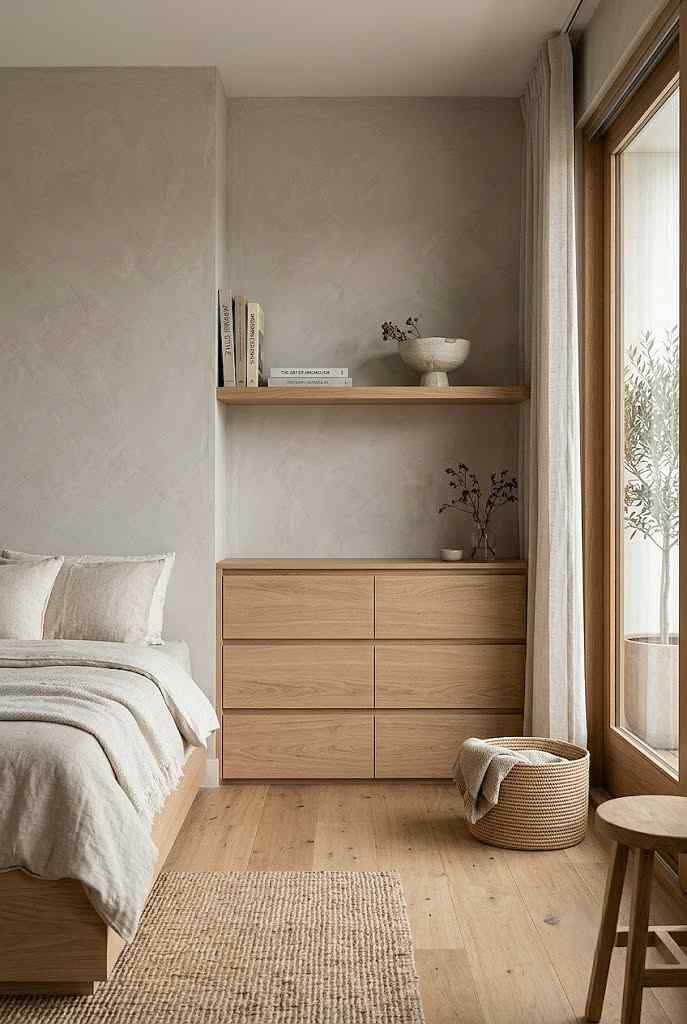
The Japandi approach to storage walks a tightrope: everything should have a designated spot, but you shouldn’t be staring at a sea of plastic bins and closed cabinets.
Use natural wood shelving for books or decorative items you genuinely want visible. Build or buy low dressers with plenty of drawer space for everything else. Consider under-bed storage with natural wood frames. The rule is simple if it’s visible, it should be beautiful enough to live with; if it’s not beautiful enough, it goes behind a door or in a drawer.
A small wooden shelf holding a stack of folded linen blankets looks intentional and Japandi-perfect. The same blankets shoved in a plastic tote? Aesthetically chaotic, even if nobody sees it. Your own brain still registers the difference.
The hidden storage aspect also teaches you something valuable about possession: if you can’t see it regularly, do you actually need it? This isn’t minimalism-as-deprivation talking; it’s practical wisdom. Seasonal items belong in under-bed storage. Work clothes you wear occasionally belong in dresser drawers. The things you use daily or love visually belong on open shelving or readily accessible spots. This creates a natural filter for what you keep in your bedroom at all. Japandi storage isn’t about rigid systems or color-coordinated bins it’s about honest assessment of what genuinely serves your life. Some people implement a rule: if you open a drawer and realize you haven’t used something in six months, out it goes. That simple practice keeps your bedroom from becoming a storage unit masquerading as a sanctuary.
Mistakes That Derail Your Japandi Bedroom

Most people stumble when they overthink it. The biggest trap? Treating Japandi like a theme rather than a philosophy. That means buying cute Japanese-inspired decor, hanging up some prints, and calling it done. Authentic Japandi comes from restraint and thoughtfulness, not shopping harder.
Another common misstep is mixing too many wood tones. You don’t need cherry, oak, walnut, and pine all fighting for attention in one room. Stick to one or two primary wood colors and let them dominate. Three types of wood makes everything feel fragmented.
Also, resist the urge to overcomplicate textiles. You don’t need fifteen different throw pillows, each with a different natural-fiber weave. A pair of linen pillows and one quality throw is infinitely more Japandi than a decorative pillow explosion.
And please no motivational wall art. Japandi isn’t about inspirational quotes or trendy typography. If something’s on your wall, it should be art you genuinely love or an accent that serves a purpose (like floating shelves).
One final mistake people make is underestimating the power of empty wall space. Western design culture has trained us to believe blank walls are a failure that you need art, shelving, or something to fill the void. But in Japandi design, empty walls are the design. They’re not neglect; they’re intentionality. A single accent wall in a slightly deeper neutral tone can be enough. One framed piece of art above the dresser. That’s it. Everything else just breathes. This restraint actually makes the pieces you do include more powerful. When you walk into a room with one beautiful wooden shelf holding five carefully chosen objects, those objects command attention. In a room with twelve shelves holding fifty objects, nothing stands out everything just melts into background noise.
Making It Personal Without Losing the Aesthetic
Here’s the question that trips people up: how do you live in your Japandi bedroom without it becoming a boring, soulless box?
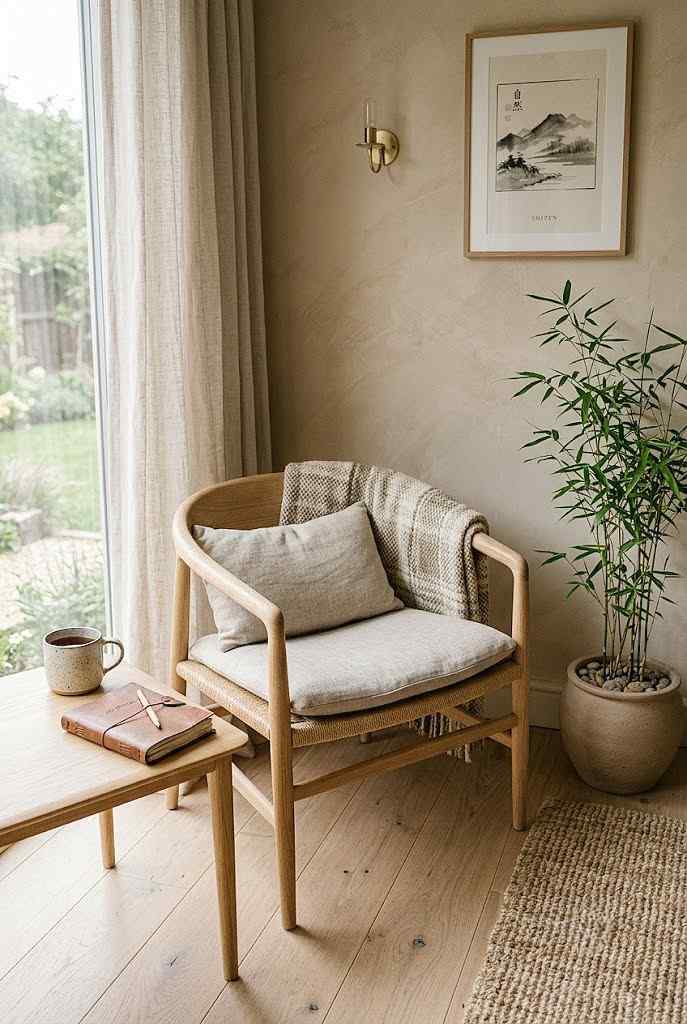
The answer is selectivity, not sterility. Surround yourself with objects that have meaning. A photo of your family in a simple wood frame. Your favorite book on a shelf. A plant you’ve successfully kept alive (points if it’s a small indoor bamboo). A candle that actually smells like something you enjoy, not “Autumn Coastal Minimalist Breeze.”
Your bedroom should reflect your calm, not some generic aesthetic of calm. If that means displaying your collection of vintage teacups or keeping a journal visible on your nightstand, do it. Japandi is about creating peace, and peace looks different for everyone.
The personalization piece is where people finally relax and stop performing. Your Japandi bedroom isn’t a showroom; it’s a retreat. If your calm requires background music playing softly, add a simple Bluetooth speaker. If it requires handwritten notes from loved ones, pin them to a single cork board instead of scattering them everywhere. If it requires a specific scent whether that’s unscented candles or a subtle essential oil diffuser honor that. The Japandi philosophy gives you permission to build around your authentic needs rather than designing around what you think you should need. A working parent might need a bedroom that doubles as a temporary office corner. A creative person might need a small reading nook with natural light. A light sleeper might need blackout capabilities despite the minimalist aesthetic. Japandi accommodates all of this because it’s a framework, not a rigid formula.
Making It Personal Without Losing the Aesthetic
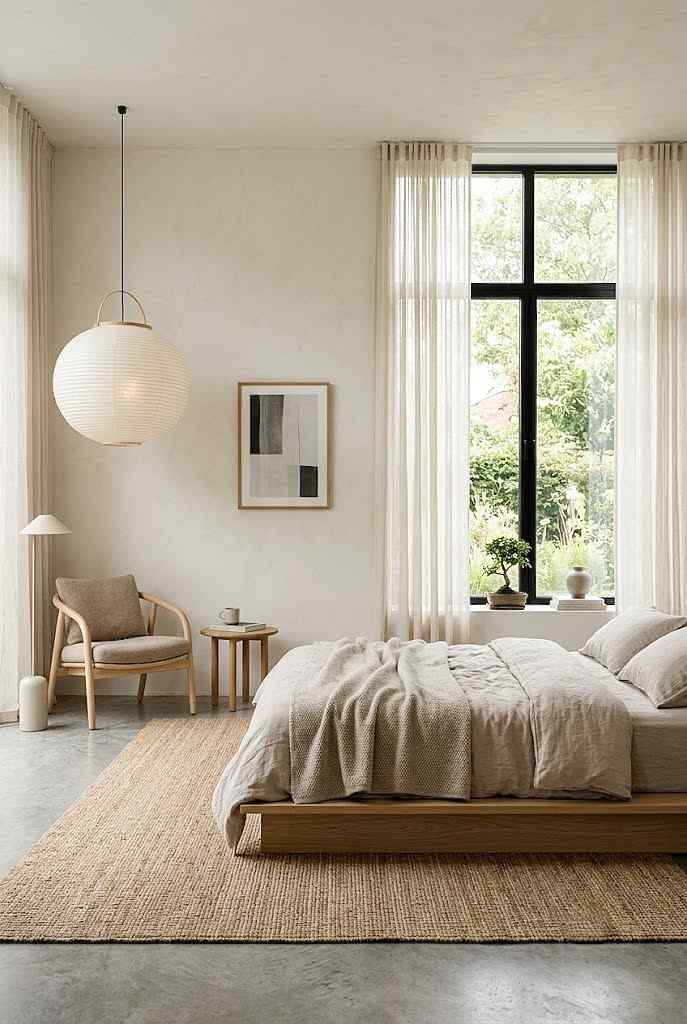
Start with the bed as your anchor. A low wooden platform frame in natural wood, dressed in natural linen and cotton, with a single quality throw. Add a wooden nightstand with a single warm lamp and nothing else sitting on top. Include an area rug in natural fiber under the bed.
From there, choose one wall for minimal shelving or leave walls mostly bare. Add one accent maybe a large piece of simple art or a single decorative mirror. Hang lightweight curtains in cream or soft gray. Include one chair or reading nook with a natural wood frame and linen upholstery if space allows.
The final touch: introduce life through plants, natural light, and carefully chosen objects. No Instagrammable nonsense just functional beauty that supports the way you actually rest.
As you bring these elements together, remember that a Japandi bedroom isn’t built in a weekend. It’s built gradually as you understand your own needs and preferences. Start with the foundations bed, lighting, basic storage and let everything else follow. There’s no rush to achieve some perfect version. In fact, rushing directly contradicts the entire philosophy. Japanese design culture includes the concept of ma-ai (the space between things), and this applies to your design journey too. Give yourself space to live in your room, understand what works, and adjust accordingly. A Japandi bedroom should feel like it evolved naturally from your life, not like you imposed a design onto your existence.
FAQ’s
Can I use colorful accent walls in a Japandi bedroom, or does everything have to stay neutral?
Stick to muted, nature-inspired colors like soft sage or terracotta; bright colors contradict Japandi’s calming essence completely.
What’s the best wood type for Japandi bedroom furniture, oak, walnut, or something lighter?
Light oak or natural ash works best; choose one primary wood tone and avoid mixing multiple types together throughout.
How do I prevent my Japandi bedroom from feeling cold and sterile without adding too much decor?
Layer natural textures,wool rugs, linen throws, woven baskets,rather than purchasing more decorative objects or furniture pieces.
Is it possible to have a Japandi bedroom in a small apartment with limited storage space?
Absolutely; use vertical shelving, under-bed storage, and multi-functional furniture to maximize space while maintaining minimalist aesthetics.
What’s the difference between Japandi and regular minimalism, and why is Japandi better for bedrooms?
Japandi adds warmth and coziness through natural materials and textures, while minimalism alone feels austere; bedrooms need both calm and comfort.
CONCLUSION
Your bedroom isn’t a design project to show off or a trend to chase. It’s the one room where you spend a third of your life completely vulnerable sleeping, waking, processing emotions. It deserves a space that supports rest instead of competing for your attention.
Japandi bedrooms accomplish this because they’re built on principles that have worked for centuries, adapted for how we actually live now. They’re not minimalist to the point of anxiety or cozy to the point of clutter. They’re the design equivalent of finally exhaling.
If you’re considering redesigning your bedroom, start by asking yourself one question: when you walk into your room at the end of a chaotic day, does it welcome you or stress you out? Your answer should guide everything else.