
modern bedroom
By Anna Grace | 11 March 2026
The Modern Bedroom Design Mistake Everyone Makes (And How to Fix It)
Your bedroom probably doesn’t look how you want it to. Mine didn’t either until I realized that “modern design” doesn’t mean stark minimalism or cold, Instagram-perfect spaces it means creating a room that works for you while still feeling intentional and current. Most people treat their bedrooms like an afterthought, cramming in whatever furniture was on sale and calling it a day. But here’s the thing: you spend roughly a third of your life in that room. Shouldn’t it actually feel amazing to exist there?
Modern bedroom design has evolved way beyond white walls and platform beds. Today, it’s about blending functionality, personality, and aesthetics in ways that make your space feel cohesive without feeling staged. Let’s talk about how to actually pull this off.
Understanding What “Modern” Actually Means for Bedrooms
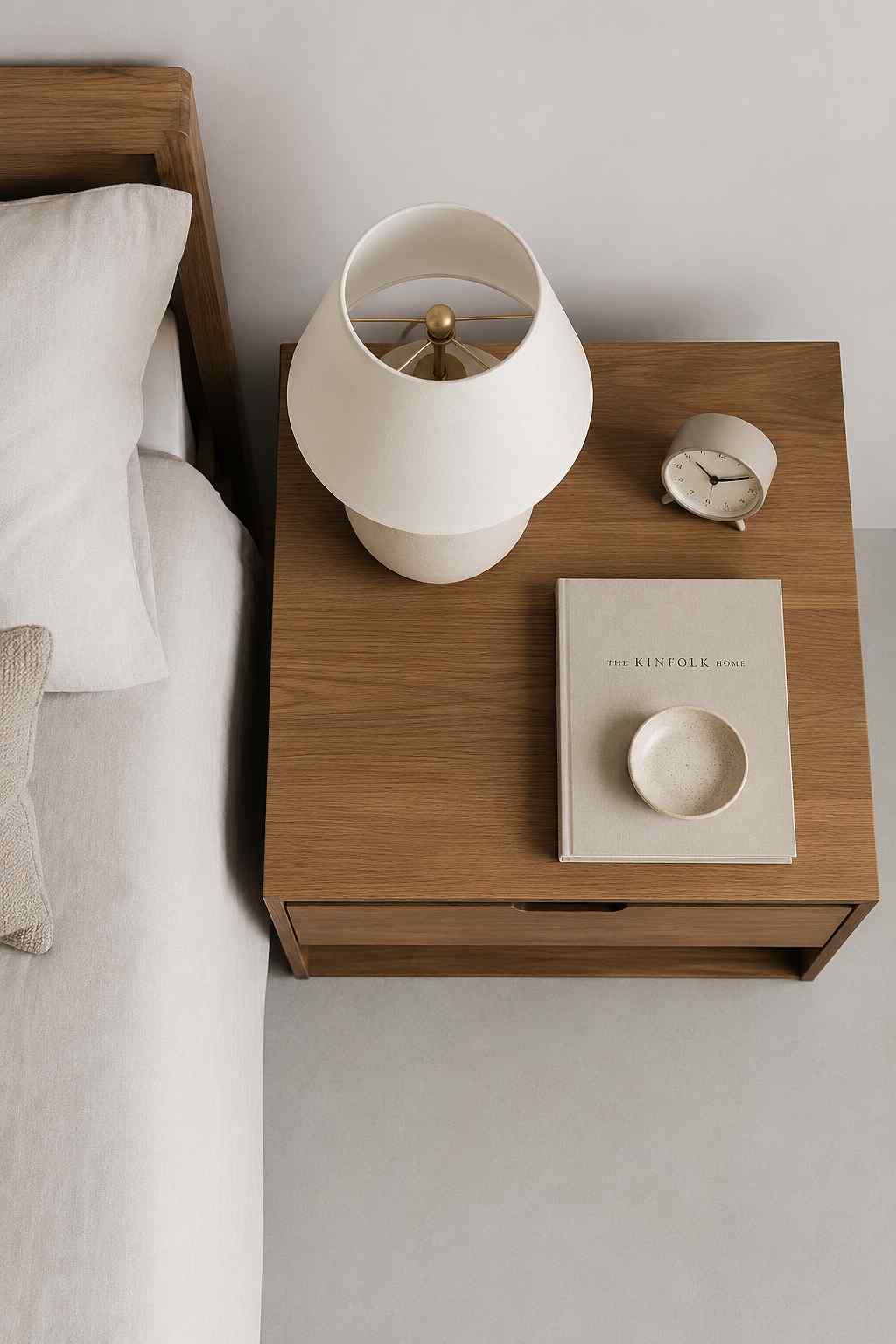
Modern doesn’t mean you need to live like a robot in a gallery. The real definition here centers on clean lines, purposeful choices, and stripping away visual clutter while keeping your space warm and livable. It’s the opposite of overstuffed maximalism, but it’s also not cold minimalism that makes you feel like you’re sleeping in a hotel lobby. 🙂
The sweet spot combines three elements: intentional furniture selection, thoughtful color palettes, and zero junk taking up valuable visual real estate. Your bed shouldn’t be buried under decorative pillows you don’t actually like. Your nightstand shouldn’t double as a junk drawer for half-read books, charging cables, and mystery items. Modern design forces you to make decisions about what actually belongs in your space.
What separates modern bedroom design from other styles is the emphasis on negative space. You’re not trying to fill every corner you’re being deliberate about placement. One really good piece of furniture matters more than five mediocre ones. This approach makes smaller bedrooms feel bigger and larger bedrooms feel intentional rather than echoing and empty.
The Philosophy Behind Modern Design Principles
Modern bedroom design borrows heavily from mid-century modernism, Scandinavian minimalism, and contemporary architecture but the real magic happens when you stop treating it like a historical movement and start thinking of it as a practical philosophy. The core idea? Your environment directly shapes your mental state. Clutter creates cognitive load, meaning your brain works overtime just processing visual noise while you’re supposed to be sleeping. Modern design eliminates that friction.
Think about Japanese minimalism for a second. It’s not about emptiness; it’s about respecting each object and the space around it. Your favorite chair isn’t less valuable because you only have one chair instead of three. Your bedframe doesn’t need to be “balanced” by random matching nightstands on both sides if your bedroom layout doesn’t support that. Modern design respects your actual life, not magazine spreads.
The timeline matters too. Modern design emerged in the early-to-mid 20th century specifically as a reaction against excessive ornamentation. Designers wanted to strip away the decorative surplus of Victorian and Art Deco periods and focus on form following function. In your bedroom, this translates to asking hard questions: Does this item work? Does it look right proportionally? Could I remove it and feel relieved? If you answer yes to that last one, out it goes.
One more thing that separates amateur attempts from actually cohesive modern bedroom design: respecting materials. Modern design celebrates what things are made from. Real wood looks better than laminate. Solid metals outperform plating. Natural fabrics beat synthetics. You don’t need to buy expensive pieces, but you should buy honest pieces furniture that doesn’t pretend to be something it’s not. A particle board dresser painted to look like walnut violates the entire principle. A simple pine dresser finished naturally? That works perfectly within modern design philosophy.
Color, Light, and Creating the Right Atmosphere
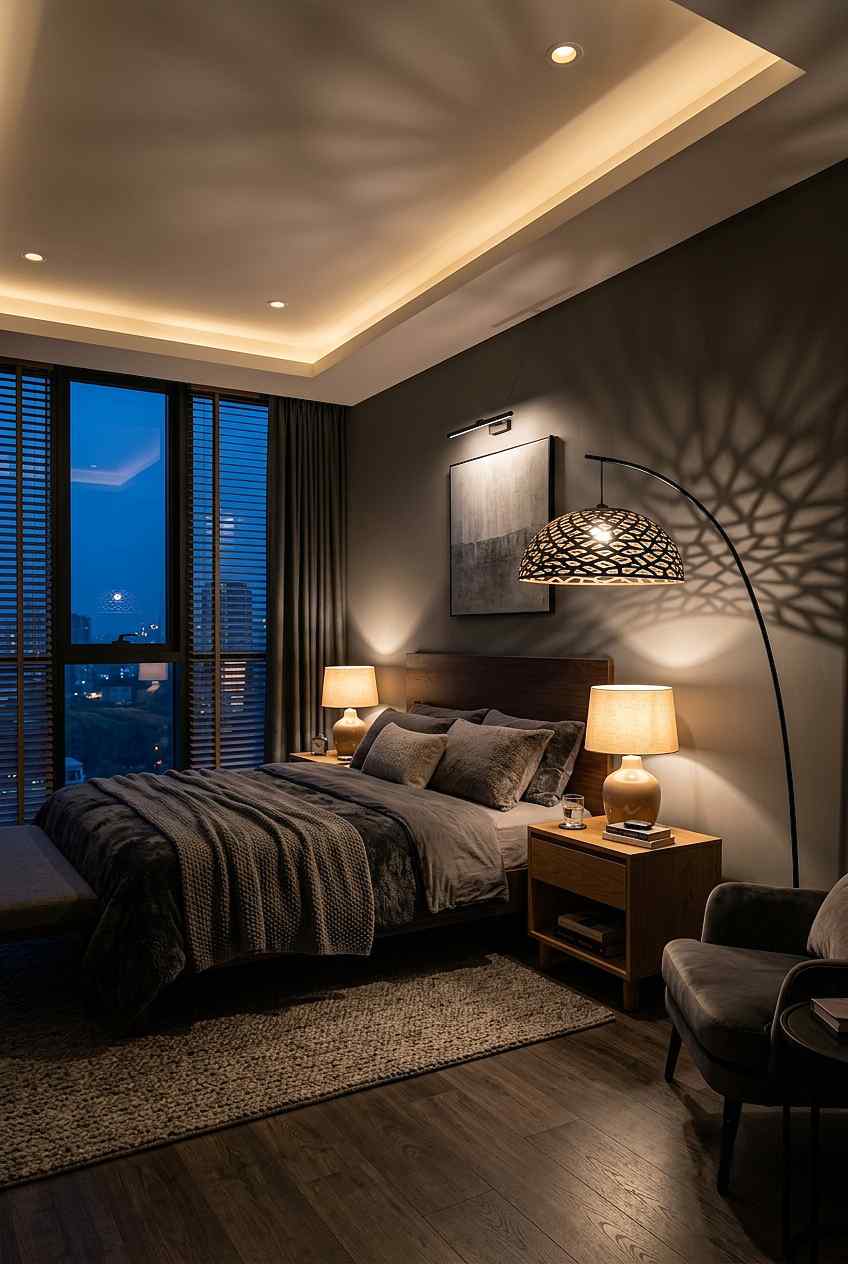
Let’s address the elephant in the room: your bedroom needs to feel calm, but that doesn’t mean it has to be beige. Modern design lets you play with color in smart ways.
Neutral base colors (think soft grays, warm whites, or muted taupes) give your bedroom breathing room. IMO, these backgrounds actually let you enjoy occasional pops of color through artwork, throw blankets, or a feature wall without the space feeling chaotic. Some people go bold with darker walls charcoal, deep navy, or even black and it works brilliantly when paired with bright lighting and lighter furnishings.
Lighting transforms everything. Your bedroom needs three layers: ambient light (ceiling fixture or recessed lights), task lighting (reading lamps at the bedside), and accent lighting (maybe LED strips behind a headboard, or a sculptural floor lamp in the corner). Poor lighting makes even a beautifully designed room feel depressing. I learned this the hard way after moving into a place with horrible overhead lighting one good bedside lamp didn’t cut it until I added a softer background light. Now the room actually feels inviting.
Natural light matters too. Thick blackout curtains serve a purpose (you need darkness to sleep properly), but consider motorized options or quality shades that give you control throughout the day. Large windows let modern design shine because they showcase clean lines and uncluttered spaces beautifully.
Mastering Color Psychology and Light Layering
Here’s what most people get wrong about color in modern bedrooms: they assume “neutral” means boring. Actually, neutrals have tremendous range and personality. Warm whites lean creamy and welcoming. Cool grays feel sophisticated and calming. Soft taupe adds depth without drama. Warm grays bridge both worlds. The trick is picking a neutral that matches your natural lighting and your personal energy. Hold paint samples on your walls at different times of day what looks perfect at 10 a.m. might feel cold at 6 p.m.
When you do introduce color, modern design principles suggest restraint and intentionality. A feature wall works beautifully when it’s the wall you see first entering the room or the wall behind your bed. A muted sage green, warm terracotta, or soft dusty blue can feel contemporary without overwhelming the space. The key is avoiding saturated, primary colors, which feel more playful than modern. You want colors that feel like they belong in nature tones you’d find in stone, earth, or plants.
Lighting chemistry matters more than most people realize. Color temperature measured in Kelvin fundamentally changes how your space feels. Warm white light (2700K) creates cozy, residential vibes. Cool white (4000K-5000K) feels more clinical and energizing. For bedrooms, you want warm light, full stop. Even in modern spaces, warm lighting makes people feel welcome. But here’s the strategic part: you can use cooler task lighting for reading (it reduces eye strain) and warmer ambient lighting for the overall atmosphere. Your bedside lamp might be 4000K while your ceiling light dims down to 2700K.
The percentage of brightness matters equally. Dimmers aren’t optional in modern bedroom design they’re essential. You need bright light for getting ready, medium light for winding down, and minimal light for sleeping. Fixed, bright overhead lighting forces your bedroom into one mood. Good lighting design gives you flexibility, which is very much aligned with modern principles of functionality.
Natural light creates complications that artificial light doesn’t. Windows are beautiful and necessary, but they also let sunlight blast directly into your sleeping space at 6 a.m. if you’re not prepared. Quality cellular shades or motorized blinds solve this by giving you complete control. Some modern bedroom designers layer sheer curtains under blackout options the sheers filter harsh light during the day, and the blackouts seal everything out at night. This approach looks cleaner than heavy curtains alone and functions better overall.
One underrated strategy: light positioning relative to your face. Bedside lamps should be positioned so light doesn’t shine directly at your eyes while lying down. A lamp mounted on the wall above the headboard works better than one on a surface nightstand for this reason. Wall sconces flanking a headboard provide even light without that one-side-brighter problem. These details separate thoughtful modern design from rooms that just happen to have modern furniture in them.
Furniture Layout: Less Is Genuinely More
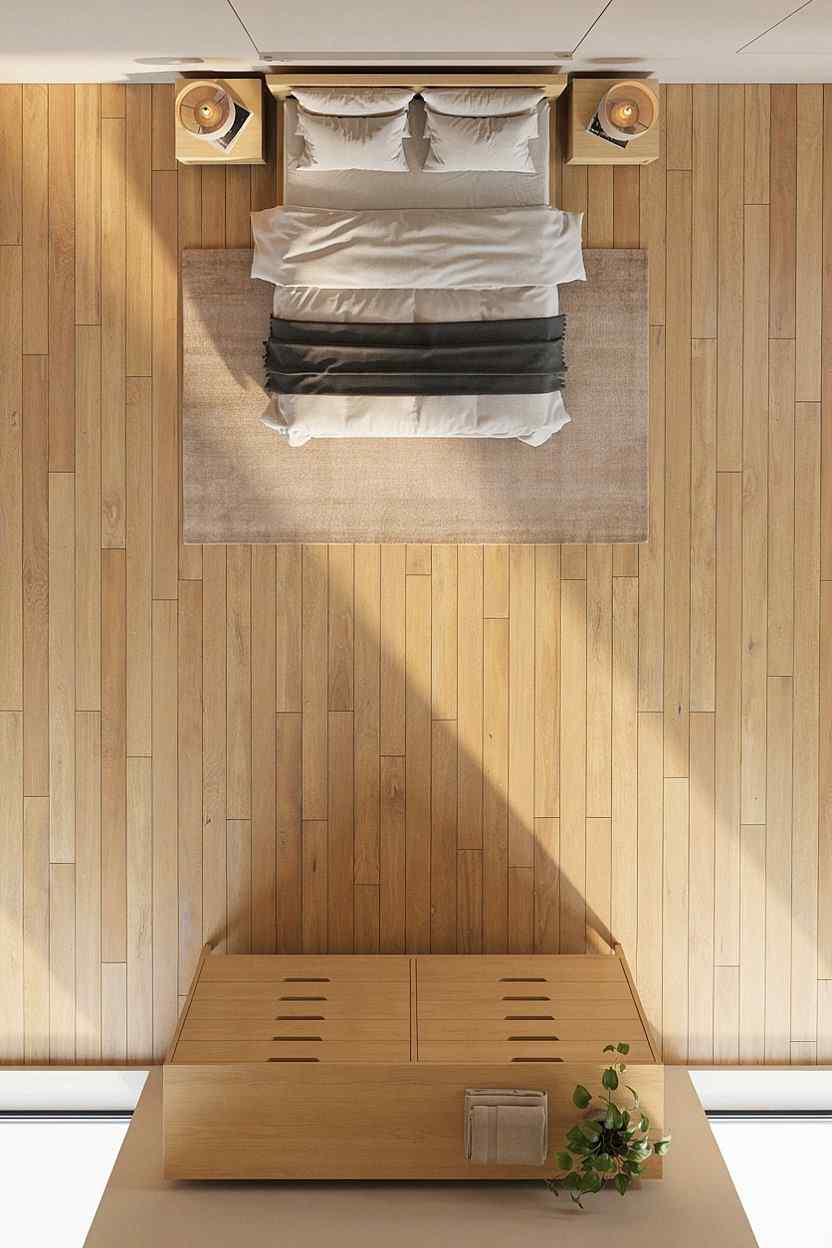
Here’s where many people stumble: they buy furniture that looked good in the showroom, then jam it into bedrooms where it doesn’t belong. Modern bedroom design starts with the fundamentals and builds from there.
Your bed sets the anchor. In modern design, the bed often floats in the room rather than pushed against the wall this works if you have space and creates a sophisticated, intentional look. If you’re in a smaller bedroom, pushing it to one wall is practical, but then everything else needs to earn its spot. A nightstand on each side? Absolutely. A chunky dresser that doesn’t fit the scale of the room? Probably not.
Think vertical when you’re tight on space. Wall-mounted shelving, floating nightstands, and tall narrow dressers let you store things without stealing floor space. Your eyes will naturally travel upward in rooms with high ceilings, so horizontal pieces feel more grounded and modern.
What about that reading chair you’re tempted to squeeze in? Only if your room actually has space for it to exist without blocking movement. Modern bedrooms have negative space room to walk around, breathe, and move. Cramped spaces feel stressful, no matter how nice the individual pieces are.
Strategic Placement and Spatial Flow
Furniture arrangement in modern bedroom design follows an invisible grid. Imagine your room divided into thirds both horizontally and vertically. Placing your bed slightly off-center creates visual interest while keeping the room feeling balanced. A single nightstand on one side works fine (asymmetry is very modern), but if you use two, they should align with the bed’s edges, not float out awkwardly.
The path you walk when entering your bedroom matters more than you’d expect. You should never squeeze between furniture pieces or navigate around obstacles. The natural walking route from door to bed should be clear and obvious. This prevents the cluttered feeling even in smaller spaces. I rearranged my furniture layout after realizing I had to angle sideways to reach my closet once I cleared that path, the whole room felt bigger despite no actual changes in size.
Bed frame selection sets the tone for everything else. A low platform bed reads as contemporary and makes rooms feel spacious. A bed with a substantial headboard anchors the space and provides visual weight. A metal frame bed frame gives industrial-modern vibes, while wood offers warmth. The frame you choose should complement your wall height and room proportions. High ceilings can handle beds with taller headboards; standard ceilings benefit from low-profile designs that don’t visually chop the room in half.
Nightstand height and scale require real consideration. Your nightstand should align with your mattress height (usually 24-28 inches). A nightstand that’s much smaller or larger than your bed creates awkwardness. Modern design favors nightstands with open shelf space underneath rather than solid bases this maintains that sense of visual lightness and airiness. One nightstand works perfectly fine in modern design; you don’t need matching pairs just for symmetry’s sake.
Dresser placement depends on room flow. If your bedroom doubles as your dressing space, position the dresser where you have good natural light (usually near a window) and where the mirror doesn’t reflect your bed directly this sounds superstitious, but psychologically, seeing your bed from the dresser mirror can make the room feel less restful. Placing the dresser perpendicular to a window or on a wall opposite the bed creates better flow and function.
Storage solutions should be invisible. Modern bedrooms hide clutter. Closed storage in drawers and cabinets beats open shelving with visible items. If you must use open shelving, style it minimally with matching storage boxes or baskets that contain chaos. The goal is a bedroom where everything has a home and nothing sits out unless it’s decorative or functional art.
Wall space deserves strategic thinking too. A large empty wall feels incomplete in modern design, but filling it with random art doesn’t work either. One substantial piece of artwork, a gallery wall of 4-6 consistent pieces, or a textured wallpaper accent wall all work. The key is intentionality you’re making a decision, not filling blank space.
The Tech Integration Question
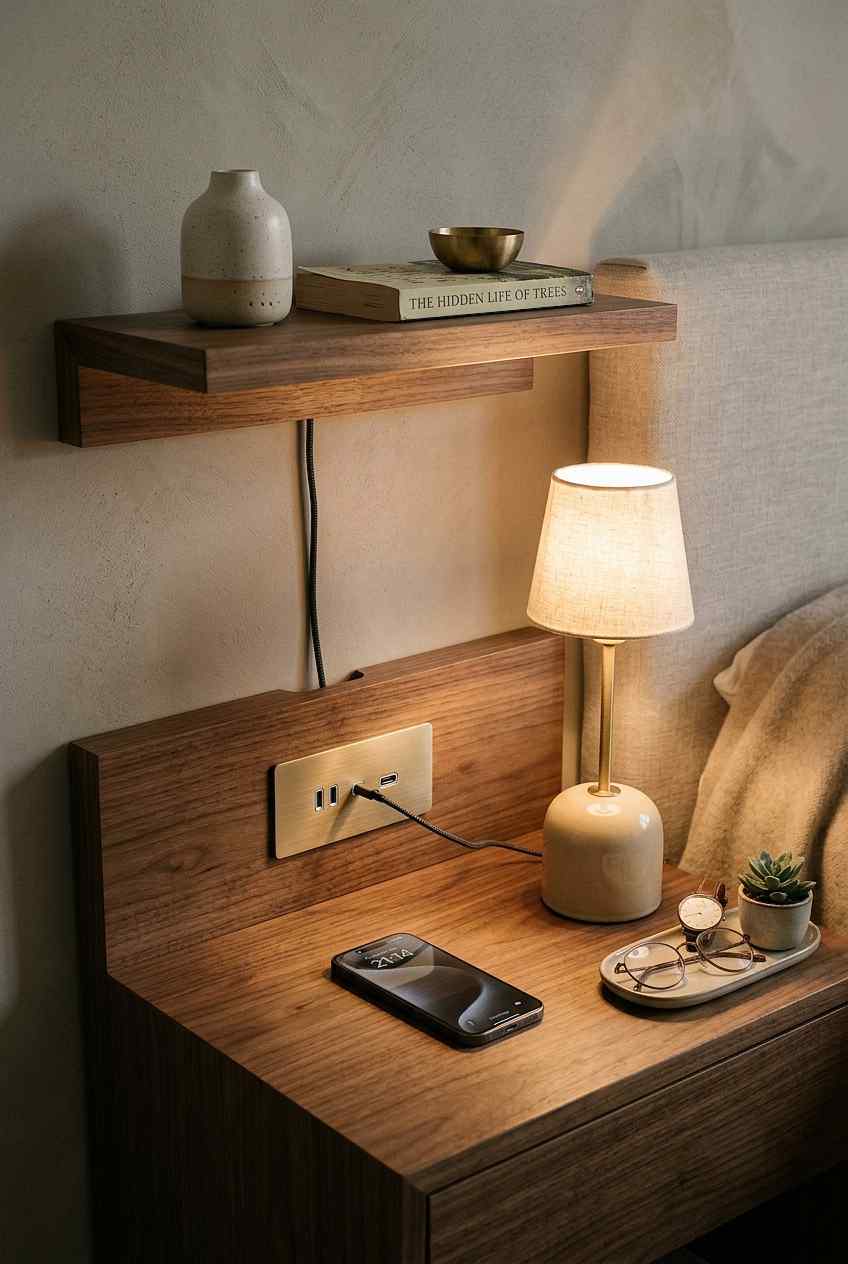
Modern bedrooms almost always incorporate technology and that’s fine, as long as you’re intentional about it. Hidden charging ports, USB outlets in nightstands, and subtle cable management mean you’re not looking at a rat’s nest of wires behind your bed.
Should you have a TV? That’s personal. Some modern designers argue bedrooms should be tech-free sanctuaries; I think that’s impractical for most people. If you want a TV, mount it on the wall and commit to proper speaker placement so sound quality doesn’t suffer. A cheap speaker mounted to the TV sounds terrible and instantly makes the space feel less polished.
Smart lighting (Philips Hue, for example) lets you adjust colors and brightness without getting out of bed, which feels luxurious and is genuinely useful for winding down at night. Smart thermostats belong in bedrooms because temperature massively affects sleep quality modern design isn’t just about aesthetics; it’s about creating a space that functions well.
Balancing Technology with Bedroom Purpose
The relationship between bedrooms and technology is complicated in modern design. On one hand, modern design celebrates functional integration tech should work seamlessly within your space. On the other hand, bedrooms are meant for sleep and intimacy, which technology can interrupt. The sweet spot involves making technology available but not dominant.
If you include a TV, here’s the modern approach: mount it on a motorized wall mount or hide it behind a panel that closes when you’re not watching. This prevents the TV from dominating your visual environment 24/7. If you leave it exposed constantly, your eye naturally drifts there, which disrupts relaxation. Some contemporary bedrooms use projectors instead of wall-mounted TVs you project onto a blank wall when you want to watch, then the wall returns to being blank. This aligns perfectly with modern design principles.
Speakers deserve real consideration. Bluetooth speakers that look like minimalist sculptures (think Bang & Olufsen) fit modern design aesthetically while providing excellent sound. Integrated speaker systems built into walls or ceilings work too but require renovation. Cheap speaker bars that sit on dressers look cheap and sound cheap if you’re including audio, invest in quality.
Cable management separates polished modern bedrooms from chaotic ones. Wall-mounted raceways hide cables running to outlets. Desk grommets route cords through surfaces. Wireless charging pads eliminate some cables entirely. Behind your bed, where cables typically congregate (phone charger, lamp cord, potential TV connections), spend time organizing. Running cables along the baseboard or through conduit makes them invisible. Leaving them exposed creates visual and mental clutter.
Smart home integration should feel invisible. Voice-activated lights that respond to commands without you seeing buttons or switches feel very contemporary. Thermostats that adjust automatically based on sleep patterns serve function without demanding attention. Smart outlets that cut power to devices at bedtime reduce EMF exposure (which some people care about) and definitely reduce the visual presence of cords and devices.
One practical consideration wireless charging pads on nightstands eliminate the visual chaos of cables. Your phone just sits there charging without a cord visibly running to an outlet. This small detail actually changes how modern your bedroom feels. The same applies to wireless earbuds in their charging case hidden storage beats a charger and cable visible on the nightstand.
Your bedroom network also affects modern design psychology. Having WiFi and strong cell signal means you can keep devices elsewhere and still stay connected. Bedrooms that force you to keep your phone on the nightstand (poor signal elsewhere) feel different than bedrooms where your phone naturally stays in another room. Signal strength affects behavior, which affects design functionality.
Textiles, Comfort, and Those Details That Matter

This is where modern bedrooms become actual bedrooms and not just rooms with beds in them. Your linens, throw pillows, and area rugs completely shift how the space feels.
Quality matters here more than you’d think. High thread-count sheets, a weighted duvet that actually keeps you warm, and pillows that support your neck properly aren’t luxuries they’re requirements if you want to enjoy spending time in your bedroom. Modern design celebrates natural materials and honest craftsmanship, so cotton, linen, and wool feel right in contemporary spaces.
Stick to a limited color palette for textiles (2–3 main colors plus neutrals), then layer different textures. A chunky knit throw over linen bedding, a wool area rug beside the bed, smooth leather on a bench these contrasts keep the space interesting without visual chaos. Your bedroom should feel like somewhere you want to spend time, not somewhere you’re counting down until you can leave.
One last thing about layers: they make rooms feel finished. A bedroom with just a bed and nightstands looks unfinished. Add a throw blanket, some well-chosen pillows, wall art that actually means something to you, and suddenly the space feels complete and intentional.
The Textile Foundation and Sensory Design
Textiles in modern bedroom design serve dual purposes: they provide the sensory foundation for comfort and act as visual elements that humanize the space. Unlike trendy decor that ages poorly, quality textiles only improve with time. A linen duvet cover actually becomes softer and more beautiful after years of washing.
Thread count gets misunderstood constantly. High thread count doesn’t automatically equal comfort the quality of the cotton matters more. Long-staple cotton (Pima or Egyptian) feels smoother than short-staple, even at lower thread counts. Modern bedroom design favors sheets with 400-600 thread count in quality cotton over thin 1200-count polyester blends. What your skin touches matters fundamentally to bedroom experience, and modern design doesn’t compromise on that.
Duvet weight selection directly impacts sleep quality. A light duvet works for summer; a weighted duvet works year-round for most people. But here’s the texture component: a duvet with a natural fiber cover (cotton, linen, or a cotton/linen blend) feels exponentially better than polyester. The visual appearance matters too pure white or natural linen looks clean and modern, while busy patterns undermine that aesthetic.
Pillow architecture affects both appearance and function. Standard pillows (20×26 inches) create visual clutter when stacked (that furniture-store look). Modern design favors either one really good pillow that you actually sleep on or two standard pillows propped against the headboard, nothing extra. If you need multiple pillows for sleep, store the extras in a closet, not visible on the bed. The number of decorative pillows most people use is genuinely absurd from a modern design perspective.
Area rugs ground the space visually and add acoustic warmth. A bedroom without a rug feels cold and hard. One rug positioned partially under the bed (the foot and sides, not pulling out into the room) creates coziness and defines the sleeping zone. Color-wise, your rug should either echo your wall color for cohesion or pick up an accent color from artwork or other elements. Modern design favors solid or subtle pattern rugs over busy florals or geometric extremes.
Throw blankets serve both comfort and design purposes. Rather than using decorative pillows that take up your bed, modern design suggests a high-quality throw blanket that you actually use. Drape it over a chair, fold it at the foot of your bed, or keep it on a low shelf nearby. Materials like merino wool, cashmere, or linen in neutral colors work perfectly. The texture contrast between a chunky knit and smooth linen creates visual interest without clutter.
Window treatments go beyond function. Motorized cellular shades in white or soft gray align with modern aesthetics while providing complete light control. If you layer with curtains, choose solid colors and quality fabrics linen or cotton feel modern, while heavy velvet or busy patterns undermine the aesthetic. Curtains should hang from ceiling to floor for visual continuity, not stop awkwardly at the window frame. That small detail changes how high-ceilinged your room feels.
Finishing touches transform bedrooms from functional to exceptional. A quality wooden shelf to display a few meaningful objects (a plant, a small sculpture, a book you love). A simple throw pillow in a complementary color texture. Wall art that genuinely moves you rather than art chosen because it matched the bedspread. These elements should spark joy or serve function never exist just to “complete” the look.
FAQ’s
How much does it cost to redesign a bedroom ?
Modern bedroom design costs whatever you spend there’s no minimum. Focus on one quality bed frame, good lighting, and intentional pieces rather than quantity.
Can I use bold colors and patterns in a modern bedroom design?
Absolutely! but strategically. Choose one bold accent wall or feature element, then keep everything else neutral. Patterns work best solid or minimal. Avoid busy prints everywhere.
How do I make a small bedroom look modern without it feeling cramped?
Use vertical storage, floating furniture, and wall-mounted solutions to maximize floor space. Choose a light neutral wall color. Incorporate good lighting to create airiness. Keep surfaces clear and clutter-free.
What’s the difference between modern bedroom design and minimalist bedroom design?
Modern design emphasizes clean lines and functionality with personality intact. Minimalism removes nearly everything, prioritizing emptiness.
Where should I start if I’m redesigning my bedroom with modern principles?
Start by decluttering completely, remove everything that doesn’t serve function or bring joy. Then assess your lighting and upgrade it. Choose a cohesive neutral color palette. Finally, invest in one quality furniture piece at a time rather than replacing everything.
CONCLUSION
Modern bedroom design isn’t about following rules it’s about being intentional with your choices so your space supports what you actually need. Do you need excellent lighting for reading before bed? Build that in. Do you want your bedroom to feel sophisticated and calm? Choose a cohesive color story and remove everything that doesn’t belong. Does your room make you happy when you walk into it, or does it feel like an afterthought?
The beautiful thing about modern design is that it works with your life instead of against it. You don’t need a massive budget or an interior designer you need clarity about what makes you comfortable and the willingness to remove everything that doesn’t earn its place. That’s genuinely all there is to it.