
cozy livingroom decor ideas
By Anna Grace | 16 feb 2026
Transform Your Space with Cozy Living Room Decor Ideas
There’s a difference between a room that looks cozy and a room where you actually want to spend three hours reading on a Sunday. The first one photographs well. The second one keeps you there until you realize it’s midnight and you haven’t even checked your phone 🙂
Most people think coziness comes from throwing blankets on furniture and calling it a day. But the real magic? It’s in how light lands on your walls, how the room feels when you sink into a chair, and whether every single thing you see brings you a tiny bit of joy. Getting this right turns your living room into the place everyone genuinely wants to hang out — not just the spot where the TV happens to live.
Let’s figure out how to actually build that space.
Start with Lighting That Doesn’t Make You Squint
Harsh overhead lights are the enemy of cozy. Full stop. You need a layered approach where you can control what the room feels like at any given moment. Natural light during the day? Great. But once the sun dips, you’re going to need multiple light sources working together.
A good floor lamp in the corner creates ambient warmth without blasting your face. Table lamps on side tables give you pools of light that feel intimate. And honestly, string lights or a dimmer switch will do more for your vibe than any furniture purchase you could make. The soft glow these create is genuinely transformative.
IMO, the best cozy rooms skip ceiling lights entirely. You don’t need to see every corner of your living room at once. Strategic shadows are your friend.
The reason soft lighting works so well for cozy spaces is rooted in how our brains respond to brightness levels. When you’re exposed to bright overhead lights for too long, your eyes tense up and your body stays slightly on alert. Warm, dimmed lighting tells your nervous system it’s safe to relax. Think about how you feel in a hotel room with harsh lights versus a cabin lit by lamps your body knows the difference immediately.
Consider layering your lighting with different bulb temperatures too. Warm white bulbs (2700K color temperature) feel cozier than cool white. If you’re replacing existing fixtures, this one small change costs almost nothing but transforms how the entire room feels when evening hits. And here’s something most people skip positioning your light sources below eye level creates shadows that feel more intimate than overhead lighting ever could.
Texture Makes Everything Better

This is where people actually feel whether your room is cozy or just decorated. Run your hand across the sofa. Sink your fingers into a rug. That tactile experience matters more than you’d think.
Layer different textures deliberately:
● A plush area rug anchors the space and adds warmth underfoot
● Throw blankets draped over seating (linen, chunky knit, fleece mix it up)
● Pillows in varying fabrics some soft, some textured, some with a bit of structure
● Wall hangings or tapestries that add softness to hard surfaces
● Natural elements like wooden furniture, woven baskets, or a plant in a ceramic pot
When you’re sitting on a couch with a soft blanket, surrounded by textures that feel good to touch, your body relaxes. That’s coziness at the nervous system level.
Beyond the basics, think about how textures interact with your climate. In humid areas, natural fibers like cotton and linen actually feel more breathable and comfortable. In drier climates, wool blankets and heavier fabrics feel more luxurious. This isn’t just decoration you’re actually designing for your body’s comfort in your specific environment.
Mixing textures also gives your eye something interesting to follow. A smooth linen sofa next to a chunky knit throw, beside a silky pillow, next to a rough jute rug that variety keeps the space from feeling flat or boring. The best part? You can change out textures seasonally without redecorating. Lightweight linens in summer, heavier knits in winter. Your living room stays cozy year-round while feeling fresh.
Color Choices That Calm Rather Than Stimulate
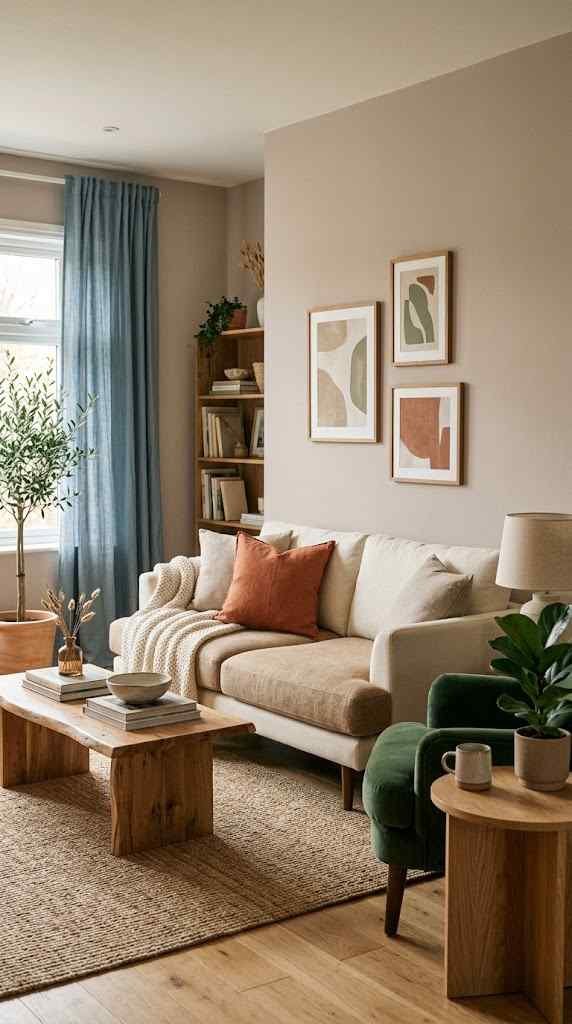
Cozy rooms don’t scream for attention. They whisper. Which means your color palette should lean toward shades that feel restful rather than energizing.
Warm neutrals create this feeling easily: warm grays, soft beiges, creamy off-whites, warm taupes. These work as your backdrop. Then you layer in accent colors through textiles and decor think deep forest green, terracotta, dusty blue, or warm rust tones.
The trick is not having too many colors fighting for space. Pick one or two accent colors maximum, then let your textures do the talking. A living room with five different bright colors will feel chaotic, not cozy. A room with warm neutrals and two supporting accent colors? That’s where people actually relax.
What colors are already making you feel calm when you imagine them? Start there.
The reason warm neutrals work so well isn’t random they’re the colors our brains associate with natural materials like wood, stone, and earth. When you surround yourself with these shades, your mind settles into a more grounded state. This is why neutral living rooms feel peaceful even when they’re full of objects.
Your accent colors should be pulled from nature too if you want to maintain that calm feeling. A forest green reminds you of trees and growth. Terracotta connects to earth and clay. Dusty blues reflect the sky. These colors feel natural rather than artificially saturated, which is why they pair so well with neutrals without feeling chaotic. When you’re choosing paint or textiles, hold them up in your actual lighting at different times of day colors shift dramatically depending on how light hits them, and that can make or break your cozy vibe.
Declutter in a Way That Actually Sticks
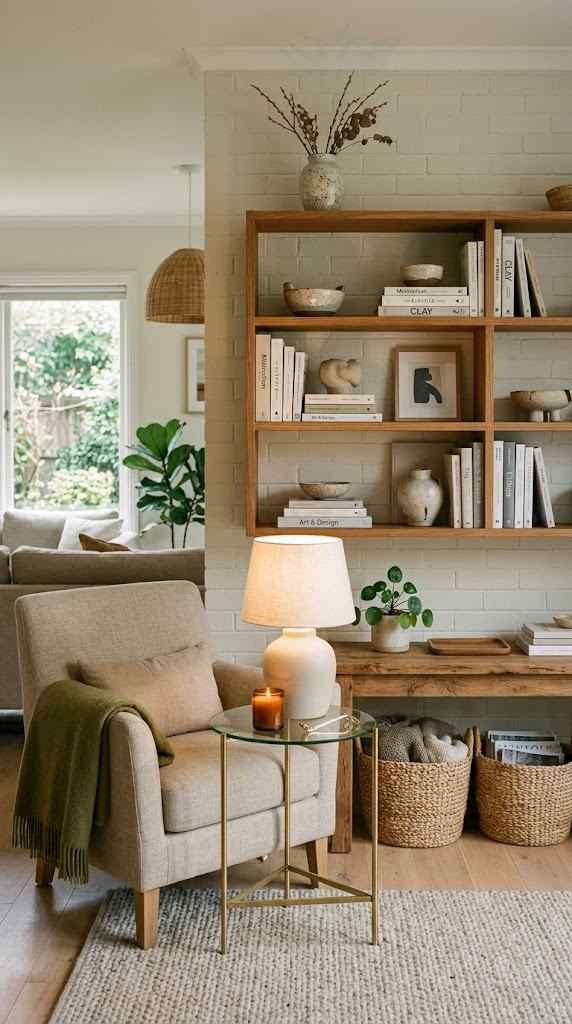
A cozy room can have stuff in it but nothing that feels chaotic or like clutter. The difference is that everything you see should have a reason to be there. FYI, that reason can just be “I like looking at it.”
Remove anything that:
● You don’t use or genuinely enjoy
● Creates visual noise
● Sits in places where you need clear surfaces to relax (side tables, the arms of sofas)
● Doesn’t match the calm energy you’re building
But also? A room full of furniture that’s hard and empty-looking is the opposite of cozy. You want enough pieces and objects that the space feels lived-in and thoughtful, just not so much that you feel anxious looking at it.
Open shelving with books and objects arranged with intention hits the sweet spot. Storage baskets tucked under tables hide the chaos while keeping things accessible. The goal is creating a space that feels curated, not just cleaned.
The psychology behind clutter is real. When your eyes scan a room with too many things competing for attention, your brain stays in a slightly activated state trying to process everything. Fewer, more intentional objects mean less cognitive load. Your mind can actually relax instead of working overtime.
This doesn’t mean your living room should look like a showroom. Some of the coziest spaces have plenty of objects on shelves and tables the difference is they’re arranged intentionally. Books face the same direction. Objects are grouped by color or height. Negative space exists between things rather than every surface being packed. It’s about visual harmony, not emptiness.
The Small Touches That Transform Everything
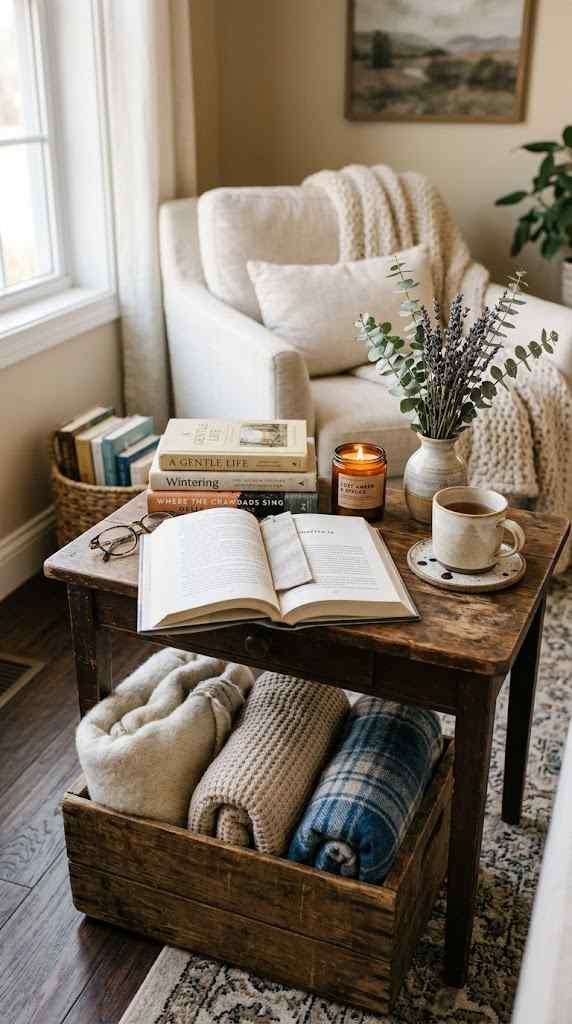
Sometimes it’s the details nobody consciously notices that make a room feel genuinely cozy.
A side table with a candle and a stack of books you’re actually reading. A throw blanket folded over the arm of your sofa (not just draped there’s something about a neat fold that feels intentional). Fresh flowers or greenery in a corner. A small water feature if you want ambient sound. A tray on your coffee table organizing remotes and coasters so the table doesn’t look cluttered.
Have you ever been in a space where you felt immediately at home, but couldn’t put your finger on why? It’s usually because someone paid attention to these small things. Your brain picks up on intentionality even when you’re not thinking about it.
One thing I’ve noticed in my own living room a simple wooden box filled with extra blankets for guests does more for the cozy factor than it has any right to. People literally curl up with them without being asked.
The reason these small touches matter so much is they show intentionality. When someone walks into a room and sees a carefully folded blanket, a book clearly being read, and a candle that’s actually been lit, they sense that this space was created with thought. It feels lived-in and cared for, which is the essence of cozy.
Personal touches matter more than matching. A mismatched set of ceramic objects you actually love beats a perfectly coordinated set you feel neutral about. A photo of people you love on a shelf beats abstract wall art. This is your space it should reflect your actual life, not a magazine spread.
Furniture That Invites You to Sit

Your furniture choices make or break coziness. A rigid, angular sofa with firm cushions will always feel formal. A deep, soft sofa with good back support? That’s where people actually stay.
Prioritize comfort over style (though you can have both). A chair that actually fits your body when you sit in it. Cushions with enough give that you don’t feel like you’re perched. A footrest or ottoman where you can prop your legs up. Comfort is cozy there’s no way around it.
Arrange your furniture to encourage conversation or relaxation, not to showcase an open floor plan. Angled pieces, items facing each other, corners that create natural gathering spots these all make a room feel warmer than pieces lined up against walls.
When you’re shopping for living room furniture, test it like you’d test a bed. Sit on it. Lean back. Put your feet up. If you can’t relax fully within 30 seconds of sitting down, it’s not cozy furniture it’s just furniture. A chair that forces you to sit perfectly upright is beautiful but not functional for relaxation.
Arrangement matters as much as the pieces themselves. Furniture pulled too far from the walls actually makes rooms feel smaller and less intimate. Pieces angled slightly toward each other create natural conversation areas. An ottoman that doubles as storage and footrest increases both comfort and function. Think about how you actually spend time in this room, then arrange accordingly.
Sound and Smell Complete the Picture

Cozy isn’t just visual. A room that smells fresh and clean (not aggressively fragranced) affects how you feel in the space. A lightly scented candle, fresh flowers, or just good ventilation matters.
For sound, a gentle ambient background helps music at low volume, a small fountain, even just the sound of a window cracked open. Silence can be peaceful, but many people find a little subtle sound makes a room feel less stark.
Scent is wildly underrated in creating atmosphere. You don’t need expensive candles even a simple unscented candle adds the visual element of flickering light and warmth. But if you do use scented products, subtlety is key. A faint vanilla or cedar is cozy; an overwhelming fragrance is overwhelming.
Sound design matters too, especially if you live in a noisy area. A small water fountain creates white noise that masks traffic sounds. Soft background music at near-silent levels (barely audible) creates atmosphere without feeling like the TV is on. Some people find complete silence most cozy, while others find it unsettling trust what actually makes you want to stay in the room, regardless of what sounds cozy in theory.
FAQ’s
How can I create a cozy living room on a tight budget?
Focus on lighting (affordable lamps and string lights) and textiles (thrifted blankets and pillows). You don’t need new furniture.
What’s the best way to arrange furniture for cozy living room layouts?
Angle pieces toward each other, avoid pushing everything to walls, and create intimate seating clusters rather than formal spacing.
Can I make a small living room feel cozy and spacious at the same time?
Yes! use warm, light neutral colors on walls, keep furniture minimal, and layer lighting to create depth and warmth without clutter.
Which cozy living room color combinations work best together?
Warm neutrals as your base (cream, beige, taupe) with one or two accent colors from nature like forest green, terracotta, or dusty blue.
How often should I update textures and decor in a cozy living room?
Seasonally is ideal. Swap heavy blankets for lighter linens, add warmer tones in winter. Keeps your cozy space fresh without full redecoration.
CONCLUSION
Building a cozy living room isn’t about buying the “right” decor or following a specific aesthetic. It’s about creating a space where you naturally want to be where your body relaxes, your nervous system calms down, and you feel okay just sitting there without doing anything.
Start with lighting and comfort. Add textures and thoughtful color. Clear out what doesn’t belong. Layer in the small touches. The result won’t be magazine-perfect, and that’s exactly why it’ll feel so good.
Your cozy living room is waiting. You just have to build it intentionally, one small decision at a time.