
japandi kitchen
By Anna Grace | 7 April 2026
Why Every Modern Home Needs a Japandi Kitchen
You know that feeling when two things shouldn’t work together, but then they do? Like peanut butter and pickles? Except this time it’s actually good. That’s Japandi kitchens in a nutshell a collision of Japanese restraint and Scandinavian warmth that creates spaces that somehow feel both calming and inviting. I first stumbled onto this aesthetic while scrolling through renovation fails (you know, doom-scrolling at 11 PM), and I realized I’d been staring at the same kitchen style in three different contexts. Turns out, Japandi isn’t a trend anymore it’s become the default for people who want their kitchens to look intentional without trying too hard.
What Actually Is Japandi, Anyway?
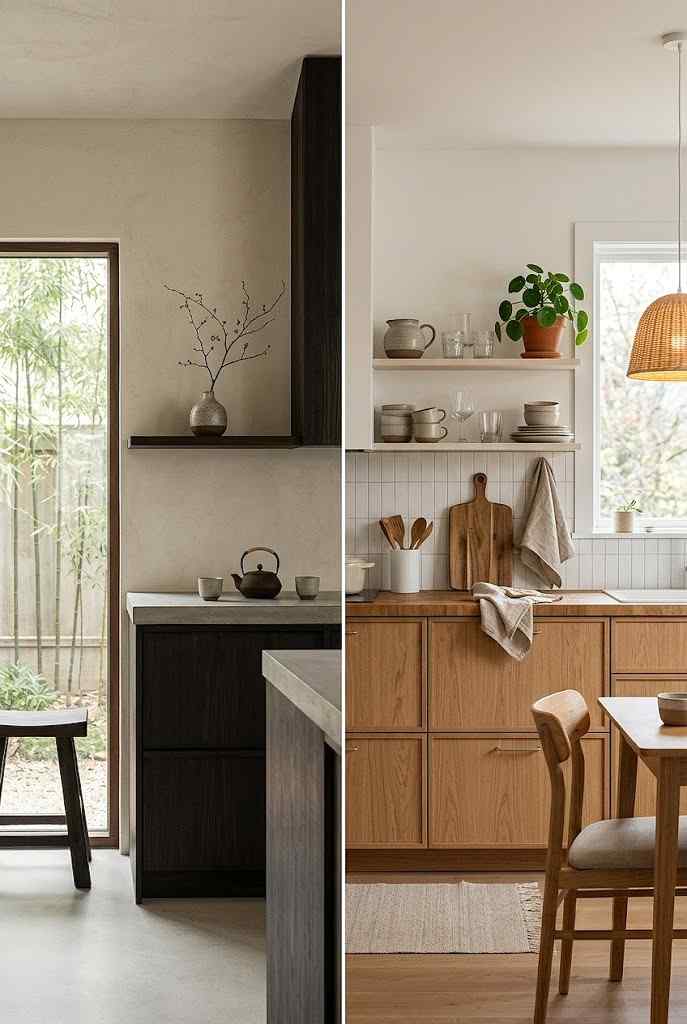
Japandi takes the name literally: Japan + Scandinavian design fused into one approach. The Japanese side brings wabi-sabi principles (finding beauty in imperfection), minimalism, and an almost spiritual respect for empty space. The Scandinavian half contributes hygge vibes, natural light obsession, and functionality that doesn’t compromise on beauty. When you blend them, you get a kitchen that’s stripped down but still human organized but not sterile, simple but not boring.
The core philosophy? Everything in your kitchen should either serve a purpose or spark joy. And if it does both, even better. This isn’t Marie Kondo’s method applied to interior design it’s older and wiser. Japanese architects have been designing tight, efficient spaces for centuries. Scandinavian designers perfected the art of making people feel cozy in dark winters. Put them in a kitchen together, and you’re working with serious design credentials.
IMO, the reason Japandi kitchens feel so magnetic right now is that most people are exhausted by maximalism and overstuffed spaces. We want to cook breakfast without feeling like we’re navigating a kitchen showroom. Japandi gets that.
Here’s what surprised me most when I dug deeper: Japandi didn’t come from designers sitting in a boardroom trying to invent a trend. It grew organically because Japanese and Nordic design cultures share a weirdly similar starting point both value craftsmanship over mass production, and both grew up in regions where winters (or minimal resources) forced people to get creative with less. That shared DNA is why the fusion doesn’t feel forced.
IMO, this is also why Japandi kitchens age better than most trends. A farmhouse kitchen from 2015 already looks dated. A Japandi kitchen from five years ago? Still looks fresh, because it was never chasing a moment it was chasing timelessness. That’s the real flex here, not the aesthetic itself.
The Design Elements That Make It Actually Work
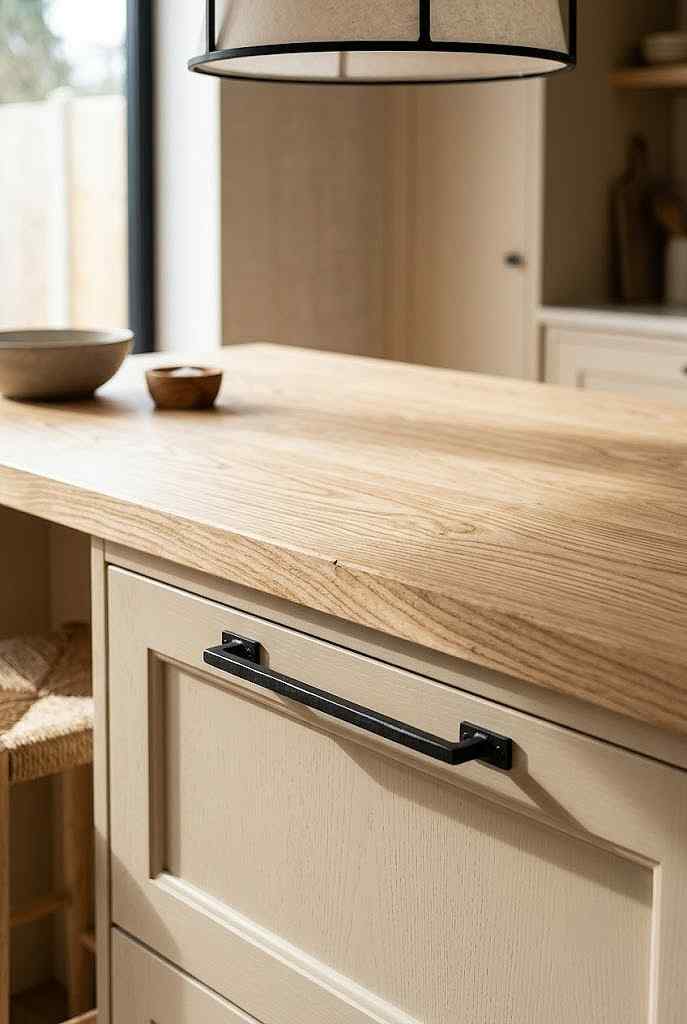
Japandi kitchens follow a consistent visual language, but it’s not rigid which is kind of the point. Here’s what you’ll consistently find:
Materials and Finishes: Natural wood dominates. We’re talking light oak, ash, or minimalist cabinetry in soft neutrals paired with wood countertops or island tops. The wood has a story knots, grain patterns, and natural color variations are welcome here. Matte black accents (handles, fixtures, frames) add just enough contrast without screaming for attention. Concrete, stone, or simple tile in neutral grays round out the palette.
Color Story: The Japandi kitchen basically says “let’s just use what nature already gave us.” Creams, soft whites, warm grays, natural wood tones, and the occasional dark accent create a restful backdrop. You won’t see bright pops of color or trendy pastels. When color does show up maybe a deep forest green or charcoal it’s deliberate and paired with plenty of breathing room.
The Clutter Factor (or lack thereof): This is where Japandi separates from “just minimalist.” Japanese design respects negative space like it’s sacred; Scandinavian design makes negative space feel generous, not cold. Counter clutter gets minimized ruthlessly. Open shelving (if used at all) displays carefully curated items matching plates, clean-lined ceramics, a few quality glassware pieces. Everything visible earns its spot through either utility or genuine beauty.
Lighting Approach: Both cultures understand that good light transforms a kitchen. Japandi kitchens favor natural light in abundance (large windows, skylights if possible) and supplement with warm, dimmer-friendly fixtures. Pendant lights with simple forms, often made from natural materials like wood or soft metals, hang over islands or work zones. Nothing harsh, nothing that feels like a buzzing office overhead.
One thing people forget to mention: texture does a lot of heavy lifting in Japandi kitchens. Since the color palette stays so restrained, contrast comes from how things feel, not how they look. Rough-hewn wood next to smooth stone. Matte cabinetry against glossy tile. A woven basket beside sleek metal fixtures. Your eye reads depth through texture instead of color, which is honestly kind of genius when you think about it.
Also worth noting Japandi kitchens rarely use pure white. It’s always an off-white, a warm cream, or something with a hint of gray. Pure white reads clinical and cold, which defeats the entire Scandinavian half of the equation. If your kitchen currently has stark hospital-white walls, that’s step one on your list to fix.
Building Your Japandi Kitchen Without Losing Your Mind
You don’t need a six-figure renovation budget to capture this aesthetic. Start by subtracting before you add. Take everything off your counters except what you use daily. Seriously appliances, jars, cutting boards, the whole lot. Notice how much better it looks?
Next up, assess your cabinetry. If it’s solid enough structurally, consider a paint refresh. Soft white, warm gray, or natural wood tones are your friends. Hardware swaps are cheap and game-changing replace existing handles with simple bar pulls in matte black or natural brass.
For countertops and backsplashes, think about what honestly excites you. Some people go minimal with white subway tile and butcher block. Others layer in natural stone or mix wood with simple concrete. The rule isn’t strict the rule is that it should feel like it’s there for a reason, not because it was in the inspiration board.
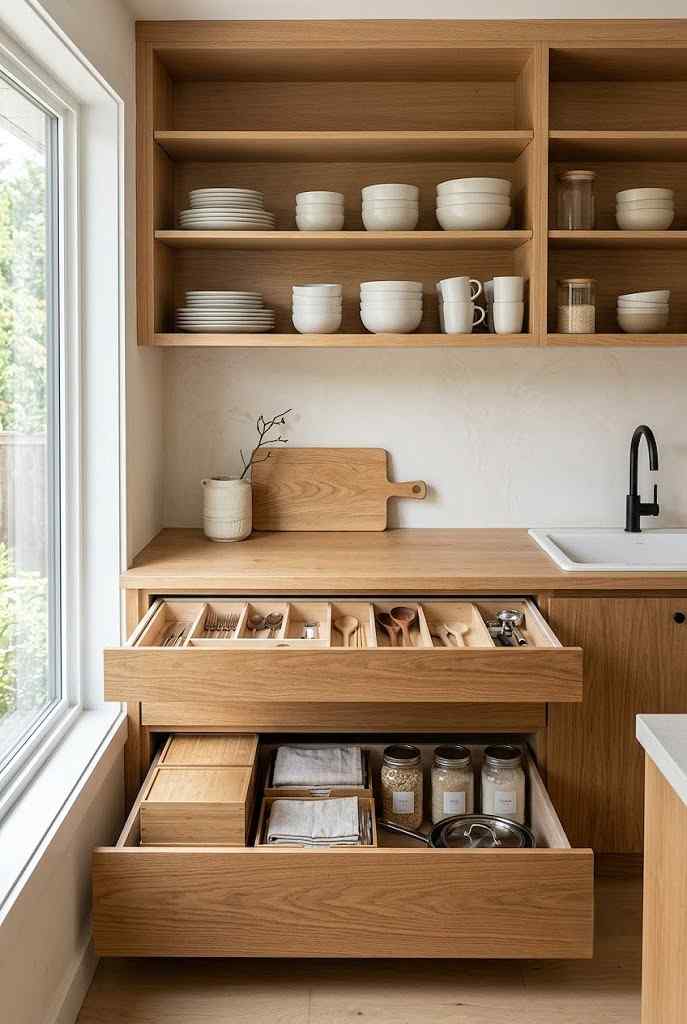
Storage is your secret weapon. The “minimalist kitchen” only works if you have somewhere to hide things. Deep drawers, pull-out organizers, closed cabinetry with clean lines these let you maintain the calm aesthetic while actually storing your stuff. You’re not living like Marie Kondo; you’re living like you’re organized enough to enjoy your space.
Bring in textiles thoughtfully. A linen runner rug in natural fibers, a simple cotton or linen kitchen towel, maybe one woven basket for produce storage. These add softness without clutter.
Don’t underestimate what a single plant can do here. One olive tree, a snake plant, or a simple potted herb garden on the windowsill adds life without breaking the minimalist rule. Japandi isn’t about sterility it’s about intention. A plant earns its spot because it’s alive and it’s doing something (growing herbs for dinner counts).
Budget-wise, tackle this in phases if you need to. Start with decluttering and hardware swaps (basically free). Move to paint and lighting next. Save flooring or countertop replacement for when you’ve got real money to invest. You don’t need to gut your kitchen in one weekend to get 70% of the aesthetic patience actually works in your favor here.
Why Your Kitchen Actually Wants to Be Japandi Right Now
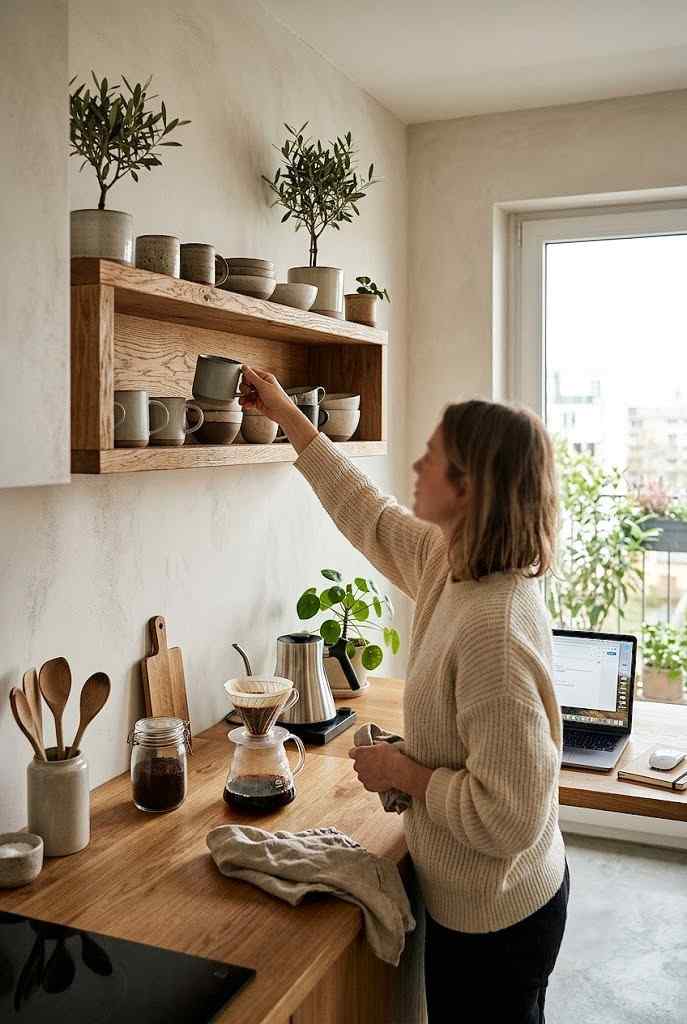
There’s a practical reason this style keeps gaining momentum it actually works for how people live now. Remote work means your kitchen isn’t just breakfast-to-lunch territory anymore you might be grabbing coffee while on a video call or snapping photos of your lunch for social media. A Japandi kitchen photographs beautifully without looking staged, and it functions smoothly because everything has a designated home.
The sustainability angle doesn’t hurt either. Japandi prioritizes quality over quantity, which naturally points you toward fewer, better pieces that last decades instead of fast furniture destined for the landfill. Natural materials age gracefully that wood counter gets character, not damage. 🙂
Plus, there’s something psychologically calming about walking into a Japandi kitchen. You’re not overwhelmed by visual noise. Your brain can actually relax. After a decade of maximalist everything, that’s starting to feel like a luxury feature.
There’s also a resale angle nobody talks about enough. Realtors will tell you neutral, timeless kitchens sell faster than bold, trend-heavy ones because buyers can picture themselves living there. A Japandi kitchen doesn’t alienate anyone with weird color choices or overly personal styling it reads as move-in ready and universally appealing, which matters if you’re planning to sell in the next few years.
And honestly? Cooking just feels different in a calm space. I know that sounds a little woo-woo, but clutter genuinely raises stress levels there’s actual research behind it. A Japandi kitchen removes visual noise, so your brain isn’t quietly cataloging fifteen random objects while you’re trying to figure out dinner 🙂
The Honest Trade-Offs
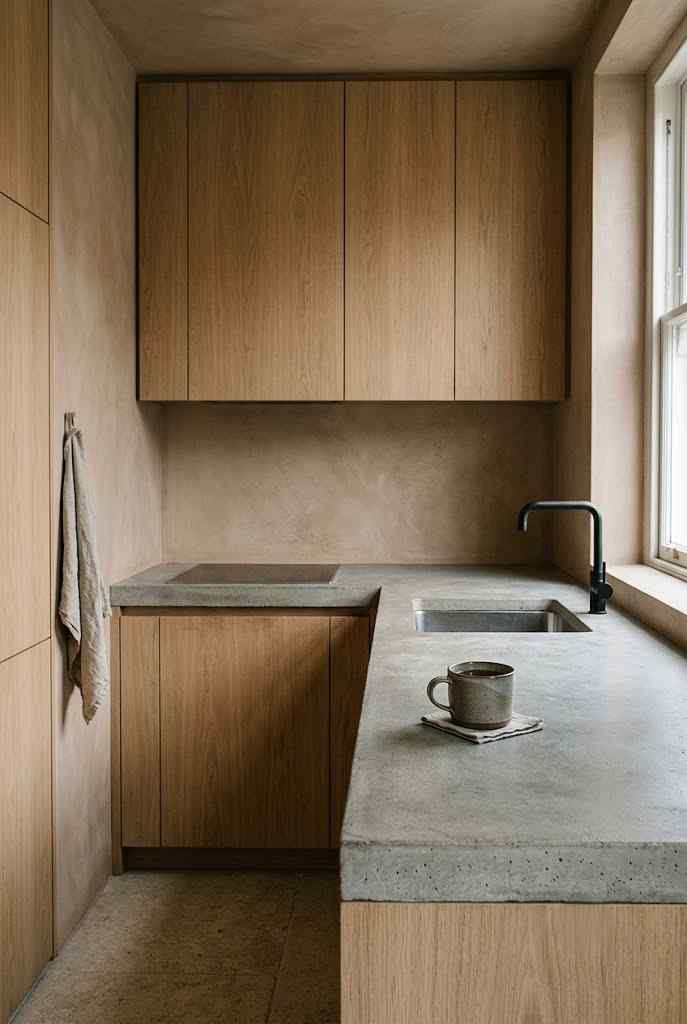
Let’s be real Japandi isn’t perfect for everyone. If you love displaying your cookbook collection, holiday dishes, or that vintage mixer in every color, this aesthetic will feel restrictive. Japandi kitchens require discipline. You can’t just buy a cute thing and leave it on the counter “for now.” There is no “for now.”
Open shelving, which some Japandi designs feature, requires that you actually like how your stuff looks. If you have mismatched plates or chipped bowls, they’re staying in cabinets. Small kitchens can feel cramped if you strip them bare without adding warmth elsewhere it’s a balance.
And here’s the thing nobody mentions achieving authentic Japandi usually costs more upfront than filling your kitchen with particle board and ornaments. Quality wood, intentional fixtures, and thoughtful materials add up. But the payoff is a space that functions beautifully for years instead of one that feels dated in 18 months.
Families with young kids might also struggle here. Kids generate stuff art projects, snack wrappers, forty different water bottles and Japandi’s whole philosophy rests on everything having a home. If you’ve got little ones, budget extra for closed storage solutions so the chaos of daily life doesn’t wreck the calm your kitchen is supposed to deliver.
There’s also a maintenance reality check worth mentioning. Light wood and pale surfaces show stains and scratches more visibly than darker, busier finishes. If you’re not into regular upkeep resealing wood, wiping surfaces immediately this style will test your patience. It rewards people willing to actually care for their space, not just admire it.
Making It Actually Yours
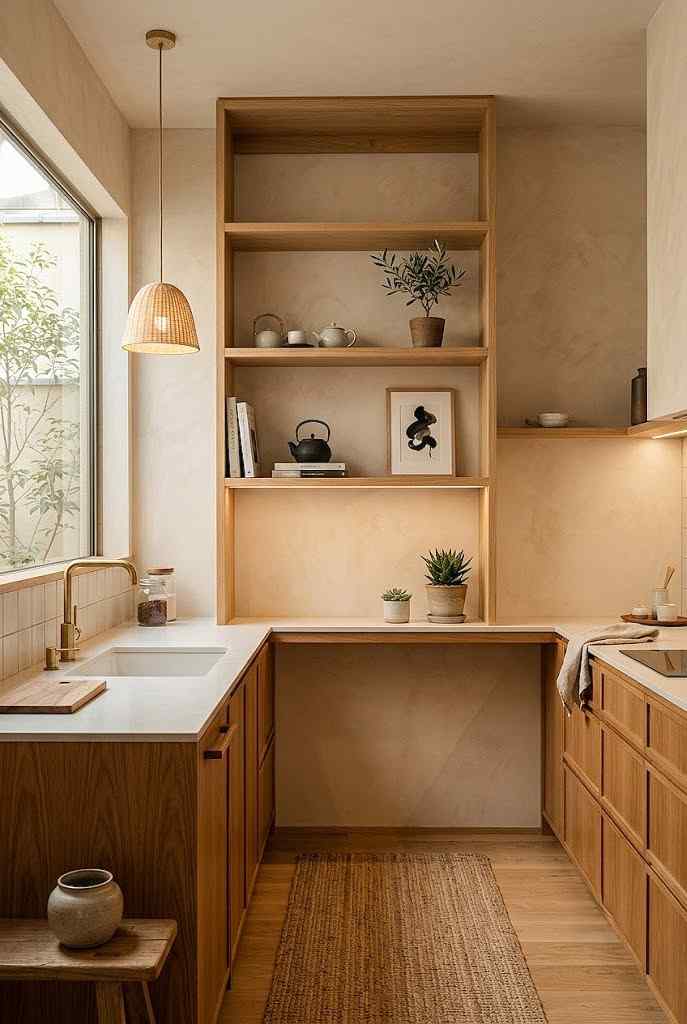
The final piece of Japandi wisdom: this aesthetic is a framework, not a prison. Your kitchen should reflect what you actually need and want. Some people add warmth through art on the walls (large, simple, clean-lined pieces). Others bring in one bold element maybe dramatic black cabinetry if everything else is soft, or a standout tile pattern on one wall.
The Japanese principle of ma (the space between things) paired with Scandinavian coziness means you can create a kitchen that feels both peaceful and personal. That’s the sweet spot everyone’s chasing.
Consider layering in family heirlooms too, as long as they fit the material language. A grandmother’s ceramic bowl, an inherited wooden spoon, a vintage brass kettle these add sentimental weight without clashing, because natural materials generally play nice together across eras. Japandi isn’t anti-history it’s anti-clutter.
If you’re renting and can’t renovate, don’t count yourself out. Removable wallpaper in warm neutrals, swap-in cabinet hardware, a few well-chosen textiles, and open shelving styled with items you already own can get you 80% of the way there. This aesthetic scales down beautifully you just need intention, not a construction crew.
FAQ’s
What’s the difference between a Japandi kitchen and a regular minimalist kitchen?
Japandi adds warmth and natural texture, while pure minimalism can feel stark and impersonal.
Is Japandi kitchen design expensive to achieve?
Not necessarily small changes like decluttering and hardware swaps create impact without major renovation costs.
What colors work best in a Japandi kitchen?
Warm neutrals like cream, soft gray, and natural wood tones work best, avoiding stark white.
Can I create a Japandi kitchen in a small space?
Yes, Japandi actually suits small kitchens well since it prioritizes open space and reduced clutter.
Does Japandi style work with existing wood cabinets?
Absolutely! light or natural wood cabinets align perfectly with the Japandi kitchen’s core aesthetic already.
CONCLUSION
The Japandi kitchen movement isn’t hype it’s what happens when two deeply thoughtful design cultures shake hands. You end up with a space that respects your time, values quality, and makes mornings feel a little bit better. Whether you’re doing a full overhaul or just rearranging what you have, the principles work anywhere. Strip away excess, add intentionality, let natural materials breathe, and suddenly your kitchen doesn’t feel like somewhere you tolerate it feels like somewhere you want to be.