
kitchen corner
By Anna Grace | 21 feb 2026
Transform Your Kitchen Corner Cabinet From Dead Space to Functional Storage Gold
Your kitchen corner is probably a graveyard of forgotten tupperware right now. I say that without judgment because mine is too or at least it was until I got frustrated enough to actually fix it. We spend so much time obsessing over countertops and backsplashes that we completely ignore the fact that a huge chunk of usable kitchen real estate just… sits there, wasted.
Here’s the thing: a poorly optimized kitchen corner isn’t just an eyesore it’s lost functionality you’re paying for.
Why Kitchen Corners Drive You Crazy
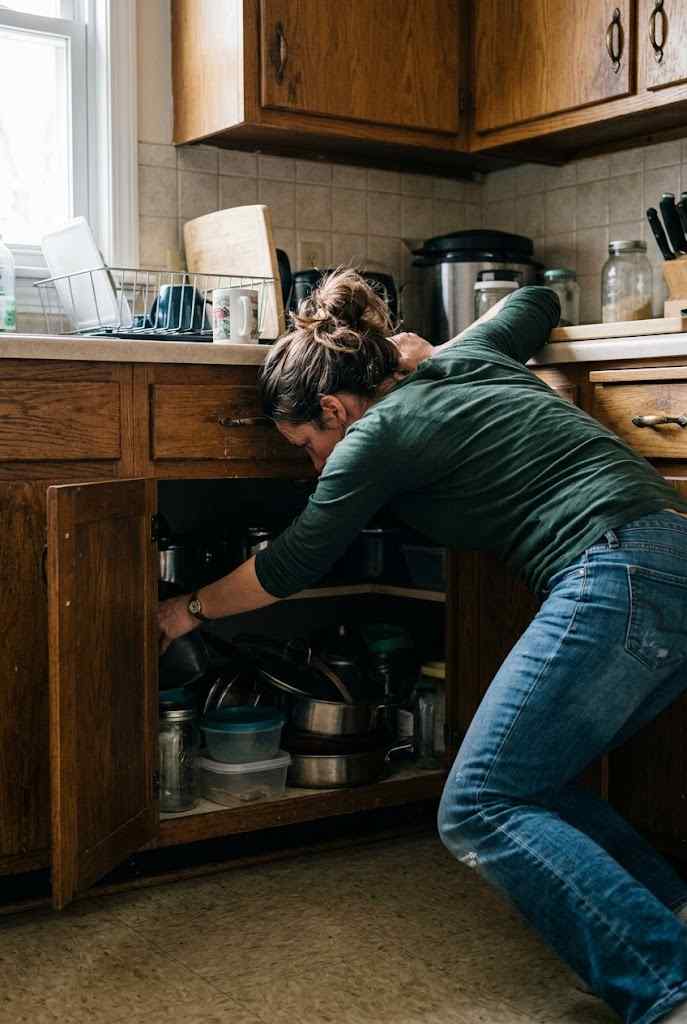
Let’s be honest, deep kitchen corners are basically Bermuda Triangles for your household stuff. You shove something back there, and two months later you’re not even sure what you stored or if it’s still good. The real frustration isn’t that they’re awkward shapes it’s that nobody designs them with actual people in mind.
Most kitchens come with blind corners, and those are particularly infuriating. The cabinet door opens, but reaching anything more than a few inches back requires you to practically crawl in there. :/ I once watched my mom spend five minutes fishing for a single casserole dish with a wooden spoon like she was playing kitchen archaeology. That’s when you realize this isn’t a minor inconvenience it’s a design failure.
The angle of the corner itself works against you. When two cabinet walls meet at 90 degrees, that intersection creates dead zones that standard shelving just can’t reach. You end up stuffing things haphazardly, forgetting they exist, and eventually replacing them because you can’t access them. It’s wasteful, frustrating, and totally preventable
The real kicker? Your kitchen corner isn’t just taking up physical space it’s occupying mental real estate. You’re constantly aware it’s there, and that background frustration adds up. I’ve had friends literally rearrange their entire kitchens specifically to avoid using corner cabinets, which just means they’re cramming everything else into smaller spaces. That defeats the purpose. The problem spirals too when you can’t find things easily, you overbuy duplicates. Three bottles of vanilla extract instead of one because you forgot you had it buried in the corner. That’s money down the drain
The worst part? This isn’t a you problem it’s genuinely poor cabinet design that manufacturers have known about for decades but refuse to fix because standard rectangular cabinets are cheaper to produce. You’re not struggling because you lack organizational skills; you’re struggling because you’re fighting against geometry.
Understanding Your Corner Type Matters
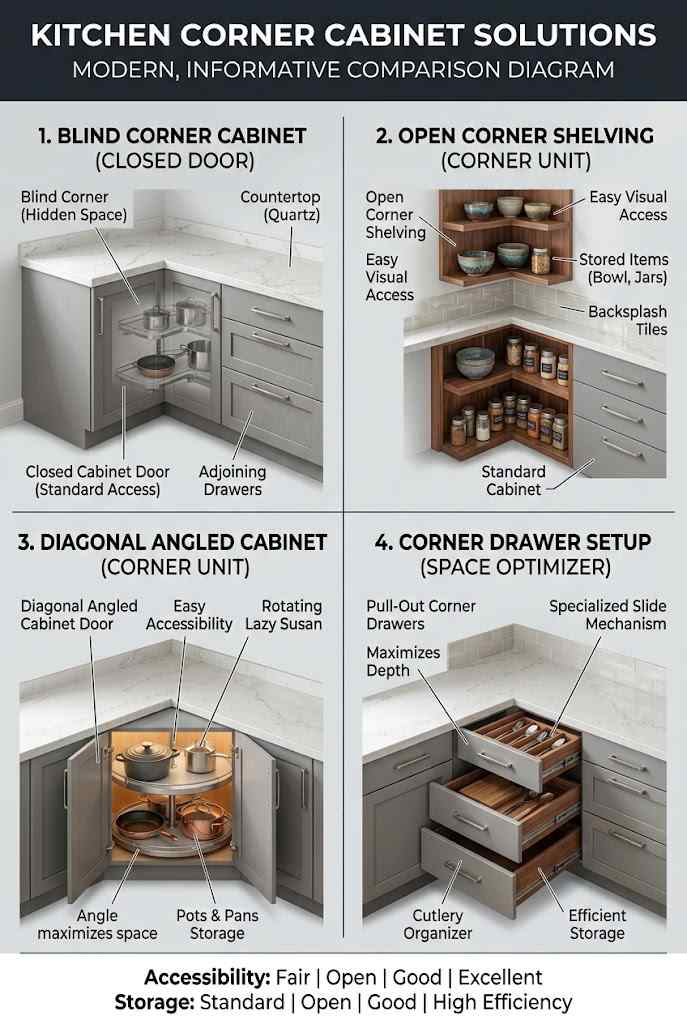
Not all kitchen corners are created equal, and the solution depends entirely on what you’re actually dealing with. Identifying your corner type is half the battle.
Blind corners are the most common culprrit. The cabinet door swings open, but the interior wall blocks your view and reach. You lose roughly 30% of the actual usable space inside because it’s inaccessible without awkward maneuvering.
Open corners (where two walls meet without a cabinet between them) offer different challenges. These are usually above the counter or in open shelving areas, and they need something to anchor the visual space or they look half-finished.
Diagonal corners are less common but trickier to solve. Some kitchens use angled cabinets here, which look unique but are expensive and complicated to modify later.
Corner shelving areas (where you’ve got exposed shelves instead of closed cabinets) need organization systems that look intentional, not like you just piled things up.
Recognizing which corner type you have determines whether you’re installing a pull-out system, building floating shelves, or just getting better at rotating your stock.
Knowing your corner type also helps you set realistic expectations. If you have a blind corner in a rental apartment, you’re probably not installing a fancy pull-out system. But you can absolutely work with a lazy Susan or a tiered shelf riser. Conversely, if you own your home and that corner is driving you nuts multiple times a week, investing in a proper solution suddenly makes financial sense
Time is money, and if you spend ten minutes a week hunting through your corner cabinet, that’s almost nine hours a year. When you frame it that way, a $400 pull-out system doesn’t seem so expensive anymore. Also consider how you use that space seasonally. Do you pull out special baking dishes during the holidays? A solution that lets you access them easily once or twice a year is different from one you need to use daily.
The context matters as much as the corner type itself what works beautifully for someone who stores their decorating supplies there might be completely wrong for someone using it for everyday cooking essentials.
Practical Storage Solutions That Actually Work
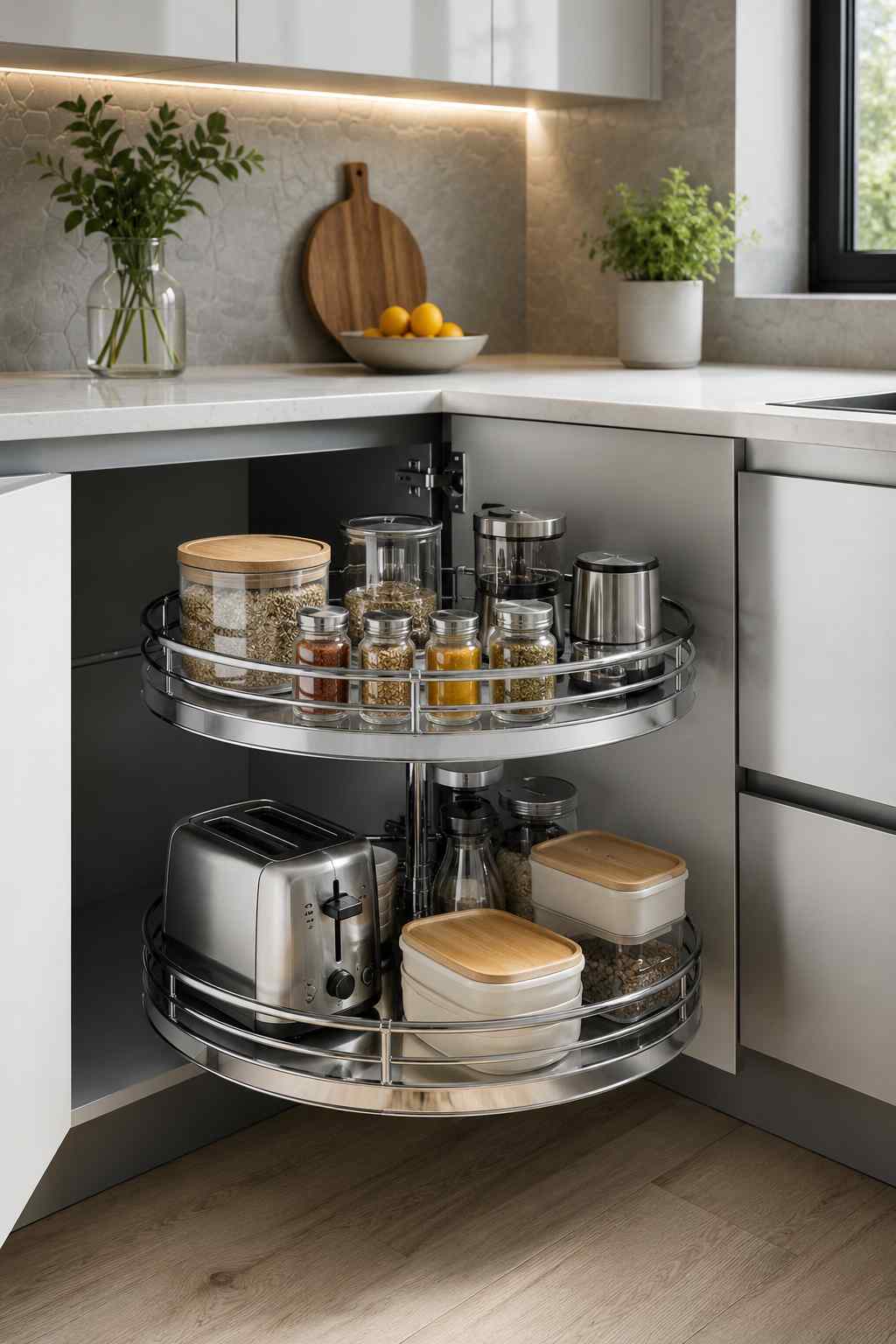
Here’s where things get genuinely useful. If you’ve got budget and patience, several solutions can transform your kitchen corner from dead weight into functional space.
Pull-out rotating systems are the gold standard for blind corners. These slide out on tracks, giving you full access to everything in the back. Yes, they’re pricier than standard shelving, but they eliminate the whole “reaching into darkness” problem. IMO, if you have the budget, this is worth it you’ll actually use the space instead of treating it like a junk drawer.
Corner drawers work brilliantly for smaller kitchens. They glide out smoothly and give you drawers instead of open shelves, so your kitchen corner stays organized and hidden. These are excellent for storing lightweight items like kitchen towels, utensils, or small appliances you use occasionally.
Lazy Susan organizers are the budget-friendly shortcut. Pop a two-tier lazy Susan in your corner cabinet, and suddenly rotating to reach the back isn’t painful anymore. They work best for oils, condiments, spices, or lightweight gadgets not for your heavy cast iron.
Floating corner shelves suit open kitchen corners perfectly. They look intentional and break up empty wall space. Just make sure whatever you put on them is attractive this isn’t hidden storage, so it’s part of your décor now.
Corner racks and tiered shelving are another flexible option. These vertical systems maximize your wall space without requiring permanent installation. They work for utensils, small appliances, or cookbooks, and you can adjust them as your needs change.
The key is matching the solution to what you actually want to store there. A spice rack-style corner system is useless if you want to store baking sheets.
There’s also the middle ground that nobody talks about: upgrading your cabinet hardware without replacing the whole cabinet. Sometimes a simple soft-close hinge upgrade paired with a better internal organization system can transform functionality without the four-figure price tag. You can also get creative with what you’re repurposing wine racks work great for storing baking sheets, door-mounted spice organizers fit perfectly in narrow corner spaces, and tension rods (yes, the ones for curtains) are incredible for hanging small utensils or aluminum foil boxes.
The key is not thinking of solutions as “official kitchen products” only. Hit your dollar store, hardware store, and home goods section with fresh eyes. Some of the best kitchen corner hacks come from people adapting things designed for completely different purposes. Also, don’t underestimate the power of simply removing what doesn’t belong. Before you invest in any storage solution, do an honest audit of what you actually keep in that corner. Seriously does that bread maker get used? Those fourteen specialty cake pans? The pasta maker? If you’re storing things “just in case,” your corner is full of anxiety, not useful items. Clear it out completely, decide what actually needs to live there, then install your solution. You’ll size it correctly and avoid the mistake of recreating a new jumbled mess in a fancy new system.
Making Your Kitchen Corner Look Intentional
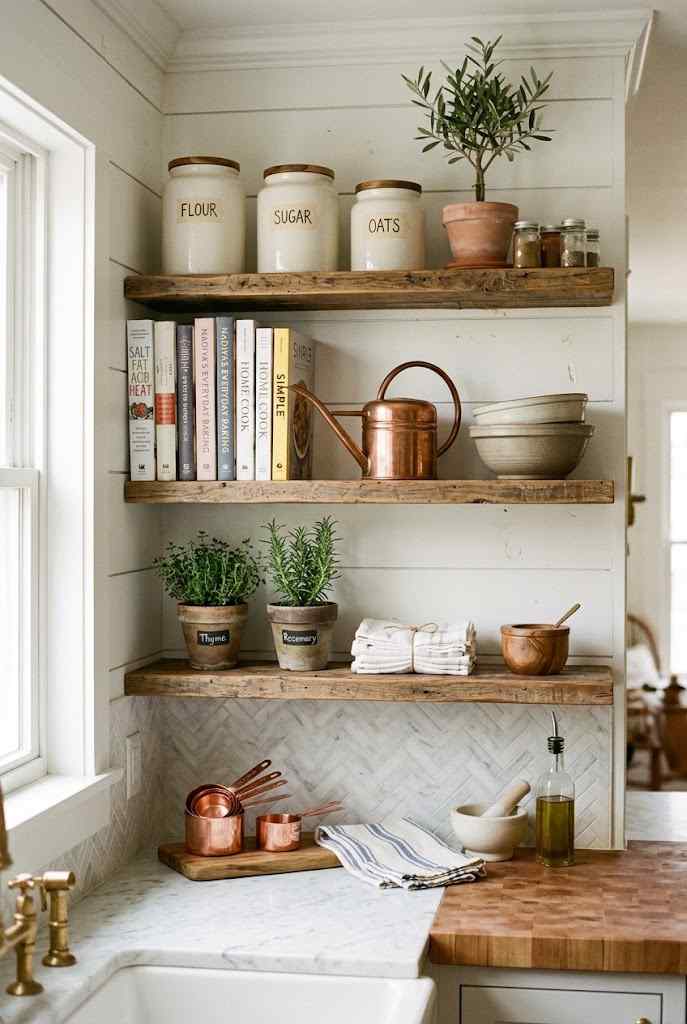
Here’s what people don’t talk about enough: your kitchen corner is visible. It’s part of your design whether you treat it that way or not.
If you’re going with open shelving or a visible storage system, commit to the aesthetic. Keep it organized and curated, not cluttered. This sounds obvious, but it matters. A corner filled with mismatched containers and random kitchen gadgets reads as “I ran out of ideas,” while the same space organized by size and color looks intentional.
Consider your existing kitchen style. Modern minimalist? Go for sleek, linear shelving and a limited color palette. Farmhouse or cozy? Open shelving with ceramic containers, copper accents, and visible cookbooks. Traditional? Enclosed cabinetry with decorative hardware stays clean and classic.
The real trick is resisting the urge to turn your corner into a dumping ground just because you’ve improved the storage. FYI, accessibility doesn’t excuse clutter. Just because you can now reach what’s in your corner doesn’t mean you should stuff it completely full.
There’s psychology at play here too. When your kitchen corner looks intentional and organized, it affects how you feel about cooking and being in that space. Studies on kitchen design consistently show that visual order reduces stress and makes people more likely to actually cook at home rather than ordering takeout. That means a nice-looking kitchen corner isn’t frivolous it’s functional in its own way. You also can’t ignore the social aspect. If you have people over, they absolutely notice your kitchen, and they especially notice messy corners because they stand out. I’m not saying you need to decorate for guests, but there’s something satisfying about having a space that looks like you have it together. It’s the small stuff that matters. Even if you have limited budget, painting the inside of an open corner cabinet a cheerful color or adding a simple back panel can completely change how it reads visually.
A mismatched jumble of containers looks like chaos; the same containers in coordinating colors look like a choice. Dark corners especially benefit from light-colored backs or interiors because they make the space feel bigger and less cave-like. The visual psychology of your corner storage directly impacts whether you maintain it or let it slide back into chaos.
The Organization Secret That Changes Everything
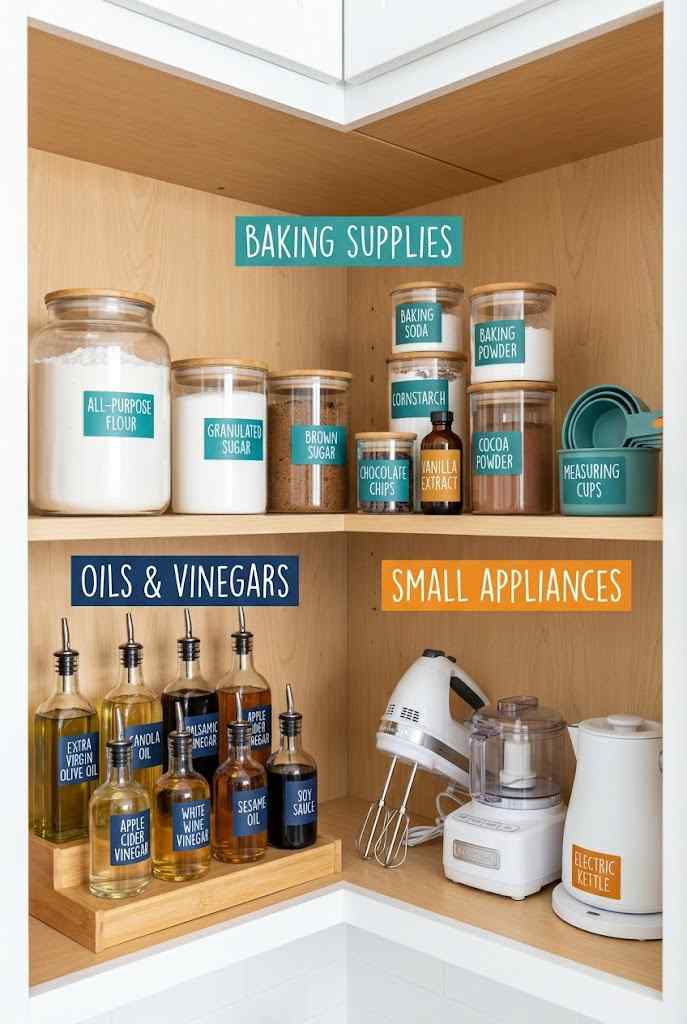
I know someone who installed perfect pull-out shelving in her kitchen corner and somehow still can’t find anything. The storage system isn’t the problem the system inside the storage is.
This is where most people mess up. They solve the accessibility problem but ignore the organizational one. Your corner storage only works if you actually know what’s in there and where to find it.
Group items by category. Keep all your baking supplies together, oils and vinegars in one section, small appliances in another. This sounds basic, but most people jam things in randomly.
Label everything if it’s not immediately obvious. Clear containers are your friend. You see what’s inside without opening anything. For items in opaque containers, small labels take seconds to add and save you hours of searching later.
Rotate your stock intentionally. Use the “first in, first out” method so older items get used before they expire. Kitchen corners are where forgotten spice bottles go to die don’t let that happen.
Keep your most-used items at eye level or easy reach. Reserve the awkward, hard-to-reach spots for things you grab occasionally, not your daily cooking staples.
Beyond the basics, there’s a time-saving trick that professional organizers use: creating “zones within zones.” Instead of just grouping baking supplies together, separate them furtherone section for dry ingredients, one for tools, one for packaging materials. This seems excessive until you’re actually cooking and need to grab brown sugar without digging past five other things. The more intentional your internal organization, the faster you move through your kitchen. It also makes restocking easier.
When everything has a designated spot, you notice immediately when you’re running low instead of discovering you’re out of something mid-recipe. Some people use photo labels inside cabinet doors showing what should be stored in each section sounds obsessive, but it keeps other household members (kids, partners, roommates) from just shoving things wherever. Clear expectations prevent the slow creep back into chaos that happens when everyone has a different idea of where things belong.
Another game-changer is the “utensil audit.” Most people have way more kitchen tools than they use. Seriously, how many spatulas do you need? Pick your favorites and store only those in your easily accessible corner areas. Everything else gets boxed up and stored elsewhere, or honestly, you probably don’t need it. Your kitchen corner doesn’t need to hold your entire kitchen just the stuff you actually reach for regularly. That constraint forces intentional decision-making that keeps the space functional long-term.
When to Upgrade vs. When to Live With It
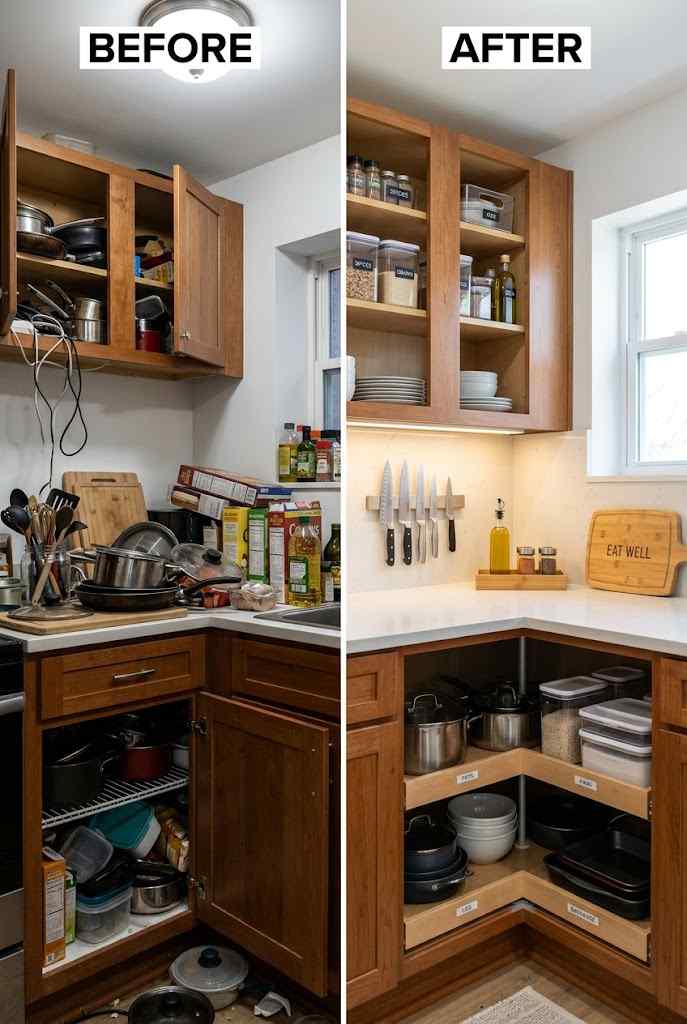
Not every kitchen corner deserves a renovation. Sometimes the solution is simpler than you think, and sometimes the expense isn’t worth what you’re actually gaining.
If your corner handles 20% of your kitchen’s storage and you’re constantly frustrated, an upgrade makes sense. If you store three things back there and rarely access them, maybe you’re overthinking it.
Budget matters too. A pull-out system can run $300–$800 installed. A lazy Susan costs $20. That same space might serve you perfectly well without the expensive solution. Choose what fixes your actual problem, not what looks flashiest in the showroom.
The real question: does your kitchen corner waste your time? If yes, invest. If it’s just “not ideal,” you might live with it and spend the money elsewhere.
FAQ’s
How do you maximize a kitchen corner with limited budget?
Use lazy Susans, tiered shelf risers, and clear containers grouped by category total spend under fifty dollars.
What’s the best way to prevent kitchen corner clutter from returning?
Assign specific zones for each category, label everything, and audit quarterly to remove items you’ve stopped using.
Can you install pull-out corner systems in rental kitchens?
No permanent installations allowed, but adhesive-mounted organizers and freestanding shelving units work beautifully instead.
Why do kitchen corners collect forgotten items so quickly?
Limited visibility and awkward access make it easy to forget what’s stored there poor initial organization accelerates the problem.
Should you store frequently used items or rarely used items in hard-to-reach corners?
Reserve difficult-to-access spots for occasional-use items; keep daily essentials at eye level or easy-reach areas for efficiency.
CONCLUSION
Your kitchen corner isn’t supposed to be a mystery zone. It’s real estate you paid for, and it should work as hard as the rest of your kitchen. Whether that means installing a pull-out system, adding open shelving, or just getting ruthlessly organized with what you’ve got, the point is to make a decision and commit to it.
Start by looking honestly at what frustrates you, what you actually store there, and what your budget allows. Then pick a solution and implement it. You’ll be amazed how much mental energy you free up when you’re not wondering what’s buried in your kitchen corner anymore 🙂