
kitchen light
By Anna Grace | 9 March 2026
A No-Nonsense Guide to Better Kitchen Lighting at Home
Your kitchen probably looks dingy right now, and I’m guessing you’ve never even realized it’s the lighting. I figured this out after complaining about my kitchen for months, only to discover that my overhead fixture was basically a sad museum of dust and inadequate lumens. Turns out, good kitchen lighting isn’t a luxury it’s the difference between enjoying food prep and dreading it.
Most people treat their kitchen light like an afterthought. You flip a switch, something glows (barely), and you call it a day. But here’s the thing: your kitchen is where you spend real time, make real meals, and probably handle sharp objects while hungry. That deserves better than a single ceiling fixture that makes everything look like a crime scene.
Here’s the thing: kitchen lights isn’t just about visibility it’s about creating a space where you feel capable, where colors actually pop, and where you’re not squinting at your cutting board like you’re performing surgery in a cave.
Why Kitchen Light Actually Matters More Than You Think

Bad lighting ruins your entire kitchen experience, even when everything else is perfect. You can’t see what you’re cutting. Colors of fresh ingredients look washed out. That lovely meal you prepped looks like it came from a hospital cafeteria before it even hits the table. :/
The real issue is that most kitchens rely on one light source usually a sad little fixture in the middle of the ceiling. This creates shadows everywhere, especially over your work surfaces where you need light most. Counter corners go dark. The backsplash becomes a mystery. Chopping vegetables turns into a guessing game.
Beyond functionality, kitchen light affects mood and health. Bright, cold light while you’re cooking? Your brain stays in “task mode.” Warmer light during dinner? Suddenly the meal feels more enjoyable. Research shows that lighting quality influences how much you enjoy eating, how hungry you feel, and even your digestion. Your lighting choices actually wire your body’s responses to food.
Think about the last time you burned yourself chopping something because you couldn’t quite see where your fingers were. That’s not clumsiness that’s your kitchen light failing you. FYI, most kitchen accidents happen not because people are careless, but because visibility is garbage.
There’s also a resale angle nobody mentions. Buyers walking through a home notice lighting instantly, even if they can’t articulate why a kitchen feels “off.” A well-lit kitchen photographs better, feels bigger, and honestly just sells the vibe of a home that’s been cared for. Poor lighting quietly tanks how spaces are perceived, kitchen included.
The Three Types of Kitchen Lighting (And How to Actually Use Them)
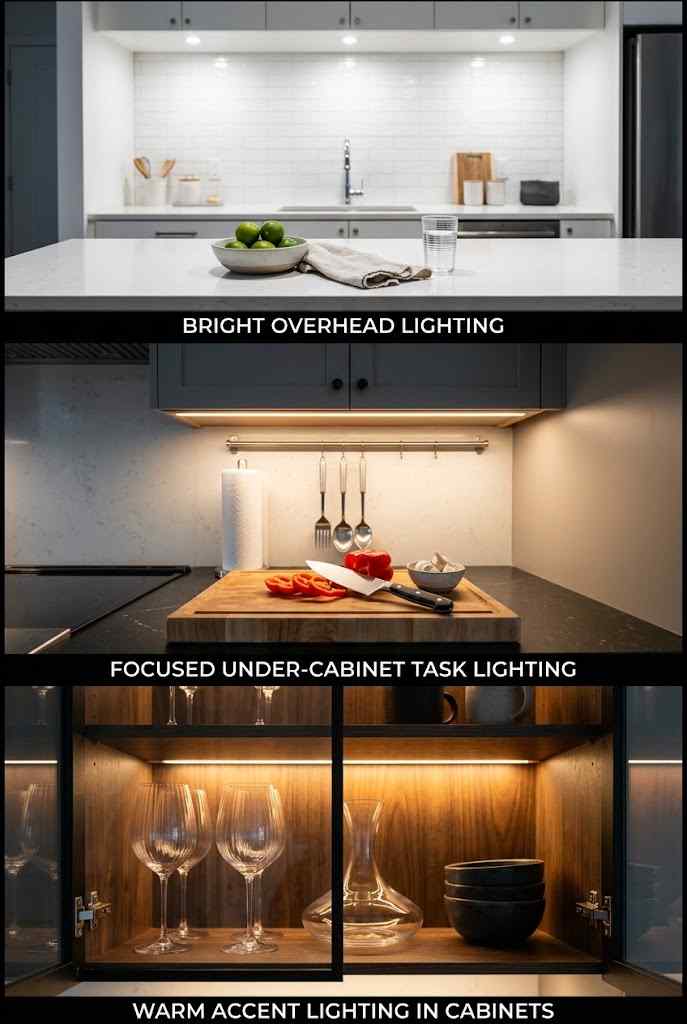
Here’s a mistake I made for years: I assumed one bright light fixture equaled “good enough” lighting. Wrong. Layering isn’t about adding more light it’s about adding the right light in the right spots. A kitchen with three layers working together uses less total wattage than one relying on a single blazing overhead fixture, and it looks infinitely better doing it.
Don’t overthink the accent layer either. Even a single LED strip behind your upper cabinets creates depth most kitchens are missing. It’s a small move that makes the whole room feel designed instead of assembled.
Designers talk about three lighting “layers,” and while that sounds pretentious, it actually solves your problem. You need ambient, task, and accent lighting working together not competing or leaving gaps.
Ambient lighting is your baseline glow. This is often that overhead fixture everyone has, but it works best when it doesn’t work alone. Ambient light fills the room evenly so you’re not stumbling around. Recessed lights, flush mounts, or semi-flush fixtures do this job. The goal isn’t to light the entire kitchen bright enough for surgery it’s to create basic visibility without making your eyes hurt.
Task lighting is where everything clicks. This is focused, bright light directly where you work. Under-cabinet lights are the MVP here. They eliminate shadows on your countertops, making prep work easier and safer. A pendant light or two over the island (if you have one) gives you a bright spot for cutting, mixing, or plating. Many people skip this layer entirely, then wonder why they’re squinting while cooking.
Accent lighting is your secret weapon for ambiance. This might be inside glass cabinet doors, along shelving, or strip lighting behind upper cabinets. Accent light makes your kitchen look intentional and warm, especially during evenings. It’s purely optional if you’re cooking, but it transforms the room when you’re eating or just hanging out.
Combining all three? That’s when your kitchen actually feels livable.
Kitchen Light Types: What Actually Works
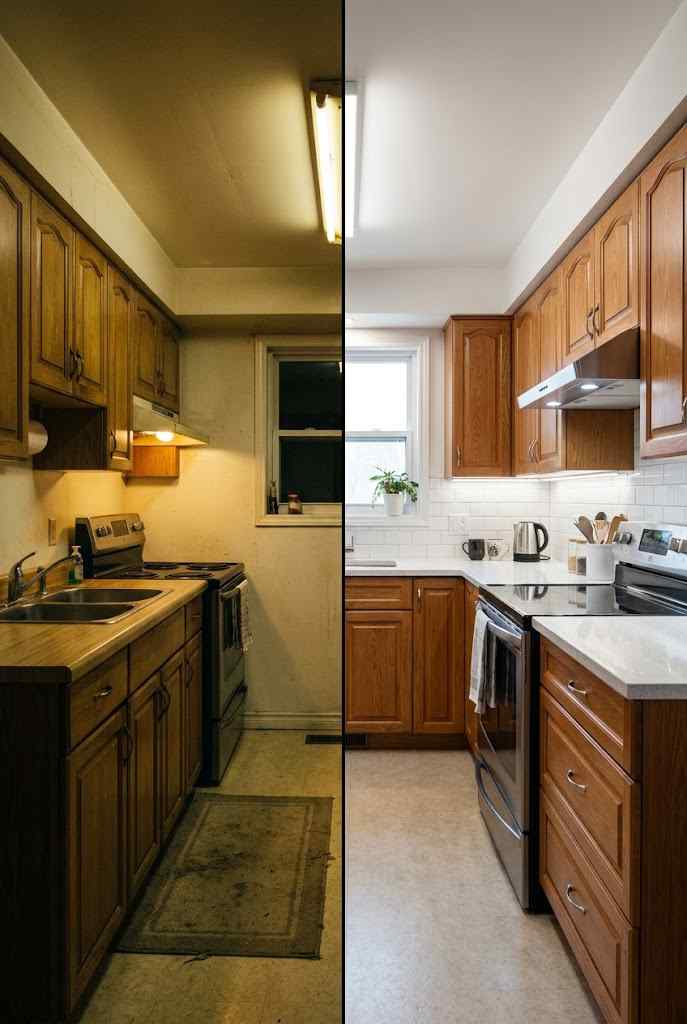
Not all bulbs and fixtures behave the same, and this matters more than most people realize.
LED lights dominate now, and for good reason. They’re efficient, last forever, and come in different color temperatures. Here’s the crucial part color temperature is measured in Kelvin (K). Go for 2700K-3000K for warm kitchen light near dining areas. That’s cozy, makes food look appetizing, and doesn’t feel like you’re prepping for an interrogation. For task areas, 4000K-5000K feels more natural for detailed work while staying less harsh than hospital-grade 6500K.
Incandescent bulbs are basically dead now, and nobody misses them. Halogen gets hot and expensive. Fluorescent makes food look gray. LED wins because it controls color, lasts 15+ years, and saves money on your power bill.
The fixture itself matters too. Recessed lights work great for ambient but terrible for task lighting (they create shadows below the rim). Pendant lights look nice and can direct light downward effectively. Under-cabinet strips are game-changers they eliminate prep shadows and cost less than you’d think to install. Flush mounts disappear into the ceiling, which is fine if you combine them with task lighting.
Smart bulbs deserve a mention here too. Many LED options now sync with your phone, letting you switch color temperature depending on whether you’re meal-prepping at 7am or hosting dinner at 7pm. Is that necessary? No. Is it kind of addictive once you try it? Also no lie yes.
CRI (Color Rendering Index) matters more than people realize. Look for bulbs with a CRI of 90 or above this number tells you how accurately colors appear under that light. Skip this detail and your beautifully plated meal might still look flat and lifeless, no matter how bright the room is.
Common Kitchen Light Mistakes (That You’re Probably Making)

One single overhead light? Mistake number one. IMO, this is why so many people hate cooking. A lone fixture casts your entire body as a shadow on the countertop. Your hands disappear. Your food looks wrong. Install under-cabinet lights and a pendant or two total cost isn’t crazy, impact is massive.
Choosing the wrong color temperature creates weird moods. Too warm and you can’t see colors clearly. Too cold and dinner feels institutional. Finding your sweet spot (usually 3000K-4000K) makes an enormous difference.
Ignoring dimmers is leaving money and comfort on the table. You want bright light when you’re prepping. You want softer light during dinner. A dimmer on your ambient lights lets you adjust to the moment without rewiring anything.
Most kitchens also overlook the backsplash entirely. That wall behind your stove or sink? It reflects light and can bounce glare straight into your eyes if you’re not careful. Positioning lights thoughtfully (not directly at face level) prevents this headache.
Another sneaky mistake: mounting under-cabinet lights too far forward, so they shine directly into your eyes instead of down onto the counter. Positioning matters as much as the light itself. Push fixtures toward the back of the cabinet, closer to the wall, so light bounces downward onto your workspace instead of blinding you mid-chop.
People also forget to match fixture finishes to their kitchen hardware. A brushed nickel pendant next to matte black cabinet handles looks like it wandered in from another house. Small detail, but it’s the kind of thing that makes a kitchen feel put-together instead of thrown together.
The Practical Stuff: Installing Better Kitchen Light
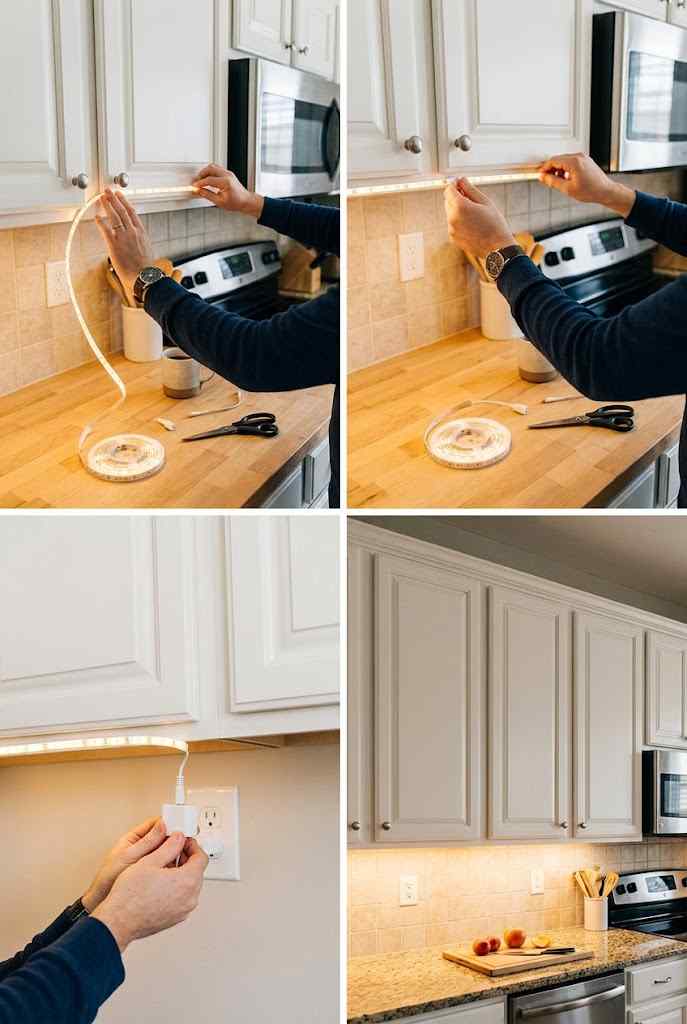
You don’t need a complete rewire to upgrade. Start small.
Under-cabinet lighting is the easiest first step. Peel-and-stick LED strips run along the bottom of your upper cabinets, plug into an outlet, and done. Hardwired strips look cleaner but need an electrician. Either way, this single upgrade makes your counters actually functional.
Adding a pendant light over your island (if you have space) gives focused task lighting. Most hangers fit standard electrical boxes. A qualified electrician takes an hour, and you get tons of benefit.
If your overhead light feels harsh, install a dimmer switch. This costs roughly $15-30 and takes 20 minutes. Seriously. Your kitchen immediately feels more flexible.
Replace your bulbs with good LEDs at the right Kelvin rating. This costs almost nothing and improves everything instantly. Don’t buy the cheapest bulbs they flicker and die fast. Spend a few bucks more and get quality.
Budget matters here, so let’s talk numbers. Peel-and-stick LED strips run $15-40 for a full kitchen. A basic pendant light fixture costs $30-80 before installation. Dimmer switches sit around $15-30. Total realistic budget for a full upgrade: under $200, even accounting for a couple hours of electrician time if you’re not comfortable with wiring yourself.
Timing your upgrade matters too. If you’re already repainting or replacing cabinet hardware, tackle lighting simultaneously. You’ll avoid re-doing trim work twice, and contractors (if you’re using one) often bundle these jobs for a better rate.
Kitchen Light and Actual Daily Life

Here’s something people don’t talk about the right lighting makes you want to cook more. When your workspace is bright and welcoming, you don’t dread food prep. You stand there without squinting. You see your ingredients clearly. Chopping becomes pleasant instead of frustrating.
I noticed this after fixing my own kitchen. Suddenly I was actually making pasta from scratch and roasting vegetables intentionally, not just throwing together frozen meals in dim confusion. Better light genuinely changed my cooking behavior.
The evening shift matters too. After work, when natural light disappears and your mood dips, warm task lighting at the kitchen counter keeps things pleasant. You’re not sitting in a dark cave. Dinner feels more intentional. Your space feels cared for, not just functional.
Guests notice lighting even when they can’t name what changed. I’ve had people comment that my kitchen “feels bigger” or “feels calmer” after the lighting upgrade nothing else changed except how the room is lit. That’s the quiet power of getting this right: people feel the difference before they consciously see it.
Kids benefit too, if that’s relevant to your household. Better lighting during homework-at-the-counter sessions or after-school snack time reduces eye strain and keeps everyone more alert. It’s a small parenting win hiding inside a lighting upgrade.
FAQ’s
How many lumens do I need for kitchen task lighting?
Aim for 700-800 lumens per square meter over counters and prep areas for clarity.
Can I mix warm and cool kitchen light in the same room?
Yes, layering warm ambient light with cooler task light works well and feels balanced.
Do LED kitchen lights really save money long-term?
Yes, LEDs use 75% less energy and last 15-25 times longer than incandescent bulbs.
Is it worth hiring an electrician for kitchen lighting upgrades?
For hardwired fixtures like pendants, yes! plug-in options like LED strips are simple DIY jobs.
What’s the best kitchen light color temperature for cooking versus dining?
Use 4000K-5000K for cooking tasks and 2700K-3000K warm light for relaxed dining moments.
CONCLUSION
Your kitchen light setup is a problem you can actually solve, probably for under $200 and a few hours of work. Start with one upgrade under-cabinet lights or a dimmer and experience the difference. Once you’ve lived in a well-lit kitchen, you won’t go back.
The right lighting doesn’t just make your kitchen look better. It changes how you feel while you’re there, what you cook, and how you enjoy eating. That’s worth the small effort to get it right.