
kitchen table
By Anna Grace | 11 March 2026
The Kitchen Table: Why This One Piece of Furniture Actually Runs Your Entire Home

Your kitchen table isn’t just somewhere you eat breakfast. It’s where your kids do homework, where you scroll your phone while coffee goes cold, where tough conversations happen, and probably where you’ve stress-eaten more desserts than you’d like to admit. Mine literally has a permanent dent from the time my partner threw a spatula at it during an argument about dishwasher loading methods. That dent? It’s a memory. A terrible, funny memory.
A quality kitchen table anchors your entire home in ways other furniture just can’t replicate. It’s the unofficial command center, the gathering spot, the surfaces that gets more use than you’d ever anticipate when you buy it. So picking the right one actually matters, and it’s worth thinking through more carefully than you might assume.
Think about how many decisions get made at that table. Budget conversations, vacation planning, “we need to talk” moments they all happen over the same wooden surface you barely notice most days. That’s wild when you actually sit with it for a second.
FYI, most people spend more waking hours at their kitchen table than on their couch, especially now that remote work and hybrid schedules are normal. It’s not just furniture. It’s infrastructure for your household. Treat the decision like it deserves that weight, not like you’re grabbing the first thing that fits your kitchen.
Materials Matter More Than You Realize
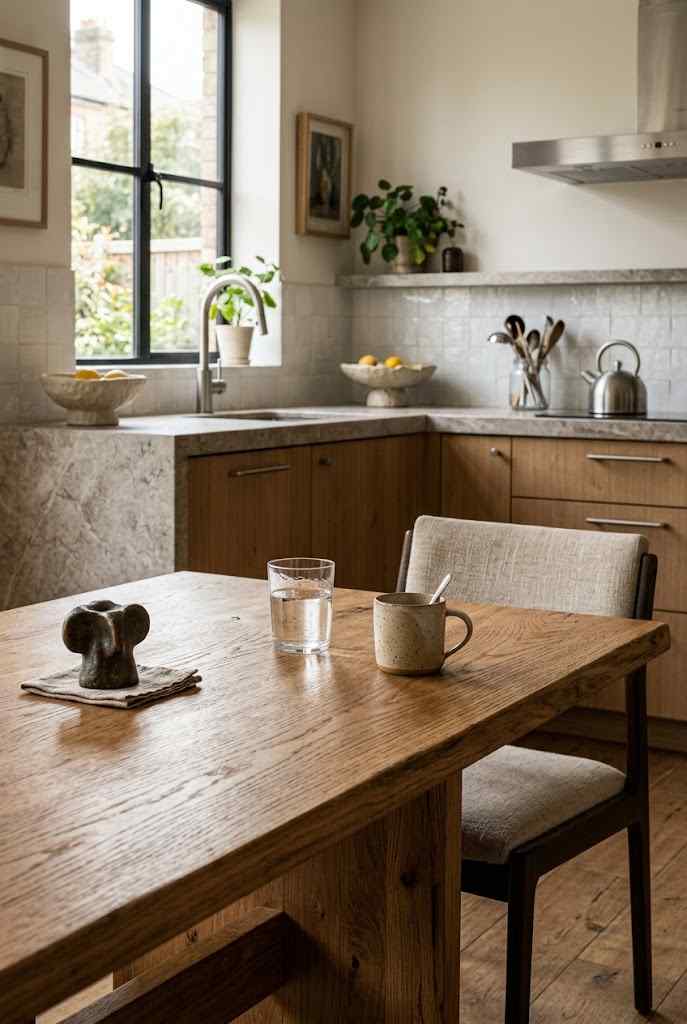
When you’re shopping for a kitchen table, the material you choose will genuinely affect how much you enjoy living with it. Wood, metal, glass, marble each one tells a different story and demands different things from you.
Solid wood tables are the classics for a reason. They warm up a space, they age beautifully, and you can refinish them if life gets too rough on the surface. The downside? Wood can scratch, water rings happen, and if you have young kids or pets, you’ll need to make peace with character marks. I’ve watched friends spend thousands on butcher block only to watch their coffee table turn into a science experiment of beverage stains.
Glass and metal combos feel modern and clean. They’re easy to wipe down crucial if you have anyone under the age of twelve living in your house. But glass shows every fingerprint, and metal can scratch. They also tend to feel a bit cold, which isn’t always bad depending on your vibe.
Marble and stone scream luxury, and they look incredible in photos. The reality check? They’re porous, they stain, and they’re genuinely expensive to maintain. If you choose marble, you’re choosing a table that needs actual attention.
There’s also laminate, which nobody brags about but everyone secretly appreciates. It’s budget-friendly, resists stains, and doesn’t care if your toddler treats it like a canvas. IMO, laminate gets unfairly judged it’s practical in ways fancier materials simply aren’t.
Reclaimed wood deserves a mention too. It’s got history, texture, and usually a story behind every knot and scratch. The catch is inconsistency no two reclaimed pieces behave the same way, so what you see in the showroom might shift once it’s in your lighting and humidity.
Size and Space: The Math Nobody Wants to Do But Absolutely Should
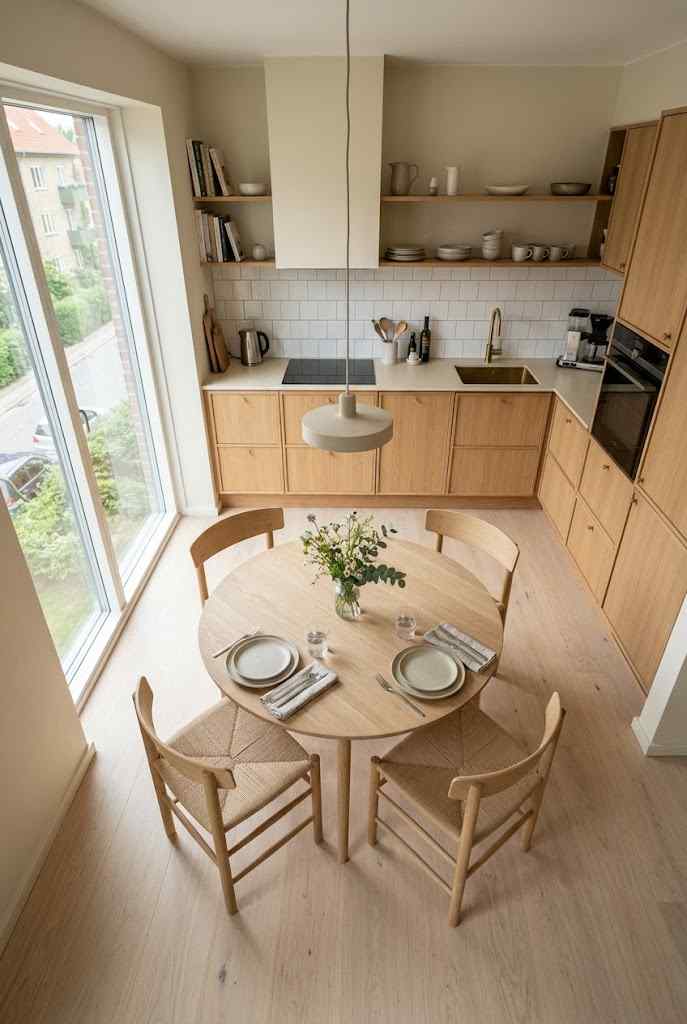
Here’s where most people mess up. They fall in love with a table, bring it home, and suddenly realize it blocks their walkway or there’s no room to pull out chairs. Have you measured your space? Like actually measured it with a tape measure and left clearance space? Most of us haven’t, and it shows.
A good rule: you need at least 36 inches of space around your table for people to move comfortably. If you have a small kitchen, this changes everything. A round table uses space more efficiently than a rectangular one. An extendable table gives you flexibility without taking up full space all the time.
The height matters too. Standard dining tables are around 30 inches tall. If your stools or bar seating around your table need to fit something taller or shorter, that’s a measurement day. I know it sounds tedious it is but it’s the difference between a table that flows with your life and one that feels like a permanent obstacle course.
Don’t forget about walking paths near entryways or appliances. If your table sits too close to your stove or fridge, cooking becomes an obstacle course every single night. Nobody wants to do the kitchen shuffle around chairs just to grab a pan.
Also think about future needs, not just current ones. Planning to have people over more? Thinking about kids eventually needing homework space? Buy slightly bigger than your immediate need if your kitchen allows it growing into furniture beats replacing it in two years.
Style, Durability, and Finding the Balance Between Them
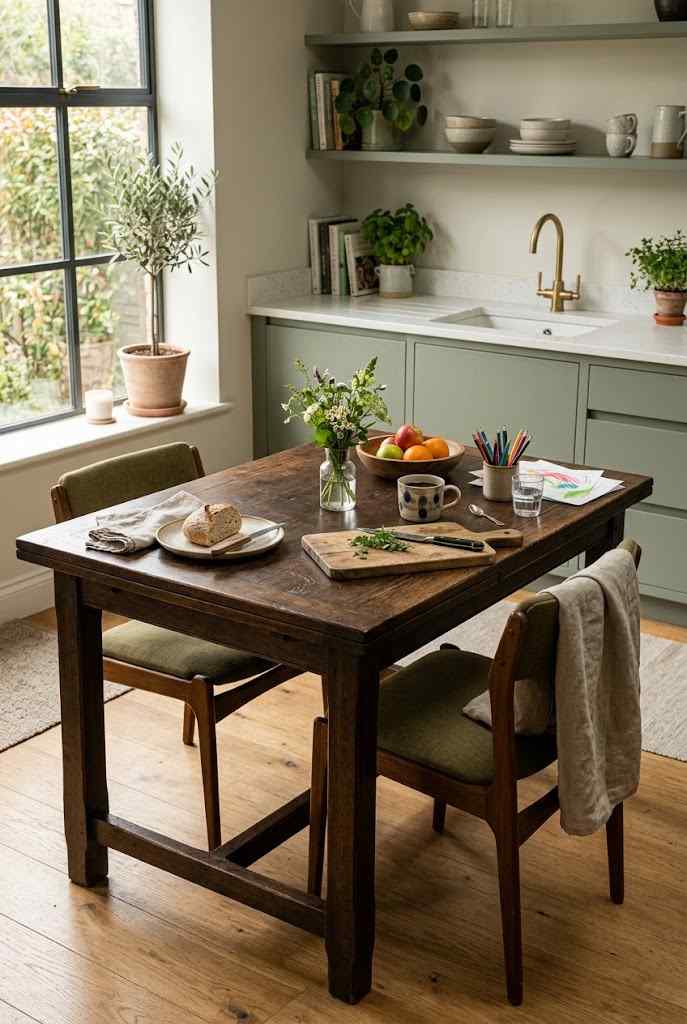
You want a table that looks good and can survive actual living. These two goals sometimes fight with each other, which is annoying but manageable if you go in with realistic expectations.
Modern minimalist tables (think sleek wood, metal legs, clean lines) photograph beautifully but show dust and crumbs like a spotlight is on them. Farmhouse tables hide things better but can feel heavy in smaller spaces. Industrial styles (concrete, reclaimed wood, steel) handle wear incredibly well and actually look better when they age.
Think about your actual life, not your Instagram fantasy. If you cook heavily, have kids, or host people regularly, you need something durable. That means avoiding light colored materials, steering clear of anything with too many crevices where food gets trapped, and picking finishes that can take a beating.
Darker wood, engineered surfaces, or sealed tops are your friends if you need toughness. Lighter materials and delicate finishes? Reserve those for the people who eat out five nights a week and never spill anything. (Those people exist somewhere, I assume.)
Texture plays a bigger role than most people consider upfront. Matte finishes hide fingerprints and light scratches far better than glossy ones, which show every single smudge like a crime scene investigation. If you’ve got a busy household, matte is doing you a favor.
Color choice matters just as much as material. Mid-tone woods forgive daily wear better than very light or very dark finishes, both of which highlight dust, crumbs, and scratches more obviously. Neutral tones also age better with your evolving taste, unlike bold statement colors you might regret in three years.
The Multi-Purpose Kitchen Table (How One Piece Does Five Jobs)
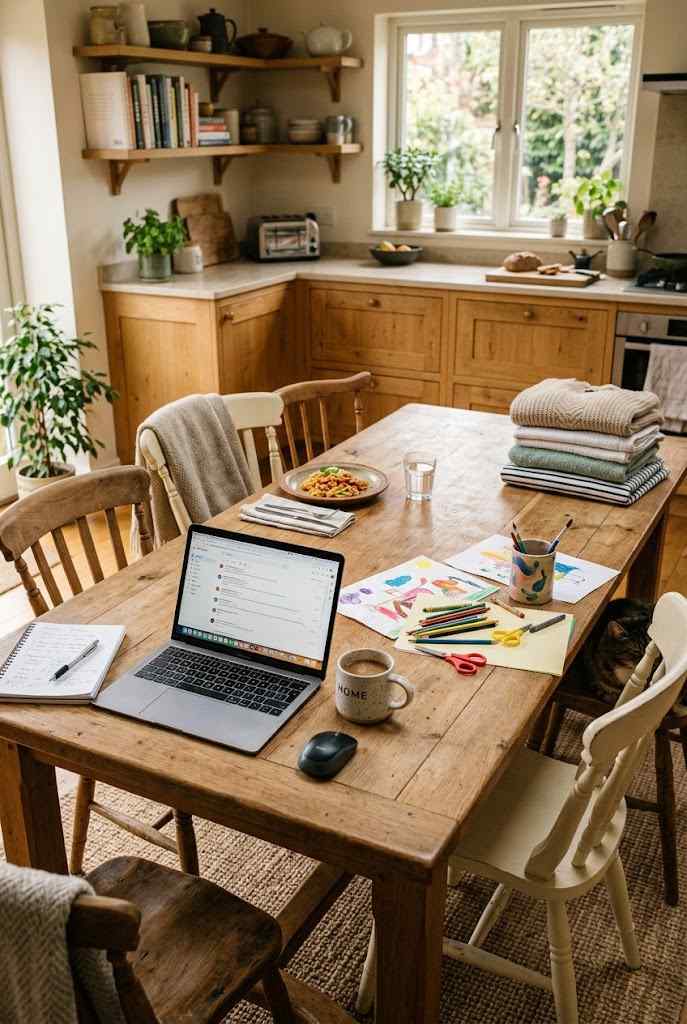
This is where kitchen tables actually earn their keep. A good table doesn’t just serve dinner. It becomes a workspace, a craft station, a homework zone, and a general command center for your household.
If you need your table to work harder than just hosting meals, the height and surface matter even more. You need enough legroom to pull a chair up for laptop work. You need a surface that won’t be destroyed by pencil marks, paint, or whatever else gets thrown at it.
The shape also shifts how multi-functional it is. Rectangular tables work better for defined work areas. Round tables encourage conversation but make it harder to spread out materials. Extendable tables give you flexibility small for daily use, expanded for when your creative projects take over.
A friend of mine has a large oak table that does quadruple duty: family dinners, her home office workspace, her kids’ art project headquarters, and (let’s be honest) a dumping ground for laundry she’s too tired to put away immediately. That table works because it’s sturdy enough to handle everything and large enough to accommodate multiple purposes simultaneously. It’s not fancy, but it’s earned its place through pure utility.
Storage matters here too, even though people forget to consider it. Tables with a shelf underneath or drawers built into the base give you a spot for napkins, chargers, or craft supplies without cluttering the surface itself.
If your table pulls double duty as a workspace, think about cord management and outlet access nearby. Nothing kills productivity faster than crawling under a table hunting for an outlet while your laptop battery dies mid-task.
Budget Reality Check (What You Actually Need to Spend)
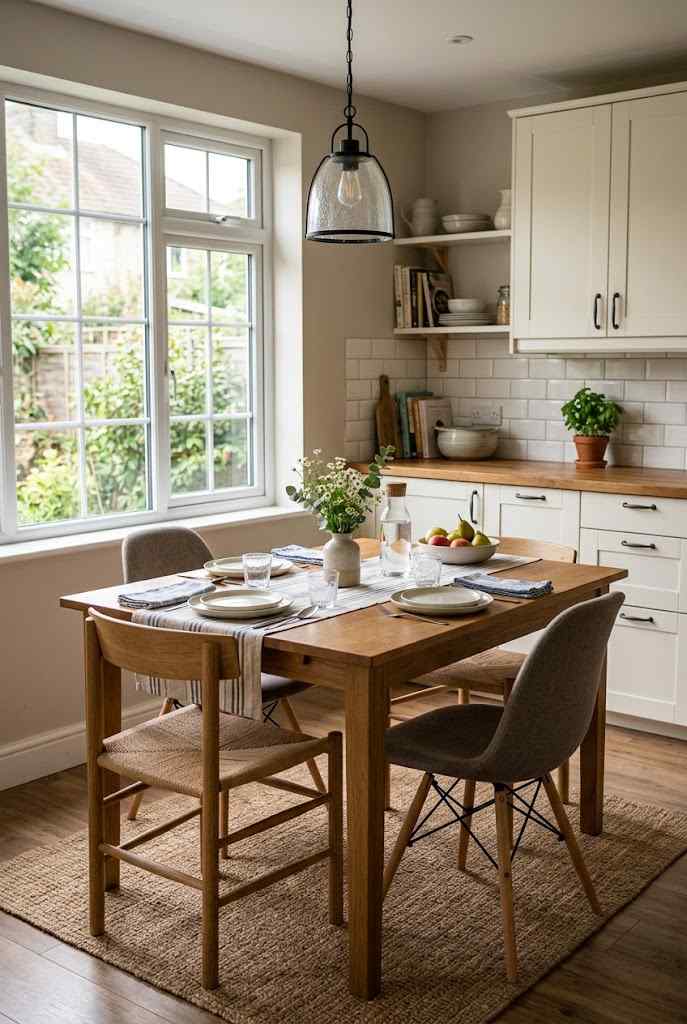
You can find kitchen tables at virtually every price point, from $200 big box store finds to $5,000+ heirloom pieces. The question isn’t really “How much should I spend?” but rather “What am I going to do with this table?”
Budget tables (under $400) work fine if you’re young, live alone, or don’t use your kitchen table as a gathering hub. They’re fine temporary solutions. You’ll replace them eventually, and that’s okay.
Mid-range tables ($400–$1,200) are where most people find their sweet spot. You get decent construction, style options, and something that’ll last through a decade of normal life without falling apart. These tables won’t transform into heirlooms, but they work.
Higher-end tables ($1,200+) are an investment in longevity and refinement. You’re paying for better wood, better construction, and tables that’ll survive being passed down or refinished. If you plan to keep your table for 20+ years, this becomes more sensible.
The real money move? Buy the best table you can actually afford within your budget. A table you love that you can pay for without stress beats a table you’re still financing in three years.
Don’t ignore secondhand options either. Estate sales, marketplace listings, and even certain thrift stores sometimes have solid wood tables built decades ago that outlast anything mass-produced today. You just need patience and a willingness to refinish if needed.
Warranty terms matter more than people realize when comparing similar price points. A slightly pricier table with a 10-year structural warranty often beats a cheaper one with none, especially if you’re planning to keep it long-term.
Trends Aren’t Everything (But They Do Tell You Something)
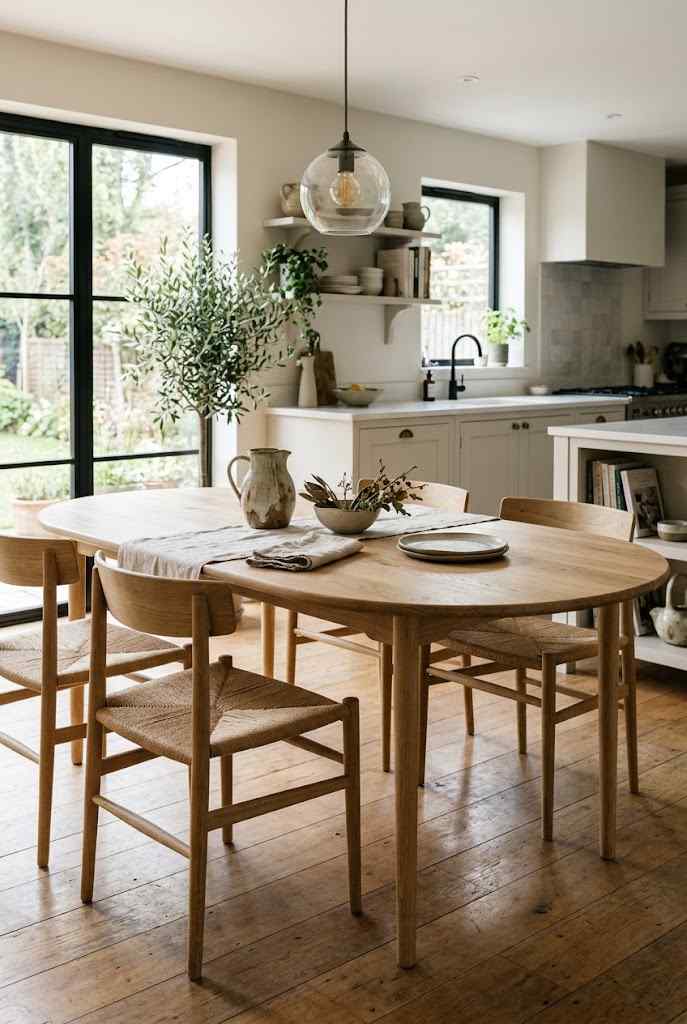
Right now, kitchen tables lean toward natural wood finishes, sustainable materials, and tables with visual lightness (thin legs, open bases). Marble is having a moment. Live edge wood is always having a moment. But trends are just trends, and your table needs to work for your actual kitchen and your actual life.
Buy what fits your space and your style. Skip trends that don’t align with your aesthetic or practical needs. A trendy table you hate living with is still a table you hate living with.
Two-tone tables are gaining traction too think a dark base paired with a lighter top, or mixed materials like wood and metal working together. It’s a subtle way to add visual interest without committing to something too bold or trendy.
If sustainability matters to you, look for FSC-certified wood or reclaimed materials specifically labeled as such. It’s an easy way to make a values-aligned choice without sacrificing quality or style.
FAQ’s
How long should a good kitchen table actually last?
A well-built kitchen table should last 10–20 years with proper care and maintenance.
What’s the easiest kitchen table material to clean daily?
Laminate and sealed wood surfaces wipe clean fastest and resist everyday stains effectively.
Should I choose a round or rectangular kitchen table for a small space?
Round tables save space and improve movement flow in smaller kitchen layouts.
Is it worth buying an extendable kitchen table?
Yes, extendable tables offer flexibility for daily use and larger gatherings without extra furniture.
What kitchen table height works best with standard chairs?
Standard 30-inch table height pairs correctly with most conventional dining chairs and stools.
CONCLUSION
Your kitchen table is one of the few pieces of furniture that shows up in your daily life constantly. It deserves the same thoughtful selection process you’d give to a major purchase because it is one. Measure your space, consider what you actually need it to do, be realistic about materials and maintenance, and pick something that makes you happy to use.
The best kitchen table isn’t the most expensive or the trendiest. It’s the one that works for how you actually live, holds up under real-world conditions, and doesn’t stress you out every time someone spills something on it. That’s the table worth having.