
vintage bathroom
By Anna Grace | 19 June 2026
Why the Vintage Bathroom in My Aunt’s House Still Beats Every Reno I’ve Seen Since
Mint-green sinks used to embarrass me. At eight years old, I decided my great-aunt’s bathroom was just old the sad kind of old, not the cool kind. Then I grew up, scrolled through a few hundred remodel photos of identical gray boxes, and realized she’d been sitting on a goldmine the entire time. That mint sink people now pay real money to recreate? She had it for free.
A vintage bathroom carries something a fresh build can’t fake: memory, warmth, a little bit of stubborn personality. You don’t need a time machine or a fat renovation budget to capture it either. You mostly need good instincts and the confidence to ignore what every builder-grade catalog keeps shoving at you.
So let me walk you through how these spaces actually work what’s worth chasing, what to skip, and where people trip over their own feet trying to pull off the look.
So What Actually Counts as a “Vintage” Bathroom?
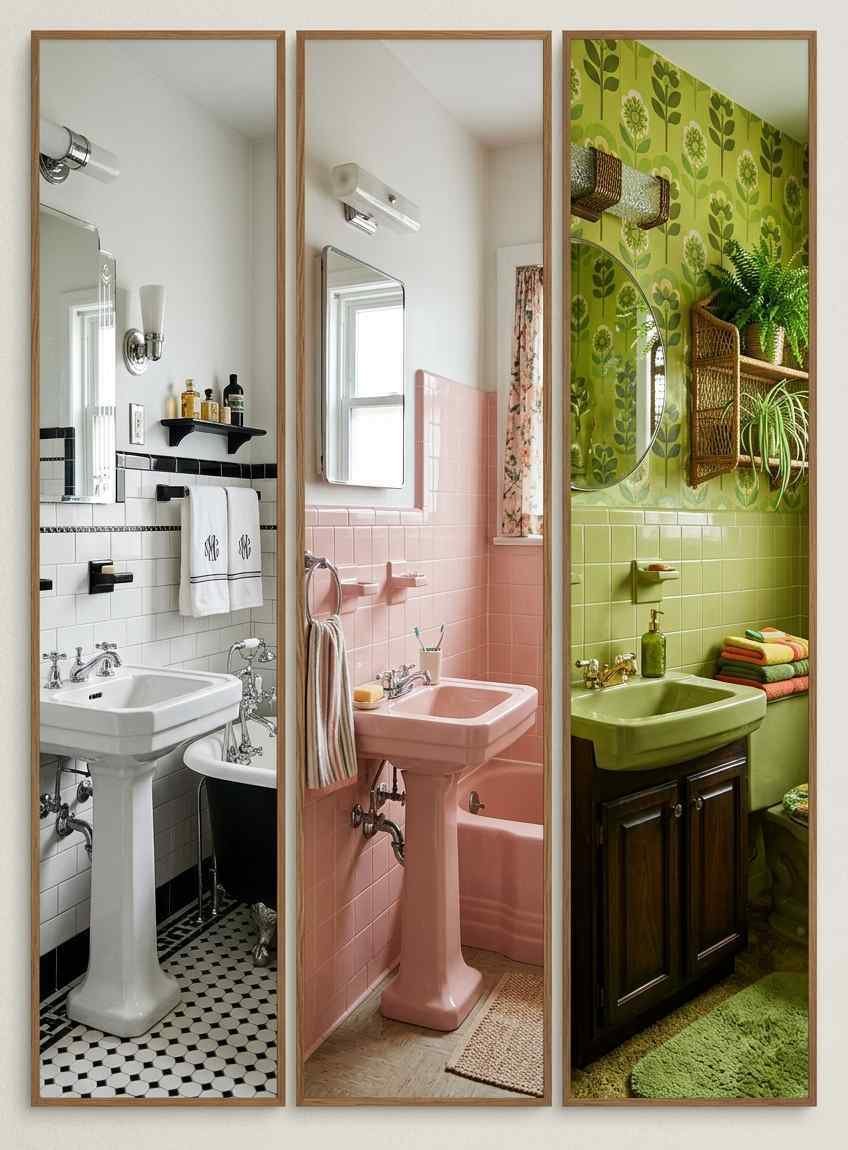
Vintage doesn’t mean one specific thing, and that trips people up right away. The label stretches loosely across the 1920s through the 1970s, and each stretch of years came with its own attitude. A 1930s bathroom whispers; a 1950s one practically sings show tunes.
Here’s the rough map I keep in my head when I picture the eras:
● 1920s–30s: Black-and-white tile, pedestal sinks, sharp geometric lines, a whiff of Art Deco glamour.
● 1940s–50s: Pastel overload mint, pink, buttery yellow plus chrome and cheerful optimism.
● 1960s–70s: Bold, saturated color, funky wallpaper, and patterns that had zero chill.
The trick with vintage bathroom design is picking one era to lead with. Blend all three and you get a costume party, not a room. Commit to a decade, then let everything else follow that decision. Your grout choices, your hardware, your paint they all get easier once you’ve picked a lane.
Now, does that mean you can’t mix in anything modern? Of course not. The best retro bathrooms I’ve seen borrow one or two contemporary comforts a rainfall showerhead, a heated floor while keeping the soul firmly planted in the past. Nobody’s asking you to give up hot water pressure for authenticity.
Your house itself gives you a free hint on which era to chase, by the way. A 1920s bungalow practically begs for hex tile and a pedestal sink, while a mid-century ranch wants those cheerful 1950s pastels. Matching the bathroom to the home’s actual age keeps the whole thing coherent, and coherence is what separates thoughtful vintage bathroom ideas from a random pile of old-looking stuff. When in doubt, let the architecture lead.
The Clawfoot Tub: Genuine Icon or Just Instagram Bait?
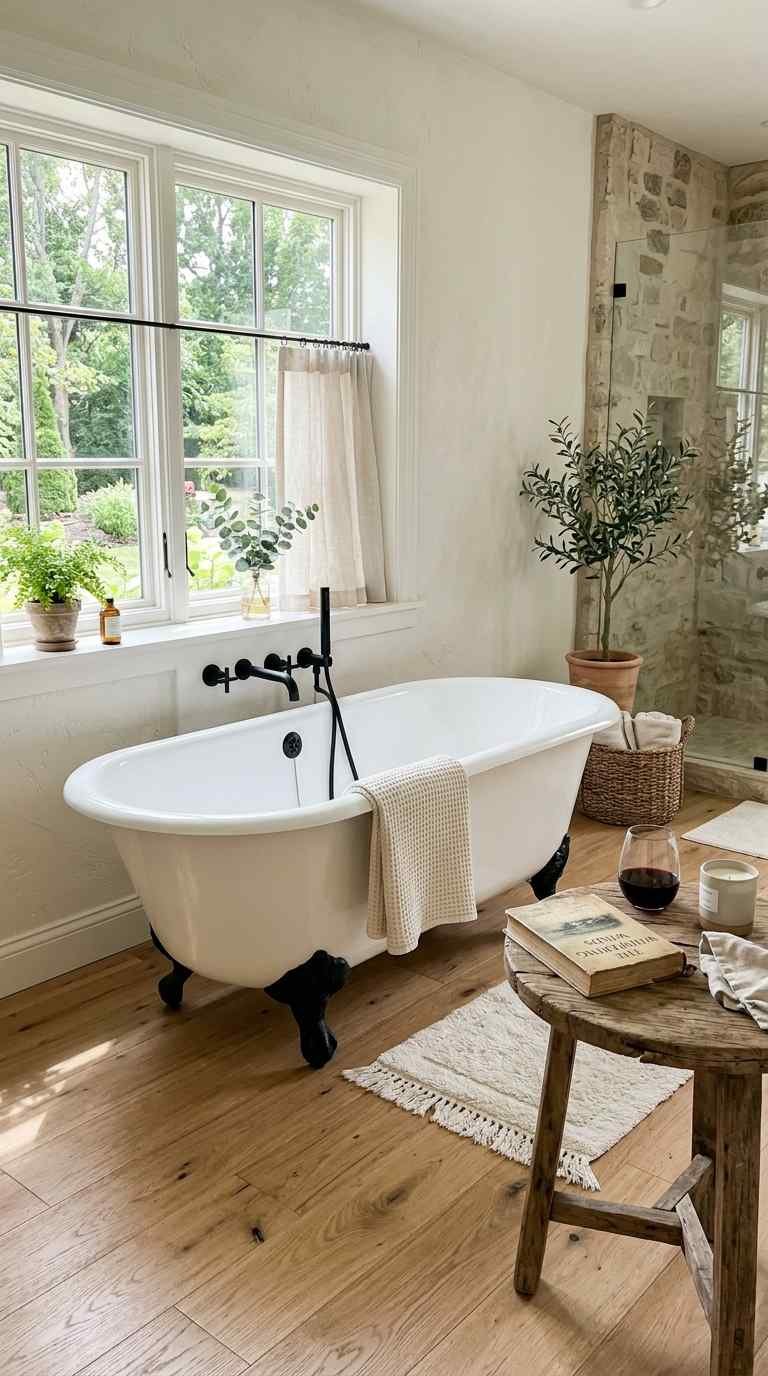
Ah, the clawfoot tub. The undisputed poster child of vintage bathroom decor, and honestly the thing most people picture the second they hear “old-fashioned bathroom.” It sits there on its little metal feet looking regal and a bit smug, daring you to run a bubble bath.
Here’s my slightly unpopular take: a clawfoot tub is stunning and mildly impractical, and you should know both halves before you commit. They’re deep and dreamy for soaking. They’re also heavy enough to make your floor joists nervous, and cleaning around those exposed feet is a special kind of annoying.
Would I still put one in? In a heartbeat. But go in with your eyes open on a few things:
Weight a cast-iron tub full of water can top 500 pounds. Check your flooring can handle it.
Plumbing freestanding tubs often need exposed or floor-mounted fixtures, which cost more.
Showering you’ll want a proper curved rod and curtain setup unless you enjoy mopping.
If a true clawfoot feels like too much drama, a reproduction slipper tub or a simple pedestal-style soaker gives you the vintage silhouette without the full commitment. FYI, plenty of “antique” tubs on the market are modern remakes anyway, so don’t feel obligated to hunt down a genuine 90-year-old one unless the treasure hunt is part of the fun for you.
One more thing nobody warns you about: the feet themselves become a styling decision. You can paint them to match your fixtures, leave them raw metal for an industrial edge, or gild them if you’re feeling theatrical. I’ve seen matte-black feet under a white tub look absolutely killer against a checkerboard floor. That single choice shifts the tub from “grandma’s guest bath” to “boutique hotel” without spending an extra dollar.
Placement matters too, and people forget this constantly. A clawfoot tub wants breathing room around it that’s the whole point of a freestanding piece. Shove it into a cramped corner and you’ve wasted its best quality. Give it a little stage, maybe a window nearby and a small table for a book and a glass of wine, and it earns every inch it takes up.
Let’s Talk Tile, Because Vintage Lives and Dies Here
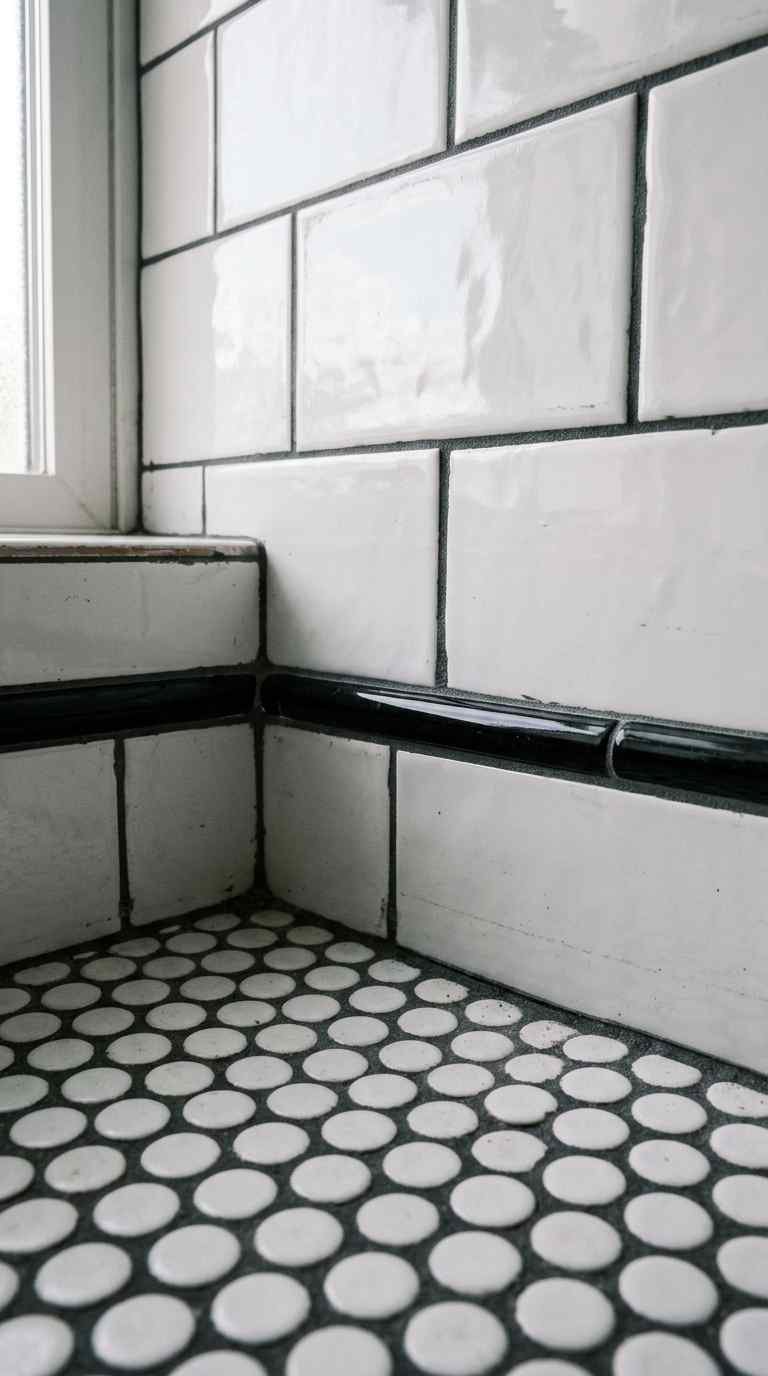
If I had to bet the whole vibe of a vintage bathroom on a single element, I’d put my money on the tile. Nothing else pulls a room backward in time faster. Get this part right and even a modern vanity somehow starts looking period-appropriate.
Subway tile is the safe, timeless workhorse those glossy little 3×6 rectangles have been around since 1904 and refuse to go out of style. Stack them, run a classic brick offset, or lay them vertically if you want a subtle twist. Pair white subway tile with dark grout and suddenly the whole wall has attitude it didn’t have five minutes ago.
But subway isn’t your only friend here. A few tile styles that instantly read as old-school:
Penny tile tiny round mosaics, usually on the floor, dripping with 1920s charm.
Hex tile the hexagon pattern that basically is a pre-war bathroom.
Checkerboard black-and-white squares that never once looked boring.
Basketweave intricate, fussy in the best way, and worth the extra install cost.
Want the fastest cheat code to a convincing vintage bathroom? Skip the trendy oversized slabs and go small-format. Big minimalist tiles scream “renovated in 2019,” while penny and hex tiles quietly murmur “I’ve been here since your grandmother’s day.” IMO that contrast alone does half the styling work for you.
Grout deserves its own moment here, because most people treat it as an afterthought and then wonder why their walls look off. Bright white grout keeps everything crisp and clean, perfect for a Deco-era look. Warm gray or beige grout softens the whole thing and reads older, more settled, less freshly-installed. The color you pick can age a wall by fifty years or drag it back to yesterday that’s a lot of power sitting in a thin line of cement.
Don’t overlook the humble tile border, either. A single accent row a thin line of black liner tile or a pencil border running around the room at chair-rail height is one of those pre-war signatures that instantly signals intentional design. It costs almost nothing and separates a real vintage bathroom from a plain white box pretending to be one. Little detail, outsized impact.
Colors and Fixtures That Nail the Decade
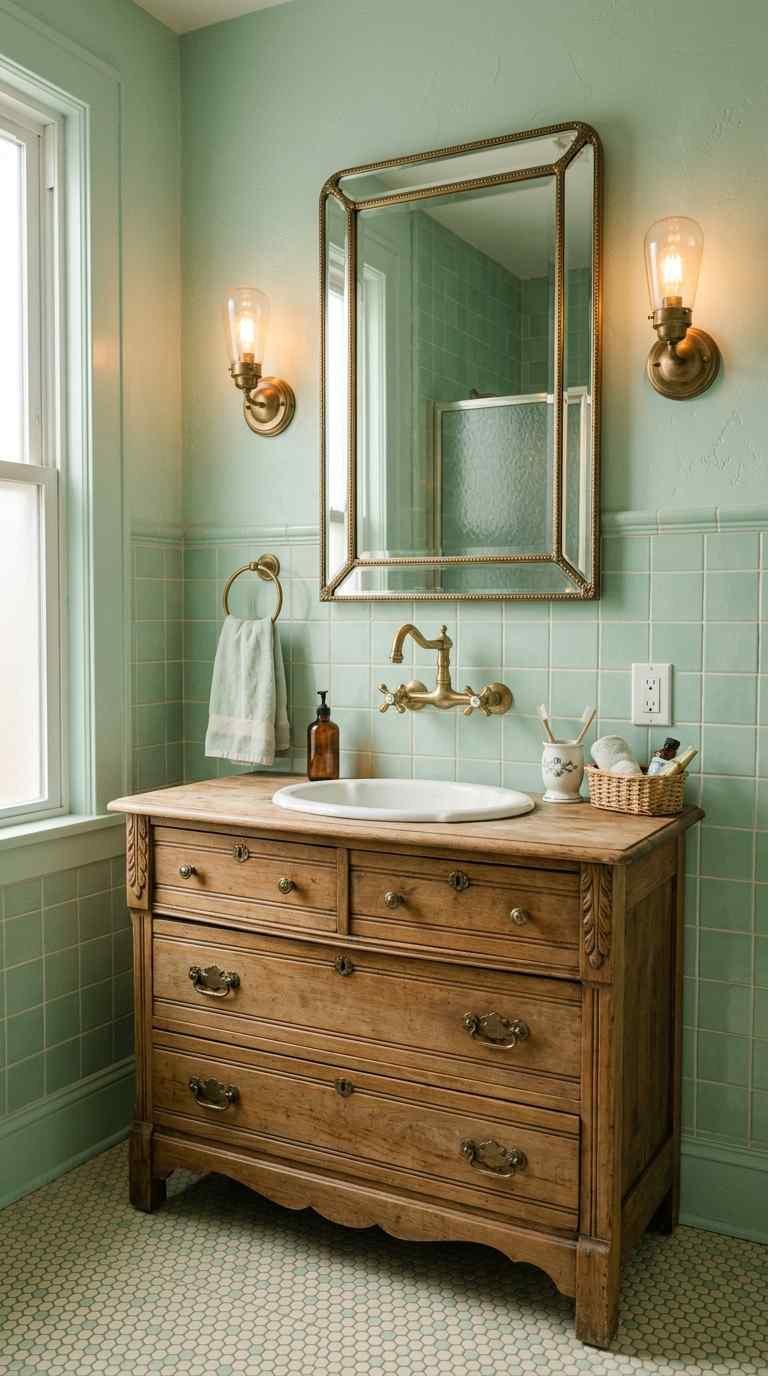
Here’s where people get nervous, and I get it committing to a pink bathroom in the year of endless greige feels like jumping off a cliff. But those soft period colors are precisely what makes a vintage space feel intentional instead of accidental. Beige plays it safe; mint plays it right.
Think about what pairs naturally with your chosen era. Pastels want warm metals and creamy trim. Deco black-and-white wants chrome and crisp edges. A 1970s room can handle avocado and harvest gold if you’re brave enough (I salute you).
The fixtures matter just as much as the walls, maybe more. A few finishes that carry serious vintage weight:
● Polished chrome classic, mid-century, endlessly clean-looking.
● Brass or unlacquered brass that warm golden glow, especially good with pastels.
● Cross-handle faucets those little X-shaped handles that read “old” from across the room.
● Exposed shower risers visible pipework that feels charmingly antiquated.
A vintage bathroom vanity ties the whole color story together, so don’t cheap out on it. A repurposed antique dresser fitted with a sink beats a flat-pack cabinet every single time more character, more story, usually more storage. Hunt your local salvage yards and estate sales before you ever set foot in a big-box store. The pedestal sink is another beautiful option if your space is tight, though you’ll trade away that under-counter storage, so weigh what you actually need.
Ever notice how a room can have all the right pieces and still feel flat? Usually it’s the finishes. Swapping shiny modern chrome for warm aged brass can transform a space in an afternoon without touching a single tile.
The Small Stuff That Secretly Runs the Show
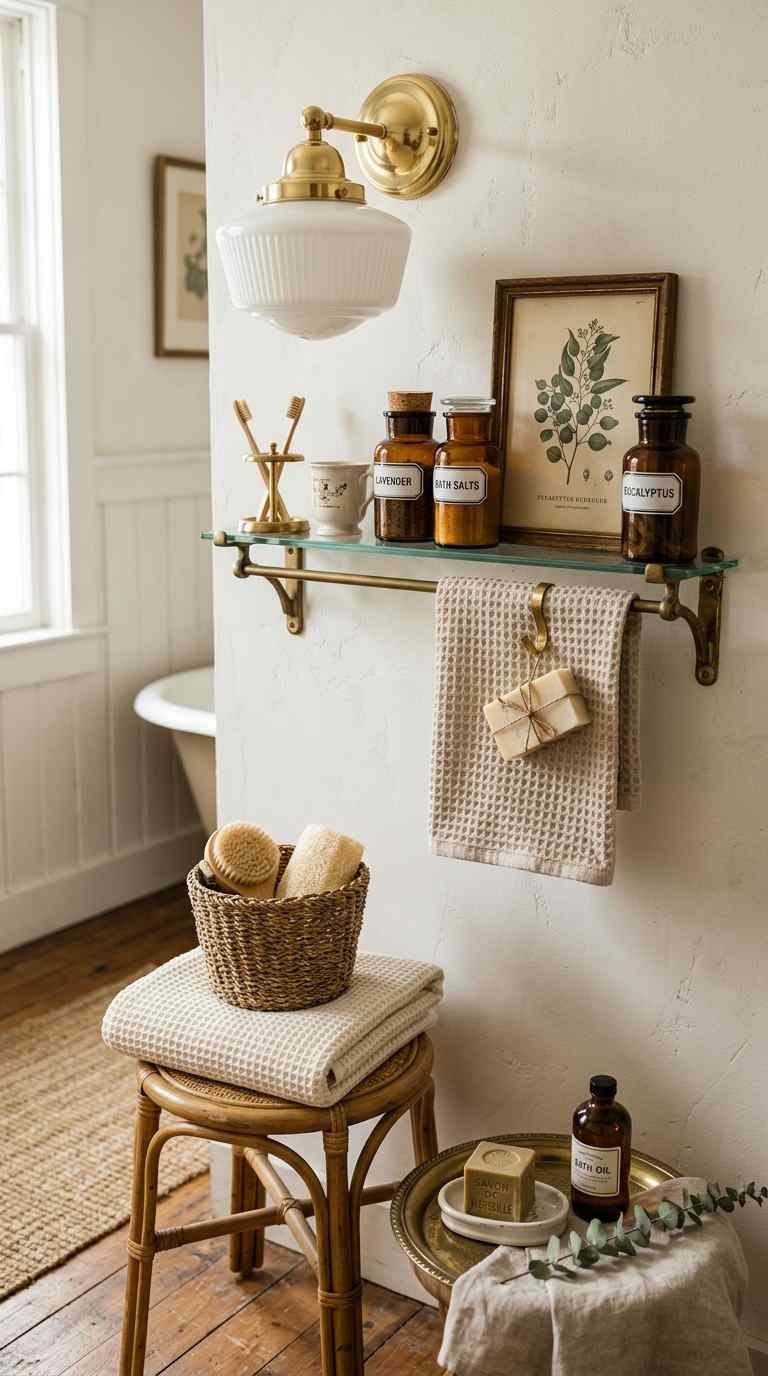
Big-ticket items get the attention, but the little details are what make guests actually believe the room. You can install a clawfoot tub and perfect tile and still land in “generic farmhouse” territory if you ignore the finishing touches. The magic hides in the accessories.
A recessed medicine cabinet with a beveled mirror, for instance, does more heavy lifting than it has any right to. So does the lighting swap those cold LED cans for a pair of milk-glass sconces flanking the mirror and watch the whole mood soften. Little moves, big payoff.
Here’s a quick pile of finishing touches worth grabbing for authentic vintage bathroom decor:
● Milk-glass or schoolhouse light fixtures
● A wall-mounted glass shelf with brass brackets
● An old apothecary jar or two for cotton balls
● Vintage-style toilet paper holders (skip the plastic, please)
● A framed piece of retro advertising art or a botanical print
● Waffle-weave towels instead of chunky modern ones
I once turned an entire boring rental bathroom around with nothing more than a $12 thrifted mirror, a set of chrome cup hooks, and a can of paint. No demolition, no permits, no crying over a contractor’s invoice. The bones were fine they just needed the right jewelry. Sometimes that’s genuinely all it takes 🙂
Don’t underestimate texture, either. A little rattan stool, a woven laundry basket, a fabric shower curtain instead of vinyl those soft, tactile bits keep a period bathroom from feeling like a sterile museum display.
Hardware is the last mile, and it’s the cheapest upgrade with the loudest payoff. Swapping generic modern knobs for glass or porcelain pulls, adding a proper brass towel bar, changing out a builder-grade light switch plate for a vintage reproduction none of it costs much, and all of it registers. People rarely name these things when they compliment a room, but they’re absolutely why it feels right.
Doing It Without Emptying Your Wallet
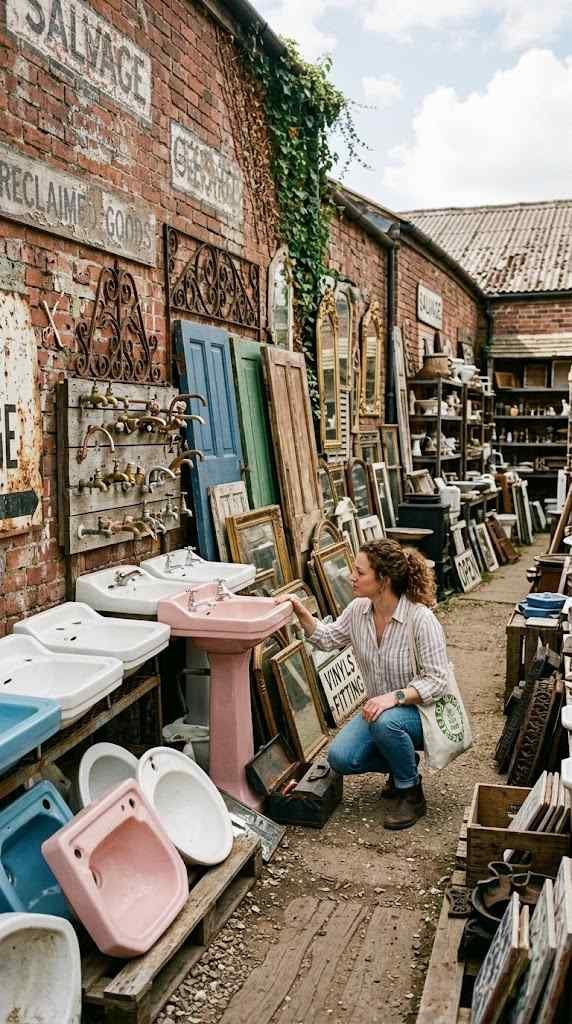
Let’s kill a myth right now: authentic vintage style is usually cheaper than a slick modern remodel, not pricier. Modern renos lean on expensive slab materials and custom cabinetry. The vintage route rewards patience, thrifting, and a willingness to restore rather than replace. Your grandmother’s aesthetic was thrifty by design, and that spirit still pays off.
Where the real bargains hide:
● Architectural salvage yards old sinks, tubs, doors, mirrors, and hardware at a fraction of new prices.
● Estate sales the single best place to score a dresser you’ll convert into a vanity.
● Facebook Marketplace people practically give away “dated” fixtures they’re desperate to offload.
● Habitat for Humanity ReStores donated building materials, often barely used, priced to move.
The one place I do tell people to spend real money is the plumbing you can’t see. Fancy vintage faucets mean nothing if the valve behind the wall fails in two years and floods the room below. Splurge on quality guts, save on the pretty exterior, and you’ll come out ahead. Beautiful bones with a cheap heart is a recipe for regret.
A quick reality check on timeline, too. Sourcing genuine pieces takes patience the perfect pink pedestal sink won’t appear the weekend you’re ready for it. Build slowly, keep a running wishlist, and let the room come together over months rather than a frantic single push. Rushed vintage always looks like a costume; collected vintage looks like a home.
Where People Go Wrong (So You Don’t Have To)
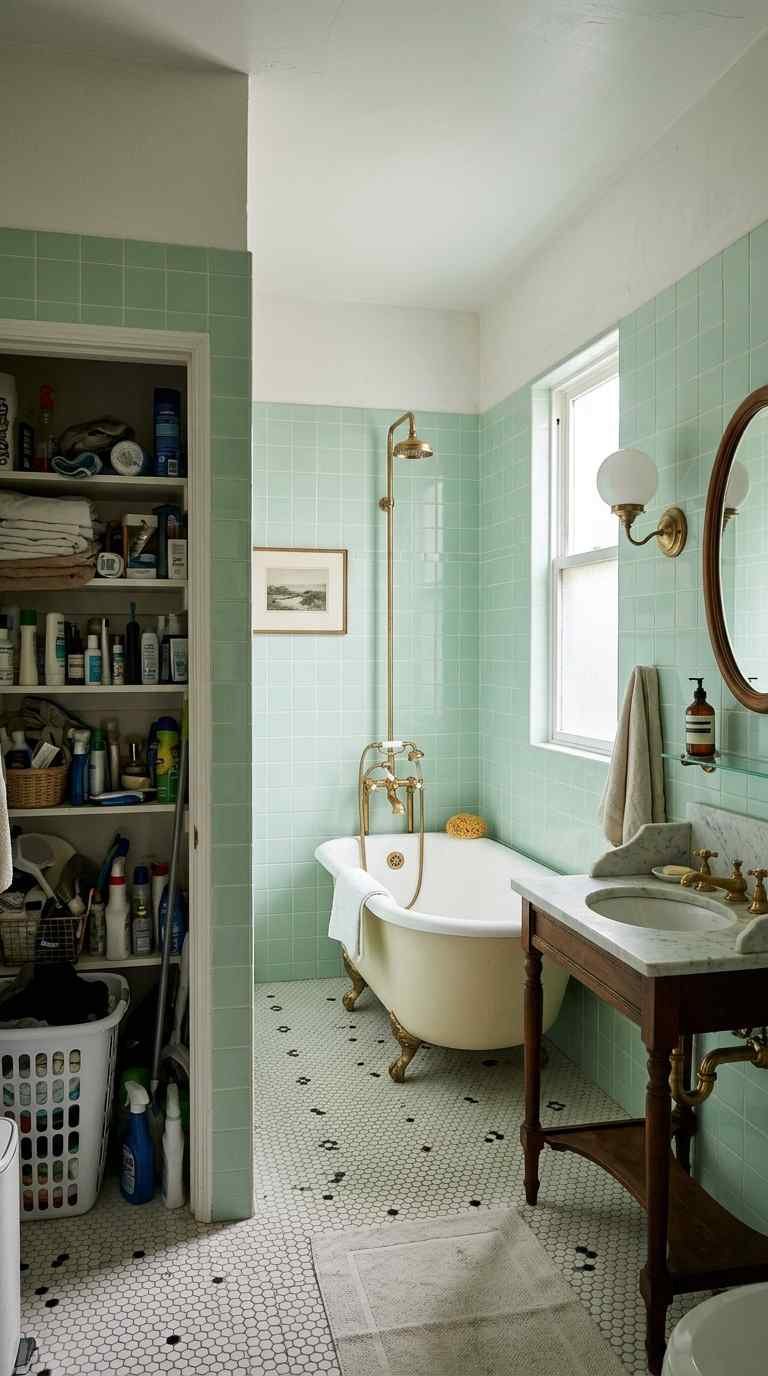
For every gorgeous vintage bathroom online, there’s another that missed the mark completely and the mistakes tend to repeat themselves. I’ve watched enough remodels go sideways to spot the pattern from a mile off. Learn from other people’s regret; it’s cheaper than learning from your own.
The most common faceplants:
● Going full theme-park. Cramming in every retro cliché at once turns charm into cosplay. Restraint reads as taste.
● Ignoring the plumbing reality. Vintage-look fixtures sometimes need modern valves behind the wall. Plan for it early or pay for it later.
● Fake-aging everything. One or two distressed pieces feel curated; ten feel like a haunted antique mall.
● Forgetting function. A pretty pedestal sink with zero storage gets old fast when you’ve got nowhere to stash the hairdryer.
● Mixing eras carelessly. A 1970s wallpaper next to a strict Deco tile creates visual whiplash, not eclecticism.
The other quiet mistake? Chasing perfection. A vintage bathroom should feel a little lived-in, a little imperfect hat’s the entire appeal. If you sand and polish and match everything into flawless symmetry, you’ve accidentally built a modern bathroom wearing an old costume. Leave room for a slightly worn faucet or a mirror with a spot of foxing. Those “flaws” are the fingerprints that make the space feel real.
And please, resist the urge to rip out original features you already own. So many people demolish genuine 1950s tile because it “looks dated,” then spend a fortune installing brand-new tile designed to look… exactly like the stuff they tore out. Why do we do this to ourselves? If the bones are solid, restore before you replace.
FAQ’s
How much does a vintage bathroom remodel usually cost?
Often less than a modern reno thrifting, salvage, and restoring existing features keep a vintage bathroom surprisingly budget-friendly.
Are clawfoot tubs practical for everyday use?
They’re deep and gorgeous but heavy and trickier to shower in, so plan plumbing and floor support ahead
What flooring works best for an old-fashioned bathroom look?
Small-format penny, hex, or black-and-white checkerboard tile instantly reads vintage and pairs beautifully with warm grout tones.
Can I make a rental feel vintage without renovating?
Yes paint, a thrifted mirror, brass hardware, and milk-glass lighting transform a plain rental vintage bathroom cheaply and reversibly.
Which fixture finish suits a vintage bathroom best?
Polished chrome or warm unlacquered brass both work; match the finish to your chosen decade for a cohesive feel.
CONCLUSION
Strip away the tile charts and fixture debates, and a vintage bathroom really comes down to one thing: giving a room a soul instead of a spec sheet. Pick a decade, lean into its color and tile, hunt down fixtures with actual warmth, then sprinkle in the small stuff that makes people ask where you found it all.
You don’t have to gut the place or drain your savings. Start with paint and a mirror if that’s what today allows, then build the rest as you go. My great-aunt’s mint sink taught me that the best bathrooms aren’t the newest ones they’re the ones with a story you can practically hear when you walk in.
So here’s the thought I’ll leave you with: a hundred gray boxes will look tired in ten years, but that pink-tiled, brass-fixtured little room? It’ll still be turning heads. Go build the bathroom your future self brags about.