
sliding closet door
By Anna Grace | 2 July 2026
Sliding Closet Doors: The Space-Saving Upgrade Your Bedroom Has Been Begging For
You know that moment when you swing open a closet door and it smacks straight into your bed frame? Yeah, that’s the universal signal that your room is basically telling you it needs sliding closet doors. Swing doors eat up floor space the second they open, and in smaller bedrooms, that’s real estate you can’t afford to lose.
Sliding closet doors solve this problem by gliding side to side instead of swinging out. No arc of open space needed, no stubbed toes at 6 a.m., no furniture rearranged around a door’s flight path. They’ve become a go-to choice for anyone renovating a bedroom, hallway closet, or even a home office nook that doubles as storage.
This guide walks through everything worth knowing before you buy styles, materials, costs, installation basics, and the mistakes people make when they rush the decision. IMO, closet doors get way less attention than they deserve during a renovation, and that’s a shame because they affect your daily routine more than a lot of “bigger” design choices.
What Are Sliding Closet Doors, Exactly?
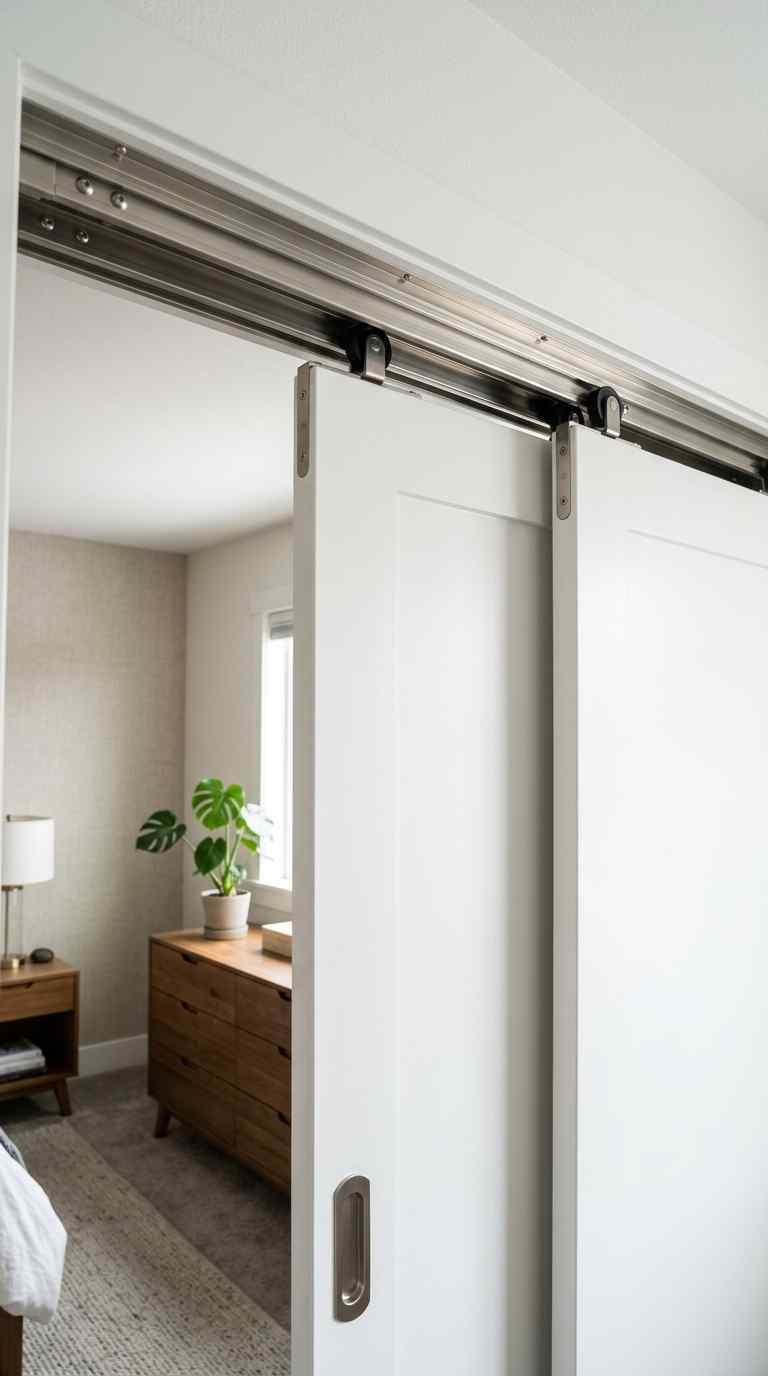
Sliding closet doors run on a track system, usually mounted at the top (and sometimes the bottom too), letting the panels glide horizontally instead of swinging on hinges. Most setups use two or more panels that overlap slightly, so one panel slides in front of the other to reveal the closet interior.
They come in a few basic configurations:
● Bypass doors two or more panels that slide past each other on parallel tracks
● Bifold doors panels that fold in half as they open, technically a hybrid but often grouped with sliders
● Pocket doors a single panel that disappears into the wall cavity
● Barn-style sliders a trendier option where the door hangs on an exposed track in front of the wall
Each style has trade-offs. Bypass doors are the most common for closets because they’re affordable and easy to install, but they never let you see the entire closet at once one section is always covered. Pocket doors solve that problem but require wall modifications, which isn’t always feasible in an existing home.
There’s also a fifth option worth mentioning: multi-panel sliding systems, sometimes called “sliding wardrobe doors” in the UK and parts of Europe. These use three or four panels on multiple tracks instead of the standard two, which lets you open a wider section of the closet at once. They’re pricier and need more precise installation, but for walk-in closets or larger reach-in setups, they solve the “one panel always blocks half the closet” problem that plain bypass doors can’t avoid.
Track configuration matters more than people expect going in. Single-track systems only support one moving panel, which isn’t common for closets but shows up occasionally in budget builds. Double-track is the standard for bypass doors, and triple-track setups exist for closets wider than 8 feet. If you’re shopping and a listing doesn’t specify the track count, ask before buying — it’s the kind of detail that’s annoying to discover after the box is already opened and the drywall anchors are in.
Why People Are Ditching Hinged Doors for These
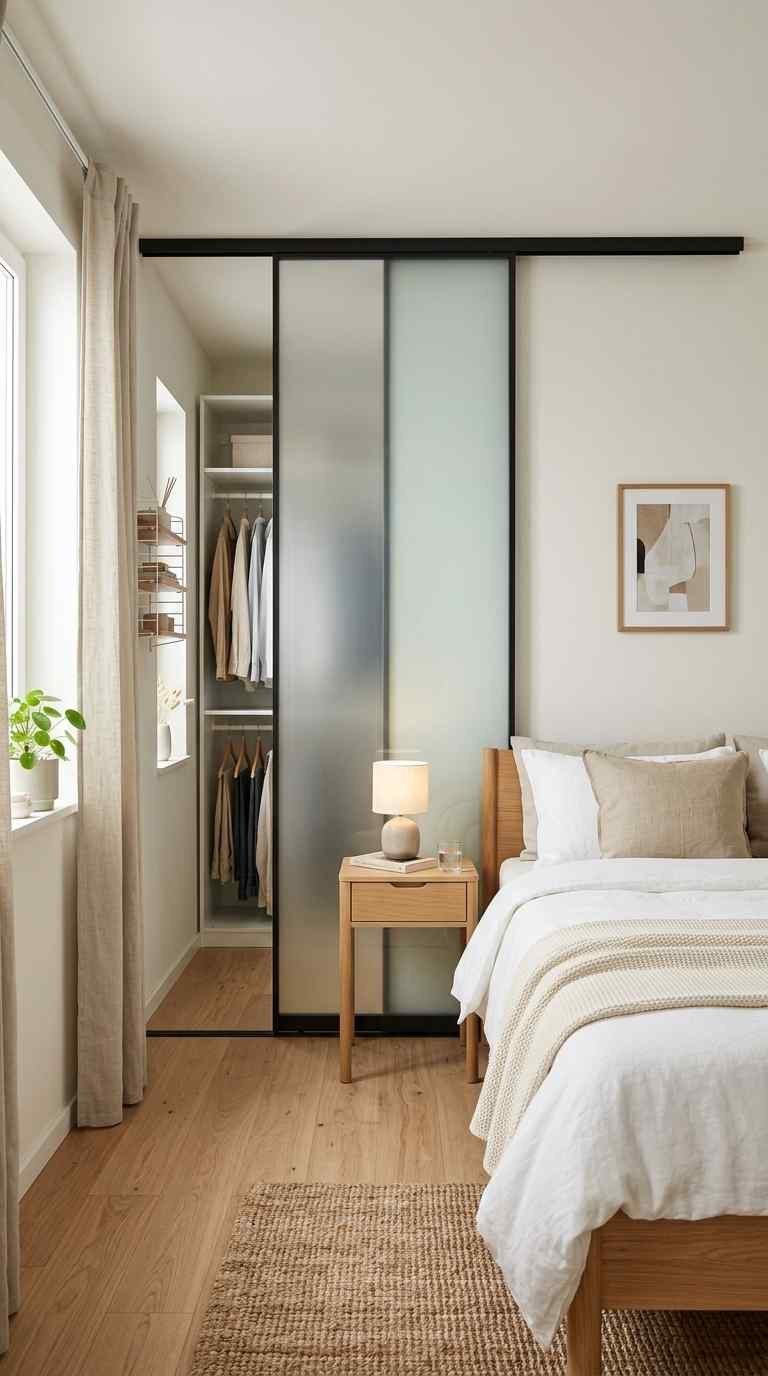
Space savings is the headline reason, but it’s not the only one. Here’s what actually pushes people to make the switch.
They free up floor space instantly. A standard swing door needs about 24 to 30 inches of clearance to open fully. Sliding doors need zero clearance beyond the track itself, which matters a lot in a 10×10 bedroom where every square foot counts.
They work better around furniture. Ever tried placing a dresser near a closet, only to realize the door won’t open past 45 degrees? Sliders eliminate that whole headache because nothing swings into the room.
They can double as a design feature. Mirrored sliding doors make small rooms feel bigger and skip the need for a separate full-length mirror. Barn-style sliders add a rustic or industrial touch that’s genuinely popped up everywhere in home design over the last several years.
They tend to be quieter. No slamming, no door hinges creaking at 2 a.m. when you’re sneaking clothes out for an early flight. Anyone who’s lived with a squeaky hinge door knows this is a bigger deal than it sounds.
That said, sliders aren’t perfect. They can jump their tracks if installed poorly, and cheaper models sometimes rattle. A friend of mine installed a bargain-bin bypass door set, and within three months, one panel kept popping off the bottom guide every time her kid ran past it. Cheap tracks are a real liability, not just a minor annoyance.
There’s a practical angle too: accessibility. Sliding doors are easier to operate for anyone with limited mobility or grip strength, since there’s no pulling a heavy door toward yourself while balancing on a cane or managing a wheelchair. Occupational therapists actually recommend them fairly often for aging-in-place renovations, which isn’t something most people think about until it becomes relevant.
Kids’ rooms benefit too, oddly enough. A five-year-old struggling to yank open a sticky hinged door is a daily frustration multiplied by however many times they change outfits before finally picking one (spoiler: it’s a lot). Sliding doors glide with minimal effort, which sounds like a small thing until you’ve watched a toddler give up entirely and just leave clothes scattered on the floor instead.
On the flip side, sliding doors aren’t ideal for every closet. Deep walk-in closets with lots of built-in shelving sometimes work better with hinged or bifold doors, since sliders can only ever expose about half the opening at a time. It really comes down to how the closet gets used daily quick grab-and-go storage favors sliders, while closets doubling as dressing rooms might not.
Materials and Styles: What’s Actually Out There
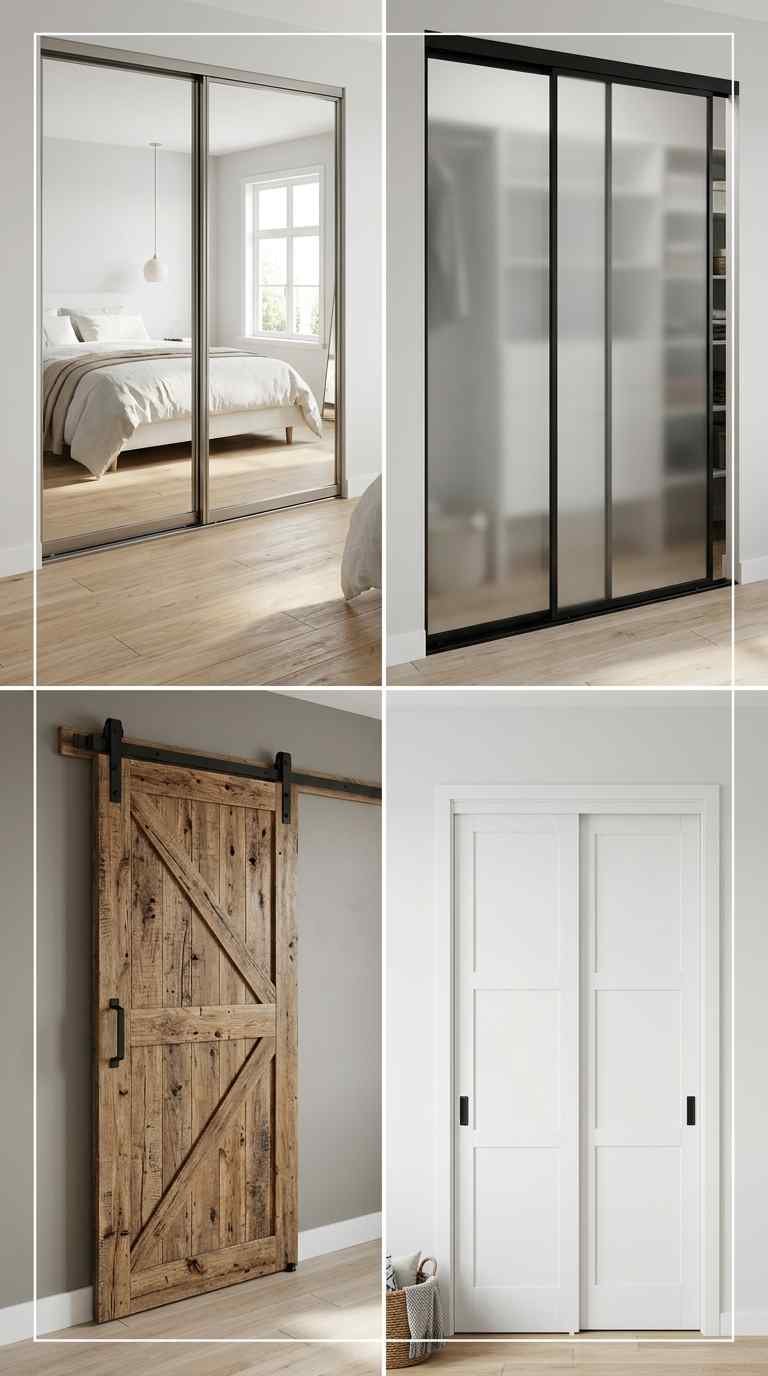
Picking a material isn’t just about looks it affects weight, durability, noise level, and price. Here’s a breakdown of the main options.
● Wood panel doors classic, warm-looking, but heavier and pricier; solid wood needs more robust track hardware
● Mirrored doors great for small rooms, reflect light, but show fingerprints and can be pricier to replace if cracked
● Frosted or glass-panel doors modern look, lets light filter through without fully exposing the closet contents
● MDF or hollow-core doors budget-friendly, lightweight, decent for low-traffic closets
● Barn-style wood sliders statement piece, exposed hardware, works especially well in farmhouse or industrial-style rooms
Finish matters too. White and off-white panels are still the most popular because they match almost any wall color, but wood-tone finishes have made a comeback as homeowners lean into warmer, more textured interiors. Matte black barn door hardware has also become something of a design staple it shows up in nearly every renovation show at this point, which either means it’s genuinely great or everyone’s just copying the same Pinterest board. Probably both.
Sizing matters just as much as style. Standard closet openings run 60, 72, or 96 inches wide, and doors are sold in matching sets. Custom sizes exist, but they cost more and usually require special ordering, so measuring twice before purchasing saves a return trip to the store.
Hardware finish is another decision point people skip past too quickly. Brushed nickel, matte black, and brass have all had their moment, and honestly, picking one often comes down to what’s already in the room door hinges, cabinet pulls, light fixtures. Mismatched metals throughout a bedroom aren’t the end of the world, but a little consistency does make the space feel more intentional rather than thrown together.
A quick style-matching cheat sheet:
● Modern/minimalist rooms → flat-panel, frosted glass, or matte black barn hardware
● Traditional/farmhouse rooms → shaker-style wood panels or classic barn sliders
● Small/low-light rooms → mirrored panels to bounce light around
●Humid climates or laundry-adjacent closets → louvered panels for airflow
None of these rules are strict, of course plenty of people mix styles successfully. But starting from one of these baselines makes shopping a lot less overwhelming than scrolling through hundreds of options with no filter in mind.
Installation: DIY-Friendly or Call a Pro?
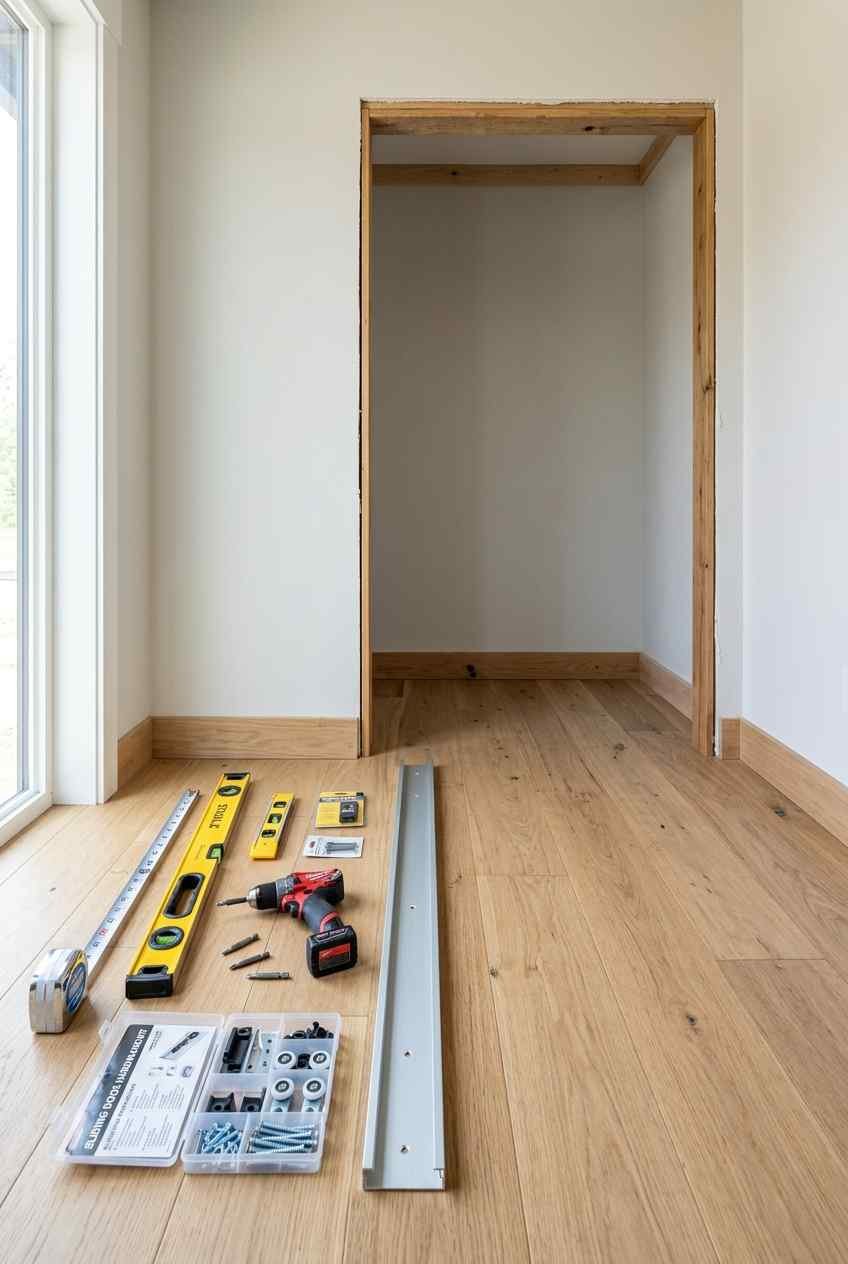
Here’s where things get practical. Bypass sliding closet doors are genuinely one of the more DIY-friendly door projects out there, assuming the closet opening is already framed and finished.
Basic installation steps for bypass doors:
● Measure the closet opening width and height precisely
● Install the top track using a level, securing it into wall studs or with appropriate anchors
● Attach the floor guide (if the system includes one) to keep panels aligned
● Hang the rear panel first, then the front panel, adjusting rollers as needed
● Test the slide motion and fine-tune alignment so panels overlap evenly
Most kits come with the hardware included, and a basic install can take anywhere from one to three hours depending on experience level. Pocket doors are a different story entirely those require opening up the wall, which usually means drywall work, possibly moving electrical or plumbing lines, and definitely calling in a contractor unless you’re genuinely comfortable with framing.
Barn-style sliders sit somewhere in the middle. The hardware mounts to the wall surface rather than requiring wall modification, but the track needs to be anchored into solid studs to support the door’s weight. Skipping that step is how people end up with a door that eventually rips out of the wall not a fun surprise.
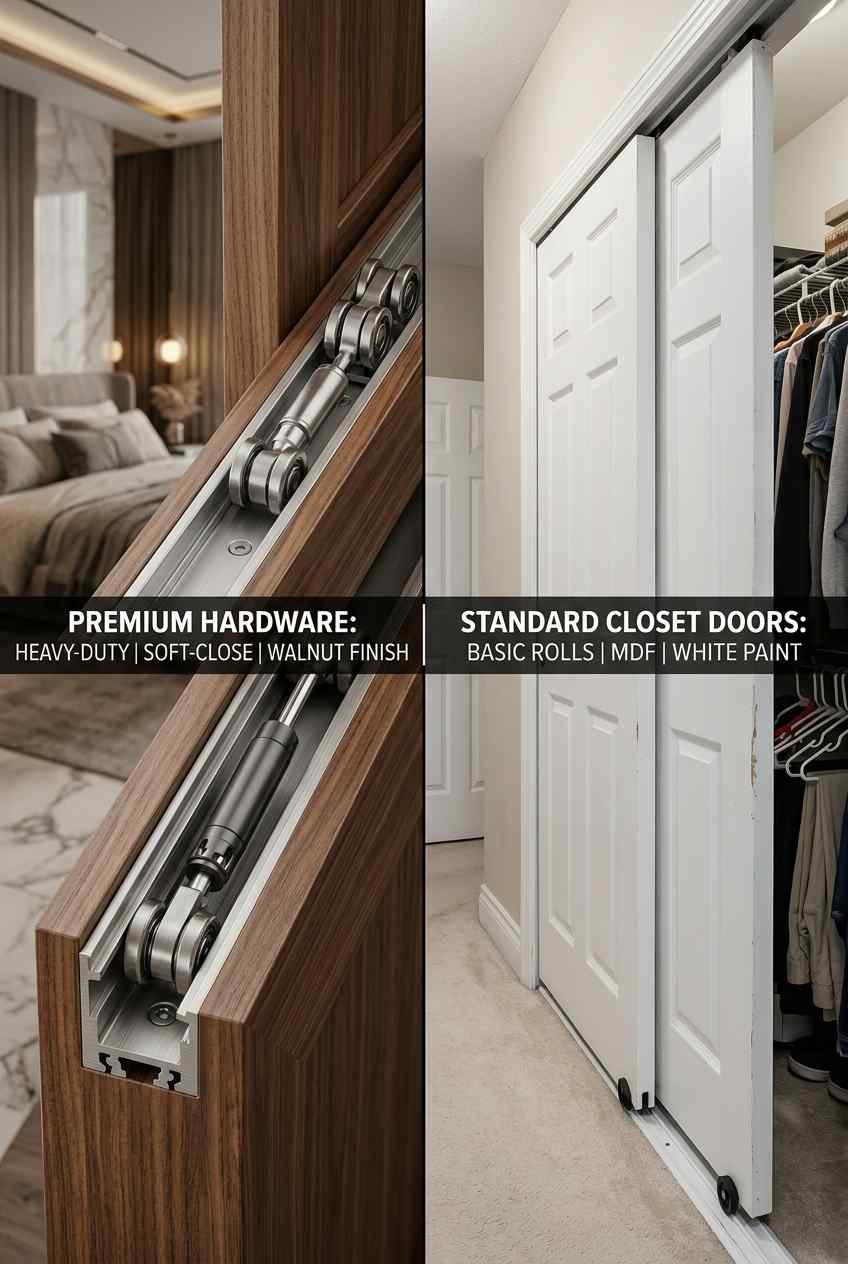
One thing that trips people up: track quality matters more than door quality. A gorgeous door on a flimsy track will stick, jump, or sag within a year. Spending a little extra on commercial-grade rollers and track hardware pays off way more than upgrading to a fancier door panel.
Tools matter more than people expect for a “simple” install. A basic kit usually requires a drill, a level (a real one, not a phone app), a stud finder, and a tape measure. Skipping the stud finder is a common rookie mistake anchoring a track into drywall alone, without hitting studs, is basically asking for the whole thing to sag or pull loose within a few months of daily use.
If a closet opening is slightly out of square which happens more often in older homes than people assume sliding doors can be trickier to fit than hinged ones, since the track needs to be dead level regardless of what the floor or ceiling is doing. In those cases, it’s worth doing a test fit before fully committing hardware to the wall, or just calling in a handyman for an hour to save yourself the guesswork.
Cost Breakdown and What Actually Affects the Price
Budgeting for sliding closet doors depends heavily on material, size, and whether you’re doing the install yourself. Here’s a rough general range based on typical retail pricing:
● Basic hollow-core bypass doors: $100–$250 per set (materials only)
● Mirrored bypass doors: $150–$400 per set
● Solid wood or panel doors: $300–$700 per set
● Barn-style sliders with hardware: $250–$800, depending on wood type and hardware finish
● Professional installation: $150–$400 on top of materials, more if framing or wall work is involved
Custom sizing, premium finishes, and soft-close hardware all push costs up. Soft-close mechanisms, in particular, are worth considering if you’ve got kids or just hate the sound of a door slamming shu they run maybe $20-$50 more per track but massively cut down on wear and noise.
Is it worth paying extra for better hardware? Honestly, yes. The door panel is the part everyone sees, but the track and rollers are the part that determines whether the whole system still works smoothly five years from now. Skimping there is the closet-door equivalent of buying a beautiful car with bald tires.
Regional labor costs shift installation pricing quite a bit too. Hiring help in a major metro area often runs higher than the national average, while rural or smaller-market installers may charge less but have longer wait times for scheduling. Getting two or three quotes before committing is generally smart, since pricing for “closet door installation” can vary surprisingly widely between contractors offering what sounds like the exact same service.
Long-term costs matter as much as upfront price. Cheaper hollow-core doors may need replacing within 5 to 7 years in high-traffic households, while solid wood panels on quality track hardware can easily last 15 to 20 years with minimal maintenance. When the math is laid out that way, spending a bit more upfront on decent hardware often works out cheaper per year of actual use which is the kind of detail that never shows up on the price tag but absolutely should.
Maintenance costs are usually minimal but not zero. Rollers occasionally need lubrication (a drop of silicone spray once or twice a year does the trick), and tracks benefit from an occasional vacuum to clear out dust and debris that can cause sticking. It’s a five-minute task most people forget entirely until a door starts squeaking loud enough to notice.
FAQ’s
Are sliding closet doors harder to install than regular hinged doors?
Not usually bypass sliders are often easier for DIYers, while pocket doors require more wall modification work.
How much clearance space do sliding closet doors save compared to swing doors?
Sliding doors need zero swing clearance, while hinged doors typically require 24 to 30 inches of open floor space.
What’s the best sliding closet door material for a small bedroom?
Mirrored bypass doors work best since they reflect light and visually expand the room’s perceived size.
Do sliding closet doors come in custom sizes for non-standard closets?
Yes, though custom sizing costs more and typically requires special ordering rather than off-the-shelf purchasing.
Why do some sliding closet doors jump off their tracks over time?
Cheap or poorly anchored track hardware is the main cause, so investing in quality rollers prevents this issue.
CONCLUSION
Sliding closet doors aren’t just a space-saving trick they’re a small upgrade that changes how a room actually functions day to day. Whether you go with a simple mirrored bypass set for a small bedroom or splurge on a barn-style slider for a statement look, the key is matching the door style to both your room’s layout and your budget’s actual limits.
Measure carefully, don’t cheap out on the track hardware, and think honestly about whether a DIY install fits your skill level before committing to a pocket door project. Get those basics right, and the door you pick will quietly do its job for years without anyone in the house giving it a second thought which, for a closet door, is exactly the goal.