
Backyard ideas for small yards
By Anna Grace | 3 May 2026
Steal These Small Backyard Ideas Before Your Neighbors Do
My first backyard measured about eleven feet by fourteen feet, and the previous owner had parked a rusted swing set right in the middle of it. Nobody had touched that thing in years. I spent my entire first summer convinced I owned a hallway with grass.
Then a landscape designer friend stepped outside, squinted at the mess, and said something I still repeat to anyone who will listen: “You don’t have a small yard. You have an unplanned one.”
That one sentence changed how I see outdoor space. Most tiny backyards don’t fail because of square footage. They fail because people treat them like shrunken versions of big yards, cramming in a lawn, a patio, a grill, a shed, and a flower bed until the whole thing feels like a storage unit with sunshine.
The good news? The best backyard ideas for small yards have almost nothing to do with size and everything to do with strategy. Below, you’ll find the exact moves I’ve used (and watched designers use) to turn cramped, awkward plots into spaces people actually want to hang out in.
Plan Your Small Backyard in Zones, Not Stuff
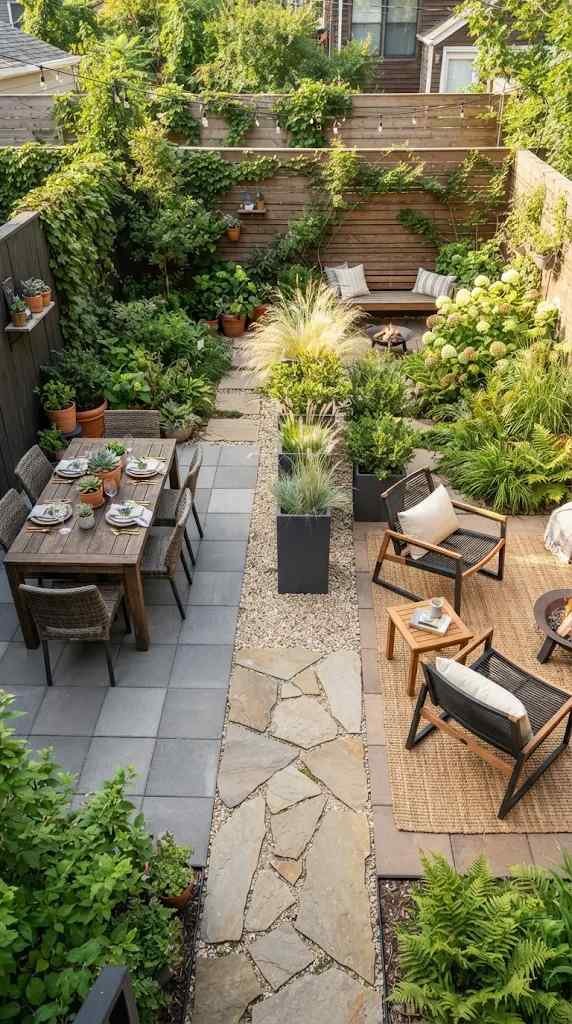
Before you buy a single chair, walk outside with a cup of coffee and ask yourself one question: what do I actually want to do out here? Forget what Pinterest wants. Maybe you crave a quiet reading nook. Maybe you host taco night every Friday, or maybe your dog simply needs a patch of something to dig up.
Pick your top two or three activities and give each one its own zone. Even a 200 square foot yard can hold a dining spot and a lounging spot if you separate them visually. Our brains read divided space as bigger space, which sounds backwards but works every single time.
Easy Ways to Define Zones
You don’t need walls or construction crews to create separation. Simple shifts in material and height do the heavy lifting:
- Outdoor rugs anchor a seating area and make it feel like a room
- Material changes, like pavers under the table and gravel around the lounge chairs
- Tall planters lined up to form a low, living wall
- Overhead elements such as a small pergola, a shade sail, or crisscrossed string lights
- A single step up to a small raised deck, which creates instant separation
I split my old yard with nothing fancier than a strip of pea gravel and three tall planters filled with ornamental grass. The whole project cost me under $150. Guests kept asking if I had expanded the fence, and I hadn’t. I had simply stopped letting everything bleed together.
Protect Your Pathways
Every zone needs breathing room around it. Aim for at least three feet of clear walking space between areas, because a cramped path makes even a gorgeous yard feel stressful.
Here’s my rule of thumb: if you have to turn sideways to reach the grill, the layout needs work.
Watch the Sun Before You Commit
Spend one full Saturday tracking where sunlight lands at morning, noon, and late afternoon. Snap a quick photo each time from the same spot. That little experiment tells you where to put your seating, your veggies, and your shade.
Sunny corners suit herbs and tomatoes. Shady ones make perfect reading nooks in July. Skip this step, and you might build a gorgeous dining area that bakes like a pizza oven at dinnertime, which I did once, and my guests have not let me forget it.
Grow Up, Literally: Vertical Garden Ideas
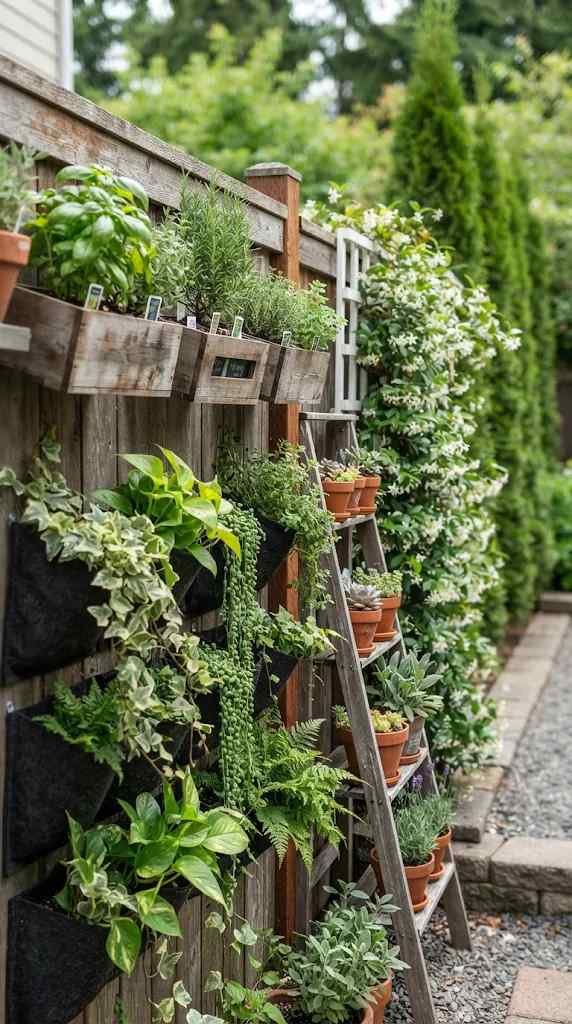
Ground space in a small yard costs you dearly. Wall space costs you almost nothing. Your fence, your house siding, and that boring garage wall all count as prime real estate, yet most homeowners ignore them completely, and honestly, that baffles me.
Vertical gardening gives you color, greenery, and even food without stealing a single inch of floor. A few of my favorite approaches:
- Pocket planters or living wall panels mounted directly on a fence
- Trellises paired with climbers like clematis, star jasmine, climbing roses, or even cucumbers
- Ladder shelves and tiered stands that hold a dozen pots in the footprint of two
- Hanging baskets suspended from a pergola beam or the roof eaves
- Wall mounted herb boxes right next to the kitchen door, so basil sits within arm’s reach while you cook
Climbing vines deserve extra praise here. A healthy star jasmine can blanket a six foot trellis within a few seasons, and it perfumes the entire yard every spring. You get a wall of green, a privacy screen, and free aromatherapy from one plant that takes up roughly one square foot of soil.
Vertical Privacy Without the Fortress Vibe
Small yards often sit uncomfortably close to the neighbors. Instead of building a towering fence that makes you feel like you live in a prison yard, try tall, skinny plants. Columnar evergreens like Emerald Green arborvitae, Italian cypress, or slender Sky Pencil holly give you height without width.
Clumping bamboo in sturdy containers works beautifully too. Just avoid running bamboo unless you want it to annex your neighbor’s yard, their driveway, and possibly a small nation.
Choose Furniture That Pulls Double Duty
A friend of mine once fell in love with a massive outdoor sectional in a showroom. She bought it for her 12 by 12 patio, and it swallowed the entire space whole. For two summers, her family climbed over the armrest to reach the back gate. Please learn from her mistakes.
In a compact backyard, every piece of furniture should handle at least two jobs. These options earn their spot:
- Storage benches that seat guests and hide cushions, toys, or garden tools
- Built in L shaped benches along the fence line, which hug the edges and skip bulky frames
- Drop leaf or folding bistro tables that shrink when you don’t need them
- Nesting side tables that tuck together after the party ends
- Poufs and ottomans that work as footrests, extra seats, or makeshift tables
- A bar ledge, basically a narrow 12 inch shelf mounted on a fence or railing at counter height, perfect for drinks and plates
Scale matters just as much as function. Pick furniture with slim frames and visible legs, because raised pieces let your eye see the ground underneath, which tricks the space into reading larger. Chunky, skirted furniture does the exact opposite and makes the yard feel heavy.
Built in seating usually costs more upfront than store bought pieces. IMO, it pays for itself fastest in small spaces, since it adds storage, eliminates clutter, and never blocks a walkway. If your budget allows only one big investment, make it this one.
Don’t forget the grill, either. A full size, four burner beast eats up a shocking chunk of a tiny patio. A compact tabletop grill or a slim two burner model cooks just as well for a family of four, and you can roll it into a corner when the burgers come off. Your patio space will thank you, and so will your shins.
Make a Small Yard Look Bigger With Light, Color, and Clever Tricks
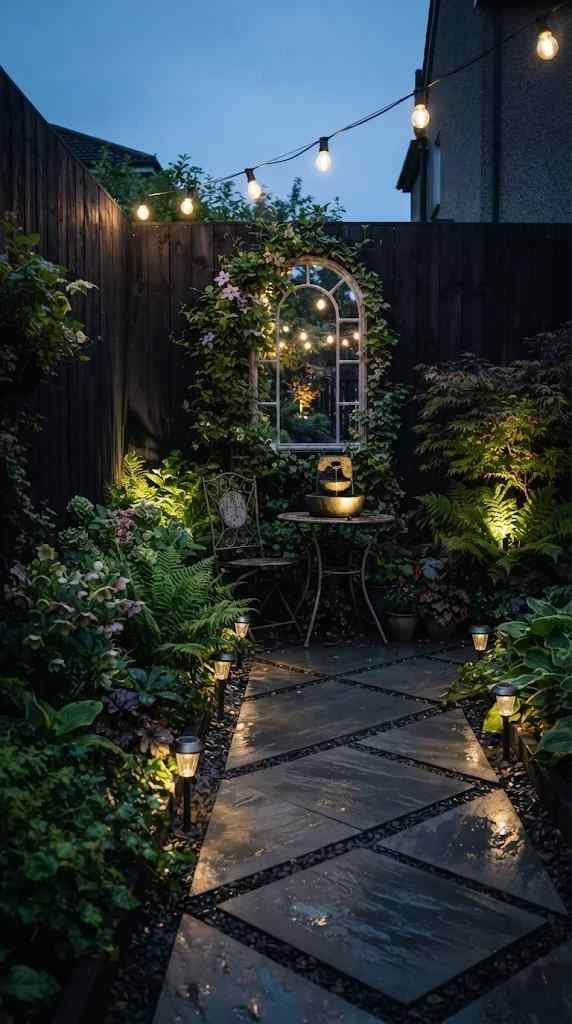
Can a backyard actually look bigger than it is? Absolutely, and you won’t need a contractor or a permit to pull it off. A handful of visual tricks can stretch your space far beyond its measurements.
Rethink Your Fence Color
Here’s a counterintuitive one: paint your fence dark. Charcoal, deep green, or even black makes boundaries visually fade away, especially at dusk. Plants pop against a dark backdrop, and the edges of the yard seem to dissolve into shadow.
Keep your plant and decor palette tight as well. Choose two or three main colors and repeat them throughout the space. A yard with fifteen competing colors feels chaotic and tiny. A yard with a calm, consistent palette feels intentional and roomy.
Add an Outdoor Mirror
An outdoor mirror on a fence reflects greenery and light, and it can create the illusion of a garden continuing past the boundary. Shatterproof acrylic versions hold up well against weather.
One important tip: birds can fly into mirrors, so angle yours slightly downward or place plants in front of it to break up the reflection. Nobody wants that kind of backyard drama :/
Layer Your Lighting
Lighting does more for a small space than almost any other upgrade. Instead of one harsh floodlight blasting the whole yard, build layers:
- String lights overhead create a cozy ceiling and define the space
- Uplights in the corners push the visual edges outward
- Solar stake lights along paths guide feet and add depth
- Lanterns and candles on tables add warmth at eye level
FYI, warm white bulbs around 2700K feel far more inviting than cool white ones, which can make your patio look like a gas station parking lot.
Play With Lines and Flooring
Lay pavers on a diagonal rather than straight across. Diagonal lines draw the eye along the longest possible path, which makes the area feel wider. Large format pavers also help, because fewer grout lines mean less visual noise.
If you can, match your patio flooring to your indoor flooring color. That continuity blurs the line between inside and outside, so your living room and backyard start to feel like one big space.
Want a sneaky bonus? Add a small tabletop fountain or a compact water bowl. The sound of moving water masks street noise and makes a tight yard feel like a private retreat.
Question the Lawn and Plant With Purpose
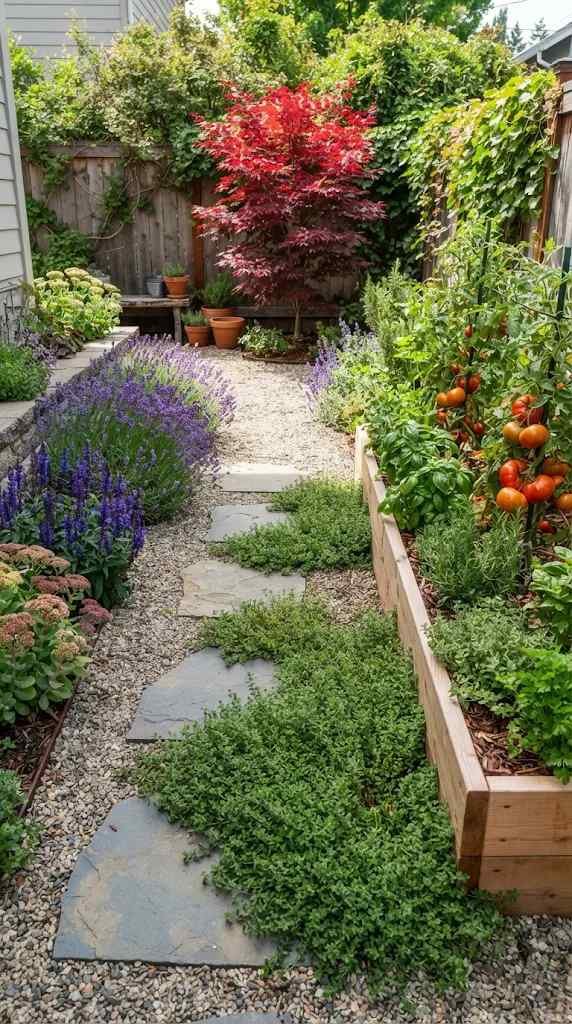
Time for a hot take: most small backyards don’t need grass at all. A tiny lawn demands a mower, an edger, fertilizer, and constant watering. In return, it gives you a patch too small to throw a frisbee across. Why pay rent on green carpet you barely use?
Plenty of lawn alternatives look better and ask for far less effort:
- Gravel gardens filled with drought tolerant plants like lavender, salvia, and sedum
- Creeping thyme or clover, which handle light foot traffic and smell lovely when you step on them
- Artificial turf, great for pets and zero mowing, though it gets hot in direct afternoon sun
- Large stepping stones with moss or creeping groundcover growing in the gaps
- Raised garden beds that turn the yard into a productive kitchen garden
When I ripped out my own sad little lawn and replaced it with gravel, stepping stones, and a ring of raised beds, I gained about four hours every weekend. I also gained tomatoes. Lots of tomatoes. My neighbors stopped answering the door by August.
Smart Planting Rules for Tight Spaces
Small gardens reward restraint. Follow these guidelines and your yard will look curated instead of cluttered:
- Repeat three to five plant varieties instead of buying one of everything at the nursery
- Plant in groups of three or five so each variety makes a visual statement
- Choose plants with year round interest, such as evergreens, ornamental grasses, and shrubs with winter bark
- Lean on containers, since you can rearrange them whenever inspiration strikes
- Shop dwarf varieties, including patio citrus, columnar apple trees, and compact hydrangeas
Give the Eye a Destination
Finally, add one focal point. A single small tree, such as a Japanese maple, a serviceberry, or a dwarf crape myrtle, adds height, shade, and seasonal color. More importantly, it gives your eye somewhere to land.
A sculptural planter, a bright bench, or a striking piece of garden art can serve the same purpose. Place your focal point at the far end of the yard, and it will pull your gaze across the full length of the space, making everything in between feel longer.
FAQ’s
Which backyard ideas for small yards cost the least?
String lights, an outdoor rug, and container plants transform small yards cheaply and quickly.
How can I get privacy in a small backyard without a tall fence?
Plant columnar evergreens, hang outdoor curtains, or install a trellis covered in climbing vines.
Can I safely use a fire pit in a tiny backyard?
Yes, choose a compact propane fire pit and check local codes for clearance rules.
Which plants suit small backyards that get mostly shade?
Hostas, ferns, heuchera, and Japanese forest grass thrive in shade and stay compact.
Is artificial turf a smart choice for small yards?
It works well for pets and low upkeep, but it gets hot in direct sun.
CONCLUSION
Small backyards punish indecision and reward clear choices. Divide your space into two or three zones, climb the walls with plants, buy furniture that multitasks, play tricks with color and light, and seriously question whether that lawn deserves its spot. Those five moves cover most of what separates a cramped yard from a cozy one.
You don’t have to tackle everything in a single weekend, either. Pick one corner this month, maybe a vertical herb wall or a rug and two chairs under string lights, and live with it for a while. You’ll quickly learn what you love, and the rest of the plan will practically design itself 🙂
The truth is, the most charming outdoor spaces I’ve ever visited rarely belonged to the people with the most land. They belonged to people who paid attention. So go measure your yard tonight, sketch it on a napkin, and stop calling it small. Start calling it yours.