
bar Stool kitchen island
By Anna Grace | 20 March 2026
How to Pick Bar Stools for Your Kitchen Island Without Losing Money
Your kitchen island sits there looking incomplete, doesn’t it? That bare countertop space screams for bar seating, but the moment you start shopping, you realize bar stools come in approximately 8,000 variations, and somehow every single one either costs $400 or looks like it’ll collapse under actual human weight. Welcome to one of home design’s sneakier challenges.
Here’s the thing bar stools for kitchen islands aren’t just decorative furniture they determine whether your island becomes a functional gathering spot or an awkward perch nobody actually uses. Get the height wrong, and guests spend dinner feeling either stretched like giraffes or squished like sardines. Pick the wrong material, and you’re refinishing them every six months. Pick the right setup, though, and you’ve created the heart of your kitchen.
The Height Question (Yes, It’s Actually That Important)
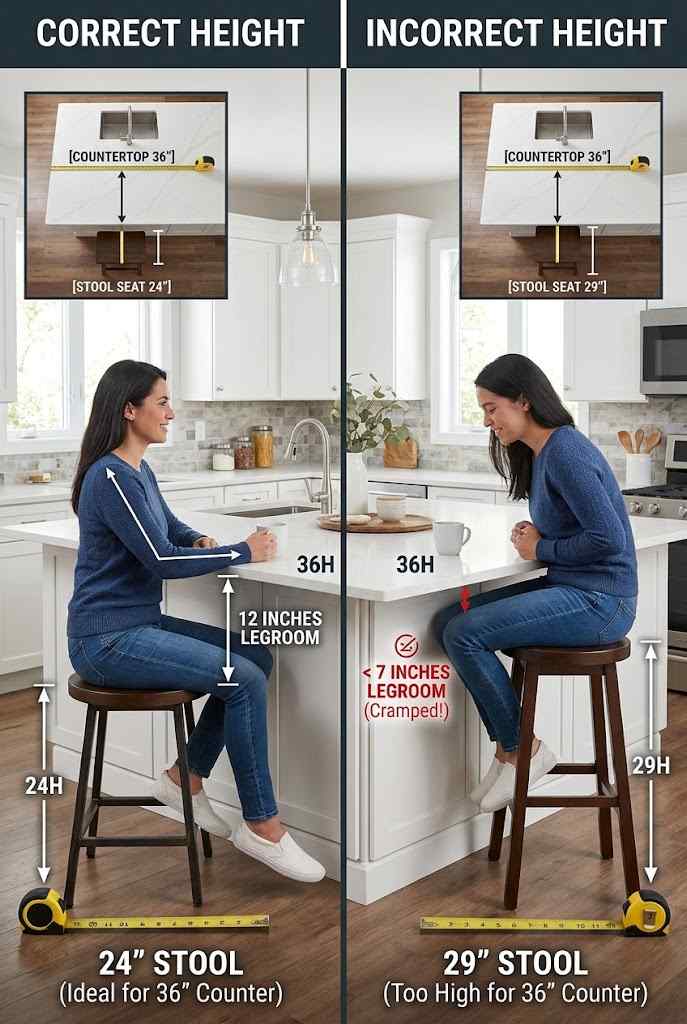
Let me share something from personal experience. My first kitchen island came with bar stools I grabbed on sale. They were 24 inches high. My island was 36 inches tall. Everyone who sat down looked like they were sitting at a kid’s table, knees practically up to their chins. I learned that day: measurements matter desperately, and they’re not negotiable.
Here’s how it works. Your kitchen island counter sets the baseline typically 36 inches from the floor. Once you know that number, you need to subtract 10–12 inches to find your ideal stool height. A 36-inch counter needs 24–26-inch stools. A higher island (40 inches) requires 28–30-inch stools.
Why this gap? That space between the stool seat and counter gives you legroom and prevents guests from banging their knees every time they shift. Without it, your island becomes genuinely uncomfortable, and nobody wants to sit there, which defeats the entire purpose.
Measure twice, buy once. Seriously. Bring a tape measure when you shop or verify dimensions online before clicking purchase. Most retailers list these specs, but not always prominently sometimes you need to dig into the product details or call customer service.
Don’t just measure your island height and call it done. Check the thickness of your countertop itself granite, marble, and wood counters vary. Some are 1.5 inches thick, others closer to 2 inches. Add that to your island base measurement for total height. Also consider your stool’s footrest position. A properly designed bar stool has the footrest roughly 7 inches below the seat, so your feet rest comfortably rather than dangling awkwardly. If you’re unusually tall or short, this matters even more. Test stools in person whenever possible online dimensions don’t account for how different seat padding thickness affects actual sitting height.
What Material Works (And Which Ones Backfire)
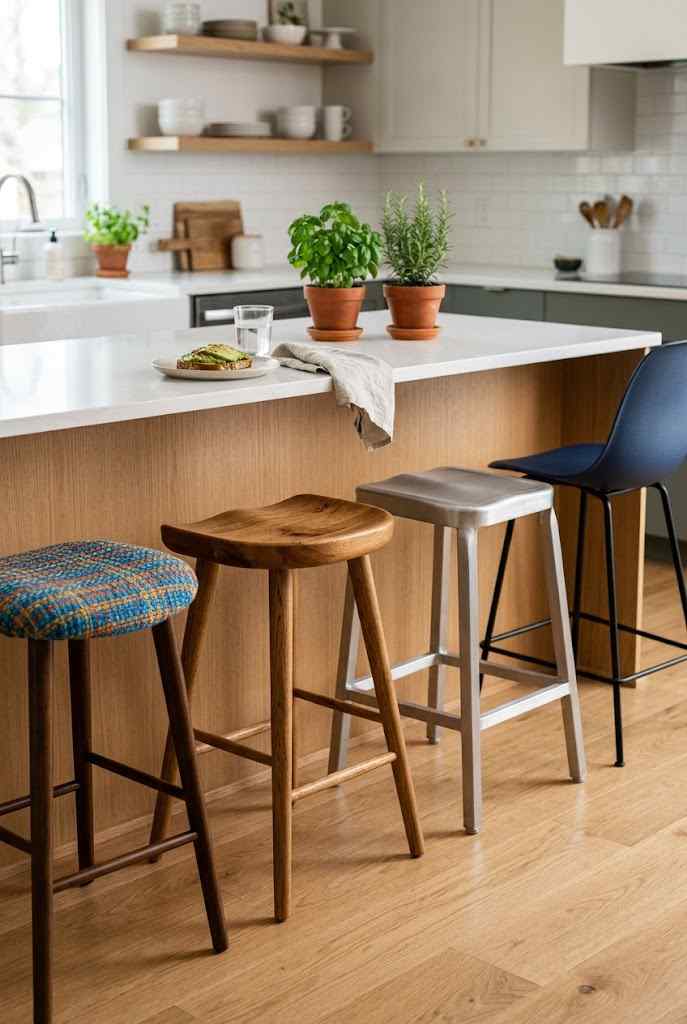
Metal frames dominate the bar stool market for solid reasons they’re durable, look clean, and don’t absorb kitchen moisture like sponges. But here’s where choices split dramatically.
Upholstered seats feel incredible to sit on and come in endless fabric colors that match your design scheme. The catch? Kitchen islands are messy environments. Crumbs, spills, and sauce splatters happen constantly. Fabric seats require regular vacuuming and occasional professional cleaning, or they’ll start looking grimy fast. If you choose upholstered, go for performance fabrics designed to resist stains, or expect to be defensive every time someone eats near that stool.
Wooden seats age beautifully if you maintain them. They feel warm, create excellent visual appeal, and pair perfectly with farmhouse or traditional kitchens. Maintenance is real though moisture and heat from cooking can warp wood over time, and you’ll need to occasionally oil or refinish them to keep them looking intentional rather than weathered.
Metal seats (usually aluminum or steel) and plastic/composite options are the low-maintenance heroes. They wipe clean in seconds, handle spills without drama, and rarely require anything beyond basic cleaning. They won’t win awards for cozy vibes, but they’re honest, practical choices for busy kitchens. IMO, underrated for modern kitchens where function actually matters.
The best material is whatever you’ll actually keep clean. Pick something you genuinely like looking at, or you’ll resent those stools for years.
Leather seats (genuine or faux) occupy a strange middle ground expensive enough to feel premium, yet prone to cracking in temperature fluctuations kitchens experience. Vinyl seats mimic leather affordably but can feel cheap if quality isn’t high. Mesh seats breathe well in hot kitchens and clean easily, though they’re less common. The legs and frame matter as much as the seat itself. Look for welded (not bolted) joints and powder-coated finishes that resist rust. Budget brands often skimp on frame quality, leading to wobbles and squeaks after six months of regular use.
Seating Styles and What They Actually Do
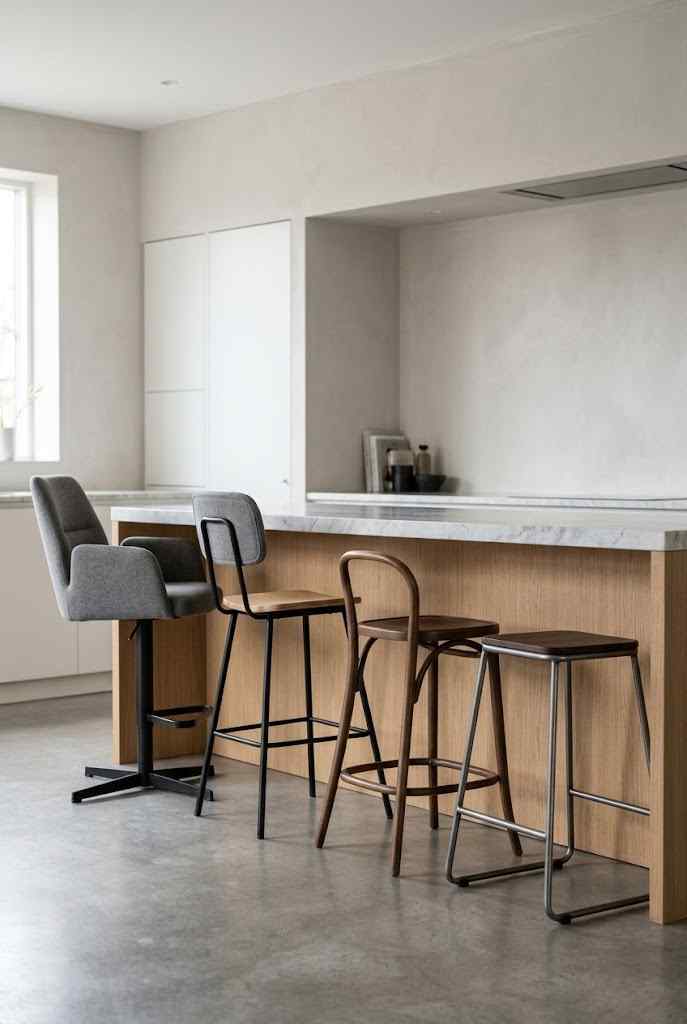
Back designs change everything about how a stool functions and feels. Know the difference before you commit to a set.
No-back stools slide under counters completely, which saves space and looks sleek. But sitting on them for extended time? Your lower back notices. They work for quick breakfasts or casual perching, not so much for lingering dinner conversations. Use these when space is tight or aesthetics demand a minimal look.
Low-back stools give you some spine support without eating up vertical clearance. They’re the compromise option practical and less visually heavy than full backs. Most bar stools in the mid-price range land here, which tells you people generally find this balance worthwhile.
Full-back and high-back stools provide genuine support and feel more like proper seating. They occupy more visual space (which matters in smaller kitchens) and you can’t tuck them completely under the counter, but they’re markedly more comfortable for longer sitting. FYI, these matter if you’ve got older family members or anyone with back issues who’ll be perching at that island regularly.
Swivel bases are popular because they feel friendly and casual you can spin around to chat with someone at the stove. Stationary bases take up less space and feel more intentional design-wise. Choose based on your actual behavior. Do you actually spin, or is that just something that looked cool in the showroom?
Footrests aren’t just accessories they’re functional necessities that directly impact comfort during extended sitting. Stainless steel or metal footrests feel industrial but last forever. Padded footrests add luxury but wear faster. Some designs include angle-adjustable footrests, which sound unnecessary until you realize your feet position changes comfort dramatically. Armrests seem like nice additions until you try sliding a stool under a low counter with them attached. Think practically about how these stools integrate with your daily kitchen flow, not just how they look photographed.
Quantity and Spacing Decisions
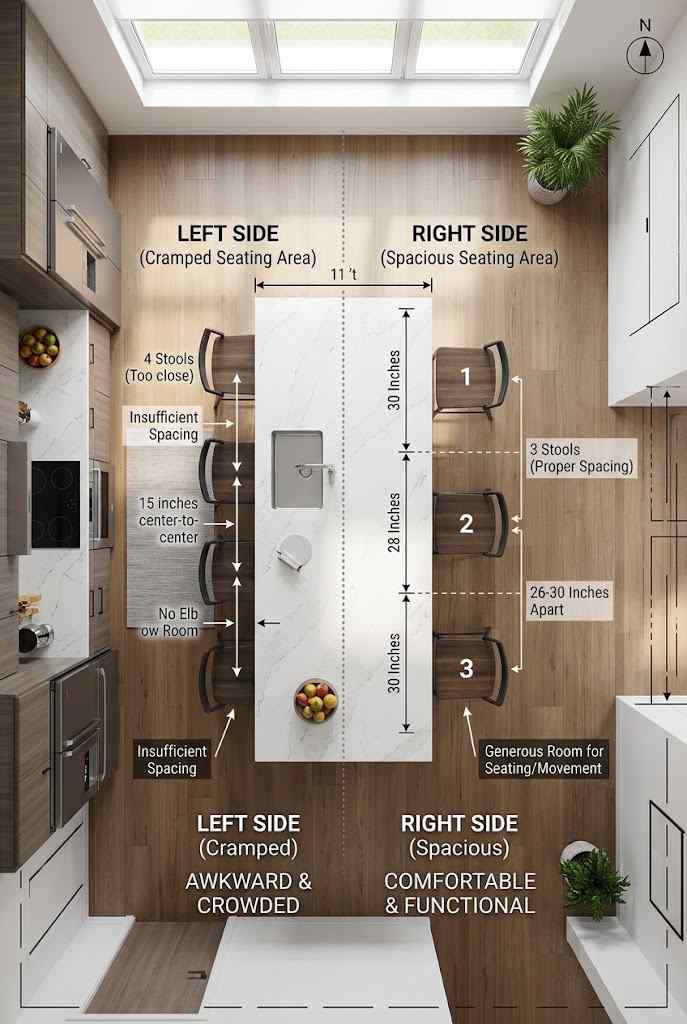
How many stools should you actually buy? This isn’t about filling every inch of counter space. It’s about realistic usage and keeping your kitchen from feeling like a crowded bar.
Calculate based on counter length, not greed. Each stool needs roughly 26–30 inches of space including the frame. A five-foot island can reasonably fit two stools. A six-footer? Maybe three, but that’s pushing it. Cramming four stools into limited space means everyone’s uncomfortable and nobody wants to sit there.
Consider your household and how you actually entertain. If you live alone, two stools might be your entire setup. Family of four who hosts dinner parties? Three stools handles most situations without feeling sparse. The goal is creating comfortable seating, not proving you have the most stools.
Space matters more than quantity. One person sitting comfortably at your island beats three people wedged in like a subway car.
Beyond seating comfort, think about kitchen workflow. If your island sits between your stove and refrigerator, bar stools create obstacles during actual cooking. Someone sitting at the island while you’re moving food around becomes friction, not hospitality. Position stools on the side of your island that doesn’t block your primary cooking movements. Some islands work better with stools on one long side only, rather than wrapping around multiple sides. Check your actual kitchen traffic patterns before committing to stool placement. A perfectly positioned bar stool encourages casual hanging out; a poorly positioned one becomes an annoyance everyone learns to work around.
The Style Layer (Because It Still Has to Look Good)
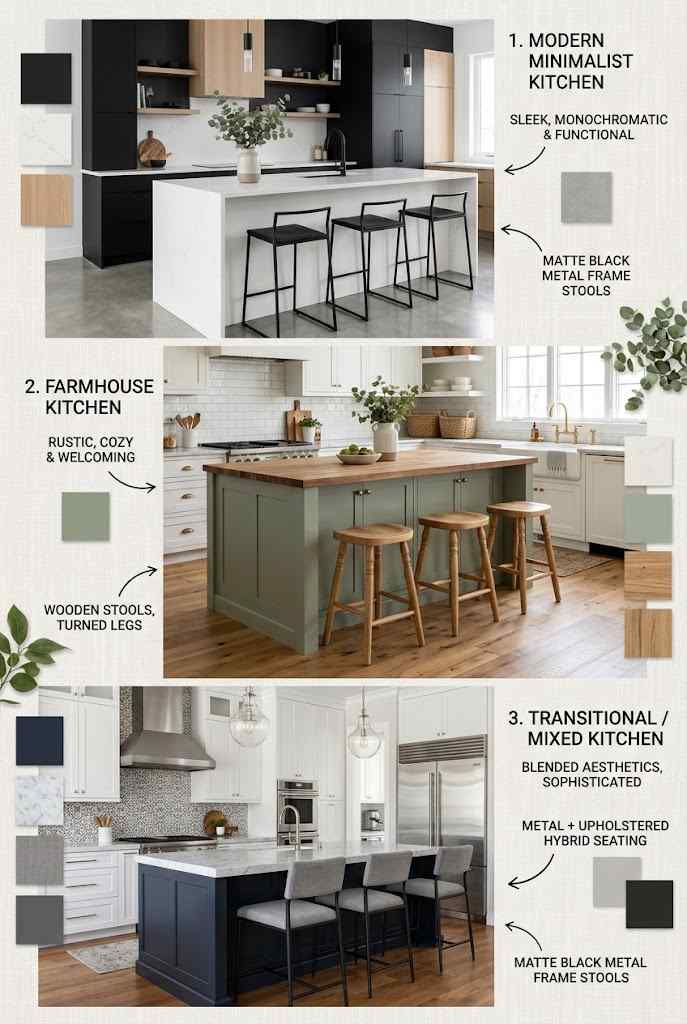
Your bar stools should whisper, not scream, about your kitchen’s vibe. They’re not the main attraction they’re supporting players in your overall design.
Modern kitchens pull toward minimalist metal frames with matte finishes and simple lines. Farmhouse setups lean into wood, spindle backs, or turned legs. Transitional kitchens (the actual home design trend, not just “stuck in the middle”) work beautifully with mixed materials metal frames paired with upholstered seats, or wood bases with sleek backs.
Here’s where this gets real: don’t force a style match that doesn’t exist. If your kitchen mixes styles (which most real houses do), your stools should feel like a natural part of that mix, not an awkward tribute to a design magazine nobody actually lives in.
The color choice matters more than people realize. Neutral tones black, gray, natural wood, or metallics work with basically everything and age well. Trendy colors look fresh for about eighteen months, then instantly dated. If you love a specific color, get it, but know you might be reshooting that stool in a few years when the trend shift happens.
Mixing stool styles intentionally (two different designs but same color, or same design in different finishes) creates visual interest without clashing. This approach also lets you replace individual stools as they wear out without feeling obligated to buy matching replacements. Classic designs from quality manufacturers last longer visually they don’t scream a specific trend year. Industrial stools with metal frames and wood seats work in kitchens from 2015 to 2035 without looking dated, whereas ultra-trendy designs age faster. Your kitchen island gets used constantly, so these stools endure more wear than typical furniture. Invest in timeless silhouettes you genuinely love rather than chasing trends.
FAQ’s
What’s the best bar stool height for a 42-inch kitchen island counter?
Subtract 10–12 inches from your counter height for ideal stool height. A 42-inch island needs 30–32-inch bar stools to maintain proper legroom and comfortable seating posture.
Can I use different bar stool styles together at my kitchen island?
Yes, mixing styles works beautifully if they share a unifying element like color, material, or frame style. Intentional mixing creates visual interest without appearing mismatched or haphazard.
How do I prevent bar stools from wobbling after months of use?
Check all bolts and screws quarterly and tighten them as needed. Wobbling often signals loose connections rather than defective design. Quality welded frames are more stable long-term than bolted construction.
Are swivel bar stools worth the extra cost for a kitchen island?
Swivel bases cost more upfront but feel casual and interactive. Consider your actual kitchen behavior if you don’t naturally spin in your kitchen, stationary bases work equally well.
What’s the most durable bar stool material for a busy household?
Metal frames with composite or metal seats are lowest-maintenance and most durable. They resist stains, require only basic wiping, and don’t warp or crack from kitchen heat and moisture exposure.
CONCLUSION
Overwhelmed yet? Here’s how to narrow it down without losing your mind. Start with measurements know your counter height and the space available. That eliminates half your options immediately. Then pick your practical priorities: easy to clean, or maximum comfort? That picks your material. Finally, look at styles that match your kitchen without overthinking it.
Read real reviews from people who actually own these stools. Instagram photos lie. Real reviews tell you whether they’re comfortable after two hours, whether they wobble, and whether they ship damaged. Spend thirty seconds reading actual customer feedback instead of assuming a pretty picture means a good purchase.
Your kitchen island works best when it actually gets used, and bar stools make that happen. Get the height right, choose durable materials you like maintaining, and pick a style that feels authentic to your kitchen. Skip one of those steps, and you’ll know it every single day.