
bathroom curtain ideas
By Anna Grace | 23 May 2026
Bathroom Curtain Ideas That Turn a Boring Shower Into a Style Statement
Your shower curtain sits there doing its job keeping water off the bathroom floor but what if it could do so much more? I discovered this truth the hard way when I swapped my dingy off-white curtain for a patterned option, and suddenly my entire bathroom felt intentional. The right bathroom curtain ideas don’t just hide your shower; they anchor your entire bathroom aesthetic. Whether you’re working with a tiny half bath or a sprawling spa-like master, your curtain choice matters more than you’d think.
The Unexpected Power of Color and Pattern
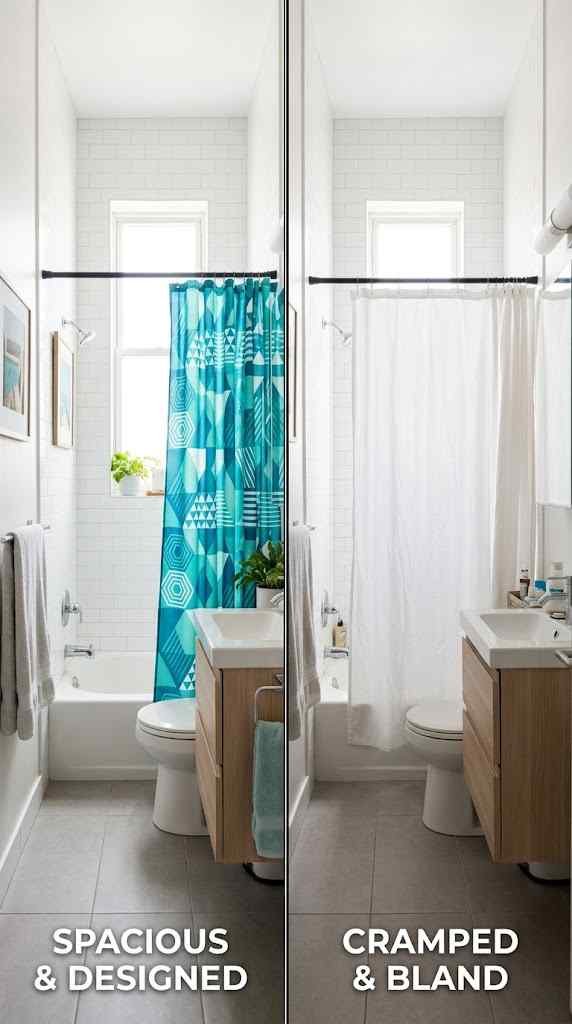
Here’s something most people miss: your shower curtain takes up a massive visual footprint in a small room. A bold color or pattern literally changes how spacious your bathroom feels.
If your bathroom runs tiny, you might think “go neutral,” but that logic backfires. A well-chosen curtain pattern actually draws the eye in a way that makes the room feel designed rather than cramped. Geometric prints, soft botanical designs, or even solid jewel tones trick your brain into perceiving depth. I went with a deep teal curtain in my guest bathroom, and visitors constantly comment on how “big” it feels spoiler alert: it’s not bigger, just smarter.
Solid colors work too, but they need intention. A crisp white or cream reads clean if your bathroom already has visual interest elsewhere (tile, vanity, lighting). Go darker if you want drama charcoal, navy, or even black feels sophisticated and hides water spots like a dream. Light pastels (sage, blush, soft gray) bring calm without feeling boring
The trick? Pick a color that echoes something else in your bathroom your towels, mat, or even a tile accent. Repetition makes even small spaces feel curated.
Don’t underestimate the psychological pull of undertones either. Warm undertones (terracotta, mustard, warm gray) make a bathroom feel cozy, almost like an extension of your living space. Cool undertones (icy blue, sage, slate) push toward that fresh, spa-like sensation people chase in magazine bathrooms.
Something IMO worth trying: color-blocking with two curtains layered together. A sheer neutral base with a bold patterned overlay gives you flexibility swap the top layer seasonally without buying a whole new setup. It’s basically the wardrobe-layering trick, but for your shower.
One thing I’d avoid? Matching your curtain exactly to your wall paint. It flattens the room instead of adding dimension. You want contrast, not camouflage. A shade or two off from your walls creates that subtle separation your eye actually craves, even if you can’t articulate why.
Materials Make or Break the Experience
Let’s talk fabric, because cheap vinyl curtains stick to your legs and feel… sticky. Nobody enjoys that sensation at 6 a.m.
Standard polyester works fine if you prioritize budget, but it feels plastic-y and holds mildew like nobody’s business. Premium polyester blends resist stains better and feel softer against your skin. Linen-look fabrics (usually poly-linen blends) bring texture and actually improve as they age they crease naturally instead of looking wrinkled.
If you want to feel fancy? Cotton-based curtains bring hotel-level luxury. They’re breathable, which means less mildew growth and that crisp, high-end feel. The downside: they cost more and require slightly more care. Some people even get them dry-cleaned (they’re not that person, but hey, options exist).
Here’s an underrated choice textured polyester with subtle patterns. The texture hides water spots and splashes, so your curtain looks pristine longer without obsessive cleaning. Think waffle-weave, microcheck, or embossed designs that catch light without screaming “fancy.”
:/ One warning: stay away from sheer or semi-transparent curtains unless you enjoy performing for the neighborhood.
Weight matters more than people expect. A curtain that’s too lightweight billows and clings when your shower’s running annoying, and honestly a little unhygienic. Heavier fabrics or ones with a built-in magnetic hem stay put, hugging the tub line without you having to think about it.
Ever noticed how some curtains develop that musty smell within weeks? That’s usually a manufacturing shortcut cheap dyes and coatings trap moisture instead of releasing it. Reading fabric descriptions before buying saves you from that unpleasant surprise later.
FYI, if you’re sensitive to synthetic smells, look for curtains labeled OEKO-TEX certified. They’re tested for harmful substances, which matters in a room where you’re breathing in steam daily. It’s a small detail, but one that pays off for anyone with allergies or asthma.
Size and Fit Aren’t Boring Details

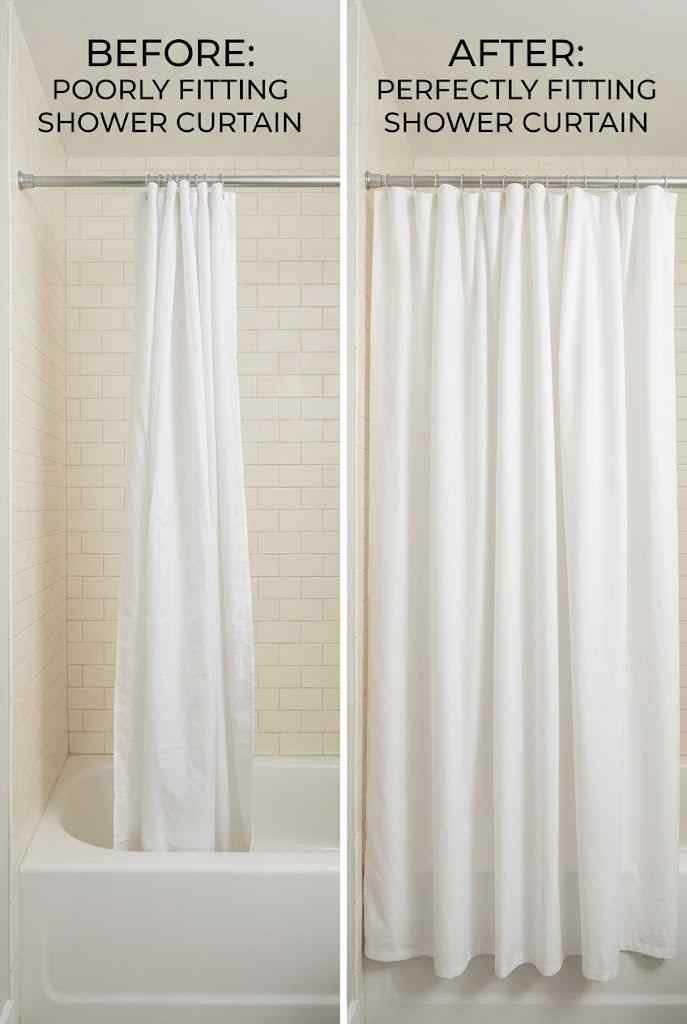
A curtain that doesn’t hang right undermines everything else you’re doing. This matters more than people realize.
Your curtain should hit the bathtub rim or just graze the top of the tub not bunching in piles on the floor (unless you’re going for a theatrical vibe, which, respect). Measure from your rod to where your water should stop. Most curtains come in standard 72-inch lengths, but if your bathroom has a higher ceiling or a pedestal tub, grab a 78-inch or even 84-inch version.
Width-wise, the curtain needs enough fabric to fully close without stretching. A skinny curtain that barely wraps around your shower rod looks cheap and doesn’t actually protect your floor. Go for a curtain that gathers naturally when drawn roughly 1.5 times your rod width, minimum. Double-width curtains (usually 108 inches) create a luxurious, full look that justifies that spa-like feeling.
The rings or hooks matter too. Cheap plastic rings squeak and stick; quality stainless steel or weighted rings glide smoothly. Your daily shower experience improves when you’re not fighting your own curtain.
Here’s a mistake I made once: buying a curtain based on the picture alone, ignoring the actual dimensions listed. It arrived looking like a crop top for my shower rod. Always check inches, not just vibes.
If you’ve got a clawfoot tub or an oddly shaped shower stall, standard sizing won’t cut it. Custom curtains exist, and while they cost more, they solve gaps and awkward overhang that generic sizes can’t fix. Measure twice, because returns on fabric items are rarely fun.
Also worth considering: curtain weight at the bottom hem. Some higher-end options include a weighted strip or small magnets that keep the fabric from flapping into your shower stream. It sounds minor until you’re the one peeling wet fabric off your ankle mid-rinse :/
Space-Specific Strategies
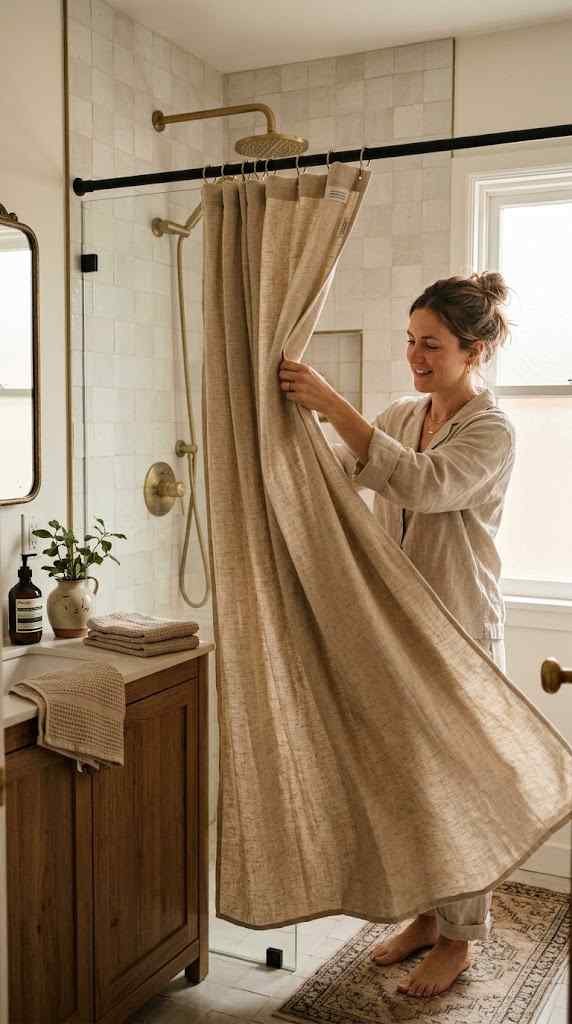
Tiny bathrooms demand different curtain logic than sprawling ones. In a shoebox bathroom, hanging your curtain rod higher and wider than the actual tub creates an optical illusion that actually makes the space feel bigger. Your eye travels to that larger rectangular shape rather than focusing on the shower’s actual footprint.
Avoid super-heavy, fabric-laden curtains in small spaces they visually compress the room. Lightweight, draping fabrics in a single solid color or small repeating pattern work best. Avoid giant florals or bold stripes that overwhelm the sightlines.
In larger bathrooms, you can play harder. Double curtains (a sheer + a patterned layer) look intentional. Architectural patterns and jewel tones don’t overpower big spaces; they anchor them. You’ve also got room to experiment with textured fabrics without the space feeling congested.
Window treatments? If your bathroom has a window, consider a curtain combo a lightweight bathroom-specific curtain in the shower paired with actual window treatments that match or coordinate. This creates a polished, designed-on-purpose look rather than everything fighting for attention.
Vertical stripes deserve a mention here they’re not just a clothing trick. In a bathroom with low ceilings, a curtain with subtle vertical lines pulls the eye upward, creating that stretched, taller feel without any construction involved. Cheap trick, genuinely effective.
For bathrooms with awkward layouts (say, a shower squeezed into a corner), curved shower rods paired with a curtain one size up can reclaim usable space. You gain elbow room while showering, and the curtain itself looks more generous and less like it’s fighting the walls.
Renters dealing with builder-grade bathrooms shouldn’t feel stuck either. A statement curtain is one of the cheapest, most reversible upgrades available no permission needed, no security deposit at risk. Swap it in an afternoon and suddenly the whole room reads differently.
Sustainable and Practical Picks
Buying curtains you’ll toss in a year feels wasteful. Quality matters for your wallet and the planet.
Organic cotton and linen-blend curtains last years longer than low-grade polyester, and they’re genuinely better for mildew-prone bathrooms because they’re more breathable. Yes, they cost more upfront. Over a five-year span, you’re probably spending less because you’re not replacing them annually. The math works 🙂
Machine-washable curtains save money on dry cleaning and environmental cost. Check the care label some premium fabrics handle washing better than others. Antimicrobial or treated fabrics resist mold naturally, reducing chemical cleaning needs.
Here’s an unconventional option: waterproof shower liners as a backup system rather than relying solely on your fabric curtain. A thin waterproof liner inside absorbs the water splatter while your pretty fabric curtain stays drier, lasting longer. This combo approach means you replace the cheap liner occasionally and keep the beautiful curtain indefinitely.
Recycled polyester (RPET) curtains have gotten genuinely good in the last few years. Made from repurposed plastic bottles, they perform nearly identically to virgin polyester but with a smaller environmental footprint. Worth a look if sustainability factors into your buying decisions.
Cleaning routine matters just as much as the fabric itself. A monthly wash with vinegar and baking soda (skip the harsh bleach) extends any curtain’s lifespan regardless of material. Mold doesn’t stand a chance against a consistent routine, and your fabric stays looking newer, longer.
Consider also buying a curtain one size larger than needed if you’re prone to skipping laundry days. Extra fabric means less direct contact with water pooling, which translates to slower mildew buildup and fewer emergency replacement purchases down the line.
The Installation Makes You Look Competent
Nobody sees your installation unless something goes wrong, but getting it right elevates the whole situation.
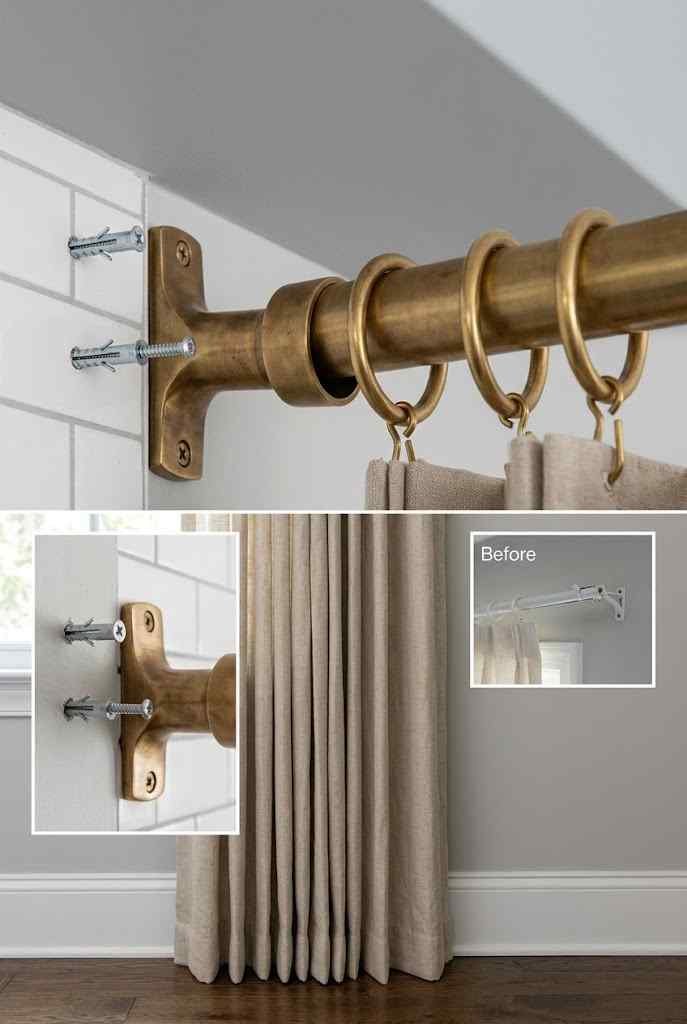
Mount your rod as close to the ceiling as practically possible this maximizes that optical lift we talked about and prevents water splatter from hitting walls. Use proper anchors into studs if possible, because water is heavy and your curtain shouldn’t come crashing down mid-shower.
Tension rods work beautifully for renters and create a streamlined look, but they can sag over time. Mounted rods with quality brackets maintain their grip longer. Weathered brass or matte black finishes complement most bathroom styles better than shiny chrome or cheap plastic.
The hooks or rings you choose should move freely test them before committing. Cheap rings stick and make your morning routine unnecessarily annoying.
Curved rods aren’t just aesthetic flexes they genuinely add functional shower space by bowing outward, giving you a few extra inches of elbow room. Combined with the right curtain length, they transform a cramped stall into something that feels almost roomy.
Double-rod setups deserve more attention than they get. Installing two rods lets you run a functional liner on the inner rod and a decorative fabric curtain on the outer one. You get all the waterproofing benefits without sacrificing style best of both categories, basically.
Don’t skip the level tool during installation. A slightly tilted rod throws off your entire curtain’s hang, creating uneven gaps you’ll notice every single day. Five extra minutes with a level saves you from a lifetime of mild visual irritation.
FAQ’s
How often should I replace my bathroom shower curtain?
Replace fabric curtains every 1–2 years; liners typically need swapping every 6 months.
Can I put a shower curtain in the washing machine?
Yes, most polyester and cotton-blend curtains are machine-washable on a gentle, cold cycle.
What’s the difference between a shower curtain and a liner?
A liner blocks water the curtain adds style and usually hangs outside it.
How do I stop my shower curtain from clinging to me?
Choose a heavier fabric or one with a magnetic or weighted hem for stability.
What length shower curtain do I need for a standard tub?
Most standard tubs need a 72-inch curtain; taller ceilings may need 78–84 inches.
CONCLUSION
Strip away the Pinterest inspiration for a second. Your curtain needs to block light if you want privacy, resist mildew because bathrooms are damp, and survive repeated wet encounters without degrading. Beyond functionality, pick something you genuinely want to look at every day not what you think you “should” want.
Your bathroom curtain spends more time in your physical space than most furniture. Make it count. The right choice doesn’t demand a massive budget, just intention. Whether you land on minimalist white, bold jewel tones, textured linen, or patterned polyester, commit fully to that decision and enjoy how it transforms your daily shower experience from mundane to genuinely pleasant.