
Bathroom Vanity
By Anna Grace | 19 May 2026
How Bathroom Vanity Cabinet Decides Whether Your Morning Runs Smooth or Sideways
My friend Nora renovated her bathroom last spring and picked the vanity dead last, almost as an afterthought the way you grab gum at a checkout counter. Three weeks later she called me half-laughing, half-furious because the drawers smacked into the toilet every single time she opened them. That one cabinet had quietly become the thing she resented most in her entire home.
A bathroom vanity looks like a background player. It isn’t. It hides your plumbing, holds your sink, gives you a place to set your coffee while you brush your teeth, and it’s the first thing your bleary eyes land on at 6 a.m. Pick it well and your mornings feel effortless. Pick it badly and you’ll curse it for a decade. So let’s figure out how to land on the right side of that.
What a Bathroom Vanity Actually Brings to the Table
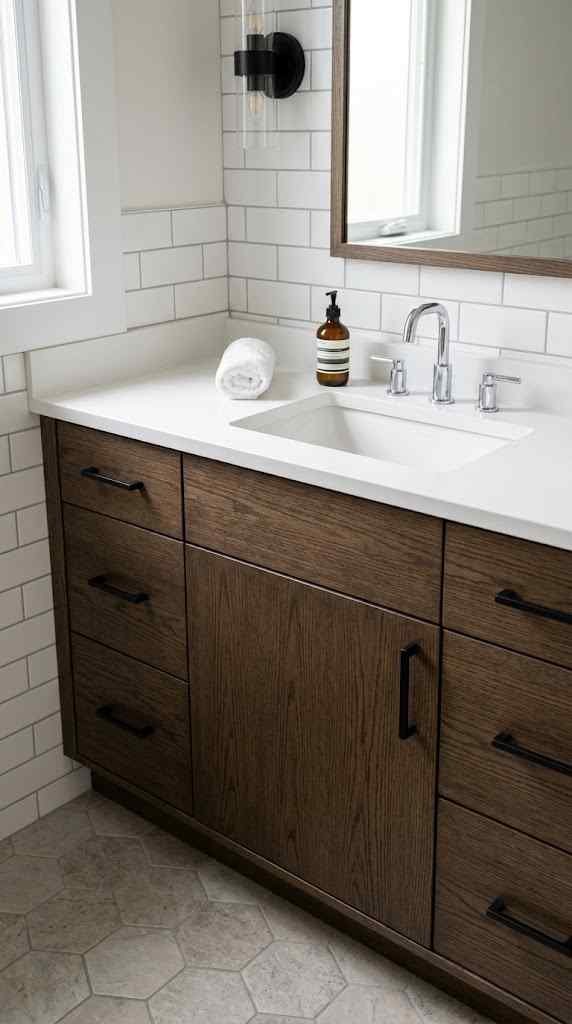
Strip away the marketing photos and a bathroom vanity is really four jobs bundled into one piece of furniture: it supports the sink, conceals the ugly pipework underneath, hands you counter space, and stashes your stuff behind a door or two. Most furniture only does one thing. This little workhorse does all of them at once while looking presentable.
The style you choose also sets the emotional temperature of the room. A warm walnut vanity cabinet makes a bathroom feel like a boutique hotel, while a crisp white one reads clean and airy. You’re not just buying storage you’re picking the anchor everything else in the room orbits around.
Here’s the part people underestimate the vanity is where you interact with the bathroom most physically. You lean on the counter, tug the drawers, splash the top, drop your rings in the little dish. If it’s poorly built, you’ll feel that flimsiness every day. Quality here pays you back in tiny moments you barely notice which is exactly the point.
Getting the Size Right (Before You Fall in Love With the Wrong One)
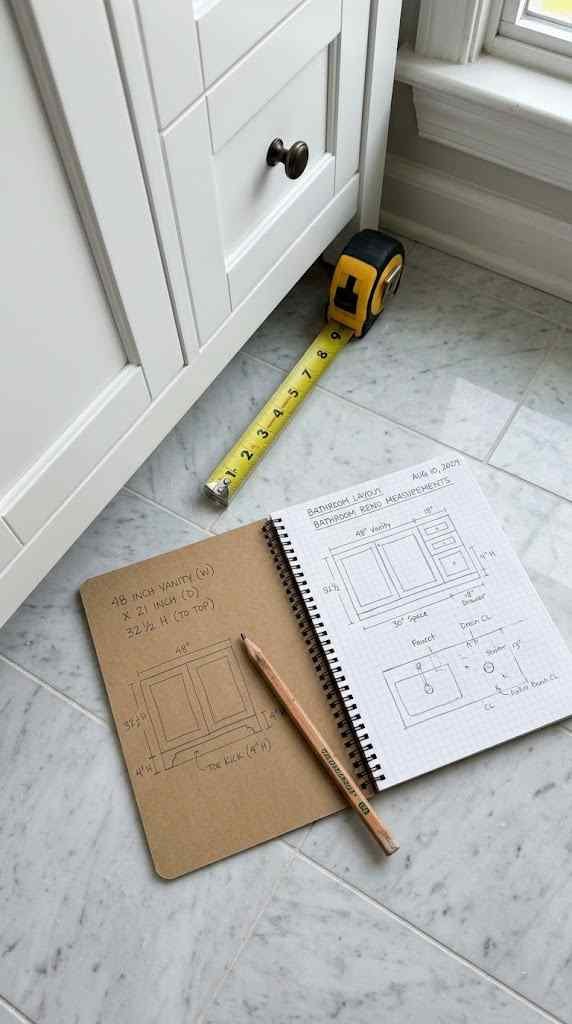
Nora’s disaster started with measurements, so let’s start there too. The single most common mistake is picking a vanity you adore online and only later checking whether it fits the room, the door swing, and the human beings who have to move around it. Romance first, math never that’s how you end up with drawers assaulting your toilet.
Before you shop, grab a tape measure and write down these numbers:
● Wall width where the vanity will sit, minus any trim or radiators
● Depth you can spare without blocking the door or shower entry
● Plumbing location how far the pipes sit from the wall and floor
● Clearance in front, so drawers and doors open fully (aim for at least 30 inches of open floor)
● Faucet hole spacing if you’re reusing an existing faucet
Now the single-versus-double question. A single-sink vanity usually runs 24 to 48 inches wide and suits most bathrooms just fine. A double vanity needs roughly 60 inches minimum to give each person elbow room, and honestly it needs closer to 72 to feel generous. Cramming two sinks into 48 inches gives you two tiny basins and zero counter the worst of both worlds.
Got a small bathroom? Don’t despair, and don’t force a double vanity in there out of stubbornness. A slim 24-inch small bathroom vanity or a wall-mounted design can free up visual floor space and make the whole room breathe. Sometimes less cabinet is the smart flex, not the compromise.
Vanity Styles Worth Knowing, From Floating to Freestanding
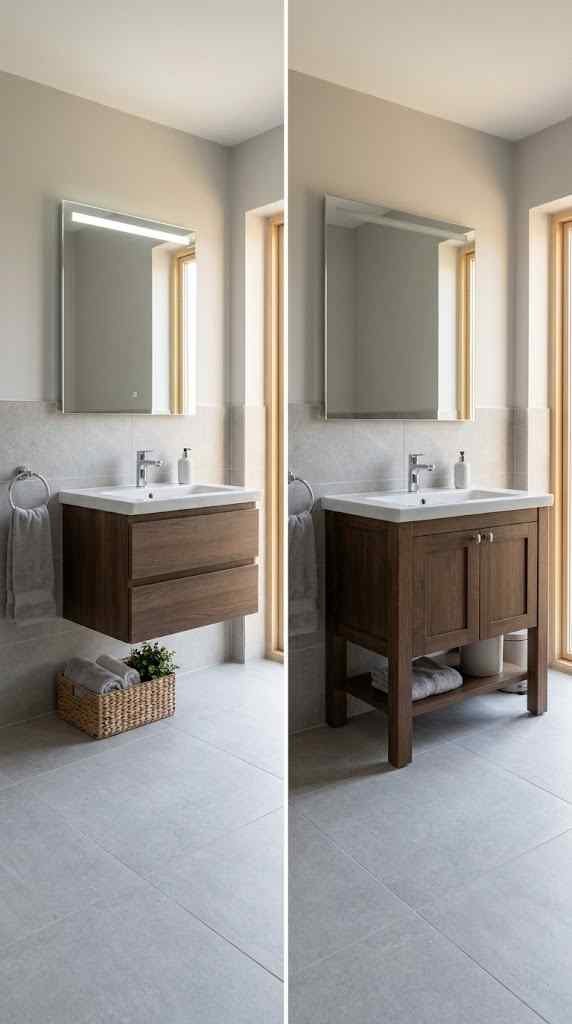
There are more vanity styles than there are excuses to skip laundry, so let me spare you the endless scroll and cover the ones that genuinely matter. Each one changes how the room feels and functions, not just how it photographs.
A floating vanity (also called a wall-mounted vanity) attaches directly to the wall with a gap of open floor underneath. It looks modern, it’s a dream to mop under, and it tricks your eye into thinking the room is bigger. The catch? It has to be anchored into solid blocking behind the wall, so it’s easier to install during a renovation than as a weekend swap.
A freestanding vanity sits on the floor like a normal cabinet and gives you the most storage for your money. It hides more of the plumbing and generally installs without you needing to open up the wall. If storage is your top priority, this is usually your best bet it’s the sensible minivan of vanities, and I mean that as a compliment.
Then you’ve got a few in-between characters worth a quick look:
● Vanity with legs freestanding storage but with an airier, furniture-like feel
● Corner vanity squeezes a sink into a tight bathroom without eating a full wall
● Vanity with a vessel sink the bowl sits on top of the counter for a spa-ish, sculptural look
IMO, floating vanities are gorgeous but oversold for family bathrooms you lose the deep lower storage that a household with kids desperately needs. Choose the vibe that matches your actual life, not the one that matches your Pinterest board at midnight.
Countertops and Cabinets That Survive Real Life
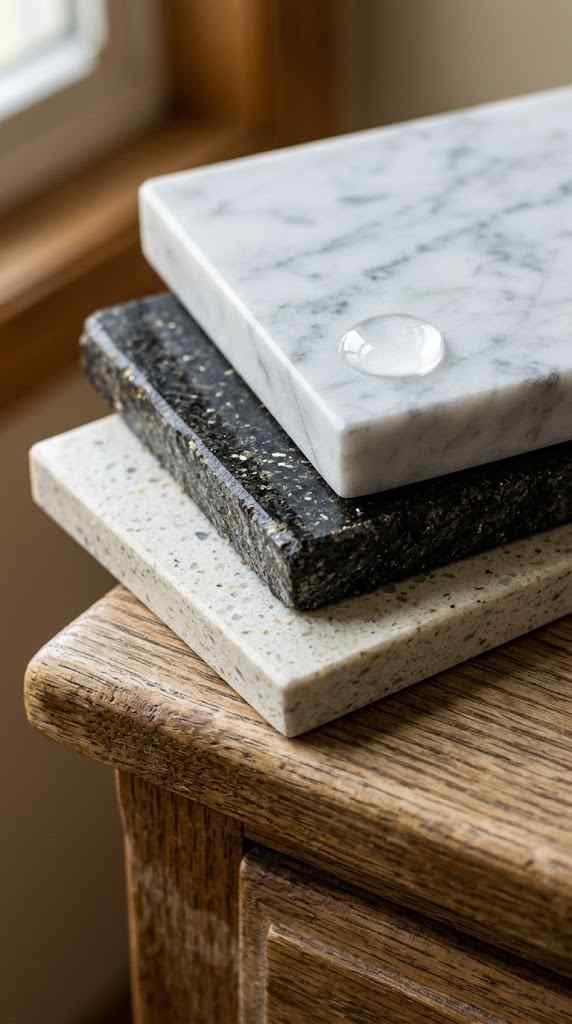
Your vanity lives in the most humid room in the house, getting splashed, steamed, and occasionally drenched by a toothbrush that goes rogue. So the materials matter more here than almost anywhere else. What looks great in a showroom can warp, stain, or swell into a sad little mess if it can’t handle water.
Let’s start at the top literally, the vanity top. Here’s how the popular countertop options actually hold up:
Quartz engineered, nonporous, stain-resistant, and basically maintenance-free. My personal favorite for bathrooms because you never have to babysit it.
Granite natural stone, tough and heat-resistant, but needs occasional sealing to fend off water spots
Marble stunning, undeniably luxurious, and needy it etches and stains if you look at it wrong, so treat it like a diva
Laminate the budget champion, surprisingly convincing these days, though it can peel at the edges over time
Solid surface seamless and repairable, a nice middle ground between price and durability
Now the cabinet body underneath, which people ignore right up until it falls apart. Solid wood looks beautiful but can swell in a steamy bathroom, so it needs a good finish to stay sealed. Plywood construction resists moisture well and holds hardware tightly it’s the quiet overachiever. MDF is smooth and affordable, but if water ever reaches the raw core, it bloats like a sponge, so keep it sealed and dry.
Ever wonder why some cheap vanities feel wobbly within a year? It’s almost always the joinery and the finish, not the wood species itself. Dovetail drawers, soft-close hinges, and a properly sealed cabinet quietly separate a vanity that lasts fifteen years from one you’ll be dragging to the curb in three.
Storage That Actually Fixes Your Chaotic Mornings
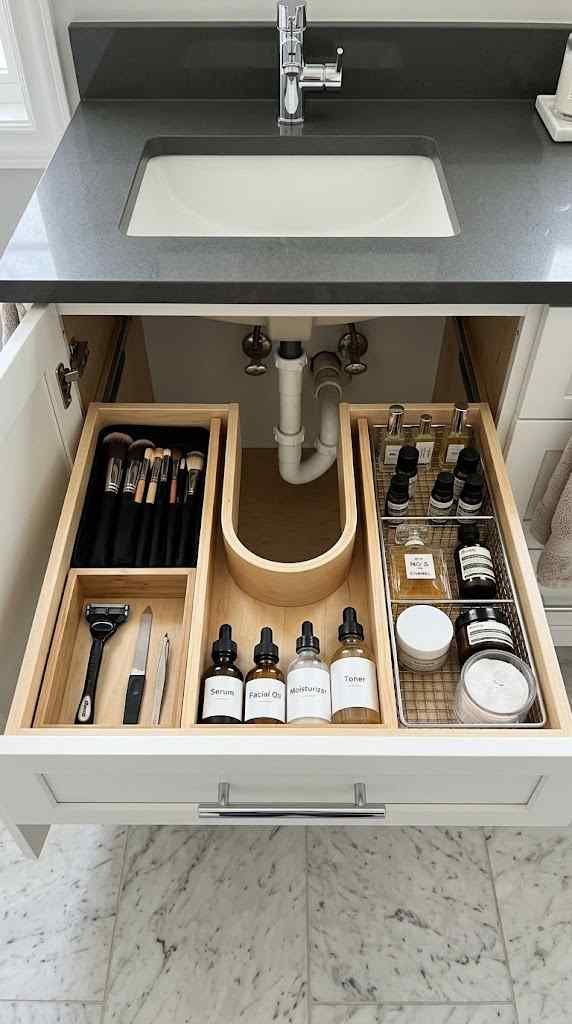
Counter space is where your day happens, but storage is where your sanity lives. A vanity with the wrong storage layout means a bathroom counter permanently buried under bottles, and nobody wants to start their day archaeology-digging for a hair tie. The trick is matching the storage type to how you actually use your things.
Drawers versus doors is the great vanity debate, and I’ll settle it for you drawers win for daily-use items, doors win for bulky stuff. Drawers let you see everything at a glance and reach it without kneeling on a cold floor. Cabinet doors, meanwhile, are perfect for hiding tall bottles, cleaning supplies, and that mountain of backup toilet paper.
The smartest vanities give you both. Look for a layout with a deep bottom drawer or lower cabinet for big items, plus a couple of shallow upper drawers for the small daily stuff. A few features genuinely earn their keep:
● U-shaped drawers that curve around the plumbing so you don’t lose that space
● Built-in dividers or drawer organizers for brushes, razors, and gadgets
● An electrical outlet inside a drawer so your hairdryer and toothbrush charge out of sight
● Soft-close runners so no one wakes the whole house at dawn
Nora, by the way, eventually swapped her cursed vanity for a slightly narrower one with a bottom drawer that clears the toilet. She texted me a photo of the drawer gliding open with zero collision and captioned it “freedom.” Small win, sure but a genuinely happy one. 🙂
One more storage truth worth internalizing vertical space is free real estate that most people leave on the table. A tall linen cabinet beside the vanity, or a mirrored medicine cabinet above it, absorbs the overflow that would otherwise pile up on your counter. Pair a compact vanity with smart vertical storage and even a cramped bathroom stops feeling like a cluttered locker room.
What a Bathroom Vanity Actually Costs (Brace, But Not Too Hard)
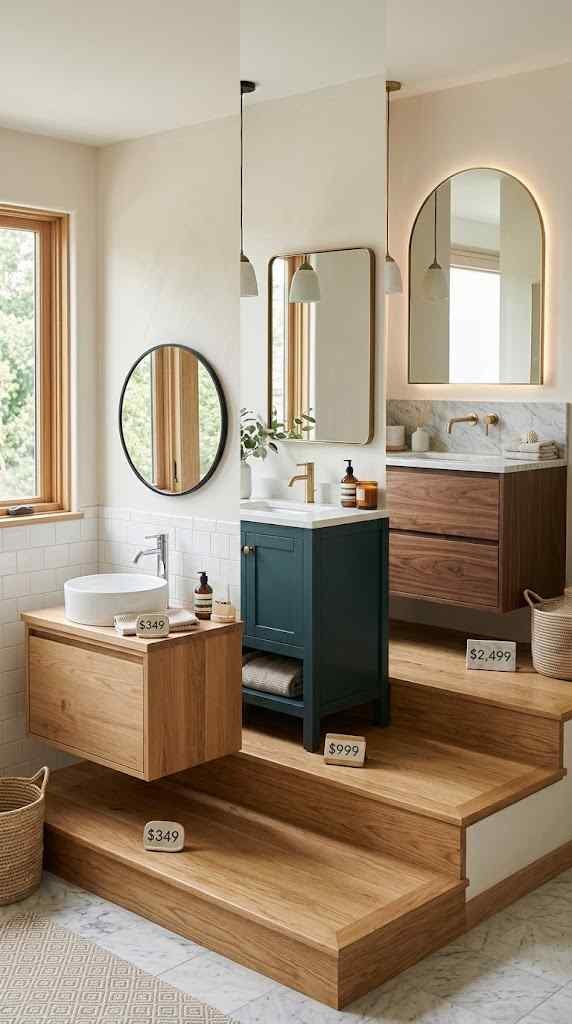
Money talk time, because the range here is wild enough to give you whiplash. A basic ready-to-assemble vanity can run under a couple hundred dollars, while a custom double vanity with stone tops and soft-close everything climbs well past a few thousand. Knowing where your needs sit on that spectrum saves you from both overpaying and under-buying.
Roughly speaking, here’s how the tiers shake out:
● Budget ($150–$500) off-the-shelf single vanities, laminate or cultured-marble tops, MDF cabinets. Fine for guest baths and rentals.
● Mid-range ($500–$1,500) plywood construction, quartz or granite tops, soft-close drawers. The sweet spot for most main bathrooms.
● Premium ($1,500–$4,000+) solid wood, natural stone, double sinks, custom sizing and finishes.
FYI, the vanity price you see rarely includes the faucet, the sink (if it’s sold separately), or installation. Those extras sneak up fast and can add a few hundred dollars before you’ve even turned on the water. Budget for the whole package from the start so the final bill doesn’t ambush you.
My honest take? Spend your money on the cabinet construction and the countertop, and save on the mirror and hardware. You can always swap a mirror or replace cheap knobs later, but you can’t fix a swollen MDF cabinet without buying the whole thing again. Put the dollars where the water lives.
Installing It Yourself vs. Calling in a Pro
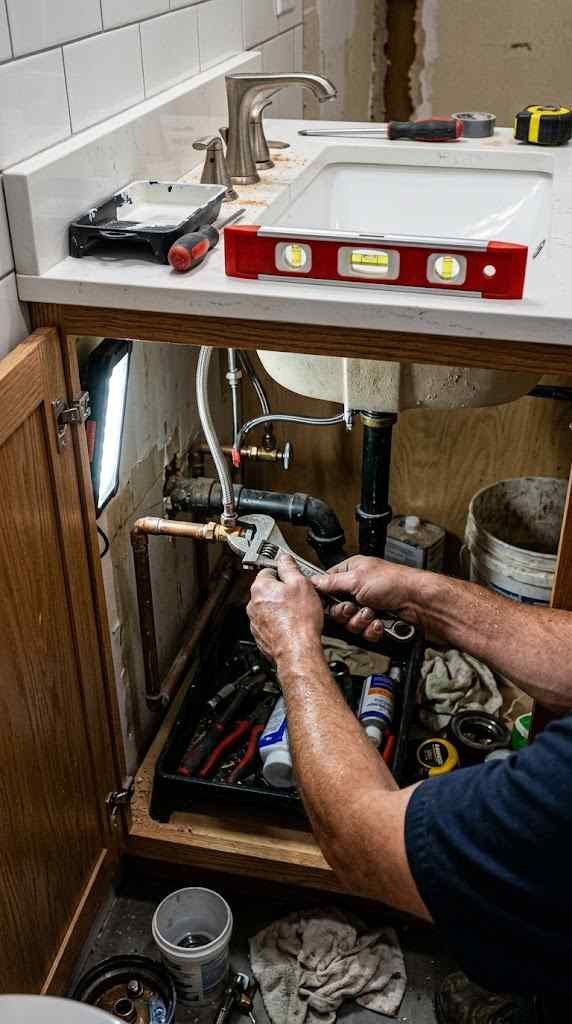
Here’s where I watch a lot of confident weekend warriors get humbled. Swapping a freestanding vanity for a similar-sized one, with the plumbing already in place, is a very doable DIY project if you own a level, a wrench, and a healthy dose of patience. Moving plumbing, cutting into walls, or hanging a floating vanity is a different animal entirely.
A basic like-for-like vanity swap usually breaks down into a handful of steps:
● Remove the old vanity, scraping away the caulk that’s fusing it to the wall
● Set the new cabinet, checking it’s level and shimming where the floor lies
● Reconnect the plumbing, then attach the top and sink
● Caulk the seams where the counter meets the wall to block water sneaking behind
Sounds tidy on paper, doesn’t it? In practice, old shut-off valves seize, drains never quite line up, and floors are never as flat as they pretend to be. If you’re relocating pipes or the vanity has to be anchored into wall studs, pay a plumber or a contractor and sleep soundly. A leak behind a vanity can rot a floor for months before you ever spot the damage that’s not the place to prove a point.
Finishes and Details People Skip Right Up Until They Regret It
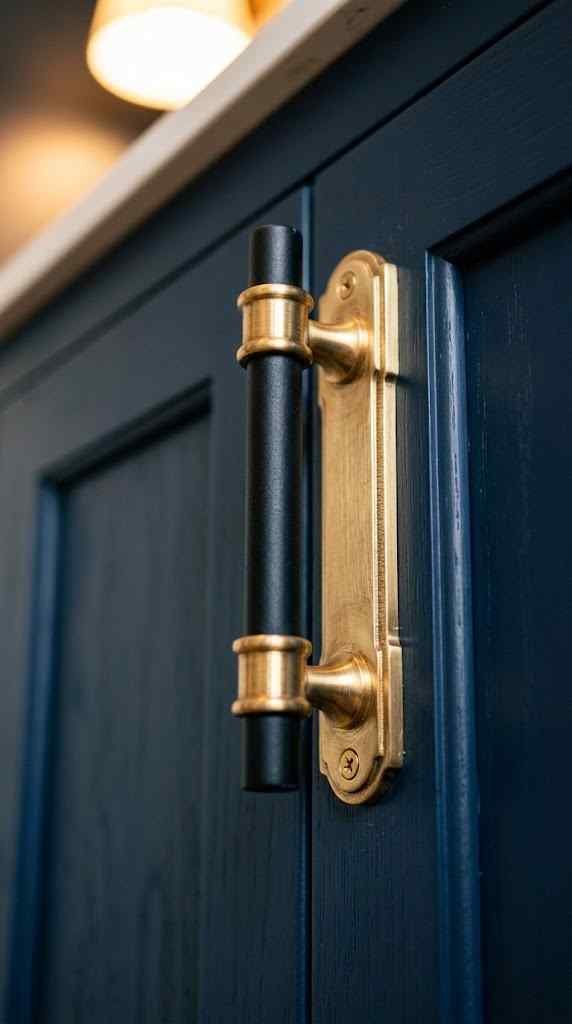
The big decisions get all the attention, but the small ones are what you actually touch a hundred times a week. Cabinet finish, hardware, faucet style, and lighting quietly decide whether your bathroom feels intentional or thrown together. These are cheap to get right and annoying to fix once installed.
Cabinet color sets the mood more than any single choice. Warm woods and deep navy or forest-green vanities have muscled in on the endless-white trend, and they hide water spots and toothpaste splatter far better than glossy white ever will. A matte finish forgives fingerprints; a high-gloss one broadcasts every smudge like a billboard.
A few finishing touches genuinely earn their spot:
● Matte black or brushed brass hardware to give a plain cabinet some personality
● A widespread or wall-mounted faucet matched to your vanity’s proportions
● Task lighting at eye level rather than a single ceiling bulb casting spooky shadows
● A backsplash strip to protect the wall from the inevitable splash zone
The finish you pick also has to survive humidity and cleaning sprays, so skip anything that says “wipe gently with a dry cloth only” unless you enjoy living dangerously. Durable, washable finishes look good on day one and still look good after a thousand sponge-downs which is the whole game.
The Vanity Mistakes I See People Make Over and Over
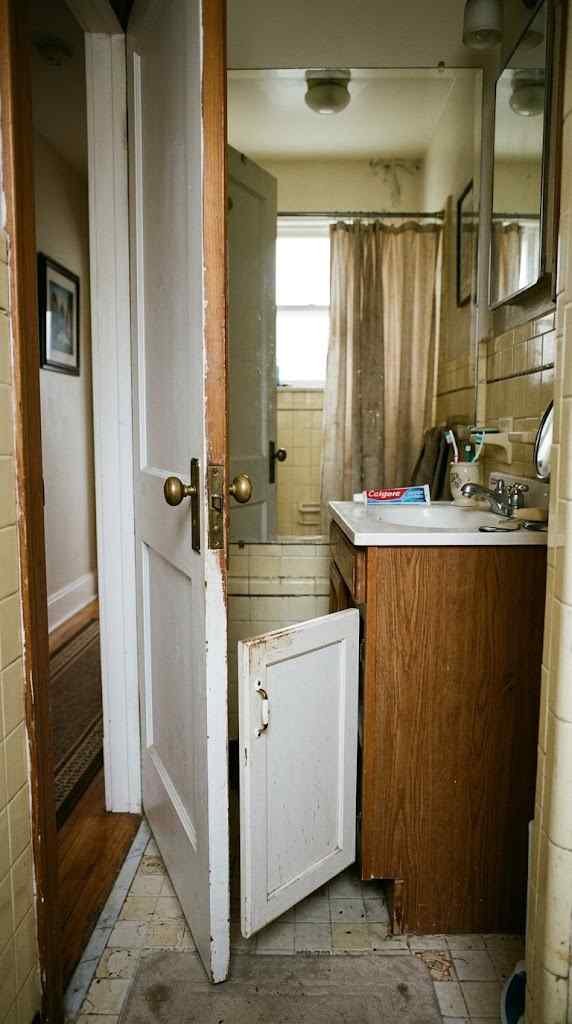
After watching enough friends stumble through bathroom projects, the same handful of regrets keep surfacing. None of them are exotic they’re the boring, avoidable slips that come from rushing the decision or trusting a photo over a tape measure. Dodge these and you’re already ahead of most shoppers.
The greasiest banana peels tend to be:
● Skipping the height check standard vanities sit around 32 inches, but taller “comfort height” ones near 36 inches spare your back if you’re on the taller side
● Forgetting the faucet type a vessel sink needs a tall faucet, and a wall-mounted faucet needs plumbing set into the wall before tiling
● Ignoring the door swing a vanity that blocks the bathroom door from opening fully is a daily tiny tragedy
● Choosing looks over ventilation a sealed-tight cabinet in a steamy room traps moisture and grows problems you can’t see
Nora hit two of these before she hit her stride, and she’d be the first to tell you the boring checks matter most. Slow down for ten minutes with a measuring tape and you’ll save yourself a return trip and a bruised ego. Trust me on that one.
FAQ’s
How tall should a bathroom vanity be?
A standard bathroom vanity sits near 32 inches, but comfort-height models around 36 inches suit taller people.
Can I install a bathroom vanity myself?
Yes, a like-for-like swap with existing plumbing is doable, but leave relocated pipes or floating vanities to a pro.
What countertop material lasts longest in a bathroom?
Quartz wins for most bathrooms it’s nonporous, stain-resistant, and needs zero sealing or fussy maintenance.
How much space does a double vanity need?
A double bathroom vanity needs at least 60 inches, though 72 gives each person real elbow room.
Are floating vanities good for family bathrooms?
Not really floating vanities look great but sacrifice the deep lower storage busy family bathrooms actually need.
CONCLUSION
The bathroom vanity rarely gets a starring role in renovation daydreams everyone fusses over tiles and tubs while the hardest-working cabinet in the house waits patiently in the corner of the plan. That’s backwards. Measure first, respect the humidity, buy the sturdiest build your budget allows, and match the storage to your real habits rather than an aspirational fantasy version of yourself.
Nail those four things and you’ll barely think about your vanity again, which is honestly the highest compliment a piece of bathroom furniture can earn. So before you fall for the prettiest one on the screen, ask the boring question first: will this actually make tomorrow morning easier? If the answer is yes, buy it your future self, coffee in hand, will quietly thank you.