
Bedroom chandelier
By Anna Grace | 5 April 2026
The Bedroom Chandelier Trend Nobody’s Talking About (But Should Be)
Most people hear “bedroom chandelier” and immediately picture a stuffy Victorian mansion or a wedding venue. They assume it’s too formal, too much, too impractical for a place where you’re just supposed to sleep and maybe scroll your phone at midnight. Here’s the truth nobody wants to say out loud: they’re dead wrong, and a chandelier might be exactly the lighting statement your bedroom desperately needs.
I used to think the same thing. Then I hung one in my guest bedroom, and suddenly people stopped saying “cute room” and started saying “wow, your bedroom is actually nice.” That shift taught me something the right chandelier transforms how a space feels, not just how it looks. It’s the difference between a bedroom that’s functional and a bedroom you actually want to spend time in.
Bedroom Chandeliers Aren’t Your Grandmother’s Lighting
Here’s where the misconception usually dies: modern bedroom chandeliers barely resemble those crystal monstrosities gathering dust in period estates. Today’s options range from delicate brass fixtures with geometric shapes to minimalist pendant clusters to soft fabric drum designs that feel almost zen-like.
The shift in design has been massive. Contemporary bedroom chandeliers come in materials like smoked glass, matte black metal, rattan, and even concrete. Some hang low and intimate, while others keep to the ceiling for a subtle accent. The chandelier has basically reinvented itself, and it’s no longer screaming “formal” the second you walk in it’s just creating sophisticated lighting that happens to look good doing it.
IMO, the biggest reason people dismiss them is outdated mental pictures. When you actually see what’s available now, the idea of hanging one starts making real sense. 🙂
The reinvention extends beyond just aesthetics. What’s changed is the entire philosophy behind bedroom lighting design. Designers now recognize that a bedroom serves multiple functions it’s not just a sleep sanctuary anymore. People work from bed, video call from their bedroom, read for hours, get ready for events, and create content in that space. That functional shift demanded lighting that could adapt and look intentional doing it.
The materials revolution matters too. You’ve got sustainably sourced wood options, recycled glass fixtures, and even lab-grown crystal that performs identically to mined versions but costs less and carries zero ethical baggage. Brass hasn’t gone anywhere it’s cycled back into favor because it genuinely ages beautifully, developing a patina that feels curated rather than neglected. Meanwhile, matte finishes replaced high-polish everywhere because they photograph better, scatter light more forgivingly, and hide fingerprints like champions.
What really blew my mind researching this was discovering that hospitality designers the people behind luxury hotels started specifying bedroom chandeliers almost a decade ago. They weren’t doing it for period rooms or maximalist spaces. They were using them in modern, minimal hotel bedrooms specifically because guests responded to them emotionally. People felt more relaxed, more cared-for, more like their stay mattered. That’s not nostalgia. That’s genuine human psychology meeting good design.
The design shift also means installation footprints changed. Older chandeliers needed massive ceiling heights and reinforced joists. Modern options mount flush or semi-flush, work in rooms with 8-foot ceilings, and don’t require structural gymnastics. Some even plug in rather than hardwire, meaning renters can install and remove them without landlord drama. The accessibility expanded massively, which is why more people are actually considering them now.
The color story shifted completely too. Traditional chandeliers came in predictable palettes: brass, bronze, or crystal clear. Now you’re choosing from blush pink, deep forest green, soft gold, matte black, natural wood tones, and even bolder options like jewel tones and metallic finishes. This explosion of color options means your chandelier can actually drive your whole bedroom’s color story instead of just fitting into whatever already existed.
Size, Placement, and the Math That Actually Matters

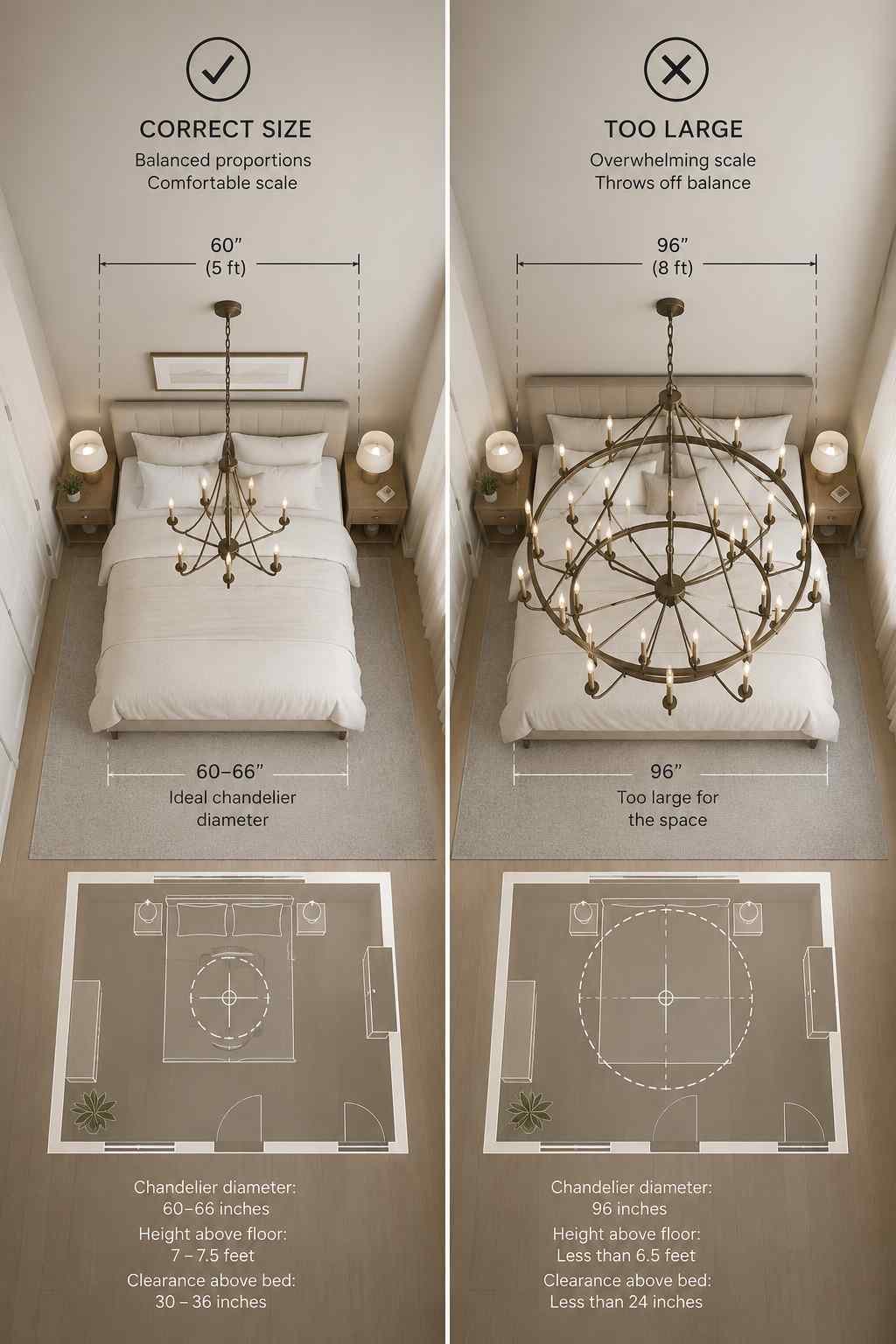
Getting the dimensions right is where most people stumble. Your chandelier needs to play nice with the room too big and it dominates like a disco ball, too small and it just looks like something you forgot to remove.
A practical starting point: measure your bedroom width in feet, then convert that to inches. That’s roughly your ideal chandelier diameter. A 12-foot-wide room? Aim for something around 12 inches across. If your ceiling sits above 9 feet, you can push slightly larger.
Placement matters equally. Center it in the room if possible, or directly above the bed for dramatic effect (though keep it mounted high enough that you won’t hit your head sitting up). Height-wise, aim for 7 to 8 feet from the floor close enough to feel present, far enough that it doesn’t create weird shadows across your face at night.
The golden rule: your chandelier should enhance the room’s proportions, not fight them. A small guest bedroom needs restraint. A sprawling primary bedroom can handle something with more presence.
Beyond the basic diameter calculation, there’s an entire secondary conversation about proportion that most people skip. Your ceiling height relative to your room width creates an optical illusion that most people don’t account for. A 12-foot-wide room with a 9-foot ceiling reads differently than a 12-foot-wide room with a 10-foot ceiling, and your chandelier choice needs to respect that perspective shift.
Here’s something nobody mentions the number of arms or bulbs matters for visual weight. A single-pendant chandelier reads as delicate and modern. A six-arm chandelier with traditional shades feels fuller and more substantial. If your room already contains chunky furniture or bold architectural features, you might need that visual weight to balance. If your space is sparse and minimal, a delicate fixture prevents overcrowding the visual field.
The height calculation deserves its own deep dive too. Standard ceiling-mounted fixtures (8-foot ceilings) typically hang 80 to 82 inches from the floor. But that’s a guideline, not a law. Some designers intentionally hang chandeliers lower at eye level or just above to create intimacy and drama. This works brilliantly if you’re not at risk of head-bonking and if your room layout supports it. The trade-off is that lower-hanging fixtures create stronger shadows and feel more enclosed.
Asymmetrical placement opens up options too. If your bedroom has a distinctive layout maybe your bed isn’t centered, or your architecture is irregular centering the chandelier doesn’t always work. Some of the most stunning modern bedrooms hang their chandelier off-center, above a reading nook or creating visual interest in an unused corner. It’s unconventional enough that it signals intentional design rather than defaulting to the obvious choice.
The electrical infrastructure deserves consideration that nobody gives it. Existing ceiling boxes determine placement. If you’re adding a chandelier and no box exists, you’re either running new wiring or working with what’s there. This isn’t a dealbreaker, but it impacts budget and flexibility. If you’re renting, knowing where existing boxes sit helps you avoid expensive rewiring conversations with landlords.
One final placement note: consider sightlines from key vantage points. If you’re lying in bed, what does the chandelier look like from that angle? From your doorway? From the mirror where you get ready? The fixture should be aesthetically pleasant from multiple perspectives, not just when someone’s standing in the center of the room.
Light Quality Changes Everything About How Your Bedroom Actually Feels
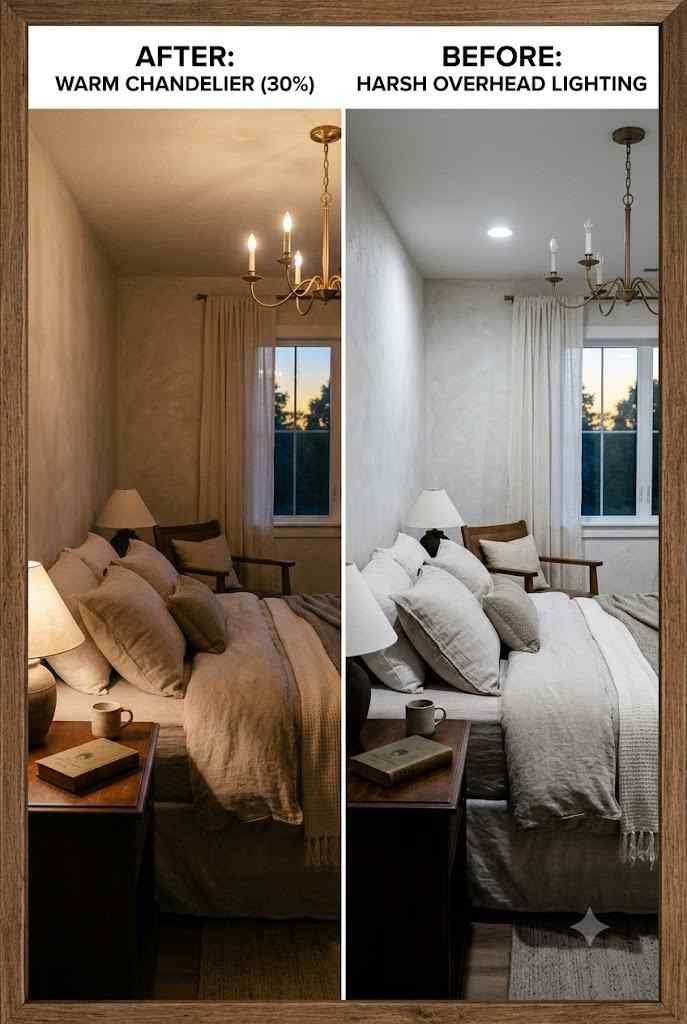
This is the part nobody talks about enough: it’s not about brightness, it’s about how the light moves. A chandelier distributes light differently than a standard ceiling fixture or bedside lamps. Depending on the design, you get warm pools of light, subtle sparkle, or diffused glow and that fundamentally alters mood.
Why does that matter? Because your bedroom isn’t just a place to sleep it’s where you unwind, maybe read, get dressed, work from home, or just exist. If your lighting setup is harsh and flat, the whole room suffers. A well-designed chandelier adds layers.
Consider bulb choices too. Warm white (2700K) feels cozy and intimate. Cool white (4000K) gives clarity without coldness. Dimmable bulbs let you shift the vibe depending on what you’re doing. Some people run their chandelier at 30% in the evening and dial it up only when they need full visibility.
Here’s a question that might change how you think about bedroom lighting what mood are you actually trying to create? That answer should guide your chandelier choice more than anything else.
The science behind light temperature reveals why people sometimes feel inexplicably uncomfortable in bedrooms with incorrect lighting. Your circadian rhythm responds to color temperature cooler light signals “stay alert” while warmer light signals “wind down.” A chandelier with warm-temperature bulbs in the evening actually helps your body prepare for sleep, while cool-temperature lighting does the opposite. This isn’t aesthetic preference; it’s biology.
The direction light travels matters significantly too. Chandeliers with downward-facing shades create task lighting suitable for reading or getting ready. Chandeliers with exposed bulbs or upward-facing elements bounce light off ceilings, creating ambient fill that feels less directional and more enveloping. Some fixtures do both simultaneously, offering flexibility. If you’re a reader, downward-focused light prevents eye strain. If you’re prioritizing ambiance, omnidirectional light serves better.
Dimmer compatibility is crucial but often overlooked. Not every bulb works with every dimmer, and cheap dimmers paired with certain LEDs create flickering nightmares. Warm-dim bulbs which shift color temperature as they dim create the most natural progression from bright task lighting to romantic low-light evenings. Spending an extra fifteen dollars on the right bulbs and dimmer prevents months of frustration.
The relationship between chandelier design and light diffusion is literally physics. Frosted or translucent shades scatter light evenly. Clear glass directs light more intensely. Solid shades with openings channel light specifically. Your choice shapes how light behaves in the room. A fixture with a drum shade diffuses light throughout the room softly. A fixture with downward shades concentrates light on whatever’s below, creating layers you can control.
Layered lighting strategy amplifies what a chandelier can do. Your chandelier might be the primary ambient source, but pairing it with bedside reading lights and possibly a subtle wall sconce creates flexibility. You’re not relying entirely on the chandelier for all lighting needs you’re using it as the sophisticated centerpiece of a coordinated system. This approach gives you options: bright and functional for getting dressed, warm and low for unwinding, dimmed for late-night scrolling without waking your partner.
Many people don’t realize they can use their chandelier strategically even when it’s not the only light. Running just the chandelier at 50% with bedside lamps off creates different mood than running both together. This switching lets you preserve the fixture’s visual statement while adapting function to your immediate needs.
Budget Options Exist (They Really Do)
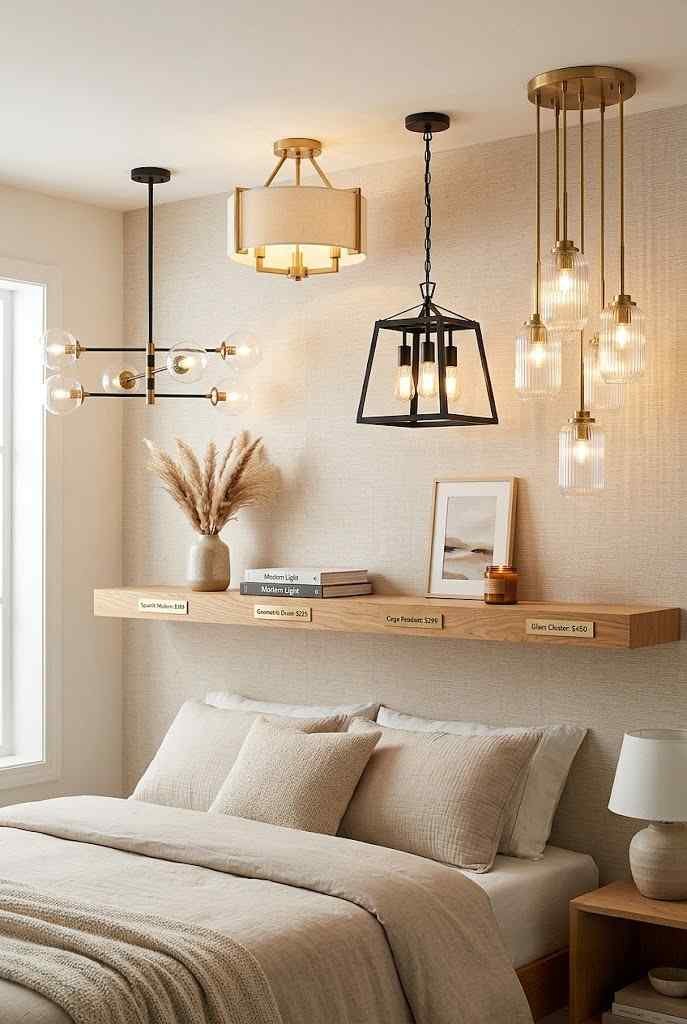
Budget chandeliers aren’t some mythical creature. FYI, you can find solid mid-range options at places like Wayfair, West Elm, and even Target that cost between $150 and $400. They’re not investment pieces, but they’re also not garbage they’ll last years with normal use.
If you want something more premium, the $400–$1,500 range opens doors to brands with excellent build quality and design. For serious luxury collectors, $2,000+ buys you designer pieces or handcrafted fixtures that become heirloom-level statements.
The thing is, you don’t need to spend four figures to get something that works. A thoughtfully chosen $250 chandelier beats an expensive one that clashes with your space. Style and fit matter infinitely more than the price tag.
Quick budget breakdown:
● Budget-friendly: $100–$300 (basic designs, reliable function)
● Mid-range: $300–$800 (more distinctive styles, better materials)
● High-end: $800+ (luxury brands, artisan craftsmanship, collector-quality)
The budget conversation changed dramatically once mass-market retailers realized people wanted bedroom chandeliers. Five years ago, affordable options meant compromising on design. Now brands at every price point genuinely understand contemporary aesthetics, and you’re not forced to choose between cost and coherence.
Where you shop dramatically affects both price and quality. Direct-to-consumer brands (manufacturing and selling themselves) often undercut traditional retail by 30-40%. Overstock websites offer previous-season pieces at steep discounts without quality compromises. Vintage and secondhand options estate sales, Facebook Marketplace, Etsy provide authentic designer pieces for fractions of original retail, though you’re hunting rather than browsing curated collections.
The cost-per-month calculation changes perspective. A $300 chandelier installed in your bedroom where you spend roughly eight hours daily across fifteen years costs you $0.0007 per hour of use. That framing makes investment feel different you’re not just buying a light fixture, you’re creating an environment for thousands of future hours.
Quality indicators worth knowing: solid brass costs more than brass-plated but lasts indefinitely without finish degradation. Hardwired installation (permanent) costs more initially than plug-in options but offers cleaner aesthetics. Weighted fixtures feel substantial and signal durability. Flimsy fixtures with thin metal and cheap socket components fail faster and feel wrong in hand even before installation.
The warranty situation matters more than people realize. Premium brands offer five to ten-year warranties covering manufacturing defects. Budget options sometimes offer nothing. That gap reflects confidence in longevity. A brand willing to guarantee their fixture for a decade believes it’ll last. A brand offering no warranty is hedging against failure.
Financing options exist too, and nobody talks about them. Many furniture and lighting retailers offer 0% financing for 12-24 months on purchases above certain thresholds. This means a $600 chandelier becomes $50 monthly with no interest, making premium options suddenly accessible. Some even have seasonal promotions (holiday sales, clearance events) where you save 30-50% without quality compromise.
The perceived value versus actual value gap is real. A chandelier people compliment constantly but costs $200 delivers better value than one costing $800 that draws no comments. Value isn’t about price it’s about impact relative to cost.
Installation Is Less Intimidating Than You Think

Here’s where people get nervous, but honestly, it’s manageable. Most chandeliers come with installation hardware and instructions. If your bedroom already has an electrical box in the ceiling, you’re halfway there. If not, you might need an electrician to run wiring, which adds cost but isn’t complicated.
The typical process: Turn off power at the breaker, disconnect the old fixture, attach a mounting bracket to the ceiling box, wire the new chandelier, secure the fixture, add bulbs, and flip the power back on. Average installation takes 30 minutes to an hour if you’re comfortable with basic electrical work.
Not comfortable? Electricians usually charge $150–$300 for this job. Worth the peace of mind.
One practical note: make sure your ceiling can handle the weight. Most bedroom ceilings manage anything under 50 pounds without issue, and most chandeliers fall well below that. Check your fixture’s weight spec before buying if you’re nervous.
The installation conversation often includes a “can you do it yourself” question. The honest answer depends on your electrical comfort and ceiling situation. If your bedroom has existing ceiling electrical boxes, you’re looking at a moderate DIY project. If you’re running new wiring from scratch, calling a professional prevents potential code violations and insurance headaches.
Safety considerations aren’t dramatic but they’re non-negotiable. Working with electricity, suspended fixtures, and overhead work requires respecting basic protocols. Your breaker panel has a shut-off switch for a reason use it. Voltage testing tools confirm power is actually off before you touch anything. Securing the fixture properly prevents future ceiling damage or worse, a chandelier falling.
The hidden aspect nobody discusses: ceiling composition affects installation. Plaster ceilings crack differently than drywall. Popcorn ceilings contain asbestos in older homes (pre-1980s), which requires professional removal before work. Cathedral ceilings or vaulted designs complicate mounting. Your electrician accounts for these variables automatically, but DIYers often don’t.
Timing matters too. If you’re renovating or painting your bedroom anyway, installing the chandelier after those projects finish prevents damage to the fixture. Installing beforehand means protecting it during construction, which is annoying. Coordination prevents frustration.
The code conversation varies by location but it’s worth understanding. Electrical codes specify how chandeliers must be secured, wired, and grounded. Inspectors in some jurisdictions verify installation. Professionals automatically comply. DIY installations might not, which creates issues if you ever sell or file insurance claims.
Hardwired versus plug-in represents a meaningful choice. Hardwired looks seamless no visible cord, clean aesthetic, permanent installation. Plug-in options offer flexibility (renters love this) and simpler installation but require a nearby outlet or visible cords. Your living situation and aesthetic preferences determine which serves better.
The post-installation adjustment period matters. New chandeliers sometimes wobble slightly until everything settles this is normal, not a failure. Bulbs might require a few on-off cycles to stabilize. If something feels genuinely wrong (excessive wobbling, electrical smell, no power), you address it immediately. Minor settling stops after a week or two.
Make It Work With Your Existing Decor

The beauty of modern bedroom chandeliers is their range. Minimalist room? Pick something geometric and clean. Eclectic vibe? Go bold with color or unusual materials. Traditional aesthetic? You’ve got endless options. Your chandelier should feel like it belongs, not like something from a completely different design universe.
Think about what’s already in your room wall color, other fixtures, furniture style, textiles. Your chandelier should either complement those elements or create an intentional contrast. Brass works beautifully with warm wood and earth tones. Black metal plays well with industrial or contemporary setups. Rattan feels natural with bohemian or coastal aesthetics.
The mistake people make is choosing purely for looks and then realizing it visually conflicts with everything else. Spend five minutes imagining your chandelier hanging there before you buy. Does it enhance the room’s existing mood, or does it feel like an odd addition?
The design integration process starts with honest assessment of what’s already working in your space. Take photos of your bedroom from multiple angles. Look at the colors, materials, and styles currently present. Is your room cohesive or eclectic? That answer guides chandelier choice significantly. Cohesive spaces demand chandeliers that extend existing aesthetics. Eclectic spaces can handle chandeliers that contrast intentionally.
The metal-matching conversation deserves attention. Your bedroom probably contains other metal finishes door hardware, picture frames, light fixtures, furniture legs. Matching these creates visual harmony. If your room is primarily warm brass tones, adding a matte black chandelier creates deliberate contrast that either works beautifully or feels disconnected depending on overall design. Matching metal finishes usually plays safer, but intentional contrast signals sophisticated design choices.
Scale relationships extend beyond just the chandelier itself. Consider how it relates to your bed size, nightstand proportions, and other furniture. A massive statement chandelier over a twin bed looks absurd. A tiny delicate fixture above a king bed disappears. Proportion creates harmony that casual observers might not consciously notice but definitely feel.
The ceiling color plays a hidden role. A dark ceiling makes chandeliers pop visually and creates dramatic contrast. A white ceiling creates seamless integration where the chandelier becomes the focal point. A colored ceiling (accent walls extending to the ceiling) needs a chandelier that complements or contrasts intentionally. This detail gets overlooked constantly but significantly impacts visual impact.
Textile coordination matters more than people expect. Your chandelier doesn’t exist in isolation it exists above and around your bedding, curtains, and furniture upholstery. A delicate crystal chandelier above rough linen or heavy velvet creates tension that might work beautifully or feel contradictory. Texture relationships matter. A modern glass chandelier above patterned bohemian bedding needs thoughtful grounding or it reads chaotic.
The wall treatment changes everything too. Textured wallpaper, paneling, or artwork behind your bed creates visual interest that influences chandelier choice. Minimal walls work with more decorative chandeliers. Busy walls work better with simpler fixtures that don’t compete. Some people paint an accent wall specifically to create a backdrop that makes their chosen chandelier shine.
Lighting these decisions is genuinely helpful. Many retailers offer AR apps where you visualize fixtures in your space before buying. Photographs don’t capture the full picture seeing a chandelier in your actual bedroom lighting and color context reveals how it truly feels. Ordering, trying, returning is expensive, but knowing before you buy matters.
FAQ’s
What’s the difference between a plug-in and hardwired bedroom chandelier, and which is better?
Absolutely. Use whites, silvers, and one accent color as your bHardwired looks seamless and permanent plug-in offers flexibility and easier installation. Renters prefer plug-in versions. Plug-in fixtures need nearby outlets or visible cords, while hardwired requires professional installation but provides cleaner aesthetics and stays put permanently.ase, then add Y2K through minimal tech accents and strategic lighting pieces only.
Are LED bulbs safe to use with dimmer switches in bedroom chandeliers?
Most modern LEDs work fine, but cheap dimmers cause flickering problems. Buy warm-dim LED bulbs rated for dimming compatibility
How much electricity does a bedroom chandelier actually use compared to regular ceiling lights?
Modern LED bedroom chandeliers use minimal power roughly 15-40 watts depending on bulb count. They’re comparable to standard overhead fixtures or actually cheaper.
Can renters install a bedroom chandelier without landlord permission or permanent damage?
Absolutely. Plug-in chandeliers need zero installation and zero permission since they’re temporary. Hardwired options require landlord approval.
What brightness level should a bedroom chandelier provide for reading and getting ready?
Aim for 500-1000 lumens total output for task lighting like reading or makeup application.
CONCLUSION
Here’s what I’ve learned: your bedroom reflects how much you value your own comfort. Investing in good lighting whether that’s a chandelier or something else is a small way of saying you deserve a space that makes you feel good.
A bedroom chandelier doesn’t need to be about impressing anyone. It’s about creating an environment where you feel calm, inspired, or whatever emotion you want when you walk through that door. If that chandelier delivers that feeling while also looking fantastic, you’ve won the game.
So if you’ve been on the fence about it, stop overthinking. The modern options are brilliant, the installation is straightforward, and the impact on your bedroom’s whole personality is genuinely noticeable. Your room’s been waiting for this upgrade and honestly, so have you. 🙂