
bedroom rug ideas
By Anna Grace | 21 feb 2026
Bedroom Rug Ideas That Actually Transform Your Space
Your bedroom rug makes or breaks the whole vibe before you even walk in. Get this wrong, and you’re staring at a space that feels cold or cluttered every single night. Get it right, and suddenly that room becomes your actual sanctuary instead of just somewhere you crash.
I learned this the hard way when I bought a rug that was technically pretty but completely ignored the proportions of my bed. It looked tiny, exposed awkward floor gaps, and made the entire bedroom feel off-balance. That’s when I realized rugs aren’t afterthoughts they’re foundational design choices that anchor everything else.
The bedroom rug world is bigger than most people think. You’ve got endless colors, textures, sizes, and styles competing for attention. So how do you pick one that actually works?
Measure Your Space Before You Browse
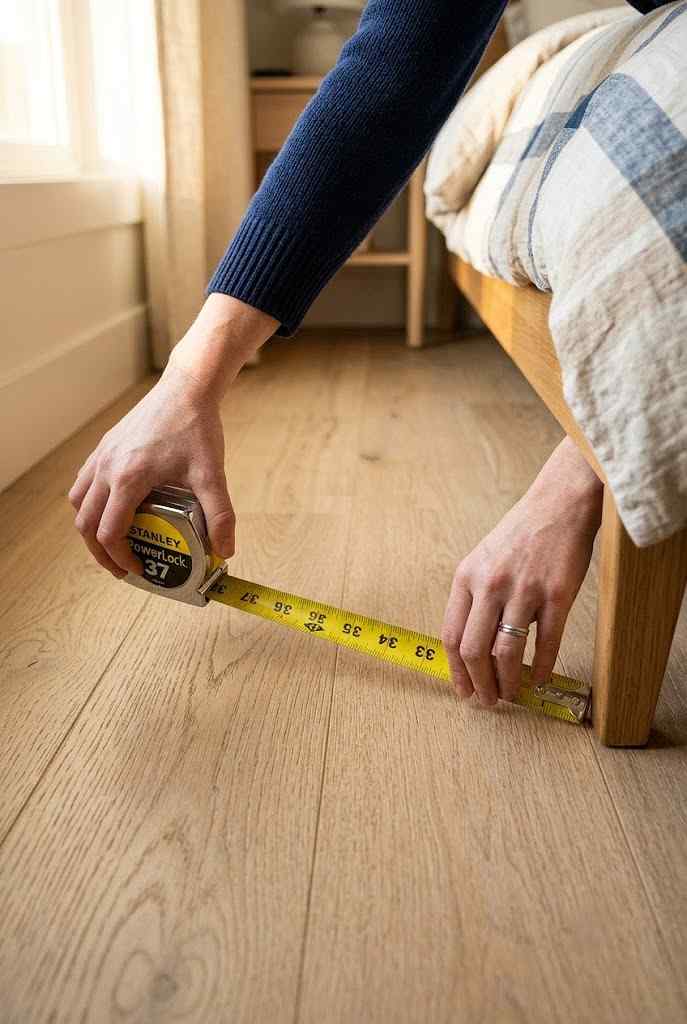
Stop. Seriously, measure first. Most people don’t, and they end up frustrated when their new rug arrives and looks either enormous or puny in real life.
Here’s what actually matters: the right bedroom rug size depends on your bed placement and room dimensions. If your bed sits in the center of the room, you want a rug that extends 2-3 feet on all sides. This creates visual balance and prevents that “floating furniture” problem.
Smaller rooms need different thinking. A 5×7 or 5×8 rug often works beautifully in tight bedrooms because it defines the sleeping area without overwhelming the floor. For larger master bedrooms, an 8×10 gives you breathing room and luxury without swallowing the space.
Why does this matter so much? Your rug should anchor your bed, not compete with it. When the proportions work, your brain registers the room as intentional and finished.
One more thing that catches people off-guard how your furniture placement changes the ideal rug size. If your nightstands sit partially off the rug, that’s actually intentional it grounds the bed without the rug feeling oversized. But if you’re pulling the rug out to where it meets your dresser or under both nightstands, you’re probably going too big. The rug’s job is supporting your sleeping zone, not mapping the entire bedroom geography.
Soft Underfoot Beats Visual Perfection Every Single Time

Here’s an unpopular opinion: how a rug feels matters more than how it looks. FYI, you touch this thing with bare feet multiple times daily.
Natural fiber rugs (wool, jute, sisal) feel incredible but can be scratchy if you have sensitive skin. Synthetic options like polypropylene feel softer and handle moisture way better, which makes them practical for bedrooms that see accidental spills or have pets. They’re also cheaper, so you won’t panic if something goes wrong.
A bedroom rug that’s rough or uncomfortable will drive you crazy. You’ll start avoiding it, which defeats the purpose. Look for something in the 0.5 to 1 inch pile range deep enough to feel luxurious but not so shaggy that it collects dust bunnies like a magnet.
What’s your typical barefoot situation? If you love that plush hotel feeling, lean toward higher pile. If you prefer cool, minimal texture, go low pile or flat-weave.
Temperature matters too, which nobody talks about. Wool rugs feel warm year-round, making them incredible in winter but slightly uncomfortable in humid climates. Synthetic alternatives regulate temperature better and work beautifully in spaces that get hot. If your bedroom stays cool most of the year, you can prioritize softness over temperature control. Test your rug before committing if possible, touch samples in person rather than relying on photos. Your feet will thank you for the extra five minutes spent doing this.
Color Strategy Changes Everything
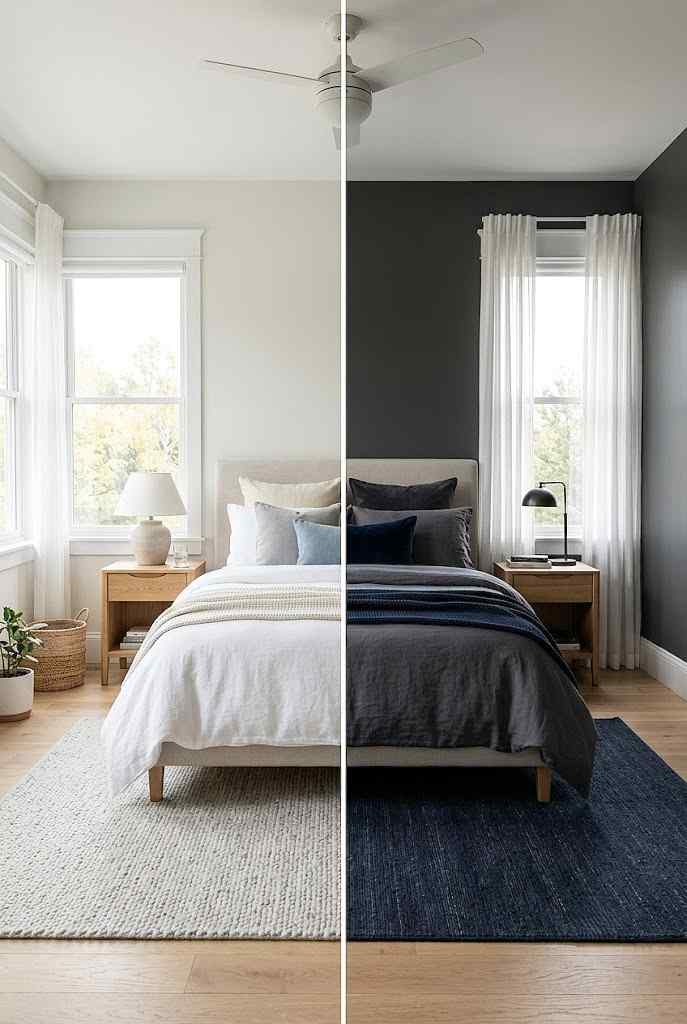
Bedroom rugs work best when they either match your wall palette or create intentional contrast. Half-measures look confused.
If your walls run neutral (whites, creams, soft grays), your rug becomes the color statement. A deep navy, rich terracotta, or even charcoal grounds the space and prevents everything from looking sterile. These darker tones also hide dust better 🙂
Lighter bedrooms can absolutely rock a lighter rug don’t force darkness just because you think you should. Cream, soft gray, or pale blue rugs feel airy and open, especially in rooms with natural light. They make spaces feel bigger.
The pattern question deserves its own thought. Solid rugs work everywhere and never feel dated. Patterned rugs (geometric, botanical, abstract) add personality but demand that everything else in the room respects their vibe. A wild patterned rug next to equally bold curtains and throw pillows reads as chaotic, not intentional
One trick professionals use: pull your rug color from a secondary accent in your room rather than trying to match walls directly. If your curtains have a subtle teal undertone or your throw pillows feature rust tones, echoing those in your rug creates sophisticated harmony without feeling matchy-matchy. This approach gives you more color options while still maintaining visual coherence. Jewel tones (emerald, sapphire, burgundy) work especially well because they feel luxe without requiring a designer budget.
Budget Rugs Don’t Have to Feel Cheap
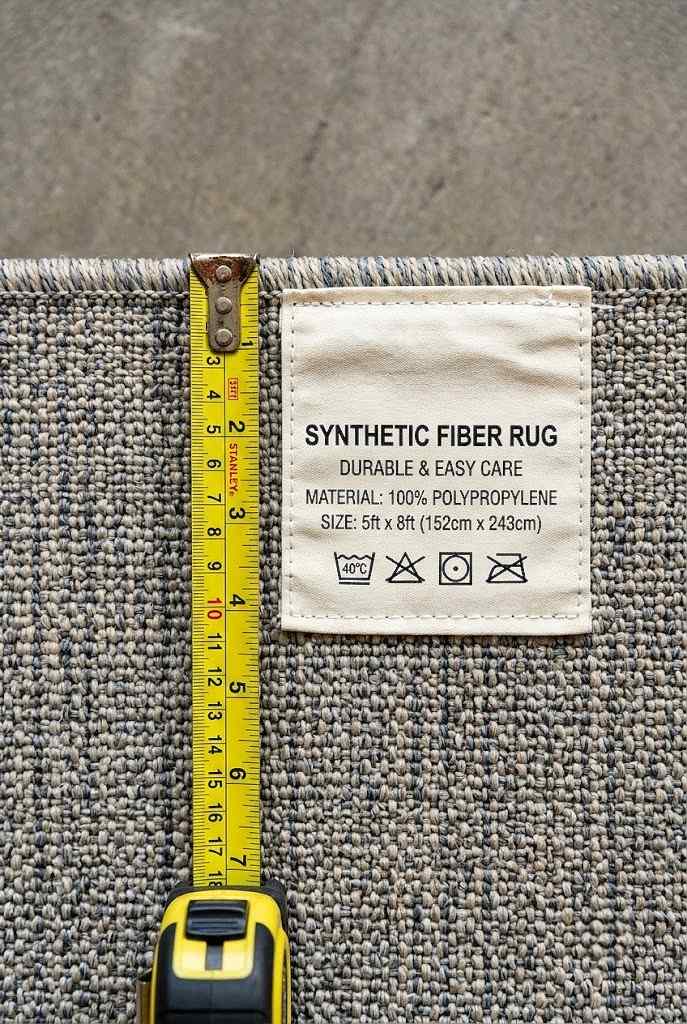
You can find bedroom rugs under $300 that feel genuinely nice. The trick is knowing where budget actually matters and where it doesn’t.
Spend more on pile quality and backing than on brand names. A $250 rug from a home goods retailer often outperforms a $400 rug from a designer brand if the materials are better. Check the rug’s pile density (higher is better) and whether it has a non-slip backing that detail prevents your rug from sliding around and creating a tripping hazard.
Where you can save: synthetic materials work fine and last years if treated well. Where you shouldn’t cut corners: backing and underpadding. A cheap rug with thin backing will buckle and wear unevenly.
Budget-friendly bedroom rug options include polypropylene, polyester blends, and honestly, even some lower-cost wool blends perform great. Your vibe doesn’t require luxury fiber to feel intentional.
Here’s a specific tip that saves money: outlet home stores and online flash sales drop quality bedroom rug prices significantly, sometimes 40-50% off retail. You’re not getting rejected stock you’re buying overstock from previous seasons. The quality is identical to full-price versions. Sign up for alerts from major retailers and check their clearance sections monthly. A $400 rug at 60% off becomes surprisingly accessible without sacrificing durability or feel.
Maintenance Reality Check

A bedroom rug that you can’t maintain is a rug that’ll frustrate you for years. Let’s be real about what you’ll actually do.
If you have pets or kids, stick with something washable or easily stain-resistant. Polypropylene and polyester handle spills without absorbing them immediately. Wool is beautiful but demands professional cleaning, which costs money and time.
Vacuum weekly to prevent dust buildup. A handheld or small upright works fine for bedroom-sized rugs. For spills, blot immediately don’t rub. Most bedroom rugs handle light vacuuming and spot-cleaning for years without looking beat up.
IMO, the best bedroom rug is one you’ll actually maintain. A slightly less attractive rug that you care for beats a gorgeous rug that collects neglect.
Protective treatments exist too. Scotchgard or similar stain-guard applications add maybe $50-80 to your purchase but extend your rug’s life significantly by repelling moisture and preventing stains from setting. For bedroom rugs specifically, this investment pays off because bedrooms see less foot traffic than living areas, meaning the protective coating lasts longer before wearing away. Combined with regular vacuuming and immediate spill response, a treated rug becomes nearly bulletproof against everyday bedroom accidents.
Layering Creates Sophistication

Bedroom rug layering sounds fancy but works surprisingly well. You put a smaller patterned or textured rug on top of a larger neutral base.
This approach gives you three benefits it defines the bed zone more clearly, it lets you introduce patterns without overwhelming the room, and it looks intentionally designed rather than accidental. A 6×9 base with a 4×6 geometric rug on top creates visual depth.
Layering only works when the bottom rug is neutral and larger than the top. If both rugs compete for attention, your bedroom starts looking confused instead of curated. The base rug basically becomes invisible its job is support, not statement.
The texture combo matters as much as the color combo. Pair a smooth, flat-weave base with a textured top rug for visual interest, or reverse it with a plush base and geometric patterned top. This textural contrast prevents the layered look from feeling flat or boring. Avoid pairing two heavily textured rugs that reads as chaotic rather than curated. The goal is creating intentional visual hierarchy, not visual noise.
Where You Place It Makes All the Difference
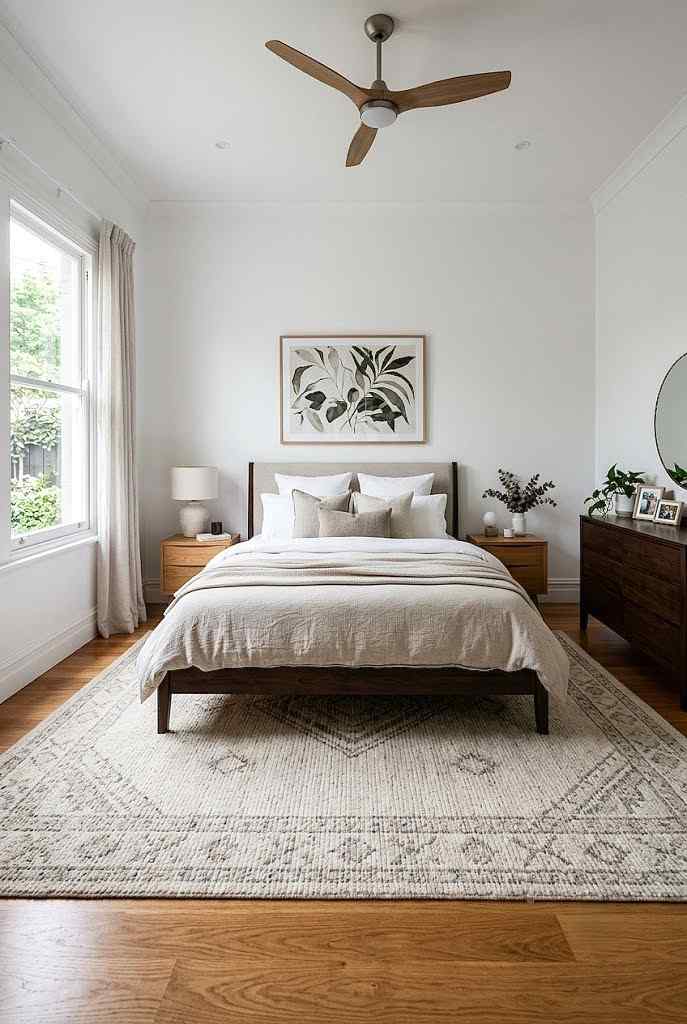
Your rug placement should feel anchored, not random. Beds deserve centered rugs this creates psychological balance even if you don’t consciously notice.
If your bed sits against a wall, position the rug so it extends at least 2 feet from the foot of the bed. This prevents the awkward “rug is too short” feeling that makes a room seem unfinished.
Corner placement doesn’t work for bedroom rugs. That small corner rug doesn’t ground anything and visually fragments the space instead of unifying it.
If you rearrange your bedroom seasonally or rotate furniture, keep your rug position consistent. Moving your rug every few months creates wear patterns and damages the backing where it was previously placed. This is especially true for high-quality wool rugs that develop character over time. Consistency keeps your bedroom rug looking fresh and prevents premature aging in random spots that nobody else will notice but you absolutely will.
FAQ’s
What size bedroom rug works best for a small room?
A 5×7 or 5×8 rug works beautifully in smaller bedrooms, providing definition without overwhelming limited floor space or making the room feel cramped.
Can I use a bedroom rug if I have pets and allergies?
Yes! synthetic polypropylene bedroom rugs resist pet hair, are hypoallergenic, and stay easy to clean compared to natural fiber options that trap allergens.
How often should I deep clean my bedroom rug?
Deep clean your bedroom rug every 12-18 months professionally, or more frequently if you have pets; regular vacuuming prevents buildup between cleanings.
Do bedroom rug pads prevent sliding and damage to flooring?
High-quality non-slip rug pads protect your flooring underneath, prevent the rug from bunching, and stop sliding hazards that create tripping risks during sleep.
What’s the most practical bedroom rug material for humid climates?
Synthetic materials like polypropylene resist moisture better than wool in humidity, prevent mildew growth, and maintain their softness without absorbing excessive dampness.
CONCLUSION
The bottom line: your bedroom rug should make you smile when you walk in barefoot, not make you wonder if you chose wrong. Pick something proportional to your room, pleasant to touch, maintainable, and honest to your color scheme. Everything else follows naturally from there.