
bedroom sconces
By Anna Grace | 19 May 2026
Why Wall Sconces Are the Bedroom Upgrade That Actually Improves Your Sleep
Your bedroom lighting might be sabotaging your sleep, and wall sconces could be the fix you never knew you needed.
Most people light their bedrooms the same way they always have slap an overhead fixture on the ceiling and call it done. But overhead lighting is harsh, unforgiving, and honestly? Terrible for winding down before bed. That’s where bedroom sconces come in. These wall-mounted fixtures aren’t just a design choice; they’re a practical upgrade that changes how your room functions every single day.
I spent years with just a ceiling light and a bedside lamp, wondering why my bedroom still felt incomplete. Once I added sconces on either side of my headboard, everything clicked. The room felt intentional, the lighting was finally flexible, and getting ready for bed became less like a medical exam and more like… well, preparing for sleep.
Let’s dig into what makes sconces different and why your bedroom might actually need them.
What Bedroom Sconces Actually Do (And Why They’re Different)
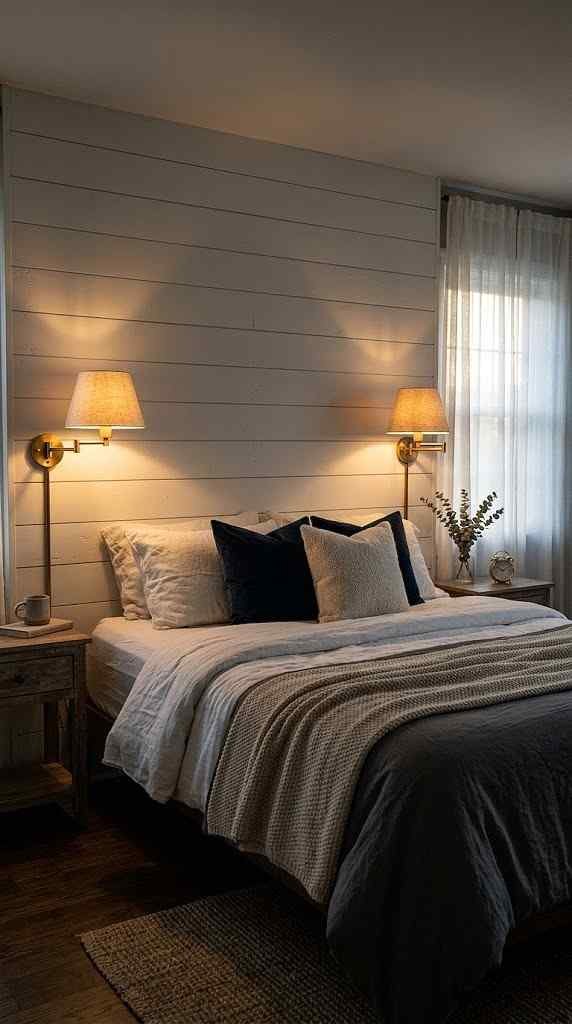
Wall sconces are fixtures mounted directly to your walls, typically flanking your bed or floating near seating areas. Unlike that brutal ceiling light overhead, sconces throw light in specific directions, creating layers instead of blasting your entire room uniformly.
Here’s the real difference: sconces give you control over your lighting mood. You can have just the sconces on for a warm, relaxing vibe, or layer them with other sources when you need to see what you’re doing. Most overhead fixtures force you into an all-or-nothing situation it’s either blindingly bright or completely dark. Sconces break that pattern.
The best part? They work whether you’re renting or own your home. Plug-in sconces exist, so you don’t have to cut into your walls or call an electrician. (IMO, this is hugely underrated.)
Beyond the basic functionality, sconces also solve a storage problem that most bedside setups can’t handle. When your lighting comes from the wall, you’re not taking up valuable nightstand real estate with lamps. This is especially critical if your bedroom is smaller or you’ve already got books, a phone charger, a water glass, and whatever else claiming that limited surface space. Wall sconces let your nightstand actually be a nightstand instead of a lamp stand that happens to have a surface. You get back the inches that overhead lights can’t offer. For apartment dwellers or anyone working with compact bedrooms, this is genuinely game-changing. The wall-mounted approach also means you can position light exactly where it needs to be without worrying about a bulky base or shade interfering with your movement around the bed.
How Sconces Improve Your Sleep and Routine

This is the part that actually matters. Blue light from bright overhead fixtures suppresses melatonin production, which is the hormone that tells your body it’s time to sleep. When you dim the lights using sconces with warm bulbs, you’re signaling to your brain that bedtime is approaching.
Traditional bedside lamps sit too low and often create shadows on whatever you’re reading. Sconces positioned at eye level when you’re lying down provide better, more even illumination without creating that awkward shadow situation. Your eyes don’t have to work as hard, which means less strain and better relaxation before sleep.
The morning routine changes too. Getting ready doesn’t require blasting the overhead lights anymore. Sconce lighting is gentler and more forgiving when you’re not fully awake yet. Plus, if your partner is still sleeping, you’re not flooding the room with harsh light.
The consistency of sconce lighting is another sleep benefit worth highlighting. Bedside lamps create shadows depending on where you’re positioned lean slightly left and the shadow follows. With sconces mounted on both sides, you get balanced illumination regardless of where you’re sitting on the bed. This matters more than it sounds, especially if you share a bed and have different sleep schedules. One person can read by sconce light while the other sleeps undisturbed, because the light is directional and doesn’t flood the entire room. Additionally, the ability to adjust sconce brightness gradually (with a dimmer) triggers your circadian rhythm more naturally than a traditional on-off switch. Your body doesn’t suddenly realize it’s bedtime it shifts gently into that mode as you lower the lights over 10-15 minutes. This subtle progression is closer to how natural sunset works, which means better sleep quality and easier mornings when you gradually brighten them instead of flipping a switch.
The Design Factor, Because They Actually Look Good
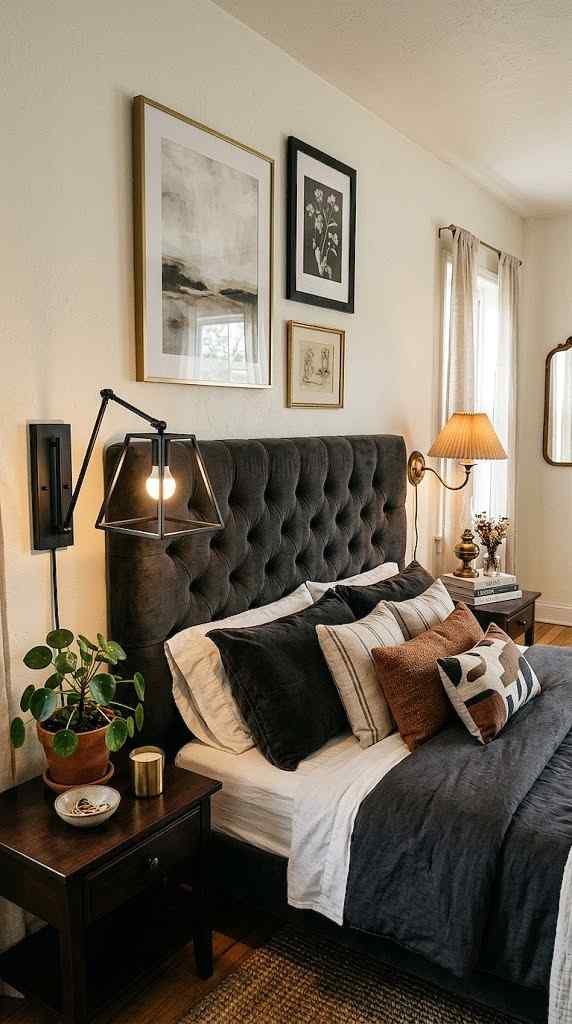
Let’s be honest: a bedroom sconce is also a design statement. That overhead fixture? It’s forgettable. Sconces add character, define the space, and give your room that “intentionally decorated” feel without requiring a full redesign.
The variety is wild. Are you going modern and sleek? Pick brushed brass or matte black sconces with simple shades. Prefer something softer and more traditional? You’ve got warm brass options, fabric shades, and designs that look straight out of a boutique hotel. Industrial, mid-century, farmhouse whatever your style, there’s a sconce that speaks your language.
Sconces also frame your headboard visually. They act like bookends for your bed, making the whole sleeping area feel more defined and intentional. Without them, your headboard just kind of… exists. With them, it becomes a focal point. The difference sounds small until you see it, then you wonder how you lived any other way.
Sconces also serve as unexpected style anchors in a room that might otherwise feel bare. A bedroom with just a bed and some furniture can feel sterile, but add two thoughtful wall sconces and suddenly the space has personality. They’re architectural elements that draw the eye and suggest that you’ve actually considered your environment. This is why hotels and high-end rental properties use them so consistently sconces signal intentionality and sophistication without requiring major furniture investments. Your choices here also communicate your personal aesthetic to anyone entering the room. A sleek industrial sconce says something different than a soft vintage brass fixture, and both say something different than a modern minimalist design. You’re not just buying lighting; you’re making a statement about how you want to live.
Placement and Installation, Don’t Overthink It
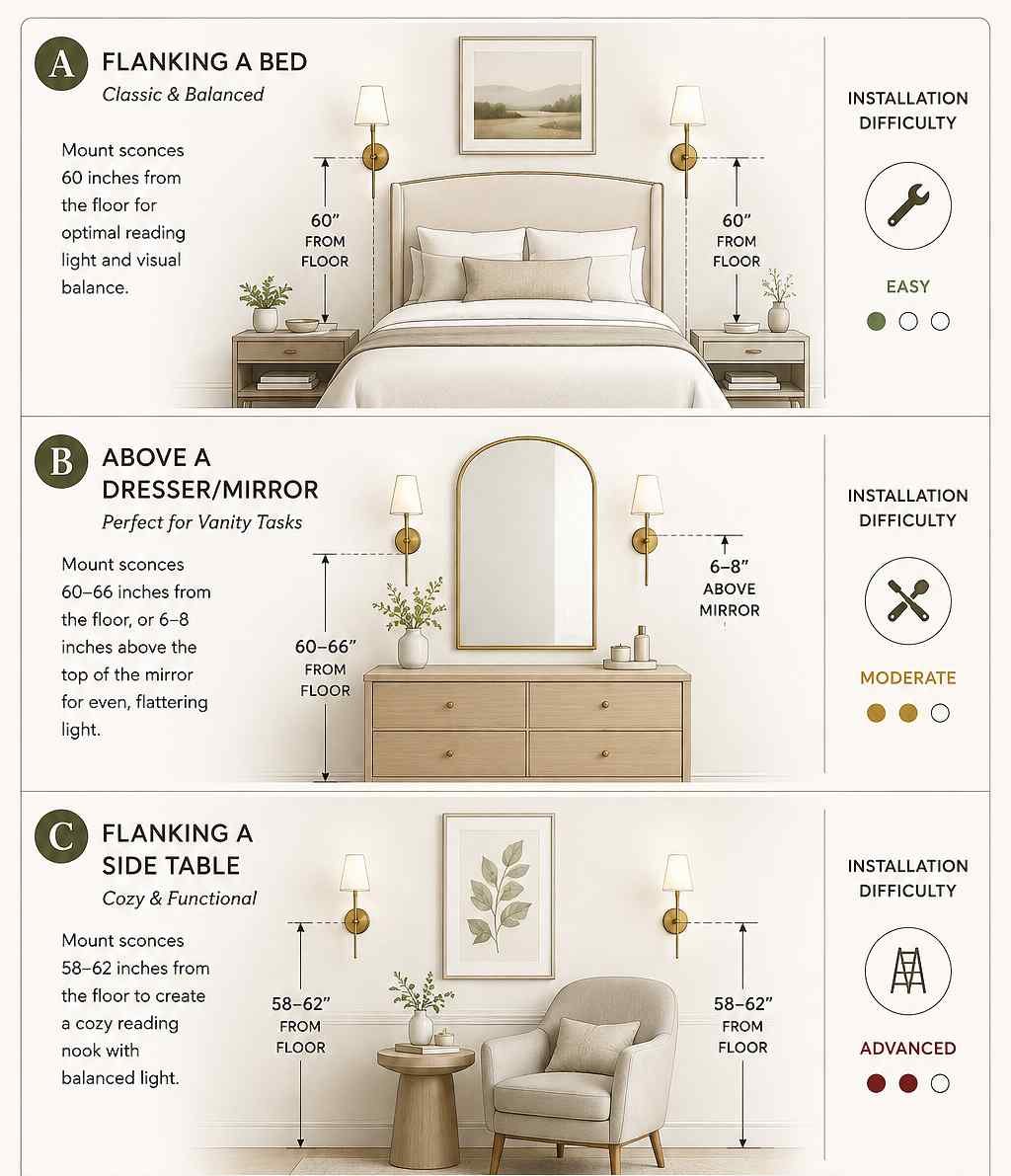
The standard rule is to position sconces about 24–30 inches to either side of your bed headboard, mounted at roughly eye level when you’re lying down (usually around 60–66 inches from the floor). This gives you even illumination and prevents shadows across your face or reading material.
But “standard” doesn’t mean it’s your only option. Side tables in a seating corner? Sconces work there too. Above a dresser? Absolutely. Flanking a mirror? That’s arguably the most flattering setup for getting ready. The key is thinking about where you actually sit and relax in your bedroom, then positioning light to serve those zones.
Installation is the part that makes renters nervous, but it doesn’t have to be. Hardwired sconces require an electrician and wall modifications, but plug-in versions attach with brackets and connect to outlets no permanent damage, and you can take them with you when you move. Honestly, the plug-in option is underrated because it’s flexible and genuinely as effective.
If you’re working with an unusual bedroom layout high ceilings, a non-traditional headboard, or furniture arranged differently sconces adapt way better than standard lighting solutions. Mount them higher on a vaulted ceiling to maintain proportions. Place them at different heights if your headboard is asymmetrical. Use them in pairs somewhere other than the bed if that’s where you actually spend your relaxation time. The flexibility is the real advantage here compared to overhead fixtures, which demand a specific room layout to look right. For the installation question many people have: hardwired sconces typically cost $100-300 per fixture for materials plus electrician fees (usually $150-300 per fixture installation). Plug-in versions run $40-150 per fixture and install themselves. Both are valid depending on your situation, your budget, and how permanent you want the setup to be. Renters absolutely should consider plug-in; homeowners might find hardwired worth it for the clean look and lack of visible cords.
What Actually Makes a Good Bedroom Sconce
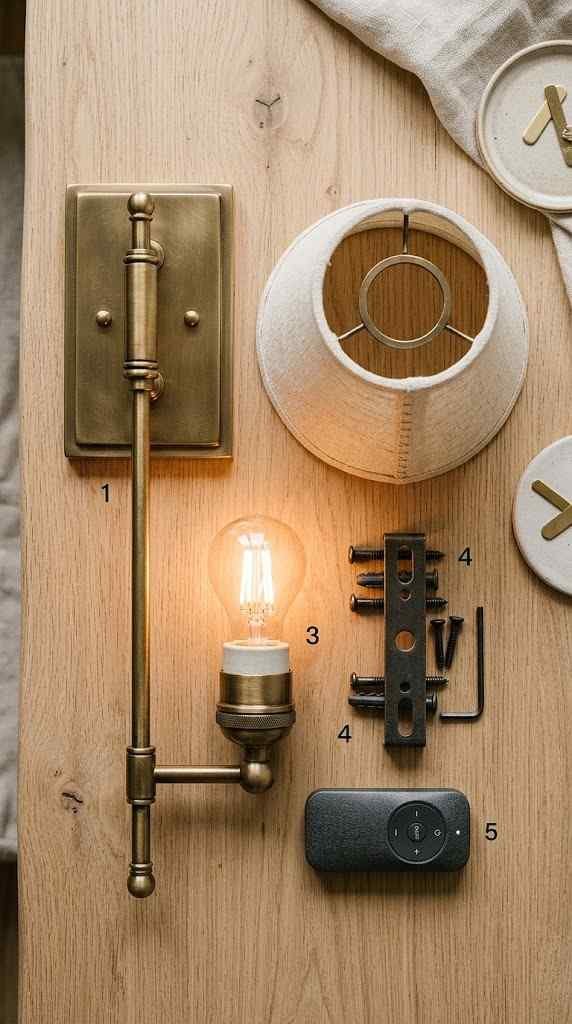
So you’re ready to buy. What separates the “eh” sconces from the ones you’ll love using every single day?
Dimming capability is non-negotiable. You need to be able to adjust brightness from full-on “I’m changing sheets” mode down to a gentle “I’m unwinding” level. This flexibility is what lets sconces truly replace your overhead for most situations.
The bulb matters too. Get warm white bulbs (2700K color temperature) for your bedroom. Anything cooler and bluer will work against your sleep cycle. LED bulbs are efficient and stay cool, which is important when they’re mounted near walls and furniture.
Shape and shade design affect how light spreads. A fully enclosed shade directs light in specific ways. An open-design sconce throws light upward and downward, creating more ambient illumination. Consider what you want dramatic accent lighting or functional task lighting and choose accordingly.
Weight and mounting security are practical but worth mentioning. Nobody wants a sconce crashing down in the middle of the night. Check the mounting hardware, read reviews about durability, and don’t cheap out on installation.
Beyond the basics, consider how sconces interact with other elements in your room. If you have a dark headboard, lighter-colored scones create contrast and make the fixture itself a design feature. If your headboard is neutral, you can go bolder with the sconce to add visual interest. The shade material matters for aesthetics and function linen or fabric shades diffuse light warmly and softly, while open designs (or those with perforated metal) throw light patterns on the wall itself, creating atmosphere. Also think about the switch placement. Do you want to get out of bed to turn them off, or do you prefer them by your bedside? Some people hardwire sconces to a switch by the door for convenience; others deliberately keep it inconvenient to encourage getting out of bed before sleep. There’s no wrong answer, just different priorities. One often-overlooked detail: check whether your sconce can accommodate higher-wattage bulbs if you eventually want brighter light. A fixture rated for 60W might limit your options later.
The Bedroom Sconce Setup That Actually Works

Here’s where a lot of people mess up: they buy beautiful sconces and then pair them with terrible bulbs or don’t set up their lighting layers properly.
Your bedroom should have at least three lighting zones: ambient (ceiling or general), task (bedside/reading), and accent (wall sconces). You don’t need all three on at once, but having the options means you’re never stuck with one mood.
Sconces usually serve as both task and ambient, depending on your setup. Flanking your bed, they’re task lighting for reading. In a larger room with dimmers, they become soft ambient light for the whole space. That versatility is why they’re worth the investment.
Pro tip: use smart bulbs if you’re comfortable with them. Being able to adjust brightness and warmth from your phone means you can shift from “getting ready” to “winding down” in seconds, all without getting out of bed. Yes, it’s a small convenience, but small conveniences add up to real lifestyle improvements.
The smart bulb option deserves more exploration because it changes how you actually use bedroom lighting. Instead of manually dimming, you can set scenes “reading” at full brightness, “winding down” at 30%, “morning” at a neutral white tone. Apps let you schedule brightness changes, which is particularly useful if you’re inconsistent about bedtime routines. Some systems even integrate with your alarm, gradually brightening before you wake up. It sounds like luxury, but it’s genuinely affordable now. Smart bulbs cost $10-25 each and work with most major platforms. The upfront cost is slightly higher, but the convenience compounds you’re making a hundred small lighting decisions easier every year. For people with seasonal affective patterns or irregular sleep schedules, this personalization is actually therapeutic. Beyond the smart angle, remember that layering sconces with one quality bedside lamp gives you ultimate flexibility. Sconces for general ambiance, the bedside lamp for reading, and maybe a small accent light elsewhere. That’s a fully functional bedroom lighting system that handles every situation without compromise.
FAQ’s
Do I need an electrician to install bedroom sconces?
Not always. Plug-in sconces require no electrician; hardwired versions do. Choose based on your budget and permanence preference.
What’s the best height to mount bedroom sconces?
Mount them 60–66 inches from the floor, about 24–30 inches from your bed’s center for ideal eye-level reading light.
Can bedroom sconces replace a bedside lamp entirely?
Yes, but pairing them with a small task lamp gives you more flexibility for different lighting moods and activities.
What color temperature bulbs work best in bedroom sconces?
Warm white 2700K bulbs are ideal for bedrooms because they support sleep and create a relaxing atmosphere without blue light.
Are dimmer switches necessary for bedroom sconces?
Not required, but highly recommended since dimmers let you adjust brightness to match your bedtime routine and improve sleep quality.
CONCLUSION
Spending money on something you see and interact with twice a day seems obvious once you say it out loud, but somehow bedroom lighting is the last thing people invest in. Sconces sit in that sweet spot where they’re genuinely functional, they look intentional, and they solve a problem you might not have realized you even had.
Your bedroom deserves better than whatever fluorescent situation you’ve been dealing with. Sconces aren’t fancy or complicated they’re just thoughtful. They prove that good design and good function don’t have to be separate things.
Get the ones that make your space feel like your space. That’s the only sconce that really matters.