
beige livingroom
By Anna Grace | 16 April 2026
The Art of Styling a High-End Beige Living Room
Most people think a beige living room sounds depressing. I’m here to tell you they’re wrong and that your biggest interior design misconception might be about to shift.
Beige gets dragged constantly. It’s painted as the lazy designer’s cop-out, the color people choose when they have zero personality. But here’s what actually happens when you commit to a beige living room done right: you create a canvas flexible enough for literally any aesthetic, a backdrop so sophisticated that everything else you add gets the spotlight, and a space that feels warm instead of sterile. The real crime isn’t choosing beige. It’s choosing beige and then abandoning it to look like a hospital waiting room.
The misconception probably stems from 2000s-era bland neutrality, where beige meant zero effort. But modern design has completely reframed what neutral means. Today’s beige living rooms are intentional, layered, and often more interesting than spaces drowning in trendy colors. They’re the canvas that lets personality shine through without fighting for attention. Choosing beige isn’t settling it’s making a confident decision to build something thoughtful instead of relying on color to do the heavy lifting.
The Beige Living Room Actually Has Serious Style Credentials
Before we go further, let’s kill the narrative that beige is boring by default. Interior designers the people whose job it is to make spaces actually livable keep returning to neutral tones, and beige specifically, because it works. It’s not lazy. It’s strategic.
Think about it beige reads as calm without feeling cold, which is something gray struggles with. It brings warmth without the commitment of warm tones like terracotta or sage. You can layer it, shift its undertones, and make it feel contemporary, minimal, maximalist, bohemian, or traditional. Every photograph of a magazine-worthy living room you’ve seen in the past five years probably has beige somewhere in the foundation.
The reason beige living rooms appear on design mood boards alongside expensive furniture and carefully curated art isn’t accidental. Designers use beige because it lets the other things you own become the narrative. Your sofa isn’t competing with the walls. Your art doesn’t get swallowed by a bold backdrop. Instead, everything harmonizes.
What makes beige different from other neutrals is its emotional warmth. While white feels stark and gray feels moody, beige whispers. It’s the color that makes a room feel like a hug without trying too hard. High-end hotels and luxury apartments rely on beige because it reads as sophisticated and timeless. It doesn’t date quickly, which matters if you’re investing in your space for the long term. You won’t wake up in five years wishing you’d chosen something different.
Where Beige Goes Wrong (and How Not to Let It)
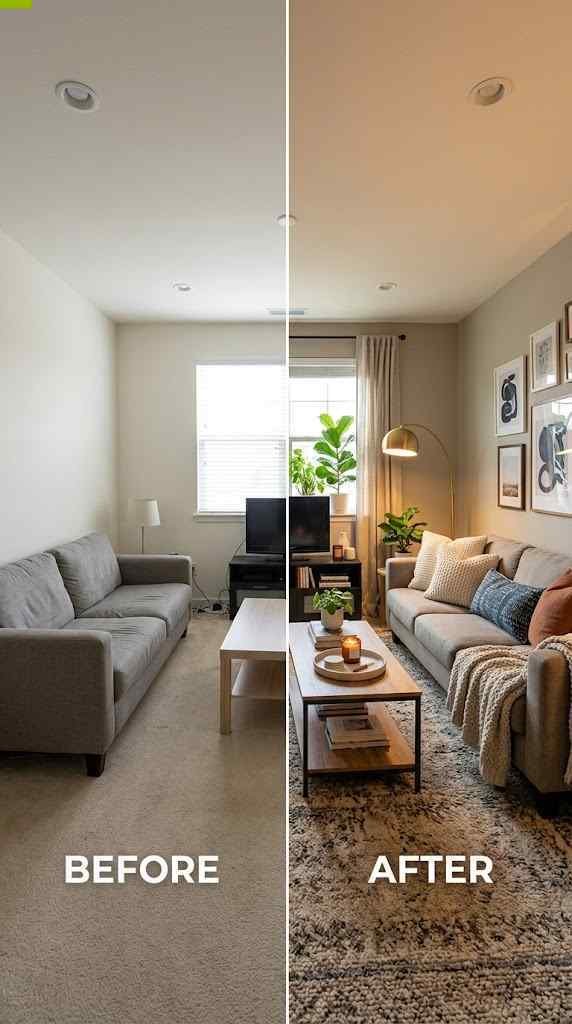
The reason beige living rooms get a bad reputation is simple: execution. Choosing a beige paint color and leaving it at that is like buying a blank journal and never writing in it. The potential exists, but you’re not using it.
Here’s what fails most beige living rooms: picking a flat, lifeless shade of beige with no dimension. Some beiges lean too yellow (making the room feel aged). Others go too pink (creating an unexpected softness that feels confused). The real move is selecting a beige with subtle undertones greige (gray-beige), taupe, or warm sand that feels intentional rather than accidental.
The second mistake people make is assuming that since beige is neutral, everything else can be boring too. A beige living room with boring furniture, boring lighting, and boring textiles doesn’t become sophisticated it becomes invisible. Beige requires you to think harder about what you’re layering on top of it.
One thing that trips people up: not sampling your paint color in actual lighting. Beige shifts dramatically depending on whether your windows face north or south, whether you have natural light all day, or if lamps provide most of your illumination. Test your chosen shade on a large section of wall, live with it for a week, and observe it at different times of day. What looks warm and inviting in morning light might shift to something cooler by evening. Getting this right from the start prevents the regret that makes a beige living room feel like a mistake.
Building Layers That Actually Make Beige Sing
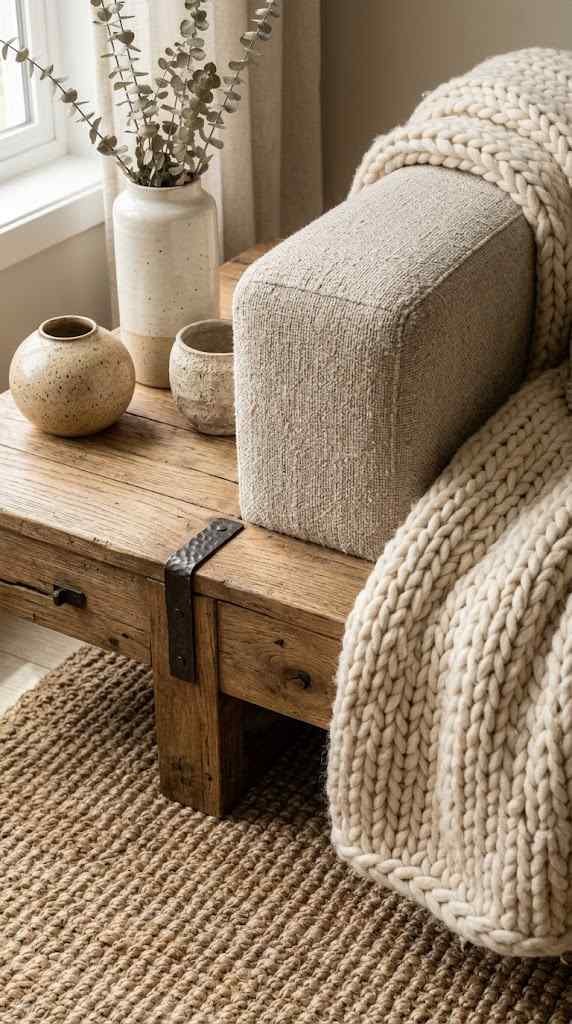
A beige living room needs texture like coffee needs cream. Without it, you just have beige, and honestly, that’s not enough.
Start with your base textiles. If your walls are smooth and matte, bring in a sofa with nubby linen, velvet cushions, a chunky knit throw, or a woven chair. Each texture catches light differently, which creates visual interest that flat colors can’t achieve alone. When everything in a beige room is also smooth (smooth paint, smooth fabric, smooth wood), the whole space flattens out.
Next, think about layering through materials. A jute rug under a coffee table, a wooden shelving unit with metal accents, concrete planters, ceramic vases, and woven baskets all add surface variation. The goal is to make someone’s eye travel, not to stare at one uniform expanse of tan.
Lighting matters more in beige spaces than anywhere else. Warm-toned lamps (not harsh white bulbs) emphasize the coziness of beige. Add a floor lamp in a corner, table lamps on side tables, and even some candles. These create pools of warmth that prevent the room from feeling sterile.
Don’t underestimate the power of natural fibers in a beige living room. Linen, wool, jute, rattan, and cotton all feel organic against beige walls and add authenticity. Mix them strategically a linen sofa, wool area rug, rattan side table, and cotton throw creates richness through variety. The key is avoiding too much of one texture. If everything is linen, it still feels flat. Balance rough with smooth, matte with subtle sheen, light with dark. This creates depth that neutral walls alone can never achieve.
Pairing Beige with Colors That Work
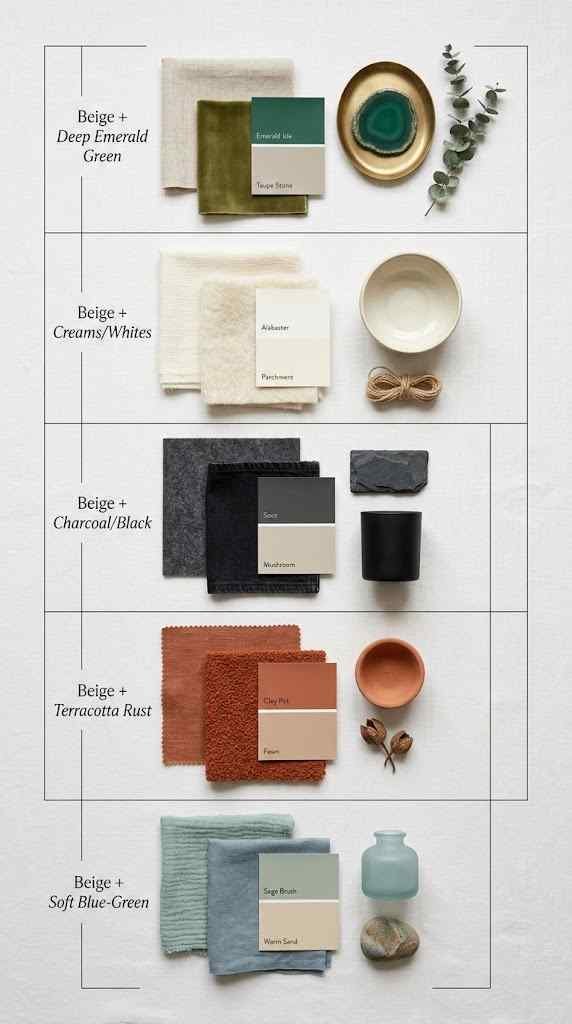
Here’s the secret most people miss: beige isn’t boring because it’s neutral it’s boring when used as a solo act. Combine it with the right accents, and suddenly you have something interesting.
Beige + Deep Jewel Tones (emerald, sapphire, rich plum) creates a cozy luxury vibe. These colors pop against beige without clashing, and they feel both modern and timeless. A jewel-toned accent chair or artwork completely transforms a beige living room.
Beige + Warm Whites and Creams layers neutral upon neutral, but different values and undertones create depth. This approach feels Scandinavian and clean without being cold.
Beige + Warm Blacks or Deep Charcoal gives beige some edge. Picture a beige sofa with a charcoal rug, black shelving, or dark-framed windows. The contrast makes the beige feel intentional rather than accidental.
Beige + Terracotta or Rust brings in earthiness. These warm orangey-browns feel natural against beige and work especially well in bohemian or maximalist living rooms.
Beige + Soft Blues or Greens keeps everything calm while adding subtle interest. This pairing works beautifully if you want the room to feel refreshing but still grounded.
The rule pick one or two accent colors maximum and repeat them throughout (pillows, art, plants, decor objects). This creates cohesion instead of chaos.
The magic formula isn’t just picking colors it’s deciding where those colors live in the room. A small accent color (like a single emerald chair) feels intentional. The same color repeated in five different places (chair, pillows, curtains, rug, wall art) feels coordinated but not overwhelming. Think of your accent color as a thread that weaves through the space without drowning out the beige foundation. You want guests to notice the thoughtfulness, not the color scheme.
Furniture and Decor That Elevate Beige Spaces
What you put in a beige living room matters way more than the wall color. The furniture is your chance to inject personality.
A statement sofa doesn’t have to be bold in color to be bold in shape. A curved sectional, a mid-century modern frame, or an oversized lounge chair in beige (or a complementary color) becomes the focal point through form alone. Pair it with side tables that have interesting legs or materials brass, wood, marble and suddenly the room has visual interest.
Wall art is non-negotiable in a beige living room. A gallery wall, a large-scale abstract piece, or even a collection of prints creates a focal point and breaks up the monotony. Black-and-white photography works. Colorful abstract art works. Even botanical prints add personality without demanding too much.
Accessories close the loop. Books stacked on shelves, plants in varying heights, throw blankets folded over chairs, and decorative objects arranged with intention all contribute to a space that feels lived-in and thoughtful. IMO, the best beige living rooms feel curated but not sterile.
Furniture scale matters in beige living rooms more than most people realize. Because the walls don’t visually anchor the space with color, your furniture needs to do that work. Oversized seating, a substantial coffee table, or tall shelving creates visual weight that keeps a beige room from feeling empty or echo-y. Tiny furniture scattered throughout a beige living room can actually make the space feel larger and colder. Go bigger, go bolder with shape and form, and let beige be the unifying backdrop that ties everything together.
Real Talk: When Beige Works Best
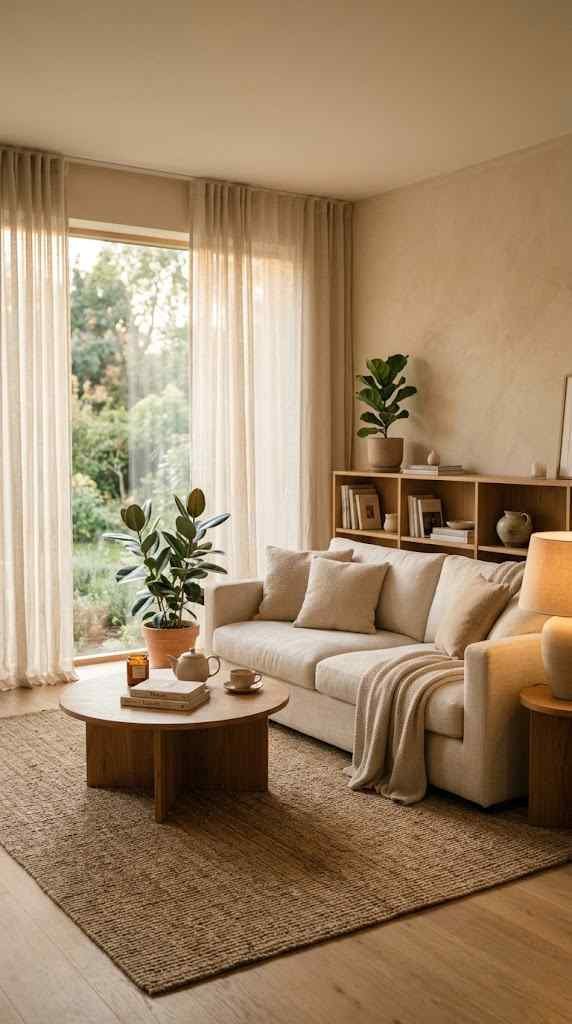
Beige living rooms shine when you’re going for one of a few specific feelings. If your goal is a calm, restorative space somewhere you actually want to hang out and relax beige is perfect. It doesn’t visually exhaust you the way some colors do.
If you have art or objects you love, beige walls let them be the stars instead of competing for attention. If you’re renting and worried about aggressive paint colors, beige is safe in a way that actually works instead of feeling temporary.
Beige also works brilliantly if you change your decor frequently. Since the walls aren’t demanding anything, you can swap out pillows, art, and accessories seasonally without the room feeling chaotic.
Consider beige if you’re designing a multi-functional living room. Whether it’s your workspace, entertainment zone, relaxation area, or all three, beige provides the neutrality that lets you shift moods without repainting. You can add energizing colors and patterns for work hours, then soften things up with calm textures for evening unwinding. Beige adapts to your lifestyle instead of forcing you to adapt to the walls.
FAQ’s
Can a beige living room work for someone who loves bold, colorful decor?
Absolutely. Beige acts as a sophisticated backdrop that actually makes bold accent colors pop more vibrantly without visual competition.
What undertone should I choose for beige warm, cool, or neutral?
Warm undertones (greige, taupe, sand) create coziness test samples in your actual lighting before committing to any beige shade.
How do I prevent a beige living room from looking too plain without adding clutter?
Layer textures, invest in statement furniture pieces, add quality wall art, and use varied lighting to create visual interest and depth.
Is beige outdated, or will it stay timeless for years to come?
Beige remains timeless because it’s emotionally neutral and adaptable. It won’t trend away like color-heavy designs do regularly.
Which accent colors clash with beige living rooms, and which should I avoid?
Most colors work with beige, but muddy or competing earth tones sometimes feel confused jewel tones, blacks, and soft pastels are safest bets.
CONCLUSION
Beige living rooms fail when they’re treated like a default. They succeed when they’re treated like a foundation that lets everything else shine. Pick a quality shade with subtle undertones, layer textures obsessively, add intentional color through accents and art, and include furniture pieces that have character. Do that, and your beige living room becomes the kind of space people ask you about not because it’s beige, but because it’s obviously thoughtful.
The next time someone says beige is boring, you’ll know they just haven’t seen one done right.