
Brown & blue livingroom
By Anna Grace | 20 feb 2026
Create the Perfect Brown and Blue Living Room: A Surprisingly Warm Color Combo
I’ll be honest the first time I saw a brown and blue living room done right, I was genuinely shocked. Not because it looked bad, but because it worked so much better than I expected. Here’s why: brown and blue seem like they shouldn’t be friends. One’s earthy and grounded. The other’s cool and calm. Yet somehow, when you pair them together, you get a living space that feels both sophisticated and inviting at the same time. It’s like they were always meant to coexist, they just needed the right introduction.
If you’re considering a brown and blue color scheme for your living room, you’re tapping into something that interior designers have been quietly obsessing over. This combination hits differently than typical neutral palettes, and there’s serious science (and style) behind why it works so well.
Why Brown and Blue Actually Complete Each Other
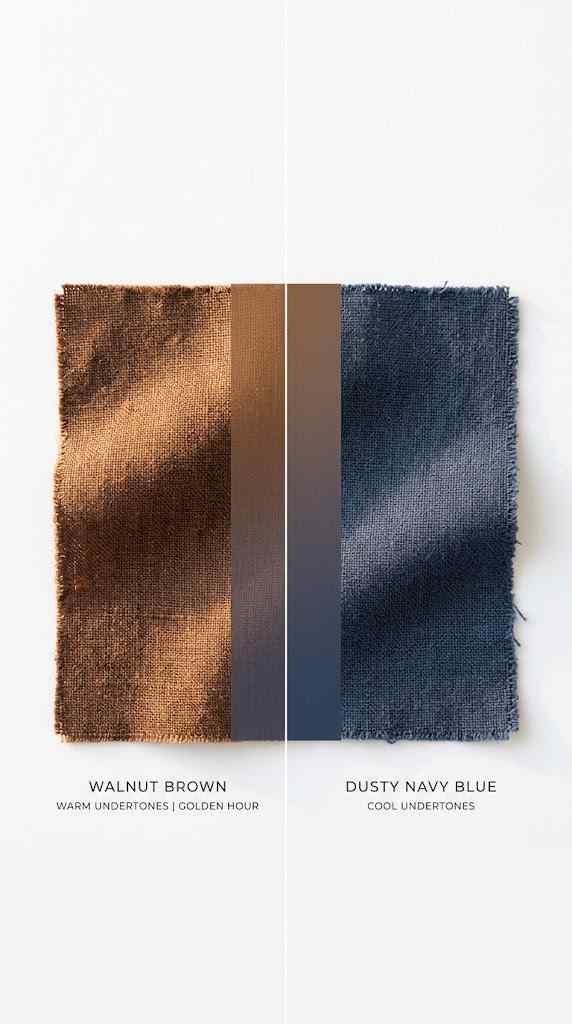
Let me start with the obvious these colors have completely opposite personalities on the color wheel. Brown is warm, grounded, and brings this natural, earthy vibe. Blue is cool, calming, and reminds us of sky and water. Individually, they’re both fantastic. Together? They create a balance that somehow feels both sophisticated and deeply comfortable.
The magic happens when you understand that brown doesn’t have to be boring beige. Dark chocolate brown, warm taupe, rich walnut these shades bring depth and coziness. Pair them with the right blue (think dusty navy, soft periwinkle, or even a muted teal), and you’ve got a color combo that looks intentional and curated, not like an accident.
What really convinced me this pairing works is how it plays with natural light. In the morning, that blue catches the sunlight and energizes the space. By evening, the warm brown tones take over and create this incredibly cozy atmosphere. The living room essentially transforms throughout the day without you changing a single thing. Pretty cool, right?
Beyond the visual balance, there’s a psychological element at play too. Brown triggers feelings of stability and security it’s literally the color of earth and wood that humans have relied on for shelter forever. Blue, meanwhile, has this calming effect that lowers stress levels. When you combine them, you’re not just creating a pretty room you’re creating an environment where people actually want to spend time. IMO, that’s the real secret to why brown and blue living rooms feel so effortlessly inviting.
Your guests sit down and immediately feel at ease, even if they can’t quite articulate why. They’re experiencing the subconscious effect of two colors that psychologically complement each other, not just aesthetically.
Finding Your Perfect Shade Combination
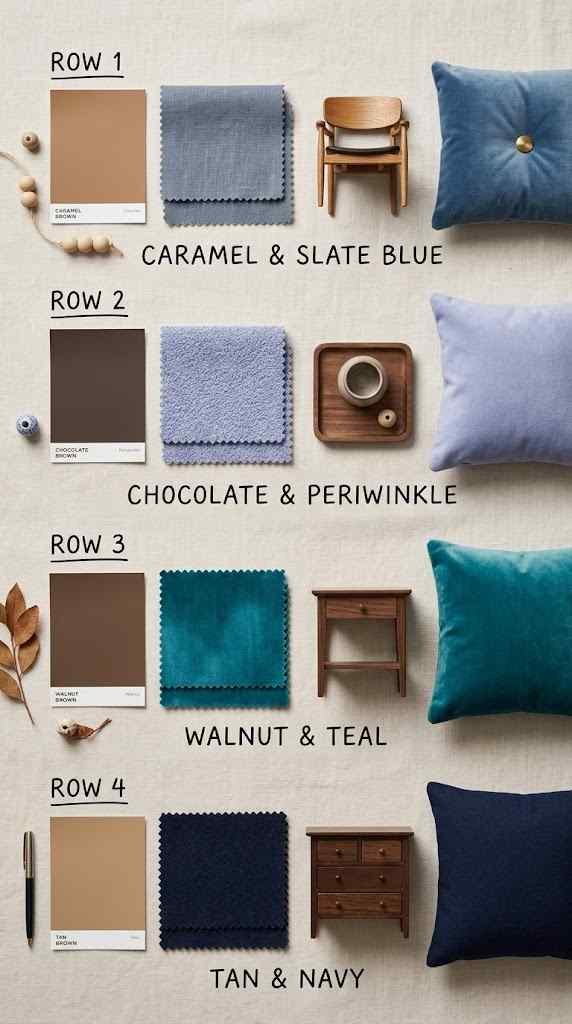
Here’s where most people trip up: they pick random brown and blue items and hope for the best. That’s how you end up with a clashing mess. Instead, think of them as partners that need to balance each other.
If you’re going with a darker brown (like chocolate or espresso), your blue should be lighter or more muted. This prevents the room from feeling too heavy or cave-like. Conversely, if your brown is lighter (like tan or caramel), you can afford to go bolder with your blue maybe a deeper navy or even a richer teal.
Quick shade pairings that work:
● Warm caramel brown + soft slate blue
● Dark chocolate brown + dusty periwinkle
● Rich walnut brown + muted teal
● Tan/beige brown + deeper navy
I’ve seen plenty of rooms fail because someone chose, say, a bright royal blue with a mousy brown. The colors weren’t speaking the same language. Your shades should have similar undertones both warm, both cool, or consciously mismatched on purpose (which is harder to pull off, but amazing when it works).
One thing that helps tremendously is visiting showrooms or looking at real-life examples before you commit to paint. Online photos can be deceptive depending on the photographer’s lighting setup. What looks like the perfect dusty blue on your phone might be completely different in your actual living room
Bring paint samples home, tape them to your walls, and observe them at different times of day and under your existing lighting. Spend a week with them up there. The shade that still looks good on day five is probably your winner. Also, don’t underestimate the power of asking yourself one simple question: “Do I want this brown and blue combination to feel moody and sophisticated, or light and airy?” That single answer will guide almost every shade decision you make moving forward.
The Furniture and Fabric Strategy
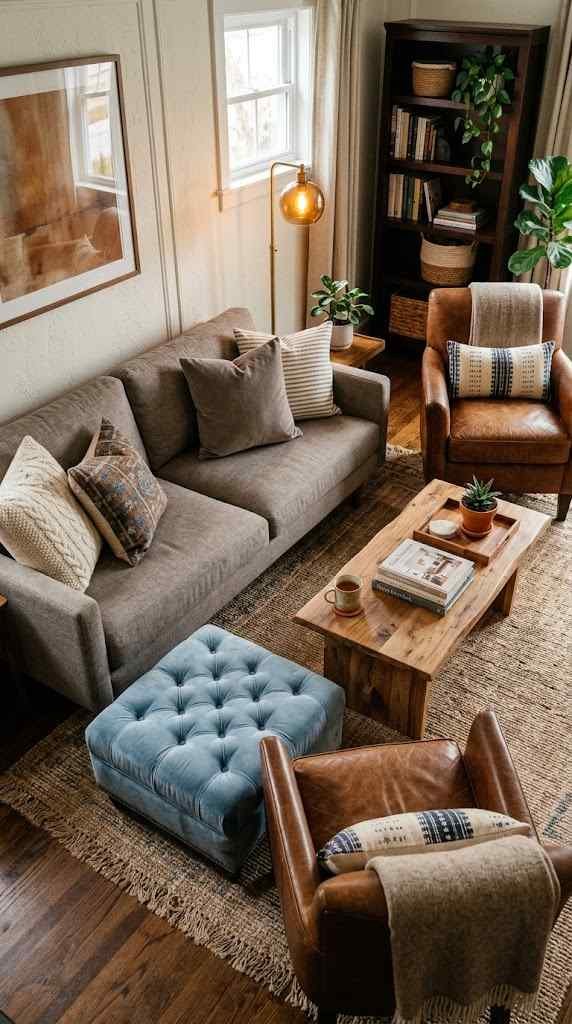
Your sofa is going to be the anchor of this whole situation. And I’m going to say something that might surprise you it doesn’t have to match either color perfectly. Some of the best brown and blue living rooms have a neutral or complementary piece holding down the space.
For example, a warm gray sofa with brown leather accent chairs and blue throw pillows creates layers without screaming “look at my color scheme!” The key is using upholstery as a way to introduce both colors naturally, rather than forcing them into every single piece.
Fabrics matter too. If you’re using brown, consider textures like linen, suede, or wool that feel substantial. For blue, softer textures like velvet or cotton work beautifully. Mixing textures keeps the room from looking flat or one-dimensional. I once visited a living room with a brown suede chair and blue velvet ottoman, and the contrast in how they caught the light was incredible.
Throw pillows and blankets are your secret weapon. They’re easy to swap, affordable to change, and they let you test the brown and blue balance without committing your entire furniture budget. Start conservative, add more as you get confident with the combo.
Another game-changer is layering your upholstery colors strategically. If you start with a neutral base sofa, you can introduce brown and blue through additional seating pieces without overwhelming the room
Think a pair of accent chairs one in brown, one in blue flanking a fireplace or window. This approach gives your brown and blue living room visual interest and intentionality without looking like you threw color at the wall and hoped it stuck. Storage ottomans in blue or brown are also secretly brilliant because they serve double duty they introduce color while also being functional. Your guests get somewhere to rest their feet, and you get another opportunity to express the color scheme.
Accessories and Accent Pieces
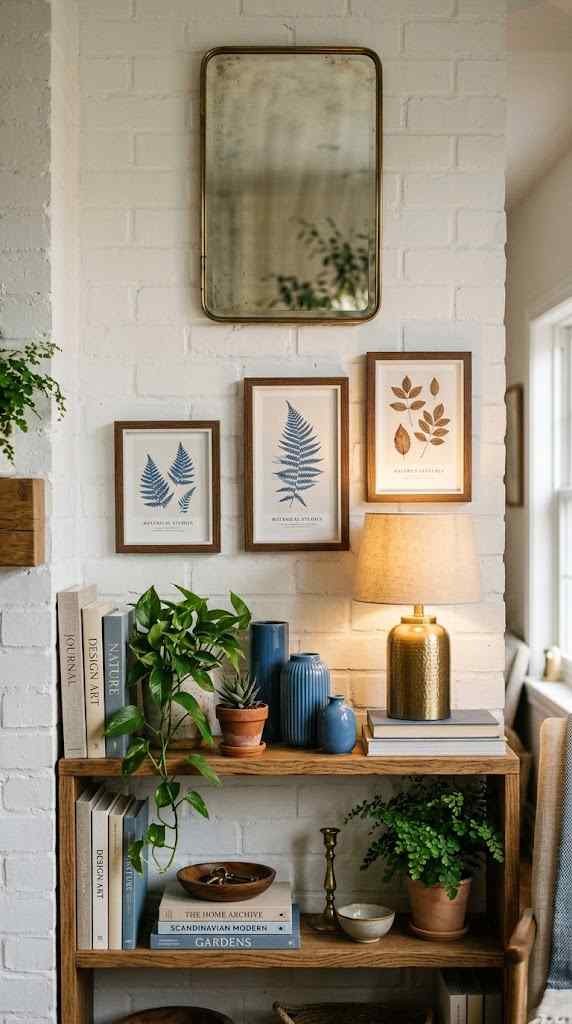
This is where brown and blue living rooms really shine. Wall art, plants, lighting fixtures, books, decorative objects these are your storytelling tools.
Think about incorporating natural wood elements (hello, brown) through floating shelves, side tables, or a coffee table. These bring warmth and texture without overwhelming the space. For blue accents, consider art pieces, a statement lamp, or even a rug that pulls in darker or lighter blues depending on your sofa situation.
Plants are honestly non-negotiable here. Green foliage acts as a natural third color that softens the brown-blue dynamic and adds life to the space. FYI, this is one of the reasons so many modern design inspo posts feature brown and blue living rooms with plants everywhere it’s not just trendy, it genuinely completes the palette.
Lighting deserves its own mention because warm lighting transforms how these colors feel. Soft, warm-toned bulbs will enhance the brown tones and make the blue feel richer. Cool, bright lights can make the same colors feel clinical and cold. Your lighting choice is literally shaping how your color scheme is perceived, so don’t treat it as an afterthought.
Window treatments deserve a moment in the spotlight here. Curtains or drapes are a massive part of your room’s color story, and they’re often overlooked in design conversations. A blue linen curtain paired with brown furniture and cream walls creates a completely different energy than white or neutral curtains would. You could also go the opposite route: warm brown curtains that frame blue walls.
The decision depends on how bold you want to be. 🙂 Additionally, area rugs are like the unsung heroes of brown and blue living rooms. A rug with mixed neutrals that includes threads of both brown and blue can tie the entire room together and anchor your furniture arrangement. Look for rugs with subtle patterns or textures that reference both colors without being too literal about it.
Real-World Layout Considerations
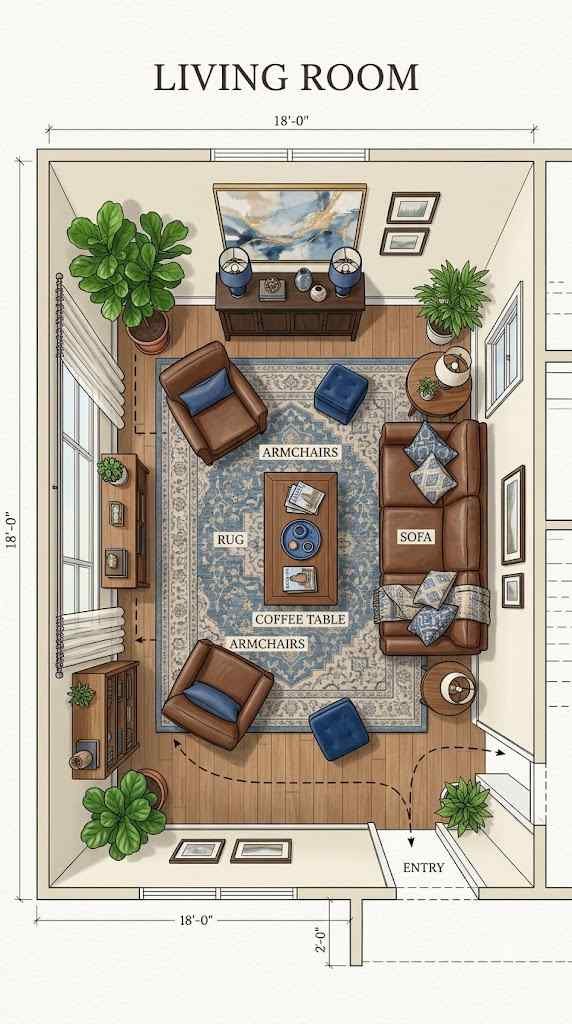
Okay, so you’ve nailed the colors. Now let’s talk about how to actually arrange a brown and blue living room so it doesn’t look chaotic.
Start by designating which color is your dominant one and which is your accent. If brown is dominant (walls, larger furniture), blue should appear in smaller doses that draw the eye around the room. This creates visual rhythm and prevents the space from feeling monotonous. A good rule of thumb: 60% brown, 30% blue, and 10% neutrals or accent colors.
The wall color you choose sets the entire tone. A warm beige or tan wall with brown furniture and blue accents feels balanced. A soft blue wall with brown furniture creates a completely different vibe almost like you’re in a calm, sophisticated retreat. Neither is wrong; they just hit differently.
Consider also how light naturally moves through your living room. If you have large windows, cooler blues might oversaturate the space, whereas warm browns could feel heavy. Test paint samples at different times of day before committing. I’ve seen people choose a blue thinking it looked perfect at noon, only to realize it looked gray and depressing at 6 PM.
Wall color psychology also plays a role here. If your living room sees a lot of natural light, even a medium blue can feel intense. If it’s a darker, north-facing space, a warmer brown or taupe might feel too heavy and cave-like. The dimensions of your room matter too smaller spaces benefit from lighter versions of brown and blue to prevent them from feeling cramped. Larger rooms can handle deeper, more saturated versions without sacrificing comfort.
One more layout consideration: how does your living room connect to adjacent spaces? If your brown and blue living room opens into a kitchen with white cabinets, you might want to echo one of your living room colors in the kitchen through bar stools or a small accent wall. This creates flow and makes the entire home feel cohesive rather than compartmentalized.
Common Mistakes to Avoid
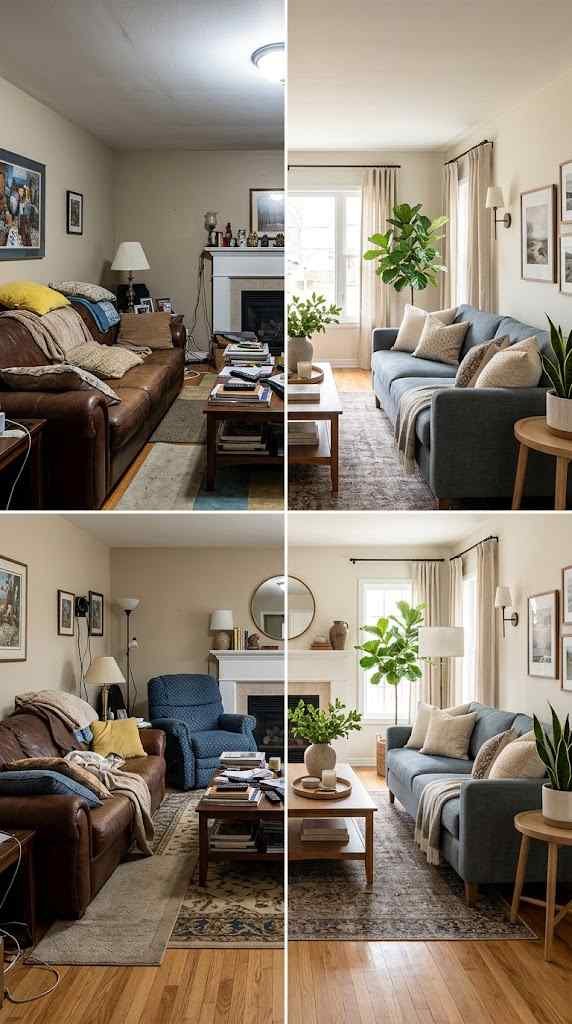
Let me save you some headaches by pointing out what actually tanks a brown and blue living room.
Using too many competing shades confuses the eye pick your brown and your blue, then stick with them. Mixing five different blues and three browns makes the space feel scattered, not eclectic. Poor lighting makes everything look off. Ignoring texture leaves the room feeling flat and uninspired. And probably the biggest one: forgetting that brown and blue need visual breathing room, which is why those neutral elements and plants matter so much.
One more thing don’t force the color combo if it doesn’t align with your home’s existing architecture or natural light. A brown and blue living room works beautifully in some homes and feels forced in others. That’s not a personal failure it’s just design reality.
Here’s something I see constantly people use matte finishes for everything and wonder why their brown and blue living room feels flat. A mix of matte, satin, and slightly glossy finishes (think metallic accents, glass table tops, or silk throw pillows) adds dimension and keeps light bouncing around the room in interesting ways. Also, don’t neglect the ceiling and trim.
A brown and blue living room with dingy off-white or yellow ceiling overhead automatically looks unfinished. Whether you keep them crisp white, soft cream, or even coordinate with your color palette, intentional choices everywhere matter. Finally, rushing the process is a mistake. This color combination deserves thoughtful curation, not impulse purchases. Give yourself at least 2-3 months to live with what you have and add pieces intentionally rather than all at once.
FAQ’s
Can I use a brown and blue living room in a small apartment, or will it make the space feel cramped?
Choose lighter, more muted shades of brown and blue; avoid dark, saturated colors that absorb light and shrink perception.
What’s the best way to introduce brown and blue into a living room without repainting walls?
Start with a neutral wall color and layer in brown and blue through furniture, pillows, artwork, rugs, and accessories instead.
Does a brown and blue living room work with modern, minimalist design, or is it only for traditional spaces?
Brown and blue works beautifully in modern design when you choose clean lines, neutral walls, and strategic color placement rather than busy patterns.
How do I make a brown and blue living room feel warm in winter and cool in summer?
Swap lighter throw pillows for deeper blues in winter switch to lighter, cooler-toned blue accents and remove heavy brown elements in summer.
What undertones should I look for when choosing brown and blue shades to ensure they complement each other?
Match undertones pair warm brown with warm blue, or cool brown with cool blue to create harmony rather than visual tension in your living room.
CONCLUSION
A well-executed brown and blue living room is the sweet spot between “I actually have taste” and “I can sit here for eight hours without feeling tense.” It’s versatile enough to evolve as your style does, and classic enough that it won’t feel dated in two years.
The best part? You don’t need to overhaul your entire living room tomorrow. Start with one blue accent piece or a brown throw blanket. See how it feels. Add more as you gain confidence. Before you know it, you’ll have created a space that’s genuinely yours not because you followed a design rule, but because you trusted your instincts and this surprisingly perfect color pairing.