
fridge organization
By Anna Grace | 15 August 2026
How to Organize Your Fridge So You Never Find Fuzzy Leftovers Again
Last spring I found a jar of pesto at the back of my fridge that had grown its own small civilization. It wasn’t ancient. I had simply forgotten it existed, because it sat behind a gallon of milk and a takeout box I had promised to eat “tomorrow” for nine tomorrows straight.
That fuzzy jar taught me something useful. A fridge rarely fails because it’s too small. It fails because everything inside it lives wherever it happened to land on grocery day.
The USDA estimates that 30 to 40 percent of the U.S. food supply ends up wasted, and a messy refrigerator plays a big part in that. Food you can’t see is food you don’t eat. Food you don’t eat becomes the stuff you scrape into the trash with a sigh and a little guilt.
Good fridge organization fixes that problem. I don’t mean the glossy version with color coded bins and calligraphy labels (although if that sparks joy, go for it). I mean a practical system built around how your refrigerator actually works: where it runs cold, where it runs warm, and where food quietly disappears.
Your Fridge Has Climate Zones, and Your Groceries Know It
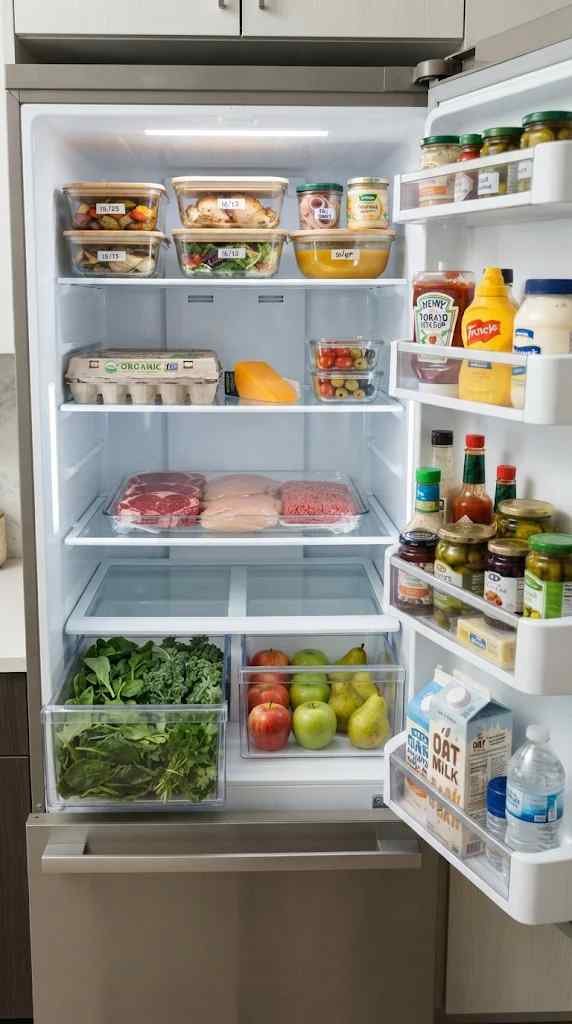
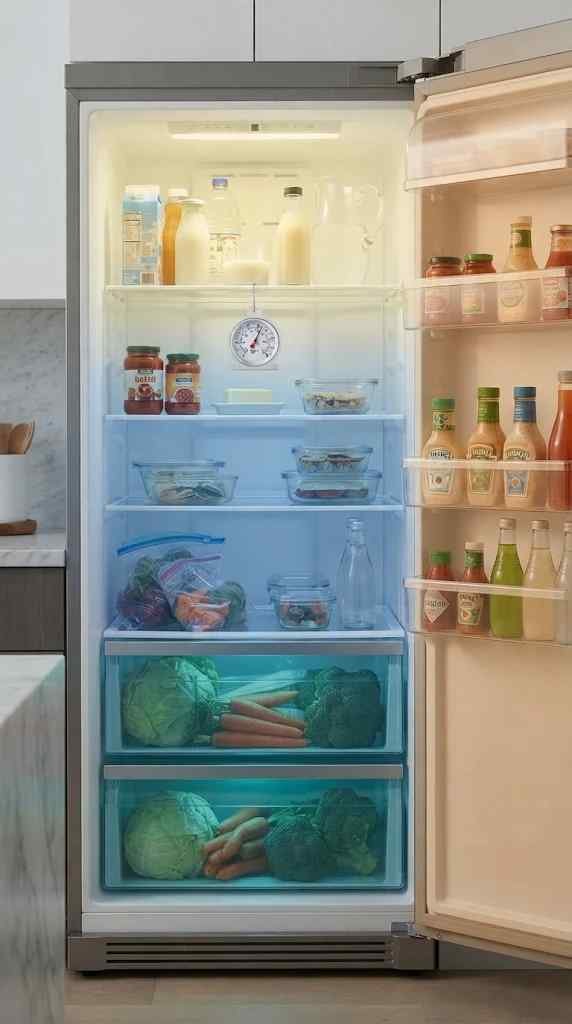
Most people treat the fridge like one big cold box. It isn’t. Cold air sinks, the door swings open dozens of times a day, and the back wall usually holds the cooling element. All of this creates distinct temperature pockets inside one appliance.
First, the baseline. The FDA recommends keeping your refrigerator at 40°F (4°C) or below and your freezer at 0°F (minus 18°C). Many fridges run warmer than their dial suggests, so a cheap appliance thermometer pays for itself fast. I bought one for about six dollars and discovered my “perfectly fine” fridge sat at 44°F. My milk had been trying to warn me for months.
Here’s how the zones usually break down:
- The door: The warmest spot, since it meets room air every time someone opens it.
- Upper shelves: Fairly steady temperatures, good for foods that don’t need intense cold.
- Lower shelves: The coldest real estate, especially toward the back.
- Crisper drawers: Their own little microclimates, built to control humidity.
Once you see your fridge as a set of zones instead of one shelf stack, everything else in this guide clicks into place. You stop asking “where is there room?” and start asking “where does this belong?” That small mental shift does more for fridge organization than any bin you’ll ever buy.
A Shelf by Shelf Map for Smarter Fridge Organization
Think of this section as assigned seating at a wedding. Every food gets a spot, and the spots exist for a reason. Nobody wants raw chicken sitting next to the birthday cake.
Upper Shelves: The Ready to Eat Crowd
Put foods here that you can grab and eat without cooking. Leftovers, deli meats, yogurt, hummus, tortillas, and drinks all fit nicely. These items benefit from steady temperatures but don’t need the deepest cold.
I also keep my leftovers right at eye level on the top shelf. If I can see it, I’ll eat it. If it hides behind the orange juice, it becomes next month’s horror story.
Lower Shelves: Raw Meat and Dairy
The bottom shelf earns its spot as the home for raw meat, poultry, and seafood. Two reasons explain this. It runs coldest, and if anything leaks, gravity sends the juices down instead of onto your salad greens.
Always keep raw meat in a rimmed container or tray, even if the package looks sealed. Those plastic wraps leak more often than grocery stores want to admit. Milk, cream, and eggs also do well on a lower or middle shelf, where the cold stays consistent.
The Door: Condiment Country
Here’s the hard truth: your fridge door is not where milk belongs, even though most fridges come with a perfect gallon sized slot. The door warms up every time you open it, which shortens the life of dairy.
Instead, load the door with things that tolerate temperature swings well:
- Ketchup, mustard, and hot sauce
- Salad dressings and marinades
- Pickles, jams, and jarred sauces
- Butter (in its covered compartment)
- Bottled water and soda
Eggs often get a cute little tray in the door too. IMO, that tray should go straight into a drawer you never open. Eggs last longer in their original carton on a shelf, where they stay colder and avoid absorbing smells.
Crisper Drawers: The Humidity Game
Most crisper drawers come with a small slider that controls humidity. Few people touch it, and that’s a shame, because it matters a lot.
| Drawer Setting | What It Does | Best For |
|---|---|---|
| High humidity (vent closed) | Traps moisture | Leafy greens, herbs, carrots, broccoli, cucumbers |
| Low humidity (vent open) | Lets ethylene gas escape | Apples, pears, stone fruit, avocados |
Ethylene gas deserves a quick explanation. Certain fruits release it as they ripen, and it speeds up spoilage in nearby produce. Ever wonder why your spinach turned slimy two days after you bought it? It might have spent the week roommating with a bag of apples.
Tools That Earn Their Spot (and Some That Belong in the Return Pile)
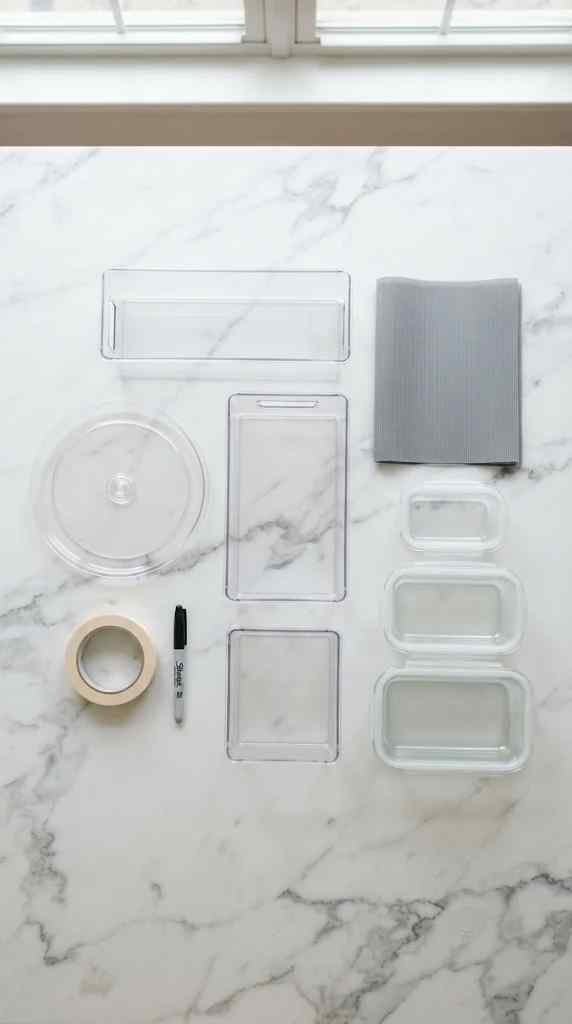
The organizing aisle at any home store will happily sell you forty dollars of plastic you don’t need. Before you fill your cart, figure out what problem you actually want to solve. The right tool solves a specific annoyance. The wrong one just adds more stuff to clean.
These products genuinely help:
- Clear bins: You can see contents at a glance, and you can pull a whole category out like a drawer. Grouping snacks, cheeses, or yogurt cups this way stops the “where did the string cheese go” hunt.
- A turntable (lazy Susan): Perfect for deep shelves and jars that tend to vanish in the back corners.
- Masking tape and a marker: Cheap, fast, and the best labeling system for leftovers. Write the item and the date. Done.
- Shelf liners: Washable liners catch drips, and you can pull them out and rinse them instead of scrubbing glass shelves.
- Stackable containers in matching sizes: Uniform shapes stack neatly and waste less vertical space.
And a few that I’d skip:
- Hyper specific gadgets, like a dedicated avocado saver or an onion shaped onion holder. They solve one tiny problem and take up a whole lot of room.
- Opaque bins, which defeat the entire purpose of seeing your food.
- Fancy label makers, unless you already own one. Your leftover chili does not need a laminated nameplate.
FYI, you don’t need to buy everything at once. Start with two or three clear bins for your messiest category, live with them for a few weeks, then decide what else your fridge actually needs. Spending money on organization before you know your habits is how people end up with a drawer full of unused plastic.
Habits That Keep Your Fridge From Sliding Back Into Chaos
A beautifully organized fridge stays beautiful for roughly four days if you don’t build habits around it. Then grocery day arrives, someone shoves a watermelon onto the top shelf, and the entire system crumbles. I’ve lived this cycle more times than I’d like to confess.
These habits keep fridge organization working long after the initial cleanup glow fades.
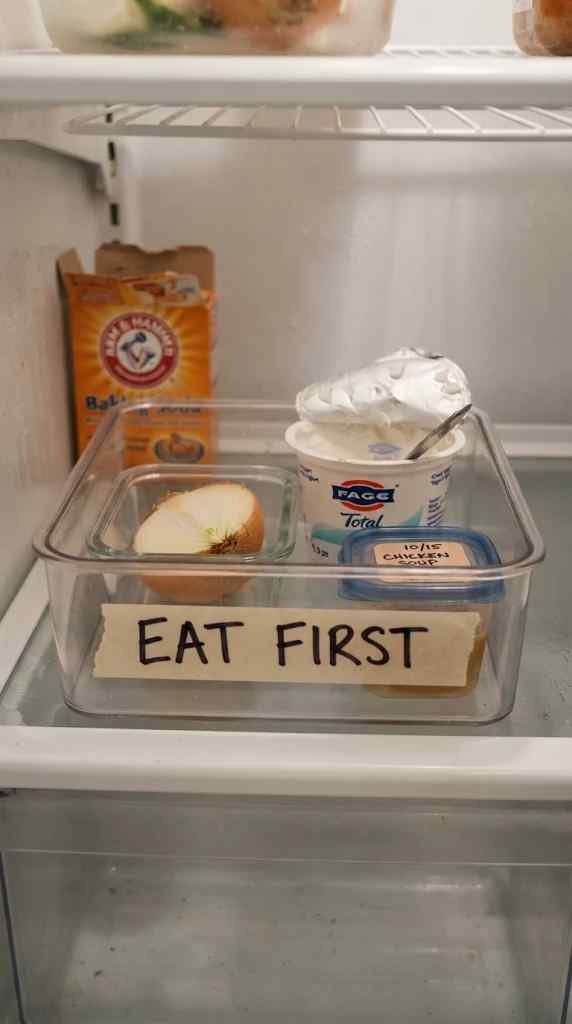
- Create an “Eat First” bin. Pick one clear container and label it boldly. Anything nearing its end (half an onion, the last of the yogurt, leftovers from Tuesday) goes in there. When anyone in your house wants a snack, they check this bin first. This single habit cut my food waste more than everything else combined.
- Rotate new groceries to the back. Restaurants call this FIFO, which stands for first in, first out. When you unload groceries, slide older items forward and tuck new ones behind them. You’ll use things before they expire instead of discovering them two weeks too late.
- Do a five minute reset before shopping. Right before you head to the store, open the fridge and toss anything spoiled, wipe up any spills, and note what you still have. You’ll avoid buying a third jar of mustard and make room for the new haul.
- Respect the leftover clock. Most cooked leftovers stay safe for 3 to 4 days in the fridge, according to USDA guidance. Date your containers so nobody has to play the “smell test” game. That game has no winners.
- Leave breathing room. Cold air needs space to circulate. When you cram every shelf full, warm pockets form and food spoils unevenly. Aim for a fridge that looks about three quarters full.
- Deep clean once a month. Empty one shelf at a time, wipe it with warm soapy water, and check dates as you go. Toss an open box of baking soda in the back to absorb odors, and swap it out every few months.
None of these take long. Together, they turn fridge organization from a weekend project into a routine that basically runs itself.
Produce Tricks That Stretch Every Grocery Dollar
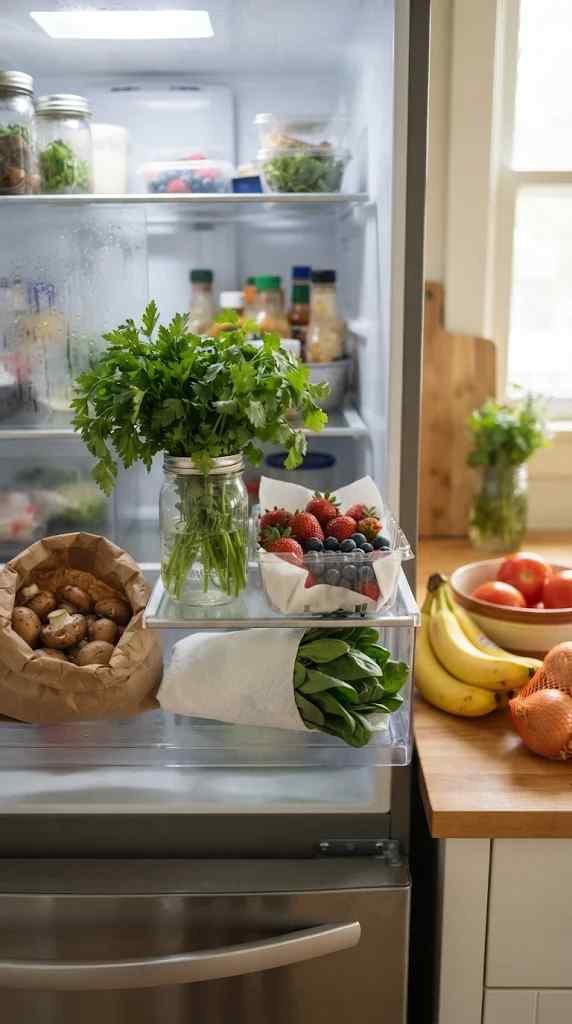
Fruits and vegetables cause the most fridge heartbreak. They cost a lot, they spoil fast, and they rarely give you a warning before they turn to mush. A few small adjustments can double how long they last.
Herbs: Treat soft herbs like parsley and cilantro like a bouquet of flowers. Trim the stems, stand them in a jar with an inch of water, and cover loosely with a plastic bag. They’ll stay perky for a week or more. Basil prefers the counter, since cold air blackens its leaves.
Berries: Don’t wash them until right before you eat them. Moisture speeds up mold, so keep them dry in a container lined with a paper towel. If you find one moldy berry, pull it out immediately, because mold spreads fast through the batch.
Leafy greens: Wrap them loosely in a dry paper towel and store them in a container or bag in the high humidity drawer. The towel soaks up excess moisture, which keeps greens crisp instead of slimy.
Mushrooms: Plastic packaging traps moisture and makes mushrooms slick. Move them to a paper bag, and they’ll breathe and last longer.
Cut produce: Store half onions, sliced peppers, and cut melons in airtight containers. Put them in your Eat First bin so they don’t get forgotten.
Some produce actually prefers staying out of the fridge entirely. Bananas, whole tomatoes, potatoes, and onions all do better on the counter or in a cool pantry. Tomatoes in particular lose flavor and develop a mealy texture in cold storage. Who wants a mealy tomato? Nobody, that’s who 🙂
Here’s a quick personal observation: I used to buy a big clamshell of spinach every week and throw out half. Once I started using the paper towel trick and stopped storing apples in the same drawer, I finished nearly every container. Same spinach, same fridge, totally different outcome.
FAQ’s
How often should I clean out my fridge?
Do a quick weekly check for spoiled food and a full deep clean monthly.
Where should I store milk for the longest shelf life?
Store milk on a lower interior shelf, where temperatures stay coldest and most consistent.
Does fridge organization actually reduce food waste?
Yes, good fridge organization keeps food visible, so you eat it before it spoils.
Can I store fruits and vegetables in the same crisper drawer?
Avoid it when possible, since ethylene from fruits speeds up vegetable spoilage significantly.
What temperature should my refrigerator be set to?
Keep your refrigerator at 40°F or below, and verify with an appliance thermometer.
CONCLUSION
A well organized fridge comes down to a few simple ideas. Learn your temperature zones. Give every category a permanent home. Buy only the tools that solve a real problem. Then build tiny habits, like the Eat First bin and the pre shopping reset, so the system survives real life.
Here’s my honest opinion after years of fridge disasters: the system matters far less than the visibility. Clear containers, eye level leftovers, and a little breathing room will save more food than any elaborate scheme. You can’t eat what you can’t see, and you won’t waste what you remember you own.
So open your fridge tonight. Pull everything out, wipe the shelves, and put each item back where it belongs. It takes maybe thirty minutes. The payoff shows up every single time you reach for something and actually find it on the first try.