
Green bedroom
By Anna Grace | 13 March 2026
Green Bedroom Secrets Designers Use That Nobody Actually Talks About
Green is having a moment. Not a trendy, blink-and-you’ll-miss-it moment we’re talking a full cultural shift where designers, interior stylists, and regular people who just want their bedroom to feel like a exhale are all reaching for green. And honestly? They’re onto something.
I repainted my own bedroom a deep sage two years ago, half-convinced I’d hate it within a month. Instead, I started sleeping better, feeling calmer, and genuinely looking forward to walking through my bedroom door. Placebo? Maybe. But the science actually backs this up green is the color most associated with rest, nature, and psychological calm. So if you’ve been circling the idea of a green bedroom, this is your sign to stop circling.
What Shade of Green Are We Actually Talking About?
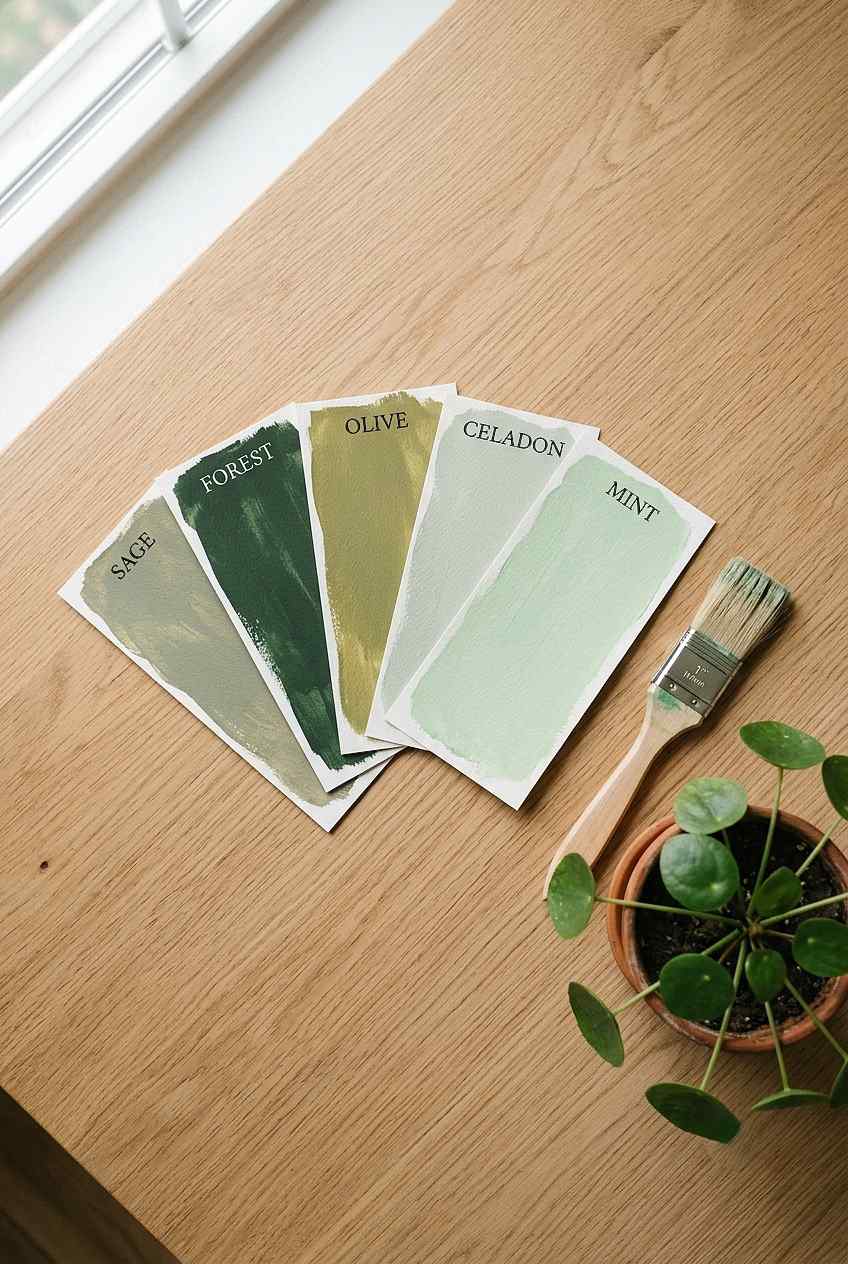
This is where people get stuck. “Green bedroom” sounds simple until you’re staring at 47 paint chips and second-guessing everything. The shade you choose will completely change the mood of the room, so it’s worth slowing down here.
Soft, muted greens think sage, eucalyptus, or dusty celadon keep things feeling airy and spa-like. They work beautifully in small bedrooms because they don’t close in the space they breathe with it. If your room gets good natural light, these shades almost glow.
Deep greens forest green, hunter green, bottle green are a different story. They’re moody, rich, and surprisingly cozy. A lot of people shy away from dark walls in bedrooms, which is a shame, because a deep green bedroom at night with warm lamp light? Genuinely stunning.
Then there’s the middle ground: muted olive, fern, or mossy tones that feel earthy without going full “enchanted forest.” These pair incredibly well with natural wood tones and linen textures, which is probably why they’re everywhere right now.
Quick guide by vibe:
● Sage or celadon → calm, minimal, Scandinavian-adjacent
● Forest or bottle green → dramatic, cozy, layered
● Olive or fern → earthy, organic, warm-toned
● Mint or pale green → fresh, airy, works well for smaller spaces
One thing nobody tells you when you’re standing in the paint aisle undertones are everything. Two shades that both call themselves “sage” on the label can look wildly different once they hit your walls. One pulls blue, the other pulls yellow, and suddenly your “calm, earthy bedroom” has taken on a vaguely hospital-corridor energy. Always test on the actual wall not a small strip, but a proper A4-sized patch and live with it through a full day and night cycle before committing.
If you’re working with a rental and paint isn’t an option, wallpaper has quietly had a glow-up. Green botanical prints, subtle leaf patterns, or even a solid dark green peel-and-stick panel behind the bed can deliver the same mood shift without a single permission email to your landlord. The quality of removable wallpaper has improved dramatically it no longer looks like a craft project gone wrong.
One more thing worth knowing: green reads differently depending on ceiling height. In a room with tall ceilings, a deep forest green on all four walls feels grand and enveloping. In a room with low ceilings, that same shade can start to feel like a submarine. If your room is compact or squat, keep the ceiling white or very pale and let the walls carry the color. That contrast alone will make the room feel taller without touching a single structural element.
And if you’re genuinely paralyzed by choice which, fair start with the trim or woodwork. Painting window frames or skirting boards in a soft green while keeping walls neutral is one of the quietest, most underrated ways to introduce the color without the pressure of a full commitment. It’s the design equivalent of testing the water before you jump in. :/
Green Paint vs. Green Accents: You Don’t Have to Go All In
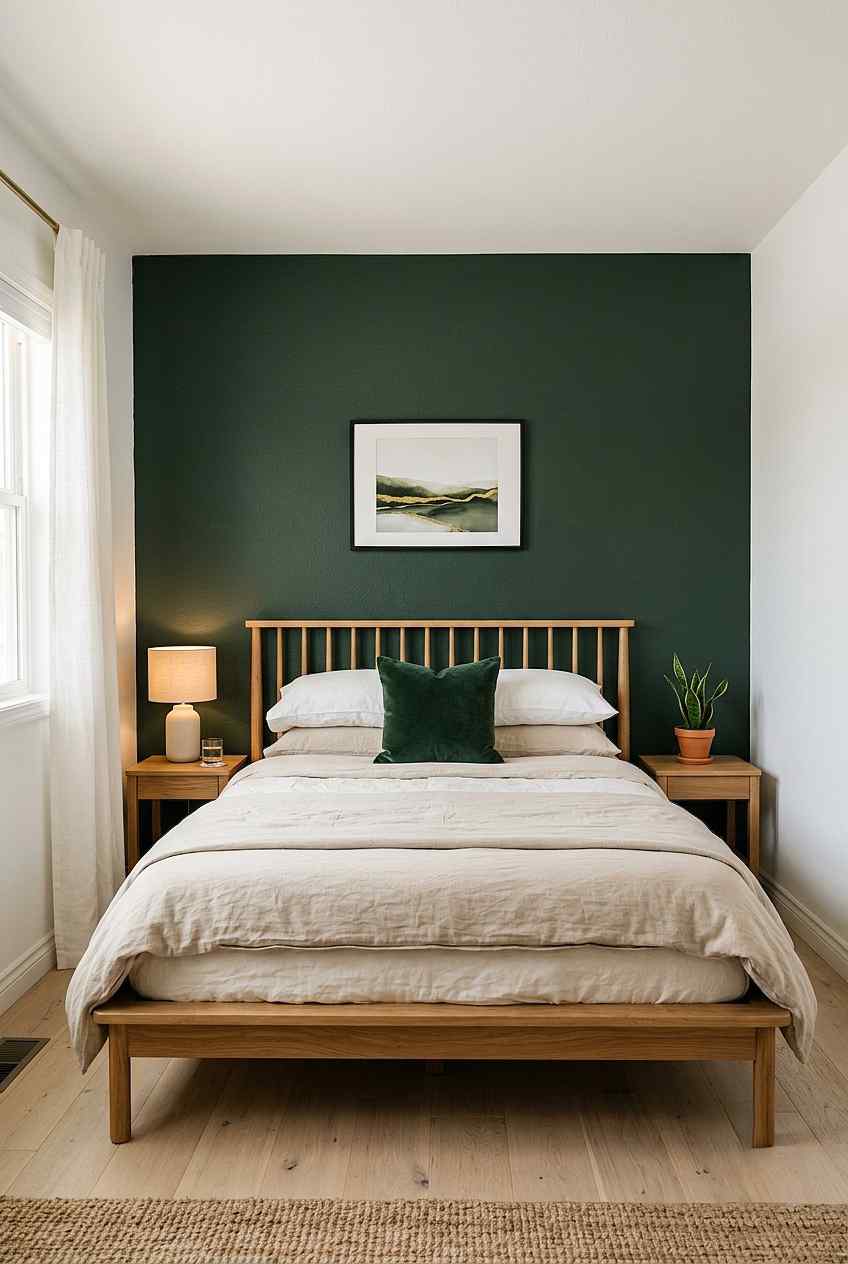
Here’s a real question worth asking yourself do you want green walls, or do you want a green room? Because those are genuinely different commitments, and both are valid.
Full green walls are bold. If you’re leaning that way, painting all four walls the same shade is the most cohesive approach but an accent wall in a deeper green can be just as striking, especially behind the bed. The headboard wall is having its moment for good reason. It frames the bed, adds drama, and you barely see it while you’re sleeping anyway. Low risk, high reward.
If commitment isn’t your thing right now, green accents can do a lot of the heavy lifting. A sage green duvet, deep green throw pillows, or a set of forest-toned curtains can shift the entire energy of a room without a single drop of paint. FYI this is also a great way to test whether you actually like green before you’re elbow-deep in a weekend paint project.
Furniture is another underrated route. A green velvet headboard or an olive linen bed frame adds color while doubling as a textural statement. Nightstands in sage or a dusty green dresser can anchor the room without overwhelming it.
Here’s what most people skip entirely: the ceiling. A pale green ceiling barely-there, almost white-green is one of those moves that sounds strange until you see it done well. It wraps the room without reading as dark, and it creates this subtle cocoon effect that genuinely changes how restful the space feels. Designers have been quietly recommending it for years. It’s only weird until it isn’t.
Curtains are another underrated accent play. Floor-to-ceiling curtains in a deep olive or forest green make a room look taller, more finished, and more expensive than almost any other single change you can make. They frame the window, they frame the room, and if you choose a slightly textured fabric velvet, linen, or cotton-mix they add dimension even when they’re just hanging there doing nothing. That’s a solid deal for fabric on a rod.
If you want to try green accents in the most commitment-free way possible, start with your bedside table. A small lamp with a green ceramic base, a green-tinted glass vase, or even a stack of books with green spines. It sounds minor, and it is but those small pops of color train your eye to accept green in the space gradually. By the time you’re ready to paint, the color already feels at home in the room. The brain is surprisingly easy to persuade when you go slow.
What about the floor? Green rugs are still an accent play, even if the walls stay neutral. A deep emerald or sage-toned rug anchors the room in color from the ground up, which actually feels less overwhelming than wall color because you’re not surrounded by it. You’re standing on it and that distinction matters more than you’d think when you’re someone who finds bold color decisions stressful.
What to Pair With Green (Because Green Doesn’t Work Alone)
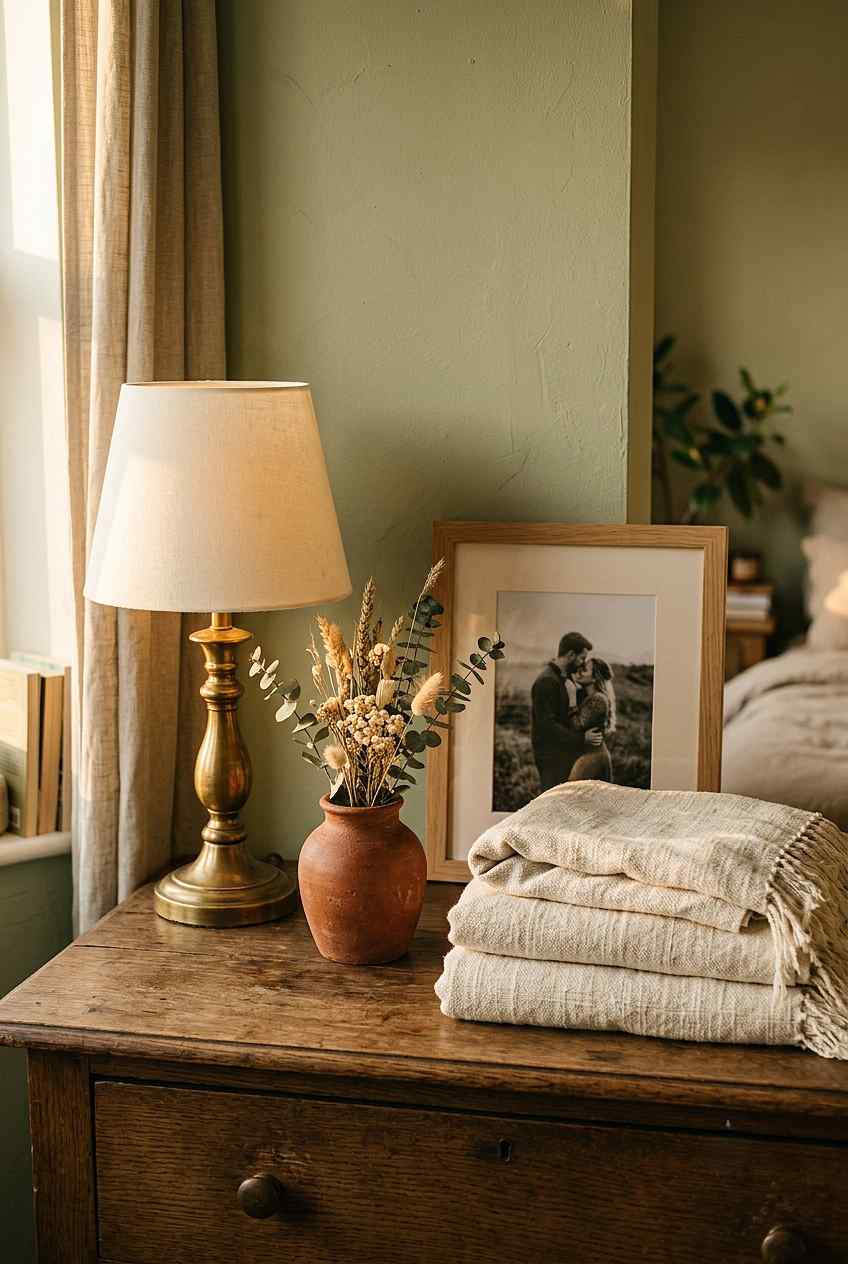
Green is weirdly social. It plays well with a lot of colors, but the combinations you choose will define whether your bedroom feels collected and intentional or a little chaotic.
Warm whites and creams are green’s best friends. They soften the intensity of any green shade and keep the room feeling light. Crisp white bedding against dark green walls is one of those combinations that photographs well and looks even better in person.
Wood tones are a natural match pine, walnut, oak, rattan, bamboo. Anything that brings the outside in will reinforce the organic quality green already carries. IMO, a sage green bedroom with warm wood floors and white linen is one of the most timeless looks you can create right now.
What to be careful with:
● Bright, cool-toned colors (electric blue, purple) can clash unless you really know what you’re doing
● Too much black can make a moody green room feel heavy rather than sophisticated
● Mixing too many shades of green tends to look accidental rather than layered
Terracotta, rust, and blush work surprisingly well as accent colors in a green bedroom. Warm metallics brass, gold, brushed copper add warmth without competing.
Pink is one of those pairings that surprises people. Not bubblegum or neon dusty rose, blush, antique pink. Against a sage or olive green, it reads botanical and warm rather than sugary. Think pressed flowers, old garden illustrations, the kind of color combination you’d find in a Victorian greenhouse. It’s unexpected, and that’s exactly what makes it work.
Navy is another one that holds its own next to green without competing. Deep navy throw pillows on a sage green bed, or a navy and white striped rug on forest green floors the two colors share enough depth to feel intentional together. It’s a combination that leans slightly nautical if you’re not careful, but anchor it with warm wood tones and natural textures and it stays grounded.
What about pattern? This is where people get nervous, and understandably so. The safest approach in a green bedroom is to keep pattern in the small things a floral print cushion, a patterned throw, a botanical print framed on the wall and let the larger surfaces stay solid. One statement pattern in the room is interesting. Three competing patterns in a room with green walls is a lot. Pick your battle and win it cleanly.
Color temperature matters here too. Warm greens (olive, sage, fern) want warm partners terracotta, ochre, amber, honey wood. Cool greens (celadon, eucalyptus, teal-leaning shades) play better with cooler companions pale grey, soft white, stone, silver. Crossing the temperature divide can work, but it takes a confident hand. If you’re still finding your footing with green, match your temperatures and the room will feel coherent almost automatically.
Textures and Materials That Make a Green Bedroom Feel Expensive
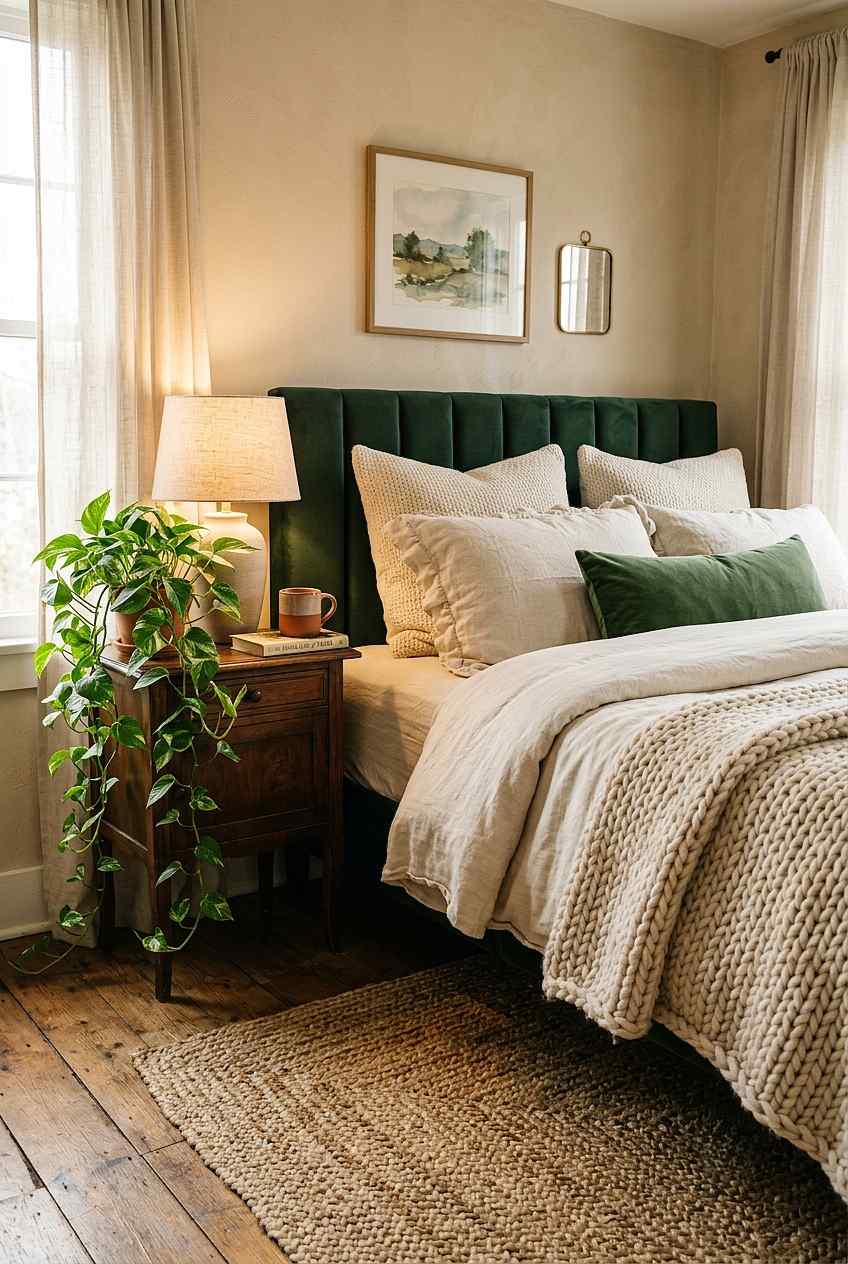
Color alone won’t get you there. The difference between a green bedroom that looks pulled-together and one that looks like a paint sample gone wrong is almost always texture.
Linen is the obvious choice it’s breathable, casual-luxe, and comes in every shade of neutral that pairs with green. Layer it with a heavier cotton duvet or a chunky knit throw and you’ve got a bed that looks like it belongs in a boutique hotel. 🙂
Velvet in a green bedroom is and I mean this sincerely kind of perfect. Velvet cushions, a velvet headboard, or even a small velvet bench at the foot of the bed adds a richness that flatters green tones. Forest green velvet especially hits differently under warm light.
Plants are the obvious finishing touch, and yes, the obvious answer is the right one here. A green bedroom with actual living plants doesn’t just look better it genuinely improves air quality and deepens the sense of calm the room is already trying to create. A trailing pothos on a shelf, a fiddle leaf in the corner, a small monstera on the dresser any of it works.
Natural fibers for rugs jute, sisal, wool ground the space and add warmth underfoot. If you’ve got hardwood floors, a jute rug in a green bedroom makes the whole thing feel considered rather than accidental.
Ceramic and clay accessories deserve a mention here because they punch well above their price point in a green bedroom. A cluster of matte terracotta pots on a shelf, an unglazed ceramic lamp base, a simple clay bowl on the nightstand these add texture and warmth without requiring any budget at all, really. The handmade, organic quality of ceramic works in harmony with green tones in a way that machine-made plastic accessories just can’t replicate.
Woven wall hangings and macramé yes, still add softness to green walls in a way that artwork sometimes doesn’t. A large framed print can feel flat against a textured green wall. A woven piece adds another layer of depth, breaking up the flatness of the wall itself while keeping the earthy, organic energy consistent. It’s not for every aesthetic, but in a room leaning into natural materials, it earns its place.
Mirrors are underused in green bedrooms, which is a missed opportunity. A mirror in an aged gold or oxidized brass frame against a deep green wall is genuinely striking the reflection bounces light around, the frame adds warmth, and the wall color becomes a backdrop rather than a feature fighting for attention. A well-placed mirror in a green bedroom can make the space feel significantly larger while adding a material element that no amount of throw pillows can replicate.
One honest tip on plants: not every room has the light for a fiddle leaf fig, and there’s nothing more deflating than watching an expensive plant slowly give up in a corner. Choose plants that actually suit your room’s light levels. Pothos, snake plants, and ZZ plants will survive almost anything and still look intentional. The goal is living green that stays living not a guilt spiral every time you walk past a drooping fern. 🙂
Lighting Your Green Bedroom the Right Way
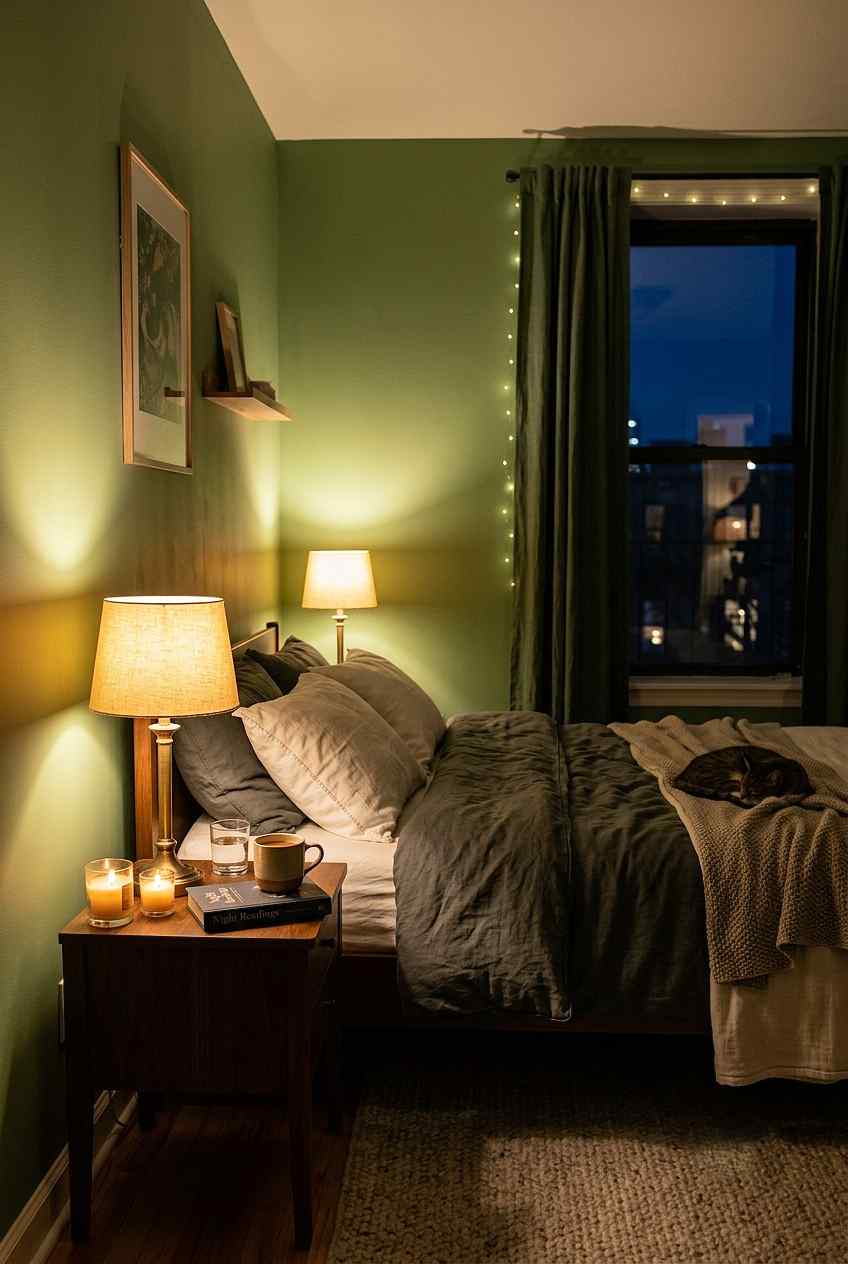
This part matters more than most people expect. Green is a chameleon color it shifts significantly depending on the light, and the wrong bulbs can make even a beautiful sage look vaguely yellow or cold.
Always go for warm-toned bulbs (2700K–3000K) in a green bedroom. Cool white or daylight bulbs tend to flatten green tones and strip out the warmth you’re trying to build. Warm light, on the other hand, makes green walls glow in a way that feels almost alive.
Layered lighting is your friend. Overhead lighting is fine for functionality, but a green bedroom really comes into its own with bedside lamps, a floor lamp in the corner, or even a few candles. The more you can control the intensity, the better. Dimmer switches are one of those upgrades that cost almost nothing and change how a room feels entirely.
Natural light also plays a role in how your shade reads throughout the day. North-facing rooms get cooler light, which tends to make green look more intense. South or west-facing rooms get that golden afternoon light that makes every green shade warmer and richer. Worth factoring in when you’re choosing your exact paint color.
Sconces deserve more credit than they get. Wall-mounted bedside sconces free up the nightstand surface, keep the wiring off the floor, and when chosen in a warm brass or matte black finish add a sculptural quality to the wall. In a green bedroom especially, the contrast between a metal fixture and a green wall creates a visual anchor that a table lamp on a cluttered nightstand simply can’t. They’re also genuinely practical: you can read without lighting up the whole room. Win-win.
Consider the color of your lampshades too. White shades cast neutral light; cream or amber shades push the warmth further; green shades particularly in a deep emerald or hunter tone cast the most extraordinary glow that makes a green bedroom feel like it’s lit from within. It sounds intense, but the effect at night is closer to candlelight than neon. Worth experimenting with before you dismiss it.
If you use artwork or a gallery wall in your green bedroom, directional picture lighting or a small clip-on spotlight pointed at the wall creates a focal point after dark that shifts the whole character of the room. It stops being a bedroom and starts feeling like a space someone actually curated. The way a room looks at 10pm matters as much as how it looks at noon, especially in a space designed primarily for winding down.
And one final thing about natural light that most guides skip entirely: window treatments. Sheer white or linen curtains in a green bedroom maximize natural light during the day and soften it beautifully the light that filters through a cream linen curtain has a warmth that hits green walls in the most flattering way. Heavy blackout curtains are great for sleep, but if your room gets beautiful morning light, don’t block it entirely. Layer a sheer behind the blackout and get the best of both without sacrificing either.
FAQ’s
Does a green bedroom actually help you sleep better?
Yes! green’s natural associations with calm make bedrooms feel more restful and genuinely sleep-conducive.
What’s the easiest green bedroom change without painting walls?
Swap your bedding for sage green linen, instant color shift, zero commitment required.
Can a small bedroom pull off dark green walls without feeling cramped?
Yes, if you keep furniture light, use warm lighting, and add at least one large mirror.
Which green bedroom shade works best in rooms with little natural light?
Warm olive or soft sage, they hold warmth better than cool celadon under artificial lighting.
Do green walls go out of style quickly like other trendy colors?
Green is nature’s neutral, it has staying power most trend colors simply don’t offer.
CONCLUSION
A green bedroom isn’t just a design trend it’s one of the rare color choices that actually makes the space it’s in feel better to be in. Calmer. Quieter. More like somewhere you genuinely want to spend time. That’s not nothing.
Start with your shade, let it guide your material choices, and don’t overthink the accessories. The best green bedrooms aren’t the ones with perfect matching they’re the ones with a clear point of view. Maybe that’s moody forest green with brass fixtures and velvet. Maybe it’s soft sage with white linen and a jute rug. Either way, trust your instincts.
You spend a third of your life in your bedroom. You might as well make it a room you actually like.