
Green sofa livingroom
By Anna Grace | 16 feb 2026
Green Sofas in Living Rooms This Bold Choice Works Better Than You Think
Your living room probably needs a jolt. Not the throw-pillows-and-cable-knit kind of jolt, but the real, look-twice-when-you-walk-in kind. A green sofa delivers exactly that. Most people play it safe with gray, beige, or navy colors that blend into the furniture-store background. Green, though? Green forces a conversation. It refuses to whisper.
I didn’t plan to fall in love with a green sofa until I actually sat on one while apartment shopping with a friend. The moment my back hit the cushions, something clicked. The color pulled everything together made the room feel intentional, calm, and somehow more “itself” than any neutral palette ever could. That’s when I realized how many people skip over green entirely, writing it off as too bold or too risky. They’re missing out.
Green Sofas Aren’t Actually a Risk, They’re Smart Interior Design
Here’s the thing nobody tells you a green sofa is easier to live with than you’d think. It’s not like painting your walls hot pink. You can move it, replace it, cover it with throws. Green works because it straddles the line between neutral and statement. It doesn’t scream. It doesn’t demand attention every single second. Instead, it settles into your space like it belongs there, which it absolutely does.
Green connects to nature. Your brain relaxes around it. Every study on color psychology points to the same conclusion green calms people down. So you’re literally sitting on a color that makes you feel better. That’s not a design trend. That’s science wearing a sofa.
The psychological pull matters more than trends ever will. Sure, green gained popularity in the last few years as Instagram designers showed off their emerald living rooms. But the staying power comes from something deeper. Green doesn’t feel dated because it exists in every forest, garden, and houseplant on earth. It’s timeless by definition.
Beyond psychology, there’s a practical reason green works everywhere. It adapts to different lighting conditions better than most colors. Morning light softens it. Evening lamps warm it up. Even harsh fluorescent ceiling lights (though you shouldn’t use those in a living room anyway) don’t make green look sickly the way they do with some colors. Your green sofa transforms throughout the day without you doing anything.
There’s also something about committing to a green sofa that changes how you approach the rest of your space. Suddenly, you’re thinking about texture, about layering, about intentionality. You’re not defaulting to the furniture-store aesthetic anymore. People notice that shift immediately not because the sofa is loud, but because the whole room starts feeling curated. It becomes your living room, not a showroom floor that happens to be where you sleep.
The investment angle matters too. A quality green sofa lasts 7-10 years if you treat it reasonably. That’s a decade of daily comfort. Compare that to fast furniture that falls apart in three years, and suddenly a green sofa feels like the smarter financial choice, not the riskier one.
Picking the Right Shade Completely Changes the Vibe
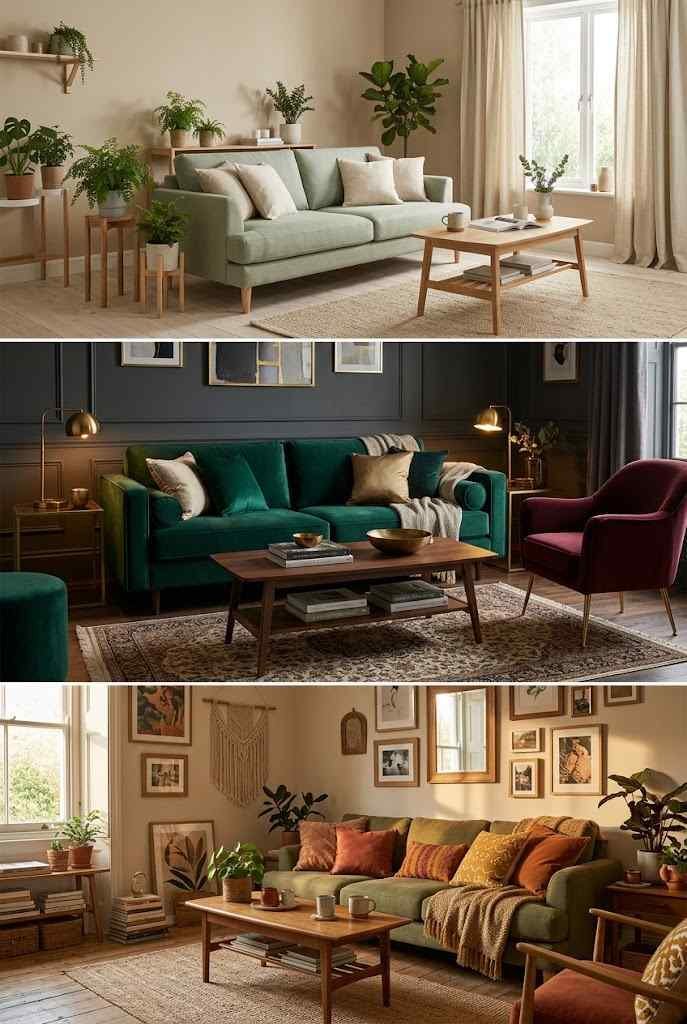
Not all greens feel the same. This is critical. A pale sage reads differently than a deep forest green, and both feel totally different from a bright lime.
Sage and muted greens feel sophisticated and restful. They pair beautifully with wood tones, warm metallics, and cream-colored walls. This shade works if you want your living room to feel like a retreat a place where everything encourages you to actually sit and breathe. IMO, sage greens are the gateway drug to bold color choices. They’re confident without being aggressive.
Emerald and jewel-toned greens make a statement. They own the room. Pair emerald with brass fixtures, dark wood, and rich textures, and your living room transforms into something genuinely luxe. This shade says you know what you want and you’re not apologizing for it. It suits darker living rooms better since emerald can absorb light and make smaller spaces feel cozier (or cramped, so size matters here).
Olive and mossy greens fall somewhere in the middle. They’re interesting without being as dramatic as emerald, more interesting than sage. Olive pairs exceptionally well with warm earth tones, orange accents, and natural textures. It feels collected rather than curated like you didn’t overthink it.
Bright or chartreuse greens skew modern and energetic. Honestly? These are harder to live with long-term. They demand specific styling and can feel trendy quickly. I’d approach bright greens carefully unless you’re genuinely into bold, contemporary aesthetics.
Which one fits your life? That’s the only question that matters. Pick based on how you want to feel when you sink into that sofa at 7 p.m. on a Tuesday.
If you’re torn between shades, here’s a trick: photograph your living room at different times of day, then overlay swatches of different green tones digitally. See which one feels right when the light is real not just in your imagination. Most furniture stores let you bring home fabric samples too. Live with them for a few days. Drape them on a chair and actually sit in your space with that color nearby.
The ceiling height in your room also influences which green works best. Lower ceilings pair beautifully with lighter, airier greens (sage, celadon) because they don’t absorb light or make the space feel cave-like. Higher ceilings can handle deeper, richer greens without sacrifice. If you’re in an apartment with 8-foot ceilings and a small footprint, emerald is going to feel dramatic in a way that might exhaust you. Sage will feel like a relief.
Room orientation matters too= north-facing rooms feel cooler naturally, so they benefit from greens with warmer undertones (olive, moss). South-facing rooms get plenty of warm light, so cooler greens (sage, seafoam) stay vibrant without looking washed out. It’s not complicated, just worth considering before you order.
The Practical Questions Everyone Actually Wants Answered
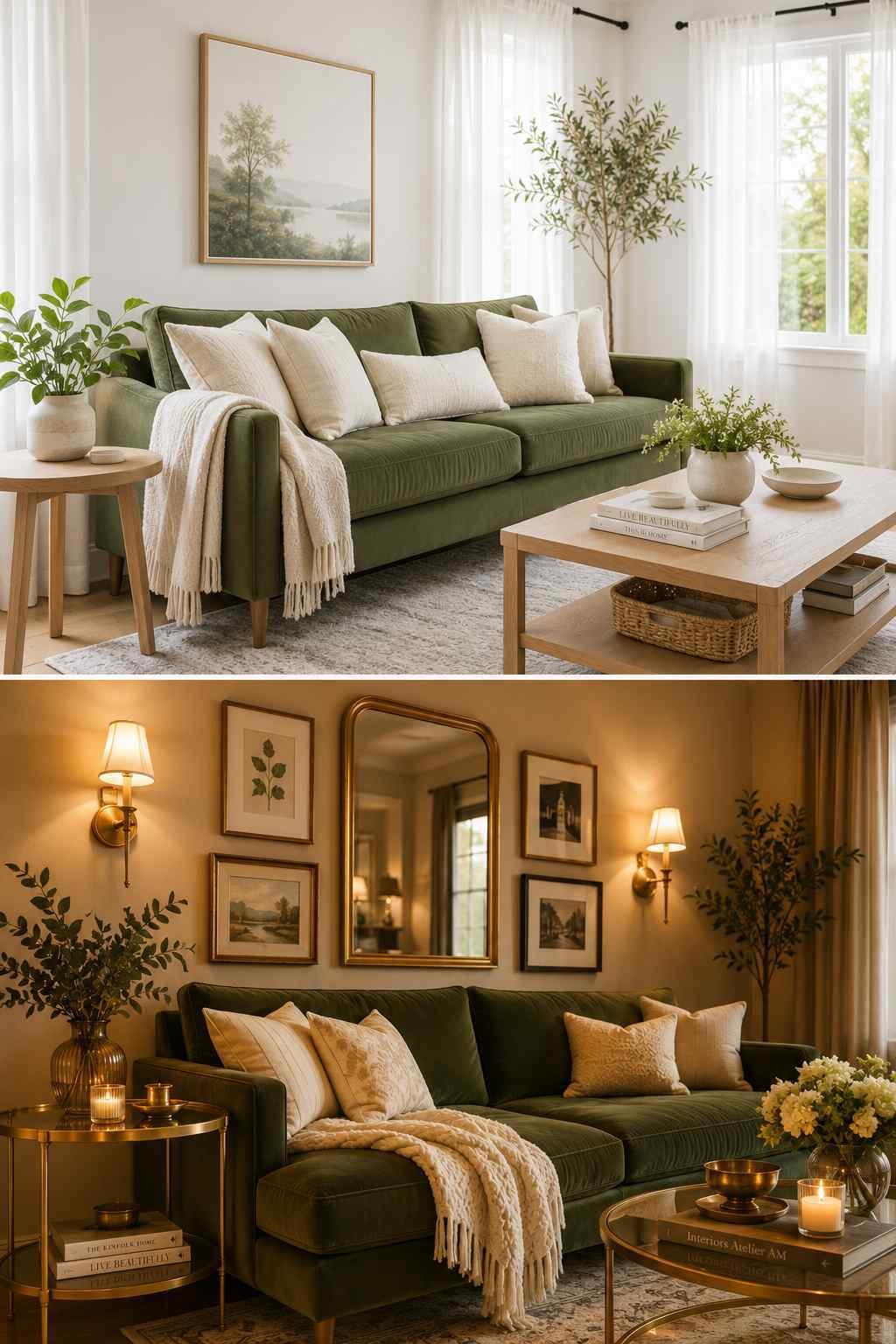
Does a green sofa show dirt? Not as much as you’d fear. Darker greens hide stains better. Lighter greens show more, obviously, but that’s true of any pale furniture. A good protective spray (yes, they exist) helps enormously.
Will you get tired of green? Unlikely, because you can refresh the room around it endlessly. Change your throw pillows, swap artwork, rotate your plants. The sofa stays constant while the room evolves. That’s the beauty of making one bold choice it gives you a anchor to work with forever.
Does it work in small living rooms? Absolutely, especially sage or muted greens. They actually make small spaces feel intentional rather than cramped. Avoid oversized sectionals in jewel tones unless you want your room to feel like a cave, but a standard sofa or loveseat in green? It anchors a small space perfectly.
What if you’re renting? This one matters. Some people can’t fully commit because they don’t own the space. Fair enough, but a green sofa is still portable. You’ll take it with you. Unlike paint or built-in bookcases, a sofa goes where you go.
Beyond the obvious, here’s what people don’t anticipate your green sofa might make you want to finally organize the rest of your space. It’s not the sofa’s fault it’s just that once you’ve committed to something intentional, everything else that’s chaotic starts bothering you. Books get shelved properly. Throw blankets find hooks. Clutter gets actual homes. Your green sofa becomes the catalyst for a living room that actually works.
Pet owners worry too. Will claws destroy green fabric? Not more than any other color. Light-colored fabrics show claw marks more visibly (they look like darker scratches), while darker greens camouflage wear better. If you have cats or dogs, fabric choice matters more than color. Microsuede, performance fabrics, and densely woven materials resist damage better than delicate linens. The green is secondary to durability here.
Storage also becomes easier to plan around a green sofa. Suddenly you can picture exactly what you need maybe a wooden bench for blanket storage, or a side table with drawers. Most people live with ugly plastic bins because they never defined what their space needed. A green sofa defines it for you.
Styling a Green Sofa: It’s Easier Than You’d Expect
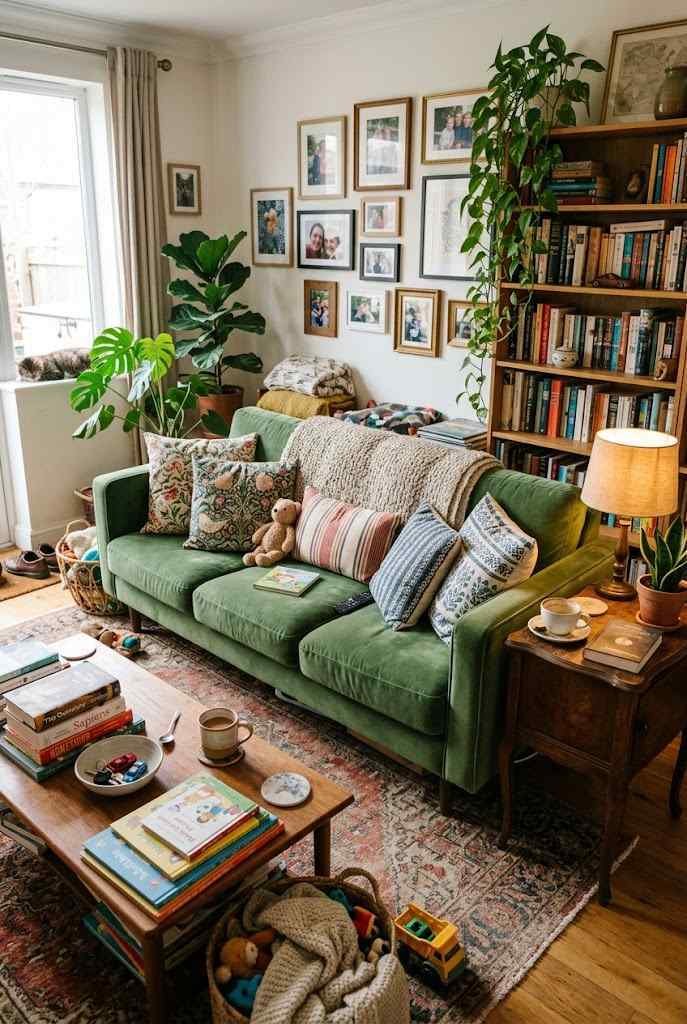
People overthink what goes with green sofas. They panic about color clashing, then default to all beige everything to “play it safe.” Wrong move. Green actually plays well with tons of colors.
Neutrals remain your best friend. Cream, white, warm gray, and soft taupe all support green without competing with it. These colors give your room breathing room. They let the sofa be the star without everything feeling chaotic. If you want a calm, collected living room, this is your formula.
Wood tones amplify the nature angle. Light woods feel fresh and Scandinavian-adjacent. Dark woods add richness and formality. Medium honey tones? They warm everything up. Your green sofa will look more at home next to wood furniture than practically anything else.
Warm metallics sing next to green. Brass and gold fixtures, lamp bases, and picture frames create luxury without coldness. Copper works too. Silver and chrome? They tend to feel clinical against green, so skip them unless you’re going full modern-minimalist.
Accent colors can either complement or contrast. Warm terracotta, burnt orange, and rust tones create an earthy, cohesive look. Want more drama? Pair green with deep navy or charcoal. Want something unexpected? Soft blush or muted burgundy creates a sophisticated contrast that actually feels intentional rather than accidental.
Textiles matter enormously. Linen, wool, velvet, and leather all work with green. Patterned pillows and throws don’t have to match they should tell a story together. A green sofa surrounded by textures creates depth. A green sofa surrounded by nothing but smooth surfaces feels flat.
The rug situation deserves special attention because it either grounds your sofa or fights it. A warm-toned jute or sisal rug feels organic and connects the sofa to the earth-tones trend. A cream or oatmeal low-pile rug feels contemporary. Patterned rugs work too just keep the overall color temperature consistent. If your sofa leans warm, your rug should too. Cool sofa? Cool rug. Mismatching these creates visual tension that reads as unfinished rather than intentional.
Lighting transforms green more than any other design element. Warm bulbs (2700K) make green feel cozy and intimate. Cool white bulbs make it crisp and contemporary. If you’re still using overhead ceiling lights, stop. Seriously, get yourself some table lamps with shades, a floor lamp behind the sofa, and wall sconces if possible. Layered lighting makes green sofas sing. It also makes every other element in your room work harder.
Wall color is the invisible player nobody talks about enough. A white or cream wall behind your green sofa creates contrast and makes it pop. A warm beige or taupe wall feels more cohesive and less “statement-y.” A second accent color (like a soft blush or dusty blue) creates depth without chaos. Your wall choice sets the entire tone, so pick it intentionally.
Why Green Sofas Actually Feel Modern (Without Being Trendy)
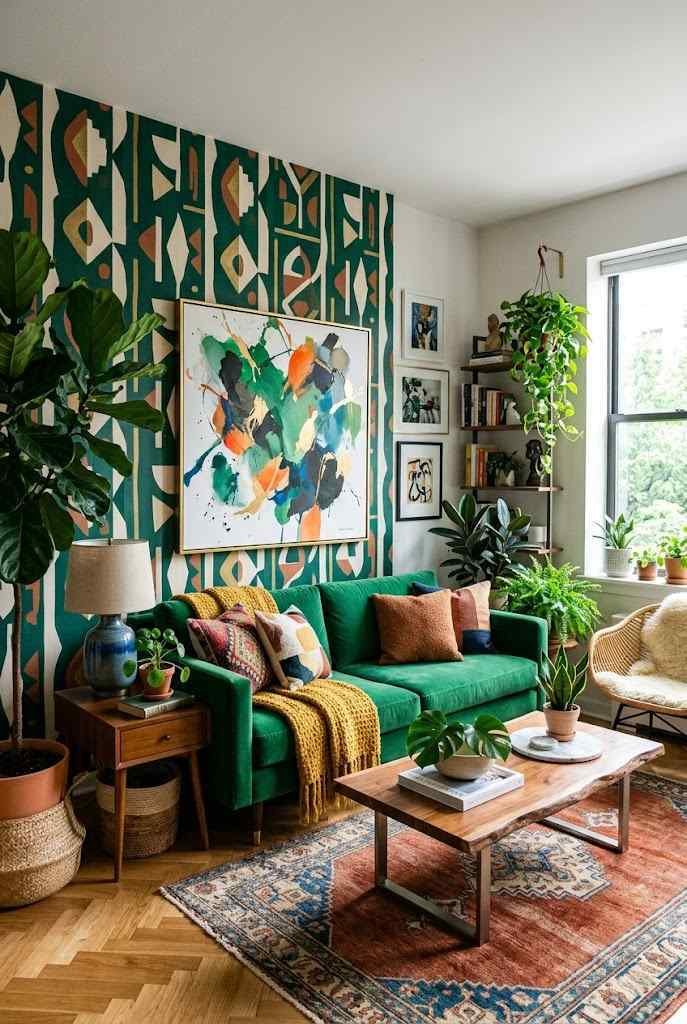
The best design choices feel current without screaming “2024.” Green manages this trick beautifully. It’s been around forever, but it also feels fresh right now. That’s because the interior design world collectively stopped treating color as risky.
Maximalism has its moment. People are choosing bold colors, patterned wallpapers, and layered textiles intentionally. A green sofa fits perfectly into that landscape. It’s not boring. It’s not trying too hard. It’s just… real.
I genuinely believe we’re moving past the era where “neutral and boring” equals “timeless and sophisticated.” A green sofa proves that smart color choices hold up just fine. In five years, it won’t look dated. In ten years, someone will covet that green sofa because it was always good they just forgot temporarily.
The internet is absolutely flooded with green sofa inspo right now, but here’s the thing: most of those rooms work because they’re built on solid design principles, not because green is magic. Good lighting, thoughtful color choices, intentional layering these are doing the heavy lifting. The green sofa is just the brave choice that holds it all together.
What’s interesting is that green sofas work across design aesthetics. Minimalism loves the calm they bring. Maximalism loves the boldness. Mid-century modern design celebrates the retro green tones. Cottagecore leans into sage and olive. Bohemian embraces jewel tones with eclectic layering. That versatility is exactly why green isn’t a trend it’s an option that transcends trends.
The real modern move? Choosing a color because it feels right, not because you’re afraid to. That confidence is what reads as contemporary. Five years ago, admitting you wanted a green sofa might’ve gotten you concerned looks. Now, everyone’s secretly wondering if they should’ve chosen green instead of gray.
FAQ’s
What wall colors work best with a green sofa?
Cream, warm beige, and soft taupe complement green sofas beautifully. Darker accent walls in navy or charcoal create drama without clashing with your sofa’s color.
Will a green sofa look outdated in a few years?
No. Green connects to nature, making it inherently timeless. Unlike trendy colors, green sofas maintain their appeal across decades and design styles.
How do I prevent my green sofa from looking too bold in a small living room?
Choose muted greens like sage or moss instead of jewel tones. Layer with neutral textiles and maximize natural light to keep the space feeling open and intentional.
Can I style a green sofa with other bold colors, or should I stick to neutrals?
Bold colors work beautifully! Pair your green sofa with warm terracotta, burnt orange, or even deep burgundy. The key is maintaining warm or cool undertones consistently throughout.
Is green fabric harder to clean and maintain than neutral sofas?
Not necessarily. Darker greens hide stains better than lighter shades. Protective fabric sprays work on green sofas just as effectively as other colors, making maintenance straightforward.
CONCLUSION
Here’s my honest take yes, if you love it. Not if it’s trendy. Not if it matches an Pinterest board. But if you walked into a room with a green sofa and felt that same spark I felt, go for it. Your living room deserves to feel like home, and home should make you happy the moment you sit down.
Green sofas work. They’re practical, they’re beautiful, and they prove you don’t need to be boring to be smart. That’s worth something.