
Guest bedroom
By Anna Grace | 17 March 2026
How to Create a Guest Bedroom People Actually Want to Sleep In
My aunt has a guest bedroom that doubles as a museum of unwanted furniture. There’s a treadmill draped in winter coats, a bookshelf full of VHS tapes, and a bed so stiff it could qualify as a chiropractic intervention. Every holiday, someone sleeps in that room, and every holiday, they emerge looking like they lost a fight.
You don’t need a big budget or an interior design degree to do better. A great guest bedroom comes down to a handful of smart decisions: a comfortable bed, thoughtful storage, decent lighting, and a few small touches that quietly say “we’re glad you’re here.” This guide walks through all of it, from the mattress up, so your spare room stops being a storage unit with a pillow and starts being the room guests brag about.
Start With the Bed, Because Nothing Else Matters If It’s Terrible
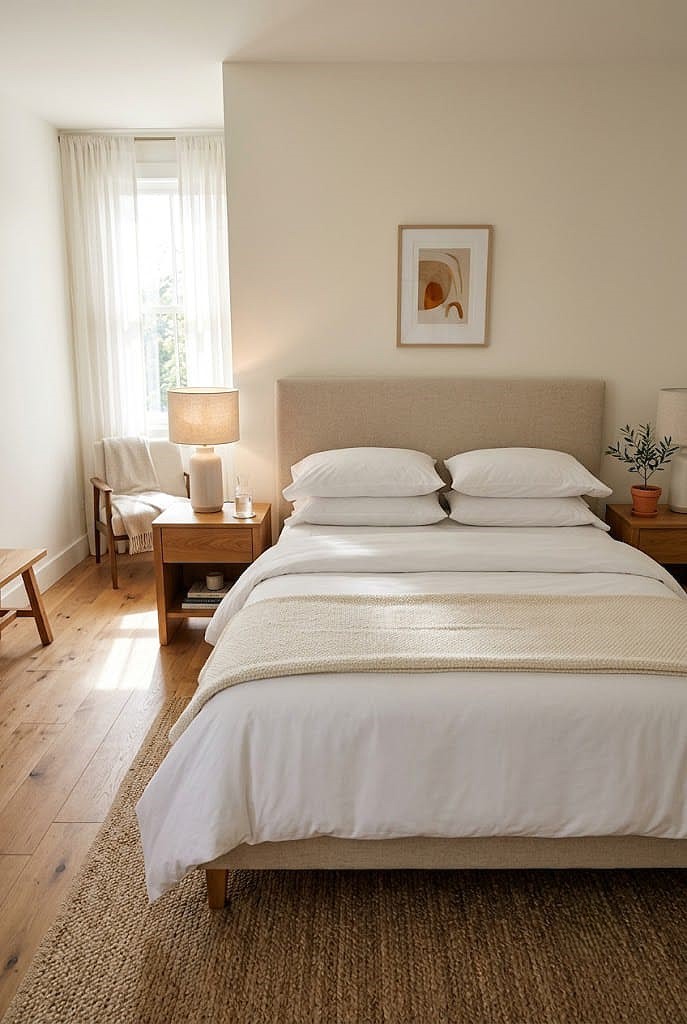
Here’s an uncomfortable truth: your guests will forgive bland walls, mismatched lamps, and even that weird painting you inherited. They will not forgive a bad night’s sleep. The bed is 80% of the guest bedroom experience, so put your effort (and most of your budget) there first.
A mid-range mattress in the guest room beats a premium everything-else. You don’t need to spend what you spent on your own bed, but avoid the temptation to demote your 15-year-old mattress to guest duty. If it wasn’t good enough for you, it’s not good enough for your mother-in-law. A quality medium-firm mattress works for the widest range of sleepers, since you can’t predict whether your next guest sleeps on their back, side, or in some pretzel formation known only to them.
Don’t overlook the frame, either. A squeaky bed frame turns every midnight roll-over into a house-wide announcement, and guests will lie rigidly still all night rather than risk waking anyone. Tighten the bolts, add felt pads where wood meets wood, and test it yourself with a dramatic flop. If it still creaks, a simple platform frame costs surprisingly little and eliminates the problem entirely.
Size matters too, and bigger isn’t automatically better. A queen fits most couples comfortably while leaving room to walk around in a modest spare room. If your space is tight, a full-size bed with generous walking clearance beats a king you have to shimmy past sideways. Guests would rather have floor space for their suitcase than an extra six inches of mattress.
Layer the Bedding Like a Hotel Does
Hotels figured out the bedding formula decades ago, and it’s worth stealing:
● Two pillow options per sleeper: one firm, one soft, because pillow preference is deeply personal and weirdly emotional
● A fitted sheet, flat sheet, and mid-weight duvet: layers let guests self-regulate temperature
● An extra blanket folded at the foot of the bed or in the closet: cold sleepers will silently thank you
● White or light neutral sheets: they look clean, they photograph well, and guests can see they’re actually clean
Wash the bedding right before guests arrive, not the week before. Sheets that have been sitting on a made bed for two weeks collect dust, and there’s nothing like a sneezing fit at 11 p.m. to sour a visit.
One personal rule I stand by: sleep in your own guest bedroom for one night before anyone else does. You’ll immediately discover the streetlight that blasts through the curtains, the vent that rattles, and the pillow that feels like a sack of flour. It’s the cheapest quality-assurance test you’ll ever run.
Give Guests Somewhere to Put Their Stuff
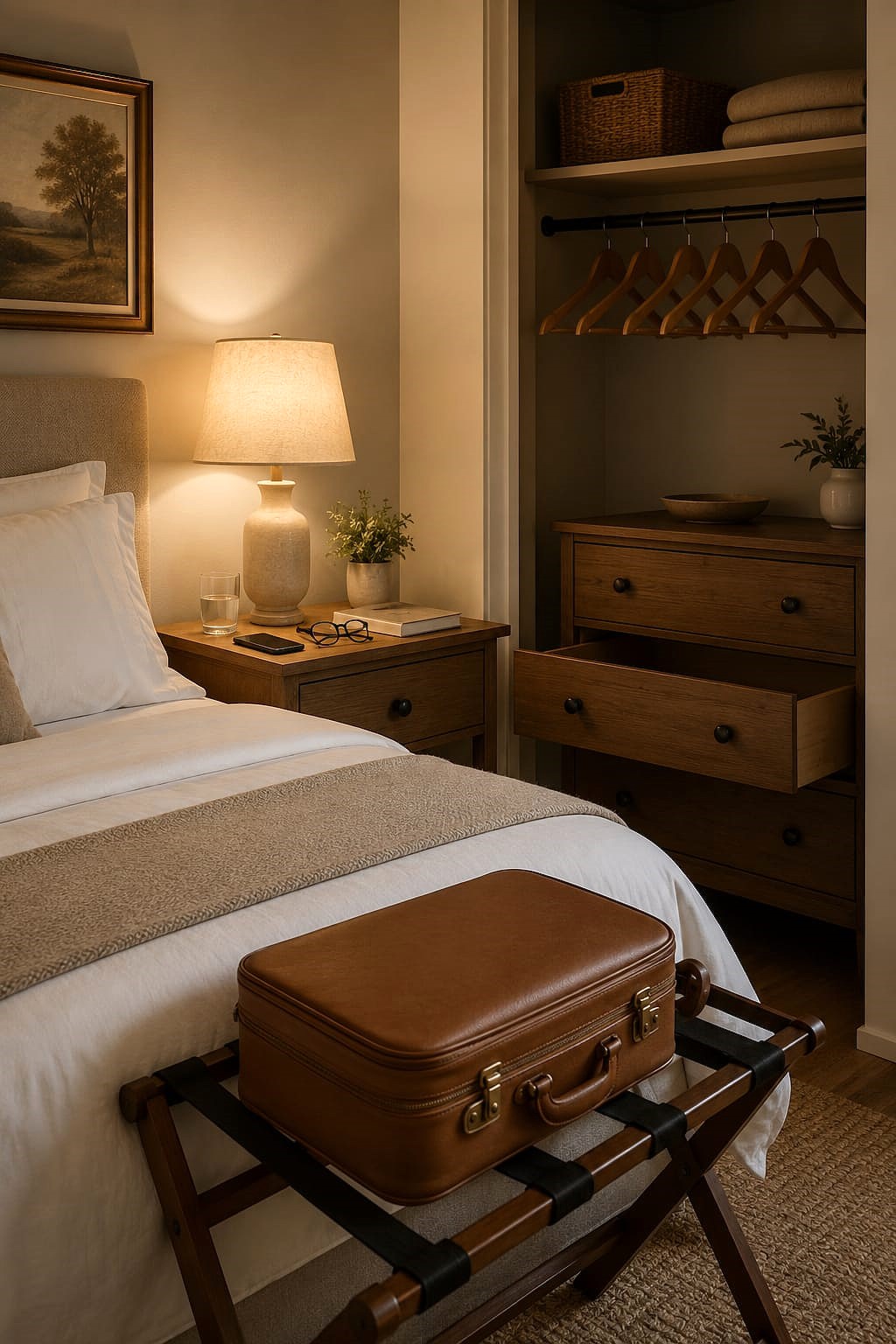
Have you ever lived out of a suitcase on the floor for four days, crouching down every morning like an archaeologist excavating your own socks? It’s grim. Storage is the most overlooked element of guest bedroom design, and it’s often the difference between a room that feels welcoming and one that feels like crashing on a fancy couch.
The essentials are simpler than you’d think:
● A luggage rack or a bench at the foot of the bed: this single item elevates the whole room and costs less than dinner out
● Six matching hangers in an empty section of closet: not a closet stuffed with your off-season wardrobe with two wire hangers wedged in as an afterthought
● One empty drawer: even a single cleared drawer in a dresser signals “this space is yours”
● A nightstand with a surface, not a shrine: clear off the decorative clutter so there’s room for a phone, glasses, and a book
If your guest bedroom pulls double duty as a home office or hobby room, storage becomes even more important. Nobody relaxes in a room where your tax documents stare at them from an open desk. Use closed storage cabinets, lidded baskets, a desk with doors so your life can disappear when guests arrive. A room divider or a folding screen can also visually separate the “office zone” from the “sleep zone” in about thirty seconds.
And please, resist the urge to treat the guest room closet as overflow storage for the rest of the house. If a guest opens the closet to hang a jacket and gets buried under an avalanche of gift wrap and camping gear, the illusion of hospitality dies instantly. Been there. The wrapping paper tubes rained down like javelins.
The Pre-Arrival Sweep
Beyond permanent storage, build a habit around a ten-minute sweep before every visit. Walk the room with a laundry basket and remove anything that belongs to your household: chargers, half-read books, the sweater you tried on and abandoned. Guests notice personal debris more than you’d think, because every stray object whispers “you’re borrowing someone else’s space.”
While you’re at it, check the practical stuff. Test the bedside lamp, confirm the outlets work, open and close the closet door to make sure it doesn’t stick or shriek. Run your hand along the top of the dresser and the headboard dust collects fastest in rooms nobody uses. Ten minutes of attention prevents a dozen small moments of guest awkwardness later.
Get the Environment Right: Light, Temperature, and Sound
You can nail the bed and the amenities and still torpedo the whole guest bedroom with a flickering overhead bulb and a radiator that clanks like a haunted ship. Environment is invisible when it’s right and unbearable when it’s wrong, so it deserves deliberate attention.
Lighting comes first. A guest bedroom needs at least three light sources: an overhead or general light for the whole room, a bedside lamp for reading, and ideally a small lamp on the dresser for soft ambient light. Use warm bulbs (2700K–3000K) everywhere cool white light makes a bedroom feel like a dental office, and nobody wants to wind down under interrogation lighting. If the bedside lamp has a fiddly switch buried under the shade, replace it. Guests shouldn’t need a tutorial to turn off a light.
Temperature is trickier because you can’t control it from inside the room in most homes. What you can do is compensate:
● Provide that extra blanket for cold sleepers
● Add a small fan for warm sleepers (it doubles as white noise)
● Show guests how to adjust the vent, radiator, or thermostat if they have access
● Check the room’s temperature at night, not at noon many spare rooms run noticeably hotter or colder than the rest of the house after dark
One more environmental note: smell. Every house has a scent its owners can no longer detect. Air the room out for a few hours before guests arrive, and skip the heavy plug-in air fresheners a subtly fresh room beats one aggressively perfumed with “Autumn Harvest Spice” every time.
Air quality matters beyond scent, too. A room that stays closed up for months collects stale air, dust, and sometimes a hint of dampness that settles into bedding and curtains. Crack the window seasonally even when nobody’s visiting, launder the duvet cover and pillow protectors a few times a year, and consider a small air purifier if anyone in your regular guest rotation has allergies. Guests with sensitivities will notice the difference in the first breath, even if they’re too polite to mention it.
Make It Beautiful Without Making It Weird
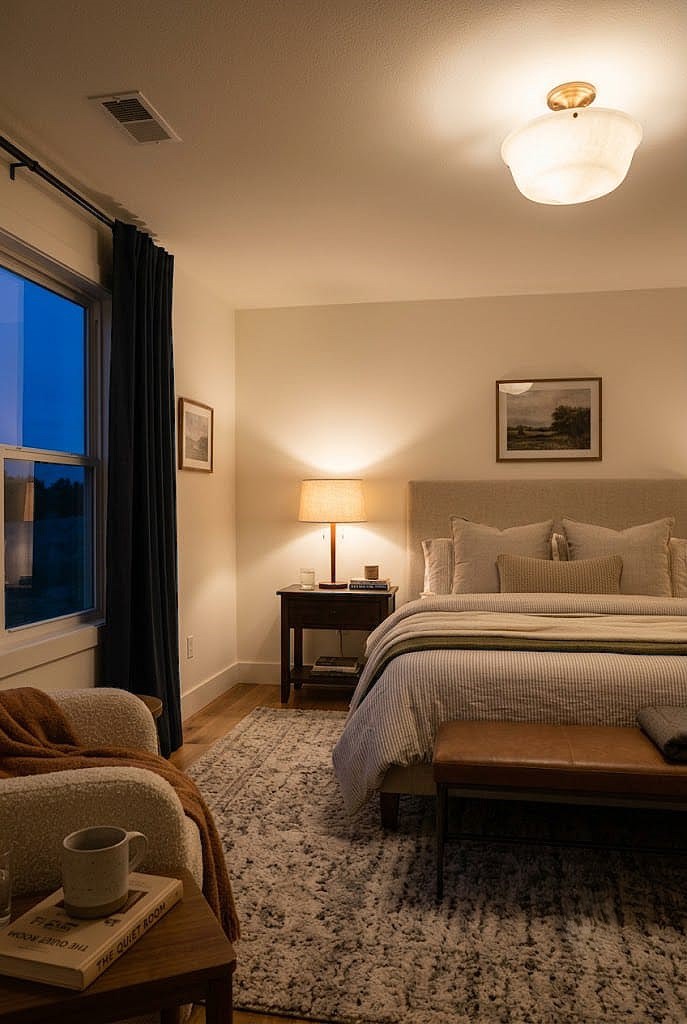
Now for the fun part: making the guest bedroom look intentional. The goal isn’t a showroom. It’s a calm, slightly impersonal space where almost anyone could feel at home think “boutique hotel,” not “your personality, but louder.”
Neutral doesn’t have to mean boring. Start with a calm base soft whites, warm greiges, muted blues or greens then add personality through texture and one or two focal points. A single piece of large art above the bed does more than a gallery wall of family photos (which, gentle reminder, can make guests feel like they’re sleeping inside your scrapbook). Layer in a textured throw, a rug that feels good under bare feet, and curtains that actually reach the floor.
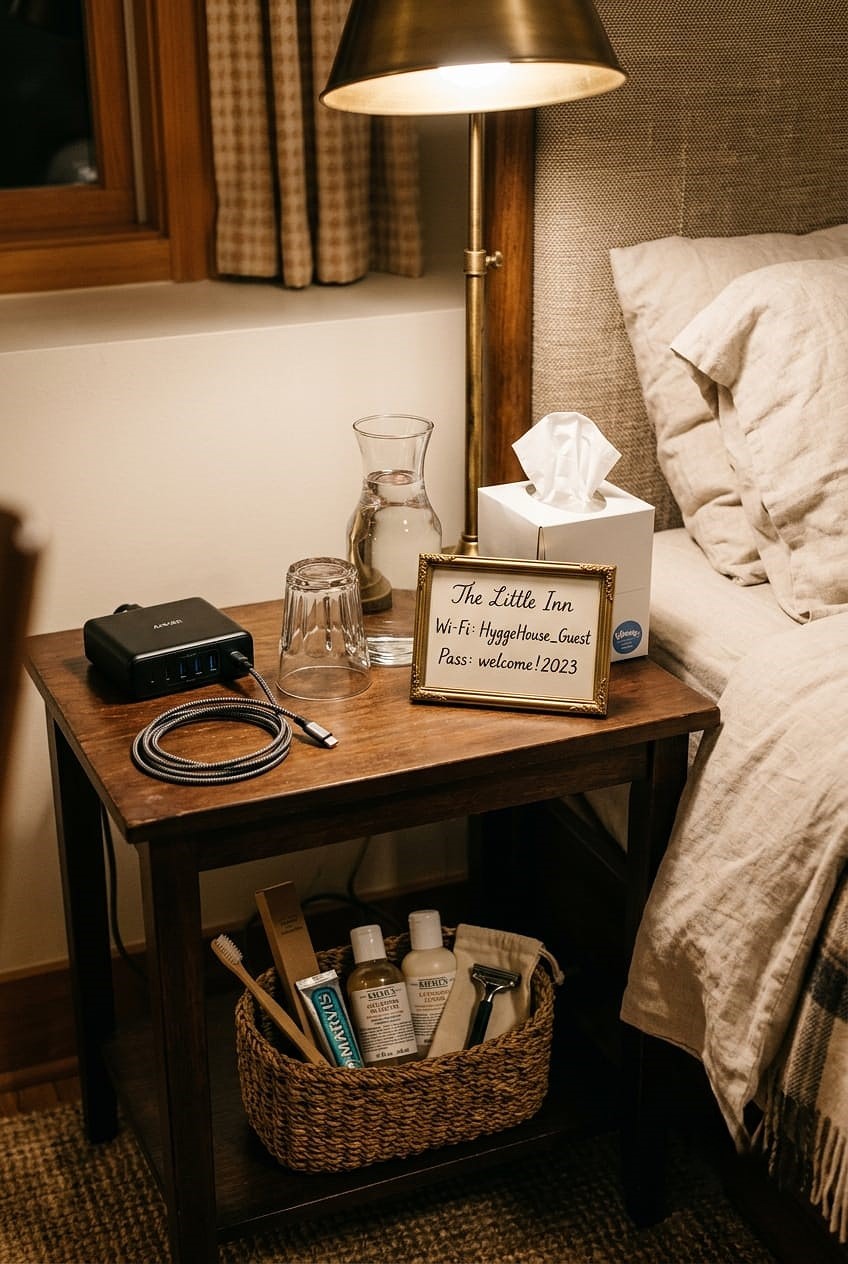
Keep decor functional wherever possible. A pretty tray corrals the water glass and Wi-Fi card. An attractive bench holds a suitcase. A stylish basket hides the extra blanket. When every decorative object earns its place, the room feels curated instead of cluttered and there’s less for you to move when the room inevitably reverts to its off-season duties.
A few styling guidelines that hold up in almost any guest room:
● Leave surfaces 70% empty: guests need places to put their own things
● Skip anything too fragile or precious: nobody relaxes next to an heirloom vase on a wobbly table
● Add one living thing: a low-maintenance plant (real or convincingly fake) softens the whole space
● Choose double-duty pieces: a sleeper chair, a storage ottoman, or a fold-out desk keeps the room useful between visits
And if your budget is tight? Prioritize in this order: mattress, bedding, blackout curtains, bedside lamp, luggage rack. Everything else is garnish. IMO a $40 set of crisp white sheets on a decent mattress outperforms a $400 accent chair every single time.
And if your budget is tight? Prioritize in this order: mattress, bedding, blackout curtains, bedside lamp, luggage rack. Everything else is garnish. IMO a $40 set of crisp white sheets on a decent mattress outperforms a $400 accent chair every single time.
Keep It Guest-Ready Between Visits
The final styling challenge isn’t creating a beautiful guest bedroom it’s keeping it that way when nobody’s watching. Spare rooms attract clutter the way parked cars attract shopping carts, and the room you perfected in April can quietly become a laundry-folding station by June.
Two habits solve this. First, give the room a permanent job between visits reading nook, yoga corner, quiet workspace because a room you actually use stays maintained, while a room you ignore becomes a dumping ground. Second, keep a “guest kit” packed and stored in the closet: fresh sheets in a labeled bag, the toiletry basket, the spare towels, the Wi-Fi card. When someone announces a visit, you’re twenty minutes from ready instead of scrambling through a full weekend reset.
There’s also a quiet benefit for you in all this. A guest bedroom that stays presentable becomes a genuine retreat within your own home a tidy, calm room you can escape to when the rest of the house descends into chaos. Some of the best afternoon naps happen in the room you decorated for other people. Consider it a hosting dividend. 🙂
From Moodboard to Reality: Making the Shift
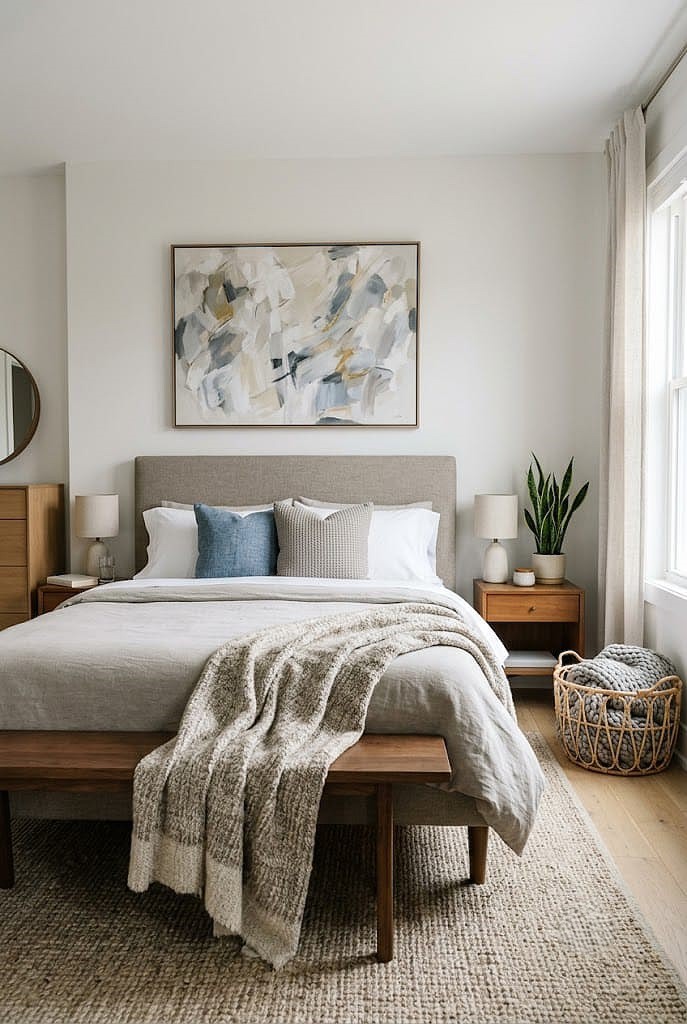
Once your moodboard feels right, resist the urge to buy everything at once. Start with the big-ticket items that anchor the room, like your bed frame, mattress, and wall color, since these set the tone for everything smaller. Nightstands, lamps, and decor can follow once the foundation is in place.
Before you finalize any paint color, test it. Buy sample pots and paint a few large swatches directly on your wall, then observe them at different times of day. Morning light and evening lamp light can make the same color read completely differently this single step would’ve saved me from my navy blue cave incident, no exaggeration.
FAQ’s
What is the most important item in a guest bedroom?
The mattress, a quality medium-firm option suits the widest range of sleepers.
What size bed is best for a guest bedroom?
A queen for most rooms choose a full if walking space is limited.
What should I put on a guest bedroom nightstand?
A lamp, phone charger, water, tissues, and the Wi-Fi password card.
How do I make a guest bedroom feel like a hotel?
Layer white bedding, add blackout curtains, provide toiletries, and clear ample storage space.
Can a guest bedroom double as a home office?
Yes! use closed storage and a divider to hide work items during visits.
CONCLUSION
A guest bedroom succeeds when your visitor stops noticing it. No fumbling for light switches, no texting you for the Wi-Fi password from down the hall, no waking up at dawn because the curtains surrendered to the sunrise. The room simply works, and your guest simply rests.
So walk into your spare room tonight and audit it honestly. Would you sleep well in there? Would you know where to put your suitcase, charge your phone, find an extra blanket? If the answer is no, you now have your to-do list and most of it costs less than a weekend away.
Your future guests won’t remember the paint color. They’ll remember that they slept well, felt considered, and didn’t have to ask for a single thing. That’s the whole job of a guest bedroom, and it’s entirely within reach.