
IKEA mudroom
By Anna Grace | 19 July 2026
The IKEA Mudroom Revolution: How Budget Furniture Became Your Home’s Best Investment
Your entryway doesn’t have to look like a tornado hit it. Seriously I used to think mudrooms required hiring an interior designer and dropping serious cash, but then I discovered what IKEA’s modular systems could actually do. Turns out, a functional mudroom is entirely achievable without maxing out your credit card, and the Scandinavian furniture giant has made it absurdly simple.
Here’s the thing most people treat their entryway like a dumping ground. Shoes scatter everywhere, coats pile on chairs, and that weird tangle of scarves takes up a shelf. It doesn’t have to be this way. IKEA mudroom solutions give you the structure to change that narrative completely.
Why Your Mudroom Needs Structure (Even If You Think It Doesn’t)
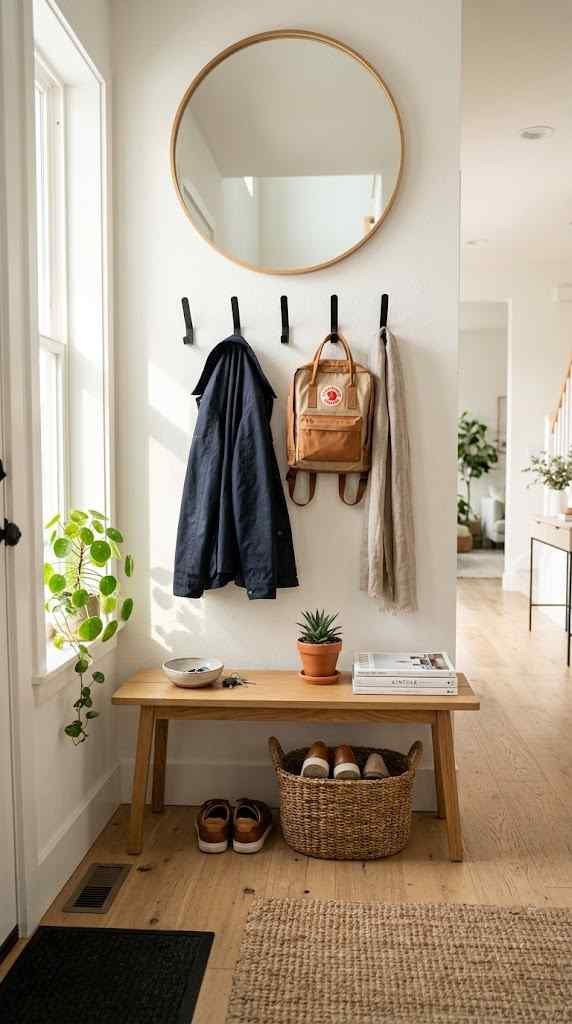
A mudroom without a system is just an ugly hallway. The moment you walk through your front door, you’re in “transition mode”—between outside and inside, between chaos and calm. If your entryway doesn’t catch that chaos, it spreads into every room of your home like a flood.
Think about it: where do wet jackets go right now? Where do backpacks land? What happens to mail, keys, and that stuff you need tomorrow? Without designated spots, these items don’t vanish. They multiply.
The psychological shift matters more than you’d expect. When you have a place for everything, you actually use it. IKEA’s mudroom furniture isn’t just about storage it’s about building habits. A coat rack that sits right by the door, shelves at eye level for daily items, hooks for bags these aren’t luxuries. They’re the difference between an organized home and controlled chaos.
Let’s get real for a second your entryway is basically your home’s first impression, and right now it might be lying about how put-together you are. Guests walk in, step over shoes, and silently judge the coat mountain by your door. That’s not paranoia; that’s just how first impressions work.
There’s also a time-cost nobody talks about. Every morning you spend digging for your keys or hunting down a missing glove adds up. IKEA mudroom systems eliminate that scavenger hunt entirely. You know exactly where things live, so mornings stop feeling like a treasure hunt gone wrong.
Kids make this even more critical. Teaching a five-year-old to “put it away” only works if “away” actually exists as a designated spot. Without structure, you’re fighting an uphill battle every single day. A mudroom system isn’t about aesthetics first it’s about removing friction from your daily routine.
IKEA’s Best Mudroom Staples That Actually Work
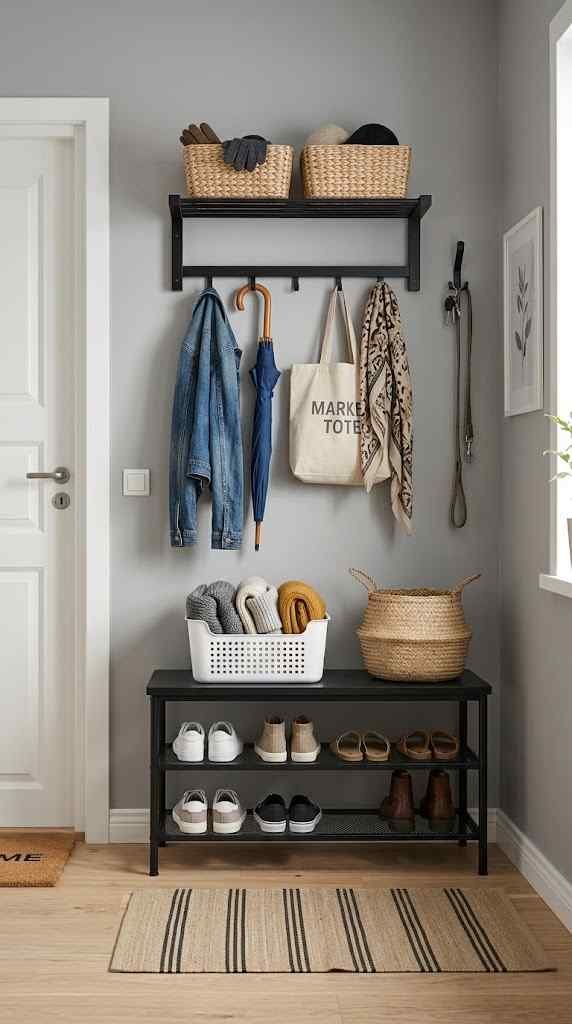
IKEA doesn’t carry a “mudroom collection” per se, but their modular pieces work together brilliantly when you know what to grab. The genius of their approach is flexibility.
PINNIG bench with shoe storage does double duty. It’s not just seating while you untie your boots; the hidden storage underneath captures shoes before they scatter. IMO, this is the single most practical IKEA piece for small mudrooms.
HAT shelf might sound boring, but it’s compact enough for narrow entryways and holds way more than hats. Toss gloves, keys, sunglasses, whatever needs corralling. The minimalist design means it doesn’t feel cluttered even when it’s full.
For hooks, TJUSIG offers different style options you pick based on your vibe. More sturdy than it looks, and they’re cheap enough that you can install them without existential dread.
Don’t sleep on the TROTTEN shelving unit either. It’s more industrial-looking than BESTÅ, but it handles heavier loads like sports gear or bulky winter boots without breaking a sweat. If your household includes athletes or outdoor enthusiasts, this one earns its keep fast.
For anyone dealing with a genuinely tiny entryway, the ENHET series offers narrow-depth cabinets that don’t eat into your walking space. FYI, measuring your entryway width before shopping saves you from returning oversized pieces later learned that one the hard way.
Baskets deserve their own shoutout too. VARIERA and SKUBB options slide into BESTÅ or open shelving to corral smaller items like gloves, hats, or dog leashes. They’re cheap, washable, and swap out easily when they get gross (because they will get gross eventually).
Mix textures and finishes intentionally. A mudroom filled with only white laminate feels sterile; adding a wood-tone bench or a woven basket warms things up without sacrificing function.
Designing Your Mudroom Layout: Where Things Go and Why
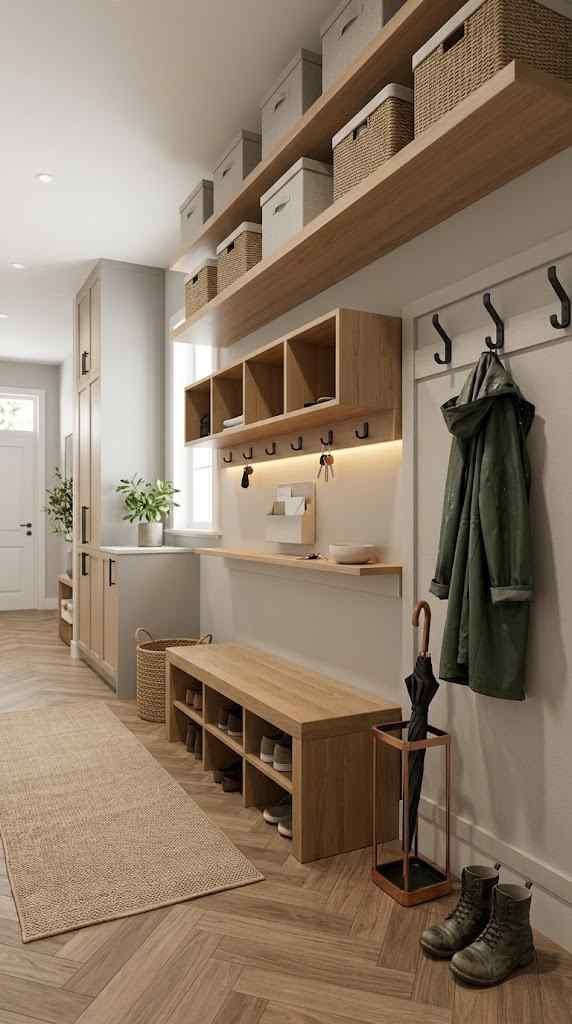
Here’s where most people stumble: they buy cute storage and then slap it on the wall without thinking. Bad move.
Start with traffic patterns. Where does everyone pause when they enter? That’s where daily-use items belong keys, phone chargers, the stuff you grab on your way out. This zone lives at eye level or within arm’s reach. IKEA’s shallow shelves and small wall-mounted cubbies excel here.
A few zone examples that tend to work well in small and medium offices:
Below eye level, go heavy. Shoe storage, larger baskets, anything you don’t need multiple times per day. This is where PINNIG benches and lower cubbies shine. They handle bulk without creating visual clutter at your sightline.
Above eye level, keep it light. Seasonal storage, decorative baskets, or things you rarely need. High shelves that look busy get in your head.
Wet items get their own zone. Hooks for damp coats shouldn’t sit directly above where you store shoes or bags. Moisture travels. A dedicated rail away from your other storage prevents that musty smell and protects your things. TJUSIG hooks work perfectly for this just space them strategically.
If your mudroom is pocket-sized, go vertical ruthlessly. Every inch of wall becomes valuable real estate. BESTÅ works because it doesn’t waste space you’re stacking functionality upward instead of spreading it outward.
Lighting changes everything in a mudroom, yet people forget it constantly. A dim entryway makes even the most organized space feel like a storage closet nobody wants to enter. Adding a simple wall sconce or under-shelf LED strip instantly elevates the whole area.
Color plays a bigger role than you’d think too. Dark, moody mudrooms hide dirt well but can feel cramped in small spaces. Lighter tones whites, soft grays, natural wood bounce light around and make narrow hallways feel less like a squeeze.
Consider zone labels if multiple people share the space. A family of four fighting over one shelf creates more chaos than having none at all. Assign each person their own hook, basket, or shelf section it sounds simple, but it eliminates the “that’s not my mess” arguments before they start.
Don’t forget a landing spot for outgoing items either. Library books, dry cleaning, packages to return these need a designated spot too, or they’ll wander into random corners of your home.
Small Mudroom Hacks That IKEA Makes Possible
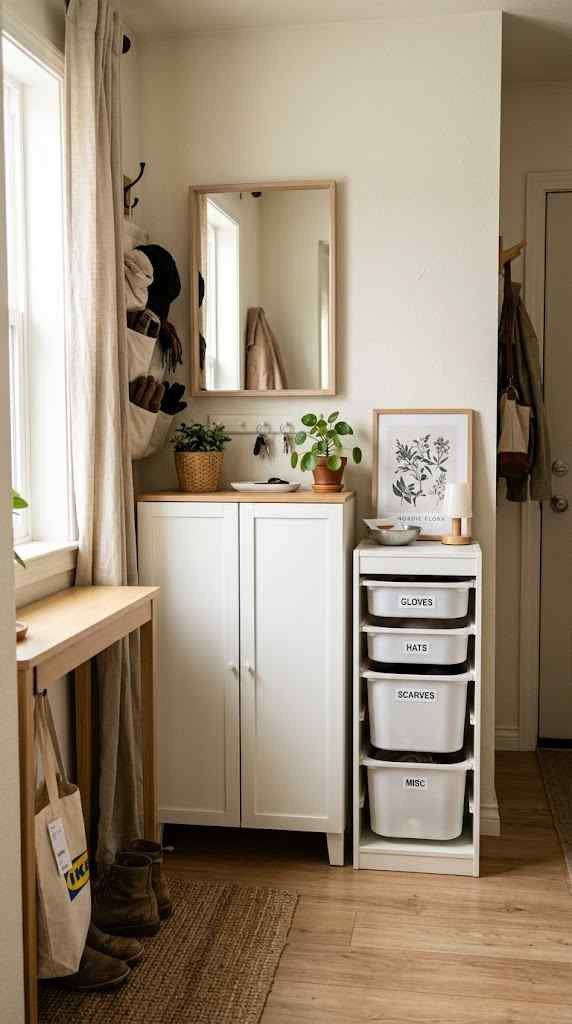
Tight quarters feel suffocating, but they don’t have to. Some of IKEA’s best solutions come from thinking sideways.
Narrow halls become functional when you use corner space. A small corner bench with a shelf above it transforms dead space into a full mudroom. PINNIG fits snugly, and a floating shelf above it gives you more without eating floor space.
Mirrors multiply visual space instantly. Hang one above your bench or shelf, and the room suddenly feels bigger. TVÄRS or similar mirror frames are affordable and do the job. Bonus: you actually use it before leaving (checking your face matters).
Door-mounted storage is your secret weapon for tiny mudrooms. RAGGISAR shoe rack hangs on the back of your closet or door, stealing no floor space. It sounds simple, but this one move can free up an entire shelf.
Use the space under stairs if you have them. A shallow BESTÅ unit tucked underneath captures shoes and gloves without intruding into your living space.
Baskets are your friends not just for looks, but for psychology. Toss items into a basket instead of letting them pile on a shelf. It feels more contained, and everything’s protected from dust.
Stackable bins are criminally underrated for tight mudrooms. Instead of spreading storage horizontally, stack labeled bins vertically inside a slim closet. You lose zero floor space and gain surprisingly generous storage capacity.
If you’re dealing with an actual closet-turned-mudroom, remove the closet door entirely and hang a curtain instead. It sounds unconventional, but curtains take up way less swing space than a traditional door, which matters when every inch counts.
Command strips paired with lightweight IKEA hooks work wonders for renters who can’t drill into walls. You still get functional hook storage without violating your lease agreement a small win that makes a real difference.
Think about multi-use furniture too. A slim console table with drawers can double as both a landing strip for keys and mail, plus hidden storage for less attractive items like extra masks or umbrellas. Function first, always.
Building It Wrong (And How to Avoid the Most Common Mistakes)
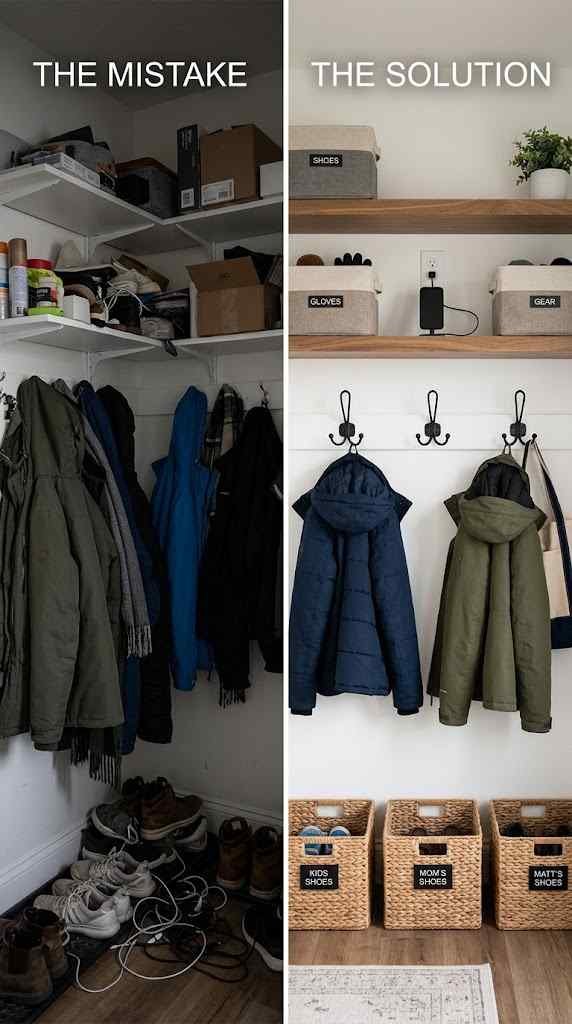
I once installed an IKEA mudroom that looked great but completely missed the mark functionally. Here’s what I learned:
Don’t max out your wall. Just because you can fill every inch doesn’t mean you should. Empty space is not wasted space it’s breathing room. A cluttered mudroom defeats the purpose.
Avoid overly decorative baskets that don’t match your lifestyle. If you have kids or pets, pristine woven baskets turn into a frustration magnet within weeks. Choose durable, washable options that tolerate real life.
Don’t forget power outlets. Seriously. Phone chargers, small fans to dry damp things, USB ports for keys mudrooms increasingly need electricity. Plan your IKEA layout around outlets you already have, or budget for an electrician to add them.
Skip hooks that are too delicate for your needs. TJUSIG holds up, but those tiny decorative pegs won’t survive winter coats or heavy backpacks. Be realistic about load.
Don’t ignore ventilation. A closed mudroom with wet winter gear becomes a humidity bomb. If your space doesn’t breathe, no amount of IKEA genius fixes the mold problem.
Another mistake? Ignoring seasonal rotation. Keeping summer sandals in prime real estate during January makes zero sense, yet most people never bother swapping their setup. Rotate items twice a year, and your mudroom stays relevant instead of cluttered with irrelevant footwear.
People also underestimate weight limits on wall-mounted shelving. That cute floating shelf holding three heavy winter coats? It’s not built for that. Check IKEA’s weight specifications before loading up, unless you enjoy unexpected shelf collapses at 7 AM.
Lastly, don’t skip the “trial week” test. Live with your new setup for seven days before finalizing everything. You’ll quickly notice if a hook is too high, a basket is too small, or the whole layout just doesn’t match how your family actually moves through the space.
FAQ’s
Can I create an IKEA mudroom without drilling into walls?
Yes, use freestanding units like PINNIG or BESTÅ, plus adhesive hooks for rental-friendly options.
How much does a basic IKEA mudroom setup typically cost?
Budget setups start around $150–$300, depending on pieces and storage capacity needed.
What’s the best IKEA product for a mudroom with kids?
TJUSIG hooks at lower heights plus labeled VARIERA baskets teach kids independent organization habits.
How do I stop my mudroom from smelling musty?
Separate wet items from dry storage and ensure proper ventilation or airflow nearby.
Can IKEA mudroom furniture handle heavy winter gear?
Choose TROTTEN or PINNIG for heavier loads verify weight limits before loading bulky items.
CONCLUSION
Here’s my unpopular take: every home should prioritize a functional mudroom before any other home improvement. It’s not glamorous, but it solves problems that ripple through your entire house.
An IKEA mudroom does something magical it gives your home a filter. Everything that comes from outside stays contained until you’re ready to deal with it. Your living spaces stay cleaner. Your mind stays calmer. Your family actually hangs things up instead of dropping them everywhere.
IKEA’s modular approach means you’re not locked into one version forever. As your needs change kids arrive, hobbies shift, seasons transform your mudroom evolves with you. You swap out baskets, add hooks, rearrange shelves. That flexibility is worth more than a perfectly designed, immobile expensive system.
Start with one piece. Install PINNIG. Add some TJUSIG hooks. See what works. Then expand from there. Within a month, you’ll wonder how you ever lived without structure at your entryway.