
Japandi livingroom
By Anna Grace | 19 April 2026
Transform Your Living Room Into a Japandi Sanctuary
The moment I stopped trying to make my living room look like an Instagram showroom, it became the space I actually wanted to spend time in. Turns out, when you combine Japanese minimalism with Scandinavian coziness, you get something that doesn’t scream for attention it just makes you feel better when you walk into the room.
That’s essentially the magic behind japandi design, a style that’s been quietly gaining momentum for the past few years. Instead of chasing the next maximalist trend or cramming your space with statement pieces, japandi asks a refreshingly simple question: what if your living room was beautiful because it wasn’t trying so hard?
The DNA of Japandi: Where Two Design Philosophies Kissed
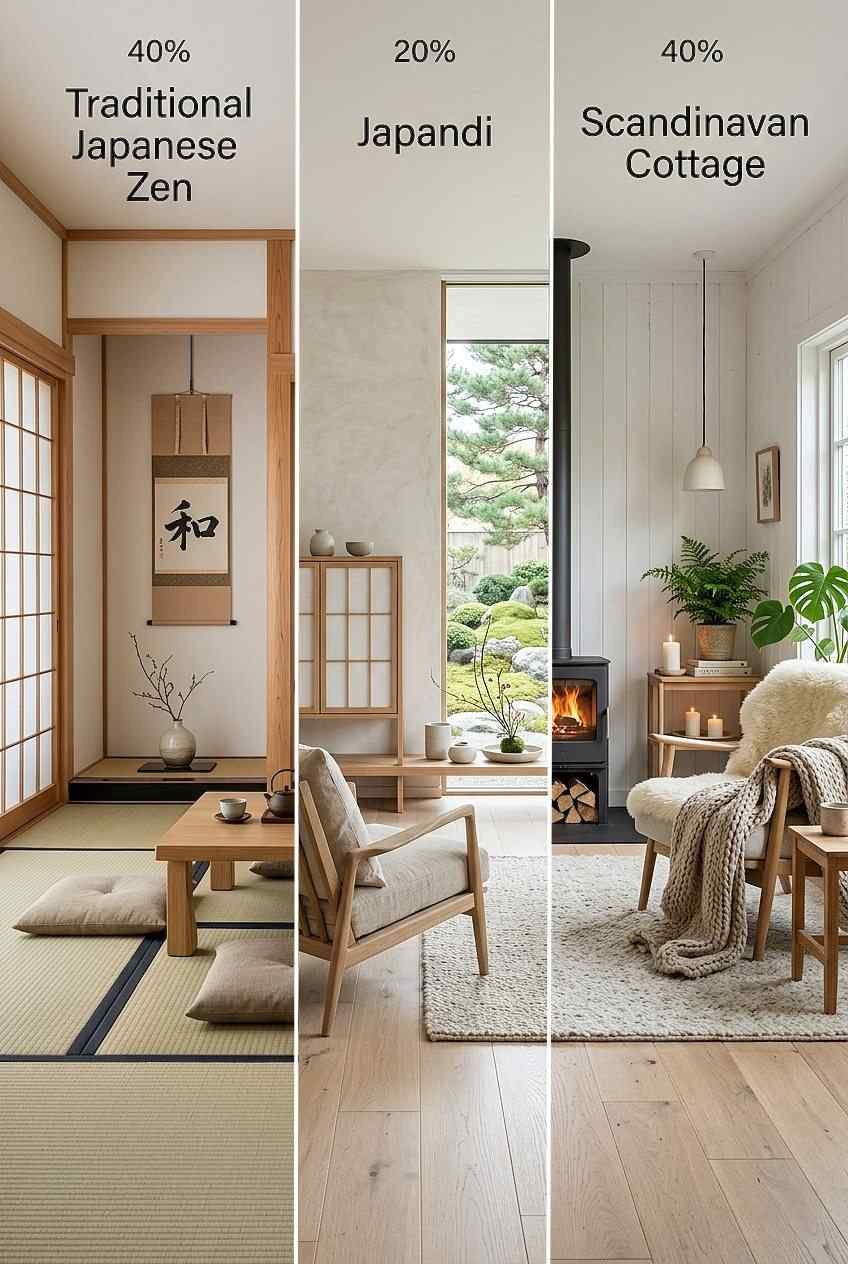
Japanese and Scandinavian design might seem worlds apart one rooted in Zen temples, the other in Danish cottages but they share something fundamental: a belief that less actually means more. Both cultures value functionality, natural materials, and the concept of wasted space as intentional, not lazy.
Japanese design brings ma (negative space), the principle that empty areas aren’t voids but essential design elements. It introduces clean lines, organic simplicity, and a deep respect for natural materials. You’re not decorating around objects you’re creating breathing room between them.
Scandinavian minimalism, meanwhile, contributes warmth. Light woods, soft textures, and an obsession with making things livable that’s the Nordic DNA. While Japanese design can feel meditative and austere, Scandinavian elements ensure your japandi living room doesn’t look like a monk’s cell.
When you blend them, you get a style that’s simultaneously serene and inviting. 🙂
What makes this fusion particularly genius is how it solves a problem that’s plagued interior design for decades: the battle between austere beauty and livable comfort. You can’t live in a museum, but you also don’t want your home to feel chaotic. The Japanese approach to emptiness teaches us that a blank wall isn’t sad it’s restful. Meanwhile, Scandinavian design reminds us that a room needs texture, warmth, and the feeling of actual human life happening in it. When you combine these, you get spaces that look magazine-worthy while genuinely feeling like home. Your guests won’t feel like they’re walking on eggshells; they’ll immediately relax. That’s the secret weapon of japandi it’s beautiful in a way that doesn’t demand anything from you.
Building Your Japandi Living Room: The Foundation
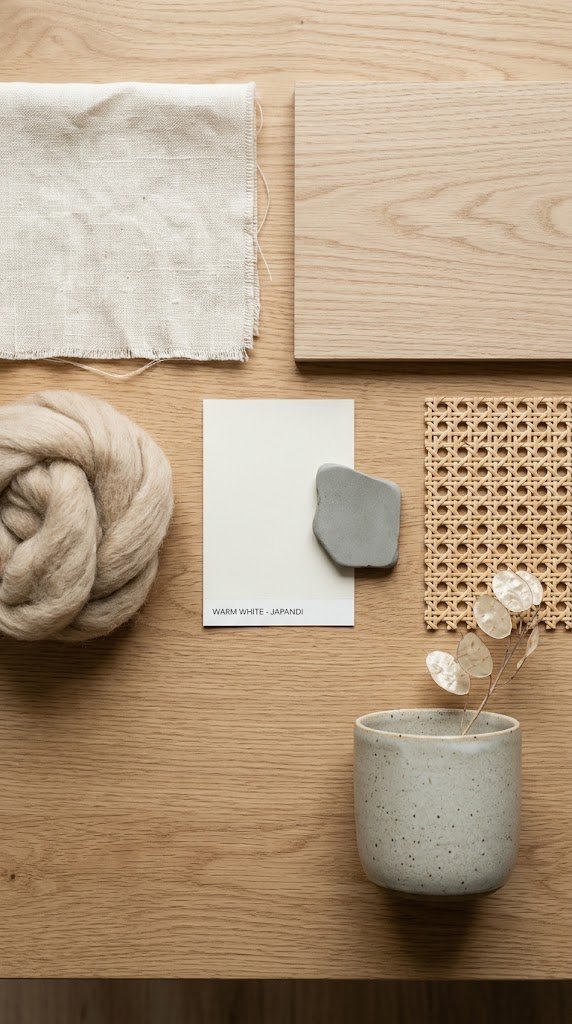
Here’s where most people get confused japandi isn’t about buying specific pieces labeled “japandi.” It’s about understanding principles and letting them guide your choices.
Color palette first. Stick to a neutral foundation whites, soft grays, warm beiges, and the occasional charcoal accent. This isn’t boring it’s intentional. These colors let texture become the star. Your eye rests on natural materials rather than fighting competing hues.
Material selection matters enormously. Raw wood with visible grain, undyed linen, natural stone, woven rattan these shouldn’t feel like afterthoughts. They’re the entire conversation. Japandi living rooms celebrate materials in their near-original state, which means you’ll notice the difference between cheap particle board and solid teak immediately.
Furniture should earn its place. Every piece needs a job. A low platform bed can anchor a corner, a simple wooden bench becomes both seating and visual interest, a ceramic vase holds flowers and adds sculptural beauty. Nothing exists just to fill the room.
One thing I learned the hard way it’s easier to start from scratch with japandi than to retrofit an existing chaotic room. But if you’re working with what you’ve got, here’s a realistic approach. Begin by removing everything you don’t absolutely love or use, then gradually reintroduce pieces intentionally. This isn’t about deprivation it’s about creating clarity. Once your walls are neutral and your furniture is minimal, you’ll suddenly notice how powerful a single wooden sculptural object becomes, or how a well-placed plant draws your eye naturally.
The foundation stage also means investing in quality over quantity. A single solid walnut side table beats three flimsy particle-board alternatives, both aesthetically and in terms of longevity. Think of it as building a wardrobe where every piece works with every other piece the foundational items matter most.
The Living Room Layout: Arranging Space the Japandi Way
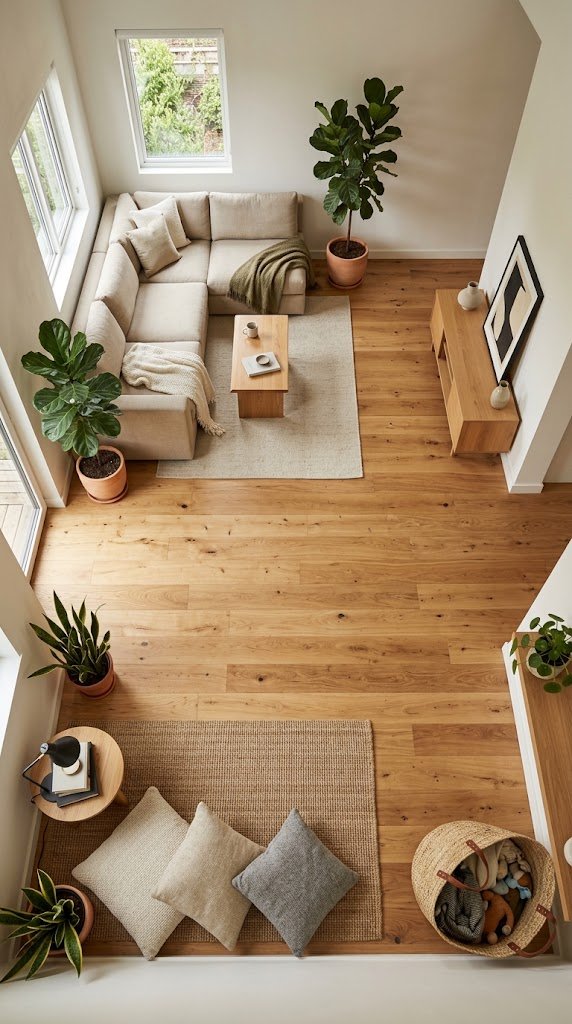
Most people arrange furniture around a TV. In a japandi living room, you arrange it around how you actually use the space.
Consider a lower profile setup. Floor seating (yes, with proper cushions) pairs beautifully with japandi it echoes Japanese tatami traditions while satisfying Scandinavian coziness. If that feels too extreme, a low-slung sofa accomplishes the same grounded aesthetic without requiring you to learn to sit cross-legged.
Create zones instead of one “viewing area.” A seating corner here, a reading nook there, a small display surface somewhere else. These deliberate separations make the room feel larger and prevent that clustered, overstuffed feeling.
Leave actual empty floor space visible. Not barren emptiness, but intentional gaps. This is where japandi philosophy shines that negative space isn’t a design failure it’s a feature. Your eye gets to rest, your body has room to move, and the space breathes.
I’ve seen people struggle with japandi layouts because they’re trained by decades of living room design to anchor everything around a TV. But here’s the thing japandi invites you to imagine your living room doing multiple things beautifully instead of one thing adequately. That corner by the window? Perfect for a meditation cushion and a single shelf of meaningful books. The wall opposite the door? Maybe it stays mostly bare except for one piece of art and a plant. This multifunctional approach means your space serves you better throughout the day.
Morning coffee while reading, afternoon work on a lap desk, evening conversation with a friend each activity has its own designated zone without feeling like the room is chopped into pieces. The beauty is that these zones flow into each other visually because they’re connected by the common thread of simplicity and quality. You’re not creating boundaries with heavy furniture you’re using placement and intention instead.
Accessories: The Japandi Minimalist’s Restraint Test
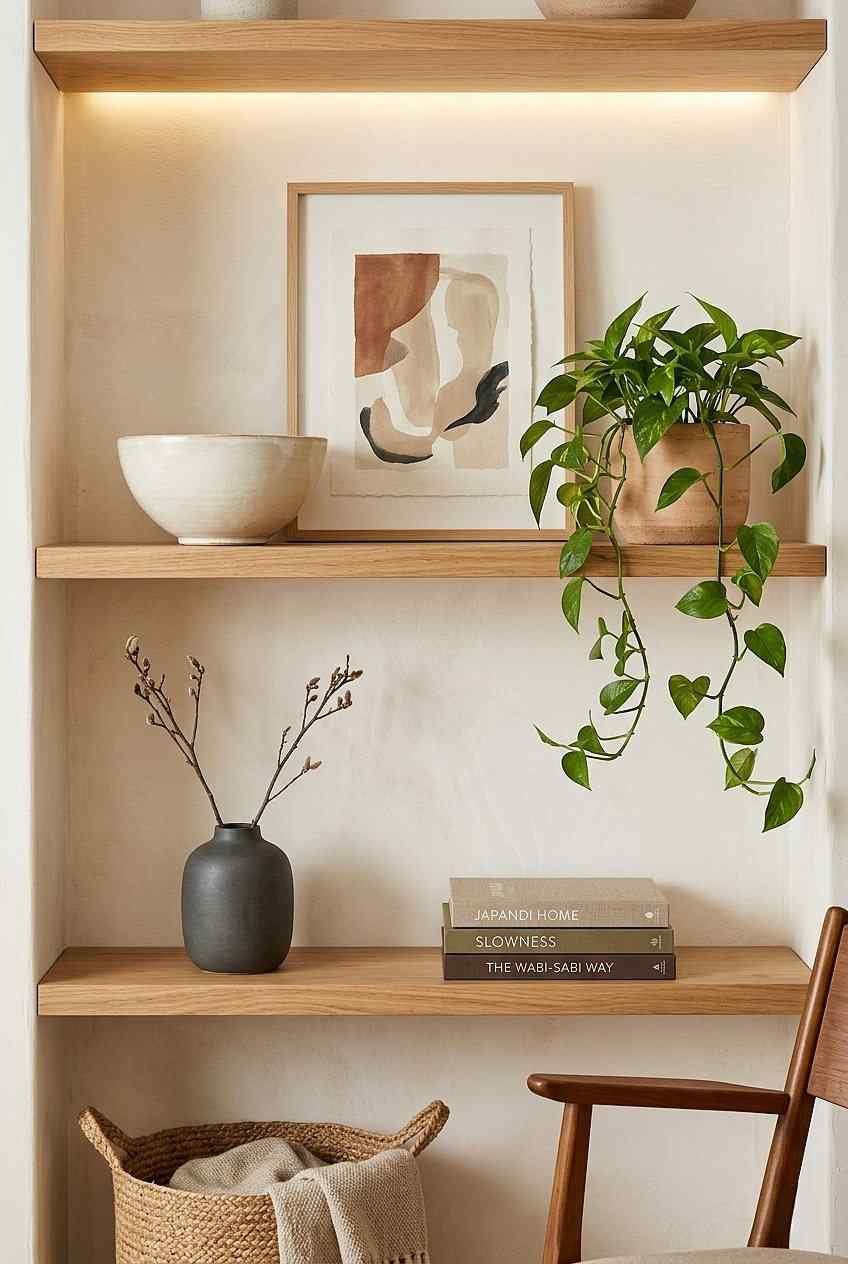
This is where many people derail their japandi living room. Minimalism doesn’t mean sterile, but it absolutely means curated. IMO, the best way to choose accessories is to ask would this object be beautiful even if no one saw it?
Select a few statement pieces rather than many small ones. One stunning wooden bowl on a shelf beats seven decorative items clustered together. A single piece of abstract art preferably with muted tones works better than a gallery wall. A woven basket serves storage and adds texture without clutter.
Plants deserve special mention here. They’re not optional in japandi design; they’re essential. Indoor greenery connects your living room to nature while keeping the aesthetic fresh. Pothos, snake plants, or peace lilies thrive indoors and don’t demand much.
Textiles should be functional and tactile. A chunky knit throw, a linen cushion, a jute rug these add warmth without visual noise. The key difference from other styles you’re not layering patterns; you’re layering textures.
Here’s a practical trick I use: the “empty shelf” method. Arrange your accessories, then remove one-third of what you’ve placed. Then look again and remove one more piece. What remains should each have a reason for being there visual interest, functionality, or emotional value. This isn’t deprivation; it’s curation
The objects that survive this test become focal points rather than background noise. A single piece of driftwood on a shelf becomes sculpture. A collection of three small ceramic vessels in varying heights becomes an intentional display. The space around them matters as much as the objects themselves. Seasonal rotation also works beautifully with japandi swap out your accessories quarterly to keep the space feeling fresh without cluttering it. You’re essentially curating a small museum of your own life, where every single piece on display was chosen with purpose.
Lighting in a Japandi Living Room: Warmth Over Drama
Harsh overhead lighting is the enemy of japandi. Instead, layer your light sources strategically.
Natural light remains your best tool position seating to take advantage of windows, and resist covering them with heavy curtains. Sheer linen panels let light filter through while maintaining privacy.
For artificial light, embrace warm tones. Edison bulbs with a soft golden glow, frosted glass fixtures that diffuse light evenly, and paper lanterns (obviously) all create the cozy Japanese atmosphere without the Scandinavian sterility that comes from clinical white LEDs.
Track lighting or adjustable floor lamps give you control. The ability to lower light intensity in the evening enhances that meditative japandi feeling you’re not fighting brightness; you’re settling into calm.
The temperature of your light matters more than most people realize. Cool white LED bulbs will sabotage your japandi aesthetic faster than anything else. Your brain actually processes warm light (2700K or lower) as calming, while cool light triggers alertness. Japandi is fundamentally about creating a space that supports mental ease, so the lighting needs to support that. If you’re replacing fixtures, look for materials that diffuse light beautifully frosted glass, paper, linen, or ceramic.
Avoid anything shiny or reflective that bounces light harshly around the room. Position lamps where they cast pools of warm light rather than flooding the entire space uniformly. Think of lighting as a way to sculpt the room shadows are just as important as illuminated areas. The goal is never to eliminate shadows; it’s to make them fall beautifully.
Common Japandi Mistakes That Derail the Whole Thing
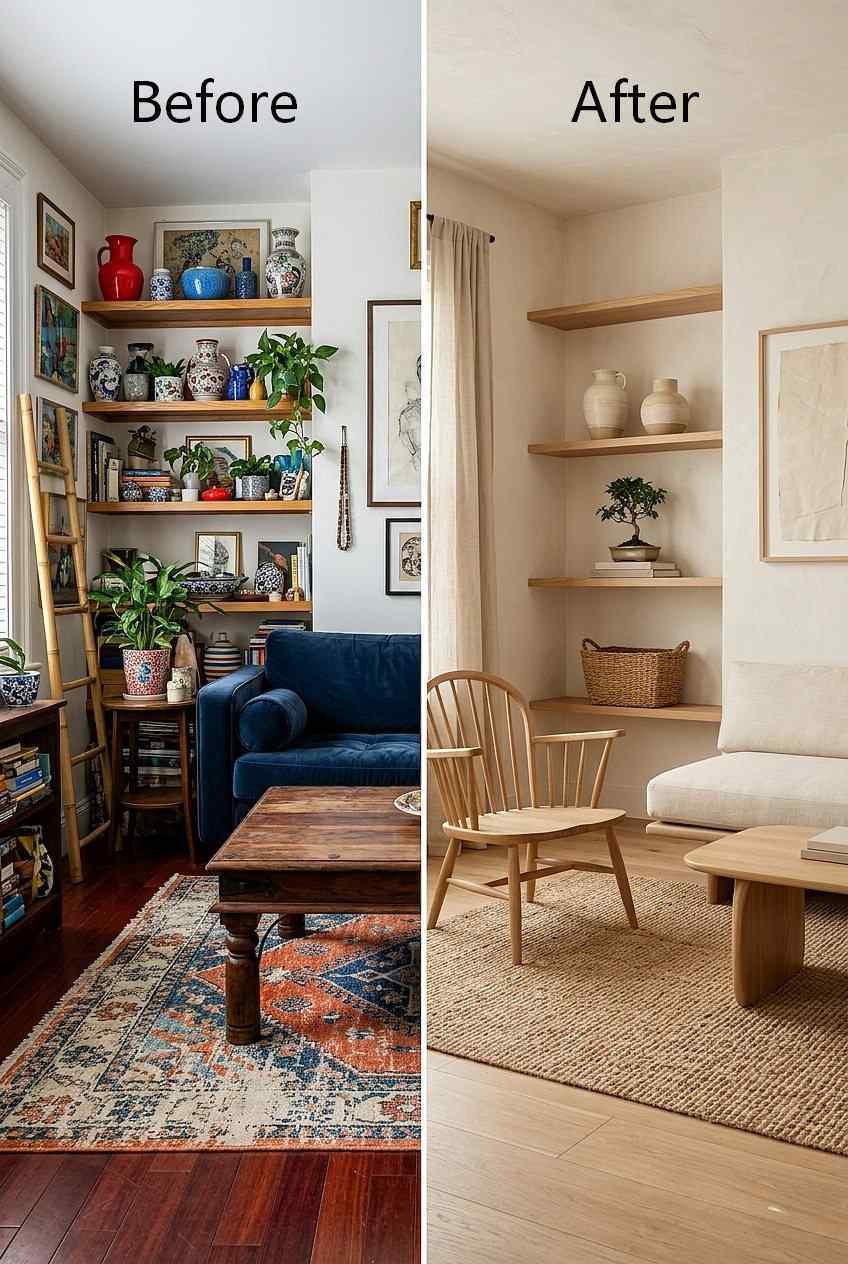
Trying to look japandi without understanding japandi philosophy? That’s the trap most people fall into. Here are the landmines:
Over-decorating with “japandi” objects. A collection of ceramic pieces, multiple floating shelves, plants in every corner this becomes maximalism wearing a japandi disguise. Restraint is the entire point.
Mixing textures randomly. Japandi celebrates natural materials, but throwing together ten different wood tones looks chaotic, not curated. Establish a material palette and stick to it. Mixing two wood tones works; mixing five doesn’t.
Ignoring proportion and scale. A massive sectional swallows a small living room. A delicate mid-century chair in a large space becomes invisible. Japandi design requires matching furniture to your actual space.
Adding color just because. That “one pop of color” trend doesn’t belong here. Japandi doesn’t forbid color it just believes color should come from natural materials (warm wood, green plants) rather than a painted accent wall.
Another mistake worth mentioning confusing japandi with ultra-industrial minimalism. Some people strip their living rooms bare and think they’ve achieved japandi because it’s minimal. But that cold, sterile look is actually the opposite of what makes japandi work.
The Japanese principle of wabi-sabi finding beauty in imperfection and incompleteness is central to the aesthetic. This means your wood can have knots, your ceramic can be handmade with irregular edges, your rug can be naturally undyed with color variations. These imperfections aren’t flaws they’re evidence of authenticity. Similarly, Scandinavian coziness requires softness soft textures, soft light, soft corners (figuratively speaking). If your living room looks cold, sterile, or uncomfortable, you’ve missed the mark. The sweet spot is where minimalism feels warm, where simplicity feels intentional rather than empty, and where restraint feels luxurious.
Making Japandi Personal Without Breaking the Rules
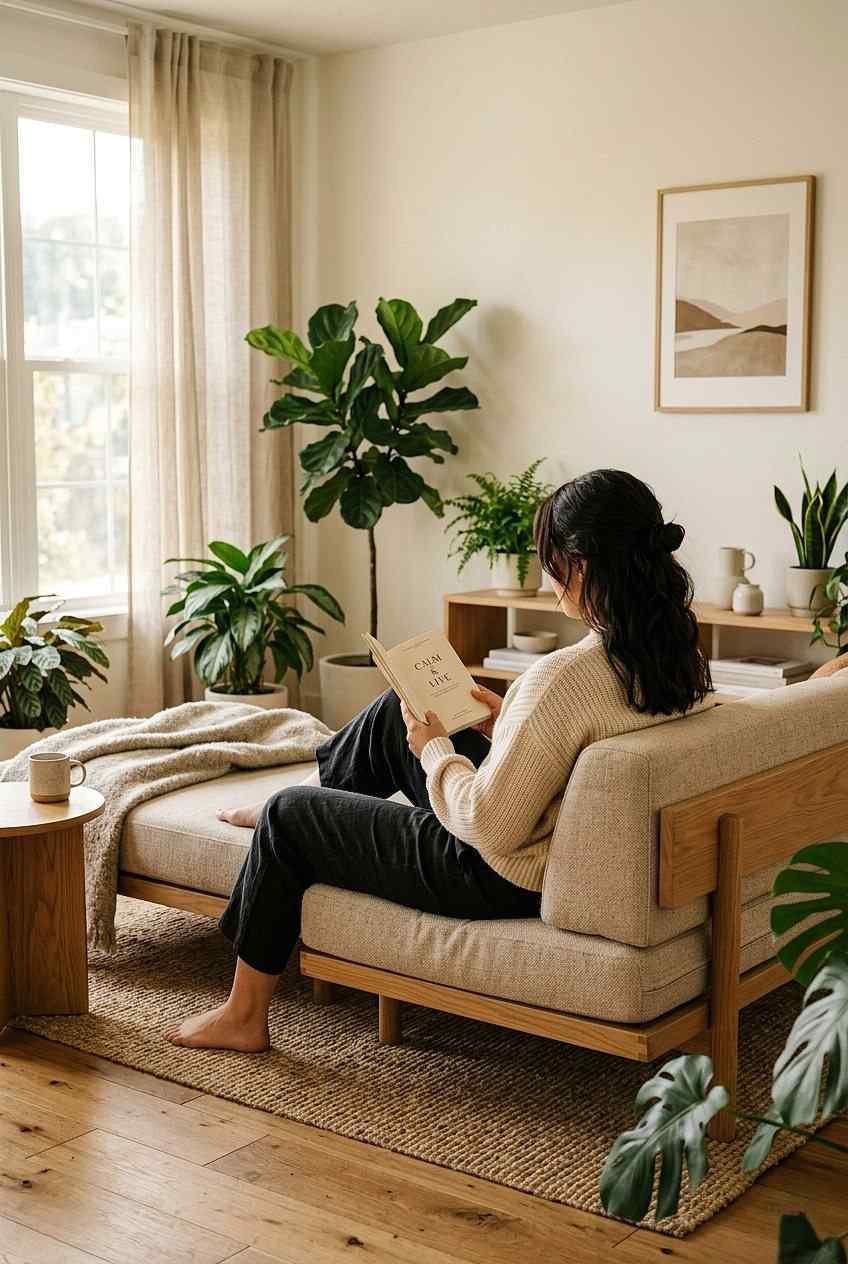
The biggest misconception is that minimalism means you can’t express yourself. Wrong. Japandi is intensely personal because it’s so quiet everything visible carries weight.
That family heirloom wooden box becomes art. Your collection of meaningful objects (not 47 decorative items, but perhaps five that genuinely matter) tells your story. A photograph on a simple shelf speaks louder than three dozen on a gallery wall.
Your japandi living room should reflect how you live. If you read constantly, make that visible through a thoughtful shelf arrangement. If you practice yoga, create actual space for it. If you cook together, maybe the open kitchen flows naturally into the living area. The style serves your life it doesn’t dictate it.
The personalization piece is where japandi becomes genuinely rewarding. Your living room becomes a reflection of what matters to you rather than what Instagram says should matter. Maybe you’re an avid reader your space celebrates that with a thoughtfully arranged book collection and a reading chair that invites hours of sitting. Maybe you practice yoga or meditation the open floor space and peaceful atmosphere support that lifestyle naturally. Perhaps you entertain frequently your layout facilitates conversation and gathering without sacrificing the calm aesthetic
The point is that japandi isn’t a rigid style you fit into it’s a framework within which your actual life fits perfectly. The minimalism creates a canvas, and your personality and habits provide the strokes.
FAQ’s
Can you achieve a japandi living room on a budget, or is it an expensive design style?
Japandi prioritizes quality over quantity, so you can start affordably by investing in fewer, better pieces gradually over time.
What’s the easiest way to transition my current living room into a japandi aesthetic without starting completely over?
Begin by removing clutter and unnecessary items, then slowly replace worn pieces with neutral, natural-material alternatives that align with japandi principles.
How do I keep my japandi living room from looking too empty or cold?
Layer warm textures like linen, wool, and natural wood, use warm-toned lighting, and incorporate living plants to add warmth without clutter.
Are there specific japandi living room plants that work better than others indoors?
Low-maintenance plants like pothos, snake plants, and peace lilies thrive indoors and complement japandi aesthetics without demanding constant care.
How can I add color to a japandi living room without breaking the minimalist aesthetic?
Introduce color naturally through wood tones, plant greenery, and subtle textile variations rather than bold accent walls or bright decorative pieces.
CONCLUSION
Building a japandi living room doesn’t require a complete overhaul or a massive budget. It requires a commitment to intention. Walk through your current space and ask what you actually use, what genuinely makes you happy, and what’s just occupying square footage.
Remove the rest. Then, slowly, thoughtfully, add back only pieces that belong. Warm wood, natural light, neutral colors, functional beauty, and breathing room. That’s not a design trend that’s a lifestyle that actually sticks around.