
kitchen countertop
By Anna Grace | 22 March 2026
Why Your Kitchen Countertop Choice Matters More Than You Think: A Complete Material & Durability Guide
Your kitchen countertop isn’t just a surface. It’s where you’ll spend thousands of hours chopping, kneading, setting down groceries, and wondering why you didn’t spring for the nicer option. Seriously most people pour money into stainless steel appliances they’ll use for 15 minutes a day but cheap out on the one thing they touch constantly. That’s backwards.
The countertop you choose will shape how your kitchen actually feels to live in, how easily you can maintain it, and whether you’ll cringe every time you bring someone new into your home. Whether you’re building from scratch, renovating, or just fed up with your existing surface, the decision matters way more than you’d think.
The Material Game: What’s Actually Worth Your Money
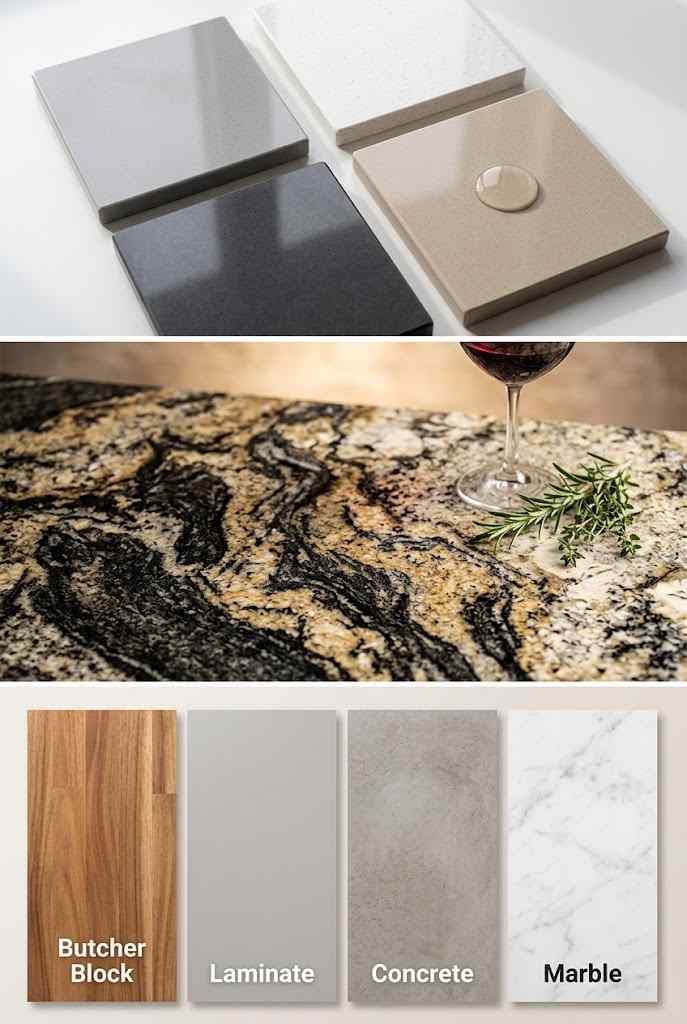
Here’s the truth: you have way more options now than you did ten years ago. Granite and quartz used to be the only “premium” players, but the landscape has shifted completely.
Quartz has become the heavyweight champion for good reason. It’s engineered from natural quartz mixed with resins, which means it’s non-porous, doesn’t need sealing, and shrugs off most stains like it’s got an attitude. It’s durable, comes in nearly any color you dream up, and won’t harbor bacteria in microscopic cracks. The downside? Your wallet will notice. We’re talking $80-150 per square foot installed, and that adds up quick in even a modest kitchen.
Granite still has its fans, and honestly, the aesthetic argument for natural granite is solid. You get that one-of-a-kind veining, genuine elegance, and it feels substantial in a way engineered materials sometimes don’t. But you’ll be sealing it regularly (fun times), and acidic substances can etch the surface if you’re not careful. Cost-wise, you’re looking at similar pricing to quartz, maybe slightly less depending on the slab.
Laminate gets a bad rap, but it’s genuinely improved. New laminate resists scratches better, cleans easily, and won’t destroy your budget you’re looking at $10-20 per square foot. The catch? They can chip, scratch with enthusiasm, and don’t have that premium kitchen vibe. IMO, it’s still solid for rentals or if your kitchen priorities lie elsewhere.
Butcher block brings that warm, farmhouse feel. Wood feels alive in a kitchen, literally. But wood needs love oiling, protecting from moisture, being gentle with it. If you’re the type who neglects maintenance, this will haunt you. It’s also pricey ($50-100 per square foot) for something that’s genuinely high-maintenance.
Marble looks like a million bucks, which is why people love it. That elegant veining? Stunning. But marble is soft, porous, and hates acid, heat, and basically everything you do in a kitchen. It’s the beautiful, dramatic friend who needs constant reassurance. Save it for a fancy secondary kitchen if you’ve got one.
Concrete is for the bold. Polished concrete screams industrial-chic and is surprisingly durable once sealed properly. It’s customizable, can be stained, and definitely makes a statement. Maintenance is moderate, and cost depends on whether you DIY or hire someone who actually knows what they’re doing.
Beyond the standard material lineup, there’s a growing wave of alternatives worth considering. Recycled glass countertops combine crushed glass with resin for a one-of-a-kind look that genuinely turns heads. They’re eco-conscious, durable, and catch light beautifully though they skew pricey at $70-130 per square foot. Solid surface materials like Corian offer a middle ground between laminate and high-end stone, with seamless installations and easier repairs than you’d get elsewhere.
If you’re thinking long-term investment, consider how your chosen material ages emotionally, not just physically. Some materials develop character and patina over time (butcher block, concrete), while others look dated once the trend passes (certain laminate finishes from 2010). The most expensive option won’t necessarily be the smartest if you’re not passionate about maintaining it. Cost also fluctuates based on slab availability that trendy blue-grey quartz everyone wants might cost 30% more than neutral options right now, but prices shift with demand.
The Durability Reality Check (It’s Messier Than Marketing Suggests)
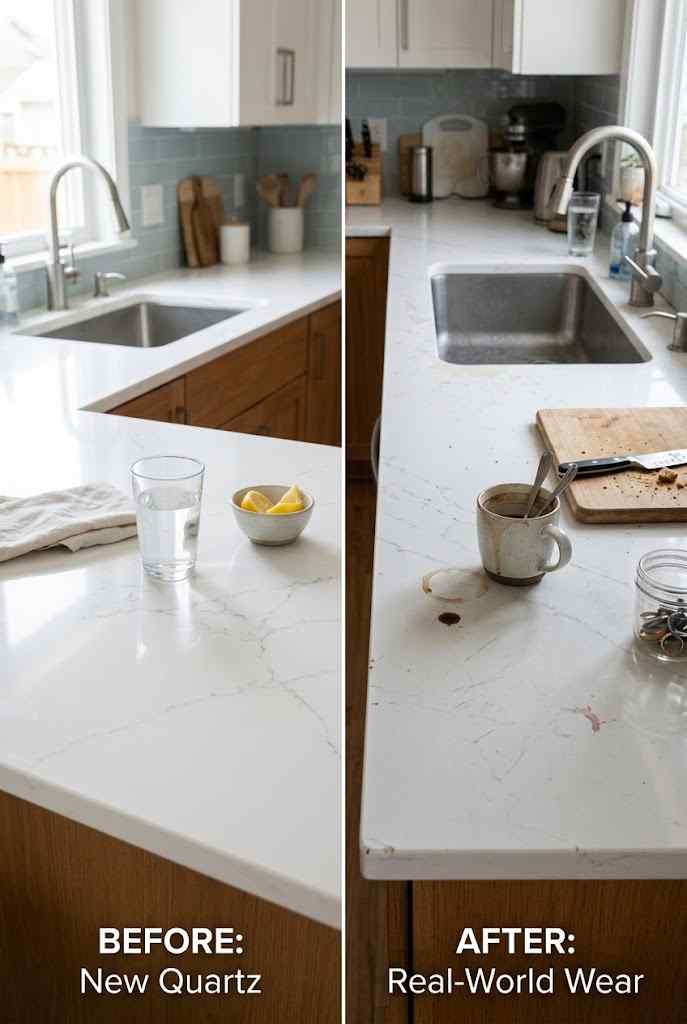
Every countertop material comes with a reliability story that gets better with every sales pitch you hear. Let’s talk actual reality.
Quartz: Legitimately tough. Won’t stain, won’t harbor bacteria, won’t get destroyed by heat unless you literally place a hot pan directly on it (which you shouldn’t do anyway). This is probably the “safest” choice if you want to set it and forget it.
Granite and marble: Beautiful but fussy. That granite scratch you can live with. That marble etch from your lemon juice? That’s permanent, and it bothers you every single time you see it. I’ve got a friend with marble counters who now eats at restaurants half the time just to avoid using her own kitchen.
Butcher block: Durable if you treat it right, trashed if you don’t. You can sand out scratches and re-oil it back to life, which is kind of cool, but also requires you to actually do that.
Laminate: Gets dinged up faster than other options, but it’s cheap enough to replace that it doesn’t hurt as much emotionally or financially.
Concrete: Tougher than people assume, but chips happen, and sealed concrete can trap water underneath if the seal fails.
The real talk: Your lifestyle matters more than material specs. A material can be technically durable while still being wrong for how you actually live. Choose based on honesty about your habits, not the Instagram photos.
Temperature tolerance is where materials really diverge. Quartz can technically handle heat, but manufacturers recommend trivets or pads anyway because the resin can discolor under extreme temperature. Granite handles heat better, which is why professional cooks sometimes prefer it, but one hot pot directly on a marble counter and you’ve got permanent damage. Laminate will literally melt or blister if you’re not careful. Concrete, when properly sealed, surprises people with its heat resistance it’s actually quite forgiving.
What nobody tells you about durability the installer matters as much as the material. A gorgeous granite slab installed with insufficient support will crack. Quartz sealed improperly will eventually allow moisture underneath. Concrete sealed by someone who doesn’t know what they’re doing becomes a nightmare. Get references, ask to see other work, and don’t hire based on price alone your countertop’s lifespan depends on craftsmanship as much as material quality.
Color, Aesthetic, and the Trend Trap
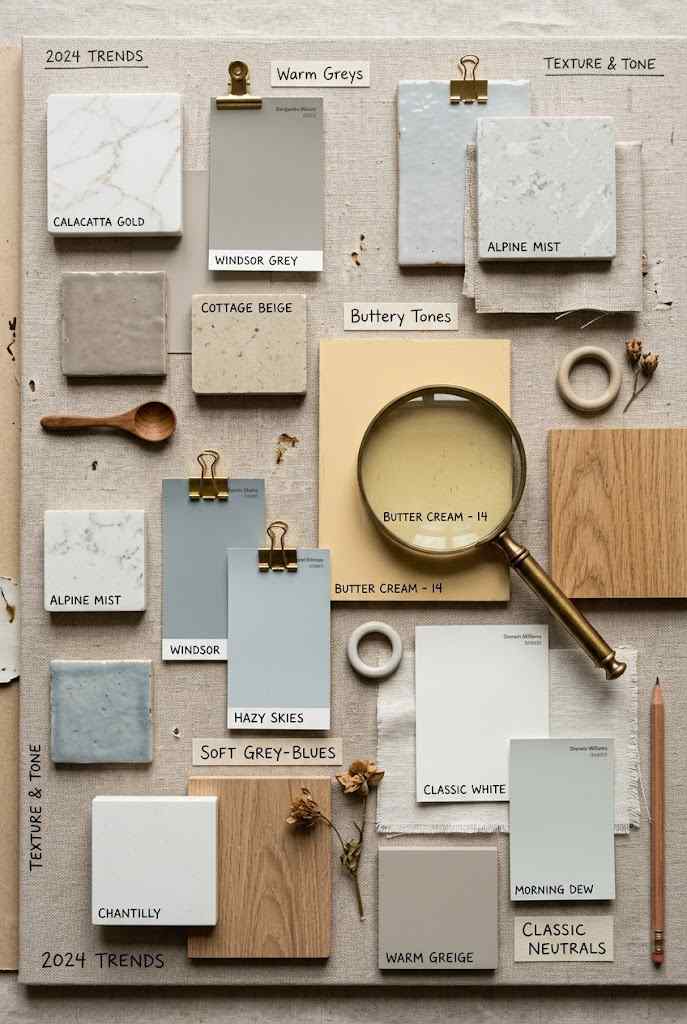
Kitchen counter colors are having a moment, and honestly, I see a lot of people make expensive mistakes here.
Dark counters look sleek and modern until you have kids, then they become a canvas for every spill, dust particle, and fingerprint. Lighter counters hide mess better but show every crumb and require more frequent cleaning. Mid-tone counters are the sensible compromise, which explains why they’re less exciting and less popular.
The trend cycle is moving fast right now. Marble is still lingering from the luxury boom. Buttery, warm tones and softer finishes are gaining ground against stark, cold minimalism. Blue-grey quartz feels very 2024-2025. Whatever color feels edgy and perfect right now will probably feel dated in seven years.
Here’s my angle: pick something you genuinely love because you’ll live with it for 10-15+ years. Trends are fun, but you’re the one spending time at this counter, not an interior design blog. If you’re torn, go neutral-ish and let your backsplash and cabinets carry the personality. They’re easier to change.
The psychology of counter color affects how you feel in your kitchen daily, even if you don’t consciously notice it. Warm tones (creams, golds, taupes) tend to make spaces feel intimate and cozy they work beautifully in open-concept homes where the kitchen flows into living spaces. Cool tones (greys, blues, blacks) read as modern and sophisticated but can feel cold if you’re not careful with your lighting and backsplash choices. Pure white is dramatic and clean but shows every single thing, making it high-maintenance if you’ve got kids or pets.
Consider how natural light hits your kitchen at different times of day. A counter that looks stunning in bright morning sun might look dingy at 6 PM when the light angles differently. If your kitchen has limited natural light, warmer tones will feel less depressing than cool greys. Southwest-facing kitchens with intense afternoon sun might benefit from cooler tones that don’t heat up the space psychologically.
Installation and Hidden Costs Nobody Talks About
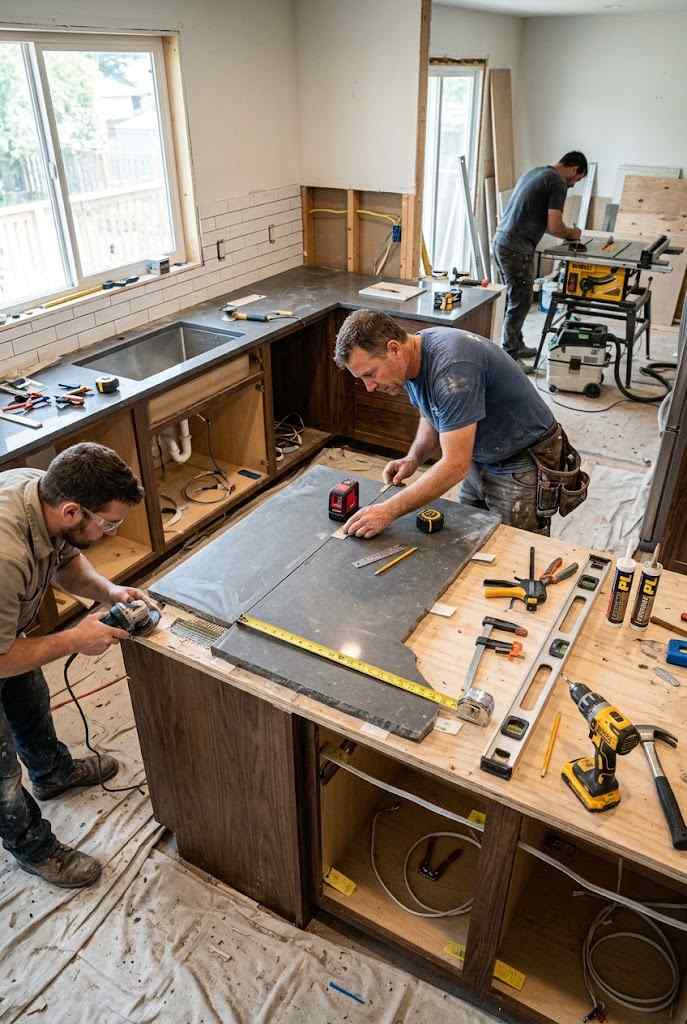
Here’s where your budget goes sideways if you’re not paying attention.
The material cost you see advertised? That’s rarely your total cost. Installation runs $200-500 per linear foot on average, sometimes more if your kitchen layout is complicated. Removing old counters might cost extra. Your countertop might need cabinets reinforced or adjusted. Sink cutouts, undermount vs. overmount, edge profiles (and yes, edges are a cost multiplier) all of this adds up faster than expected.
Go ahead and add 20-30% to whatever quote you initially get, and you’ll probably be closer to reality. Get multiple quotes, and don’t automatically pick the cheapest. Installation quality matters enormously; a beautiful countertop installed poorly is still a problem.
The pre-installation phase determines whether your project runs smoothly or becomes a nightmare. Your existing cabinet structure needs evaluation can your cabinets support the weight of your chosen material? Granite and marble are heavy; some older cabinets need reinforcement. Quartz is slightly lighter but still substantial. This adds $500-2000 depending on how much work is needed.
Plumbing and electrical relocations happen more often than people expect. If you’re moving your sink, reconfiguring your prep area, or installing a new cooktop, those lines move with the countertop. A contractor can sometimes hide these costs in the overall estimate, but they’re real work and real money. Ask specifically about this before committing.
Edge profiles seem like a small detail until you see the price difference. Straight edges are standard. Beveled edges cost slightly more. Ogee or decorative profiles jump the cost up another $10-20 per linear foot. Over a 20-foot kitchen, that’s $200-400 just for how your counter edge looks. It’s worth considering upfront rather than discovering it during installation.
Maintenance: The Conversation Nobody Wants to Have

Before you commit, know what you’re signing up for.
Quartz and laminate? Clean them, move on. Most materials require similar basic cleaning.
Granite and marble? Sealing is yearly for granite (maybe). Marble is basically a permanent reminder of every choice you’ve made in your kitchen acidic food, heat, moisture. It’s breathtaking and high-maintenance in equal measure.
Butcher block and concrete? Both need occasional re-treatment to stay gorgeous. This isn’t hard, but it is regular work.
Stainless steel counters (yes, some people have them)? Fingerprints show constantly, and they’re cold and industrial in ways that don’t age well at home. Skip them unless you love that aesthetic and obsessive cleaning.
The unsexy truth: your chosen material will require some maintenance. The real question is whether you’ll actually do it, and the answer depends on how much you care versus how lazy you naturally are (no judgment we all have our limits).
Your cleaning routine will become muscle memory, so pick a material whose maintenance doesn’t make you resentful. Daily cleaning for quartz means basic soap and water with occasional glass cleaner for shine truly zero complaints territory. Granite needs a bit more attention; weekly sealing checks and using stone-safe cleaners prevents etching. Marble demands you change how you live: coasters are non-negotiable, acidic foods get wiped immediately, and you’ll need special sealers.
Repair costs vary wildly by material. A scratch on laminate means replacement of that section or the whole counter. A ding on quartz? Epoxy fill by a professional runs $300-800 depending on size. Granite chips can be professionally repaired for similar costs. Butcher block scratches sand out at home for free, but deep gouges might need professional refinishing. Concrete can be refinished but it’s an investment.
FAQ’s
How long do kitchen countertops actually last before needing replacement?
Quartz and granite last 20-30 years with proper care; laminate typically needs replacement in 10-15 years.
Can you install new countertops over existing ones without removing the old surface?
Yes, but you’ll need cabinet reinforcement for weight, and the height increase might affect appliance fit.
What’s the most budget-friendly kitchen countertop that doesn’t look cheap?
Quality laminate or solid surface materials offer durability and modern aesthetics at $10-40 per square foot installed.
Do kitchen countertops increase your home’s resale value?
Quality countertops attract buyers and justify higher asking prices, though ROI depends on neighborhood standards.
Which countertop material is best for a small kitchen?
Light-colored quartz or laminate visually expands small kitchens, while busy patterns make spaces feel cramped.
CONCLUSION
Your kitchen countertop deserves the same thoughtful decision-making you’d give to picking a mortgage or a pet. It’s going to be there through countless meals, spills, moments of joy, and moments of regret.
Quartz if you want durability with minimal fuss. Granite or marble if you’re genuinely committed to maintaining something beautiful. Butcher block if you love warmth and don’t mind a project. Laminate if budget is non-negotiable and you’re okay with eventual replacement. Concrete if you’re brave.
The best choice isn’t the most expensive or the trendiest. It’s the one that matches how you actually live, what you’re willing to maintain, and what makes you happy every single time you walk into your kitchen. Everything else is just noise.