
Kitchen hardware
By Anna Grace | 5 April 2026
Kitchen Hardware Is The Silent Architect Of Your Entire Kitchen Experience
Your cabinet door swings open with a satisfying click. You pull out a drawer, and it glides like butter. Someone catches the edge of your countertop with their sleeve and nothing happens because that corner is reinforced properly. None of these moments happen by accident and honestly, most people never think about why kitchen hardware exists at all. They just expect it to work until it doesn’t, then they curse under their breath and ignore it for another two years.
Here’s the thing: kitchen hardware is doing about 80% of the heavy lifting in your cooking space, and yet it’s treated like an afterthought. The hinges, handles, drawer slides, corner guards, and corner braces you choose determine whether your kitchen feels like a dream or a chore. This isn’t just about aesthetics (though that matters). It’s about durability, function, safety, and how many times you’ll have to tighten a loose handle before you lose your mind.
There’s also a resale angle nobody talks about enough. Buyers walking through an open house touch cabinet doors and drawers within the first thirty seconds it’s almost instinctive. A sticky drawer or a hinge that squeaks sends a subtle signal that the whole house might have hidden issues, even if that’s completely untrue. Real estate agents will tell you hardware is one of the cheapest ways to make a kitchen feel updated without touching cabinetry at all. Swap out dated brass knobs for something current, and suddenly the whole room reads newer than it is. It’s a small move with outsized returns.
Let me tell you why this matters to you right now.
Hardware That Actually Lasts (And Why You’ve Probably Been Buying The Wrong Stuff)
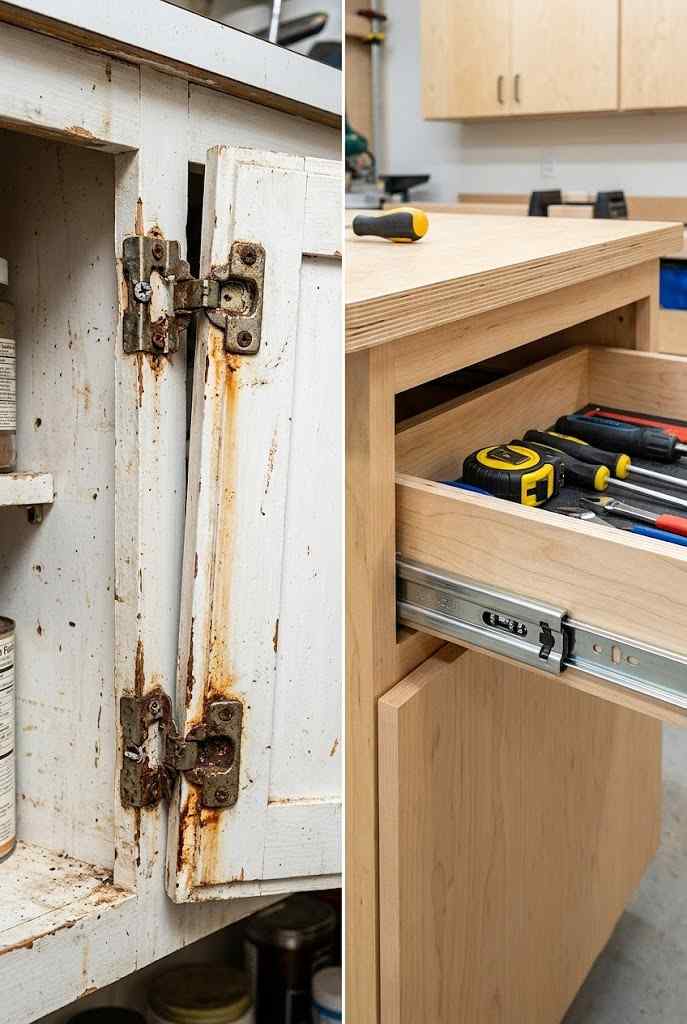
Think about the last time you renovated a kitchen or updated your hardware. Did you grab whatever was closest to your budget, or did you actually think about quality? Most people do the former. IMO, that’s where things fall apart literally.
Cabinet hinges are the unsung workhorses of your kitchen. They open and close thousands of times. A cheap hinge with weak springs will sag, forcing your door out of alignment within months. A solid hinge spreads the load evenly and lasts decades. Same with drawer slides: a budget-friendly slide will stick, jam, and eventually collapse. A quality full-extension slide moves smoothly even when stuffed to capacity.
The reason this matters is pure math. A kitchen cabinet door operates roughly 2,500 times per year if you’re cooking regularly. Over ten years, that’s 25,000 cycles. Cheap hardware fails around year three. Better hardware? It’s still running smoothly when you sell the house.
What separates budget hardware from premium hardware? Stainless steel construction, ball-bearing drawer slides, and hinges with adjustable closing mechanisms. You’re paying more upfront, but you’re buying back your sanity over the long term.
FYI, weight capacity is another spec people completely ignore when shopping. Drawer slides come rated for specific loads typically 75, 100, or 150 pounds and stuffing a heavy pot drawer onto a slide rated for lightweight utensils is a recipe for early failure. Check the rating before you buy, especially for drawers storing cast iron or small appliances. IMO, this single detail causes more premature hardware breakdowns than any other factor. It’s an easy fix just match the slide to the actual job it’s doing instead of grabbing whatever’s on the shelf.
The Aesthetic Game Is Real (And Harder Than You Think)
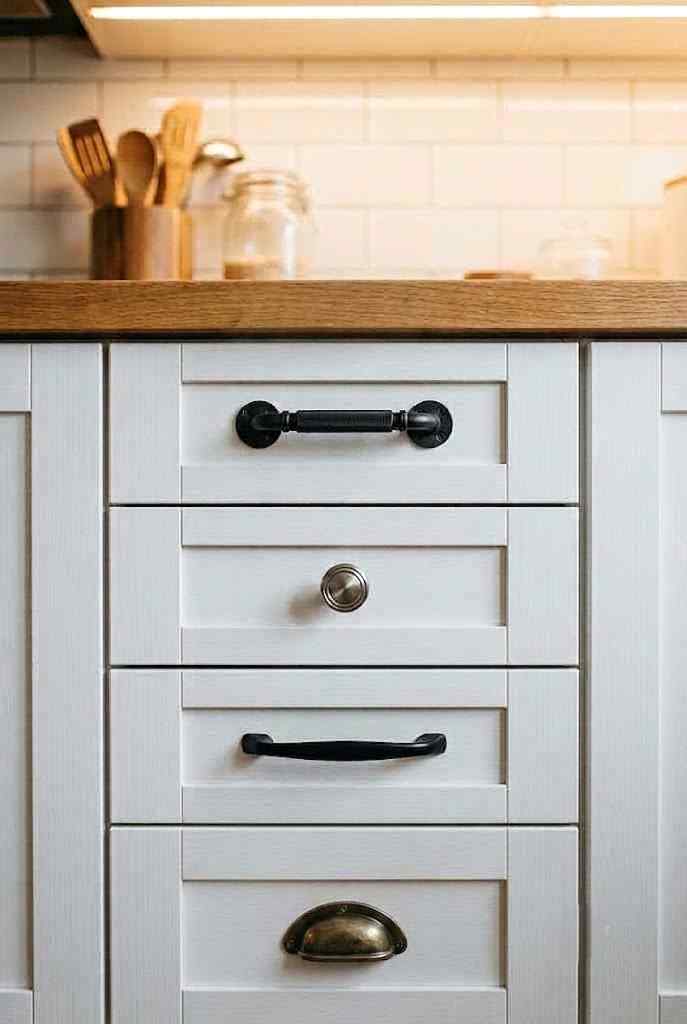
Here’s something people get wrong constantly: hardware styles either make your kitchen feel cohesive or they sabotage it completely. Your handles and knobs are jewelry for your cabinets. They’re visible every single time you’re in that room.
Brushed nickel used to be the safe default. Now? Modern kitchens span minimalist (flat bar handles), industrial (chunky metal pulls), farmhouse (classic cup pulls), and contemporary (sleek, almost invisible recessed handles). Your hardware needs to match the vibe you’re creating or everything feels scattered.
The tricky part is coordinating across your whole space. You’ve got cabinet handles, drawer pulls (which are often different sizes from handles), appliance pulls, faucet finishes, and light fixtures. Ideally, these echo each other without looking like you bought everything in a matching set at a big-box store. That’s where finish consistency becomes crucial matte black, polished stainless, bronze, or gold throughout keeps things intentional.
I learned this the hard way when I updated my kitchen and mixed two different handle styles because I didn’t think anyone would notice. People definitely noticed.
Mixing metals intentionally is actually trending right now, and it’s different from mixing accidentally. Designers pair a matte black faucet with brushed gold cabinet pulls on purpose, creating contrast instead of chaos. The trick is picking one dominant finish and one accent finish, then sticking to that ratio throughout the space. Random mixing looks like indecision. Intentional mixing looks curated. If you’re unsure where you land, snap a photo of your kitchen and squint at it does it feel like one cohesive room or five different showrooms mashed together?
Installation Reality: It’s Easier Than You Fear (But You Can Still Mess It Up)
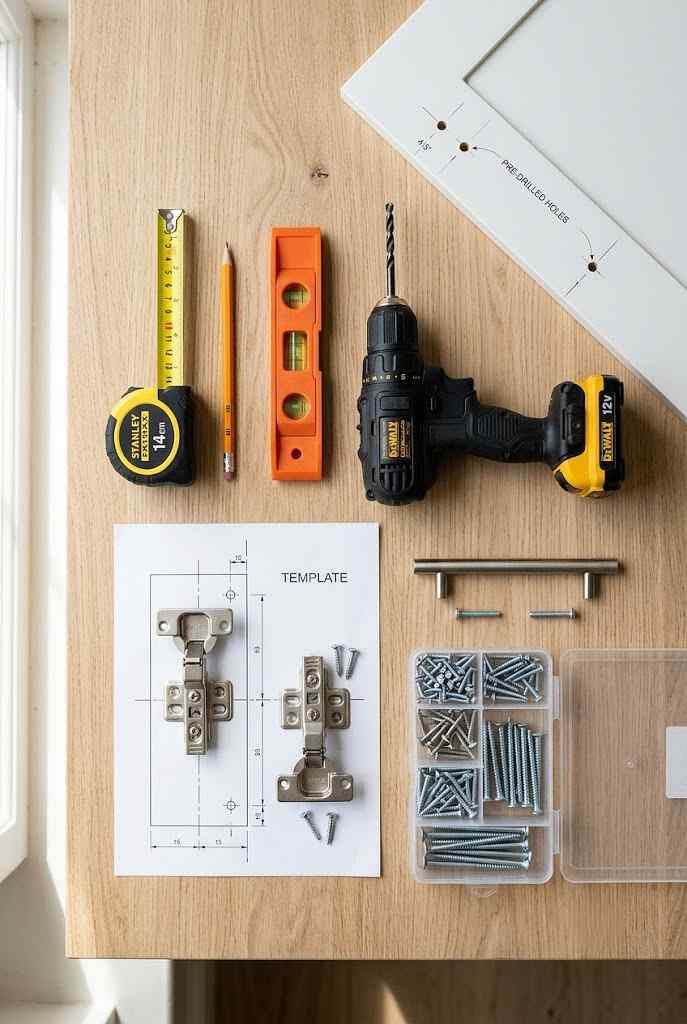
Most people think installing or replacing kitchen hardware is complicated. It’s actually not as long as you’re paying attention.
Here’s the basic workflow:
Measure twice, drill once. Your cabinet doors and drawers have pre-drilled holes. If you’re replacing existing hardware, you’re probably using the same holes. If you’re installing new hardware from scratch, measure the distance between holes carefully. A drill bit, a simple template, and steady hands get the job done in fifteen minutes per drawer.
Choose the right fasteners. Cabinet hardware comes with screws, but not all screws are created equal. You need screws that grip without splitting wood, especially if you’re drilling into thinner cabinet materials. Pilot holes prevent splitting always use them.
Alignment matters. Crooked hardware looks sloppy. Use a level or a straight edge to ensure your handles sit perfectly horizontal. It takes an extra minute and makes everything look intentional.
The biggest mistake people make is forcing hardware that doesn’t fit. If a drawer slide doesn’t mount cleanly or a hinge doesn’t align, stop and reassess. Forcing it will damage your cabinets and guarantee failure.
Choose the right fasteners. Cabinet hardware comes with screws, but not all screws are created equal. You need screws that grip without splitting wood, especially if you’re drilling into thinner cabinet materials. Pilot holes prevent splitting always use them.
Alignment matters. Crooked hardware looks sloppy. Use a level or a straight edge to ensure your handles sit perfectly horizontal. It takes an extra minute and makes everything look intentional.
The biggest mistake people make is forcing hardware that doesn’t fit. If a drawer slide doesn’t mount cleanly or a hinge doesn’t align, stop and reassess. Forcing it will damage your cabinets and guarantee failure.
One thing nobody warns you about cabinet material affects your drilling approach significantly. Solid wood forgives minor mistakes and holds screws tightly. MDF and particleboard, common in budget cabinetry, strip out easily if you overtighten or redrill in the same spot. Use wood glue in stripped holes before reinstalling hardware it’s a cheap trick that saves you from replacing an entire cabinet door. Also, keep a small container nearby for screws; losing tiny hardware screws mid-project is annoyingly common and will send you searching the floor for twenty minutes.
Budget Breakdown: Where To Spend, Where To Skimp
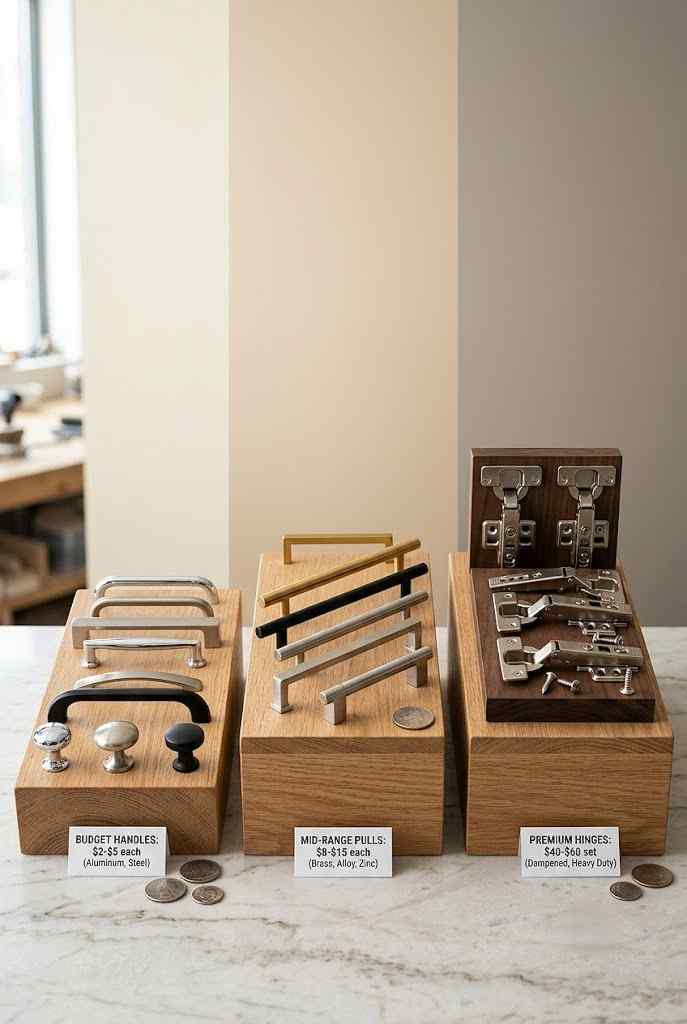
Let’s be real kitchen budgets have limits. So where does hardware spending actually matter?
Invest in drawer slides and hinges. These carry the mechanical load of your cabinets every single day. Cheap mechanisms fail and leave you with stuck drawers or sagging doors. Spending 40–60% more here prevents constant frustration.
Cabinet handles and knobs? You have more flexibility. A $2 handle and a $20 handle do the same job. The difference is aesthetics and finish durability. Mid-range handles ($8–15) give you style without gouging your budget.
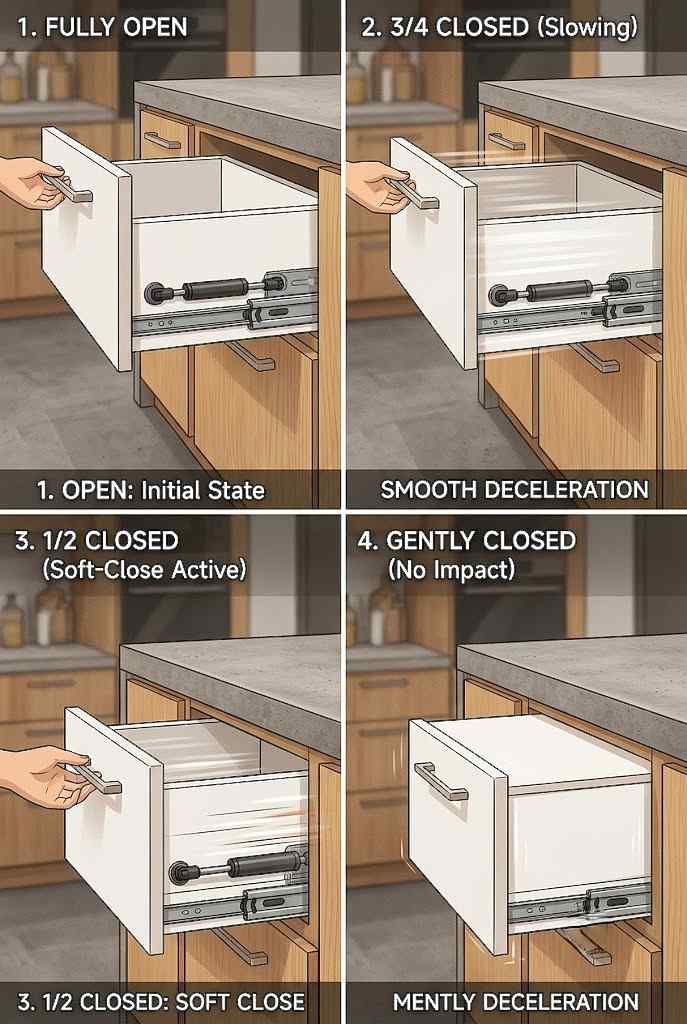
Specialty hardware like pull-out organizers, soft-close mechanisms, and corner solutions can range from $50 to $300 each. These are nice-to-haves, not necessities. Skip them initially and add them later if you have money left over.
A typical kitchen needs roughly 30–40 pieces of hardware (handles and pulls). That’s a $240–$600 range for decent stuff. Not nothing, but it’s maybe 5% of your total kitchen budget totally worth protecting.
Buying in bulk sets rather than individual pieces often saves 15–20% if your kitchen needs matching hardware throughout. Many suppliers offer 10-packs or 25-packs at a discount compared to buying single units. Also, watch for seasonal sales home improvement stores frequently discount hardware during spring renovation season and again around Black Friday. Timing your purchase around these windows stretches your budget further without sacrificing quality. Just don’t let a sale talk you into buying finishes that don’t match your actual kitchen style.
Materials That Actually Perform
Not all kitchen hardware is born equal, and material choice directly impacts durability and appearance.
Stainless steel is durable, corrosion-resistant, and works with almost any kitchen style. It’s the reliable choice. Solid brass develops a patina over time beautiful if you want that aged character. Aluminum is lightweight and budget-friendly but less durable under heavy use.
For finishes, matte and brushed versions hide fingerprints better than polished finishes. If you have kids or cook constantly, matte everything eliminates that smudged, grimy look after a week.
The kitchen environment is harsh humidity, temperature swings, oils from cooking, and constant touching stress hardware. Materials that resist corrosion and maintain their finish matter more here than anywhere else in your home.
Retrofitting soft-close mechanisms onto existing hardware is possible too, and it’s cheaper than replacing everything. Soft-close dampers can attach to many standard hinges and slides without full hardware replacement, running around $5–8 per unit. It’s not universal check compatibility with your current setup first but it’s a solid middle-ground option if you love your existing hardware but want the quiet upgrade. Installation takes about five minutes per door once you know what you’re doing, and the payoff in reduced noise is immediate and noticeable.
FAQ’s
How often should I replace kitchen cabinet hardware?
Quality hardware lasts 10–15 years replace sooner if hinges sag or slides stick.
Can I install soft-close hinges on old cabinets?
Yes, most soft-close hinges retrofit onto standard cabinets without replacing existing hardware entirely.
What’s the standard size for cabinet handle screws?
Most cabinet handles use 8-32 or M4 screws, but always measure existing holes first.
Does kitchen hardware finish affect maintenance requirements?
Matte and brushed finishes hide fingerprints better and need less frequent cleaning than polished.
Is it cheaper to buy hardware in matching sets?
Yes, bulk sets typically save 15–20% compared to purchasing individual hardware pieces separately.
CONCLUSION
Your kitchen hardware works harder than almost any other component of your home. It handles wear, supports weight, and creates the tactile experience of your cooking space. Spending intentionally on quality hardware, cohesive finishes, and proper installation pays dividends over years and years.
Want to upgrade your kitchen without a full renovation? Replace your hardware. Want your kitchen to feel more intentional and polished? Hardware transforms it instantly. And want your cabinets to actually function smoothly for a decade instead of degrading by year three?
Climate matters more than people realize when choosing materials, too. Coastal or humid regions accelerate corrosion on lower-quality metals, so stainless steel or powder-coated finishes hold up significantly better than standard plated options. If you’re in a dry climate, you have more flexibility since humidity-related wear isn’t as aggressive. Either way, always check whether hardware is rated for kitchen or bathroom use specifically some decorative hardware is designed for furniture and won’t survive years of cooking grease and steam exposure.
Yeah! you already know the answer by now.