
Laundry room organization
By Anna Grace | 27 July 2026
Laundry Room Organization Hacks That Actually Survive Real Life
My laundry room used to be where hope went to die. Detergent bottles multiplying like rabbits, one sock forever missing its partner, and a laundry basket that somehow always looked full even five minutes after I emptied it. Sound familiar? If your laundry room currently doubles as a storage unit for things you don’t know what else to do with, you’re not alone, and you’re also not stuck that way.
Laundry room organization isn’t about turning your space into a magazine spread. It’s about making the most annoying chore in your house slightly less annoying. A few smart changes can cut your laundry time in half and stop you from buying a fourth bottle of stain remover because you can’t find the other three. Here’s how to actually make it happen, without spending a small fortune or a whole weekend.
Start With a Total Purge (Yes, Everything)

You can’t organize clutter. You can only rearrange it, which is why so many laundry room “makeovers” fall apart within a month. Before you buy a single bin or shelf, pull everything out of that room. Every bottle, every mismatched sock, every dryer sheet box you forgot you had.
Sort what you find into three piles: keep, toss, and donate. Old detergent that’s separated and gross? Toss it. Dryer balls you bought once and never used? Either commit to using them or let them go. That mystery stain-fighting spray from three moves ago probably doesn’t work anymore either.
A laundry room only stays organized if you start with less stuff, not more containers. This step feels tedious, but it’s the difference between a system that lasts and one that collapses the second you’re tired and just want to shove things wherever they fit.
Here’s what typically deserves a spot in a functional laundry room:
● Detergent and fabric softener (one of each, not backups of backups)
● Stain treatment products
● Dryer sheets or wool balls
● A small sewing kit for quick fixes
● Extra hangers
● A lint roller
Don’t stop at products, either. Old cleaning rags that have lost their absorbency, that broken hamper with the busted wheel, or the ironing board you haven’t unfolded since 2022 all count as clutter too. If you haven’t touched something in over a year, chances are you won’t miss it once it’s gone. Set a timer for fifteen minutes and just keep moving through the pile instead of overthinking every item.
For anything still usable, a quick donation run to a local shelter or thrift store means it won’t just sit in a garage waiting for a “someday” that never comes. And for expired detergent or half-empty bottles you’re not sure about, check your city’s household hazardous waste guidelines before tossing them in the trash. Laundry products aren’t always safe for regular disposal, and pouring random chemicals down the drain is never a great idea.
Zone Your Space Like a Tiny Command Center

Once you’ve cleared the decks, think in zones instead of random shelves. Professional organizers do this in every room of the house, and laundry rooms respond especially well to it because the workflow is basically the same every single time: sort, wash, dry, fold, put away.
Set up a sorting zone near the door or wherever dirty clothes enter the room. This can be as simple as three labeled bins for lights, darks, and delicates, or a hanging canvas hamper system if you’re tight on floor space. IMO, this one change alone saves more time than almost anything else on this list, because you stop standing there sorting clothes by hand every single wash day.
Next comes the washing zone, obviously right at the machine, where your detergent, stain sprays, and pods live within arm’s reach. Then a folding zone, ideally a countertop or fold-down table, because folding laundry on top of the dryer while it’s still warm is a special kind of chaos nobody needs. Finally, a storage zone for off-season items, extra linens, or cleaning supplies that don’t need daily access.
Why does zoning matter so much? Because your brain stops having to think about where things go. You just move through the motions.
If your household deals with seasonal items, a rotating zone helps as well. Swap out winter coats and heavy blankets for beach towels and lighter linens twice a year, and store the off-season stuff in labeled bins up high or in a nearby closet. This keeps your active zones focused only on what you’re actually using right now, which honestly makes the whole room feel less crowded even if the square footage hasn’t changed at all.
Get Vertical (Your Floor Space Is Precious)
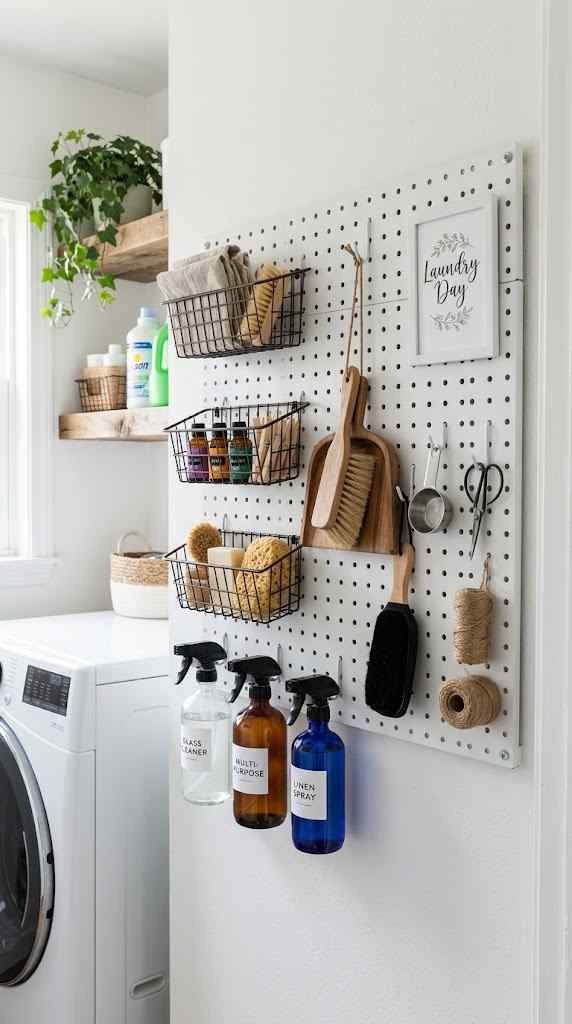
Most laundry rooms are small, and small rooms punish you for storing things at floor level. Shelving that goes up instead of out is your best friend here. Wall-mounted shelves above the washer and dryer can hold baskets, bins, or jars of detergent without eating into your walking space.
A pegboard is genuinely underrated for laundry rooms. You can hang small baskets, hooks for spray bottles, even a mini broom and dustpan, and rearrange it whenever your needs change. I installed one in my own laundry room last year, mostly on a whim, and it turned out to be the single best twenty-dollar decision I’ve made for that space. No more digging through a cabinet to find the lint brush.
Over-the-door organizers work great too, especially on the back of a closet laundry door where you’d otherwise waste that entire surface. Stack these ideas together and you can free up a shocking amount of floor space:
● Wall shelves above appliances for bulk supplies
● A pegboard for tools, sprays, and small items
● Over-the-door pocket organizers for dryer sheets and clips
● A rolling cart that slides between the washer and dryer for narrow gaps
● Stackable bins clearly labeled by category
● Where vinyl falls short
Freestanding wire shelving units are another solid option if your laundry room has an awkward corner or a stretch of empty wall that’s just begging for storage. They’re inexpensive, easy to assemble, and you can adjust the shelf height as your needs shift. A closet rod mounted above the dryer also gives you a spot to hang shirts straight out of the dryer, cutting down on wrinkles and saving you an ironing step later.
Don’t overlook the space above your washer and dryer’s control panel either, since a lot of models leave a narrow gap perfect for a slim floating shelf. Even six extra inches of storage adds up when you’re working with a tight footprint. Small laundry rooms reward creative thinking way more than big ones do, so it pays to look at every surface twice before deciding there’s no room left.
Vertical storage isn’t a design trend, it’s a survival tactic for small laundry rooms.
Contain Everything (Loose Items Are the Enemy)

Loose items are what make a shelf look messy even when it technically isn’t. Bins, baskets, and clear containers group things by category so your eyes (and your hands) know exactly where to look. Clear bins work especially well because you can see what’s inside without opening five containers to find the dryer sheets.
Label everything. This sounds excessive until you have a partner or kids who “helped” put laundry supplies away and now nothing is where it used to be. A simple label maker or even masking tape and a marker solves this instantly. Labels also make it obvious when something’s running low, so you’re not caught mid-wash with an empty detergent bottle.
Decant liquid detergent into a matching dispenser if you like a cleaner look, though this is optional. What’s not optional, in my opinion, is having a designated spot for lost socks. Every household generates them. A small labeled bin means you’re not hunting through drawers hoping a match turns up eventually.
Consider these container solutions based on what you’re storing:
● Clear acrylic bins for pods, sheets, and small supplies
● Woven or fabric baskets for towels and linens waiting to be put away
● A mesh bag system for delicates that need hand washing
● Small trays for stain sticks, brushes, and spot treatment tools
Drawer dividers work wonders too, if your laundry room happens to have a built-in cabinet or dresser. Split one drawer into sections for stain pens, spot brushes, and spare buttons, and suddenly that catch-all drawer stops being a black hole. Mesh bags deserve a specific labeled hook near the hamper as well, since they’re easy to forget about until you’re mid-sort and realize your favorite bra needs one.
For bulk buyers, stackable canisters with airtight lids keep powder detergent from clumping and pods from drying out. Glass jars look nice on open shelving, but plastic bins are more practical if kids or pets are anywhere near the laundry room. Whatever you choose, consistency matters more than style, since a shelf full of mismatched containers still reads as cluttered even when everything technically has a home.
Build a System You’ll Actually Keep Up With
Here’s the part most laundry room guides skip. You can have the prettiest, most Pinterest-worthy setup in the world, and it’ll fall apart in three weeks if the system doesn’t match how you actually live. Do you have kids who dump laundry wherever? Build in a low, easy-access hamper zone at their height. Do you work from home and do laundry in bursts throughout the day? Keep a small basket nearby for items that need immediate attention instead of a giant pile-up system.
Set a simple laundry schedule too, whether that’s one load a day or a designated laundry day each week. Having a rhythm means dirty clothes don’t pile up into an overwhelming mountain that makes the whole room feel chaotic again. A “one load a day keeps the chaos away” approach works surprisingly well for busy households, even if it sounds like something printed on a throw pillow.
Do a five-minute reset once a week. Wipe down surfaces, restock anything running low, and put back anything that’s drifted out of its zone. A laundry room that gets a weekly five-minute check stays organized far longer than one you only deep-clean twice a year. Small, consistent effort beats big, occasional overhauls every time.
Get everyone in the house involved in the system too, not just the person who usually does the laundry. A simple chart taped to the wall showing which day belongs to which family member’s laundry can prevent the Sunday night scramble where three people all need clean clothes for Monday morning. Kids old enough to sort lights from darks can absolutely handle that job, and it takes one more task off your plate.
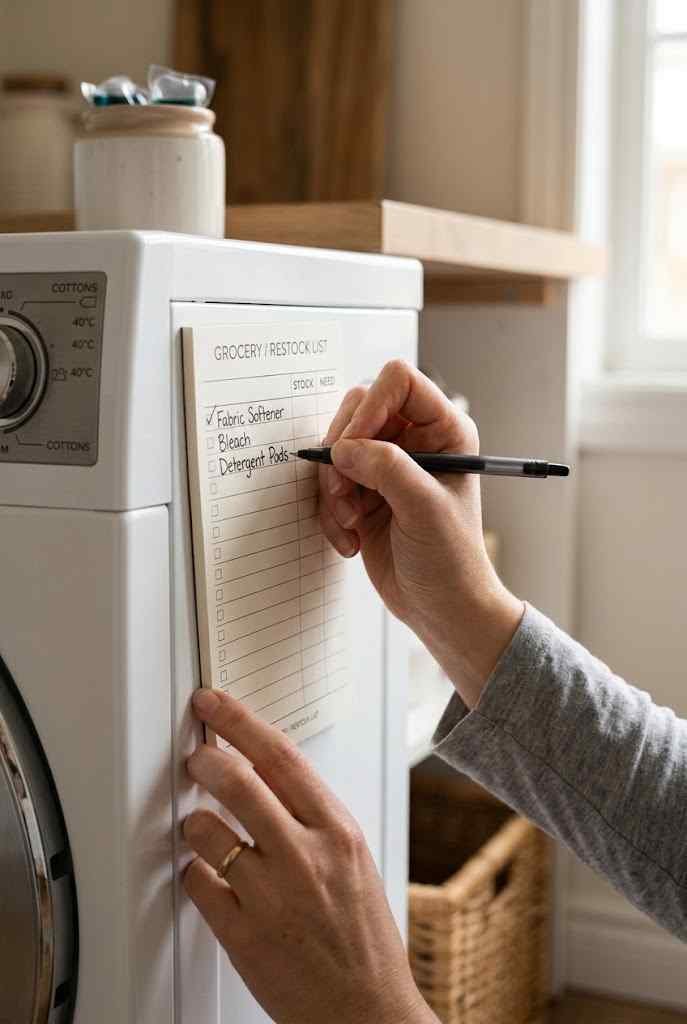
Keep a small notepad or phone note for restocking, jotting down when you’re down to your last detergent pod or nearly out of dryer sheets. This way you catch it before you’re standing in the laundry room at 9pm with a half-washed load and nothing to finish drying it properly. Seasonal deep resets, maybe once every three months, are also worth scheduling on your calendar so they don’t quietly slip to “never.”
FAQ’s
What’s the cheapest way to organize a small laundry room?
Reuse containers you already own, add a pegboard, and label everything with tape and a marker.
How do I organize a laundry room with no closet or cabinets?
Use wall-mounted shelving, a rolling cart, and over-the-door organizers to maximize vertical and hidden space.
Should I store detergent in its original bottle or decant it?
Either works, but decanting into a matching dispenser looks cleaner and often pours more easily.
How often should I reorganize my laundry room?
Do a five-minute weekly reset and a full purge every six months to prevent clutter from returning.
What’s the best way to deal with mismatched socks?
Keep a small labeled bin specifically for lone socks instead of storing them scattered through drawers.
CONCLUSION
Laundry room organization isn’t a one-and-done project you finish and forget. It’s more like a habit you build into your week, small tweaks here and there until the whole system just works without you thinking about it. Start with the purge, add zones and vertical storage, contain what’s left, and build habits that actually fit your life instead of someone else’s Instagram feed. Your future self, standing in a laundry room that finally makes sense, will thank you.