
laundry storage
By Anna Grace | 13 July 2026
Laundry Storage Ideas That Turn Chaos Into a System
Your laundry room probably looks like a crime scene of mismatched socks, half-empty detergent bottles, and a laundry basket that’s been “temporarily” sitting in the hallway for three weeks. Sound familiar? You’re not alone. Laundry storage is one of those things nobody thinks about until they’re tripping over a dryer sheet box at 6 a.m.
I used to store my detergent, fabric softener, and stain remover on top of my washing machine, stacked like a wobbly Jenga tower. One morning, the whole thing toppled over and I spent twenty minutes mopping up spilled Tide instead of actually doing laundry. That’s the day I got serious about laundry storage, and honestly, it changed how I feel about the whole chore.
Laundry storage isn’t just about looking tidy for guests who will probably never see this room anyway. It’s about saving time, protecting your supplies, and making a repetitive chore feel less like a scavenger hunt. When everything has a designated spot, you stop wasting five minutes hunting for the stain stick every time your kid comes home with grass-stained knees.
This article walks through practical, budget-friendly ways to organize your laundry space, whether you’ve got a full mudroom-style laundry area or a stackable washer-dryer combo crammed into a closet. We’ll cover shelving, baskets, small-space hacks, seasonal rotation tricks, and a few products worth the money. No fluff, just stuff that actually works in real households with real messes.
Start With a Laundry Storage Audit

Before you buy a single bin or shelf, figure out what you’re actually storing. Most laundry rooms accumulate more junk than you’d expect: detergent, dryer sheets, stain sticks, lint rollers, ironing supplies, extra hangers, and sometimes even cleaning products that have nothing to do with laundry at all. It’s wild how a room meant for one task somehow becomes the dumping ground for everything else.
Pull everything out of your laundry area and sort it into three piles: keep, relocate, and toss. That half-used bottle of fabric softener from a brand you stopped buying two years ago? Toss it. The iron you haven’t touched since your last job interview? Maybe it belongs in a closet instead, not taking up prime real estate next to your dryer.
A quick audit prevents you from organizing clutter instead of eliminating it. This step feels tedious, but it saves you from buying storage solutions for items you don’t even need anymore. There’s no point building a beautiful shelving system to house products you’re never going to use again.
Once you know what’s staying, group similar items together. Cleaning supplies in one zone, laundry-specific products in another, and miscellaneous items (like that mystery key you found in a pants pocket) in a designated catch-all bin. This grouping step matters more than people realize, because it’s the foundation everything else in this article builds on.
Take photos of your empty laundry space before you start refilling it. It sounds unnecessary, but having a blank slate reference helps you resist the urge to just shove everything back where it was out of habit. Old habits are sneaky that way, and laundry rooms are prime territory for them.
Vertical Storage Is Your Best Friend
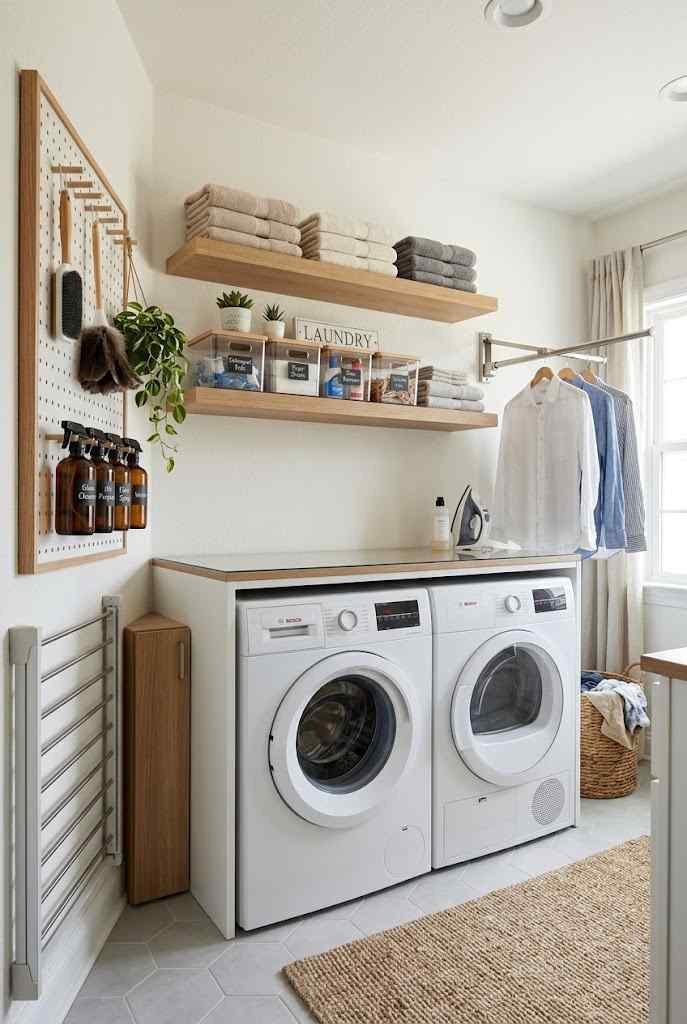
Laundry rooms are often narrow, awkward spaces, which means floor space is precious. So why are you still storing things on the floor? Every square foot of wall space you’re not using is basically wasted potential, sitting there judging you every time you do a load.
Wall-mounted shelves above your washer and dryer instantly free up counter space and keep supplies visible. Open shelving works great for baskets and bins, while closed cabinets hide the less attractive stuff, like that giant tub of stain remover you bought in bulk from a warehouse store. If you rent and can’t drill into walls, tension-mounted shelving units exist specifically for that problem, and they hold more weight than you’d think.
Here are a few vertical storage options worth considering:
● Floating shelves above the machines for detergent and folded towels
● Pegboards for hanging small tools like lint brushes, spray bottles, or scissors
● Over-the-door organizers for extra hangers, dryer sheets, or cleaning rags
● Tension rods installed between cabinets for hanging clothes straight out of the dryer
● Stackable cube organizers for grouping small items like stain pens and sewing kits
If your laundry space has any unused wall real estate, that’s an opportunity. Even six inches of wall space can hold a narrow shelf for stacking detergent pods or fabric softener sheets. I added a twelve-inch shelf above my dryer last year and it fit an entire month’s worth of pods, which freed up an entire cabinet shelf for towels instead.
Don’t Forget the Space Above the Door
This spot gets overlooked constantly. A small shelf above the laundry room door can hold seasonal items you don’t need daily access to, like holiday tablecloths or extra blankets waiting for a wash. It’s dead space in almost every home, and it’s usually the last place anyone thinks to add storage.
Use the Sides of Your Machines Too
Most people forget that the exposed sides of a washer or dryer, especially in a closet setup, are usable real estate. A narrow adhesive shelf or hook strip mounted to the side panel can hold spray bottles, a small trash bin, or a broom and dustpan combo. It’s a tiny addition that solves the “where do I even put the broom” problem most laundry rooms have.
Baskets and Bins: The Backbone of Laundry Organization
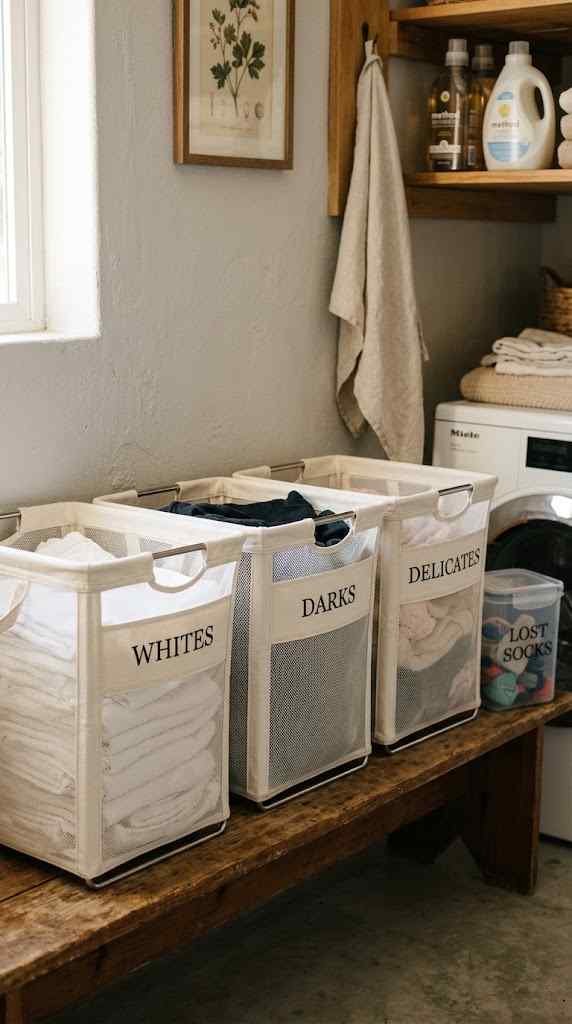
You can’t talk about laundry storage without talking about baskets. They’re the unsung heroes of the whole system, and picking the right ones makes a bigger difference than you’d think. A bad basket choice can actually create more mess than it solves.
Woven baskets look nice, but they’re not always practical for heavy loads or damp clothes. Canvas or mesh bins breathe better and prevent mildew smells, especially if you’re storing slightly damp items before they hit the dryer. Plastic bins with lids work well for detergent pods, dryer balls, or anything you want kept away from curious pets or kids who think laundry pods look suspiciously like candy.
Here’s a simple system that works for most households:
● One bin for whites
● One bin for darks
● One bin for delicates or hand-wash items
● One small bin for lost socks (because there’s always a sock situation)
● One bin for items needing repair (buttons, hems, whatever you keep meaning to fix)
Labeling bins isn’t just for organization influencers on Instagram. IMO, labels genuinely save time, especially in households where more than one person handles laundry. Nobody wants to guess which bin holds the towels versus the bedsheets, and kids especially benefit from color-coded or picture labels if they’re old enough to help with chores.
If your laundry area doubles as a mudroom or entryway, stackable bins save serious floor space. Look for ones with wheels if you’re dealing with a smaller footprint room, since it makes hauling loads to the machine way easier on your back. Trust me, your lower back will thank you after the first month of not dragging a full basket across tile.
Consider material differences too. Wire baskets allow air circulation, which is great for gym clothes or towels that need to dry out slightly before washing. Solid plastic bins, on the other hand, are better for containing liquids or powders that might leak. Matching the bin type to what’s actually going inside it makes the whole system more functional, not just prettier.
Small-Space Laundry Storage Hacks
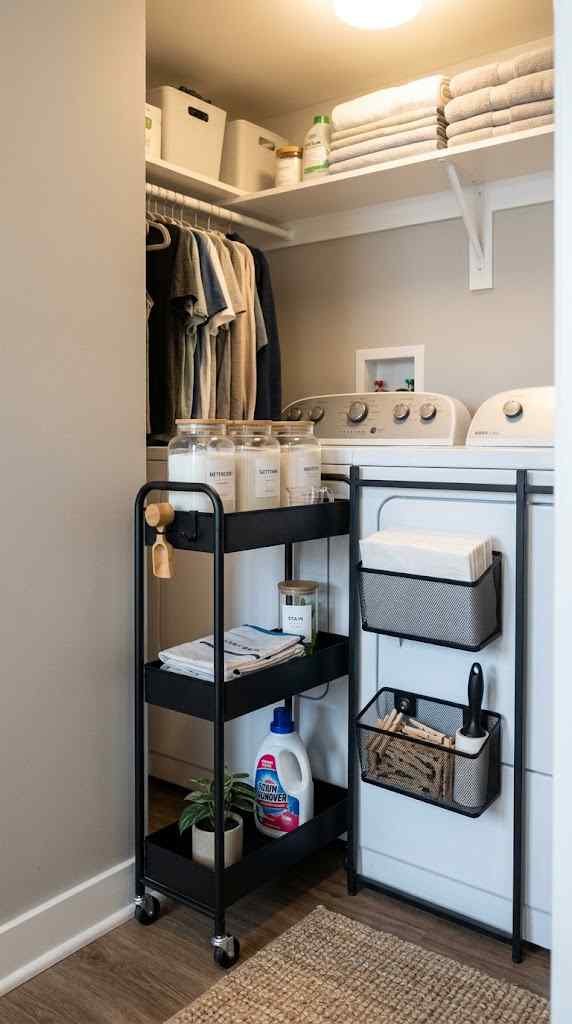
Not everyone has a dedicated laundry room. Plenty of people are working with a stacked unit in a hallway closet, or worse, a washer-dryer combo shoved into a kitchen corner. Does that mean good storage is impossible? Not even close.
Small spaces just need smarter storage, not more storage. The goal isn’t cramming in as many organizers as possible; it’s choosing the few that actually earn their spot.
A rolling cart is one of the best investments for tight laundry spaces. Slide it between the wall and the washer, and you’ve got instant vertical storage that moves out of the way when you need floor access. Add a few labeled bins to the cart shelves for detergent, dryer sheets, and stain removers, and suddenly your laundry closet feels like an actual system instead of a chaotic pile shoved behind a folding door.
Magnetic organizers are another underrated option, especially if your washer or dryer is metal. Magnetic spice jars or small containers can hold dryer sheets, extra buttons, or spare change found in pockets, and they stick right to the side of the machine without taking up any additional space. This trick alone solved my “where do all these loose coins go” problem for good.
Consider these small-space specific tips:
● Use the gap between your washer and dryer for a slim rolling cart
● Install a retractable clothesline for air-drying delicates without needing extra floor space
● Mount a small fold-down shelf or table for folding clothes when you’re short on counter space
● Store detergent in a smaller, refillable container instead of the bulky original jug
● Hang a mesh laundry bag on a hook to catch delicates that need hand-washing separately
● Use clear shoe organizers on the back of the door for small items like lint rollers and stain sticks
I’ve lived in three apartments with laundry closets barely big enough to turn around in, and the rolling cart trick saved my sanity every single time. It’s a small change, but it makes the whole space feel less like a supply closet and more like an actual functional room. If you’re renting and worried about damaging walls, almost every hack on this list requires zero drilling, which is a nice bonus.
Don’t underestimate the ceiling either, if your laundry space has one that’s accessible. A ceiling-mounted drying rack that pulls down on a pulley system is a favorite in tiny European apartments for a reason. It keeps drying racks completely out of the way until you actually need them.
Products Worth Buying (and a Few You Can Skip)

Not every laundry storage product is worth the hype. Some are genuinely useful, and others are just cute clutter that Pinterest convinced you that you needed. It’s easy to fall down a rabbit hole of buying “organizational” products that don’t actually organize anything.
Worth buying:
● Stackable clear bins – Seeing contents at a glance saves time and prevents duplicate purchases
● Wall-mounted drying racks – These fold flat against the wall when not in use, which is huge for small spaces
● Detergent dispensers with pumps – Skip the bulky jug and refill a sleek dispenser instead; it looks better and pours cleaner
● Hanging mesh bags – Great for delicates, and they double as extra storage for smaller laundry items
●Rolling utility carts – Flexible enough to hold supplies, snacks for folding sessions, or overflow items during busy weeks
FYI, you don’t need a Pinterest-perfect laundry room to have a functional one. A lot of the most “aesthetic” laundry storage setups online prioritize looks over usability, and that’s a trap worth avoiding if your goal is actually saving time and reducing stress. A laundry room that photographs well but takes twice as long to use isn’t actually organized, it’s just staged.
If you’re on a budget, thrift stores and discount home goods stores often carry solid baskets, bins, and shelving units for a fraction of retail price. Function matters more than brand names here, so don’t feel pressured to buy the trendy version of everything. Some of my favorite laundry storage pieces cost less than a fancy coffee order and have lasted years.
FAQ’s
What’s the best way to organize a small laundry closet?
Use vertical shelving, a rolling cart between machines, and slim bins to maximize limited floor space.
Should I store detergent in its original packaging?
No, refillable dispensers with pumps look neater and prevent bulky jugs from cluttering shelves or counters.
What type of baskets work best for laundry storage?
Canvas or mesh baskets breathe better than plastic, reducing mildew smells from slightly damp clothing items.
How do I stop losing socks during laundry?
Dedicate one small labeled bin specifically for stray socks so they don’t scatter across other storage areas.
Is vertical storage really better for laundry rooms?
Yes, it frees up floor and counter space, which matters most in narrow or cramped laundry areas.
CONCLUSION
Laundry storage doesn’t need a full room renovation or a Pinterest board full of matching wicker baskets. It needs a system that fits your actual space and habits. Start with an audit, add vertical storage where you can, invest in a few solid baskets or bins, and don’t be afraid to get creative if you’re working with a small space.
The goal isn’t a magazine-worthy laundry room. It’s a space where you can grab detergent without knocking over three other bottles, and where laundry day feels a little less like an obstacle course. Give a few of these ideas a try, and see how much smoother your routine feels within a week or two. Once your system clicks into place, you’ll wonder why you put up with the chaos for so long.