
leather couch
By Anna Grace | 2 June 2026
Why Leather Couch Is Still the Most Divisive Piece of Furniture You’ll Ever Love
Nobody warned me the day I bought my first leather couch that I’d spend the next six months defending that decision to literally everyone who walked through my door. “Isn’t it cold in winter?” Yes. “Doesn’t it squeak when you move?” Also yes. “Isn’t it cruel?” Well, Karen, let’s not go there today.
But here’s the thing I still wouldn’t trade it. A leather couch is one of those furniture purchases that gets better with time, with use, with a little wear on the armrests. It has character. And honestly, in a world of cheap fabric sectionals that look great for about eleven months before pilling into oblivion, character counts for a lot.
So if you’re on the fence about buying a leather sofa, or already own one and want to actually take care of it, this is the article for you.
What Makes Leather Couches Worth the Investment
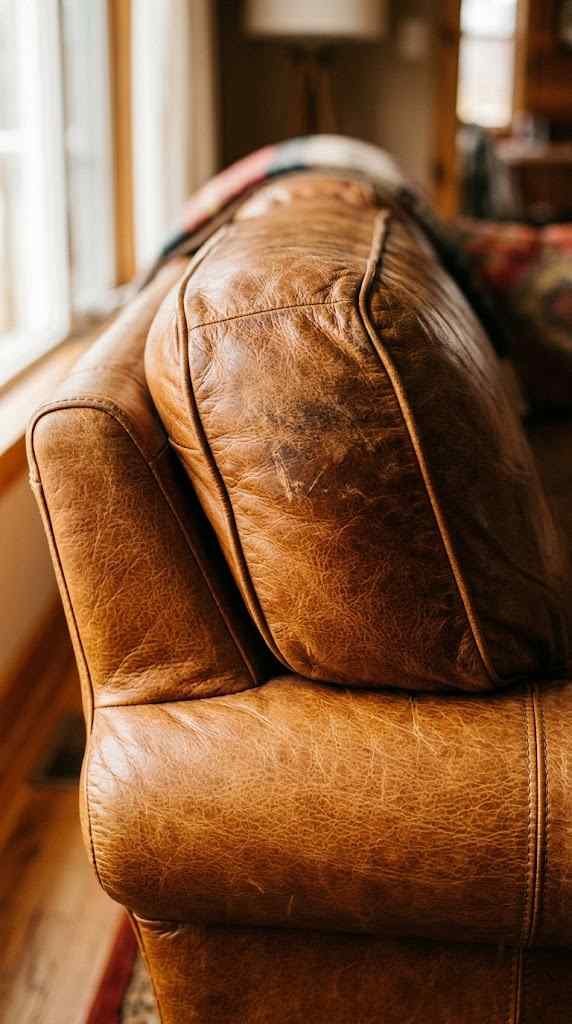
Let’s start with the obvious: leather couches cost more upfront. Sometimes a lot more. But the math only looks bad until you zoom out.
A mid-range fabric sofa might last you five to seven years before it starts looking rough faded, fraying at the seams, possibly harboring smells that defy explanation. A well-made leather sofa, properly maintained, can last fifteen to twenty years. Some people have leather couches that outlive their marriages. That’s either a testament to the furniture or a red flag about the marriage, but either way, the couch wins.
Full-grain leather is the gold standard. It’s the top layer of the hide, left mostly intact, which means it develops a patina over time that rich, lived-in glow that makes vintage leather look so good. Top-grain leather is sanded down slightly, more uniform in appearance, and slightly more resistant to staining. Both are excellent options. What you want to avoid is bonded leather, which is basically leather scraps glued to a fabric backing. It looks fine in the showroom and starts peeling within a few years. Don’t be fooled by the price tag.
Think of it like buying a good pair of leather boots versus a cheap pleather pair from a discount rack. The cheap ones look identical on day one. By month six, you know exactly which choice you made. The same logic applies to your sofa quality leather rewards patience and penalizes shortcuts.
Also worth knowing leather holds its resale value better than fabric. A well-maintained full-grain leather sofa can fetch a decent price secondhand, which is something you’ll never say about a pilled-out microfiber couch from a big-box store.
Leather Couch Styles: Which One Actually Fits Your Space

Leather sofas come in more styles than most people expect. The common assumption is that they’re all big, boxy, dark brown things that belong in a law office or a bachelor pad from 2003. That’s not true anymore and frankly, it was never the whole picture.
Chesterfield sofas are the most iconic leather couch style tufted buttons, rolled arms, deep color. They read traditional but pair surprisingly well with modern spaces when done right. A dark green or cognac Chesterfield in a room with clean-lined furniture is genuinely striking.
Mid-century modern leather sofas have clean lines, tapered wooden legs, and a slimmer profile. They’re ideal if your space can’t absorb a massive sectional, and they age beautifully in caramel or tan leather.
Contemporary leather sectionals are where most buyers land these days big, modular, often with a chaise. They’re the ultimate comfort pieces. The trade-off is that they dominate a room, so measure twice before you commit.
Club chairs and loveseats are often overlooked, but a leather loveseat can anchor a reading nook or home office without the commitment of a full sofa. Worth considering if you’re not ready to go all-in.
The other thing people underestimate is color range. Leather sofas aren’t just brown anymore cognac, forest green, slate grey, dusty rose, off-white, and even navy are all common options now. Picking a color that works with your existing floors and walls matters more than most buyers realize before they bring it home.
If your room has warm wood tones, caramel or tan leather plays naturally with that palette. Cooler, more industrial spaces concrete floors, metal accents tend to work better with darker or more muted leather tones. When in doubt, bring a fabric or paint swatch to the store. It sounds fussy but saves a lot of regret.
The Real Talk on Leather Couch Care
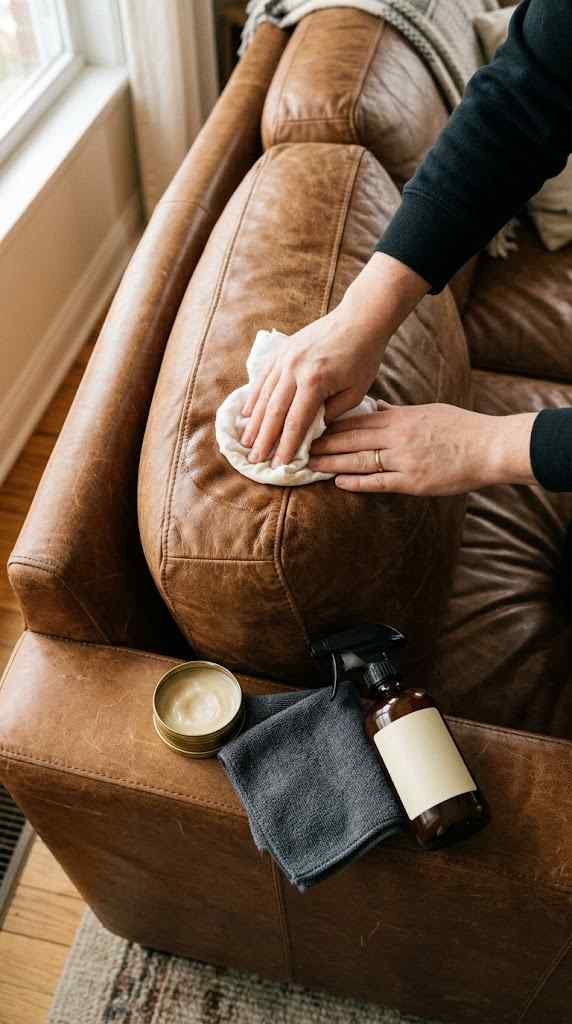
Here’s where people get either overly paranoid or dangerously casual, and neither approach ends well. 🙂
A leather couch is not high-maintenance, but it does need some attention. The three main things that damage leather are: prolonged sun exposure, excess moisture, and neglect. Direct sunlight fades and dries out leather faster than almost anything else. If your couch lives near a west-facing window, consider UV-blocking curtains or rotate the cushions periodically.
Conditioning is the single most important thing you can do. Leather naturally loses moisture over time, which leads to cracking. A good leather conditioner applied every six to twelve months keeps it supple and prevents that dried-out look. It takes about fifteen minutes and makes a visible difference within a day or two. IMO, it’s one of the easiest maintenance tasks in home ownership.
For cleaning spills and they will happen blot immediately with a dry cloth. Don’t rub. Most liquid spills on quality leather can be managed with nothing more than a clean cloth and quick action. For tougher stains, a leather cleaner specific to your leather type (aniline, semi-aniline, or pigmented) is your best friend.
What not to do baby wipes, harsh chemical cleaners, or any product with alcohol in it. These strip the leather’s natural oils and accelerate aging in the bad way.
One underrated tip keep your leather couch away from heating vents and radiators. Consistent dry heat does the same damage as sunlight it pulls moisture from the leather slowly over time until you start noticing stiffness at the seams and corners. A humidifier in the room during winter months can genuinely extend the life of your sofa.
Scratches are another story people panic about unnecessarily. Minor surface scratches on full-grain leather often buff out with your fingertip the warmth and oil from your skin can actually blend them back in. Deeper scratches may need a leather repair kit, which you can find for under $20 and works better than most people expect. Not every scratch is a disaster. Some of them are just the couch getting comfortable with you.
Leather vs. Fabric: The Honest Comparison
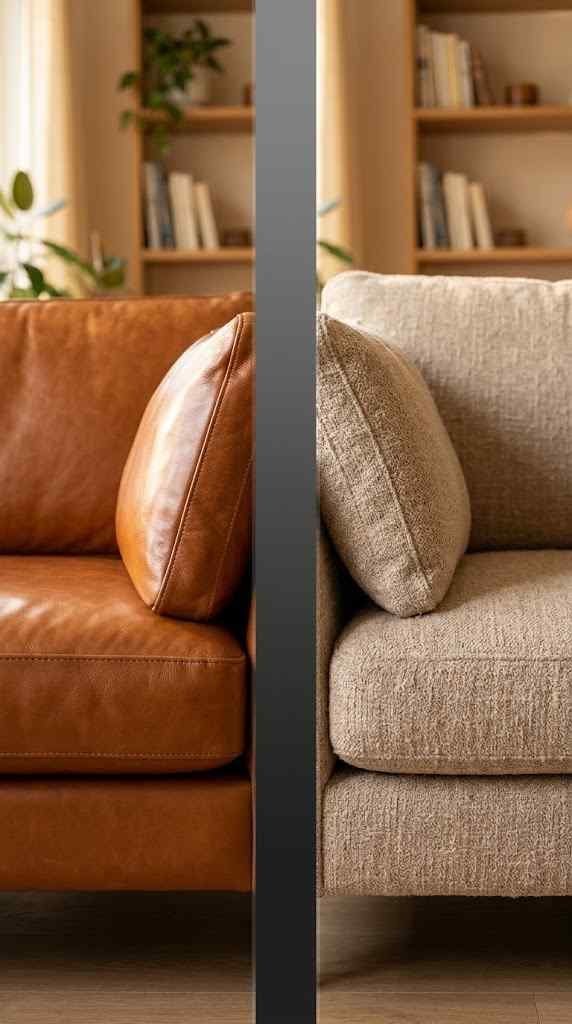
People ask this constantly, and the answer is genuinely nuanced. Here’s a straight-up breakdown:
|
Is leather better? For longevity and ease of cleaning, yes. For warmth and a cozier feel in cold climates, fabric has the edge at least initially. The temperature thing is real. In winter, sitting on cold leather is a bit of a shock. But it warms up with your body heat within a minute or two. People treat this like a dealbreaker. It’s more of a mild inconvenience.
If you have pets with sharp claws, that’s a more legitimate concern. Cats in particular can do a number on leather. Some owners swear by microfiber throws over the armrests as a protective measure. Others just accept the scratches as part of the patina narrative. Your choice. :/
One thing the table above can’t capture is smell. A real leather couch has a distinct, pleasant scent subtle, earthy, clean. Fabric couches absorb odors: food, pets, that candle you burned one time in 2021. Leather doesn’t hold smells the same way, which is a quiet but real advantage in any home where cooking or pets are part of daily life.
The allergen point in the table is also worth expanding on. Dust mites and pet dander tend to settle into fabric fibers and stay there. Leather surfaces don’t give them anywhere to hide, making a leather sofa a legitimately better option for anyone dealing with allergies or asthma at home. It’s not a cure, but it’s a meaningful reduction in one source of irritants.
How to Choose the Right Leather Couch Without Regretting It

The showroom experience is deceptive. Leather couches under fluorescent lighting, unoccupied and untouched, look a certain way. In your home, with actual sunlight and actual human use, they look and feel different. So what should you actually pay attention to?
Sit in it. Sit in it for longer than feels polite. Check the seat depth if your feet dangle or your back doesn’t reach the cushions, it’s not the right fit. Leather sofas with fixed cushions often feel firmer than fabric counterparts. That’s normal and it softens over time, but if it’s already uncomfortable in the store, that’s worth noting.
Check the frame. A leather couch is only as good as its bones. Kiln-dried hardwood frames are more stable than softwood or particleboard alternatives. You probably can’t see the frame, but you can ask. A retailer who doesn’t know what their frames are made of isn’t a retailer worth trusting.
Ask about the leather grade. Full-grain, top-grain, genuine leather, bonded leather these are not the same thing and they’re not priced the same either. If a “leather” sofa seems suspiciously affordable, check what grade of leather you’re actually getting.
Consider color carefully. Dark leather hides wear. Light leather especially white or cream shows everything. Both age beautifully, but light-colored leather requires a bit more effort to maintain. If you have kids or pets and you’re eyeing that cream leather sectional, either commit to being vigilant about cleaning or pick a darker tone and spare yourself the anxiety.
One more thing worth doing before you commit: look at the stitching. Quality leather sofas use thick, evenly spaced stitching with no loose threads or puckering at the seams. Cheap construction shows up at the seams first always. Run your fingers along the edges and the back cushion joins. If anything feels uneven or thin, that’s a telling sign of how the rest of the piece was put together.
And don’t skip reading reviews that are at least a year old. A sofa that looks great in three-month reviews can tell a very different story at the eighteen-month mark. Look for mentions of peeling (bonded leather red flag), frame creaking, or cushion collapse. Those patterns repeat.
FAQ’s
Can a leather couch last longer than a fabric sofa with normal daily use?
Yes !ba quality leather couch easily outlasts fabric sofas by a decade or more.
What’s the easiest way to remove a fresh spill from a leather sofa?
Blot gently with a dry cloth immediately avoid rubbing to prevent stain spreading.
Does full-grain leather get better or worse with age?
Full-grain leather develops a rich patina over time, actually improving its appearance.
Is a leather couch a bad idea if you have indoor cats?
Sharp cat claws can scratch leather; protective throws on armrests reduce the damage significantly.
How often should you condition a leather sofa to prevent cracking?
Conditioning your leather couch every six to twelve months keeps it supple and crack-free.
CONCLUSION
A leather couch is one of those purchases where the quality difference between a mediocre choice and a great one is immediately obvious and only gets more obvious over years of use. It’s worth spending a little more on a piece you’ll actually be proud of in a decade.
The squeaking when you shift positions? It settles. The cold-to-the-touch in winter? You’ll barely notice it after the first season. The judgment from people who don’t understand why you’d choose leather? Their fabric sofas will be in a landfill in seven years.
Buy the leather couch. Take care of it. Watch it get better with every passing year. That’s a rare thing in furniture or anywhere, really.