
luxury bathroom
By Anna Grace | 6 March 2026
The Luxury Bathroom: What Actually Makes One Feel Worth It
The first time I stood barefoot on a heated bathroom floor at six in the morning in the dead of January, I finally understood what all the fuss was about. No shock of cold tile. No hopping around like the ground was made of lava. Just warmth, quietly doing its job while I brushed my teeth and slowly rejoined the human race. That single moment rewired how I think about the room most people treat as an afterthought.
My honest take? The bathroom might be the most underrated space in the entire house. We gut kitchens for the Instagram photos and obsess over living rooms nobody actually sits in. Meanwhile, the room you visit first thing every morning and last thing every night gets a builder-grade vanity and an exhaust fan that sounds like a small aircraft taking off. A luxury bathroom flips that whole logic on its head. It treats your daily rituals as something worth doing beautifully.
So what actually transforms a plain, functional bathroom into one that feels like a private five-star escape? A lot of it isn’t the stuff you’d guess. Let’s get into the parts that genuinely matter and the ones that just quietly drain your bank account while pretending to be essential.
What Separates a Luxury Bathroom From an Expensive One
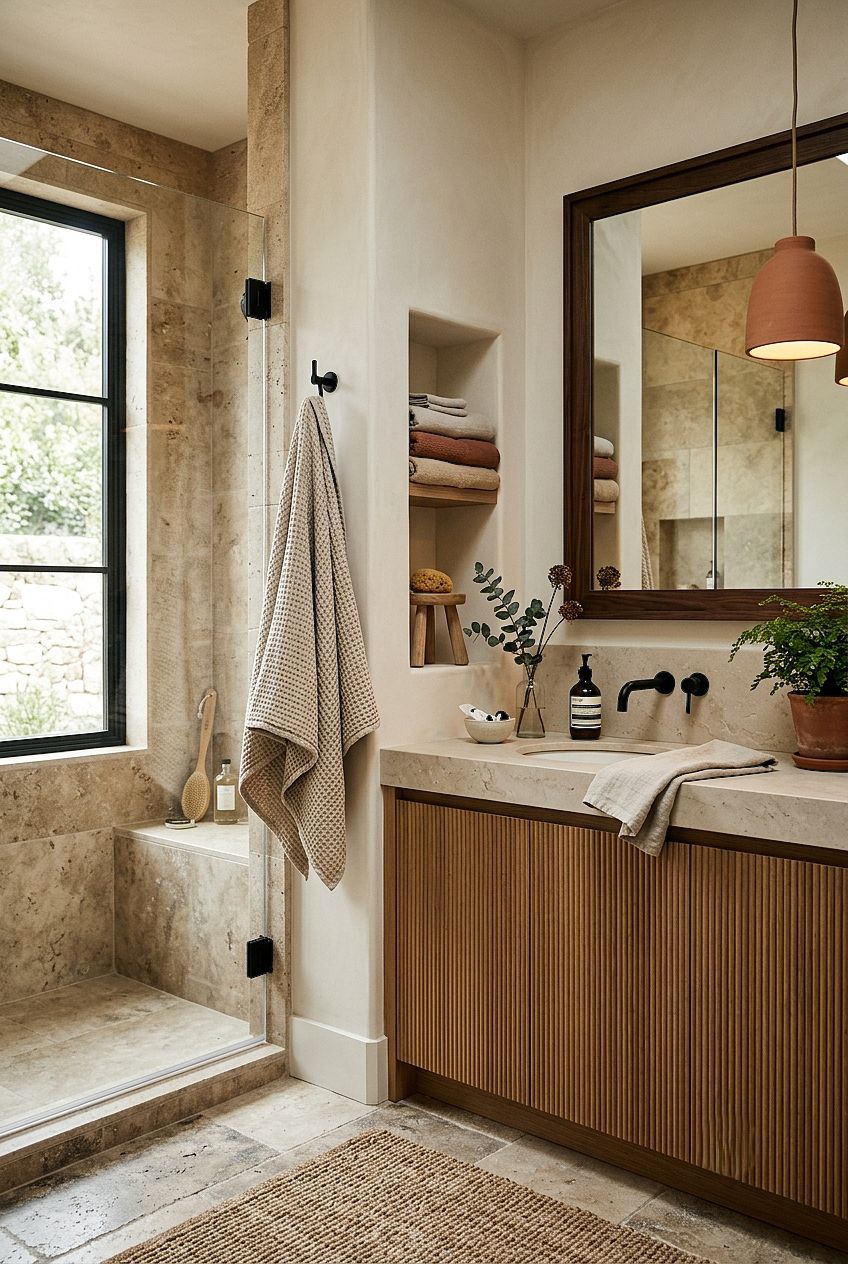
Money and luxury are not the same thing, and anyone who has ever stood in a $40,000 renovation that feels like a suburban dentist’s office already knows it. You can spend an absolute fortune and still end up with a cold, echoey box of white subway tile that makes you flinch. Price tags don’t create atmosphere. Choices do.
A genuinely luxurious bathroom hits three notes at the same time: it looks intentional, it feels good to occupy, and it works so smoothly you never have to think about it. That third note gets ignored almost universally. If your gorgeous slab-marble sink leaves zero room to set down a toothbrush, the design has failed you no matter how flattering it looks under studio lighting.
Picture the last hotel bathroom that actually made you stop and admire it. Odds are decent it wasn’t the most expensive one you’ve ever seen. It was probably the one where everything landed exactly where your hand expected it. Soft, flattering light. A towel within arm’s reach of a dripping wet you. Water pressure that clearly meant business. Luxury in a bathroom is really just thoughtfulness made physical.
Real luxury also tends to whisper rather than shout. Gold faucets and crystal chandeliers demand attention, and honestly, sometimes that maximalist drama is exactly the vibe you’re after. But the spaces that age gracefully lean on quality over flash good materials, clean proportions, and quiet little details you only notice after living with the room for a week or two. Flash impresses guests for an evening. Craftsmanship impresses you every single day.
The Materials That Do the Heavy Lifting
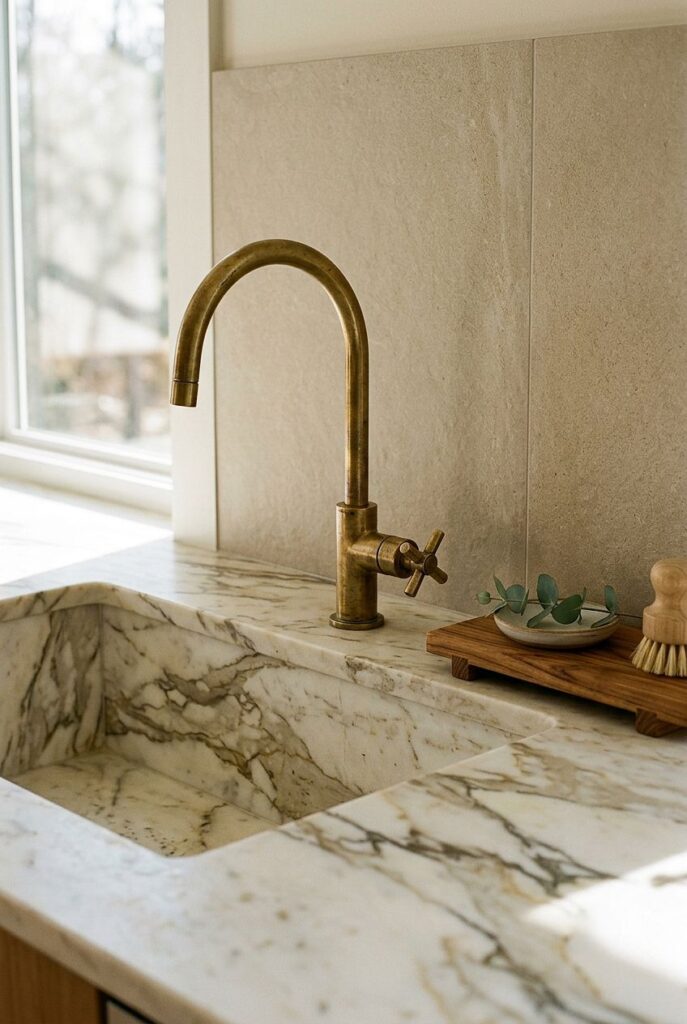
Nothing announces a high-end bathroom faster than the surfaces you actually touch. Your hands and feet are brutally honest critics. They register the difference between cheap engineered laminate and honed natural stone before your brain has even finished forming an opinion. This is why cutting corners on materials always shows, eventually.
Natural stone remains the reigning champion, and for good reason. Marble, quartzite, travertine, and soapstone each bring a personality that manufactured surfaces still can’t quite fake convincingly. They carry a sense of weight and history, like the room was quarried rather than assembled from a catalog.
● Marble delivers that classic veined drama everyone pictures, though it will stain if you so much as glance at it with a glass of red wine. Seal it, baby it, and it rewards you for decades.
● Quartzite gives you a strikingly similar look with far more durability, which is exactly why designers keep quietly steering clients toward it instead.
● Travertine brings a warm, earthy softness that suits spa-style bathrooms beautifully and photographs like a dream.
● Soapstone ages into a deep, buttery patina and shrugs off acids, making it weirdly practical for something that reads as such a luxe material.
Metals matter enormously too, and I’d argue they’re where a shocking number of people quietly go wrong. Mixing three or four different finishes across your faucets, cabinet hardware, and light fixtures reads as chaotic, not curated. Pick one hero metal unlacquered brass that patinas over time, moody matte black, timeless brushed nickel, warm aged bronze and let it carry the whole room with confidence.
Then there’s wood, which a surprising number of people forget belongs anywhere near a bathroom. A teak shower stool, a walnut vanity, a slatted wood detail across the ceiling that natural warmth slices right through all the cold stone and glass and keeps the space from feeling like a very expensive morgue. FYI, teak handles constant humidity like an absolute champ, which is precisely why luxury yachts and world-class spas have relied on it forever.
The tile you choose does more emotional heavy lifting than almost any other single decision. Large-format slabs with minimal grout lines feel serene, seamless, and undeniably expensive. Tiny mosaic tile sprawled across every surface feels busy, dated, and vaguely stressful like a room that can’t stop talking. Restraint is the whole game here.
Turning the Room Into an Actual Spa
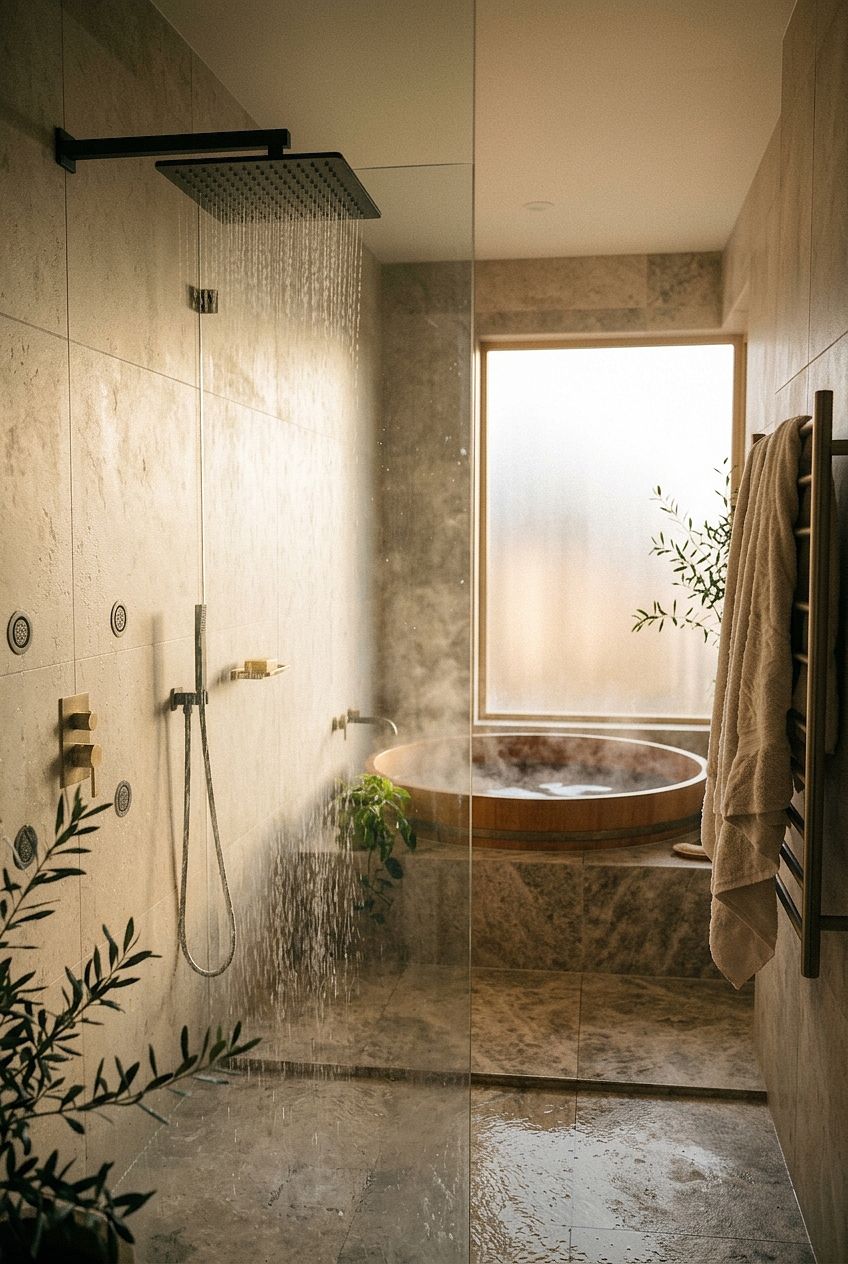
Here’s where a thoughtful luxury bathroom design truly earns its keep. Anyone with a credit card can hang a nice mirror and call it a day. Building a space that lowers your blood pressure the second you walk through the door takes real intention and a bit of restraint.
Start with the shower, since that’s where you spend the most conscious, awake time. A rainfall showerhead mounted directly overhead transforms the entire experience from a frantic “rinse and go” into a genuine “why would I ever leave this.” Add a handheld sprayer and a set of body jets, and you’ve essentially installed a personal car wash for humans in the best possible way. 🙂
Then there’s the soaking tub, undisputed diva of the luxury bathroom. Freestanding tubs get all the glossy magazine love, and a deep Japanese-style soaking tub really can turn a genuinely rough Tuesday into something survivable. But do you actually take baths, though? Be brutally honest with yourself before you drop three grand on a sculptural centerpiece you’ll realistically use twice a year and then resent for hogging floor space.
Temperature is the secret weapon nobody bothers to photograph, because you can’t see comfort in a listing photo. Consider these upgrades that punch dramatically above their visual weight:
● Heated floors: hands down the best money I have ever watched anyone spend in a bathroom. No competition. It changes your relationship with winter.
● Towel warmers: wrapping yourself in a genuinely warm towel feels absurdly indulgent for how little the bar actually costs to run.
● Steam showers: a built-in steam function quietly upgrades your ordinary morning routine into a legitimate spa treatment.
A fireplace or infrared heat panel: total overkill for some people, pure uncomplicated bliss for others. You know which one you are.
The goal here was never to check every box on a fancy list. It’s to build a sequence of small, deliberate pleasures that stack up into something greater. When the floor is warm underfoot, the light is soft and low, and the shower feels like standing under a warm summer storm, you’ve created a room people physically resist leaving. That reluctance is the whole point.
Lighting, Layout, and the Details Everyone Skips
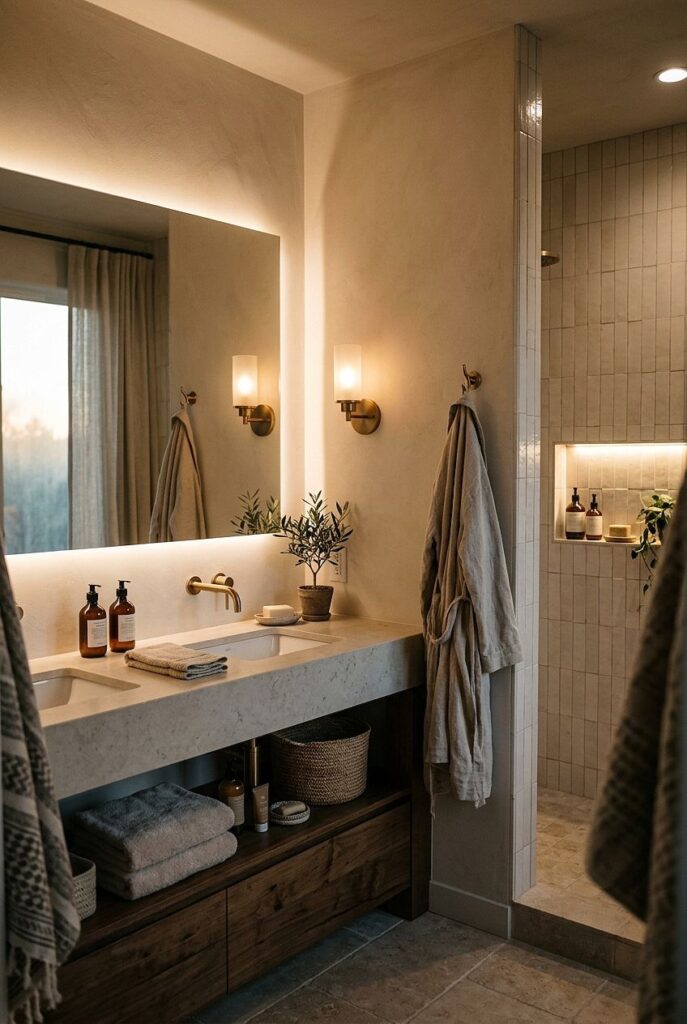
Bad lighting has quietly ruined more bathrooms than bad tile ever could dream of. That single harsh ceiling fixture blasting shadows under your eyes? It makes even a marble palace feel like a police interrogation room at 3 a.m. Layered lighting fixes roughly ninety percent of that problem overnight.
You want at least three distinct sources cooperating: ambient light to wash the whole room, focused task lighting around the mirror where you genuinely need to see your face, and a little accent lighting to set the evening mood. Put dimmers on every bit of it. A middle-of-the-night bathroom trip should never require sunglasses and a recovery period.
Layout attracts far less glamorous attention than finishes, yet it shapes your daily life more than any faucet ever will. A double vanity quietly ends those morning territorial disputes couples pretend they don’t have. And a separate water closet a tiny private room walling off the toilet is honestly one of the most luxurious moves in all of modern bathroom design. Why is that still not standard in every home? Beats me.
Storage is the completely unsung hero of a room that stays looking luxurious past move-in day. All that gorgeous stone and careful lighting means nothing if the counter is drowning under half-empty bottles, a tangled hairdryer cord, and three abandoned samples of face cream. Build in enough concealed storage and the space keeps its serene, uncluttered calm. Clutter is the sworn enemy of luxury, full stop, no exceptions.
Don’t underestimate the small stuff either, because it’s often what people remember. A backlit mirror that flatters instead of exposes. A tiled niche built into the shower wall for your products, instead of a rusting caddy dangling off the showerhead. A proper hook for your robe placed within actual reach of the shower. These tiny, almost invisible decisions separate a bathroom that merely looks expensive in photos from one that genuinely feels expensive to live inside.
Choosing a Look That Won’t Feel Tired in Five Years
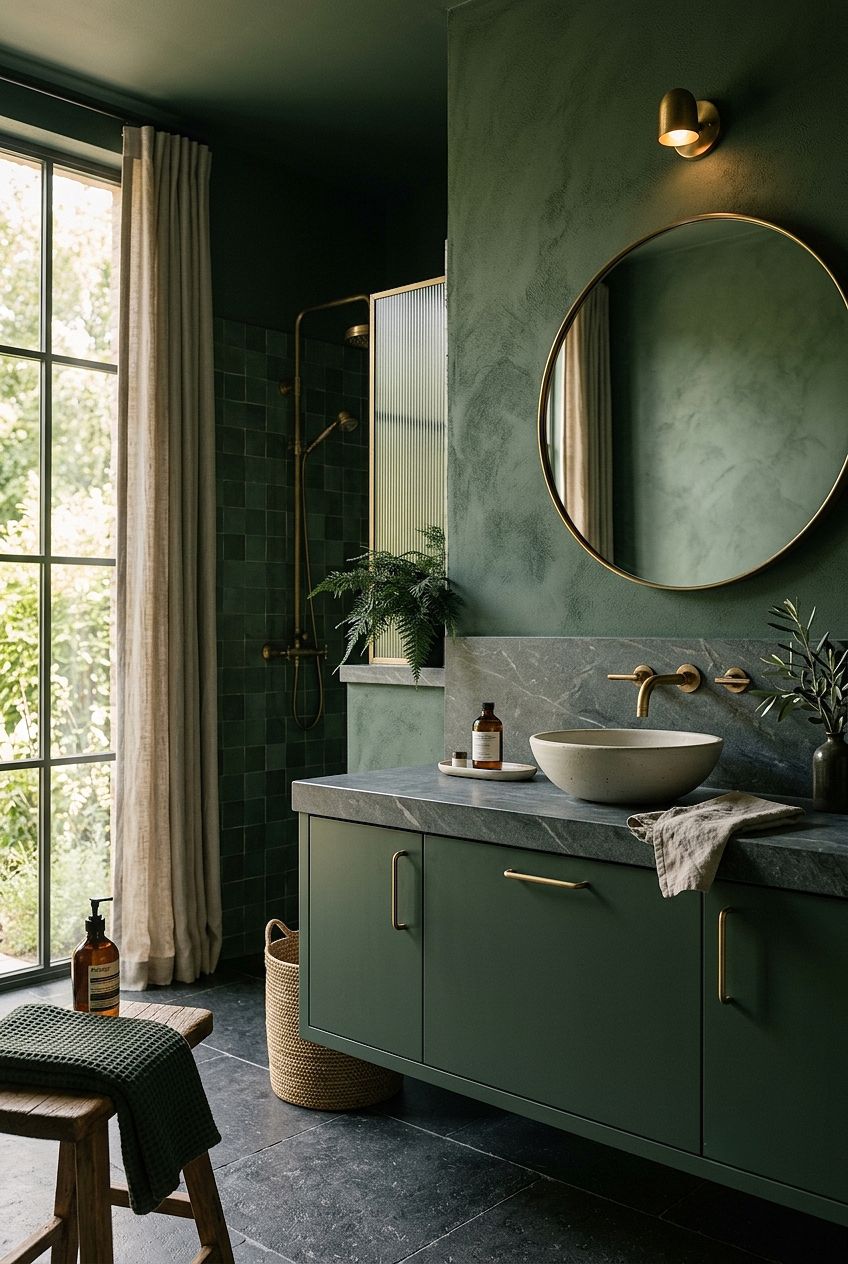
Trends move fast, and bathrooms are expensive enough that chasing every one is a genuinely bad idea. The luxury bathrooms that still look sharp a decade later usually commit to a coherent aesthetic instead of grabbing one trendy thing from every showroom. Pick a lane and stay in it.
A few directions tend to age gracefully. Warm minimalism pairs natural stone, wood, and soft neutral tones for a look that feels calm rather than cold. Classic and timeless leans into marble, polished nickel, and clean symmetry that could pass for either 1925 or next year. Spa-organic goes heavy on travertine, greenery, and earthy textures that make the whole room exhale.
Color is where people either nail it or panic and default to all-white. All-white can absolutely look stunning, but it also risks feeling clinical if you don’t layer in warmth through wood, brass, or textured stone. A moody, dark bathroom deep green, charcoal, warm terracotta reads as far more expensive than most people expect, and it hides water spots like a champion. IMO, a saturated color with great lighting beats a nervous all-beige room every time.
Whatever direction you commit to, let it echo somewhere else in your home rather than existing as a random one-off fantasy. A bathroom that feels wildly disconnected from the rest of the house always reads slightly off, no matter how expensive each individual piece was. Cohesion is a quiet, underrated form of luxury.
Smart Tech Worth the Hype (and What Definitely Isn’t)
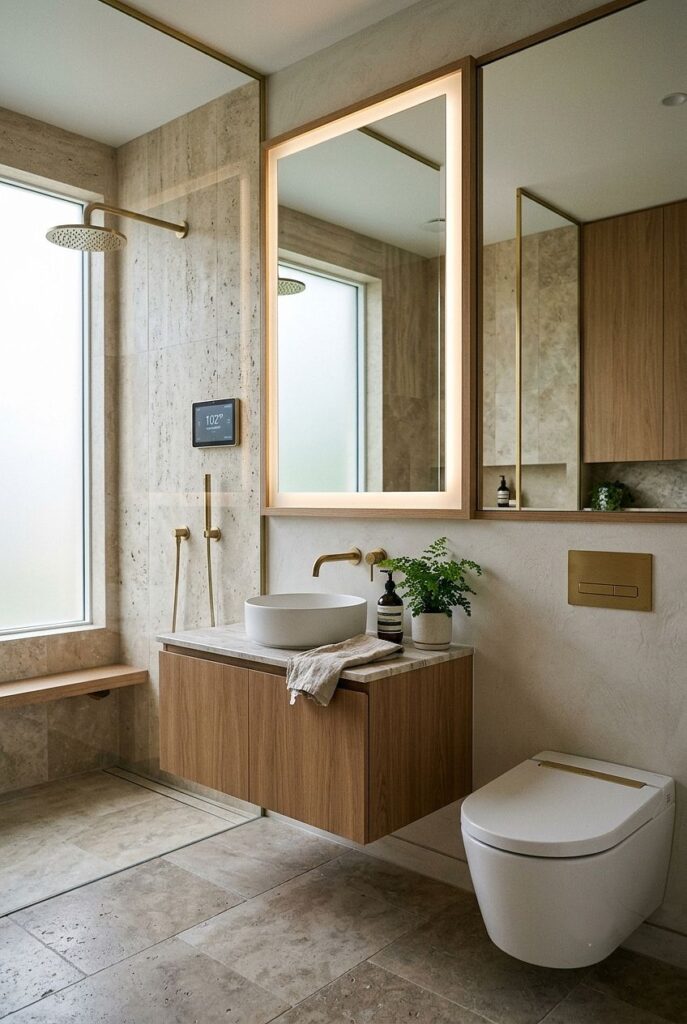
Bathroom technology jumped from silly gimmick to genuinely useful faster than almost anyone expected. Some of it earns its spot completely. Some of it is a solution nobody ever asked for, wearing an expensive chrome costume and hoping you won’t notice.
Smart toilets lead the pack by a wide margin, and once you’ve experienced a good bidet seat with a heated ring, standard toilets start to feel faintly medieval. Digital shower controls let you dial in an exact temperature and save personal profiles, so nobody gets ambushed by cold water while the pipes reluctantly warm up. Anti-fog heated mirrors mean you stop wiping a sad little foggy circle to see your own face after every shower. All three of those genuinely improve daily life.
Then there’s the tech built mostly for show. A bathroom mirror that streams the news while displaying your calendar sounds thrilling for roughly a week before the novelty curdles into annoyance. Voice-controlled everything gets old the very first time it mishears “warm” and floods the tub. The best bathroom technology disappears into the background and quietly makes things nicer it never demands a firmware update at the worst possible moment.
Chase function over novelty every time. A heated floor you can trigger from an app before you even get out of bed is fantastic and life-improving. A tub that posts to social media is a party trick you’ll unplug by summer and never think about again. Spend your tech budget on the stuff that serves you, not the stuff that performs for guests.
Where to Spend and Where to Chill
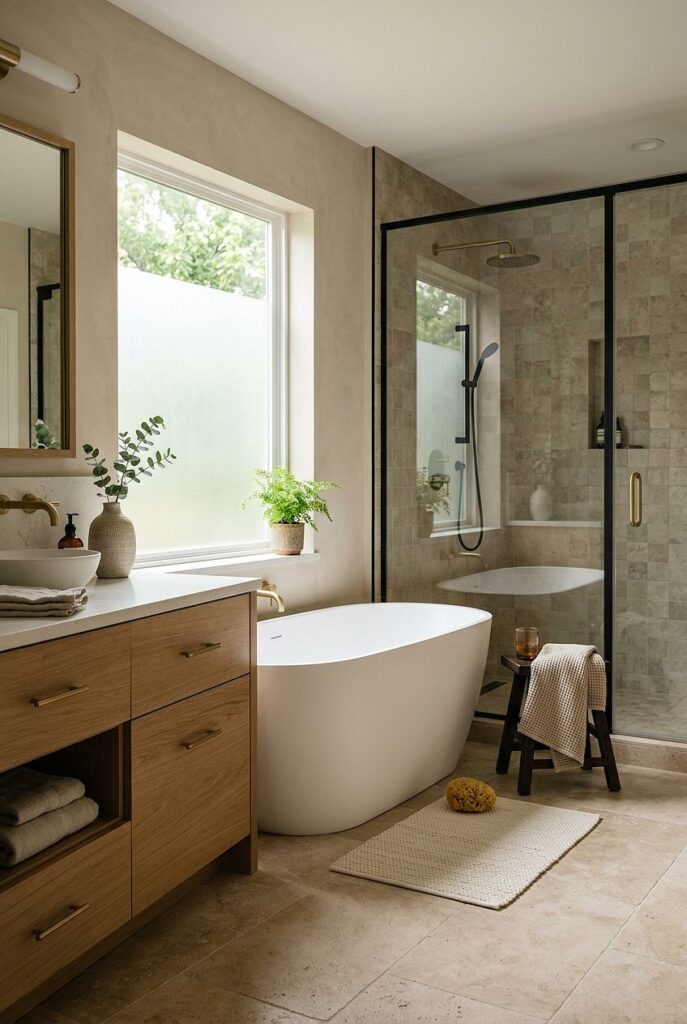
Not every element in the room deserves your full budget, and pretending otherwise is exactly how people blow their savings on all the wrong things. Smart luxury means spending loudly where it genuinely counts and spending quietly everywhere else. The trick is knowing which is which before the contractor hands you the invoice.
Splurge without guilt on the things your body physically touches and the fixtures you’ll keep for fifteen-plus years the shower system, the vanity, the flooring, the faucets. Those are the bones of the room. Cheap versions announce themselves embarrassingly fast and then wear out even faster, forcing you to pay for the upgrade twice.
Save comfortably on the swappable stuff. Mirrors, cabinet hardware, paint, accessories, and decorative light fixtures can all be upgraded down the road without a single wall coming down. You can conjure an astonishing amount of high-end atmosphere with a well-chosen paint color and a bit of dramatic lighting for genuine pocket change.
Here’s a quick gut-check on where your money actually works hardest:
● Worth the real splurge: shower system, freestanding tub, natural stone, heated floors, a solid quality vanity
● Save comfortably here: towels and accessories, cabinet hardware, the mirror, paint, decorative lighting
● Mostly a waste for most people: gold-plated fixtures nobody enjoys touching, tech gadgets you’ll ignore by spring, a second tub added purely “for symmetry”
The most genuinely stylish bathrooms I’ve ever stood in were rarely the priciest ones on the block. They were the rooms where somebody clearly spent with intention instead of just spending hard. Restraint, it turns out, looks a lot like luxury when it’s done right.
FAQ’s
Can you create a luxury bathroom on a small budget?
Absolutely! A great paint color, layered lighting, and warm accents create luxury bathroom appeal without a full renovation.
Are freestanding soaking tubs actually worth the money?
Only if you actually take baths. Otherwise that sculptural tub becomes expensive floor decoration you’ll rarely ever use.
Which luxury bathroom upgrade adds the most everyday comfort?
Heated floors, hands down. Warm tile on a cold morning delivers daily comfort that far outweighs its modest cost.
Is smart bathroom technology worth the investment?
Sometimes. Smart toilets and digital showers genuinely help, but skip the news-streaming mirror you’ll ignore by next month.
What paint colors make a bathroom look more expensive?
Deep, moody tones like charcoal or forest green often read as more expensive than a nervous all-white scheme.
CONCLUSION
Strip away the marble slabs and the mood lighting, and a luxury bathroom really boils down to one stubborn idea: your daily routine deserves to feel good. Not fancy purely for a listing photo good in the specific way a warm floor feels on a brutally cold morning, in the way stepping under a real rainfall shower resets your entire mood before the day even starts.
You genuinely don’t need to gut the whole room or take out a second mortgage to get there. Start with one single upgrade that touches your life every day the floor, the shower, the lighting and build outward from there whenever it makes sense for your budget. Luxury was never a price you pay once and forget. It’s a hundred small comforts you get to quietly enjoy every single day for years.
So here’s the real question: what’s the one thing in your current bathroom that’s been quietly annoying you every morning? Fix that first. Your future self, standing barefoot on a warm floor at six a.m., is going to be extremely grateful you did.