
Luxury Bedroom
By Anna Grace | 1 Feb 2026
Your Bedroom Is Judging You, Here’s How to Make It Luxury
There’s a version of your bedroom that exists in your head moody lighting, plush layers, the kind of space that makes you feel like you’ve checked into a five-star hotel without the $800 room service charge. Then there’s your actual bedroom, with its mismatched pillows and the throw blanket that’s seen better days. The gap between those two realities? Smaller than you think.
Luxury bedrooms aren’t just about money. They’re about intention. A thoughtfully designed bedroom doesn’t demand a complete renovation it demands that you stop treating sleep as an afterthought and start treating it as the ritual it deserves to be.
And here’s the thing most people miss the bedroom is the one room in your home that’s entirely yours. Guests don’t live in it. It doesn’t need to impress anyone at a dinner party. So why is it always the last room people invest in? It deserves the same attention, care, and thoughtfulness you’d pour into a living room or kitchen. Once you start thinking that way, the whole approach to designing it changes.
The Foundation: Your Bed Is the Whole Argument
Every luxury bedroom you’ve ever admired in a magazine or hotel room has one thing in common the bed is unapologetically the centerpiece. Not shoved against the wall, not dressed in whatever fitted sheet survived the last laundry cycle. The bed earns its dominance in the room.
Start with a quality mattress seriously, this is non-negotiable. You spend roughly a third of your life horizontal on this thing. If your sofa cost more than your mattress, something has gone wrong. A high-density memory foam or a hybrid spring mattress from a reputable brand will transform your sleep quality and, honestly, your entire morning mood.
A good mattress also needs a proper base. A slatted bed frame or a box spring that actually supports the mattress properly extends its life and improves the feel dramatically. Don’t spend a thousand dollars on a mattress and then place it on a frame that sags in the middle that’s like buying great coffee and brewing it in a dirty mug.
Then comes the bedding. Luxury isn’t always about thread count numbers (though anything between 400–800 in Egyptian or Pima cotton is solid). It’s about weight, texture, and layering. A fitted sheet, a crisp flat sheet, a duvet with a cover that doesn’t feel like a potato sack then add a chunky knit throw at the foot of the bed for that effortlessly styled look that took zero effort once you bought the right throw.
Investing in a mattress topper is also worth considering if a full mattress replacement isn’t in the budget right now. A quality memory foam or down-alternative topper adds that cloud-like softness that makes getting out of bed feel genuinely criminal every morning.
Pillows: More Than You Think You Need
IMO, most people under-pillow their beds. A luxury bed uses at least two sleeping pillows per person, two Euro shams behind them, and two decorative pillows in front. Is it slightly excessive? Yes. Does it make the bed look like it belongs in a Ritz-Carlton? Absolutely.
Pillow quality matters just as much as quantity. Look for pillows with a proper fill power if you prefer down, or a responsive memory foam fill if you sleep on your side. The cases should match or intentionally complement your bedding mismatched pillow covers are the fastest way to undo an otherwise polished bed setup. And don’t forget to replace pillows every 18 months or so. Even luxury ones have an expiry date.
Lighting: The Detail That Changes Everything
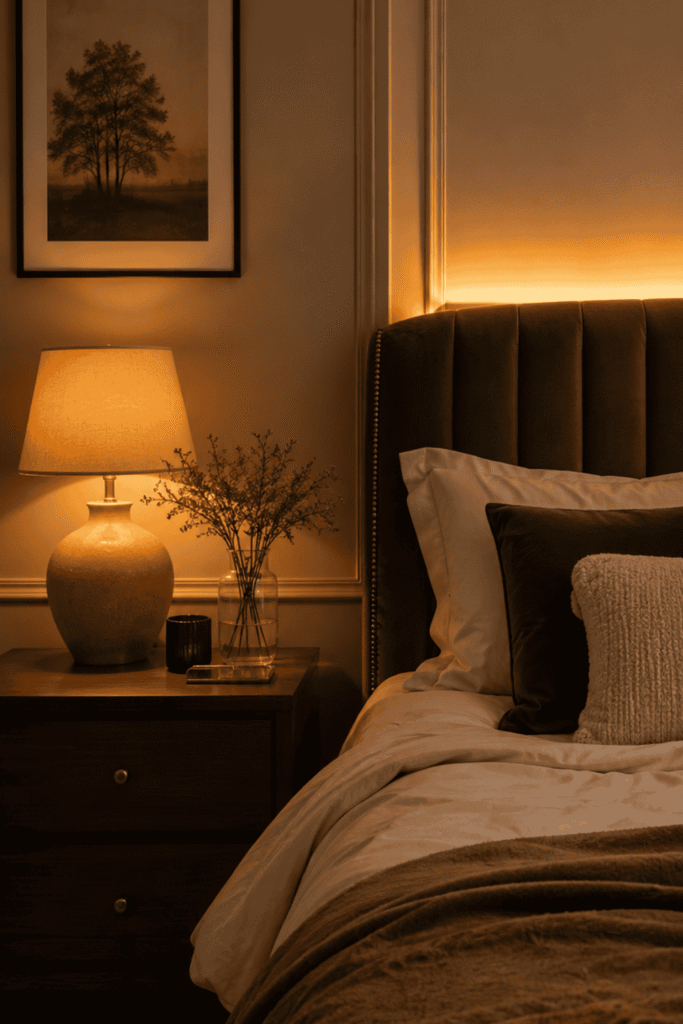
Here’s something interior designers won’t stop talking about and for good reason. Overhead lighting is the enemy of luxury. That single ceiling fixture flooding your bedroom in flat, harsh light? It’s actively working against the atmosphere you’re trying to create.
A luxury bedroom uses layered lighting. That means:
● Ambient lighting a soft overhead source, ideally dimmable
● Task lighting bedside lamps or sconces for reading
● Accent lighting think LED strips behind a headboard, or a backlit mirror
Warm-toned bulbs (2700K–3000K) are your best friends here. They cast the kind of golden glow that makes everything including you look better. Swap out cool white bulbs and watch your room transform without moving a single piece of furniture.
I replaced the overhead fixture in my bedroom with a dimmer switch and two matching table lamps about two years ago. The room felt like a completely different space in under an hour. It’s the kind of upgrade that makes you wonder why you waited.
Smart bulbs are another easy win here. Being able to dim your bedroom lights from your phone or set them on a schedule that gradually brightens in the morning sounds like a small thing until you’ve actually lived with it. Waking up to a slowly brightening room instead of a jarring alarm in pitch darkness is one of those quality-of-life upgrades that genuinely improves your day before it even starts.
Wall sconces mounted on either side of the bed are particularly elegant and free up nightstand space. If hardwiring isn’t an option, plug-in sconces with a fabric cord are widely available and look just as intentional when styled properly. The goal is to make the room feel lit for you, not just lit.
Color, Texture, and the Art of Not Trying Too Hard
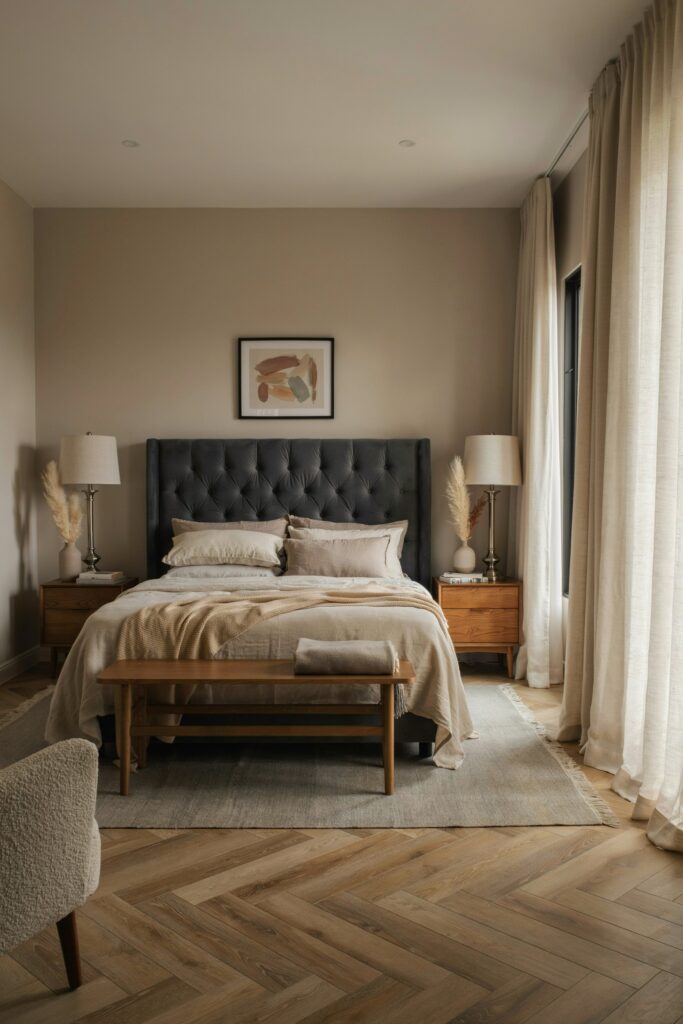
Walk into any luxury hotel bedroom and you’ll notice something: the palette is restrained. Rich, yes. Busy, never. Luxury bedroom design leans into depth and texture rather than bold color clashes.
Neutral bases, warm whites, greiges, deep taupes, soft charcoals let the textures do the talking. A velvet headboard against a matte wall. Linen curtains that pool slightly on the floor. A wool rug underfoot that makes stepping out of bed feel like a reward rather than a cold shock to the system.
The 60-30-10 rule works perfectly here: 60% dominant color (your walls and large furniture), 30% secondary color (bedding, curtains), 10% accent (throw pillows, art, a lamp base). It sounds formulaic, but it’s the reason some rooms feel pulled together while others feel like a store display gone wrong.
If you’re nervous about committing to a wall color, start with your bedding and work outward. Choose a duvet or comforter set you genuinely love, then pull the dominant and secondary tones from that for your walls and curtains. It removes the guesswork and ensures everything speaks the same visual language. Accent walls in deep, moody tones navy, forest green, charcoal behind the bed headboard are particularly effective in creating that dramatic, cocoon-like luxury bedroom feel without painting the entire room.
Texture layering is where most people leave money on the table, figuratively speaking. A room done entirely in smooth, flat surfaces even expensive ones falls flat. Mix matte with sheen, rough with soft, natural with refined. A ceramic lamp base next to a linen shade. A jute rug layered under a sheepskin. Wooden furniture beside a tufted velvet bench. These contrasts create visual warmth that no single expensive purchase can replicate on its own.
Curtains: Floor-to-Ceiling or Nothing
This is a firm opinion. Short curtains in a bedroom look unfinished. Hang your curtains high close to the ceiling, not the window frame and let them fall to the floor. This one trick adds visual height, makes the room feel larger, and gives the space that quietly expensive look that’s hard to explain but impossible to ignore :/
Blackout lining is worth the extra cost too, especially if you’re not a morning person. Beyond sleep quality, blackout curtains also help regulate room temperature keeping it cooler in summer and warmer in winter which is a very practical bonus wrapped in a very elegant package. Choose curtains in natural fabrics like linen, velvet, or silk blends for that authentic luxury bedroom aesthetic that synthetic fabrics simply can’t fake.
Furniture That Works With the Room, Not Against It
Luxury doesn’t mean cramming in the most expensive pieces you can find. It means choosing furniture that fits the space, serves a purpose, and has a coherent visual language with everything else in the room.
A quality bed frame upholstered headboards are having a very justified moment anchors the room. Matching or intentionally paired bedside tables give symmetry, which the human eye reads as calm and organized. A dresser or wardrobe with clean lines keeps things looking intentional rather than accumulated.
When selecting bedside tables, think about proportion. A table that’s too short or too tall relative to your mattress height looks awkward and makes reaching for a glass of water feel like a design protest. Ideally, the surface of your nightstand should sit level with the top of your mattress or just slightly above. It’s a small detail that makes a surprisingly big difference in how polished the whole setup feels.
What makes a bedroom feel truly elevated is what you leave out. Clutter is the opposite of luxury. If you’ve got a chair in the corner that’s become a clothing pile, either commit to using it as seating or lose it. Every piece of furniture should earn its floor space.
Storage is a huge part of this equation. Built-in wardrobes or a well-chosen freestanding armoire keep clothing out of sight and the room feeling calm. Under-bed storage drawers are a practical option for smaller spaces just make sure whatever goes underneath is actually organized, because a luxury bedroom with chaos hiding two feet below the mattress is still chaos. Ottoman benches at the foot of the bed offer both storage and styling double duty, always appreciated.
FYI mirrored furniture can make a small bedroom feel significantly more open, but use it sparingly. One mirrored piece reads as elegant. Four reads as a funhouse.
A bench or upholstered stool at the foot of the bed is one of those pieces that feels indulgent but is wildly practical. It gives you somewhere to sit while putting on shoes, a place to drape tomorrow’s outfit, and it completes the bed visually in a way that just having the floor there doesn’t. It’s a small luxury that earns its spot every single day.
The Final Layer: Scent, Sound, and the Details No One Mentions
You’ve nailed the bed, sorted the lighting, picked a palette that doesn’t give you anxiety. Now comes the part most people skip and it’s what separates a nice bedroom from a memorable one.
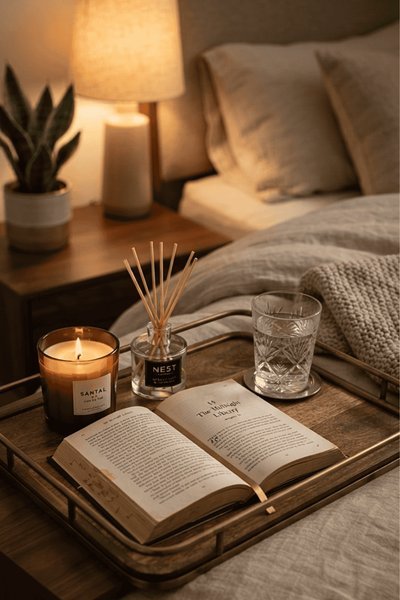
Scent is wildly underrated in bedroom design. A reed diffuser or a quality candle with a calming fragrance (think sandalwood, white tea, cedarwood, or jasmine) creates a sensory cue that signals relaxation the moment you walk in. Hotels have known this for years. Your bedroom should too
The psychology behind scent is actually fascinating your brain associates specific smells with emotions and environments incredibly quickly. This is why walking into a spa instantly makes your shoulders drop. You can engineer that same response in your own bedroom by being consistent with a signature scent. Pick one you love, use it regularly, and within a few weeks your brain will start unwinding the moment it catches the fragrance. It’s one of the most effortless luxury upgrades you can make.
A white noise machine or a small Bluetooth speaker with a bedtime playlist adds an auditory element that makes the room feel like a full experience, not just a place to collapse. Sound therapy whether that’s rain sounds, brown noise, or lo-fi music has genuine sleep science behind it, and pairing it with your scent ritual creates a powerful wind-down routine that signals your nervous system it’s time to relax.
Then the small things: a tray on the nightstand to hold your book, a glass of water, and your phone (face down, ideally). A piece of art that you actually love, not one you bought because it matched the duvet. A plant that doesn’t need much attention a snake plant or a pothos because greenery adds life to a room in a way that no amount of decorative objects can replicate.
Art in a bedroom is personal, and that’s exactly the point. It doesn’t need to be expensive or impressive it needs to be something that resonates with you. A framed print you picked up on a trip, a photograph that means something, an abstract piece in tones that calm you down. What you put on the walls of a space you wake up in every morning should feel like a quiet reflection of who you are, not a generic placeholder. That authenticity is ultimately what makes a luxury bedroom feel truly luxurious not the price tags, but the intention behind every single choice.
FAQ’s
How much should I spend to make my bedroom feel luxurious?
You don’t need a huge budget prioritize quality bedding, good lighting, and intentional furniture choices.
What bedding materials are best for a luxury bedroom feel?
Egyptian or Pima cotton with 400–800 thread count delivers the softest, most hotel-quality sleep experience.
Can a small bedroom still look and feel luxurious?
Absolutely! use mirrors, floor-to-ceiling curtains, layered lighting, and a clutter-free layout to maximize elegance.
What scents work best for creating a relaxing luxury bedroom atmosphere?
Sandalwood, white tea, jasmine, and cedarwood are calming, sophisticated scents perfect for a luxury bedroom.
How do I choose the right color palette for a luxury bedroom?
Stick to neutral, warm tones like taupe, greige, and soft charcoal let textures create visual depth instead.
CONCLUSION
The honest truth? A luxury bedroom isn’t built in a weekend shopping spree. It’s built piece by piece, decision by decision, with a clear sense of what you want the space to feel like. Start with your bed. Fix your lighting. Edit ruthlessly. The rest follows.
What would your ideal bedroom actually feel like to walk into? That answer is your design brief. Start there 🙂