
Maximalist Livingroom
By Anna Grace | 3 June 2026
How to Create a Maximalist Living Room That Actually Feels Calm
Your walls have been beige for three years, and you can’t remember the last time anyone said your space made them feel something. Minimalism promised calm, but it delivered boredom instead. Welcome to maximalism where more really can be more, and your living room becomes a reflection of who you actually are rather than who a magazine told you to be.
Maximalist living rooms are having a moment, and it’s not some fleeting TikTok trend. This is people consciously rejecting the “buy less, choose well” doctrine and instead filling their homes with texture, color, pattern, and personality. But here’s what separates a maximalist living room that feels vibrant and collected from one that just looks like a storage unit exploded: intentionality. You can’t just throw everything at the walls and call it maximalism. There’s an actual art to curating abundance.
What Maximalism Actually Means (Spoiler: It’s Not Just “Clutter”)

Maximalism gets unfairly lumped in with hoarding, which couldn’t be further from the truth. A true maximalist living room is intentionally layered and thoughtfully styled, not randomly packed. Think jewel tones paired with bold geometric patterns, vintage furniture mixed with contemporary art, plants crowding the corners, and every surface telling a story.
The core idea? You’re celebrating fullness. Every book on your shelf, every throw pillow, every framed photo matters to you. Nothing’s there for show or because you felt obligated. In your maximalist living room, excess becomes a love language.
IMO, maximalism is actually the antidote to the anxiety that minimalism created. Why did we collectively decide that having fewer than seven items per room was enlightening? Maximalism says: enjoy what you own, display it proudly, and surround yourself with things that make you happy.
Beyond the surface-level aesthetic, maximalism in your living room reflects a shift in how we think about consumption and authenticity. It’s the difference between buying things because they fit a predetermined design scheme and buying things because they make you feel something. You’re building a space that evolves with you rather than staying frozen in time. Your maximalist living room will change as you discover new artists, inherit pieces from family, or stumble upon that perfect thrifted find. That’s not a flaw it’s the whole point. The room grows as you do, and five years from now, it’ll tell a completely different story while still feeling cohesive and intentional.
Why Your Boring Room Is Secretly Calling for Maximalism
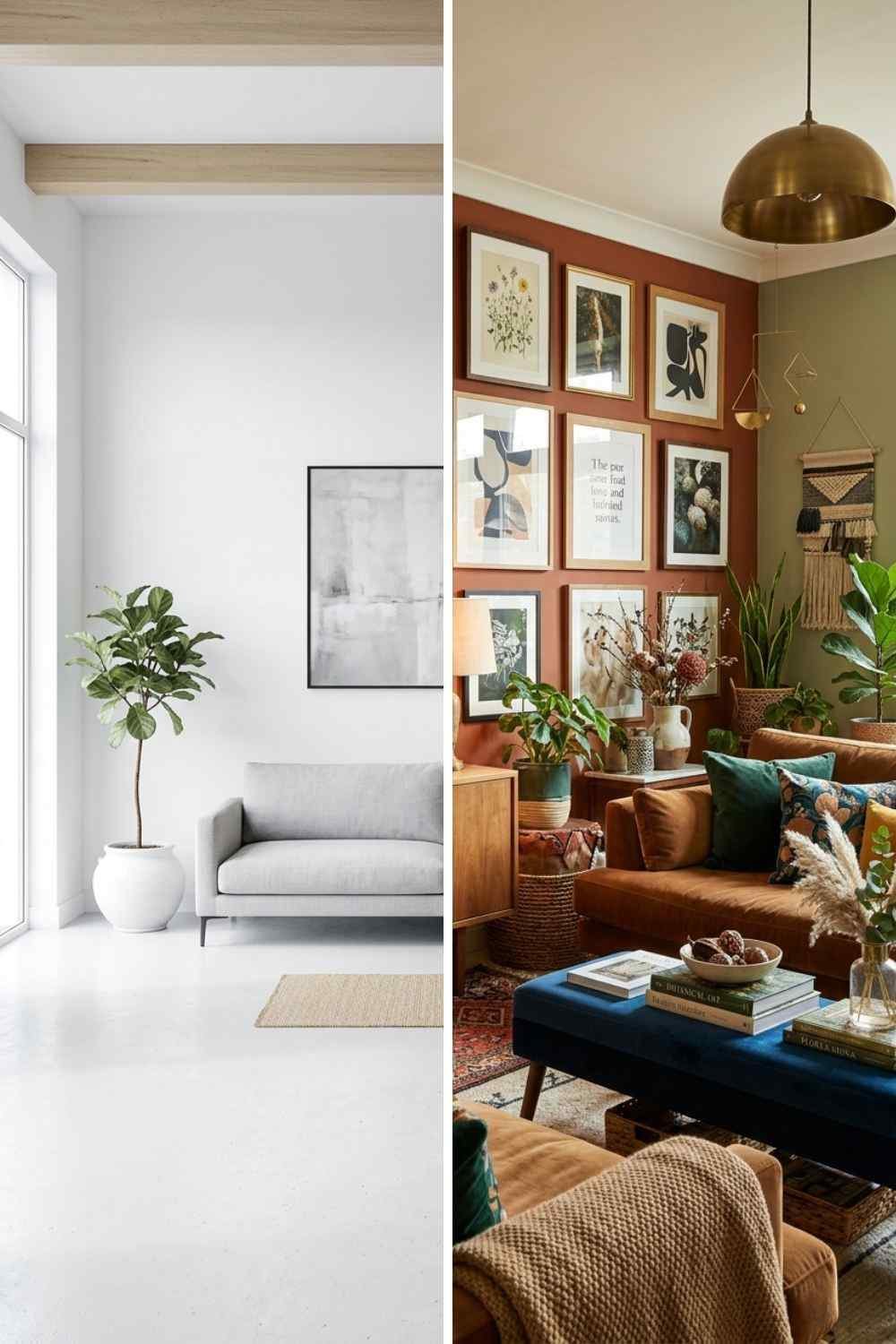
There’s a psychological reason why someone scrolls past an all-white interior and feels nothing, but lights up looking at a maximalist living room bursting with color and collected treasures. Humans crave visual richness. Our brains are wired to find interest in complexity, not sterility.
The shift toward maximalism reflects something deeper happening in culture: fatigue with the Instagram aesthetic that everyone copied. You know the one three-part plants, a single statement pillow, one meaningful piece of art. Beautiful? Maybe. Memorable? Rarely.
A maximalist living room doesn’t care about being Instagrammable in a palatable way. It cares about being you. Your eclectic taste, your weird art collection, your grandmother’s velvet chairs, your growing plant problem. That’s maximalism.
Plus, there’s a sustainability angle nobody talks about. Instead of discarding and replacing, maximalists repurpose, mix, and layer. That vintage credenza from your parents’ house? It lives in your maximalist living room. That tapestry you found at a thrift store? On the wall it goes. You’re not just decorating you’re preserving and celebrating pieces that have history.
There’s also a deeper comfort in maximalism that people underestimate: permission to be yourself. When you’re not bound by the rules of minimalism or any other design dogma, you stop apologizing for your interests. You don’t hide the fact that you read a lot, or that you’ve collected art from every country you’ve visited, or that you have seventeen throw pillows because they all bring you joy. Your maximalist living room becomes a physical manifestation of your personality. It’s like the difference between wearing an outfit you think you should wear and wearing an outfit that makes you feel like yourself. One is a performance; the other is freedom.
The Secret Ingredient: Cohesion Without Conformity
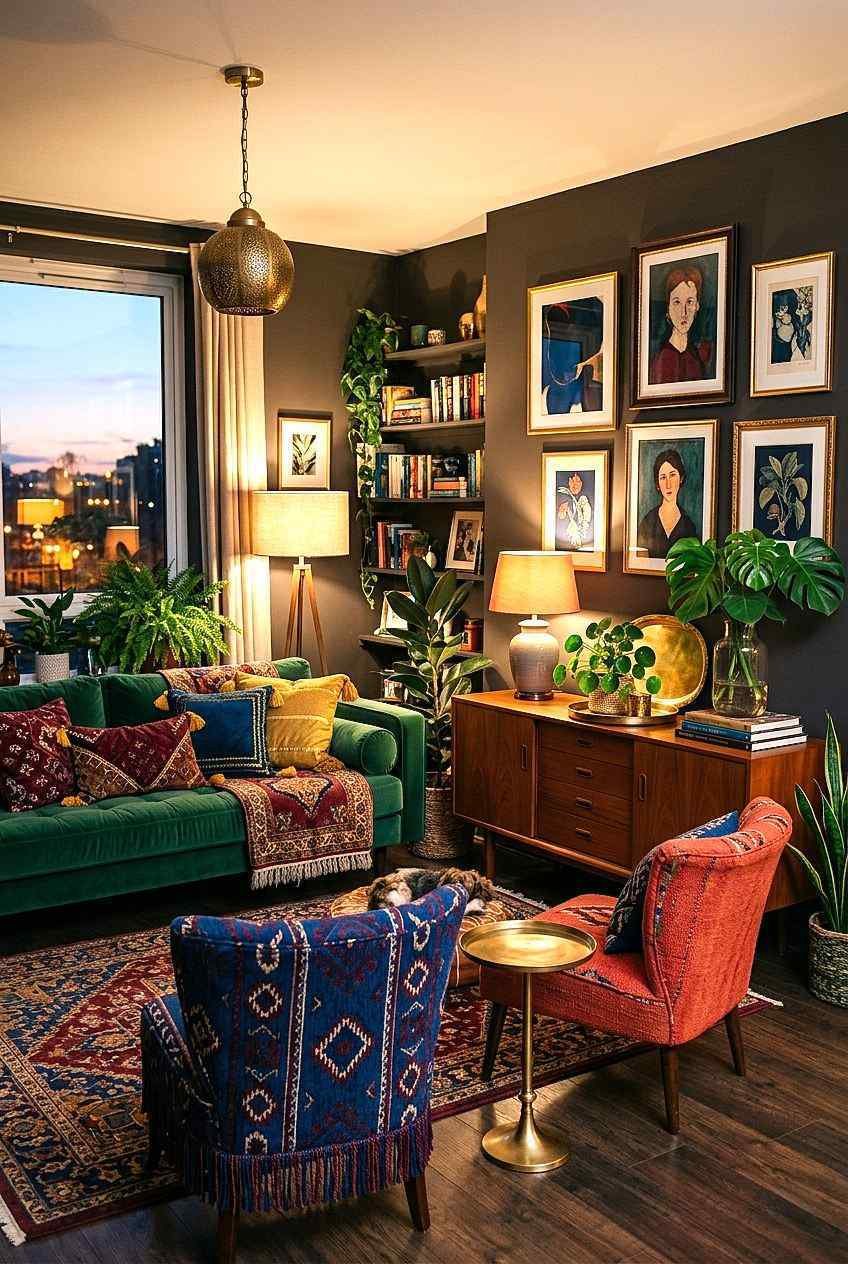
Here’s where people slip up with maximalist living rooms. They think “maximalist” means no rules, and suddenly they’re living in visual chaos that stresses them out every time they walk through the door. Wrong.
The trick is choosing a unifying thread that lets disparate elements coexist peacefully. This might be:
- A color palette (jewel tones don’t compete; pastels mixed with neutrals do)
- A stylistic era (mid-century modern can absorb boho touches, vintage industrial pairs with contemporary art)
- A material language (lots of wood, brass, and linen feel cohesive even in a maximalist living room; mixing too many shiny plastics and matte finishes creates discord)
- A scale consistency (oversized statements mixed with delicate pieces creates balance; everything oversized or everything tiny feels off)
Think of it like throwing the best dinner party with people from different decades of your life. They all show up, they’re all interesting, but the wine and the good lighting tie everything together. That’s your maximalist living room framework.
I filled my own living room with about eighty percent 1970s pieces, 15% contemporary art, and 5% stuff my partner brought in. Different eras, but they talk to each other because they exist in the same color temperature and texture family. The maximalism works because it’s not random chaos it’s considered excess.
The real skill in maximalist design isn’t adding more anyone can do that. It’s knowing what ties disparate elements together so they sing instead of scream. Look at museum collections; they often feature pieces from wildly different eras and cultures, but the curation creates dialogue between them. Your maximalist living room operates the same way. A 1970s ceramic vase sits next to a contemporary sculpture, and they don’t fight because they’re both in the same warm, muted color family. That’s the invisible thread. When someone walks into your space, they might not consciously register why it feels so intentional, but they’ll feel it. That’s the mark of a truly successful maximalist living room abundance that reads as curated, not cluttered.
Practical Ways to Build a Maximalist Living Room Without Losing Your Mind
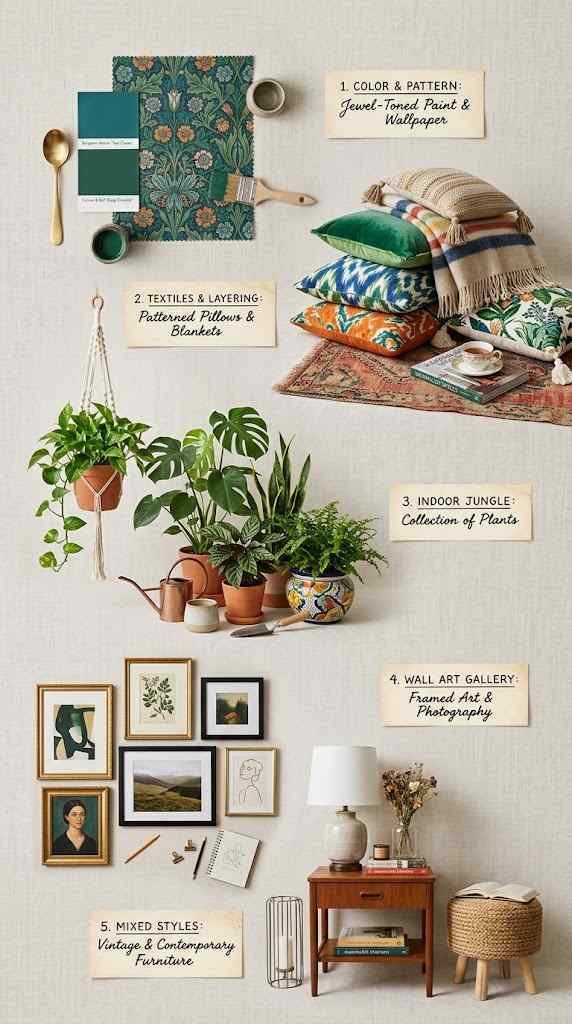
Want to actually pull this off? Here’s how you layer without feeling overwhelmed:
Start with the walls. Wallpaper, paint color, or a combination both your maximalist living room should have personality from the second you enter. A deep jewel tone, a bold pattern, even an accent wall with textured wallpaper signals that the rest of the room is going to be interesting.
Furniture next, not last. Pick pieces that excite you not matchy sets. A statement sofa (bold color or pattern), a vintage coffee table, layered seating options. Your maximalist living room furniture should feel like it was collected over time, not purchased in a single IKEA run.
Layer in textiles. This is where maximalist living rooms truly come alive. Throw blankets in contrasting colors, multiple pillows with different patterns, a rug that’s probably doing too much (and that’s the point). Mix textures: velvet, linen, leather, jute.
Plants everywhere. Seriously. Corner plants, hanging plants, shelf plants. A maximalist living room without plants is like a maximalist living room without joy. They soften hard edges and add life.
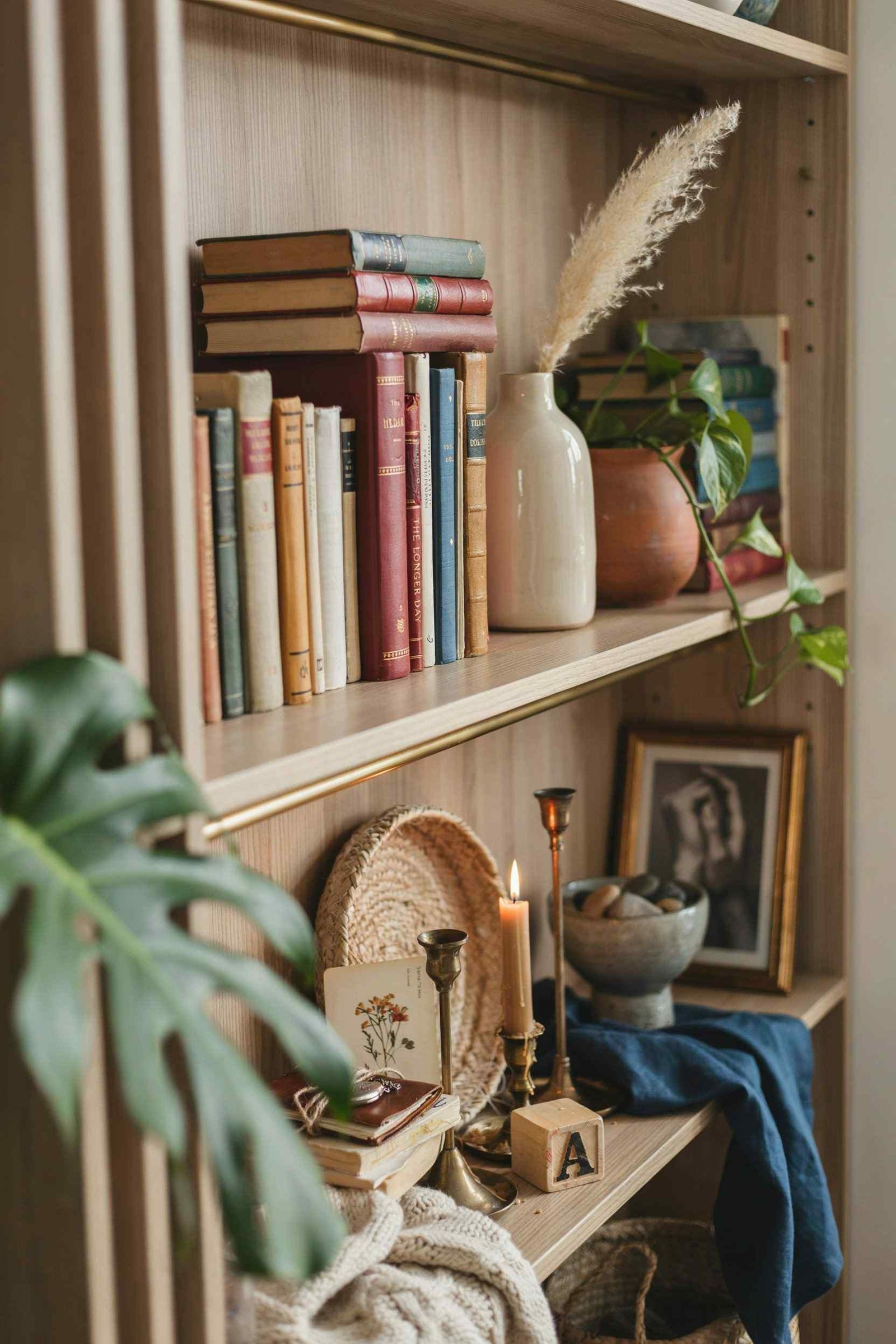
Art and collections. Frame things. Shelves should tell stories. Display the books you actually read, the ceramics you love, the magazines you’re keeping. Your maximalist living room is a gallery of your taste, not a designer’s fantasy.
Lighting. This is the glue. Mix floor lamps, table lamps, and overhead lighting. Let it be warm. The best maximalist living room can shift mood depending on what lights are on.
One thing people often skip: create zones within the room. Your maximalist living room doesn’t have to feel homogeneous from corner to corner. You can have a reading nook that’s slightly more intimate, a conversation area that’s the visual anchor, and a corner for displaying collections. This prevents the space from feeling overwhelming and gives the eye natural resting points. Think of it like chapters in a book each section develops a different theme while contributing to the overall narrative. You also don’t need to do this all at once. The best maximalist living rooms are built slowly, thoughtfully, over seasons. Add pieces as you find them. Let the room tell you what it needs next. Rushing to fill every surface defeats the purpose.
The Maximalist Living Room vs. The “Maximalist” Mistake
There’s a difference between curated maximalism and hoarded spaces that people call maximalist to feel better about disorganization. Real maximalist living room design is intentional. Everything has a reason. Everything is clean, even if it’s full.
Your maximalist living room shouldn’t feel stressful. If you walk in and your eye doesn’t know where to land because it’s truly chaotic (not complexly interesting), you’ve lost the thread. That’s not maximalism that’s overwhelm wearing a costume.
Also, functionality matters. A maximalist living room where you can’t sit comfortably or find the remote is just a storage unit. :/ Every element, no matter how decorative, should coexist with actual living.
Maintenance matters too. A truly successful maximalist living room requires you to actually live in it and care for it. That doesn’t mean rigid, obsessive organization, but it does mean dusting your collections, rotating your art occasionally, and refreshing arrangements so nothing becomes invisible through familiarity. This is where maximalism differs from hoarding hoarding is about holding on to everything unconsciously; maximalism is about conscious engagement. Your maximalist living room should feel alive and tended to, not abandoned under layers of dust. And here’s the thing: that engagement is part of the joy. You’re not passively existing in the space; you’re actively participating in its upkeep and evolution.
FAQ’s
Can I have a maximalist living room if I have limited space?
Absolutely. Scale down quantities and focus on vertical layering shelves, wall art, hanging plants to maximize impact without floor clutter.
How do I know if my maximalist living room has too much color?
If your eye doesn’t know where to rest or you feel anxious walking in, add more neutral anchors or reduce the color saturation slightly.
Is a maximalist living room more expensive to design than a minimal one?
Not necessarily. Thrifting, inheriting pieces, and DIY projects make maximalism budget-friendly if you’re intentional about sourcing.
How often should I update or rearrange my maximalist living room?
There’s no fixed rule. Rearrange when it feels stale or when you acquire new pieces that shift the room’s energy.
Can I combine maximalism with other design styles like modern or industrial?
Yes. Maximalism works beautifully as a foundation; layer in other styles through color, materials, and furniture choices for a hybrid aesthetic.
CONCLUSION
So you’re staring at your beige room and thinking: could I actually pull off a maximalist living room? Probably, if you’re willing to trust your taste and ignore the voice in your head that says “less is more.” That voice has had its moment.
Your maximalist living room doesn’t need permission from minimalism’s rulebook. Fill it with colors that make you happy, patterns that excite you, and pieces that remind you of who you are. The quiet rooms are great for other people. Your space should be loud and proud and unapologetically full of life.