
Mediterranean Backyard
By Anna Grace |11 May 2026
Mediterranean Backyard: How to Build Your Own Slice of the Coastline
If your backyard currently looks like everyone else’s lawn-and-patio situation, you’re missing out on something genuinely transformative. A Mediterranean backyard isn’t just about slapping up some terracotta and calling it done it’s a complete sensory shift that turns your outdoor space into a place where time actually slows down. I realized this years ago while sitting in a cramped courtyard in Barcelona, nursing an espresso at 11 AM on a Tuesday, when it hit me: I didn’t own a space that felt that alive back home.
Here’s what makes a Mediterranean backyard different: it prioritizes atmosphere over perfection, hard landscaping over manicured grass, and the ability to linger over the need to impress. These aren’t trendy shortcuts either they’re principles that have worked for centuries across Spain, Italy, Greece, and southern France. If you’re ready to stop living on your porch like you’re just passing through, let’s talk about how to make this happen.
The Foundation: Layout and Hardscaping
Your Mediterranean backyard doesn’t start with plants it starts with bones. Think about how courtyards and villas in the Mediterranean region actually work they use stone, gravel, and strategically placed seating areas to create natural gathering zones. The layout works with your outdoor space rather than fighting against it.
Gravel and stone pathways should anchor your layout. Crushed limestone or pea gravel in warm, sandy tones feels authentic and practical it drains well, develops character over time, and costs way less than continuous paving. Lay down permeable pathways that wind naturally rather than cutting straight lines. These curves create visual interest and make your space feel like it evolved organically rather than being designed by committee.
Here’s a practical tip: measure your pathways at about 2-3 feet wide. Narrow enough to feel intentional, wide enough that two people can walk side by side without awkwardness. The winding approach works because it makes even small spaces feel larger your eye doesn’t take in the entire backyard at once, so it reads as more expansive.
Hardscaping materials matter more than you’d think. Weathered stone tiles, rustic pavers, or even reclaimed brick work beautifully. The goal is that sun-baked, slightly aged appearance not pristine. FYI, newer materials can look sterile, so don’t shy away from older pieces that have patina. A single seating area with stone, terra cotta, or simple wooden benches becomes the anchor point where people naturally congregate. This isn’t just where you sit it’s where the whole backyard’s energy centers.
Consider adding a small raised platform or patio area if you have the space. Even raising your seating 6-12 inches changes the entire perspective and creates visual separation between zones. Stone or gravel at ground level with a wooden deck above creates nice contrast and functional diversity.
Shade structures are non-negotiable. A pergola draped with climbing vines (we’ll get to which ones in a second) creates the perfect transition between full sun and your seating zone. You need that dappled light effect where you can actually sit outside during peak afternoon heat without feeling like you’re in an oven. The shade also softens harsh shadows and creates that romantic, filtered-light atmosphere that makes everyone look better and feel more relaxed.
If a pergola feels too ambitious, even a shade sail in a natural linen color works beautifully. The point is creating relief from intense sun while maintaining that open, breezy Mediterranean feel. You’re not looking for a fully enclosed space just strategic cooling and lighting.
Color Palette and Architectural Details
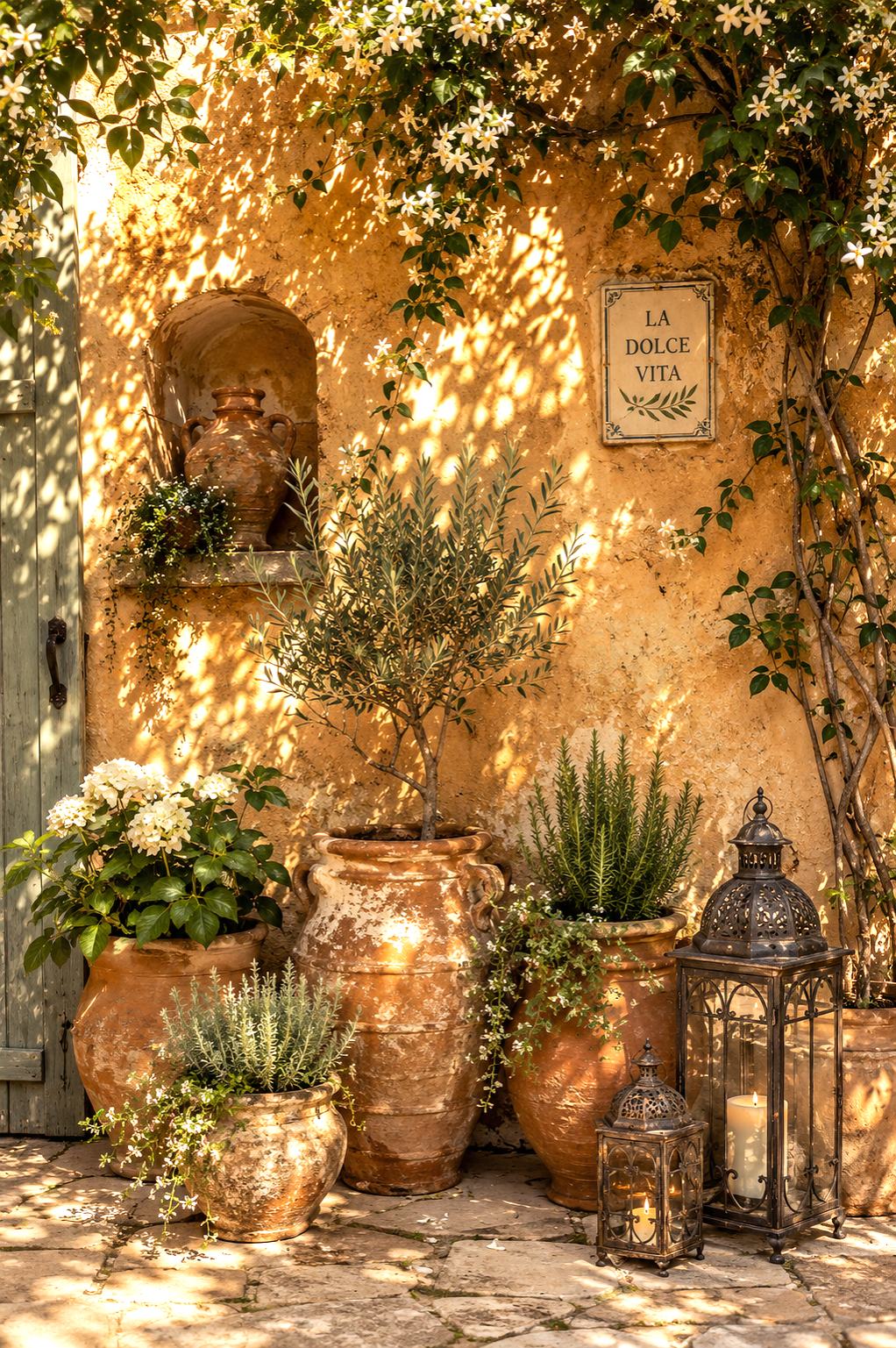
Your Mediterranean backyard’s color story should feel warm and earthy, but not monochromatic. Think terracotta, cream, sage green, dusty blue, and touches of jewel tones through flowers. The palette works because these colors naturally complement each other and feel cohesive without being boring.
Wall color matters significantly. A warm cream, soft ochre, or even a weathered white backdrop makes plants pop and reflects heat. If you have existing structures, consider a subtle stucco finish or rendering in warm tones. IMO, this single change can transform an ordinary backyard into something that actually reads as “Mediterranean.” A fresh coat of paint costs maybe $200-500 for most residential spaces and completely changes the vibe.
Don’t go pure white it reads sterile. Look for warm whites with slight yellow or beige undertones. Farrow & Ball’s “Dead Salmon” or Benjamin Moore’s “HC-38” (Guilford Buff) capture that authentic Mediterranean warmth. Test samples in your space first because lighting dramatically affects how colors read.
Accessory pieces add character without trying too hard. Terracotta pots in varying sizes (not matching sets that’s too formal) scattered around planting areas feel authentic. Vintage-looking lanterns, a simple wooden table, wrought iron chairs. A water feature even a modest one like a small fountain or basin brings movement and that cooling sound that makes spaces feel instantly more serene. The sound of water adds a whole sensory dimension people don’t expect.
One thing that really works: displaying plants in layers. Mix ground-level plantings with container groupings at different heights. This creates visual richness and practical flexibility for seasonal adjustments. A 12-inch pot at ground level, a 24-inch pot on a small pedestal, a trailing plant in a wall-mounted planter these layers create depth and sophistication without looking forced.
Consider adding small architectural details like arches, alcoves, or niches. Even a simple wooden arch covered with climbing roses creates a focal point and sense of discovery. A small built-in niche with a potted plant or small sculpture draws the eye and adds intentionality. These details don’t need to be expensive simple wooden frames or stone arrangements work beautifully.
Plants That Actually Work
Here’s where most people mess up: they buy a few random Mediterranean plants and hope for the best. Real Mediterranean landscaping uses dense, textural plantings that create depth and feel lush without requiring constant coddling.
Lavender, rosemary, and olive trees form your backbone. Lavender brings purple-gray texture and that unmistakable scent that makes people close their eyes and smile. Plant varieties like ‘Provence,’ ‘Grosso,’ or ‘Hidcote’ depending on your climate zone. Rosemary grows aggressively (which is good) and offers year-round interest. Upright varieties add height; creeping types work beautifully spilling over stone edges. Olive trees are the literal anchor they’re sculptural, they age beautifully, and they whisper “I belong in the Mediterranean” without saying a word. Even small olive trees create an instant focal point.
Add Italian cypress for vertical drama, but use them strategically one or two, not a whole army. They’re statement plants. Citrus trees (lemon, orange, fig) combine function and aesthetics. There’s something magical about harvesting your own lemons from your backyard. Bougainvillea in magenta, pink, or orange creates explosive color when it blooms, though it’s tender in cold climates. Don’t forget about silvery-leafed plants like santolina and artemisia. These create a calming visual palette and handle dry conditions beautifully. Mix in some native grasses (feathery and textural) and you’ve got movement without fussiness.
Herbs like oregano, thyme, and sage fill in ground-level spaces and smell incredible when you brush past them. Plant these near pathways so people naturally interact with them. Greek oregano spreads nicely as a groundcover. Creeping thyme flowers in pink or white. Sage varieties come in green, purple, and variegated options.
The secret? Plant densely and let things intertwine. Mediterranean gardens feel abundant because everything’s packed in together, creating natural layers and texture. Sparse plantings look thin and awkward. When you’re planting, space things at about 60-70% of their mature width. Yes, they’ll be crowded initially. By year two, they’ve filled in and created that lush, established look you’re after.
Consider the bloom timeline too. You want something flowering spring through fall. Lavender peaks early-to-mid summer. Bougainvillea goes strong summer through fall. Herbs flower throughout. This staggered approach keeps your space interesting all season rather than having one explosive month then flatness.
Creating Your Entertaining Space
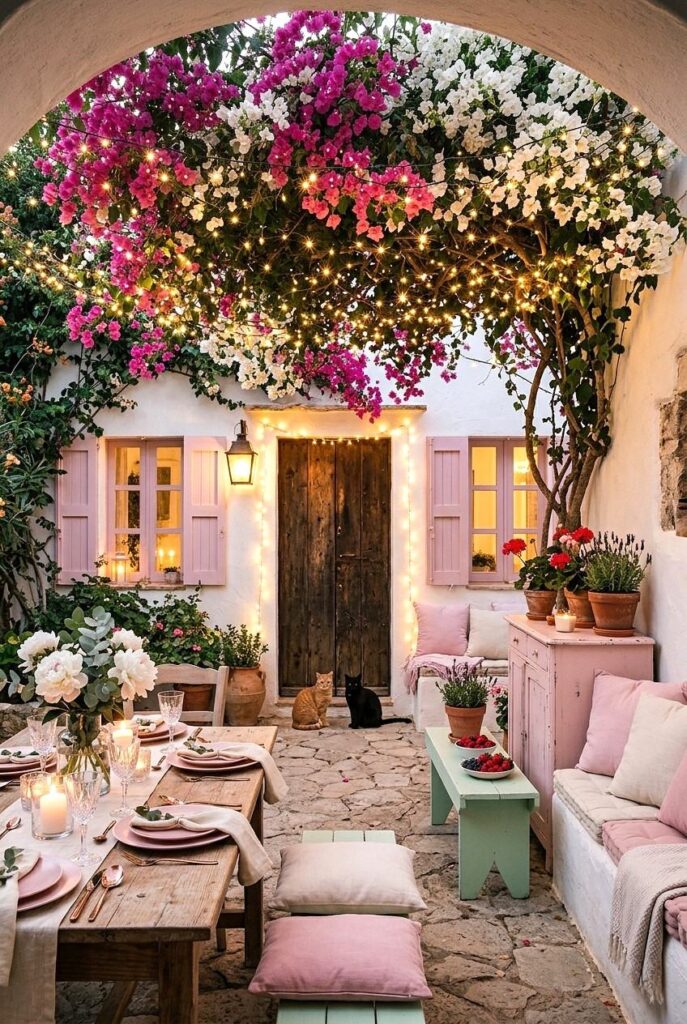
The whole point of a Mediterranean backyard is to actually use it. These spaces are built for lingering long dinners, afternoon siestas, coffee at odd hours when the light’s perfect. Your entertaining space needs to support this lifestyle, not just look good.
Set up a proper dining or lounging area with durable outdoor furniture. Wooden tables with simple benches, or lightweight metal chairs that you can move around. The key is flexibility you want to rearrange easily based on sun, wind, or who’s visiting. Built-in seating around a small table or along a low wall works beautifully and saves space. Think about your typical gathering size. A table that seats four-six is more practical and intimate than something massive that demands constant use to not look lonely.
Lighting transforms everything once the sun sets. String lights overhead create ambiance without being tacky. Solar lanterns placed thoughtfully around pathways guide movement and create atmosphere. A simple outdoor kitchen area even just a grill and small counter extends functionality without requiring a full renovation. You don’t need a $10,000 outdoor kitchen. A weathered wooden table with a grill and some shelving underneath works perfectly.
The entertaining culture in Mediterranean regions revolves around simple abundance: good wine, fresh herbs, ripe fruit. Your outdoor space should support this lifestyle. Have a spot for bottles, glasses, cutting boards. Hang a small shelf for pots of fresh herbs you’ll snip during cooking. These practical touches make entertaining feel effortless. A simple wooden cart on wheels works beautifully for moving drinks, food, and supplies around without constant trips inside.
Consider adding a small bar area or beverage station. Shelving with wine glasses, bottle storage, and a small table for mixing drinks creates a functional focal point. Nothing fancy simple wood and metal framework. This becomes a natural gathering spot even when you’re not formally entertaining.
Think about sound and music too. A simple Bluetooth speaker tucked into a planter plays background music without looking like an eyesore. Mediterranean entertaining is about all the senses sight, smell, taste, touch, and sound. Soft music elevates the entire experience.
Seating variety matters. Dining chairs for the table, lounging chairs or benches for relaxing, ground cushions for casual gatherings. This flexibility makes the space feel less formal and more inviting. People relax differently depending on their mood and energy level.
Maintenance Reality Check
Let’s be honest: a Mediterranean backyard requires less fuss than a traditional lawn-and-flower-garden setup, but it’s not zero-maintenance. These plants are tough, but they still need water, occasional pruning, and attention.
Watering is the biggest variable. Most Mediterranean plants prefer dry conditions, but during establishment they need regular moisture. Once established, deep, infrequent watering works better than daily sprinkles. A simple drip system or soaker hoses saves time and money. Set up irrigation on a timer so you’re not hand-watering during the hottest part of summer. Drip systems deliver water directly to root zones, reducing waste and disease issues that come from overhead watering.
For the first year, plan on watering newly planted areas 2-3 times weekly depending on heat and rainfall. By year two, most plants only need watering during extended dry spells. This is why dense planting helps established plants create shade for neighboring plants, reducing water needs across the board.
Pruning keeps things from getting overgrown. Lavender, rosemary, and santolina need occasional trimming to stay full and dense. Prune after flowering for best results. IMO, the best time to prune lavender is right after it blooms in late summer you get the satisfaction of harvesting beautiful flowers and shaping the plant. Olive trees and citrus need minimal pruning mostly just shaping and removing dead wood.
Deadheading spent flowers extends blooming periods. Walk through with pruning shears 2-3 times during the growing season and remove dried flowers. This simple task takes 15 minutes and dramatically extends color.
The beautiful part? You’ll spend less time maintaining than you would a traditional garden. No weekly mowing, no complex plant combinations that demand specific conditions. The plants are fundamentally low-stress. Most Mediterranean plants are actually happier when slightly neglected they’ve evolved to thrive on minimal intervention.
Weeding is minimal too, especially once plants fill in. Dense planting crowds out weeds naturally. A 2-3 inch layer of gravel or mulch around plantings further suppresses weeds and helps retain soil moisture.
Pest issues are rare. Mediterranean plants have natural pest resistance. The occasional spider mite or scale insect shows up, but serious infestations are uncommon with well-maintained plantings. Most problems stem from overwatering or poor drainage fix those and you’ve fixed most issues.
Making It Work With Your Climate
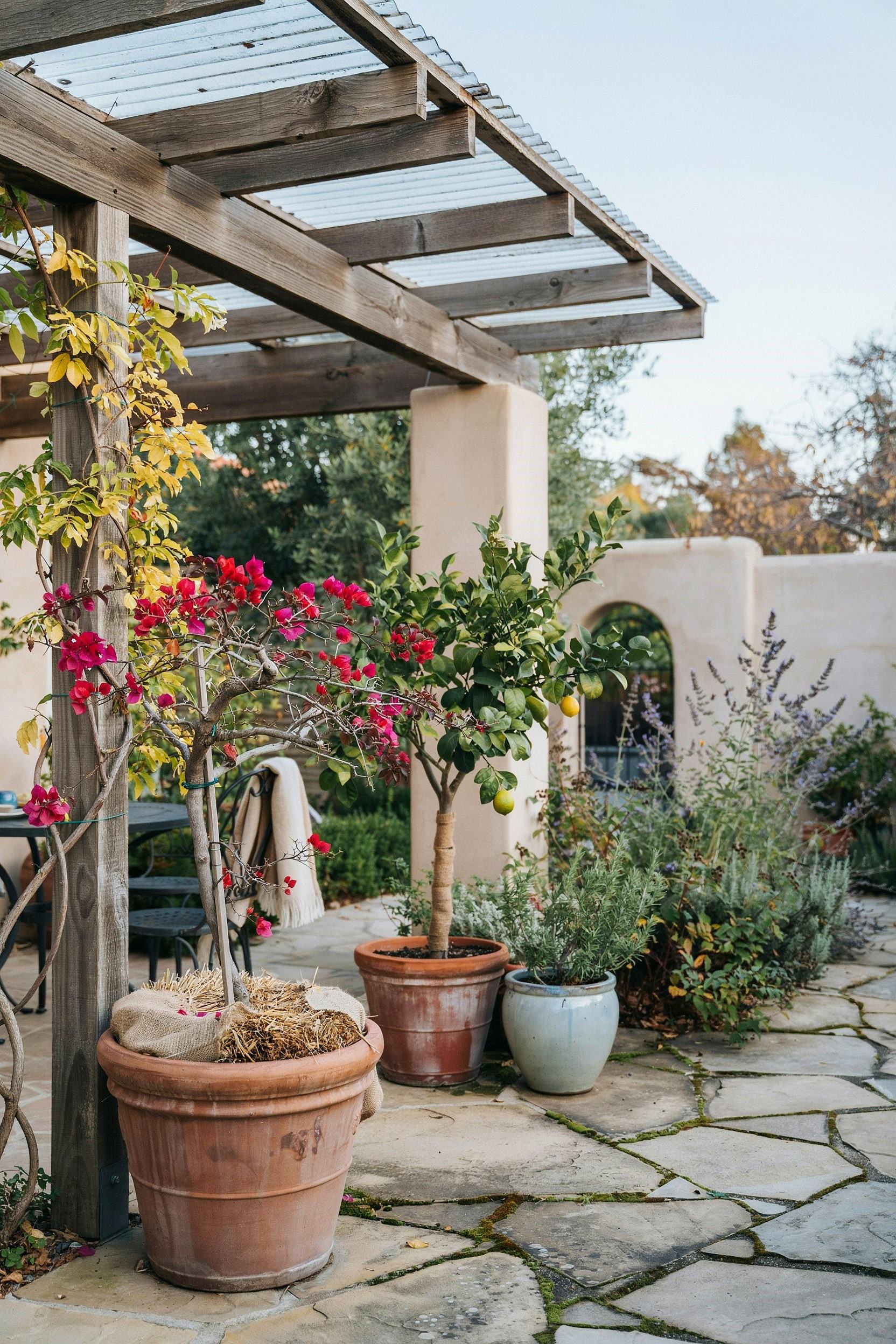
Here’s the thing nobody says directly: you don’t need to live in a Mediterranean climate to create this aesthetic. Sure, you might need winter protection if you’re in zones colder than 8. Citrus can be brought indoors or heavily mulched. Tender plants like bougainvillea might not survive as perennials, but they do brilliantly in containers you can move around or treat as annuals.
Adaptation is your friend. If you’re in a humid climate, lean into plants that handle moisture better. Mediterranean plants tend toward drought tolerance, but many still thrive in humid regions if you ensure good drainage. If you’re in a cold zone, focus on hardy Mediterranean-style plants and treat tender specimens as seasonal. The style is about feeling and atmosphere, not botanical purism.
Your soil matters tremendously. Most Mediterranean plants prefer well-draining conditions. If your yard holds water, add sand, gravel, or organic matter to improve drainage. It’s easier to fix this upfront than to fight soggy soil forever. Amending soil costs money and effort upfront but saves headaches throughout the plant’s life.
In colder zones (5-7), lean heavily on cold-hardy options: hardy lavender varieties like ‘Munstead,’ winter-hardy rosemary types, oregano, thyme, and sage. Olive trees in zones 7-8 need protection mulch heavily or grow in containers. Citrus requires winter protection. Bougainvillea and tender herbs become seasonal plantings you enjoy in summer and replace annually.
In hot, arid climates, you can go full Mediterranean without modification. These plants love hot, dry conditions. The challenge is more about not overwatering and creating enough humidity through watering patterns and shade structures.
In humid subtropical or tropical climates, the Mediterranean aesthetic works beautifully but requires minor plant swaps. Focus on Mediterranean-style plants that also tolerate humidity. Rosemary, sage, and oregano handle humidity fine. Bougainvillea actually thrives in humidity with good drainage. Olive trees are trickier but doable with proper drainage. The color palette, hardscaping, and design principles translate perfectly even if your plant palette shifts slightly.
Microclimates matter within your own backyard. South-facing walls get hotter and drier. North-facing areas stay cooler and may hold more moisture. Use these variations strategically place tender plants in protected spots, hardy plants in exposed locations.
FAQ’s
How much water does a Mediterranean backyard actually need once plants are established?
Deep, infrequent watering once monthly works best. Drip irrigation saves time and water compared to traditional lawn maintenance.
Can I create a Mediterranean backyard aesthetic if I don’t live in a warm climate?
Absolutely. Hardy Mediterranean plants like lavender and rosemary survive cold winters. Use containers for tender plants you can move indoors seasonally.
What’s the most important element to start with when building a Mediterranean backyard?
Begin with hardscaping create your seating area and pathways first. Plants and décor come after your foundational structure is established.
How long does it take for a Mediterranean garden to look mature and full?
One growing season shows dramatic results. Full, lush abundance typically develops within eighteen to twenty-four months with proper initial planting density.
Do Mediterranean plants need fertilizer, or do they thrive in poor soil?
They prefer well-draining soil but aren’t picky about fertility. Add organic matter for drainage improvement fertilize sparingly once established.
CONCLUSION
Your Mediterranean Backyard Is Closer Than You
Building a Mediterranean backyard isn’t an expensive overhaul or a years-long project. Start with the hardscaping create that seating area and add shade. Plant densely with lavender, rosemary, and at least one olive tree. Dress it with terracotta and soft colors. Within a single season, you’ve shifted from “nice backyard” to “why would I ever want to be inside?”
The real magic happens when you actually use the space. Sit there with coffee at dawn. Linger over dinner as the light changes. Clip fresh herbs while entertaining friends. That’s when a Mediterranean backyard stops being decoration and becomes the best decision you made for your home. You’re not just creating a beautiful space you’re building a lifestyle shift that costs less than a vacation but gives you endless returns through the seasons.
Your slice of the Mediterranean coast is literally just three decisions away: good bones, the right plants, and the willingness to spend time there. Everything else follows naturally.