
mid century bedroom
By Anna Grace | 10 April 2026
How to Actually Pull Off This Mid-Century Bedroom Timeless Look
Your bedroom doesn’t need to scream 1960s to feel authentically mid-century modern. That’s what most people get wrong. They cram in chunky wooden furniture, slap on some mustard yellow, and suddenly their sleep space looks like it’s waiting to be photographed for a vintage restoration site. The real magic happens when you understand what made mid-century design brilliant in the first place: function and beauty were never meant to compete.
Mid-century bedroom design thrives on restraint. It’s about clean lines meeting warmth, minimalism meeting personality. If you’re drawn to this era and honestly, who isn’t these days the challenge is capturing its essence without turning your bedroom into a museum exhibit. So let’s break down how to create a space that feels genuinely mid-century, lived-in, and yours.
The reason mid-century bedroom design has resurged so hard in the last decade isn’t nostalgia alone. It’s that we’re all drowning in excess, and suddenly a bedroom that doesn’t assault you with choices feels like a luxury. When you walk into a properly executed mid-century space, you’re not bombarded with competing patterns, colors, or textures fighting for attention. Your nervous system relaxes. Your eyes know where to rest. That’s not accidental it’s architectural wisdom that happens to have aged beautifully.
The DNA of Mid-Century Bedroom Design
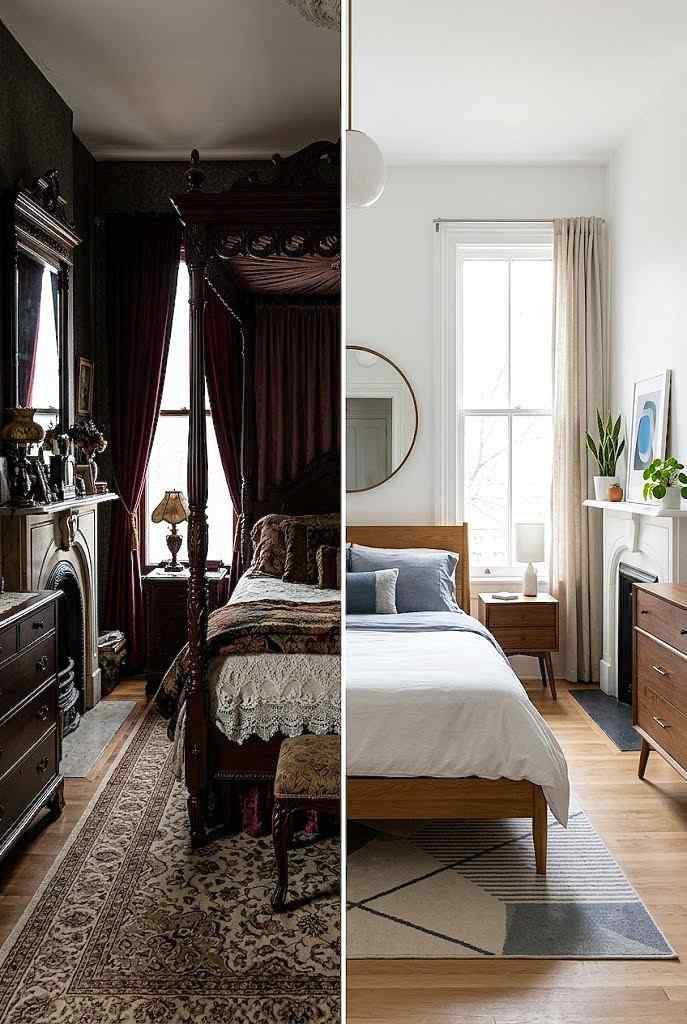
Here’s something most guides won’t tell you mid-century bedrooms weren’t designed as reactions. They were responses. After decades of ornate, heavy Victorian and art deco excess, designers in the 1940s through 1960s collectively decided furniture could do more with less. Legs showed. Lines became explicit. Materials were celebrated, not hidden behind fussy details.
This isn’t about being minimal for minimalism’s sake. It’s about prioritizing what matters and removing what doesn’t. Your mid-century bedroom should feel uncluttered but never cold. There’s personality in the restraint.
The era’s designers obsessed over proportion and proportion alone. A bed wasn’t just a bed it was an exercise in balance. Nightstands weren’t afterthoughts; they were proportional anchors. When you’re shopping for a mid-century bedroom, this is your north star does each piece make visual sense next to everything else?
This philosophy of honesty with materials shaped everything about how mid-century designers approached the bedroom. They believed a wooden leg should look like a wooden leg, not be hidden or apologized for. A metal handle wasn’t decoration it was proof of function. This radical transparency about how things work and why they’re shaped that way is what separates authentic mid-century from every knock-off that followed.
The bedroom became a laboratory for this thinking. It’s an intimate space, smaller and more forgiving than a living room, which made it perfect for testing these ideas. When you’re living with minimalist bedding and a simple wooden frame, you start noticing things you’d never catch in a room stuffed with furniture. A single artwork on the wall hits different. The quality of your nightstand lamp becomes obvious. The emptiness isn’t emptiness it’s intentional breathing room.
The Furniture That Actually Matters
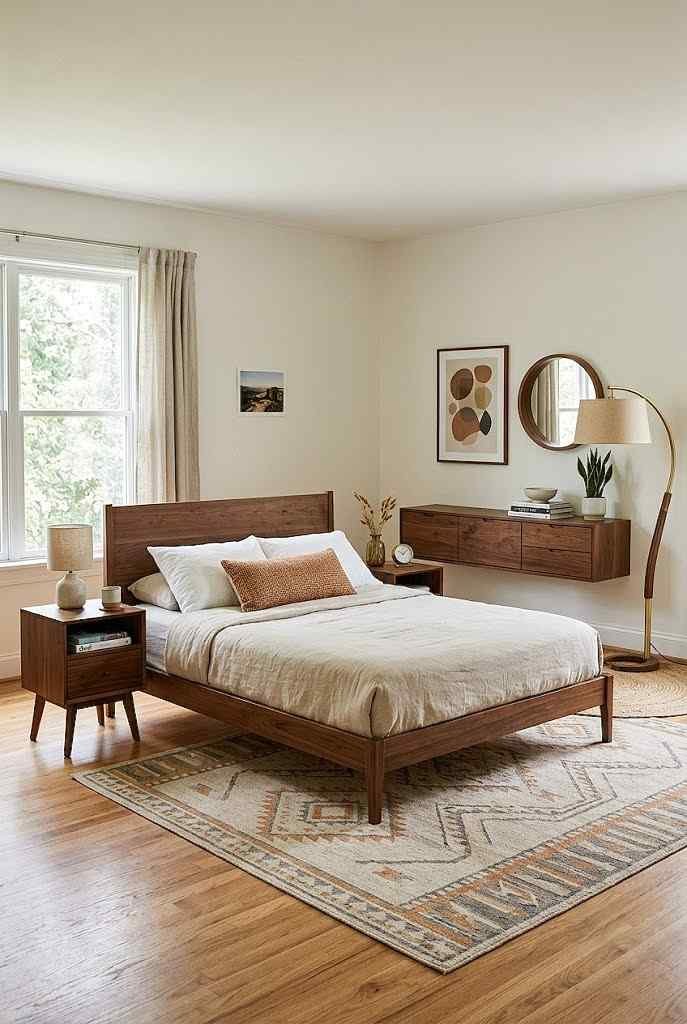
You need fewer pieces than you think, and they need to earn their space. A mid-century bedroom typically revolves around a handful of anchor pieces:
The bed frame is non-negotiable. Look for:
● Low-profile beds with exposed legs (tapered, splayed, or straight)
● Platform beds or frames with minimal headboards
● Natural wood (walnut, teak, oak) or painted finishes that feel intentional
Nightstands should be simple, proportional, and slightly smaller than you’d guess. A single drawer or open shelf works better than a towering cabinet. The goal is visual lightness.
A dresser can work, but only if it’s pared down. Flat-front, tapered legs, minimal hardware. Avoid anything that reads ornate or heavy. IMO, a floating console works just as well and feels more authentically mid-century bedroom.
One statement piece: a sculptural lamp, a low credenza, or a striking chair keeps things from feeling sterile. But just one.
Notice what’s missing? Bulky nightstands, ornamental mirrors, and gallery walls of framed prints. Those aren’t mid-century; they’re “trying too hard” mid-century. The difference matters.
Shopping for mid-century bedroom furniture today is a mixed bag. Reproduction pieces have gotten genuinely good, but they’ve also flooded the market alongside cheap knockoffs that miss the point entirely. The difference comes down to proportion and detail. Scroll through online furniture sites and you’ll see “mid-century style” beds with heavy headboards, chunky legs, and finishes that look plasticky. That’s not mid-century that’s someone misunderstanding what made the era special.
When you’re hunting for actual pieces, vintage marketplaces and local estate sales often win over new reproductions. Not because old is automatically better, but because original designers obsessed over details that mass-market reproductions skip. The angle of a tapered leg, the thickness of a drawer front, the way a handle sits these small choices accumulate into a feeling. You walk past one mid-century dresser and think “meh.” You pass another and suddenly you’re pulling out your phone to photograph it. That difference is real, and it’s worth understanding before you buy.
Color, Materials, and the Vibe You’re Building
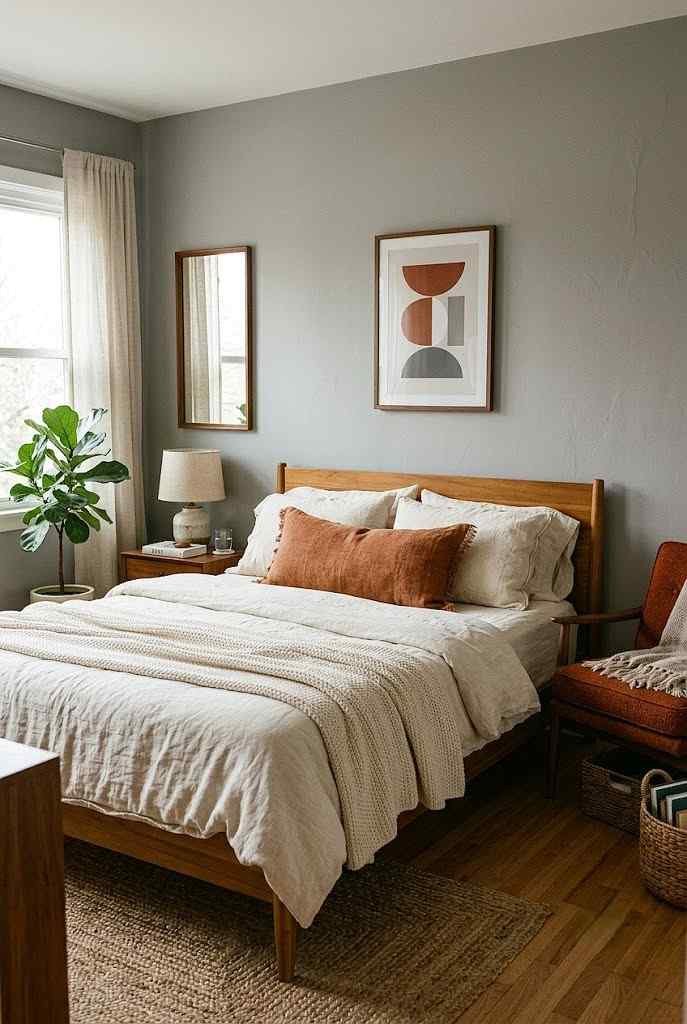
This is where people usually misstep. They reach for orange, teal, and avocado green and think they’ve nailed the decade. Meanwhile, their bedroom ends up looking like a Halloween party decided to stay.
Authentic mid-century bedrooms worked with warm, grounded neutrals as anchors: soft grays, warm whites, pale wood tones, soft charcoals. Then they introduced color through accents a throw pillow, a single painted wall, intentional textiles.
● Materials matter as much as color. Mid-century design celebrated:
● Metal accents (brass, chrome, black steel) used sparingly
● Textiles that felt natural and touchable: wool, linen, cotton
● Plywood and laminate as honest materials, not cheap substitutes
Your mid-century bedroom should feel tactile. You want to touch the wood, notice the weave of the fabric, appreciate how a brass handle catches light. That’s the opposite of everything being sleek and polished to death.
Here’s a quick palette that works: soft gray walls, natural walnut wood furniture, linen bedding in cream or light gray, and then one moment of warmth maybe a burnt orange accent chair or a pillow in a warm rust tone. Suddenly you’re not trying; you’re being
The temptation to go bold with mid-century color is strong, especially when you see those iconic ads from the era with sunny yellows and robin’s egg blues. But here’s what those vintage photos don’t show how those colors aged, faded, and mellowed over time. The avocado green that felt daring in 1968 looks exhausted in 2026. The same happens with trendy “mid-century” bedroom schemes that lean heavy on saturated colors. They date themselves within a year.
The smartest move is treating color like a long-term relationship instead of a short-term fling. Stick with the warm neutrals as your foundation they don’t get tired, and they let you swap accents without repainting. A rust-colored throw pillow this year, a mustard linen eventually if you want warmth? Easy swap. Burnt orange walls everywhere? Now you’re committed, and in five years you’re hunting for the wrong shade to repaint.
Texture fills the void that muted color leaves. If your walls are pale gray and your bedding is cream, suddenly the subtle weave in a wool throw, the grain of exposed wood, and the matte finish of a ceramic lamp base become the show. That’s layered design. That’s what keeps a room from feeling cold even when the palette is minimal.
Lighting and the Details Nobody Talks About
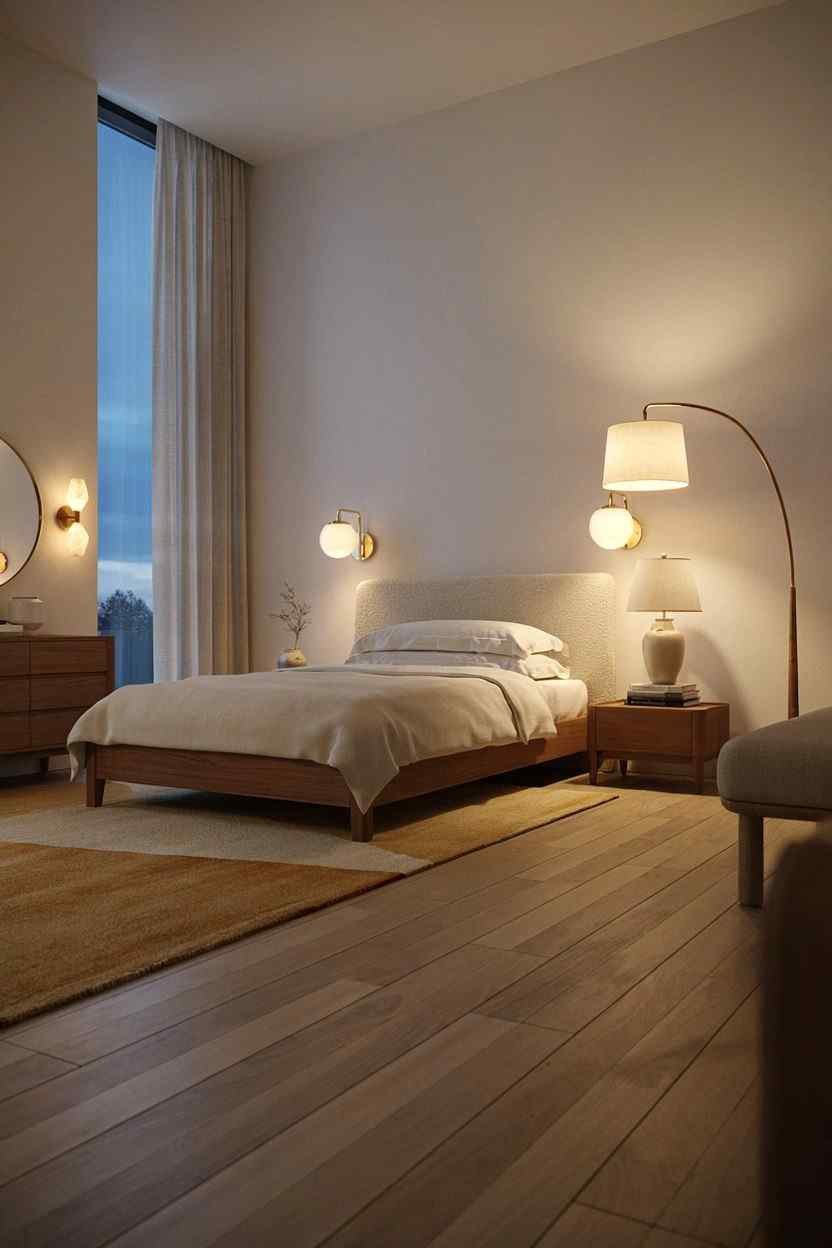
Lighting can make or break a mid-century bedroom, and most people get it backwards. They install recessed ceiling lights and assume they’re done.
Mid-century designers relied on layered, directional lighting. You need table lamps with sculptural bases (look for designs that feel like art on their own). A floor lamp in a corner. Maybe a wall-mounted reading light. Together, they create pockets of warmth instead of one harsh overhead wash.
The lampshade matters too something simple, usually cylindrical or slightly tapered, in linen or paper. Avoid anything ruffled or fussy.
What about the small stuff? Door hardware, drawer pulls, light switch plates mid-century bedrooms treat these as part of the whole. Simple brass or chrome handles beat ornate knobs. A minimalist light switch plate looks sharper than a decorative one.
Your bedroom layout should also breathe. Don’t push everything against walls. Float your bed if you have space. Leave room to move. Mid-century spaces feel open and intentional, never cramped or cluttered with styling.
The reason lighting matters so much in mid-century design is that the era coincided with affordable, accessible home electricity becoming standard. Designers weren’t hiding lights they were celebrating them. A beautiful lamp wasn’t something you tucked into a corner it was art that happened to be functional. This means your lamp choices should be visible and intentional, not afterthoughts.
Task lighting is non-negotiable in a bedroom. You need to read, so a bedside lamp or wall-mounted light at the right angle prevents eye strain and keeps you from turning on harsh ceiling light. But ambient lighting that warm glow that makes the space feel welcoming at night comes from sources positioned around the room. A small floor lamp behind a chair. A desk lamp if you have a workspace. These layers transform how your bedroom feels, especially in evening hours when artificial light becomes your primary illumination.
Hardware and small details create the final polish without adding visual weight. Choose finishes that complement your wood tones. Brass warms things up and feels vintage without trying too hard. Matte black creates contrast and reads modern. Chrome feels crisp but can feel cold if overused. The trick is picking one metal finish and sticking with it throughout your room. Mixed metals in a small space start looking like an antique store rather than a curated bedroom.
The Trap of Looking Too Polished
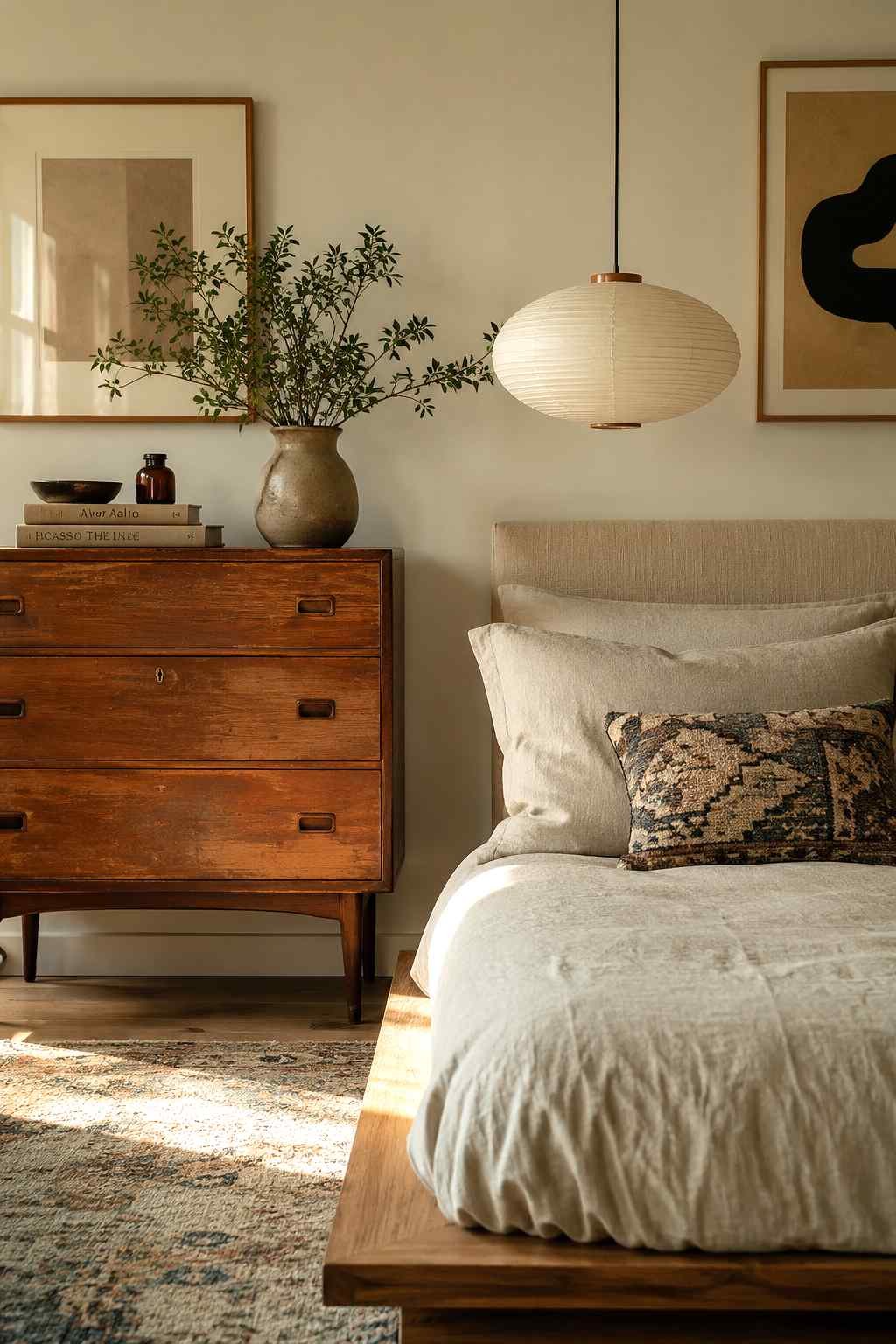
Here’s where I’ll give you the real talk the most authentic mid-century bedrooms don’t look like they came straight out of a design magazine. They look lived in.
I once visited a designer’s 1950s house original everything and what struck me wasn’t how perfect it was. It was how worn the wood was, how the textiles were faded slightly, how a beloved lamp had a small dent in its shade. That’s authenticity. Not everything matching, not everything pristine.
Don’t display your bedroom like you’re photographing it for Instagram. Use your mid-century pieces. Let them develop patina. Let a throw blanket drape casually over that sculptural chair. Leave a book on the nightstand. A real mid-century bedroom should show evidence of being slept in.
This is also where most people fail at recreating the style. They’re afraid to mix vintage finds with new pieces, so they go full reproduction. Nothing wrong with that if it’s intentional, but a mid-century bedroom feels richer when it’s a conversation between eras a vintage dresser paired with contemporary bedding, an original Noguchi lamp above a new platform bed.
Perfection is the enemy of authenticity, especially in mid-century spaces. The magazines and Instagram accounts that dominate the aesthetic have created a false impression of what these bedrooms should be. They’re styled, lit by professionals, and photographed before anyone actually inhabits them. Real mid-century bedrooms, then and now, are lived-in spaces where function beats formality.
This is where the permission to mix eras becomes genuinely liberating. A 1960s wooden dresser with a contemporary bed frame doesn’t create visual chaos it creates depth. A vintage Eames-inspired chair with modern throw pillows feels collected, not confused. The bedroom tells a story about how you live, not about your ability to match everything to a mood board. That story is what makes people want to spend time in your space.
The final permission slip your mid-century bedroom doesn’t need to be expensive. Some of the most successful spaces mix budget-friendly contemporary basics with one or two quality vintage finds. A $200 bed frame from a reproduction brand paired with an original mid-century nightstand creates a more interesting result than matching everything. Imperfection in service of authenticity beats flawless in service of an algorithm.
FAQ’s
What wood finish works best for a mid-century bedroom?
Warm natural wood tones like walnut, teak, or oak show grain beautifully and age gracefully over time.
Can I mix vintage mid-century pieces with new furniture?
Absolutely! mixing eras creates depth. Pair original dressers with contemporary bedding for collected, authentic style.
How do I avoid making my mid-century bedroom look like a museum?
Keep it lived-in. Leave books on nightstands, drape throws casually, and resist overly styled photography-ready perfection.
What’s the ideal color palette for a mid-century modern bedroom?
Start with warm neutrals (soft gray, pale wood, cream) as your base, then add warmth through minimal accent colors.
Do I need original mid-century furniture, or will reproductions work?
Quality reproductions work fine focus on proportion and detail over vintage status to achieve authentic mid-century bedroom design.
CONCLUSION
Building a genuinely mid-century bedroom means resisting the urge to overcomplicate it. The style works because it trusts proportion, material, and function to do the heavy lifting. You don’t need every piece to be a rare find or a museum-quality original. You need pieces that feel honest.
Start with one anchor piece maybe a bed frame that speaks to you. Build around it. Add lighting that feels deliberate. Choose materials and colors that make the space feel warm and grounded. Then step back and ask yourself does this room feel like it’s from another era, or does it feel like someone actually lives here?
If the answer’s the latter, you’ve nailed it. The best mid-century bedrooms don’t announce themselves. They just feel right.