
refusing to let my MIL “fix” my mid century modern eclectic living room
By Anna Grace | 3 August 2026
The first thing I saw when I hobbled down the stairs that Tuesday morning was my rug. Or rather, a rug that was not mine: a sand-colored jute thing, perfectly centered, sitting where my rust-and-indigo Turkish kilim had been for four years.
My mother-in-law, Linda, stood beside it holding a mug of coffee, wearing the calm face of a woman who had been up since five. “Don’t panic,” she said. “Just look at it for a minute before you say anything.”
I looked at it. Then I looked at the empty corner where my grandmother’s brass lamp used to stand. That’s when I said something I’m still not sure I should have said.
To understand why that moment felt like a small earthquake, you need to know two things: how I broke my foot, and what my mid century modern eclectic living room means to me.
How I tripped over my own coffee table
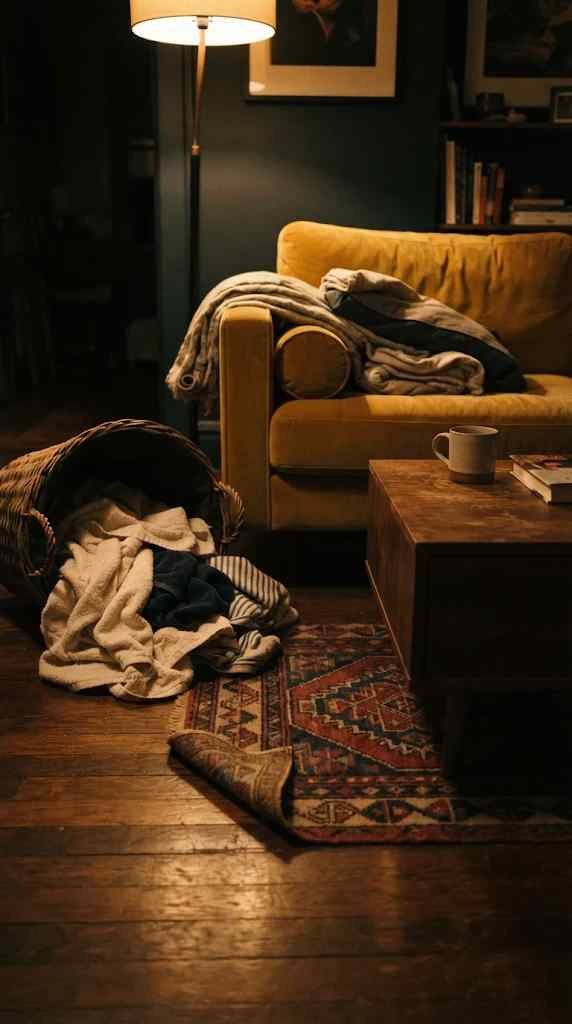
Three weeks earlier, I was carrying a full laundry basket through the living room at eleven at night. I’d done it a thousand times. This time my toe caught the curled corner of the kilim, my shin met the edge of the walnut coffee table, and I went down like a folding chair.
The result was a fractured bone in my foot, a walking boot, and strict orders to stay off it for a month. My husband, Dan, works rotating twelve-hour shifts as an ER nurse, so his mom offered to fly in from Phoenix and stay for two weeks.
I said yes immediately. I genuinely like Linda. She’s funny, generous, and she makes a pot roast that could end wars.
She also ran a home staging company for twenty-two years. That’s the detail I should have paid more attention to.
Our living room is small, about 13 by 16 feet, in a 1962 ranch outside Columbus. Over four years I filled it slowly: a teak credenza from an estate sale, a mustard velvet sofa I saved six months for, a cane accent chair, a gallery wall of thrifted prints, far too many plants, and the kilim I’d haggled for at a flea market. It isn’t magazine-perfect. It’s mine, and every piece has a story attached.
Linda walked in on day one, set down her suitcase, and looked around. “Oh, honey,” she said warmly. “There’s so much potential here.”
Linda arrives with a label maker
Potential is a word that sounds like a compliment until you hear it from a professional stager.
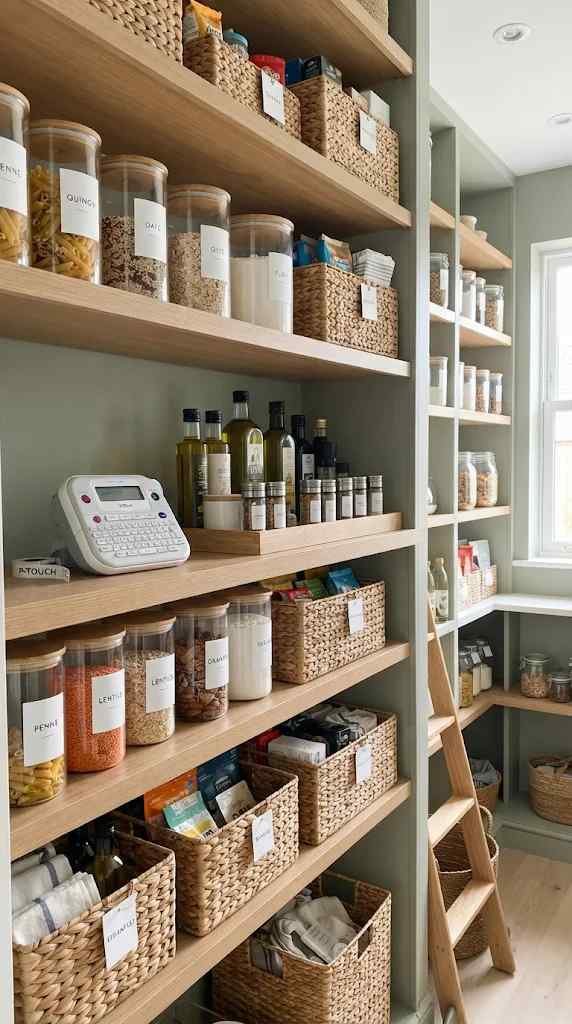
For the first few days, everything was lovely. Linda did the grocery runs, refilled my water glass without being asked, and reorganized the pantry with a label maker she had apparently packed in her carry-on. I didn’t mind. Our pantry needed an intervention.
Then the small comments started. “That chair would breathe better over by the window.” “You know, nobody needs four throw pillows on a sofa this size.” And, one evening, “Is the coffee table always this close?”
That last one stung, because she wasn’t wrong. It sat maybe ten inches from the sofa cushions, and I had the boot to prove it.
On the fourth night, she perched on the edge of the cane chair and asked, very gently, whether I’d ever thought about “pulling the room together.” I laughed it off. “It’s eclectic, Linda. It’s supposed to look collected, not coordinated.”
She nodded slowly, the way you’d nod at someone who just announced they were going to fix their own brakes.
The lamp that disappeared
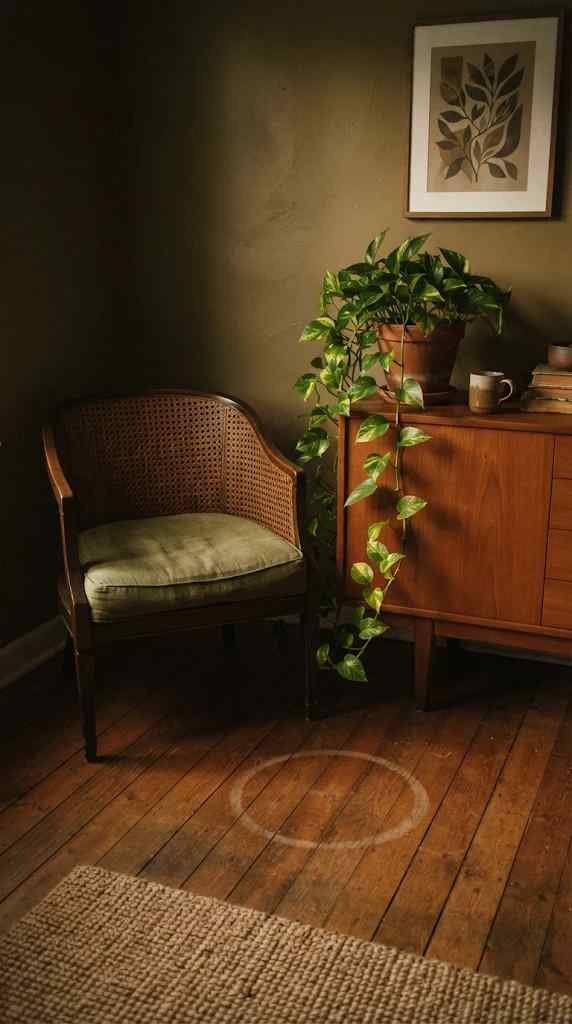
On day six, my grandmother’s lamp was gone.
It’s a tall brass floor lamp with a pleated linen shade. Nothing fancy, but it stood beside Grandma Ruth’s reading chair for forty years, and now it stands beside mine. I noticed the dark corner from the sofa while Dan was packing his lunch for a night shift.
“Did you move Grandma Ruth’s lamp?” I asked.
He glanced around, genuinely confused. “No. Mom might have. Want me to ask her?”
Linda had already gone to bed in the guest room, so I told him not to bother. I’d ask in the morning. But the next morning she left early to pick up my prescription, then a friend dropped by with soup, and every time I almost brought it up, something stopped me. Part of me didn’t want to sound paranoid about a lamp.
The other part of me noticed she never mentioned it either.
Waking up in someone else’s living room
Which brings us back to that Tuesday morning and the jute rug.
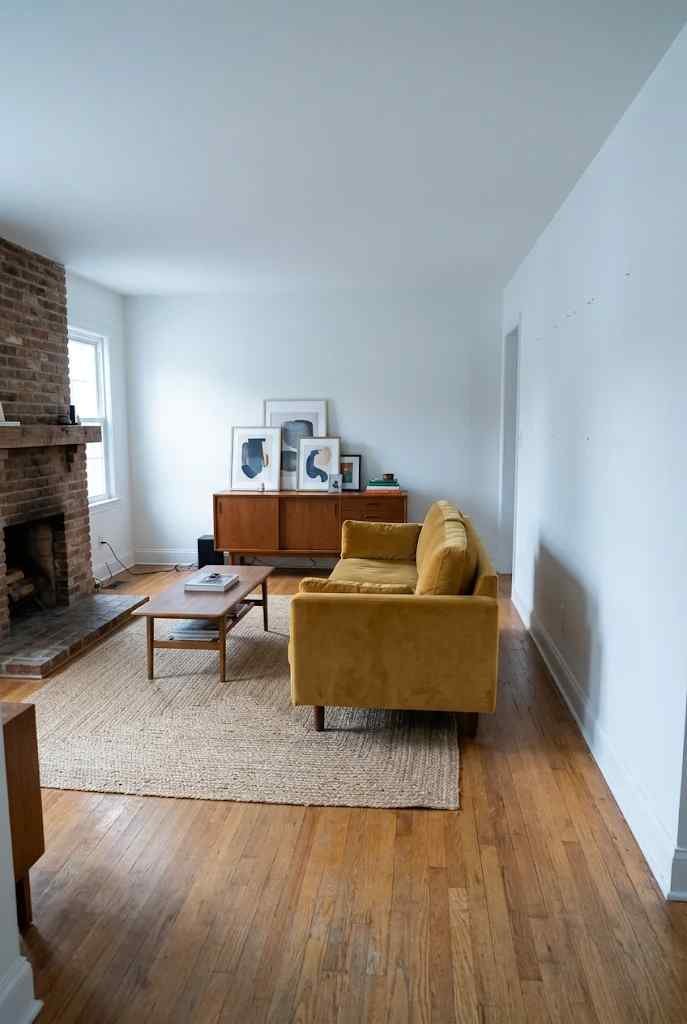
While I slept upstairs, and while Dan worked his shift, Linda had redone the entire room. The sofa had been pulled off the wall and “floated” to face the fireplace. The coffee table now sat a polite distance from the cushions. My gallery wall was down, the prints stacked neatly against the credenza, tiny nail holes dotting the drywall like a constellation. Half the plants had migrated to the sunroom.
The kilim was rolled up in the hallway, tied with twine like a hostage.
“I picked up the jute yesterday,” she said. “Eight by ten. Yours was five by seven, sweetheart. It was floating in the middle of the room like a bath mat. That’s what you tripped on.”
I stood on one foot, gripping the banister so hard my knuckles went white. “Where’s the lamp, Linda?”
She hesitated just long enough for my stomach to drop. “It’s taken care of,” she said. “Can we talk about the room first?”
The argument nobody won
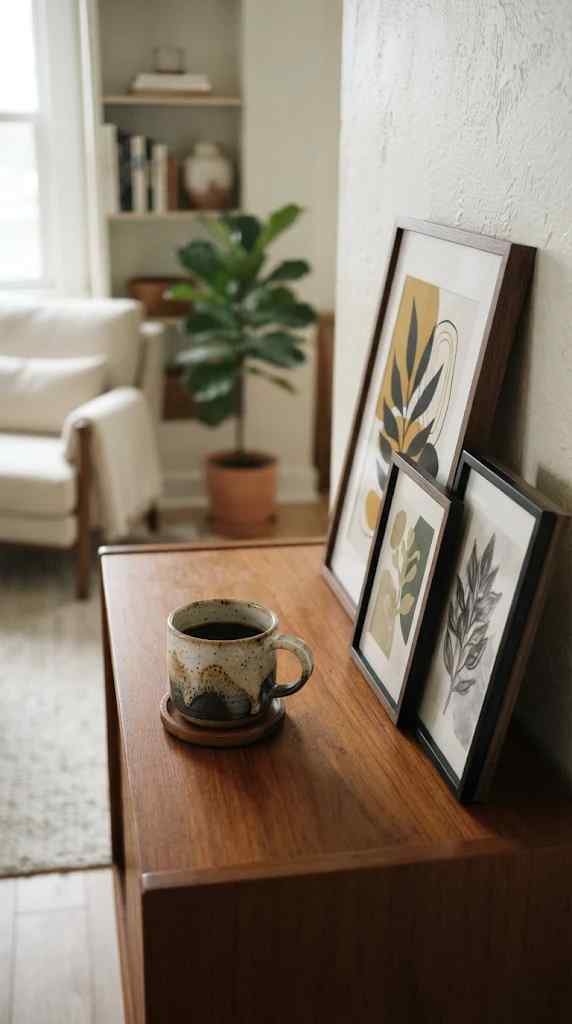
I’m not proud of what came out next. It was something like, “You don’t get to redecorate my house while I’m stuck upstairs and can’t even walk down to stop you.”
Linda set her mug on the credenza very carefully. “I’m not redecorating. I’m fixing a room that put you in a boot. You could have hit your head on that table.”
“It’s my house.”
“It’s my son’s house too,” she said quietly. “And he’s the one who found you on the floor.”
That one landed, and she knew it.
Dan got home around eight, walked into the tension like it was a wall of August humidity, and froze in the doorway. We both started talking at once. He listened, rubbed his eyes, and said the most Dan thing possible: “Can I please sleep for four hours before I have to pick a side?”
Here’s what made it so hard. Linda wasn’t being spiteful. She saw a real hazard, she had the skills to fix it, and she’d spent her whole career making rooms easier and safer to live in. In her world, a room that hurts someone is a room that failed.
But I’d spent four years building that room piece by piece, on a tight budget, as a kind of proof that I could make a home that felt like me. Having it “fixed” overnight felt like being told the proof didn’t count. Both things were true at once, and neither of us knew what to do with that.
What Linda finally told me

That afternoon, while Dan slept, Linda carried two cups of tea into the sunroom and sat down across from me, surrounded by my displaced plants.
“I should have asked,” she said. “I know that. I told myself I’d surprise you, and you’d love it, and we’d laugh about it later. That’s how it always went with clients.”
“I’m not a client.”
“No. You’re not.” She turned the cup slowly in her hands. “When Dan called me after your fall, he was shaking. He’s seen everything in that ER, and he was shaking. I couldn’t do a single thing from Phoenix. When I got here, this room was the only thing I could actually fix.”
Then she reached into her purse and handed me a receipt from a lamp repair shop downtown.
“The cord on your grandmother’s lamp was frayed down to the copper near the plug,” she said. “It was sitting right behind a velvet sofa. I didn’t want to scare you while you were laid up, so I took it in. It’ll be ready Friday. I was going to set it back up as part of the reveal.”
I stared at that receipt for a long time. The lamp mystery that had been quietly souring my whole week turned out to be the kindest thing anyone had done in it.
The compromise we drew in painter’s tape
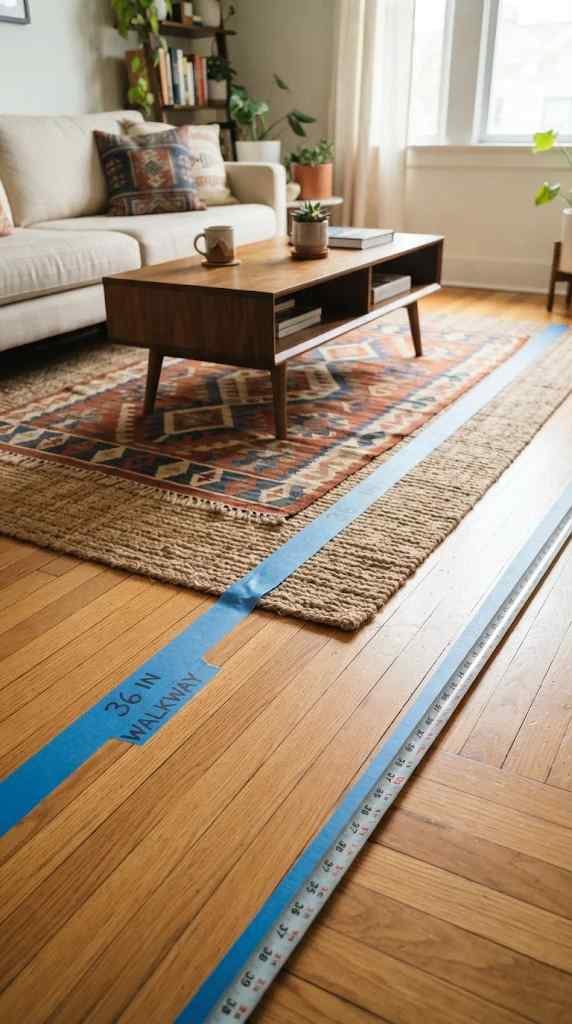
When Dan woke up, the three of us stood in the living room with a roll of blue painter’s tape and a tape measure, which is apparently how the adults in our family negotiate.
We went piece by piece. The bigger rug stayed, because Linda was right: the small one didn’t anchor anything, and its curled corners were a genuine trip hazard. But instead of living with plain jute, we layered my kilim on top, angled under the coffee table and secured underneath with rug tape. Suddenly the jute looked intentional, and the kilim finally looked like it belonged.
The floated sofa stayed too. I hated admitting it, but the room felt bigger, and there was finally a clear route from the hallway to the kitchen. Linda taped that route on the floor and measured it at three feet across. “That’s your laundry lane,” she said. “Nothing lives here. Not a basket, not a plant, not a single pillow.”
The gallery wall went back up, just behind the sofa this time instead of on the narrow wall by the door, where Dan’s shoulder had been bumping a frame roughly once a day. Most of the plants came home from the sunroom. The cane chair moved into the corner, ready for Grandma Ruth’s lamp.
For the first time, my mid century modern eclectic living room had a little of both of us in it. Then we made one rule, written on a sticky note that still lives inside the coat closet door: nobody moves anything bigger than a pillow without asking first. That includes me and Dan’s recliner, which is a whole separate story.
What happened after
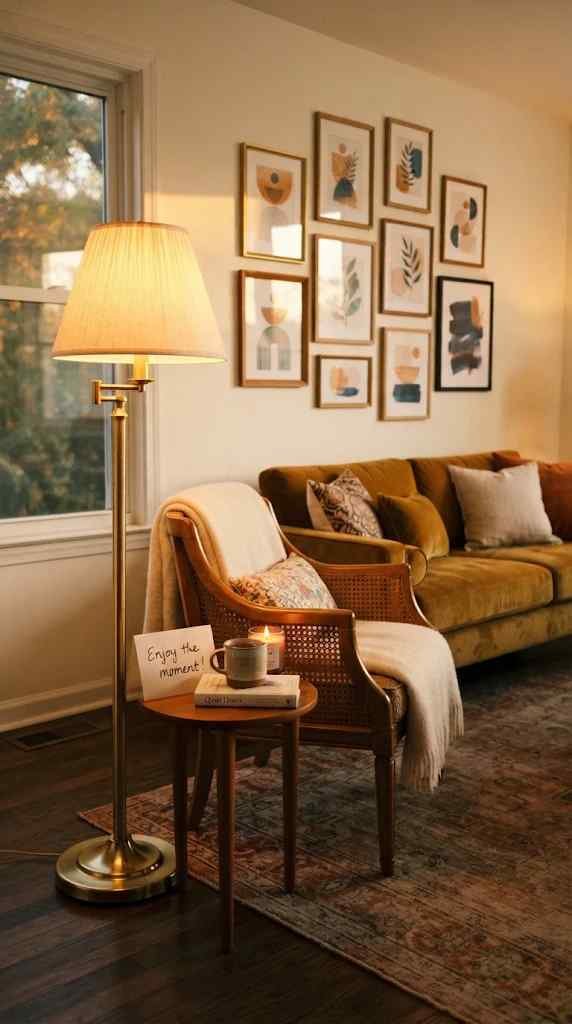
On Friday, Linda picked up the lamp herself and set it beside the cane chair. The brass had been polished, and the new cord was the same cloth-wrapped style as the original. She clicked it on, and the corner glowed exactly the way it used to in my grandmother’s apartment.
I cried a little. She pretended not to notice and fussed with the shade.
Things weren’t magically perfect. I still felt a sting patching those nail holes, and Linda still twitches when she sees my four throw pillows (I kept all four). There’s a version of this story where she should have waited, and a version where I should have listened sooner. I honestly think both versions are true.
When she flew home, I found a small handwritten card tucked behind the lamp’s base. It said: “It’s a beautiful room. It always was. Now it’s a safe one too.” I’ve left it right where she put it.
Practical takeaways for your own living room
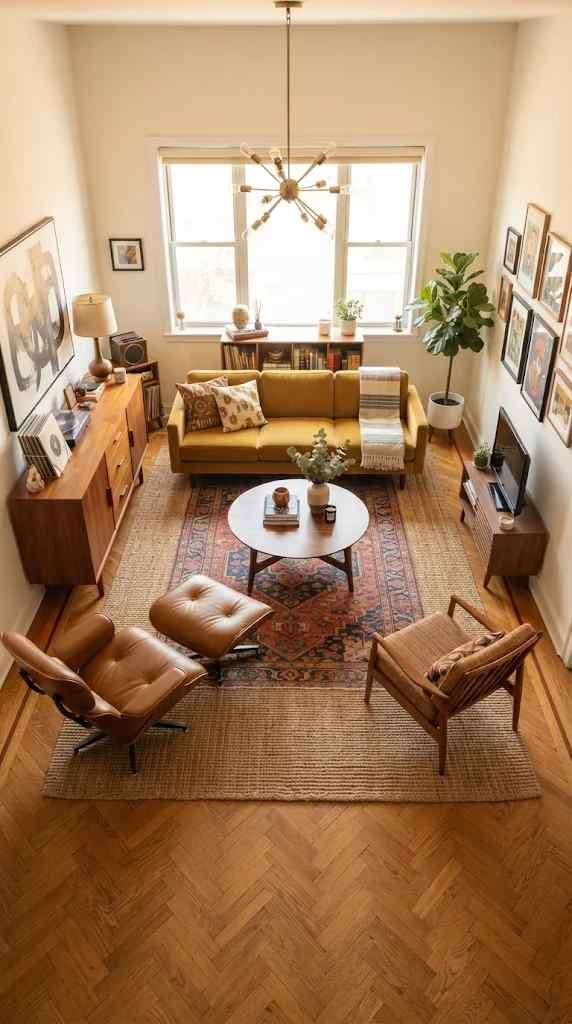
Protect your main walkways
- Aim for roughly 30 to 36 inches of clear space along main paths, like hallway-to-kitchen routes. Closer to 36 inches feels comfortable in high-traffic rooms; small rooms may need to settle nearer 30.
- Secondary gaps, such as between a chair and a side table, can be tighter, around 18 to 24 inches.
- Keep baskets, plant stands, and floor cords out of the main path entirely.
Mind the coffee table gap
- About 14 to 18 inches between the sofa and coffee table is a common range: close enough to reach a drink, far enough to walk past.
- Many mid century coffee tables are low with sharp corners. If yours sits in a busy spot, lean toward the wider end of that range or consider a rounded or oval top.
Size the rug to your seating, not the floor
- In most living rooms, the front legs of the sofa and chairs should rest on the rug. An 8×10 often suits rooms around 12×15 feet or larger, but measure your seating group first.
- Leaving roughly 8 to 18 inches of bare floor between the rug and the walls is typical, depending on room size.
- Always use a rug pad, and add rug tape or corner grippers to flat-weave rugs that curl.
Layer instead of replacing
- Layering a smaller vintage or patterned rug over a larger neutral one gets you the right scale without giving up a favorite piece. It’s often cheaper than buying a large vintage rug outright.
Balance light and heavy pieces
- Mid century furniture often sits on tapered legs and reads visually light. Eclectic rooms usually add heavier pieces, like velvet sofas or chunky credenzas. Spread that visual weight around the room instead of grouping it on one side.
Check vintage lighting before you love it
- Look for fraying, cracking, or brittle insulation on old lamp cords. A lamp repair shop can rewire most pieces, and costs vary by lamp and region.
- Never run lamp cords under rugs or behind furniture where they get pinched.
Agree on shared-space rules early
- Decide with partners, roommates, or visiting family what can be moved without asking. A simple “nothing bigger than a pillow” rule prevents a lot of surprise makeovers.
CONCLUSION
Looking back, the room was never really the fight. Linda needed to protect someone she loved, and I needed my home to still feel like mine during a stretch when I couldn’t protect it myself. The painter’s tape on the floor was simply the spot where those two needs finally met.
She was right about the hazards: the undersized rug, the cramped coffee table, the frayed cord hiding behind the sofa. I was right that a home isn’t a staging project, and that the pieces with stories behind them deserve a place. The room we ended up with kept both truths, a safer layout wrapped around everything that made it personal.
My mid century modern eclectic living room is more open now, easier to walk through, and still unmistakably mine, with four pillows on the sofa and a warm brass glow in the corner. The biggest change wasn’t the rug or the furniture. It was the sticky note in the coat closet, the one that says nobody moves anything bigger than a pillow without asking first.