
The Modular Sofa
By Anna Grace | 12 Feb 2026
The Modular Sofa Revolution: Why modular sofas are the smarter choice than traditional couches
Your apartment’s layout changes. Your job situation shifts. You move. You get married. Your roommate moves out. Your kid suddenly needs a playroom. Life is messy, unpredictable, and frankly, your furniture should stop throwing a tantrum about it.
That’s where modular sofas come in and honestly, once you understand how they work, it’s hard to go back to the rigid, stuck-in-its-ways traditional couch that dominated your parents’ living rooms.
A modular sofa isn’t just a sectional with a fancy name. It’s a furniture system that adapts to you, not the other way around. Whether you’re living in a studio the size of a closet, a sprawling loft, or somewhere in between, a modular couch bends to your space, your budget, and your lifestyle.
And yeah, that flexibility carries some real advantages but also some things you should know before you commit.
The Real Deal: Why Modular Beats Traditional
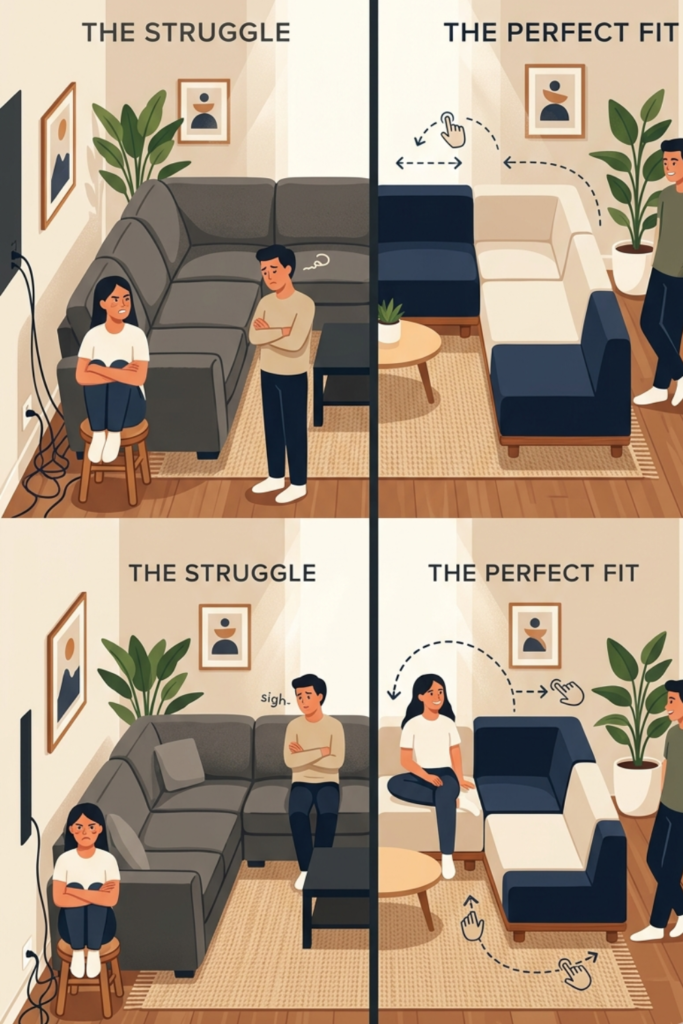
Here’s something most furniture stores won’t tell you outright traditional sofas are kind of locked in. You buy a three-seater, and congratulations you now own a three-seater forever. Move to a smaller apartment? Too bad. Want to reconfigure your living room? Tough luck.
Modular sofas flip this entirely on its head. Each piece is independent think of them as furniture building blocks. You can buy a two-seater now and add an ottoman or chaise later.
You can arrange them in an L-shape, a U-shape, a straight line, or scatter them across the room like you’re designing an Instagram set. If you move, you disassemble and reassemble in your new place.
IMO, this is a game-changer for anyone whose life isn’t 100% locked down. And whose is, really?
The space-saving potential alone makes modular sofas worth considering, especially in cities where square footage costs money. You’re not forced to buy a massive sectional that eats half your room. Start small. Expand when you need to. It’s grown-up furniture that actually grows with you.
Beyond flexibility, there’s the practical matter of durability and maintenance. If one cushion gets stained or compressed, you can replace just that piece instead of replacing the entire sofa. This isn’t a minor thing it extends the lifespan of your investment significantly. A traditional sofa with one ruined cushion? You’re either living with it or buying a new couch. A modular setup? You buy one replacement cushion and you’re done.
There’s also the psychological freedom that comes with owning a modular sofa. You stop feeling trapped by your furniture choices. Want to try a different layout next month? Go for it. Want to close off part of your living room for a home office during the pandemic? Rearrange the sofa. Want to create an open conversation area for a dinner party? Reconfigure. This adaptability reduces decision paralysis when buying because you know you’re not stuck with whatever you pick today.
And let’s be honest, there’s something satisfying about changing your space without spending thousands of dollars. Moving things around feels like redecorating without the redecorating price tag.
Finding Your Configuration: It’s Not As Complicated As It Looks
First thing ignore the mental image of those overwhelming furniture catalog pages with 47 different options. Finding the right modular setup is simpler than you think.
Start with your actual space. Measure it. Not roughly measure it. Grab a tape measure and know your dimensions. Check doorways, hallways, and stairwells too, because you’ll need to fit the pieces through them. Modular sofas break apart, but not infinitely; the frame is still solid wood or metal underneath.
Next, ask yourself what you actually use a couch for. Are you a sprawler who needs a chaise? Do you host dinner parties and need maximum seating? Are you more of a “curl up with a book” person? This determines your ideal configuration and yes, you can change your mind later, which is kind of the whole point.
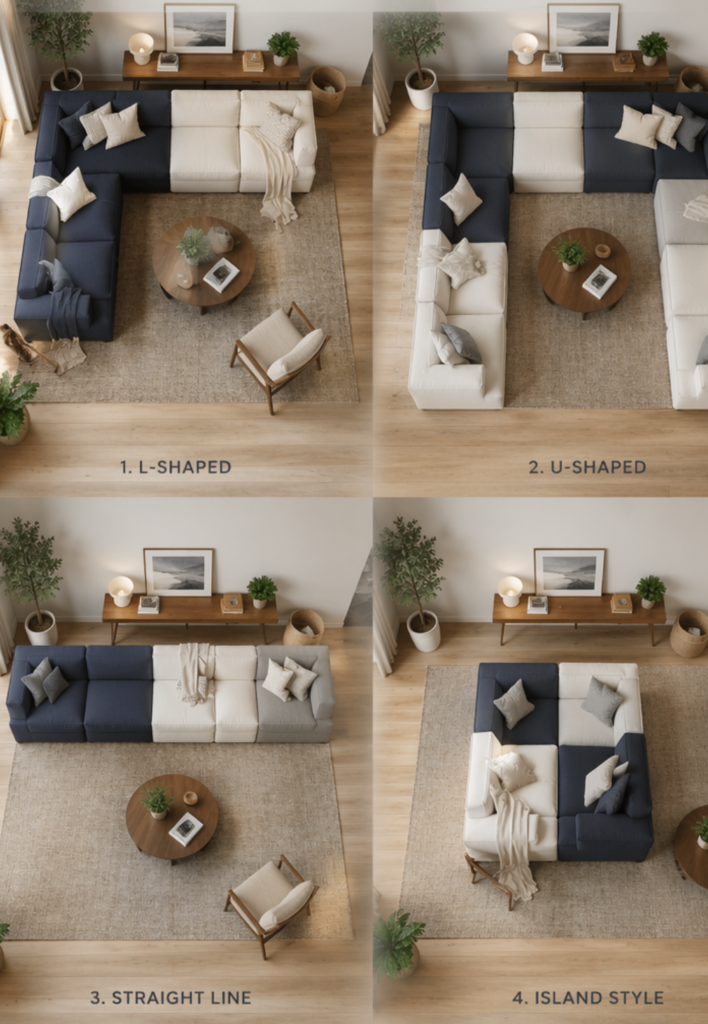
Popular setups include:
● L-shaped Classic corner configuration, great for living rooms, maximizes seating without looking cramped
● U-shaped Maximum seating and face-to-face chat potential, better for large spaces or open-concept homes
● Straight line Modern, minimalist, perfect for tight spaces or living rooms where the sofa’s against the wall
● Island style Pieces arranged in the middle of the room (risky if you have cats, but it works)
Pick a configuration that makes sense for your room, not the Pinterest photo that made you click.
Here’s a pro tip that nobody mentions: start with the smallest configuration and add pieces. Don’t buy the full U-shaped setup right away if you’re unsure. Buy a two-seater and a chaise, live with it for a few weeks, and then add more if you need them. This approach lets your space evolve naturally and prevents buyer’s remorse.
Also consider traffic flow. A modular sofa arranged in certain ways can block pathways or make your room feel claustrophobic. The best configuration is the one that feels natural for how you actually move through your space, not how you think a living room should look.
Color, Texture, and the Art of Not Trying Too Hard
Here’s where modular sofas sometimes disappoint people not all of them are built equally.
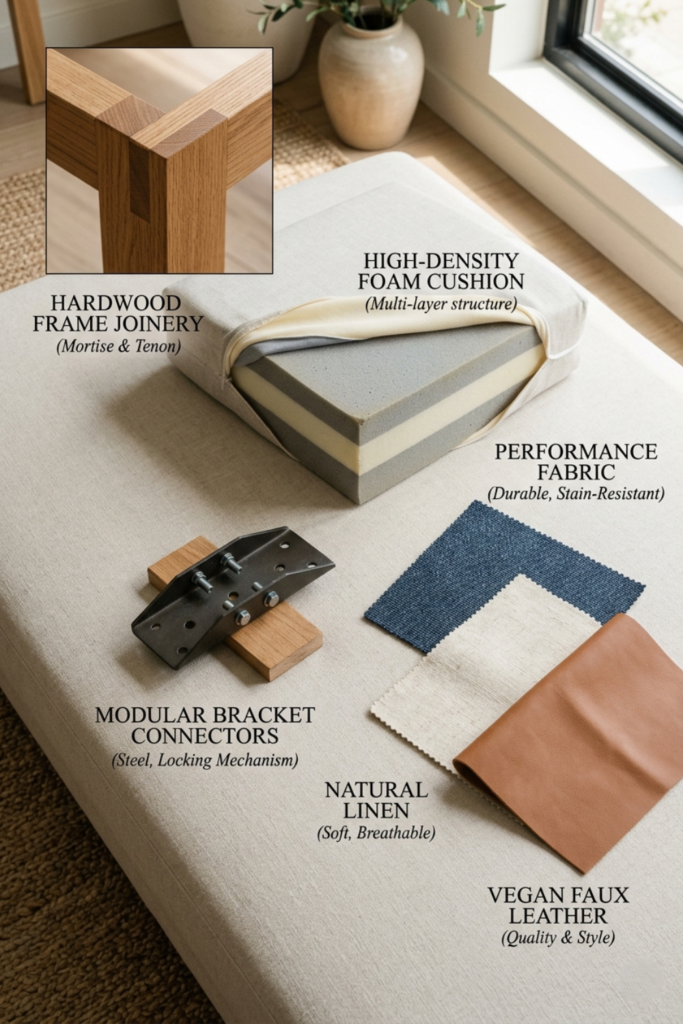
The frame matters hardwood is your gold standard, plywood is middle-of-the-road, and anything cheaper tends to sag within a couple years :/ Hardwood frames (typically kiln-dried birch or oak) can last 15+ years if treated well. Plywood frames might last 8-10 years. Particleboard? You’re looking at 3-5 years max before you start noticing structural issues.
Cushion density varies wildly too. High-density foam (rated 2.0 or higher) lasts longer and feels firmer, while low-density foam compresses faster. Medium-density (around 1.5) is a sweet spot comfortable but still durable. Ask the retailer for specific density ratings. If they don’t know, find a different retailer.
Connecting systems are crucial and often overlooked. How do the pieces connect to each other? Velcro? Brackets? Magnets? Corner connectors? Some systems are rock-solid others let pieces shift when your cat jumps on them. Test it in-store if possible. Try to separate and reconnect a display model. Does it feel solid? Does it stay in place? This matters more than you’d think.
Fabric choice also matters enormously. Performance fabric holds up better if you have kids or pets it’s treated to resist stains and is usually machine washable. Natural fabrics (linen, cotton blends) feel nicer but stain easier and require dry cleaning. Leather looks sleek but needs conditioning and scratches show. Faux leather varies wildly in quality cheap versions crack and peel quality faux lasts almost as long as real leather.
And here’s the thing nobody wants to think about: what if you want to replace a single piece five years from now? Can you actually buy an individual seat cushion, or are you stuck buying the whole setup again? Good modular systems let you shop replacements separately. Bad ones? You’re out of luck. Before buying, ask the salesperson directly: “If I need a replacement cushion in three years, can I order just that?” If they can’t give you a clear yes, keep shopping.
Check the warranty too. A reputable modular sofa comes with at least a 5-year frame warranty. Some offer 10-year warranties. If a brand offers no warranty or a tiny one-year coverage, that’s a red flag about their confidence in the product.
The Budget Reality: More Flexible Than You’d Expect
One major misconception: modular sofas are automatically expensive. They’re not.
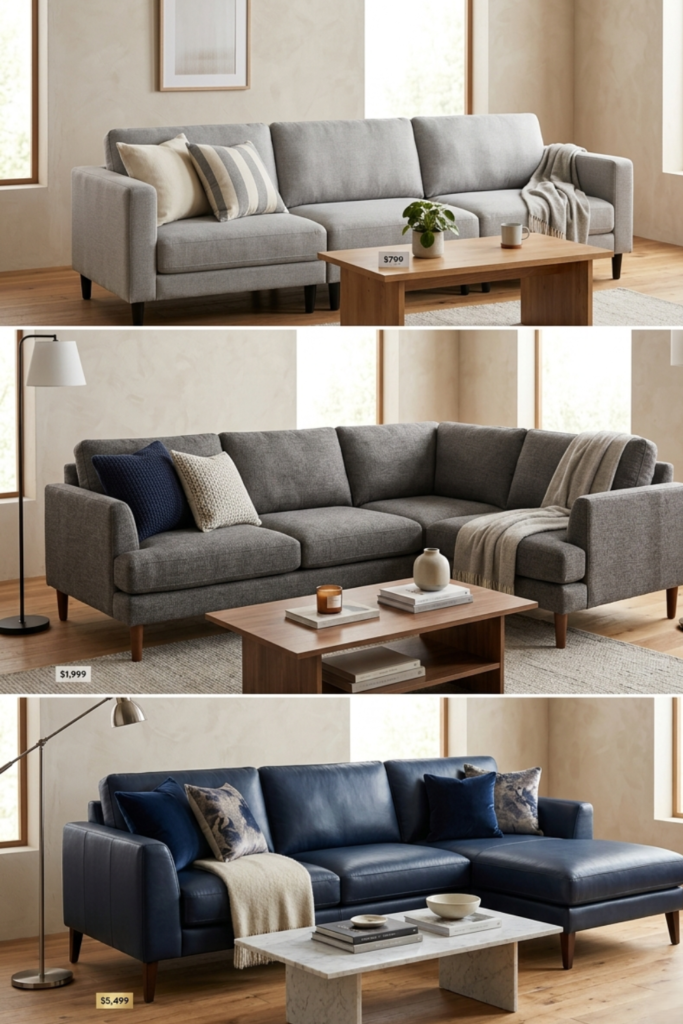
Yes, you can spend $5,000+ on a premium modular sofa from a designer brand. But you can also find decent ones in the $1,200–$2,500 range, and budget options exist at $800 if you’re not picky. The advantage of modular construction is that you can spread costs over time buy the base pieces now, add the ottoman next year when money allows.
Here’s a rough price breakdown:
● Budget tier ($800–$1,500): Basic construction, simple designs, limited customization. Good for renters or if you’re testing whether modular works for you.
● Mid-range ($1,500–$3,000): Solid hardwood frames, better fabrics, good warranty. The sweet spot for most people. Lasts 10+ years with care.
● Premium ($3,000+): High-end materials, customization options, superior comfort, designer brands. Built to last 15+ years.
This makes modular sofas genuinely accessible compared to traditional sectionals, which lock you into a single purchase price upfront. You might start with a $1,200 modular base and add pieces over time, ending up at $2,500 total but spread across 3 years instead of one big payment.
That said, be cautious with ultra-cheap options under $700. A $400 modular sofa might look fine in the showroom, but it’ll probably feel like sitting on a wooden pallet within six months. The quality threshold sits around $1,000 where modular sofas actually start to feel solid and comfortable.
Making It Work: Styling and Living With Your Modular Setup
Once you bring your modular sofa home, the work isn’t over but it’s way easier than you’d think.
Throws and pillows are your friends. They visually tie pieces together and add personality without commitment. Change them seasonally. Go wild. Layer different textures a chunky knit throw over linen pillows creates visual interest and makes the space feel intentional.
Consider the footprint of your arrangement. A room with a modular sofa arranged in a U-shape needs decent sightlines and movement space, or it’ll feel cramped. An L-shape is friendlier to tighter spaces. Sometimes less is more. Don’t fill every corner just because you can.
Pairing your modular sofa with a decent coffee table and rug creates visual cohesion. A rug pulls the whole seating area together and defines the space in larger rooms. It also dampens sound, which is a nice bonus in open-concept apartments.
Here’s something practical: vacuum more often if you choose a light color. Modular sofas, especially sectional arrangements, collect crumbs in the crevices between pieces. It’s just the reality of modular living. If pet hair is a concern, darker fabrics or performance fabric in grays and navy hide everything way better.
Lighting matters too. A floor lamp near one end of the sofa creates a cozy reading nook. This is especially useful if you have pieces extending into the room good lighting makes those spaces feel intentional rather than awkward.
Don’t be afraid to leave space around your modular setup. Just because you can fill every square inch doesn’t mean you should. Breathing room makes a living room feel open and livable rather than furniture-cramped.
FAQ’s
How do modular sofa pieces stay connected together?
Most modular sofas use metal brackets, velcro, or magnetic connectors. Quality systems keep pieces stable during use, while cheaper options may shift over time with heavy sitting.
What’s the difference between a modular sofa and a sectional?
Modular sofas have independent, rearrangeable pieces you can reconfigure anytime. Sectionals are fixed L or U shapes permanently connected and can’t be changed.
Can you replace individual pieces of a modular sofa?
Only if the brand sells replacement parts separately. Always confirm this before purchasing some manufacturers require replacing the entire sofa if one piece fails.
Are modular sofas good for small apartments?
Absolutely. Modular sofas let you start with fewer pieces and expand later, making them ideal for tight spaces or renters on a budget.
How easy is it to move a modular sofa to a new home?
Much easier than traditional sofas. Pieces disassemble completely and fit through doorways and hallways more easily than rigid furniture frames.
CONCLUSION
Is a Modular Sofa Right for You?
Modular sofas absolutely shine if you’re someone whose life involves change. Young professionals building their first space. People who move every few years. Anyone who genuinely wants to reconfigure their living room without buying new furniture. Remote workers who might need to shift their space for a home office. Growing families who need more seating as kids arrive.
They’re less ideal if you already know exactly what you want, forever, and that’s okay too. Sometimes a classic sofa is the right call. If you’ve nailed your design aesthetic and you’re committed to never changing it, a traditional sectional might actually be simpler. No assembly, no configuration decisions, less flexibility to maintain.
But if you’ve ever bought furniture and regretted the shape, the size, or the commitment it represented well, a modular sofa offers something those traditional pieces never could: permission to change your mind. And in a world where everything moves faster than it used to, where your space evolves with your life, that might be the smartest investment you make.
Think of it this way a modular sofa is furniture that grows up with you instead of holding you back. That’s worth something.