
old money livingroom
By Anna Grace | 28 June 2026
How to Design Old Money Living Room That Whisper Wealth Instead of Shouting It
The dirty secret about old money interior design? It looks like the owner couldn’t be bothered trying. And that’s exactly the point.
Walk into a genuinely wealthy family’s living room, and you won’t see a perfectly coordinated show-home aesthetic. You’ll see worn leather armchairs positioned exactly where great-grandparents sat them 40 years ago. You’ll notice books stacked sideways on shelves because someone needed a space and just… placed them there. The room breathes with an ease that screams “we don’t need to prove anything to anyone” which, ironically, is the ultimate flex.
This is the old money living room aesthetic, and it’s nothing like the Instagram-perfect trend-forecasting spaces that dominate design feeds. Building this look isn’t about chasing the latest palette or hunting down statement pieces. It’s about understanding a very specific philosophy quality, restraint, and the confidence to ignore what’s currently fashionable.
The Foundation: Understanding Old Money Style
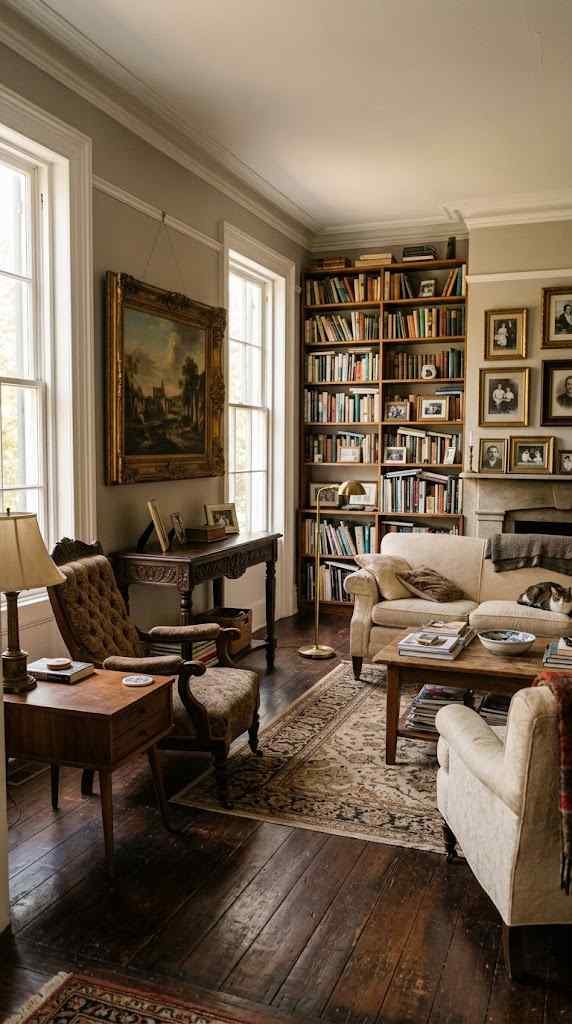
Old money living room design stems from a mindset, not a shopping list. People with inherited wealth didn’t furnish their homes for social media validation. They bought pieces intended to last generations. That 1970s sofa? It’s still there because it’s built like a tank, not because it’s retro-chic.
The aesthetic centers on understated elegance. Neutral color palettes dominate creams, soft grays, warm whites, the occasional muted sage or navy. Patterns exist, but rarely loud ones. You might find a subtle damask wallpaper in a powder room or a classic striped fabric on a chair, but nothing shouts for attention.
What separates old money style from boring minimalism is intentional curation. Every item has a reason for existing. A water-damaged oil painting hangs because it belonged to an ancestor, not because it matches the décor. Antique side tables cluster around seating because that’s where drinks and books naturally accumulate. Does this sound messy? It can be, but it’s purposeful mess the kind that actually works.
Furniture pieces favor substance over style. Solid wood frames, quality upholstery, and genuine patina matter far more than whether something’s trendy. A worn Chesterfield sofa beats a mass-produced modern sectional every single time in this world.
What makes an old money living room immediately recognizable isn’t wealth it’s the absence of desperation. There’s no need to explain the choices because the room’s logic speaks for itself. You won’t see designer collaboration pieces or limited-edition furniture drops. You’ll see things that predate Instagram, things that were purchased without consulting any trend forecast.
The philosophy underlying old money design also embraces imperfection as evidence of authenticity. A slightly faded tapestry becomes proof of genuine use. Scratches on wood furniture tell stories. Worn fabric isn’t something to replace it’s visual evidence that the room matters enough to sit in, to live in fully. This fundamentally differs from contemporary design, which often treats imperfection as a flaw requiring correction or strategic styling to look “intentionally vintage.”
Real wealth allows for this comfort with aging because it doesn’t require constant replacement cycles. When your sofa cost $2,000 in 1985 and is built to last 50 years, you can afford to let it look exactly like what it is: a well-used, deeply loved piece of furniture.
The Color Palette: Less Is Genuinely More
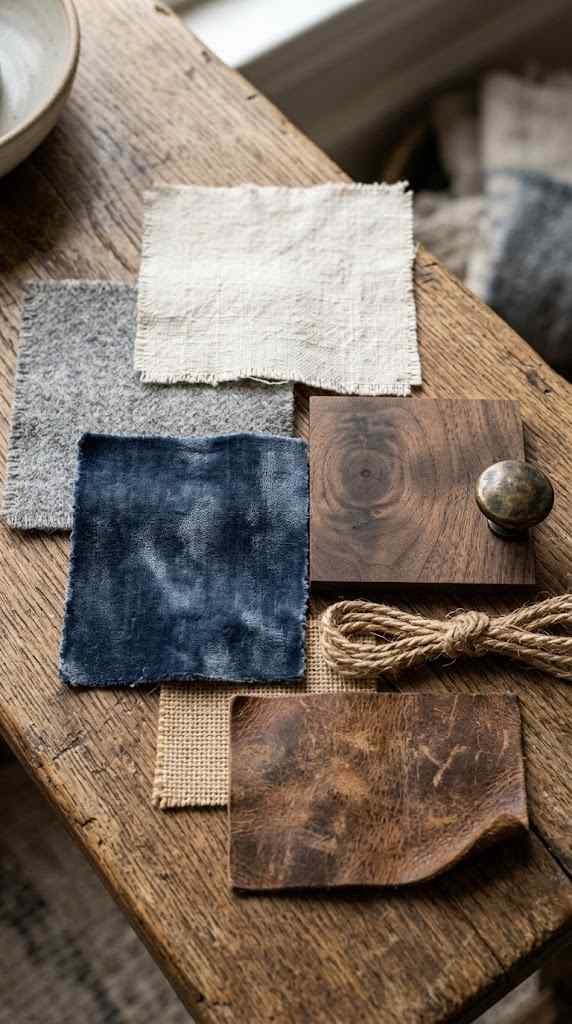
Forget color trends. The old money living room operates on a philosophy of restraint that somehow feels rich.
Picture this cream walls, dark wood floors or Persian rugs, cream-upholstered seating with maybe one navy accent piece. Add brass or bronze hardware on vintage cabinets. Throw in some naturally aged patina. The result feels expensive without screaming wealth because screaming is tacky, and old money people understand tacky better than anyone.
This palette works because it’s timeless. While millennials repaint their accent walls every two years, the old money living room stays relevant indefinitely. The colors you’re looking at might have been chosen in 1985, and they’ll work just as well in 2035.
That said, neutrals don’t mean boring. Texture becomes your secret weapon. Natural linen, worn leather, faded velvet, aged wood grain these elements create visual interest without color gymnastics. You’re not distracted by bold hues. Instead, your eye travels across the interplay of finishes and surfaces.
How do you actually execute this in a modern home? Stick to 2-3 neutrals maximum and let materials do the talking. A cream wall paired with three wood tones and aged brass creates depth without complexity.
The genius of neutral palettes in old money living rooms becomes apparent when you consider practical longevity. Trends in color come and go like seasonal weather patterns, but cream, taupe, and soft gray remain perpetually appropriate. A room decorated in 1995 with this palette reads as timeless in 2024, while a room painted “millennial pink” or “forest green” immediately signals its date of creation.
Layering neutrals also creates sophistication through subtlety. A cream wall sounds boring in isolation, but when you introduce weathered oak flooring, aged brass fixtures, and a sofa in oatmeal linen, suddenly you’ve built visual complexity without a single bold color choice. The eye travels because materials vary, not because colors clash for attention. This approach requires more restraint but ultimately delivers more impact.
Temperature matters too in old money spaces. Warm neutrals creams with yellow undertones, grays leaning toward taupe dominate these rooms. Cool whites or stark grays feel too modern, too cold. The warmth creates an inherently welcoming atmosphere, subconsciously signaling that people actually gather here rather than exist in a museum.
Furniture: Buying Once, Keeping Forever
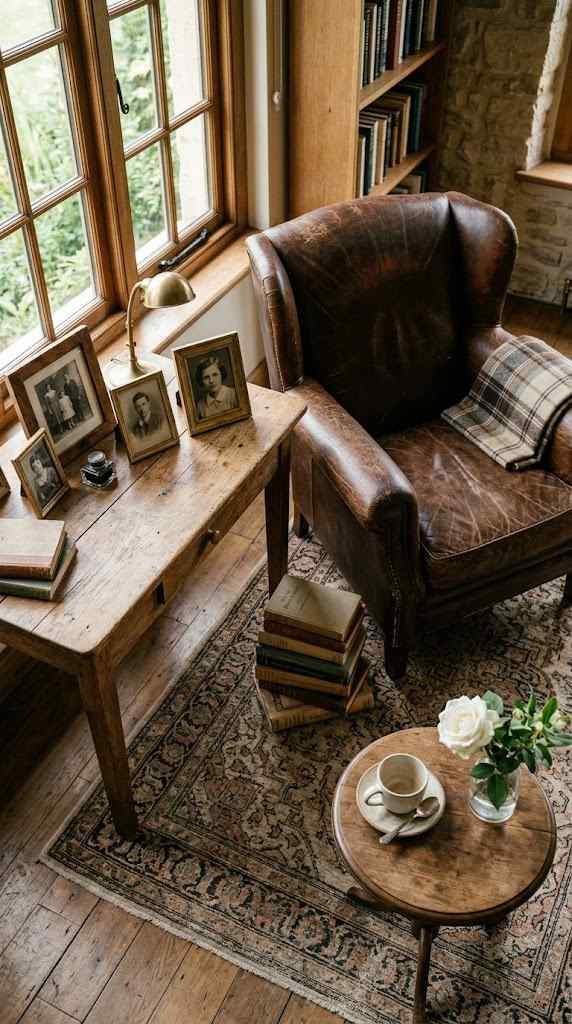
Here’s where old money living room design gets real these people don’t replace furniture. They invest in pieces designed to age gracefully.
The stereotypical old money living room features several key pieces. A substantial wooden desk, even if no one uses it as a desk it just is there, holding family photos and the occasional stack of books. Library shelving, usually built-in or looking like it should be. Multiple seating areas with different chairs, chosen for comfort rather than coordination. Quality upholstered pieces in solid fabrics, definitely not trendy textures or novelty patterns.
Antiques appear naturally, not because someone hunted Pinterest for “vintage finds.” Many pieces are inherited. Others were acquired years ago at auctions or estate sales, then kept because they’re beautiful and functional. The key difference: nothing was purchased to match anything else.
This creates an eclectic vibe that somehow coheres. A Victorian chair sits next to a mid-century modern side table. A Persian rug layers under a modern sofa. These combinations work because the bones are strong. Quality pieces speak the same language regardless of era.
What materials dominate? Leather that’s cracking slightly in the right places. Solid hardwood that’s seen actual use. Wool and natural fibers. Nothing plastic-y or obviously disposable. The living room whispers “I’ll outlast you” through every material choice.
The economics of old money furniture choices reveal something interesting about wealth itself. Buying one $4,000 sofa built to last 30 years costs less per year than cycling through $800 sofas every three years. Old money people understand this math intuitively because generational wealth builds through smart long-term thinking. They’re not shopping; they’re investing.
This mentality extends beyond seating. Wooden tables, shelving units, and cabinetry dominate because wood improves with age it doesn’t depreciate. Leather develops patina. Brass tarnishes in ways that read as distinguished rather than unkempt. These materials have genuine staying power, both structurally and aesthetically.
Where do you actually source furniture for an old money living room without inheritance? Estate sales, auction houses, and quality antique dealers supply the goods. Online platforms connect you with local dealers who specialize in mid-century modern, traditional, or transitional pieces. The key is patience and specificity browse regularly but buy only pieces that genuinely speak to you, not items that fill gaps on a checklist.
The Details That Secretly Matter
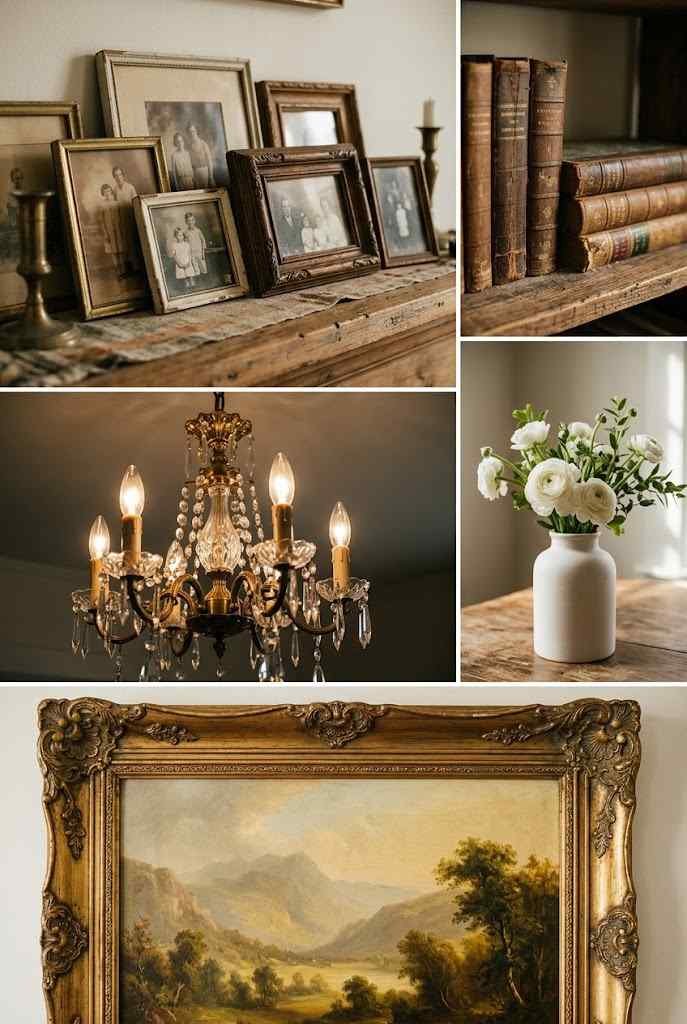
The real mark of an old money living room hides in the small stuff. Framed family photos in mixed-matched frames crowd the mantle. A collection of leather-bound books occupies shelf space, chosen for content and appearance, not color coordination. Fresh flowers appear in a simple vase nothing Pinterest-worthy, just genuine greenery because the room is actually lived in.
Lighting deserves special attention here. Layered, slightly dim lighting creates a mood that screams comfort. Floor lamps with vintage shades. A chandelier that’s probably original to the house. Table lamps with cream or ivory shades. Nothing is aggressively bright you’d actually want to spend hours here.
Art on the walls tends toward classical or representational pieces. Landscapes. Portraits of ancestors or interesting strangers from estate sales. Occasionally something abstract, but usually subtle. The frame matters too often wood or gilded, occasionally ornate, but never frameless or ultra-modern.
IMO, this is where people most often get the old money aesthetic wrong. They go minimalist and call it elegant. Real old money living rooms are full without feeling cluttered. Books overflow slightly. Objects have a home but don’t rigidly occupy it. The room looks lived-in by people who have good taste and zero time to fuss about it.
Accessories in old money spaces follow a principle of accumulation rather than curation. Objects end up in rooms because they’re beautiful, useful, or meaningful rarely because they coordinate with a design scheme. A collection of mismatched paperweights. A stack of art books beside a chair. A mirror that’s slightly too ornate for modern taste but absolutely perfect for the spot it occupies.
This “collected over time” quality creates authenticity that no stylist can manufacture. You can fake it to some degree by shopping vintage markets and estate sales deliberately, but genuine old money rooms carry decades of actual life. The water ring on the side table came from a drink someone forgot. The worn armrest rubbing reflects where the homeowner actually sits.
Scent plays an underrated role too. Old money living rooms smell like aged wood, leather, and books not candles. Occasional fresh flowers provide subtle fragrance. This olfactory dimension contributes to the overall impression of timelessness and reality in ways pure visuals cannot.
Avoiding the Imposters: What Kills the Look
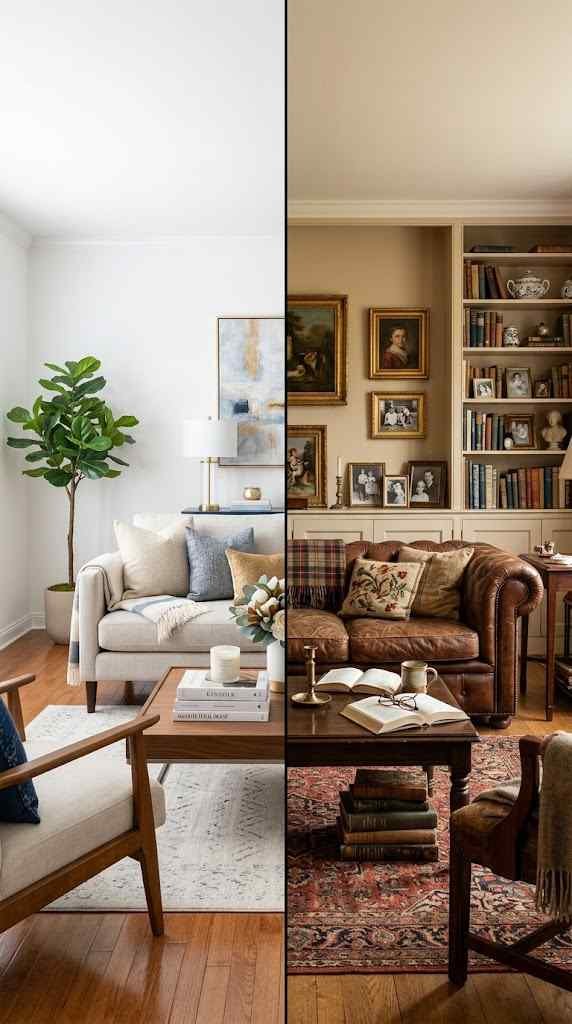
Want to spot a “trying too hard” version of old money design? Look for obvious signs.
A perfectly coordinated room screams “I bought a matching set” or “I hired someone to execute a vision.” Authentic old money living rooms never look coordinated because coordination requires intention, and intention is showy. Things match by accident because the owner has good instincts, not because everything was chosen simultaneously.
Overly trendy elements kill the vibe instantly. That sage green accent wall everyone’s doing? It dates itself immediately. The old money approach sidesteps trends entirely. These rooms look the same in 2020 and 2024 and 2030 because they’re not chasing trends.
Cheap materials are also a giveaway. Particle board furniture, synthetic fabrics, plastic hardware these things scream “new money trying to look old.” The real thing is built to last, which means solid construction from the start.
Finally, excessive “styling” destroys the magic. Perfectly arranged coffee table books, intentionally placed throw pillows, strategically scattered candles this is the opposite of old money aesthetic. That approach says “look at my interior design.” The authentic version says “I just live here and it happens to be beautiful.”
The trap many people fall into is treating old money design as a trend worth adopting. But that’s the entire contradiction if you’re consciously adopting it as a trend, you’ve already missed the point. Authenticity cannot be forced. It cannot be purchased in a single weekend shopping trip or downloaded from Pinterest boards labeled “old money aesthetic.”
Fast furniture with “vintage” branding specifically designed to look worn is perhaps the most obvious impostor. These pieces wear in predictably, their imperfections clearly manufactured rather than earned through actual use. Quality materials show use differently a real leather chair develops character, while faux-leather develops splits and tears that look cheap.
The mindset shift matters more than any single purchasing decision. Stop asking “does this look wealthy?” and start asking “do I genuinely want to live with this?” The rooms that achieve old money elegance succeed because the inhabitants made choices for themselves, not for external validation. That authenticity radiates regardless of whether the furniture is inherited or purchased.
FAQ’s
How do I start building an old money living room on a budget?
Focus on quality basics solid wood furniture and neutral upholstery then add meaningful pieces gradually over time.
What’s the difference between old money style and vintage interior design?
Old money style emphasizes restraint and inherited quality vintage celebrates era-specific aesthetics and nostalgic collection.
Can you mix modern furniture with old money living room aesthetics?
Yes, if modern pieces feature solid construction and neutral colors; avoid trendy contemporary pieces.
Why do old money living rooms never look decorated?
Because items were chosen for function and beauty over decades, creating organic curation rather than coordinated styling.
What’s the most important element to nail when designing an old money aesthetic?
Quality materials and neutral foundations matter most everything else builds naturally from these foundational choices.
CONCLUSION
Building an authentic old money living room takes time. You can’t force it. You certainly can’t buy it in a single shopping spree, which is probably why it appeals to people who actually have old money they’re patient enough to do things properly.
The closest you can get without inherited wealth and heirloom furniture? Start with quality foundational pieces. A good sofa in a neutral color. Real wood furniture from estate sales or solid vintage dealers. Build your collection slowly, choosing items for quality and longevity rather than trends or coordination. Let your space evolve over years.
Most importantly, adopt the mindset: your living room exists for living in, not for showing off. Choose pieces you genuinely love and actually use. Ignore whether things match. Value substance so thoroughly that style becomes irrelevant.
That effortless elegance everyone admires? It only looks effortless because it’s not fighting for attention. The room knows it’s good. It doesn’t need to prove anything.